

Quote Of The Day By Jean-Paul Sartre: 'We Are Left Alone, Without Excuse. That Is What I Mean When...'
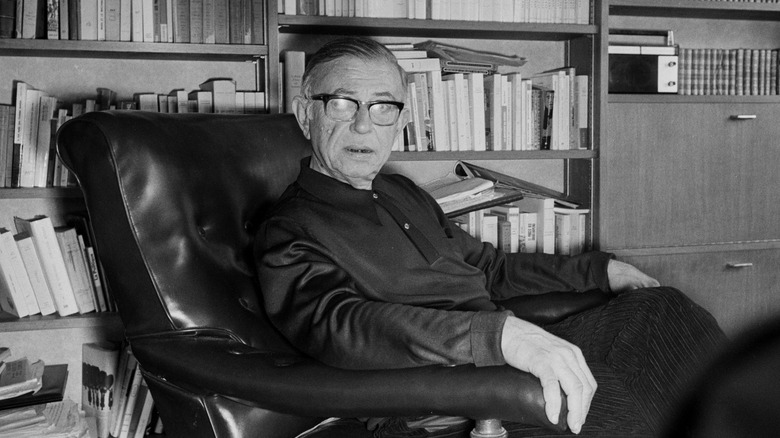
Jean-Paul Sartre was a writer and philosopher whose beliefs fundamentally changed the world. Sartre was born in 1905 in Paris, France. An only child, whose father died when he was just a baby, Sartre was raised by his mother and granddad. His interest in philosophy led Sartre to earn his doctorate in the subject. He was drafted into the French army where, in 1940, he was a prisoner of war for nearly a year. After that, he became a teacher outside of Paris and formed Socialisme et Liberté, a small resistance group.
When it fell apart, Sartre chose to focus his political activism into his writing. Soon, he wrote the philosophical text, "Being and Nothingness," and plays entitled "The Flies" and "No Exit." Sartre continued to write and earned widespread acclaim for his work. Through his words, the seeds of existentialism were planted. Sartre became so prolific that, in 1964, he was given the Nobel Prize in Literature, ultimately becoming the first person in history to turn the honor down.
Sartre did not believe in any higher power, but rather, that human beings had complete freewill. And, as a result, they were responsible for living as they should. He believed that we, as humans, decide right from wrong and, as such, it is each individual's responsibility to fight against our oppressors to protect the whole. That's why Sartre's take on being a human is today's quote of the day.
Quote of the Day by Jean-Paul Sartre
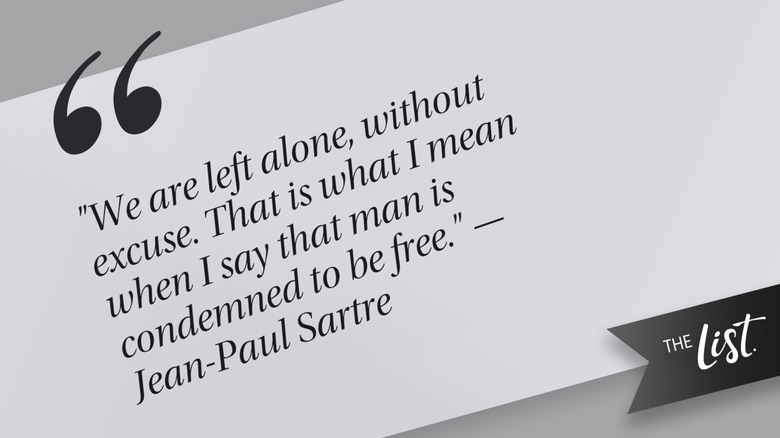
"We are left alone, without excuse. That is what I mean when I say that man is condemned to be free." This memorable quote comes from a lecture Jean-Paul Sartre gave in 1946, entitled, "Existentialism Is a Humanism." The line details the prolific French writer and philosopher's belief that what we do with our existence is entirely our responsibility, and that fundamentally, this is quite a heavy weight to bear.
Deeper Meaning of Jean-Paul Sartre's Quote — Like it or not, there's no excuse not to do what's right
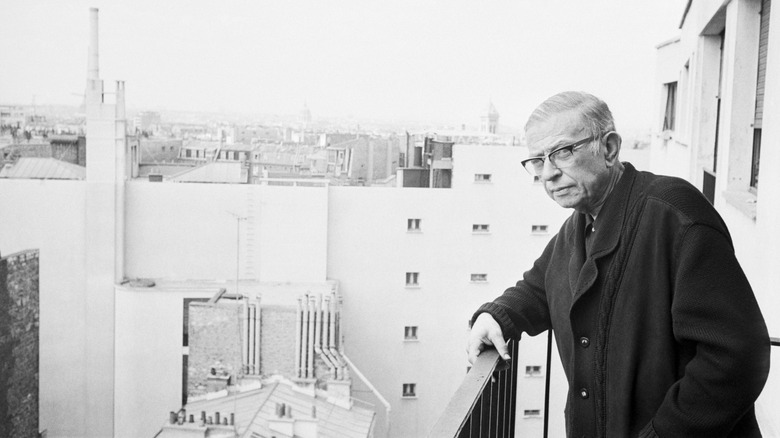
We do not choose to be put on this earth. Jean-Paul Sartre did not believe that we had a higher power to look up to, ask for guidance from, or expect to deliver posthumous justice in the afterlife. Instead, he felt that humans were solely responsible for knowing what is right and for fighting for it accordingly. Since no one asks for this responsibility, he considered the vastness of our freedom to be more of a curse than a blessing. Seeing the difficulties of war firsthand against his will surely radicalized Sartre further. He believed that, even when it is difficult or life-threatening, humans are responsible for challenging the establishment, coming together, and keeping society safe for the greater good.
Throughout history, there have been countless oppressors and endless evil in positions of power. Today is no different. Burying our heads in the sand, following the rules others lay out for us, and hoping that things are eventually resolved by someone else, perhaps even after death, is undoubtedly a convenient and appealing strategy. As Sartre acknowledged, taking on the responsibility associated with humans being entirely alone, individual, and without guidance is terrifying and painful. But this won't accomplish anything or make the world a better place. And, as we scroll past endless atrocities, wrongdoings, and oppression on our phones, this reminder is vital. Even when it's tough, we have to fight back.
More Quotes From Jean-Paul Sartre
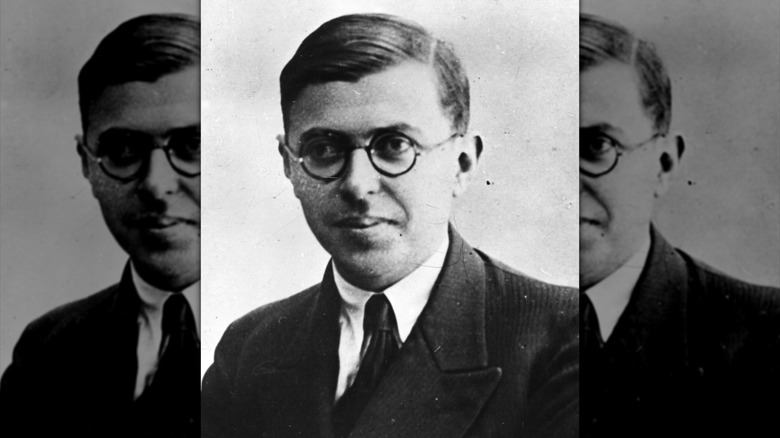
- "There is no love apart from the deeds of love; no potentiality of love other than that which is manifested in loving."
- "It's quite an undertaking to start loving somebody. You have to have energy, generosity, blindness. There is even a moment right at the start where you have to jump across an abyss: If you think about it you don't do it."
- "If you're lonely when you're alone, you're in bad company."
- "When the rich wage war it's the poor who die."
- "Man can will nothing unless he has first understood that he must count on no one but himself; that he is alone, abandoned on earth in the midst of his infinite responsibilities, without help, with no other aim than the one he sets himself, with no other destiny than the one he forges for himself on this earth."