

Carl Sandburg & Lilian 'Paula' Steichen: Their Unique Real-Life Love Story
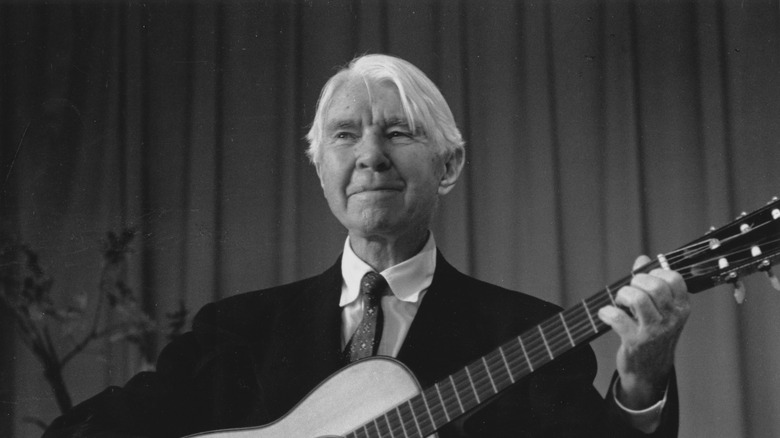
American poet Carl Sandburg often wrote about delightful everyday moments, but his wife Lilian "Paula" Steichen was probably the main highlight of his day. While some 20th century writers like Sylvia Plath were known for their chaotic marriages, Sandburg and Steichen's union was more steadfast.
In December 1907, the poet was beginning a job as an organizer for the Social Democratic Party of Wisconsin. He met Steichen at the party headquarters through her friend Elizabeth Thomas, who was the party leader's secretary. Steichen, a young English teacher, socialized with her friend's colleague and gave him her address after she declined his invitation to dinner. Steichen and Sandburg then started to write to each other, which quickly turned into a months-long courtship with multiple letters exchanged daily. In their letters, they often wrote about authors and family members. Sandburg and Steichen married in June 1908 at 30 and 25, respectively.
Sarah Perschall, who works at the Carl Sandburg Home National Historic Site, told The Laurel of Asheville, "[The couple] wrote prolifically to each other." She added, "After their marriage, they continued to write when Sandburg was away for work, but the foundation of their relationship was heavily influenced by those 'courtship' letters." While he worked as a journalist in Chicago and published a poetry collection named after city, Steichen raised livestock. The couple later moved to Michigan where she became a renowned dairy goat farmer. They also raised three daughters before moving to Flat Rock, North Carolina, in 1945, where Sandburg died 22 years later.
The Sandburgs had an unconventional but supportive marriage
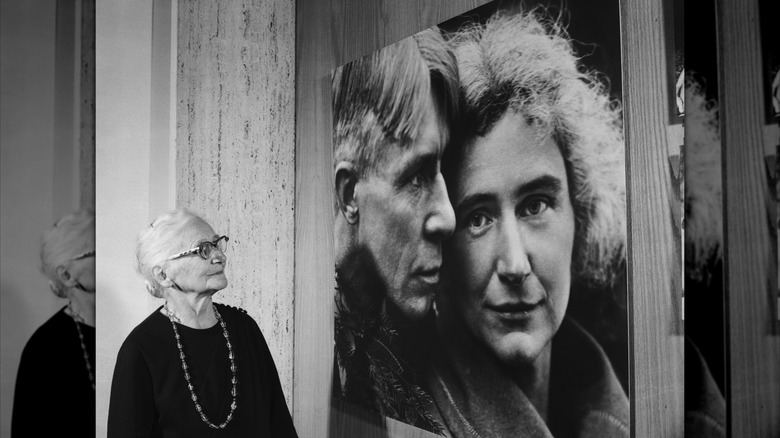
Carl Sandburg and Lilian "Paula" Steichen were married for almost six decades, and they never let the affection from their courtship days die out. However, their love thrived by eschewing 1900s societal norms. Historian John W. Quinley told Blue Ridge Country that the couple's wedding vows avoided the clause about obeying a spouse. "It was a rather avant-garde change of gender roles," he told the outlet in 2022. It seemingly set the pair up for a successful egalitarian union. While many men thought it was attractive for married women to stop working over 100 years ago, Steichen never left the work force.
Sandburg encouraged his wife to start raising dairy goats after she spent some time raising ducks, geese, rabbits, and chickens with their daughters. He even accompanied Steichen to her talks at agricultural institutions, where some people didn't recognize him. Quinley said, "Paula, who was quite famous at that point, was who they really wanted to see."
The career support was mutual. Steichen changed her mind about wanting Sandburg to pursue something other than poetry within two weeks after reading his work, and she encouraged his pursuits for the rest of his life. Director Paul Bonesteel, who helmed the documentary "The Day Sandburg Died," said, "Paula created a home life that supported him working late into the night and having time alone" (via Blue Ridge Country). Sandburg was a self-proclaimed idealist, and his marriage to Steichen seemed like an ideal partnership.