

The Vanderbilt Family's Once-Massive Fortune Has All But Disappeared
Although the U.S. gained independence to ditch the British monarchy, America has wealthy families akin to royalty. The Vanderbilts became wealthy business tycoons in the 19th century, but the family that inspired "The Gilded Age" lost their fortune within a few generations.
Cornelius Vanderbilt was born in Staten Island to farmer parents in 1794. In 1810, a teenaged Vanderbilt borrowed money from his mom to carry cargo in a periauger boat in New York City. He later worked as a steamship captain in the 1820s before running his own passenger boat enterprise, which earned him the nickname "the Commodore." While his competitive nature made him successful, Vanderbilt struck gold when he expanded his transportation services nationwide. The businessman initially offered boat rides from New York City to San Francisco during the California Gold Rush in the 1850s, but he also bought stocks in the railroad industry and owned routes in New York and the Midwest.
The Commodore was worth about $100 million when he died in 1877, and he left most of his wealth to his son William Henry "Billy" Vanderbilt. Billy matched his father's ambition by raising the family fortune to about $200 million in the span of eight years. However, he went against the Commodore's belief to give one child the bulk of the family's wealth. When Billy died in 1885, he divided the fortune between his sons Cornelius Vanderbilt II and William Kissam Vanderbilt. The split inheritance began the family's gradual financial decline due to overspending.
The third generation was more invested in showing off their wealth

As a new money family, the Vanderbilts wanted to prove themselves to more established families like the Astors. The third generation, headed by Billy Vanderbilt's sons Cornelius Vanderbilt II and William Kissam Vanderbilt, invested in building European-inspired estates on the East Coast and made massive donations. Although Cornelius II was hard-working like his grandfather Cornelius "the Commodore" and managed the railroad business, his wealth at death was roughly the same as his inheritance from Billy.
William Kissam pioneered building grand homes with his first wife Alva, whom he later divorced. They also married off their daughter Consuelo to an English duke to exchange wealth for prestige. After his brother's death in 1899, William took over the railroad business, but he gave it up just four years later. He and his second wife, Anne, raced horses in France while competitors gained control over the railroad the Vanderbilts owned. When he died in 1920, his fortune was also around the same amount as his inheritance.
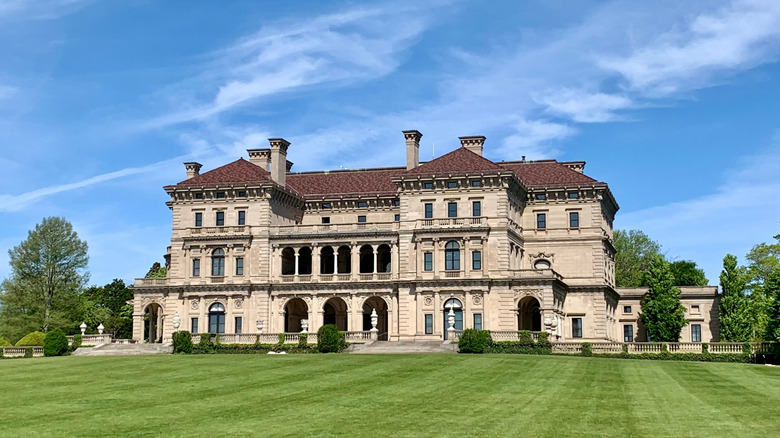
Maintaining these grand estates grew more difficult over time. Federal income taxes, inheritance taxes, and maintenance fees accumulated. Historian Gary Lawrence told Hello!, "The next generation of the builders of these magnificent homes found they no longer desired to live in their parents' houses, or they preferred more modern, easier to care for homes." Vanderbilt properties in New York City were torn down in the 1920s to make way for real estate development, and summer homes like The Breakers and the Biltmore estate became historic home museums.
Most Vanderbilt descendants aren't wealthy, with a few exceptions
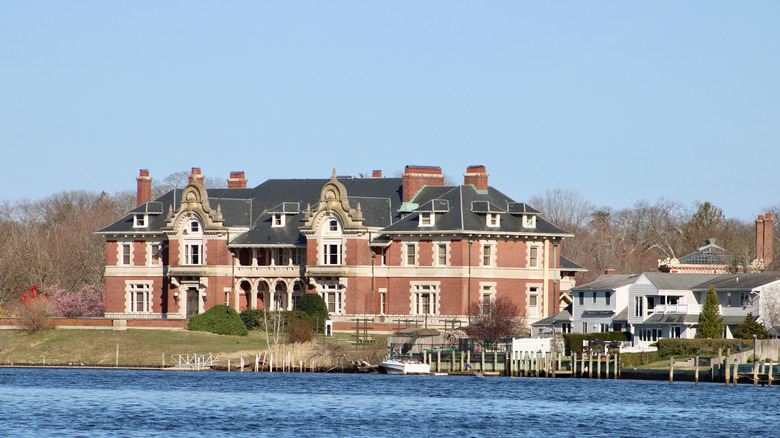
As they ditched their multimillion-dollar homes in New York City, some Vanderbilts died in debt. Cornelius Vanderbilt II's son, Reginald Claypoole Vanderbilt, spent loads on playing sports and cards before his 1925 death. He left his $423,000 estate and $5 million to his young daughters Cathleen Vanderbilt and Gloria Vanderbilt. Gloria grew her wealth by dabbling in acting, writing, and designing luxury jeans, instilling a similar work ethic in her son, CNN anchor Anderson Cooper. The former "60 Minutes" host revealed the unknown fact that he wasn't set to inherit tons of money from the Vanderbilt name in 2014. He told Howard Stern, "My mom's made clear to me that there's no trust fund. There's none of that" (via ABC). Cooper inherited less than $1.5 million from his mother when she died in 2019.
Other notably rich descendants include actor Timothy Olyphant and James Spencer-Churchill, 12th Duke of Marlborough. Olyphant's third great-grandmother Emily Thorn Vanderbilt was Cornelius II and William Kissam Vanderbilt's sister, while the Duke of Marlborough's great-grandmother Consuelo Vanderbilt was William Kissam's daughter.
However, many other relatives lost their millionaire status by the '70s, which Arthur T. Vanderbilt wrote about in "The Fall of the House of Vanderbilt." "When 120 of the Commodore's descendants gathered at Vanderbilt University in 1973 for the first family reunion, there was not a millionaire among them," he said. Fame seems to be the only way the Vanderbilts' descendants have wealth today, although earning it is very different from their ancestors inheriting it.