

'90s Stars Who Met Tragically Strange Fates
The following article contains mentions of suicide, addiction, and domestic abuse.
When it comes to determining which decade left a large imprint on American culture in the years that followed, no decade remained as much of a relative cultural cornerstone as the '90s. With many referring to this decade as the golden age of entertainment – from music to video games, films to fashion — it'd be hard to overlook this span of time when it allowed us to witness the rise of grunge music thanks to Nirvana, the release of blockbuster films like "Home Alone" and "Titanic," and much more.
For as many highs as the '90s had during this time, however, the golden decade also had a series of lows. Everyday life was yet to be tarnished by historically disastrous events such as 9/11 and COVID-19, but we've borne witness to some of the more bizarre and unexplained passings of some of our favorite icons of the decade, both during and after the '90s came to an end. While yes, we could remember the cultural impact of Kurt Cobain's suicide, the O.J. Simpson trial, or even the mysterious back-to-back murders of Tupac and Biggie Smalls, there were other notable tales of '90s stars meeting tragically strange fates that either flew under our radars or remained unsolved. From horrifying murder-suicides of comedic legends to overdoses that were either accidental or completely far-fetched, let's explore some of the more strange deaths of these iconic '90s stars.
Brandon Lee passed on set while portraying his most infamous role
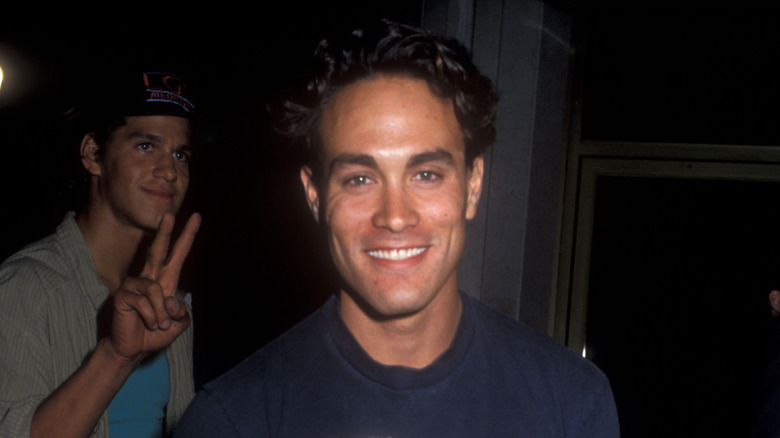
In 2021, the internet saw red over Alec Baldwin due to the infamous shooting incident that took place on the set of "Rust," where he accidentally shot and killed Halyna Hutchins with what was presumed to be a prop gun. While most pointed out the negligence of both the actor and on-set stunt coordinators, it reminded us of a similar horrifying incident that took Brandon Lee's life when he was only 28 years old.
As the son of the legendary Bruce Lee, Brandon was on his way to follow in his father's footsteps in the early 1990s. His most memorable role was his portrayal of Eric Draven in the edgy 1994 superhero film, "The Crow." The film's success wasn't one Brandon could enjoy, however, as on March 31, 1993, Brandon was accidentally shot and killed by what was supposed to be a prop .44-caliber revolver for a specific scene where he gets gunned down by Michael Masse's fictional counterpart, Funboy. At first, no one took notice of how severe the situation was since the scene appeared to have gone well. By the time the film crew saw Brandon's injuries and got him to the hospital, he had lost too much blood and was pronounced dead. Understandably, Brandon's mother, Linda Lee Cadwell, filed a negligence lawsuit against the production company. This similarly left Massee at a loss for what transpired, as he noted in an exclusive 2005 interview with Extra, it was "a tragic accident."
Selena's tragic fate was a tale of a parasocial relationship gone bad
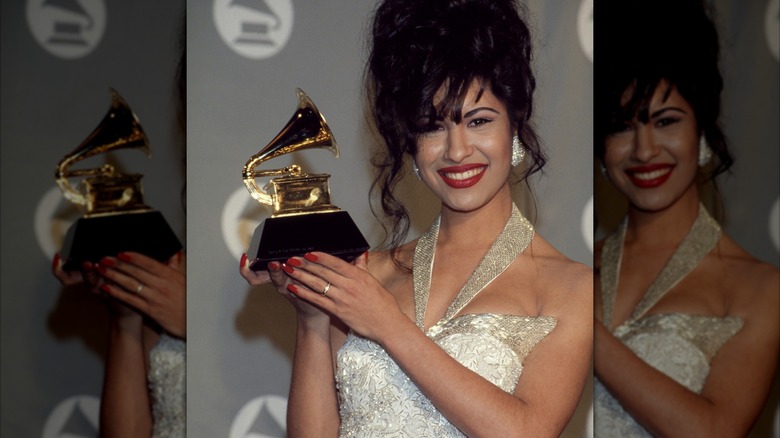
The proclaimed "Queen of Tejano" caused a popular shift in Mexican-American music throughout the early to mid-'90s. Although Selena Quintanilla got her start in the '80s, it was her 1992 album, "Entre a Mi Mundo," that found commercial success. From 1992 onward, Selena continued to garner musical milestones with the release of "Selena Live!," which allowed her to win a Grammy for best Mexican-American album in 1994.
Unfortunately, her immense popularity became the thing that killed her. Superfan Yolanda Saldívar formed a parasocial relationship with Selena after she contacted her father, Abraham Quintanilla, to start a fan club for the musician. Saldívar's work within the fan club led to her becoming a notable business associate and close friend to Selena and her family. However, a case of embezzlement caused Yolanda's eventual fallout with Selena's family, which she didn't take well. While purposely withholding some of Selena's important financial records to remain employed by them, the 23-year-old singer sought to meet Saldívar one-on-one at a motel in Corpus Christi, Texas, on March 31, 1995, to retrieve them. Their confrontation was tense, and once Selena obtained the records, Saldívar pulled out a gun and shot her in the lower right shoulder. The bullet wound was so severe that it damaged her subclavian artery, ultimately resulting in her passing. Saldívar was later convicted of first-degree murder and was sentenced to life in prison.
Richey Edwards of Manic Street Preachers suddenly went missing in 1995
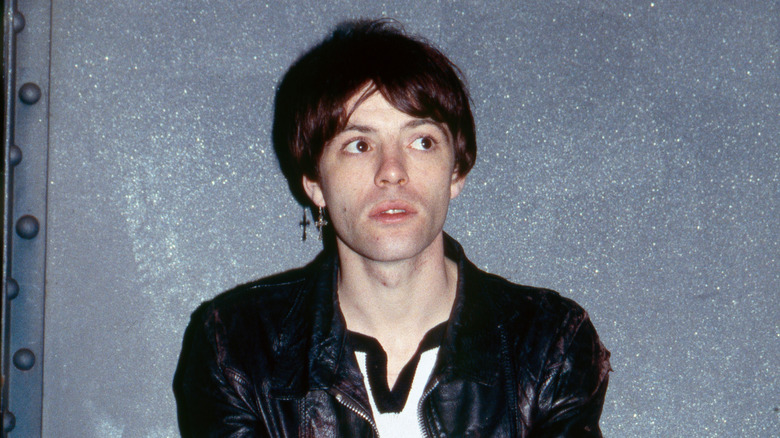
The "27 Club" has remained a phenomenon for prominent rock stars well past the likes of Jimi Hendrix and Jim Morrison. One of the more mysterious entries on this list was guitarist Richey Edwards of the Welsh rock band Manic Street Preachers. Spawning from the Britpop era, the Manic Street Preachers drew a massive, cult-like fan base thanks to the release of their albums "Generation Terrorists," "Gold Against the Soul," and "The Holy Bible."
What was once presumed to be a raw outlook of the band's appeal, Edwards' mental health became the band's biggest hurdle to overcome, with his health drastically declining during the making of "The Holy Bible." Edwards had cases where he'd severely harm himself, both through starvation and more physical acts. Alongside an alcohol addiction, Edwards' health deteriorated to such a rapid degree, but he still maintained his obligations to the band. That was until February 1995, when Edwards, 27, mysteriously disappeared before the start of their United States tour. Some people spotted him just weeks after his disappearance, but his whereabouts were ultimately unknown. According to The New Zealand Herald, the only indicators that could've pointed to signs of life were a car left close to the Severn Bridge. The Independent has noted that this location is known to be a suicide site. Therefore, it was widely presumed that he eventually died that way, as he was never found.
If you or someone you know is struggling or in crisis, help is available. Call or text 988 or chat 988lifeline.org
Phil Hartman was shot to death in his own home
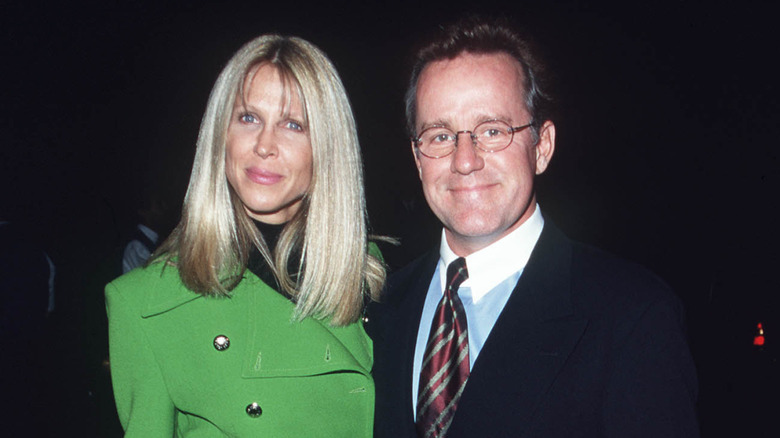
Phil Hartman was a well-known comedian who took over the mid-to-late '80s. It was his firm positions on "Saturday Night Live," "The Simpsons," and "NewsRadio," however, that saw him transition into the '90s with the same, if not more, success than he had in the decade before. Sadly, in 1998, the 49-year-old comedian was murdered by his wife, Brynn Hartman, who also took her own life following the incident.
According to Mike Thomas, the author of "You Might Remember Me: The Life and Times of Phil Hartman," Phil and Brynn's relationship became "very intense very fast" (via ABC). Phil's success coincided with his responsibilities as a husband and a father of two, Sean and Birgen, which seemingly caused Brynn to grow resentful of her husband's career. Their marital issues culminated on May 27, 1998, when, after a night of drinking, Brynn returned home and shot Phil. She confessed her wrongdoings to her friend, Ron Douglas, who had her drive back to the house with him in separate vehicles. Douglas proceeded to contact the police, but once the LAPD arrived, Brynn shot herself while locked in the master bedroom, where her husband was. "We go through the door, we find a man [lying] on the bed, he has a bullet hole through his forehead. There's a woman [lying] next to him, and she also has a gunshot wound," LAPD officer Daniel Carnahan told ABC. "Looking at the bodies, it's obvious ... that they were not alive."
If you or someone you know is dealing with domestic abuse, you can call the National Domestic Violence Hotline at 1−800−799−7233. You can also find more information, resources, and support at their website.
Owen Hart's horrifying fate was caught during a WWE pay-per-view
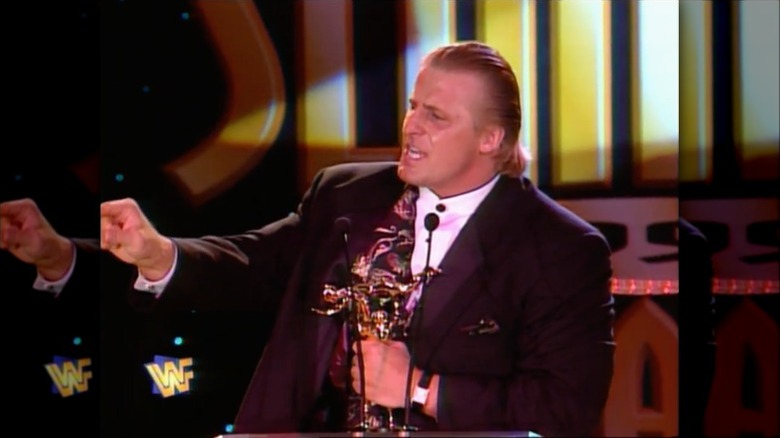
Born into the prestigious Hart wrestling family, Owen Hart was a highly successful professional wrestler in WWE during the '90s. Though he wasn't as popular as his brother, Bret "The Hitman" Hart, Owen was widely recognized for the better part of the '90s as one of the greatest performers to have wrestled for the company. His wrestling prowess was bittersweet, as he'd meet his tragic fate during the "Over the Edge" pay-per-view in 1999.
While showcasing his superhero-esque persona, "The Blue Blazer," against The Godfather, Owen was prompted to make a heroic descent from the rafters while wearing a harness as part of his entrance. It was a stunt he'd done before, but his discomfort with it caused stunt coordinators to make a few minor tweaks to his harness. Unfortunately, the harness malfunctioned during the live event, which saw him fall approximately 78 feet to his death. While still in shock, commentators Jim Ross and Jerry "The King" Lawler announced his passing shortly after. Then-CEO of WWE, Vince McMahon, continued the wrestling event, which Owen's brother, Bret, and wife, Martha Hart, found was in poor taste. She'd even go as far as to blast McMahon for being a "poor leader" for not canceling the pay-per-view altogether (via CBS Sports). Many theories were formed as a result of his untimely demise, but ultimately, it was widely recognized as a stunt gone wrong due to negligence from WWE's stunt team.
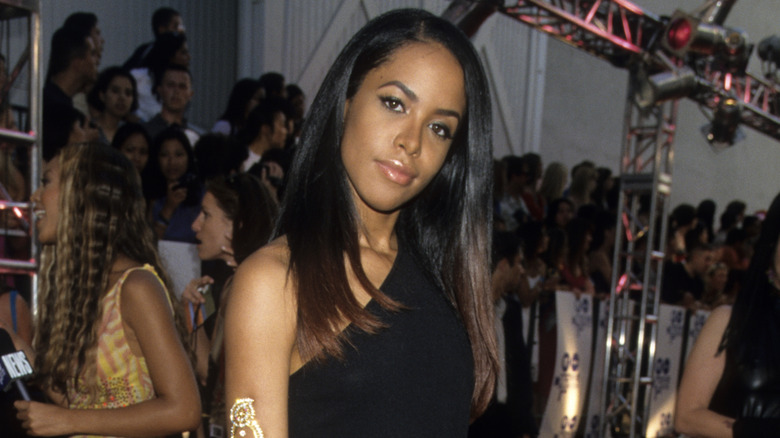
Aaliyah remained one of the music industry's more mysterious deaths
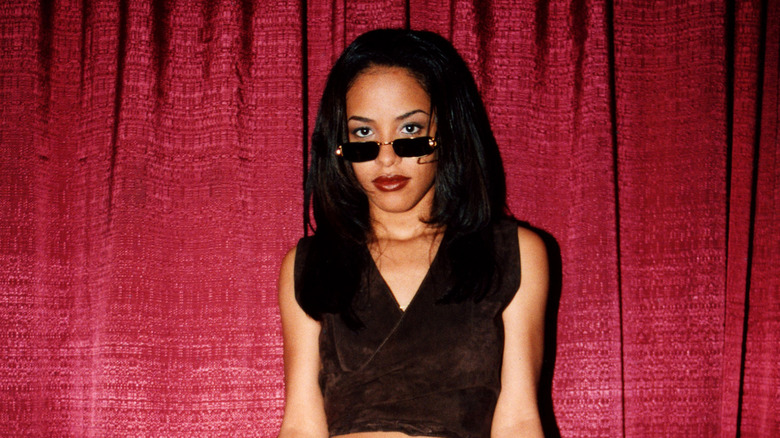
While controversially being paired up with R. Kelly, Aaliyah's debut album, "Age Ain't Nothing But A Number," saw her rise to prominence. Her legacy was further cemented with "One in a Million" and her self-titled album, "Aaliyah." Alongside her brief stint in the film industry, Aaliyah was worth millions before her death. However, in 2001, Aaliyah mysteriously passed away in a plane crash after filming the music video for "Rock the Boat" in the Bahamas.
Aaliyah was on board a plane with eight other individuals who also died due to what became known as the 2001 Marsh Harbour Cessna 402 crash. Information surrounding her passing was strange, as the aircraft had been excessively overloaded before takeoff. Investigators also found that the pilot, Luis Antonio Morales III, had falsified his FAA license and had previous charges of cocaine possession, and more. Other anecdotes we never knew about Aaliyah and the mystery surrounding her death didn't become apparent until years later, as her connection to problematic figures like R. Kelly made it seem like her passing was rooted in foul play. Regardless, her family held Blackhawk International Airways Corp. accountable and filed a lawsuit against them following Aaliyah's passing. With her death still widely rumored to be a mystery, singer Jaguar Wright publicly shared several theories about Jay-Z and Hype Williams likely playing a significant role in Aaliyah's tragic fate during a 2024 interview with RealLyfe Productions.
The reasoning for Merlin Santana's murder was unjustified
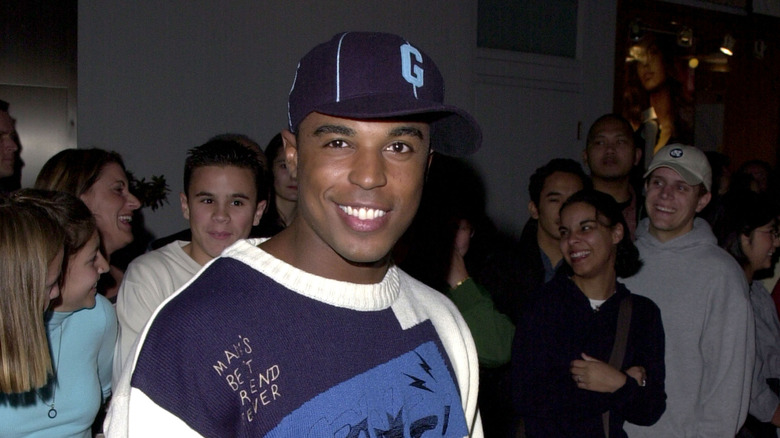
Merlin Santana's acting career spanned numerous sitcoms. From 1991 onward, the actor found himself appearing alongside Keshia Knight Pulliam, who played Rudy Huxtable in "The Cosby Show," having a small recurring role amongst the cast of "Moesha," and being a fan favorite on Steve Harvey's "The Steve Harvey Show." Unfortunately, on November 9, 2002, Santana was murdered by Brandon Douglas Bynes and Damian Andre Gates at just 26 years old.
Unfortunately, the motive behind his murder stemmed from a falsified accusation from Monique King. According to Backstage, King, 15, told her boyfriend, Bynes, 25, and friend Gates, 21, that Santana made "some sort of physical advance on her." This prompted Bynes and Gates to assault Santana with firearms, leaving him dead in the passenger seat of a car in Los Angeles, California. What makes Santana's fate so strange is that King's claims of sexual assault were later recanted by King herself. No one knows the true reason why King lied in the first place, making Santana's death one of the biggest unnecessary fates to date. Nonetheless, those who were involved were found guilty and sentenced to either life or multiple years in prison.
Jonathan Brandis' suicide at 27 came as a surprise
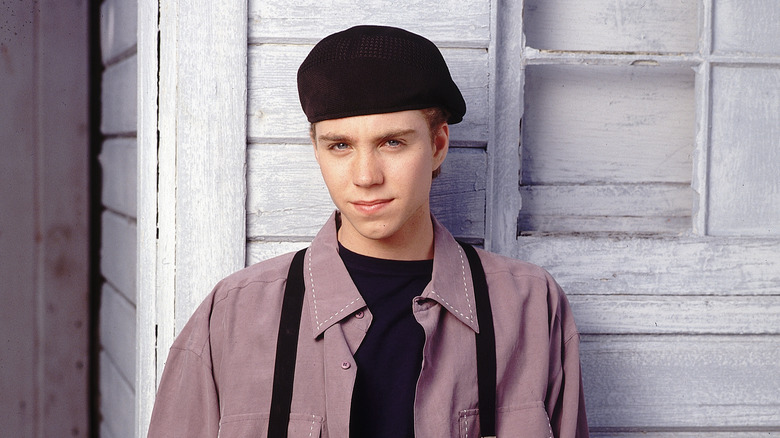
As a child star in the '90s, Jonathan Brandis forged a career that saw him appear in "SeaQuest 2032," 1992 Cap'n Crunch commercials, and more. In addition to forming a public relationship with Tatyana Ali, who played Ashley on "The Fresh Prince of Bel-Air," his popularity in the '90s was massive. The 2000s, however, weren't as fruitful for the actor, as the roles he garnered during this time weren't as notable as his previous ones, which is common for child actors once they grow up. It wasn't until 2003 that Brandis, 27, was found dead in the hallway outside of his apartment. This came as a shock to the entire entertainment industry, as the public wasn't aware of his personal issues. It was confirmed by People that friends bore witness to a drinking problem that ensued somewhere around 2002.
While Brandis' declining mental health was something that flew under the radar for most of us, Brandis' father, Greg Brandis, told People in 2021 that the signs were there. To his awareness, his son's passing was merely a result of a slew of mental illnesses being unchecked. "Jonathan was very smart, and he was very polite, and always easygoing," he said. "In a sad way, he was probably bipolar. [His death] wasn't due to the entertainment industry. I look back now, and in his 20s, he showed signs of manic depression. I hope that anyone suffering can go get help."
Brittany Murphy's passing stirred up a plethora of theories as to how it happened

Brittany Murphy's rise to prominence in the '90s saw her break out after playing Tai in the 1995 film "Clueless," after years of making appearances in "Drexell's Class," "Almost Home," and "Sister, Sister." Aside from appearing in "Girl, Interrupted" and voicing Luanne Platter in "King of the Hill," her success carried over into the early 2000s, where she had career-defining performances in "8 Mile," "Just Married," and "Uptown Girls." What most people deemed a highly successful career would later be cut short, as, on December 20, 2009, Murphy died at only 32 years old.
Her death was sudden, with very little known as to why she passed. According to People, Murphy dealt with severe flu-like symptoms that were left unchecked. The cause of her death was ruled to be pneumonia. ABC also reported that anemia and multiple drug intoxication likely contributed to her death. Although a 2009 inside story by People alleged that she had "inner demons," her autopsy didn't show signs that drugs were the culprit of her passing. Her illness could've been caught early, but it wasn't, making her untimely end even more tragic. To make matters worse, her husband, Simon Monjack, died shortly after Murphy from the same causes, prompting the public – and her father, Angelo Bertolotti – to suggest that there was more to her death than what was reported.
Matthew Perry's death left the public confused
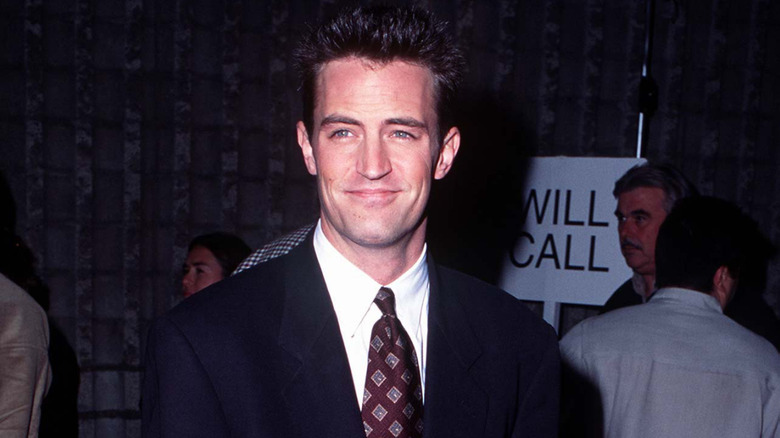
Matthew Perry's rise to prominence can be traced back to multiple instances, from "Sydney" to "Home Free." The most notable, however, was his iconic portrayal of Chandler Bing in "Friends." With the sitcom becoming one of the biggest TV sitcoms of the '90s, Perry, alongside his "Friends" co-stars, became icons of the decade. This didn't come without its pitfalls, as Perry had a longstanding history with alcohol and substance abuse that remained for the better part of his life. After he nearly died from an opioid-induced colon rupture in 2018, Perry made a full commitment to sobriety. This made the horrifying events in 2023 all the more strange, as Perry died at the age of 54 due to an accidental ketamine overdose.
Information surrounding his passing was nuanced since many believed that he had overcome his addiction to substances. To offset his symptoms of depression, Perry allegedly turned to ketamine infusion therapy, which is a treatment that has proven to be effective when it's administered by licensed professionals. Sadly, this wasn't necessarily the case for Perry, as he was illegally obtaining the drug in large amounts and abusing it frequently. Five people – Kenneth Iwamasa, Dr. Mark Chavez, Erik Fleming, Jasveen "Ketamine Queen" Sangha, and Dr. Salvador Plasencia (via CNN) — have all been linked to the malpractices that led to his death, both in the distribution of the drugs and the administration of his use of them.
If you or anyone you know needs help with addiction issues, help is available. Visit the Substance Abuse and Mental Health Services Administration website or contact SAMHSA's National Helpline at 1-800-662-HELP (4357).