

Tragic Details About King Charles' Childhood
We may receive a commission on purchases made from links.
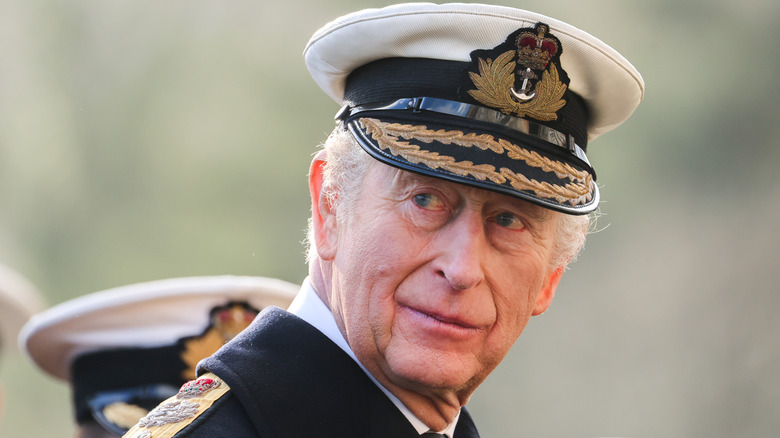
It is hard to imagine King Charles III as a little boy. The powerful British monarch was once simply Prince Charles, the son of Queen Elizabeth II and Prince Philip, Duke of Edinburgh. Born on November 14, 1948, Charles was immediately thrust into the spotlight. At 3 years old, he took on the daunting task of becoming heir to the throne when his mother was anointed sovereign, after her father, King George VI, died. Little did Charles know that the responsibility of the monarchy wouldn't fall into his hands until much later in life — when Elizabeth died in 2022 — and many other hardships would plague his childhood.
"Charles' childhood is tragic in a way and really heartbreaking," Christopher Andersen, a journalist and author of the biography "The King: The Life of Charles III," revealed on Newsweek's podcast, "The Royal Report." "From the beginning, he was an abandoned and lonely little boy." Charles' childhood was marked by the absence of his mother and father; the former was described as "detached," and the latter was characterized as intimidating in Jonathan Dimbleby's 1994 book, "The Prince of Wales: A Biography."
Charles couldn't escape his family at school either, as he was often ridiculed by other students for being royalty and thus generally an outsider. The physical abuse from his peers was so brutal that even former teachers and classmates have addressed the royal's school suffering in the media. However, Charles has also taken a beating from the press, with scandal-laden stories and mocking jokes since he was a child. Overall, a crowned adolescence was nothing like the fairytale some may dream about.
Queen Elizabeth was an emotionally distant mother
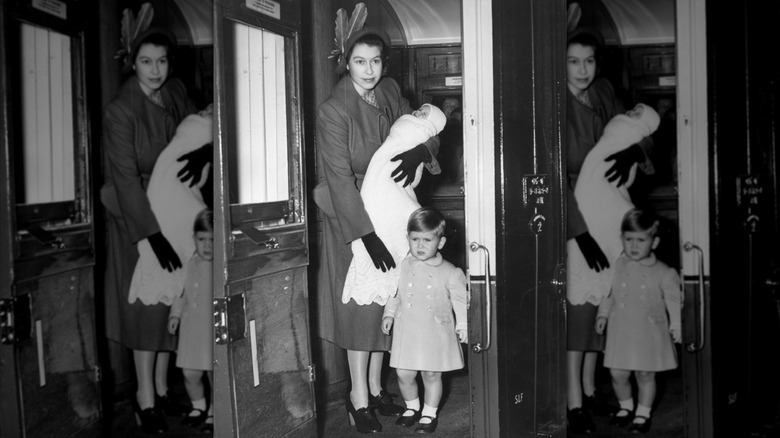
It was clear from the outset that Queen Elizabeth II would be a fierce and attentive leader. As a mother, however, accounts of her parenting paint her as an unaffectionate and often aloof maternal figure to King Charles III. Royal tours prevented the queen from witnessing her son's first milestones — Charles spent so much time with his hired nanny that his first word was "Nana," according to Time.
One highly publicized instance of the late queen's lack of salient affection for her children was after a 1954 trip. According to royal biographer Sally Bedell Smith's description in Vanity Fair, the queen received Charles and his sister, Princess Anne, with a handshake upon seeing them for the first time since her six-month stay abroad. As Elizabeth's former secretary, Martin Charteris, poignantly told Smith, the now-king "must have been baffled by what a natural mother-son relationship was meant to be like."
Nonetheless, Charles harbored a fondness for his mother, illustrated in how he spoke of her in public. He even touted Elizabeth as a constant presence in his life, despite her aristocratic parenting. In his first address to the Commonwealth after his accession to the throne, he expressed his gratitude for his "darling Mama," adding, "Thank you for your love and devotion to our family and to the family of nations you have served so diligently all these years."
Prince Philip pushed Charles to be tough
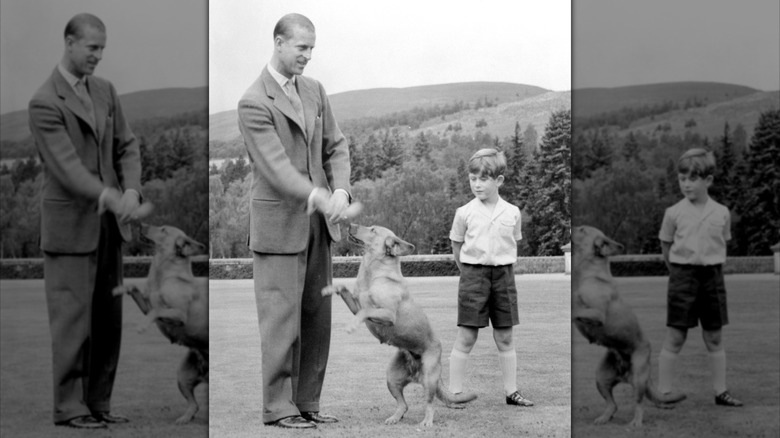
The struggle between Charles and his father, Prince Philip was much more palpable. King Charles III has been described as the sensitive and cerebral type, in comparison to his hard-shelled father. "He's a romantic, and I'm a pragmatist. That means we do see things differently," Prince Philip told The Sunday Telegraph in 1999 (via The Chicago Tribune). According to Jonathan Dimbleby's book "The Prince of Wales: A Biography," Charles was "easily cowed by the forceful personality of his father." With Queen Elizabeth II tied up in her sovereign duties, Philip was tasked with molding his dreamer son into a future king. As a result, Philip was purportedly never afraid of "belittling" or "bullying" Charles, to the point where friends of the prince perceived his parenting tactics to be much too severe.
According to Philip Eade, the author of the biography "Young Prince Philip: His Turbulent Early Life," Philip was often heard saying that he wanted Charles "to be a man's man." He subsequently sent his son to the Gordonstoun boarding school in Scotland — Philip's own alma mater. In an interview with the BBC after Philip's death in 2021, Charles praised his father for playing a key role in his academic success. However, past accounts of Charles' time at Gordonstoun sound less than pleasant. Indeed, the young prince seemingly suffered an isolating and abusive experience while attending the Scottish Highlands school.
School bullies tormented Charles
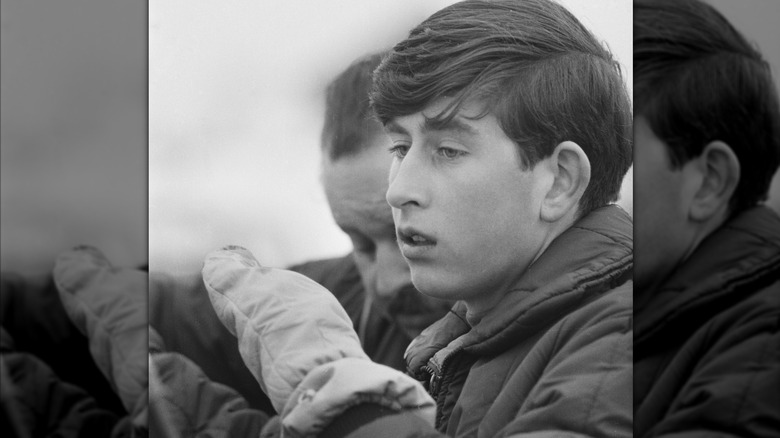
It was clear from King Charles III's first day that bullying and abuse from peers was well-nigh part of the daily curriculum at Gordonstoun — the boarding school was the subject of headlines decades later because of its brutal social environment. Reports of students ignoring Charles or beating him into the grass of the rugby pitch dominated anecdotes of the royal's time at the institution. "We didn't pick on him in class but, on the rugby field, some boys would attack him, pulling his ears and hitting him," Johnny Stonborough, a former schoolmate of Charles', wrote in an essay for Newsweek, noting that the then-prince's bullies sought him out because he was a royal. "It was targeted."
Nonetheless, Charles has been adamant that his time at Gordonstoun was character-building and worthwhile — in his later years at the school, he gained more of a social standing, being appointed Head Boy and flourishing in his artistic talents. In a 1975 speech to the House of Lords, Charles said, "I am always astonished by the amount of rot talked about Gordonstoun and the careless use of ancient cliches used to describe it" (via The Guardian). He noted that the school's idiosyncratic approach to education is what made it stand out, adding, "I am lucky in that I believe it taught me a great deal about myself and my own abilities and disabilities."
The constant media attention took a toll on young Charles
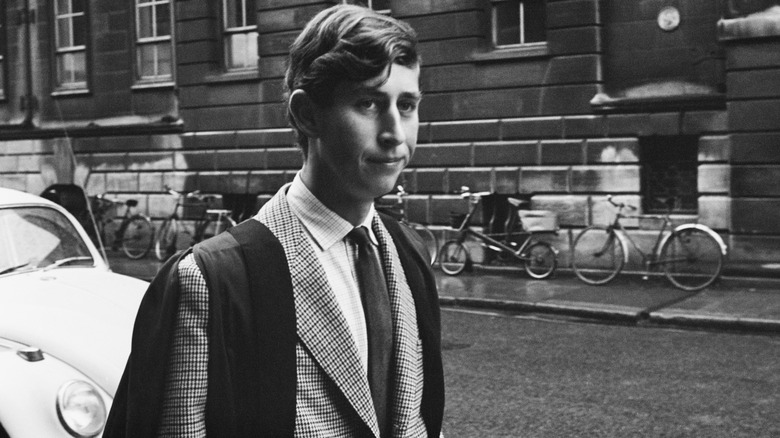
The attention that accompanied his royal title might have been the worst part of the job for King Charles III. At just 9 years old, the then-prince was mocked in a 1958 issue of MAD Magazine, in which readers submitted letters that argued Charles bore an uncanny resemblance to the publication's quirky mascot, Alfred E. Neuman.
At 14, while attending Gordonstoun, an underage Charles quickly made headlines for ordering a cherry brandy at a pub near school. It became a major scandal for the royal family and resulted in his trusted bodyguard's firing and the bar nearly losing its liquor license, according to Tatler magazine.
Scrutiny followed Charles throughout and beyond childhood, inhibiting him from a private upbringing, which is relatively common for royal children now — it is a major reason the Prince and Princess of Wales and Prince Harry and Meghan Markle keep their children out of the spotlight. Charles addressed his disdain for the media in an interview with British network ITV, telling them, "I'm not really good at being a performing monkey, really. And I think that I am quite a sort of private person. I'm not prepared to just perform" (via CBS Mornings).