

The Complete Transformation Of Brigitte Bardot
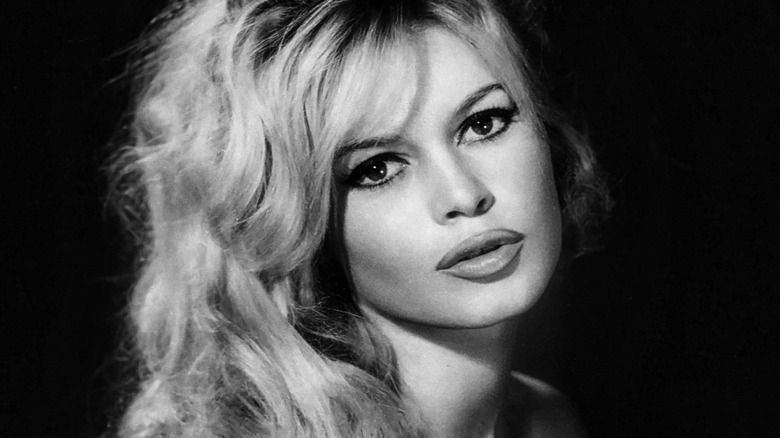
The controversial actress and model, Bridget Bardot, leaves behind a checkered legacy of acclaim for her work in the world of film and infamy for her public declarations of ethnocentric views. From her earliest days, Bardot's world was filled with the advantages of wealth and glamor, which served to both mold and restrain her. She rebelled against the stiff structures of her youth to explore her passions, which led to international recognition for her acting career, fashion sense, free expression of her sexuality, and an eventual, all-encompassing devotion to the cause of animal rights. However, despite her determination to live a life unrestrained by conventions, she did not extend the same courtesy or compassion to those who lived and believed differently than she did.
Since her passing in December 2025, Bardot's accomplishments and moral blemishes have been laid bare before the eyes of a divided public. Some public figures, such as French president Emmanuel Macron, chose to remark upon her willful and liberated spirit with an undertone of reverence, while others demanded accountability for the star's biases and damaging stances. Whether viewed through a positive or negative lens, Bardot's transformation paved a winding path through her opportunities born of talent, international fame, sexual liberation, misanthropy, romance, infidelity, activism, and staunch intolerance for diversity. From the streets of Paris to the world stage, Bardot's life, career, and impact evoked feelings of grand admiration and deep disappointment in equal measure.
Bardot had a privileged childhood
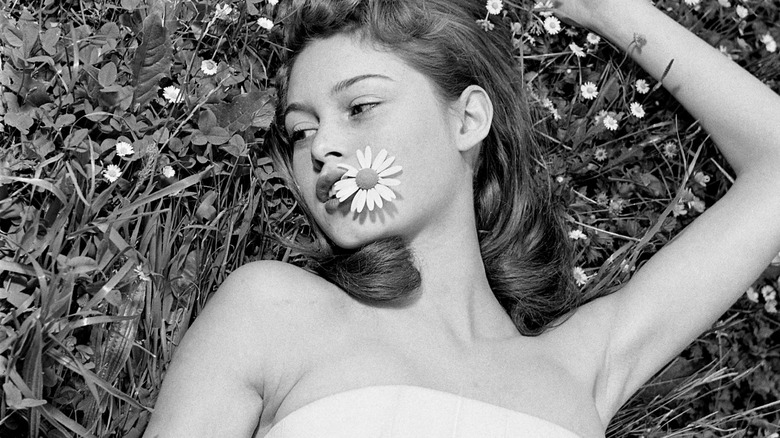
Born to Louis and Anne-Marie Bardot on September 28, 1934, Brigitte Bardot entered into the affluent world of the Parisian bourgeois. She spent her formative years in the luxurious 16th arrondissement (neighborhood) of Paris, France, inhabiting a gargantuan, nine-bedroom apartment where she spent most of her childhood. Architectural Digest reports that Bardot biographer Jeffery Robinson once described the sheer scale and grandeur of the family's primary residence, stating, "There was an enormously long hallway running straight through the center of the apartment from the large entrance hall all the way back to the servants' quarters and the kitchen." He also detailed the fine, formal furnishings of the home and its faithful representation of elegance held near and dear to the upper-middle class of Parisian society.
In addition to the Bardots' fashionable apartment in the heart of the city, they also enjoyed the open space and serenity of a weekend residence just west of Paris in Louveciennes. If two homes weren't enough to satisfy their need for tranquility, convenience, and opulence, Bardot and her family also regularly vacationed at high-profile, fashionable destinations in both winter and summer. Their bi-annual convalescence brought them to the village of Megève, nestled in the Alps, as well as the Atlantic coast resorts, and — of course — the picturesque Saint-Tropez.
To ensure that Bardot and her sister, Marie-Jeanne, fit in with the wealthy crowds their parents associated with, they were raised in a structured, disciplined, and conservative household where strict standards of behavior were upheld at all times. Bardot later explained that it was this heavily restricted environment that was a driving force behind her revolt against the constraints of societal expectations.
Bardot's original career plan was to be a ballerina
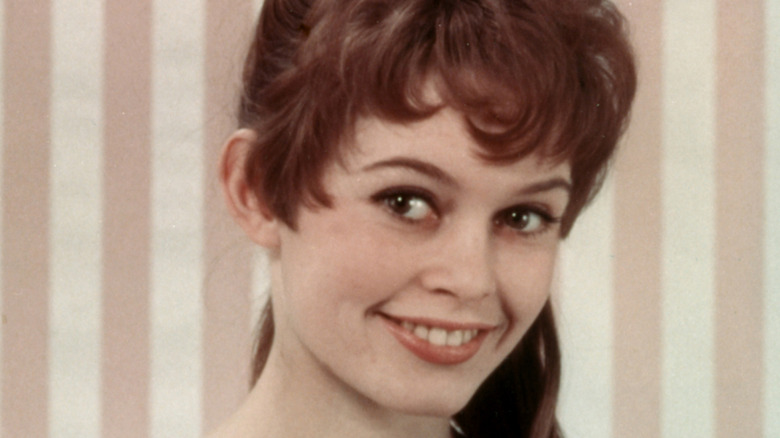
Brigitte Bardot's mother, Anne-Marie Bardot, was a society woman with an avid love of fashion and ballet. It was with her encouragement that her daughter, Brigitte, began to study ballet at the renowned Paris Conservatoire at the age of 7. Bardot proved a natural talent and was touted as an admirable student of the art form by her teachers. She went on to develop a high proficiency that would lead to her being awarded for her skill in 1948.
Ballet, however, demanded a level of discipline that Bardot could not abide. In spite of her success, she abandoned her initial dreams of becoming a ballerina in the early 1950s. Despite leaving ballet in the past, the knowledge and physical ability she gained through her years of diligent practice did not go to waste. Through ballet, Bardot cultivated a level of grace and muscle control that would set her apart in her future career endeavors.
She became a model in her early teen years
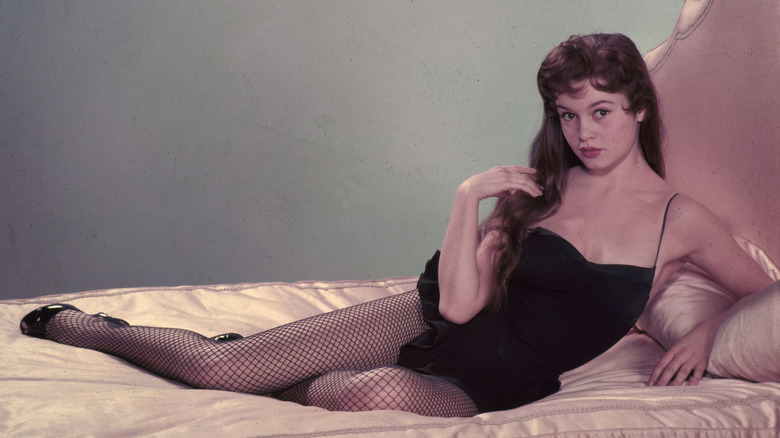
Brigitte Bardot's mother played an instrumental role in setting the stage for her success in the world of beauty and fashion. With her many societal connections with artists, designers, and photographers, Anne-Marie Bardot orchestrated Brigitte Bardot's first modelling assignment in 1948. She convinced hat maker Jean Barthet to have Bridget model his hats while displaying her ballet skills to the tune of Tchaikovsky's "Swan Lake." The objective of this display was to set Brigitte apart from her peers by allowing her to utilize the skills she developed through years of diligent ballet practice and performance, as well as by her natural beauty.
The hat campaign was just as successful as the matriarch had hoped. In the wake of the project, the young Brigitte began receiving interest from popular French magazines, such as "Les Cahiers du Jardin des Modes," "Les Veillées des Chaumières," "Modes et Tricots," and eventually, ELLE, for whom she posed for the cover in 1949.
After many modeling projects, she returned to ELLE in 1952 for a two-page spread in the magazine entitled, "Jeunes Filles of 1953: This is Your Fashion," where she was photographed in the refined, structured, elegant garb of the fashionable, respectable youth.
Bardot began her acting career with a series of small roles
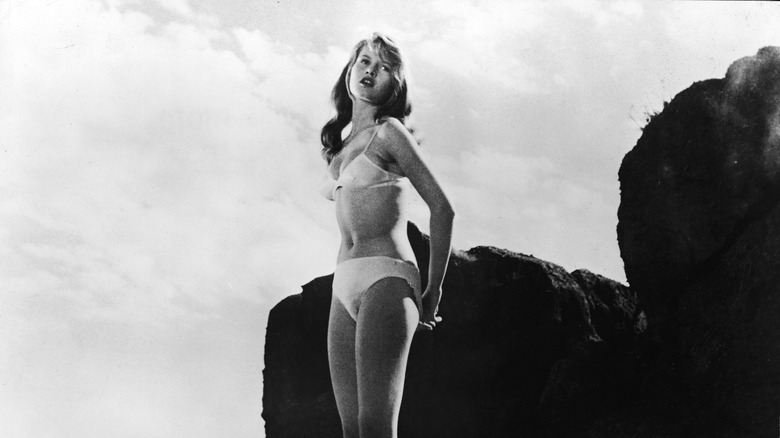
After her cover shoot for ELLE, Brigitte Bardot's appearance struck the interest of film director Marc Allégrant, from whom she received an invitation to audition for a potential project created by his young protege, Roger Vadim. Allégrant sent Vadim to contact the 16-year-old Bordot, setting into motion the fateful meeting that would eventually lead to the romantic interlude between the aspiring filmmaker and the young model.
Bardot did audition, but she didn't get the part. The film itself was of little importance, since France Today reports that it never came to fruition. Despite their age gap, Bardot and Vadim reportedly fell hard and fast for each other, and given her youth, Bardot's parents were wary of the relationship. They threatened to send Brigitte to England if she didn't cut off her connection with Vadim, but after a show of attempting to shove her head into a lit oven in protest, her parents relented on the condition that she wait to marry until she was 18.
Following their marriage in 1952, Bardot served as Vadim's muse in many of his own projects while also bringing her deeper into the world of film. Throughout the remainder of her teen years, she played a series of small roles in primarily domestic films, such as "Crazy for Love" and "The Girl in the Bikini" in 1952, "Les Dents Longues," "His Father's Portrait," and "Act of Love" the following year.
The 1950s were Bardot's breakout years in acting
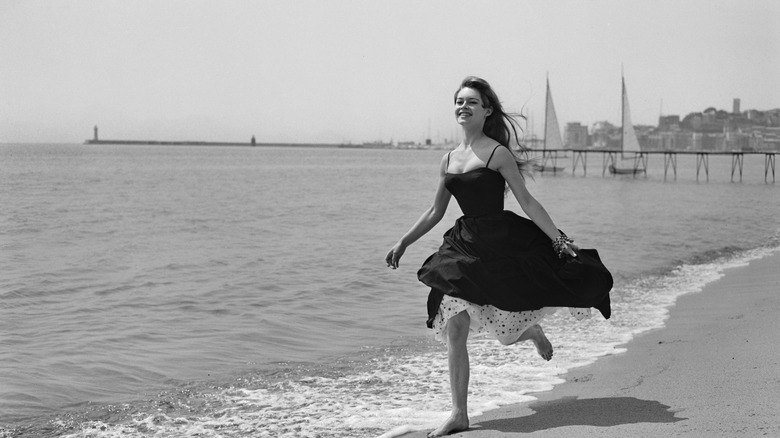
The 1950s brought some of Brigitte Bardot's most recognizable successes on screen with, "And God Created Woman" and "Love is My Profession," among other films that performed moderately in France and increased interest in foreign films in the U.S. Bardot shattered the expectation of demure purity for actresses held firm in the U.S. at the time, and she garnered a reputation as a libertine in American media so much so that "And God Created Woman" was banned in some states. Her unapologetic display of both her physical form and hedonistic desire had an indelible impact on Hollywood's concept of modesty, leading to intense shifts in the expression of female sexuality in filmmaking.
Despite the U.S. box office success of "And God Created Woman" in 1958, Bardot resisted entreaties from American directors to move to Hollywood to enhance her career. Even without an image bolstered by the Hollywood greats of the time, Bardot managed well enough to solidify herself not only as a serious actress but as an international sex symbol.
Bardot was habitually unfaithful to her partners
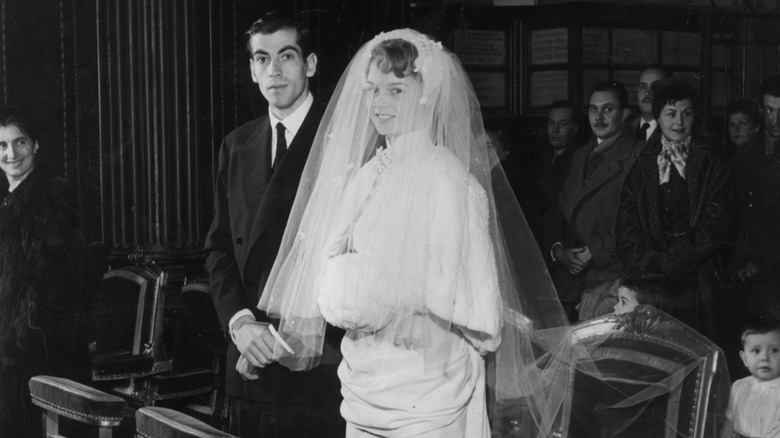
Though there was no doubt that Brigitte Bardot felt passionately for her first husband, Roger Vadim (passionately enough to stick her head in an oven) in the early years of their courtship and marriage, the union ended in 1957 due to Bardot's infidelity. Her affair partner was her co-star, Jean-Louis Trintignant, whom she acted opposite for "And God Created Woman," which — ironically — was being directed by her husband. Despite the indiscretion, Vadim held no ill will toward Bardot and was by most standards quite understanding. He told reporters, "I would always prefer to have that kind of wife, knowing she is unfaithful to me rather than possess a woman who just loved me and no one else ... I wanted a woman with spirit, with joie de vivre ... a woman with a sense of adventure and sexual curiosity."
Though undeniable sexual chemistry had brought Bardot and Trintignant together, it didn't prove to be a firm foundation for lasting love — she was also unfaithful to him during his military service in Algeria. While Trintignant was overseas, Bardot began a relationship with singer Gilbert Bécaud, and some time later, she met her second husband, Jacques Charrier. This second marriage lasted three years and ended again because of infidelity. Bardot had another affair with actor Sami Frey after the birth of her son, Nicolas-Jacques Charrier. Her third husband, Gunter Sachs, ended their relationship because of Bardot's affair with actor Patrick Gilles. After that relationship came others before she met her fourth husband, Bernard d'Ormale, to whom she remained married until her passing.
Bardot had a complicated relationship with motherhood
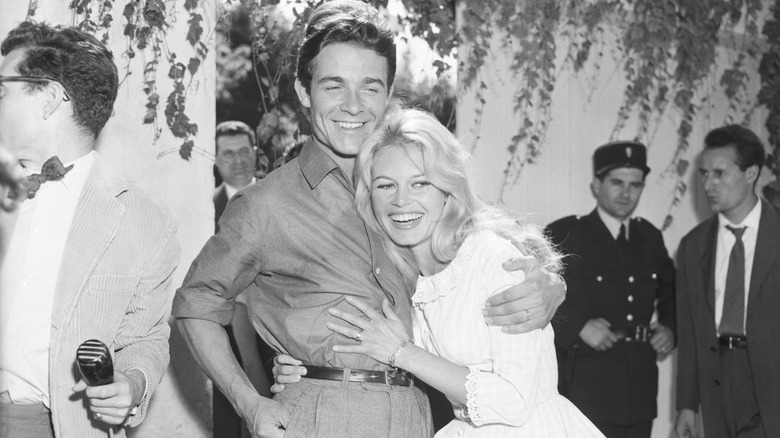
Brigitte Bardot was frank about her complete lack of desire to be a mother, and it was by accident that she became pregnant following her second marriage to Jacques Charrier. She wished to terminate the pregnancy, but did not have the support of her husband to do so. Bardot detailed the mental anguish which accompanied the revelation of her pregnancy in her autobiography, stating, "I'm not made to be a mother ... I'm not adult enough — I know it's horrible to have to admit that, but I'm not adult enough to take care of a child." Despite her fears and reservations, she gave birth to her son, Nicolas-Jacques Charrier, at home. She had been sequestered to her Paris apartment in an attempt to avoid the swarming paparazzi just outside her door.
Just as Bardot herself predicted, motherhood would prove incredibly difficult for her, and she and her son, Nicolas-Jacques Charrier, did not bond.
Charrier received full custody of their son following their divorce in 1962, and Bardot's relationship with the child remained largely nonexistent until decades later. Bardot was remarkably open about her misgivings with motherhood and her overall lack of feeling for her son in her own writings, for which both Jacques and Nicolas Charrier attempted and failed to censor. They sued for emotional damages, and Bardot was ordered to pay the equivalent of $40,000 in damages to her son. However, it is interesting to note that Bardot was perhaps harsher in her own memoirs than she was in real life. Her ex-husband said that Bardot's love and affection for their son were evident in the letters he kept from Nicolas' childhood.
Bardot struggled with her mental health
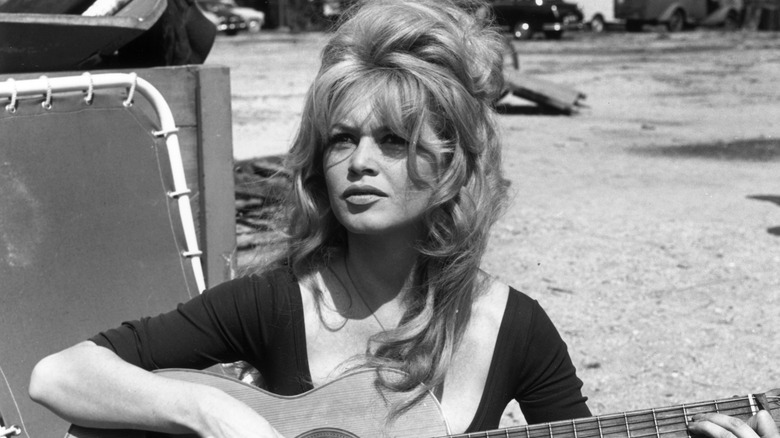
Brigitte Bardot's lifelong battle with her mental health began in childhood with her restrictive upbringing and a traumatic episode during her early childhood — she and her younger sister accidentally broke an expensive Chinese vase in her parents' home. Punishment for the indiscretion was harsh, not only physically, but psychologically. Her mother utilized damaging tactics to elicit compliance and remorse in her children, telling them that because they behaved badly, they were no longer her children and she was no longer their mother. That instance lived on in Bardot's memory for the rest of her life as a defining moment of inadequacy, and left a lack of regard for blood ties.
In her adult life, Bardot's career and reputation would prove stifling, even suffocating. She didn't enjoy the press and sought to avoid them in some cases, such as during her unwanted pregnancy with her son, Nicolas-Jacques Charrier. Soon after his birth, on her 26th birthday, Bardot attempted to take her own life in her villa in Nice. She stated later that she battled depression for years, and with the added weight of objectification and failed relationships, she spent much of her life feeling an all-encompassing sense of sadness.
Bardot became an animal activist after her career in entertainment
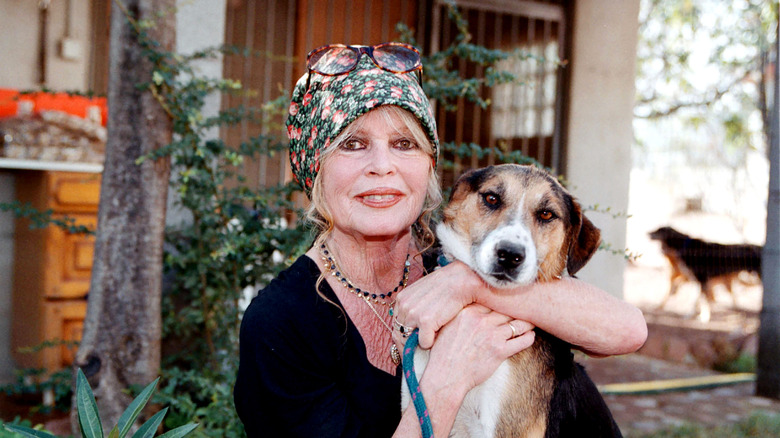
After over two decades in the film industry, Bardot decided that public life was no longer for her. At the age of 39, she retired to the idyllic Saint-Tropez to dedicate her life to wildlife conservation and activism. Outside of the limelight and tucked away in her picturesque, seaside sanctuary filled to the brim with animals in need of care, Bardot connected with her life's passion.
In 1986, Bardot founded the Brigitte Bardot Foundation. Its mission states, according to its website, "Every day, we mobilize all our resources to help animals in distress. We fight suffering in all its forms, combating mistreatment, abandonment, and the violence inflicted upon them. We are also taking action to curb the proliferation of stray cats in France and overseas by implementing sterilization campaigns and rescue programs. We file complaints and become civil parties whenever we can to make the voice of animals heard loud and clear and to have the perpetrators convicted."
Some of her protests were mainstream commentaries against the over-consumption, over-killing, and inhumane treatment of animals for capitalism, which many contemporary conservationist groups agreed with. However, many of Bardot's fiercest arguments infringed upon traditional Jewish and Islamic beliefs and religious practices.
Brigitte Bardot left a paradoxical legacy
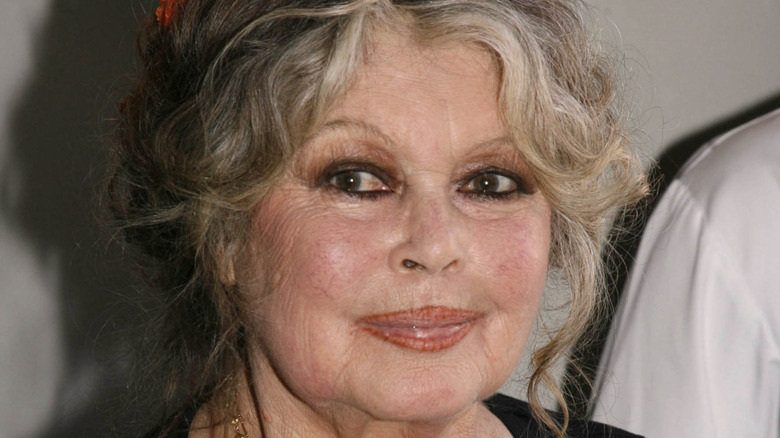
In her later years, as the greater population of France embraced religious freedom and immigration of diverse peoples, Brigitte Bardot vocalized her staunch, right-wing views on subjects, such as her intolerance for religious minority groups. This included Muslims, whom she accused of "invading" and perpetuating the perceived "Islamization," of France. In the same vein, Bardot sent an open letter to the French prefect of La Reunion — a beautiful, culturally rich island nestled off the southeastern coast of Madagascar — calling its ethnically diverse citizens "aboriginals who have kept the genes of savages," and "a degenerate population still soaked in barbarous ancestral traditions." This libelous letter earned Bardot her sixth and final conviction for inciting racial hatred, for which she was fined €20,000 by the courts.
In addition to her history of racism, Bardot wrote derogatory statements about the LGBTIA community in her book, "A Cry in the Silence," calling them "fairground freaks." Furthermore, despite her role in the sexual liberation of women, Bardot held anti-feminist views and spoke negatively about women in political office. She also admonished the #MeToo movement, stating that victims were, "In the vast majority of cases they are being hypocritical, ridiculous, uninteresting ... There are many actresses who flirt with producers in order to get a role .. Then, in order to be talked about, they will say they have been harassed. In reality, rather than benefiting them, it harms them."
At the end of her days, at the age of 91, Bardot passed from this world, tucked in bed at her Saint-Tropez home. She saw her once-captivating legacy of beauty and freedom marred with the ugliness of bigotry and intolerance, thus becoming the force in the world she once sought to overcome.