

Fashion Rules Olympic Ice Skaters Must Follow
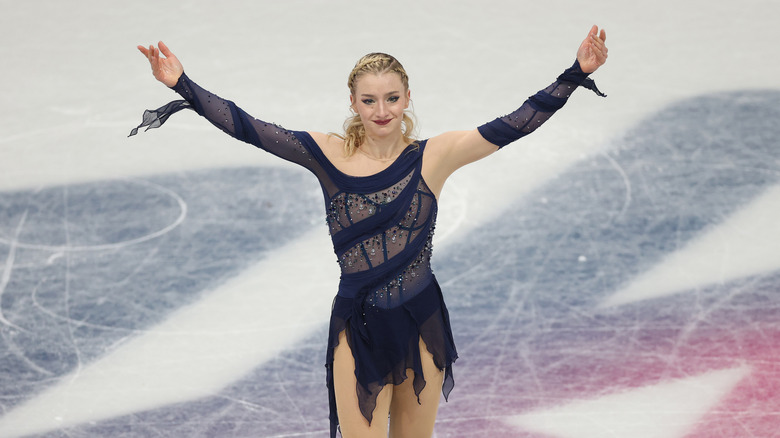
On-ice fashion has evolved far beyond the days of former U.S. Olympic figure skater, Dorothy Hamill, and her sweet skating skirts that swirled as she twirled around the ice. Today's skaters look like they could go from rink to runway. They leap to awe-inspiring heights, perform dizzying spins, and execute fancy footwork in costumes that are as much a part of a winning program as a quad axel (looking at you, Quad God). But as much as skaters look to custom and even couture skating costumes to express their creativity, there are rules that, if broken, can be the difference in whether or not a skater makes the podium. Some rules that the figure skaters must follow are explicit, while others are merely understood to be the norm. But all must be considered when going for the gold.
The transformation of the skating costume from functional to fashionable took off in the '80s, when skaters realized that the right costume could make a performance even more memorable."It's about the overall image the skater is trying to create," designer Jan Longmire, a pioneer in the world of skating costumes, told Skating Magazine. Six-time U.S. Figure Skating Champion Nathan Chen agreed. "Costumes are an important part of skating and can oftentimes express what the movement and choreography can't," he explained to Vogue. "What we're wearing, and how we present ourselves, makes for the total package — and it makes a lasting impact on the audience and the judges." As Olympian Vincent Zhou added, "The costume is the cherry on top — it adds that final bit of flavor."
Skaters should not appear to be naked or exposed
Skaters spend hundreds of thousands of hours (and dollars) training to perfect the combination of grace and athleticism that makes even the hardest maneuver look effortless, and their toned, muscular bodies attest to their dedication. Who could blame them for wanting to showcase all that hard work in revealing costumes? The International Skating Union — that's who! This governing body sets the rules for how much skin skaters can dare to bare. According to guidelines, skaters' costumes "must not give the effect of excessive nudity inappropriate for the discipline," per Self.
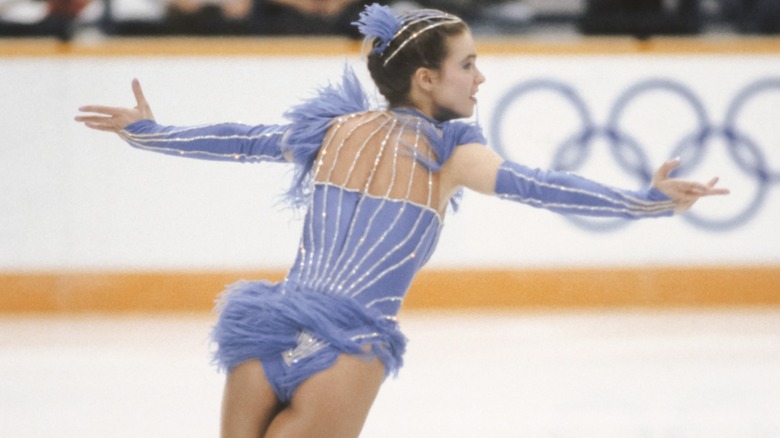
Olympic gold winner Katerina Witt pushed that envelope to extremes. Some of her costumes were so sexy that some of her fellow competitors accused the gorgeous German of trying to score more than technical points with the judges. When she got "cheeky" in a blue feathered showgirl costume that put her backside on display, the ISU created the "Katerina rule" that prevented skaters from showing their hips, abs, or buttocks in competition.
That rule has since been repealed and replaced with the ISU's more vague and subjective "modest, dignified, and appropriate for athletic competition" guideline, per The Cut. Many competitors skate on thin ice with sheer fabric that technically covers the body, but gives the illusion of skin, while others use strategically placed sequins and embellishments. L.A.-based designer Lisa McKinnon, who designed 15 of the 2026 figure skating costumes, told Self that she has one hard and fast rule for staying within guidelines: "Let's not show nipples."
Costumes must not fall apart on the ice
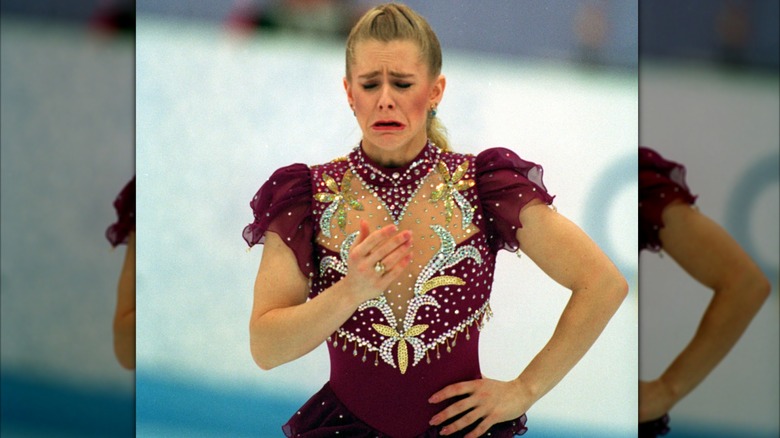
Unlike skaters who often fall apart on the ice following a good (or bad) performance, their costumes cannot. According to the ISU, costumes must not have detachable parts. That means that every sequin, bead, feather, or fringe must stick as well as (or better than) a skater's landing. When you consider the amount of embellishments that adorn most costumes, that's a pretty tall order. It's not that judges don't want skaters to shine on the ice — they just want them to do it safely and avoid awkward figure skating incidents. Even the tiniest stray bead or sequin can cause big problems if a skater's blade hits it.
That rule hasn't deterred skaters who, according to designer Lisa McKinnon, refuse to dull their sparkle. "Every skater wants to stand out in some way or another, and sometimes the sparkle aspect definitely makes you more eye-catching when you step onto the ice," designer Lisa McKinnon told The Cut. "The ice is huge, and it's very white, and you can sort of disappear a little bit."
That's why designers spend hours upon hours creating one costume, making sure everything is perfect before the skater takes the ice. Famed wedding dress designer, Vera Wang, is also a favorite among the skating elite for both her designs and her understanding of the sport. The former skater, who has created some of the most recognizable costumes for both men and women, told Vogue, "You cannot have a wardrobe malfunction—they can lose the Olympics because of it. Everything has to be stitched within an inch of its life."
Theatrical, garish, or over-the-top costumes are frowned upon
The ISU is famous for issuing costume edicts that are, at best, subjective and at worst, vague and unclear. Nowhere is that more evident than in the wording regarding the overall vibe of the costume. The rules here can be more slippery than a freshly Zambonied rink. While the costumes cannot be "garish or theatrical in design," they can "reflect the character of the music chosen," per People.
Consider it the "black tie optional" or "office casual" of the Olympics. It means different things to different people. For example, Katerina Witt's defense of the costume that caused the "Katerina rule" was that it was in keeping with the song choice, "Jerry's Girls." "For this music, you need this costume," she said per the Chicago Tribune. Skating icon Peggy Fleming agreed, "It's a little showy and on the borderline of being inappropriate for amateur competition, but it does reflect her choreography and music," she told the paper.
So where is the line in the ice, so to speak? Maybe it's cultural appropriation. Russian ice dancers Oksana Domnina and Maxim Shabalin were roasted for the loincloths, brown bodysuits, and face paint that they wore for an Aboriginal-themed dance number in the 2010 European Championships. Aboriginal leaders took offense, and the duo toned it down for the Olympics. However, they issued a statement in their defense (per Time) that read, "Our routine was very fair, and we respect this culture. It's very unique, and that's why we chose it."
Female skaters have skirted the issue on pants
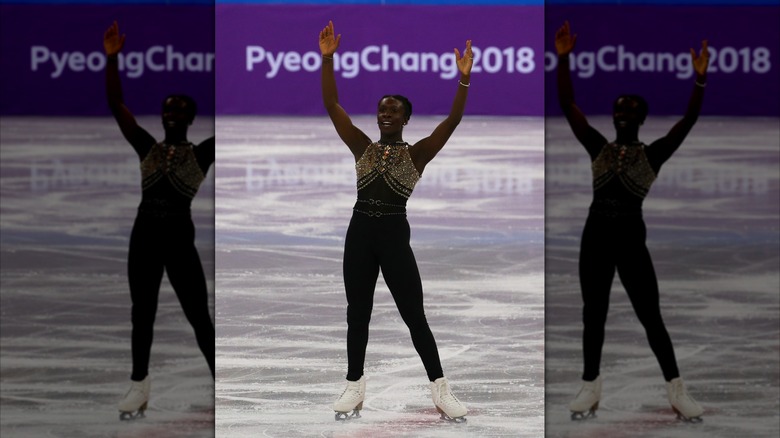
In the world of elite figure skating, Katarina Witt wasn't the only competitor to get new dress codes put into effect. Debi Thomas, who went toe pick to toe pick with Witt, chose a full-body black beaded leotard sans skirt. This caused the ISU to take the modesty rules a step further by banning skirtless costumes for women — period. Both the "Katerina rule" and the skirt rule have since been lifted, opening the door for women to wear pants and unitards.
But, other than a few competitors in the 2022 games, most female skaters don't exercise that right. "I think that there's definitely the mindset that it's a very traditional sport. Also, it's very subjective. I think as athletes, we're all people pleasers," Mirai Nagasu, the first woman from the U.S. to successfully nail a triple axel in the Olympics, told Today.
While that may be true, there may be a simpler reason that women, especially those competing in the singles category, tend to go with the flow of a skirt: ease of movement. Nagasu explained that these skaters like short skirts because of the rotational jumps in their programs. "That's because if you have that much fabric just whipping around, it could slow you down," she said, and added that the single skaters must be "aerodynamic" and "very light on your feet." Female ice dancers, however, keep both skates on the ice and have been known to embrace a longer skirt, unitard, or pants option.
Let's talk tights
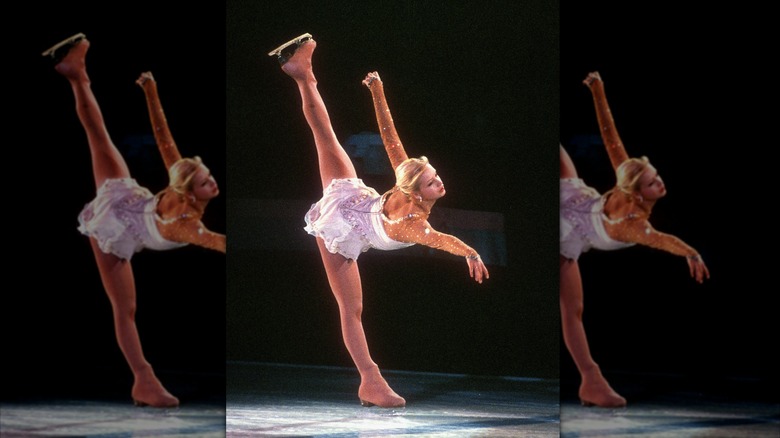
Ever wonder why a female skater's legs often look so long and smooth? That's thanks to the thick, often-nude-colored tights that they wear. These sometimes run all the way down over the skating boot to create the illusion of long, glamorous gams. Interestingly, there is no rule regarding tights for women, which seems strange considering the uproar over skirt length.
So why do so many female competitors choose them? First, they add a layer of warmth and protection. The ice may look as smooth as glass, but when a skater falls while moving at a breakneck speed, cuts and scrapes happen. Also, according to Juliet Newcomer, director of technical services for U.S. Figure Skating, tights can hide a variety of flaws, not just on the skater's legs, but on her skate boot. "We're also supposed to polish our boots when we compete, so if you have them covered, maybe it saves the skaters one step in having to worry about that," she told MPR News.
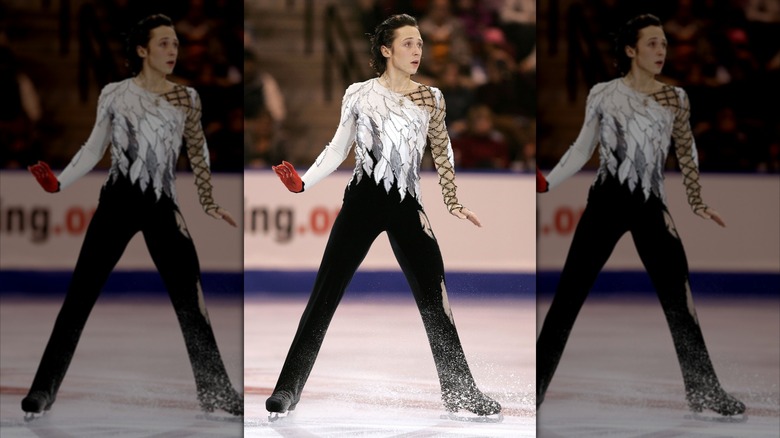
The only legit rule regarding tights is that men are banned from wearing them for reasons that probably fall somewhere within the no nudity and modesty guidelines. Instead, men are relegated to trousers, but we aren't talking loose-fitting jeans or khakis. "They need to be cut and tailored and fit so well that you can see every extension—even if my knee is slightly bent," pair skater Brandon Frazier told Vogue. "It can affect your score [if not]."
Skaters can be penalized for breaking rules
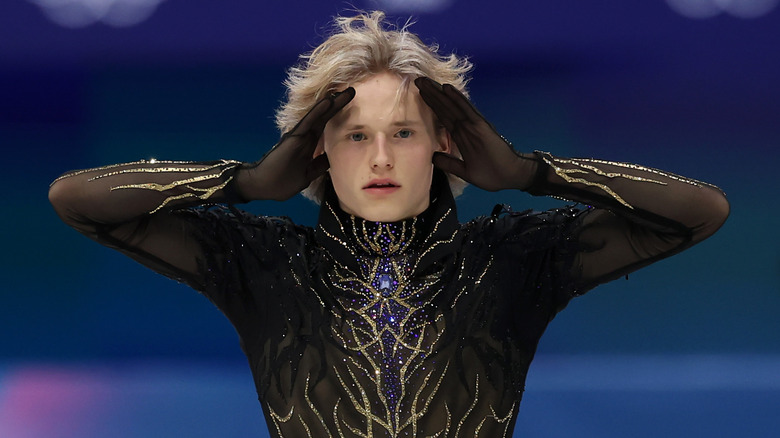
Just because some of the rules regarding figure skating costumes feel open to interpretation, most skaters will err on the side of caution. That's because, if a rule is deemed broken, there could be penalties to pay, in the form of point deductions. And no skater wants to blow years of training over a rogue sequin or a costume that reveals more than just talent. "Usually, the skaters work really hard to make sure they're not going to get deductions," Juliet Newcomer told MPR News. "Usually by the time they get to a U.S. championship or a world championship, they've done enough competition and gotten enough feedback that they're probably not taking any risks in that regard."
At the end of the day, a costume should add to a skater's performance, not detract from it. "The costume should enhance the program and almost not be noticed because it all just gels so well together with how it fits the person, how they're skating, the music, and the choreography," Lisa McKinnon, the designer behind Amber Glenn's sexy short program costume, told Self. Lest you think the ISU is censoring creativity, it should be noted that deductions rarely happen. As international judge Joan Gruber once told The Chicago Tribune, "It is within the rules (to deduct), but I've never seen the rules enforced."
There are no rules around costume cost
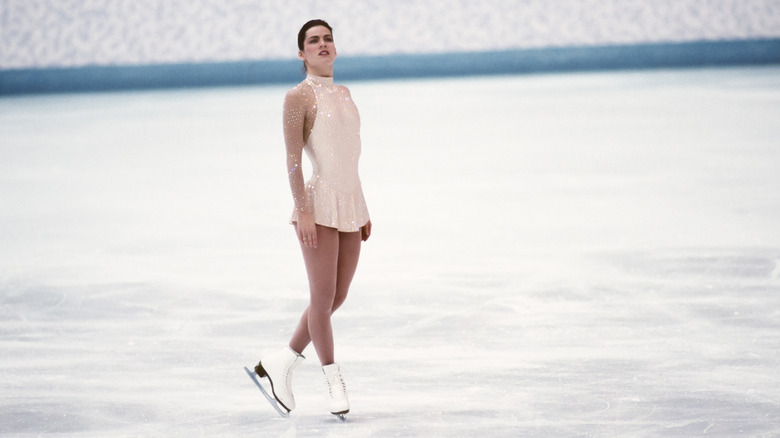
Anyone who saw the movie "I, Tonya" probably remembers the scene where Margot Robbie, as disgraced skater Tonya Harding, is furiously sewing her own costume. The skater was unable to afford a designer dress like her nemesis, the Vera Wang-clad Nancy Kerrigan. And while there is no rule that says skaters must spend a small fortune on designer duds, the contrast between Harding and Kerrigan implied that sometimes skaters are judged before they even step on the ice.
Ice skating is an expensive sport, especially at the elite level. Coaches, rink time, travel, choreographers, and more add up quickly, and that's before the first Swarovski crystal is sewn. Wang, Christian Lacroix, and Oscar de la Renta have elevated the costume game for skaters, taking their artistry from the runways of New York and Paris onto the ice rinks of the world. They work their magic, turning out elaborate, intricate designs that can stand up to a rigorous athletic performance. "Your costume is your armor," Kaitlyn Weaver, choreographer for Olympian Amber Glenn, told ESPN. "You put on a costume, you want to feel like a million bucks. It's what the world sees of you."
That confidence comes at a cost. Lisa McKinnon's creations fall into the $3500-$8000 range. Given the hours of work that go into the costumes, along with what's at stake, it could be worth the investment. As Weaver noted, "The right costuming can't win for you, but it can help."
Skaters costumes and equipment should not feature large branding
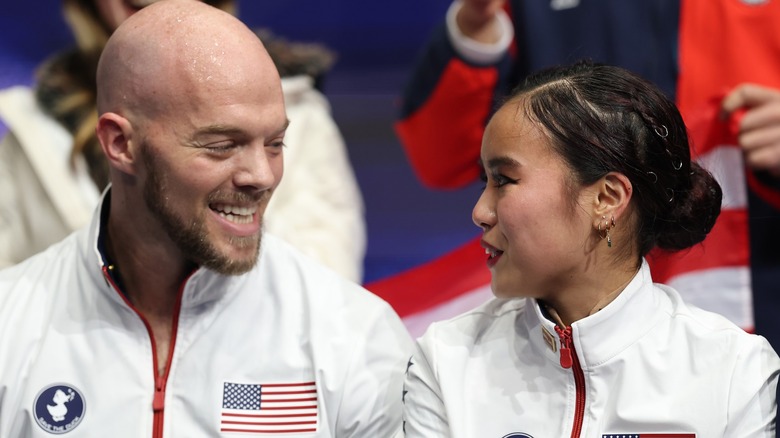
Champion athletes get brand deals and endorsements practically thrown at them. But don't expect to see an Olympic figure skater take the ice in a costume with a giant Nike swoosh down the middle, or in a skate bearing the name of the boot maker in big, bold letters. While they can do what they want off the ice, Olympic skaters are not allowed to turn into walking (or skating) billboards for their favorite athletic brands during competition.
It used to be that no manufacturing or branding of any kind could be worn on a skater's costume. But recently, the ISU voted to allow the branding of manufacturers' logos, but there are rules regarding size and quantity. It's called "field of play" sponsorship branding, and it allows skaters to earn sponsorship funds. According to the new guidelines, typically, only one manufacturer identification is allowed on a costume, accessory, or other piece of skating equipment, and it must fall within the designated (small) measurements. In other words, blink, and you'll miss it.
Once the games are underway, athletes cannot mention the brands that sponsor them, nor can they wear any branded clothing that isn't official while on Olympic property. It's a slope that's more slippery than the ice they skate on. So you most likely won't see members of the U.S. Olympic Figure Skating Team wearing anything other than the official Olympic swag.