

Tragic Details About Judy Garland's Childhood Are Heartbreaking

Judy Garland (born Frances Gumm) is a Hollywood legend who will be forever cherished in history because of her roles in iconic films like "The Wizard of Oz," "Meet Me in St. Louis," and "A Star is Born." Sadly, although some of her characters got happy endings on screen, she has one of the most tragic real-life stories of any woman in Hollywood history. Garland died on June 22, 1969, at the age of 47 in her London flat from an accidental overdose. She was discovered by her husband, Mickey Deans, after he broke down their locked bathroom door.
Garland's adult life was undeniably tragic. She left behind three children: Liza Minnelli, Lorna Luft, and Joey Luft, who were 23, 16, and 14 at the time of her death. Garland's tragic end seems almost inevitable if you look at her early life. People started abusing her when she was as young as 10 years old. Her mother forced her to perform while sick and gave her drugs to control her energy levels. Although that little girl would go on to become one of the biggest stars in Hollywood, she never stopped paying an exorbitant price for the fame that she wasn't even old enough to decide she wanted for herself.
Judy Garland had an intense stage mom
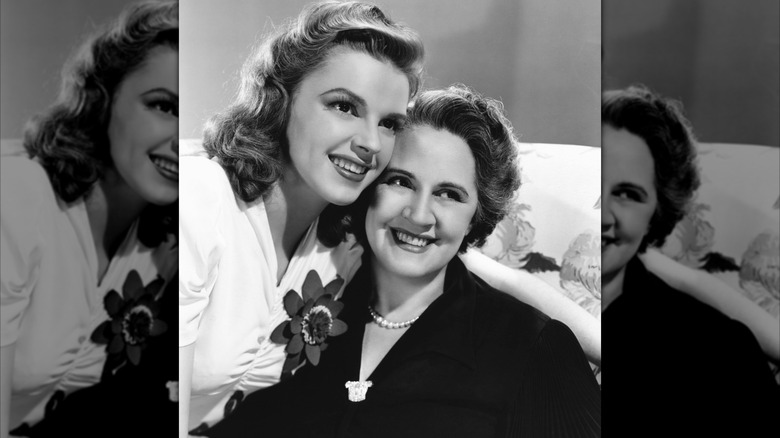
Parents sometimes want to live vicariously through their children, and that may have been the case with Judy Garland's mother, Ethel Gumm. Gumm had two elder daughters, Mary Jane Gumm and Virginia Gumm, and put Garland in a vaudeville act called The Gumm Sisters with her siblings from the time she was 2 years old. Ethel, herself a less successful vaudeville performer, managed the act. Ethel also reportedly gave Garland "pep pills and sleeping pills" starting from the age of 10 as needed when she was on the road, per The Independent. These actions would cause Garland to have a lifelong dependency on drugs, all because Ethel was desperate for her daughters to achieve the fame she never achieved.
Garland reportedly expressed mixed feelings about Ethel in interviews, but was quoted as calling her "the real Wicked Witch of the West," referring to one of the villains in her most famous movie, "The Wizard of Oz." "My mother was truly a stage mother. A mean one," Garland told Barbara Walters in a 1967 interview. "She was very jealous because she had absolutely no talent. ... She would stand in the wings ... and if I didn't feel good ... she'd say, 'You get out and sing or I'll wrap you around the bedpost and break you off short!' So I'd go out and sing."
MGM forced her to starve herself
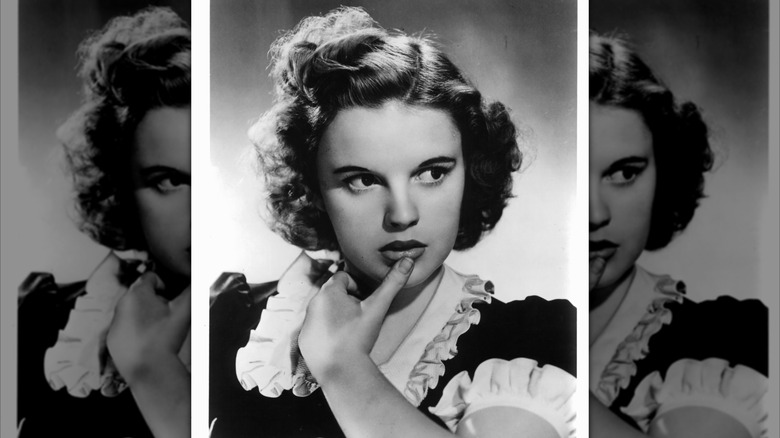
The Hollywood star "Judy Garland" was officially born in 1935 when she signed with MGM around the age of 13 and was advised to change her name. She and her sisters had changed their last name to Garland years before, and she chose the name Judy after the 1934 Hoagy Carmichael song. But her life didn't become easier just because the studio's co-founder, Louis B. Mayer, was invested in making her a star. In fact, it got arguably worse because MGM reportedly abused her. After her first musical, "Pigskin Parade," she was reportedly described by a producer of the film as a "fat little pig with pigtails"(via the Irish Independent).
Garland was put on a brutal diet by the studio that was reportedly so extreme that people took plates of food away from her as she went for the first bite. MGM executives would allegedly exchange memos about her fluctuating weight, and when Garland starred in "The Wizard of Oz," because the studio's first choice was unavailable, a blue and white checkered dress was chosen as Dorothy's costume to hide her figure. Her eating issues reportedly lasted her whole life. Movie studios of that time had a history of mistreating actors, and withholding food wasn't the only way MGM abused Garland.
She also developed a drug addiction as a teenager that was encouraged by MGM
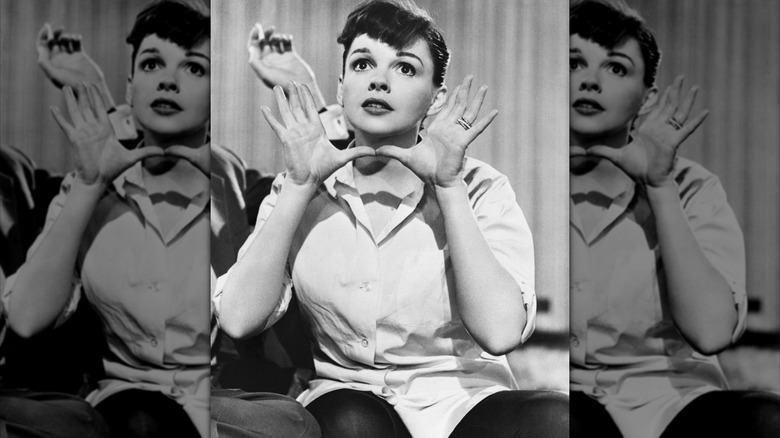
MGM executives reportedly continued Ethel Gumm's pattern of giving Judy Garland drugs when she was working on "The Wizard of Oz" at the age of 17. The amphetamines and barbiturates were supposedly meant to help her keep up with the film's demanding shooting schedule. Garland's MGM contract was dropped early, and when she was in her mid-20s, she made a Hollywood comeback in the Warner Bros film"A Star Is Born" in 1954.
After Garland's death, a source told Roger Ebert that she was clean for the first few months on the set of the film. "Everybody had heard about how temperamental she was, how impossible she was to work with, but in fact she was sunny and calm. She was off the pills, looking good, and working well," the insider said. But then the film fell behind schedule and went over budget, so the studio started overworking Garland.
Overnight, a nurse appeared on set, which the source recalled "almost always meant a star was on dope." She explained: "They were going back to the same so-called solution of 10 or 15 years ago: If Garland was in trouble, or you thought she might be, put her on pills. Speed her up, slow her down. Run her like a clock." The actor was reportedly never the same again. According to Garland's daughter, Lorna Luft, as published in Vanity Fair, by 1959, a doctor told Garland that alcohol and addiction had so negatively impacted her health that she was a "permanent semi-invalid" who would never work again.
At a young age, Judy Garland was sexually harassed by Hollywood executives
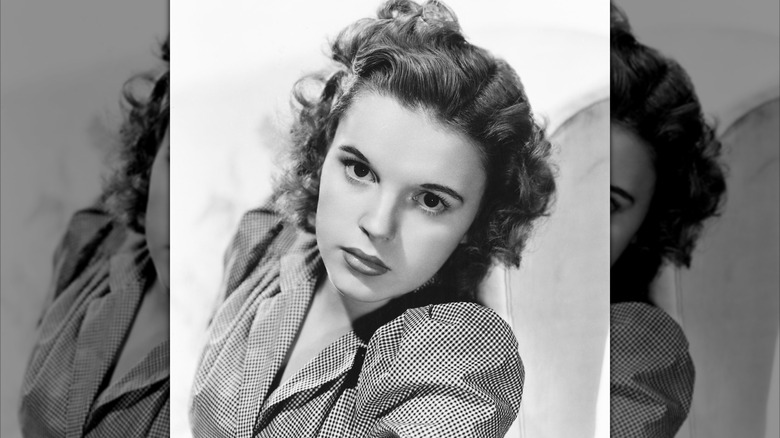
In November 2017, The Seattle Times published details about the sexual harassment Judy Garland reportedly endured at the hands of Hollywood executives. Garland's own words about the incidents were discovered by a Garland biographer in an unfinished memoir that was only 68 pages. "Between the ages of sixteen and twenty, Judy herself was to be approached for sex — and approached again and again. 'Don't think they all didn't try,' she said," the biographer Gerald Clarke wrote in his book, "Get Happy: The Life of Judy Garland."
One of Garland's abusers was Louis B. Mayer, the co-founder of MGM Studios, who famously loved her voice so much that he signed her in the middle of her audition without making her do a screen test. In her memoir, Garland recalled Mayer touching her left breast every time he complimented her voice under the guise of praising her for singing from her heart. "I often thought I was lucky that I didn't sing with another part of my anatomy," Garland wrote in her book, per the biography. She eventually confronted the executive and told him to stop. He cried and confessed love for her.
Garland also recalled being propositioned for sex in another unnamed executive's office. When she refused him, he began screaming at her as she was leaving. "Listen you — before you go, I want to tell you something. I'll ruin you and I can do it. I'll break you if it's the last thing I do," the man said, per Garland.
If you or anyone you know needs help with an eating disorder, addiction issues, or may be the victim of sexual assault, or has experienced a hate crime, contact the relevant resources below:
-
The National Eating Disorders Association website, NEDA's Live Helpline at 1-800-931-2237, or 24/7 Crisis Support via text (send NEDA to 741-741).
-
The Substance Abuse and Mental Health Services Administration website or SAMHSA's National Helpline at 1-800-662-HELP (4357).
-
The RAINN website or RAINN's National Helpline at 1-800-656-HOPE (4673).