

The Tragedy Of Paul Newman Is Just Plain Sad
We may receive a commission on purchases made from links.
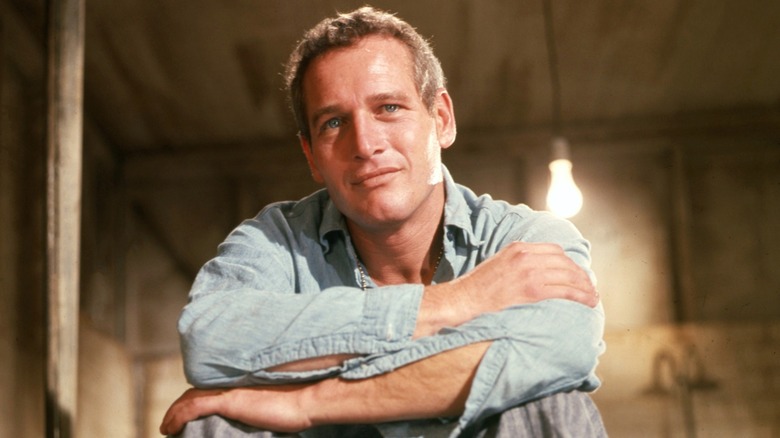
With his piercing blue eyes, mischievous swagger, and undeniable acting chops, it's no wonder that Paul Newman became one of the cinema's most beloved leading men and a certified movie star during his Hollywood reign. The legendary performer famously headlined a slew of classics hits including "Cool Hand Luke," "Butch Cassidy and the Sundance Kid," and "The Sting," brilliantly transforming from a kid from Ohio to one of the industry's most sought-after performers.
Newman's dazzling career spanned more than five decades, and his down-to-earth demeanor attracted the appreciation of fans all around the world; yet his road to stardom was far from easy. The old Hollywood star experienced a great deal of tragedy throughout his life, from a tumultuous childhood to a harrowing experience serving in World War II and dealing with the many perks and pitfalls that come with global fame.
His enduring relationship with his wife and fellow actor, Joanne Woodward, was often the subject of media fascination, as was his penchant for drinking and his devotion to his philanthropic interests. Fondly described as "one of the last of the great 20th-century movie stars" by The New York Times, Newman's death in 2008 marked the end of an era in Tinseltown, though his life story continues to captivate the masses.
Paul Newman felt like an outcast growing up
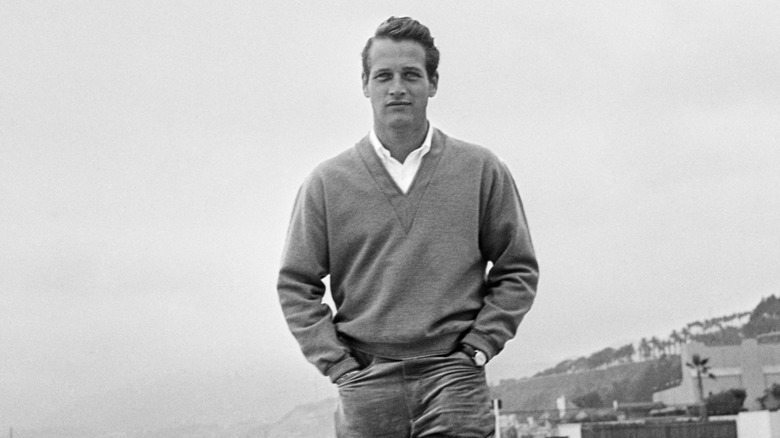
Paul Newman was born on January 26, 1925, in Cleveland, Ohio to mother Theresa Garth and father Arthur Newman, who ran a sporting goods store. Throughout his childhood, Paul felt like an outcast and didn't fit in amongst his peers as a young Jewish man, and he was often subjected to antisemitic insults. "If you were Jewish, some avenues were shut to you," Newman revealed in his posthumous memoir, "The Extraordinary Life of an Ordinary Man" (via Remind Magazine), adding that the mistreatment "hurt me and my brother a great deal."
Later, when Newman enlisted in the Navy, he got into a fist fight with a fellow serviceman after he was called an antisemitic slur. "It's probably not a coincidence that when I served in World War II the only bloody fight I got into involved an antisemitic taunt," he said in his memoir, according to Newsweek. Growing up, Newman was very hard on himself and didn't feel naturally talented at anything until he discovered his love of acting.
"I got no emotional support from anyone," Newman said in the book (via The New Yorker). "I wasn't naturally anything. I wasn't a lover. I wasn't an athlete. I wasn't a student. I wasn't a leader." He never felt good enough in the eyes of his father (who died in 1950), as he wanted his son to take over the family business. But Newman had other ambitions, and one of his biggest regrets was his father never seeing him succeed.
He nearly died while serving in World War II
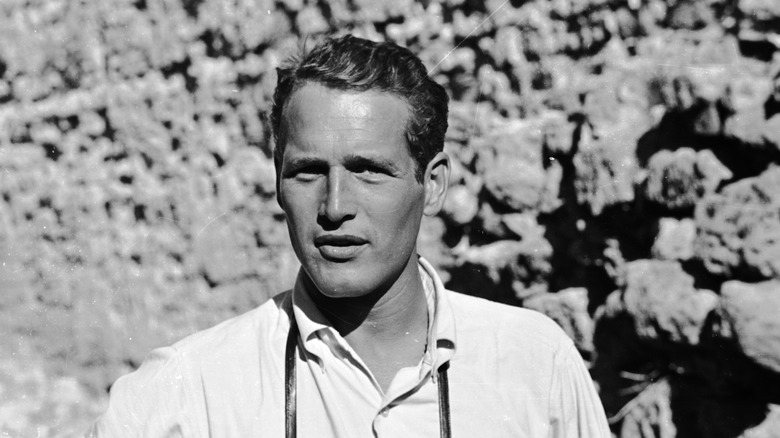
After graduating from Shaker Heights High School in 1943, Paul Newman attended Ohio University for a short period before enlisting in the United States Navy during World War II. When he was unable to be a Navy pilot due to his colorblindness, Newman helped train combat pilots and air crewmen before learning how to be a gunner and radioman. In 1944, he was sent to Naval Air Station Barber's Point, Hawaii, and assigned to replace torpedo squadrons before being designated to the USS Bunker Hill.
Newman narrowly avoided the bloodshed of the Battle of Okinawa when he and his fellow unit members were grounded after the pilot had an earache, sparing the silver screen legend from an almost certain death. All the gunners whom Newman had served with perished during a kamikaze attack in the violent battle, and he would subsequently draw upon this harrowing incident when filming the 1956 war drama "The Rack."
The film's screenplay writer and Newman's close friend, Stewart Stern, revealed to Roger Ebert that the movie star had used his friend's gruesome death in the battle for inspiration for the role. "One of the planes on the airstrip had just started its engines, and after this guy had landed he took a few steps back on the tarmac without looking," he recounted to the movie critic. "Paul was watching as his friend was sliced into pieces by the plane's propeller, and he used that memory for 'The Rack.'"
Paul Newman had multiple run-ins with the law
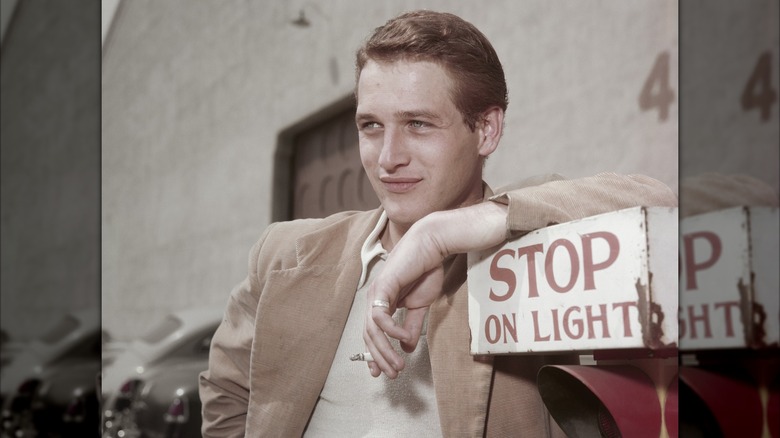
Paul Newman was known to get a little rowdy when he was hitting the bottle, and as a result he had multiple run-ins with the law throughout his life, including when he was first arrested in 1946 at the age of 21. He had been detained along with five of his classmates after a rambunctious night of drinking while attending Kenyon College in Gambier, Ohio, Newman's wild shenanigans ultimately impacting his football scholarship.
"I got thrown in jail and kicked off the football team. Since I was determined not to study very much, I majored in theater the last two years," he told Interview magazine (via Biography); Newman eventually graduated with a Bachelor of Arts in drama in 1949. The future Hollywood great was once again arrested in 1956 after dining out in Roslyn, New York, Newman and a group of friends taking a late night ride in his convertible and both driving over the restaurant's shrubbery and running a red light.
After being taken to the police station, an intoxicated Newman allegedly became remorseful once in his cell. "Don't lock the door on me," he reportedly begged the officers, according to the Daily Mail. "I don't like locked doors." Newman was eventually released and the charges were dropped.
He fell in love with Joanne Woodward while still married
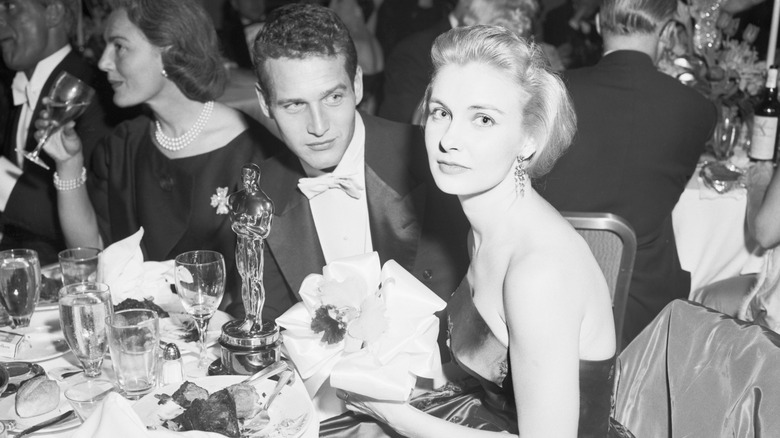
Paul Newman and his first wife, Jackie Witte, met while they were both doing summer stock theater in Wisconsin. They married in 1949 and welcomed three children together. However, their union was short-lived, as Newman famously fell for aspiring actor Joanne Woodward when she was an understudy in Newman's debut Broadway show, "Picnic," in 1953. The two developed a deep romantic connection with one another that continued throughout the ensuing years, despite his marriage to Witte — Newman and Woodward's love story is still known as one of old Hollywood's most scandalous affairs.
After Newman and Woodward filmed "The Long, Hot Summer" together in 1957, he divorced Witte to be with Woodward and they went on to become Hollywood's golden couple, their marriage lasting 50 years. Despite his relief over being able to finally share the truth about his relationship with Woodward with the world, the movie star felt "guilty as hell" about his divorce and confessed in the book "Paul Newman: A Life" (via Country Living), "And I'll carry it with me for the rest of my life."
The pair tied the knot in Las Vegas in January 1958 and enjoyed a private life in an 18th-century Connecticut farmhouse, welcoming three daughters during their decades-spanning marriage. "He's very good looking and very sexy and all of those things, but all that goes out the window and what finally is left is if you can make somebody laugh, then that's very important," Woodward said on the "Today" show in 2002 (via People). "And he sure does keep me laughing."
He famously feuded with fellow star Steve McQueen
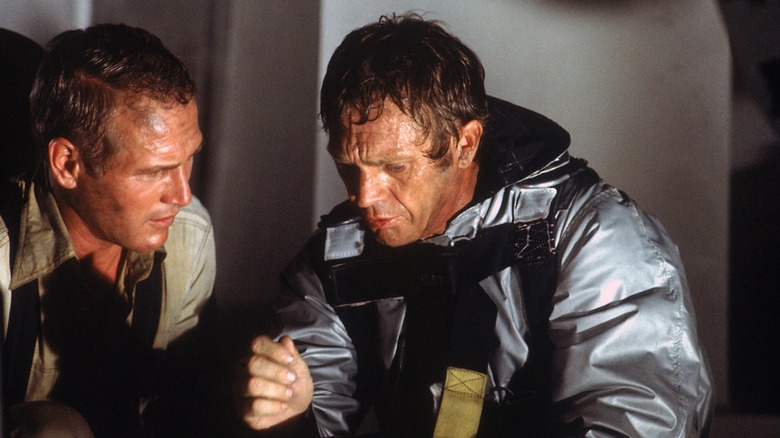
Despite seeming like they were cut from the same cloth as suave, car-loving Hollywood leading men, Paul Newman had an infamous rivalry with the "King of Cool" Steve McQueen during filming of 1974's "The Towering Inferno." Both actors were given a $1 million salary, but McQueen allegedly felt slighted by production that he had 12 fewer lines than his fellow star Newman, prompting him to go to the screenwriter and demand the same amount of lines and the final word in the film.
An incensed Newman declared McQueen "chicken sh*t" for his behind-the-scenes tantrum, and he even complained to friend A.E. Hotchner during production that "Every day here is like going to the dentist," according to the memoir "Paul and Me" (via Best Life). Producers for "The Towering Inferno" also faced quite the uphill battle when it came to editing its movie poster, as they ended up giving both the dueling men top billing by strategically placing Newman's name up higher but listing McQueen's first.
Coincidentally, the two were supposed to team up for the 1969 classic "Butch Cassidy and the Sundance Kid," but McQueen walked away and was replaced by Robert Redford after he balked at not receiving top billing over Newman. The Oscar-nominated hit ultimately became regarded as one of the greatest Westerns of all time and a beloved Newman staple, and it also kicked off the actor's enduring friendship with Redford, who similarly faced his own tragedies in life.
He tragically lost his son from a drug overdose
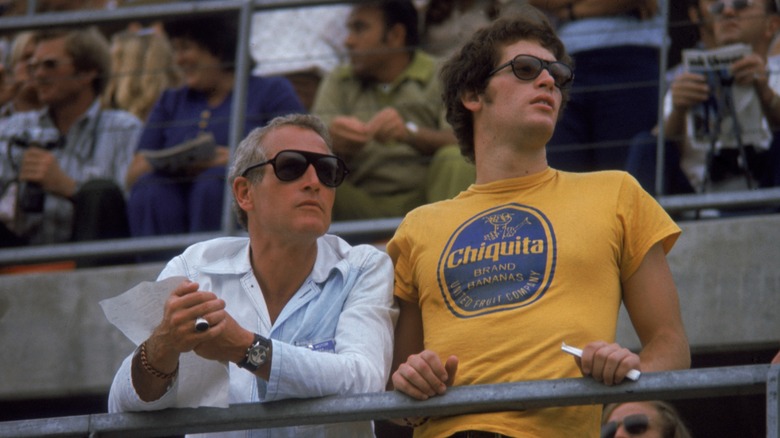
Paul Newman had been open about how devastated he was by the loss of his son Scott, who had sadly died in 1978 from a drug overdose when he was only 28. Scott had struggled while growing up and was expelled from private schools, dropping out of college to become a stuntman for some of his father's films. Like his famous dad, Scott drank heavily and had bouts with the law, and he always felt like he was trapped in Paul's shadow.
"I'm Paul Newman Jr, you know what I mean? But I don't have his blue eyes. I don't have his talent. I don't have his luck. I don't have anything ... that's me," Scott confided to the family's close friend and writer A.E. Hotchner (via The Times). Following a motorcycle accident, Scott became addicted to painkillers, and on November 20, 1978, he died from an accidental drug and alcohol overdose. After his shocking passing, Newman created the Scott Newman Center in his honor, raising awareness of drug addiction.
Newman was never the same after the celeb's child tragically passed away, as he wrestled with his guilt for the rest of his life. "Was there some way I might have told him he didn't have to be like me? That he didn't have to do macho things and could just be himself?" he said in his posthumous memoir (via People). "Many are the times I have gotten down on my knees and asked for Scott's forgiveness."
Paul Newman used alcohol as a crutch
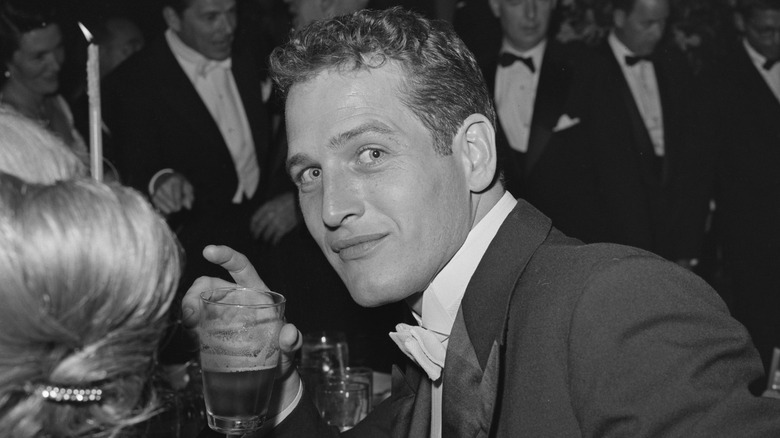
Paul Newman's penchant for alcohol (and more specifically beer) was widely known in the entertainment industry, and he often used drinking as a crutch when he became overwhelmed in his personal and professional life. His daughters would later call Newman a "high-functioning alcoholic" in the docuseries "The Last Movie Stars" (via The Cinemaholic). He apparently would often get blackout drunk when they were young children, leading his wife, Joanne Woodward, to kick him out of their home and demand he return sober or not come back at all.
Newman eventually agreed to scale back his drinking and to stop hard liquor altogether, and the death of his son Scott in 1978 prompted the actor to further evaluate his choices. His father, Arthur, had been a heavy drinker just like he'd become, and Scott seemingly inherited the family's fondness for alcohol. He ultimately devoted himself to raising awareness about substance abuse with the Scott Newman Center, though he was never able to give up beer.
Much of Newman's dependency on alcohol stemmed from his complicated relationship with his acting career. "I never enjoyed acting, never enjoyed going out there and doing it," he confessed in his memoir (via Express). "It's probably a reason I drank as much as I did. The exuberance, the danger, the exultation of performing was multiplied by a factor of 80. If I got it just from acting, I wouldn't have had to go out and get bombed."
He faced deep insecurities despite his movie star status
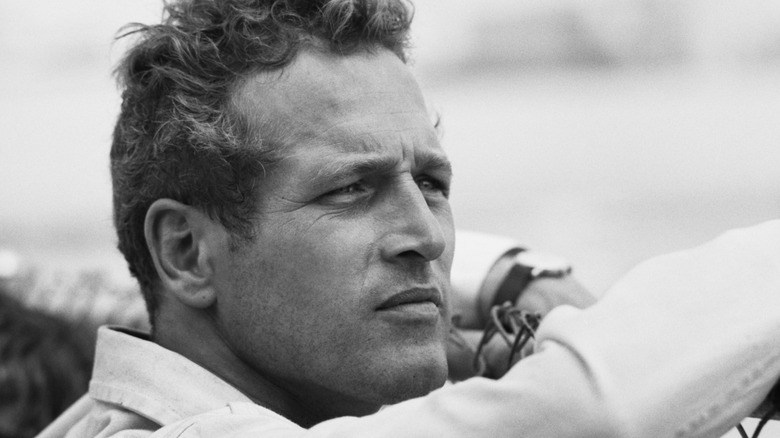
Despite being one of Hollywood's most beloved figures, Paul Newman was plagued by deep insecurities throughout his life and didn't enjoy the fame that came with being a movie star or how people thought he had a picture-perfect life. In the late '80s, Newman collaborated with friend and screenwriter Stewart Stern for five years to pen his memoir, where he opened up about being among the many celebrities suffering from anxiety, while reflecting on his childhood, career, and personal life.
His youngest daughter, Clea Newman Soderlund, discussed in an interview with the BBC how Newman felt his hard work as an actor was largely overshadowed by his handsome looks, which contributed to his overall insecurities. In his intimate memoir, the leading man wrote (via Express): "It is difficult for a person like me, who has always had a terrible sinking feeling in the pit of his stomach that his success comes simply from being fortunate enough to be born looking a certain way."
Even with endless accolades, successful films, and the adoration of his peers and fans, Newman never felt good enough. "It was kind of heartbreaking to him that it felt like, no matter how hard he worked, he wasn't going to get anywhere: meaning he wouldn't get past that pretty face and those beautiful eyes," Soderlund told the BBC, before later revealing that Newman "felt much better about himself as he got older" and that he "worked hard on himself" later in life.
Paul Newman died of lung cancer at 83
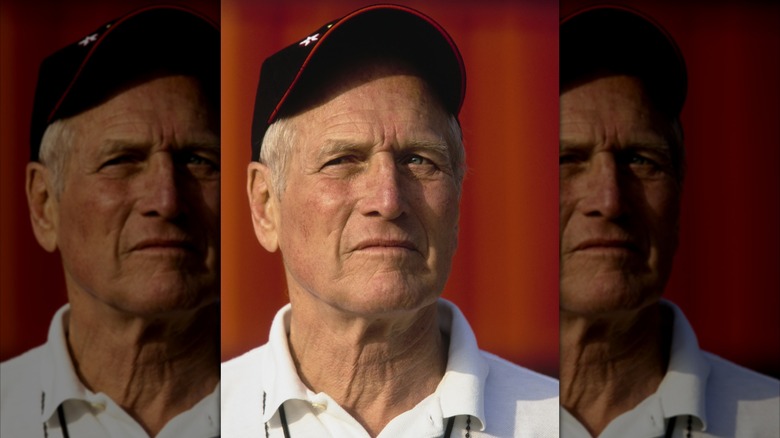
In June 2008, news spread that cinema legend Paul Newman had been diagnosed with lung cancer and was undergoing treatment, as he had been a heavy smoker throughout most of his life until he quit smoking in 1986. Newman's close friend and business partner, A.E. Hotchner, confirmed that the actor had first discovered he had the disease 18 months prior to the public finding out. The previous year, his wife Joanne had been diagnosed with Alzheimer's disease, during which Newman also announced he was retiring from performing.
"You start to lose your memory, you start to lose your confidence, you start to lose your invention. So I think that's pretty much a closed book for me." Newman told "Good Morning America" (via BBC) about his decision to walk away from acting. Newman died at 83 in his Connecticut home on September 26, 2008 from complications from the illness; his friends, family, and fans mourned the loss of the Hollywood icon.
In a statement to Variety, Newman's five daughters described their father as "a rare symbol of selfless humility, the last to acknowledge what he was doing was special. Intensely private, he quietly succeeded beyond measure in impacting the lives of so many with his generosity." His longtime friend Robert Redford also released a statement to People upon his sad passing: "There is a point where feelings go beyond words. I have lost a real friend. My life — and this country — is better for his being in it."
He was posthumously accused of adultery
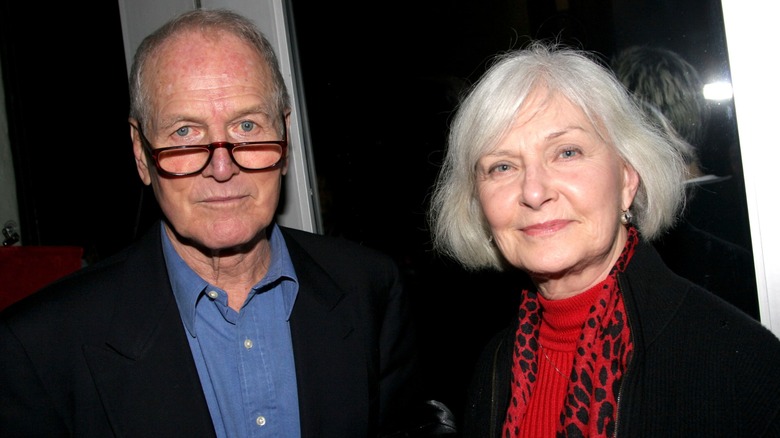
Shortly after Paul Newman's passing in 2008, the Hollywood great was accused of having an 18-month affair with a Los Angeles journalist Nancy Bacon while making 1960's "Butch Cassidy and the Sundance Kid" — film critic Shawn Levy made the claims in his controversial biography "Paul Newman: A Life." The salacious revelations sparked immediate blowback from those in the industry and deeply upset his widow, Joanne Woodward, with the Irish Independent reporting that she was "distraught at the allegations."
According to the outlet, a friend of the couple stated, "Joanne is devastated and furious. She cannot understand why this cruel book is being written about Paul," and added that "Joanne and Paul had one of the longest, happiest marriages in Hollywood." Many people, including those close to the Newmans, were outraged by the allegations, especially since the accusation of a love affair came after his death and Joanne's Alzheimer's diagnosis. The biography was also written without the approval of the actor and his family.
It remains purely speculative whether he had the alleged affair, and the accusation does not take away from the fact that Newman was one of the industry's most celebrated figures. The silver screen icon had endless accolades, including an Academy Award and six Golden Globes, was a passionate philanthropist, political activist, and a devoted family man who has left his mark on the cinema. Newman was able to overcome unfathomable hurdles in his personal life to become a Tinseltown titan.