

Decade-Defining '90s Pop Culture Moments We Just Can't Forget
The following article includes discussions of murder.
Ahhh, the 1990s. For those who grew up during the decade, plenty of golden memories of the time pop up like no time has passed at all: using channel 3 to watch TV, choosing which side of double-sided magazine posters to hang on the bedroom walls, and visiting Blockbuster every Friday night to rent a new movie are just a few highlights. Between celebrity scandals and the emergence of teen stars who are unrecognizable now, the '90s were truly a time to be alive.
When it comes to the internet, there's one big blessing (which, depending on how one uses the Internet, may also double as a curse): When something gets out there, it's generally there to stay. In that sense, the internet has made it incredibly easy for us to reminisce about the past through old photos, interviews, videos, and everything in between. There were some incredible pop culture moments in the '90s that continue to affect the world as we see it today, serving as proof that, whether good or bad, some ideas and events truly never die.
Michael Jackson performs the Super Bowl XXVII Halftime Show
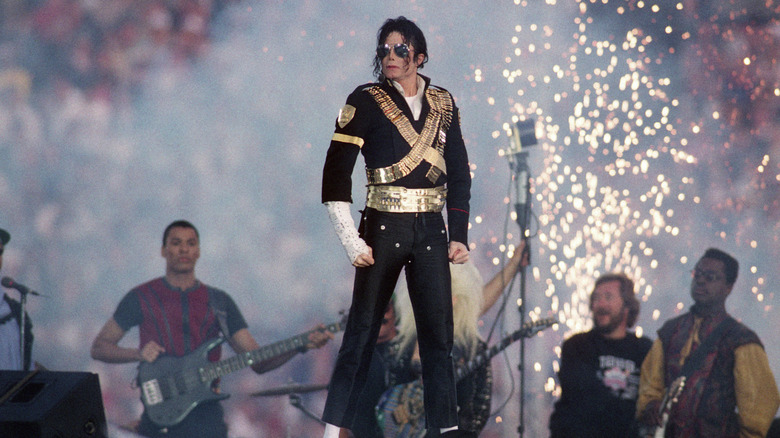
Michael Jackson, aka the King of Pop, was one of the most famous people in the world in the 1990s — Jackson was a global icon for most of his life, actually, especially after he released "Thriller" in 1982. In the '90s, Jackson released two albums full of absolute bangers: "Dangerous" (1991) and "HIStory" (1995). Outside of music, Jackson also entered a high-profile relationship with Lisa Marie Presley in 1993.
There was another big cultural moment that Jackson delivered in the '90s, again in 1993: on January 31, Jackson performed the Super Bowl XXVII Halftime Show (FYI, the Dallas Cowboys won the game). Jackson, who reportedly demanded complete creative control in exchange for the performance, delivered one of the best Super Bowl shows yet. Between the flashy pyrotechnics and Jackson's message of hope and unity, the entire production was a showstopper.
The best and most impactful part of the entire thing was Jackson's entrance, though. When Jackson popped up on stage, he didn't immediately burst into song. Instead, he stood still for almost two minutes as the crowd cheered louder (available to watch on YouTube). Over 30 years later, it's been impossible for someone to pull off a move even remotely similar.
Backstreet Boys and NSYNC redefine the boy band genre
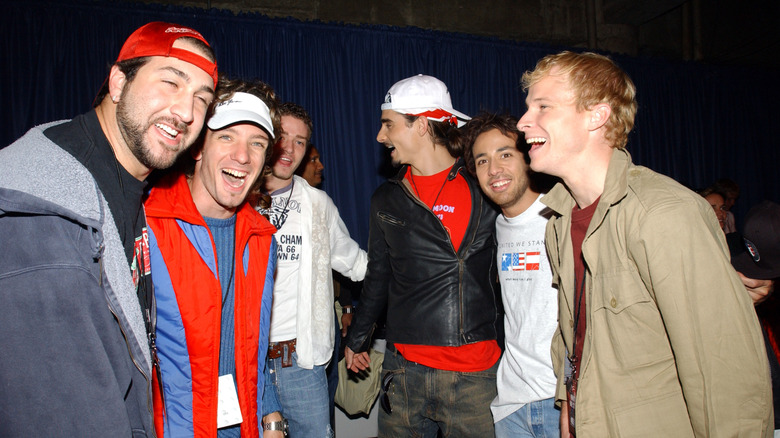
Boy bands existed long before the 1990s — Michael Jackson was a member of The Jackson 5 before he found individual stardom, for instance — but it wasn't until groups like the Backstreet Boys and NSYNC emerged that a distinct evolution emerged. The Backstreet Boys formed in 1993, while NSYNC formed in 1995; both groups were from Orlando, Florida, and managed by Lou Pearlman. They quickly climbed the charts and amassed massive followers with their respective pop hits, tight choreographed dance sequences, and fun concerts.
Throughout the '90s into the early 2000s, The Backstreet Boys and NSYNC were engaged in a real, albeit manufactured, rivalry. Any hard feelings eventually dissipated with age and industry experience; the two groups interact semi-frequently today and have collaborated at least once, although NSYNC has technically been on hiatus since 2002. In 2025, 30 years after NSYNC's debut, Nick Carter told Parade, "We've talked about [collaborating] a ton, actually ... It just hasn't lined up yet."
Friends becomes a global phenomenon
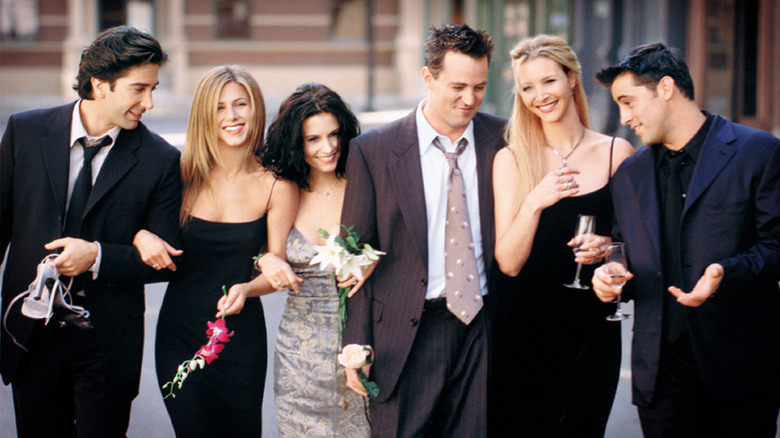
On September 22, 1994, one of the most famous sitcoms in television history premiered on NBC. Created by David Crane and Marta Kauffman, "Friends" revolved around a very simple premise: six close friends in New York City whose lives were simultaneously average and extraordinary. The sitcom produced 10 seasons over 10 years and quickly dominated the latter half of the '90s for its relatable characters, strong writing, and high rewatchability.
"Friends" didn't just have a massive impact on the '90s, it cultivated a strong enough legacy to still build upon decades later. In 2021, for instance, "Friends: The Reunion" dropped on HBO Max and was watched by approximately 29% of TVs the day of its release, a massive number. In the United Kingdom, it became the most-watched program ever on U.K. network Sky One, with approximately 5.3 million viewers the day of its release.
An especially tragic detail concerning the "Friends" cast occurred two years later in 2023, when Matthew Perry (who portrayed Chandler Bing) unexpectedly died. Perry's co-stars released a joint statement that referred to the group as a "family" (via People) while Crane and Kauffman said, in part, "[H]e was the sweetest, with a giving and selfless heart."
Titanic becomes the first movie to gross over $1 billion
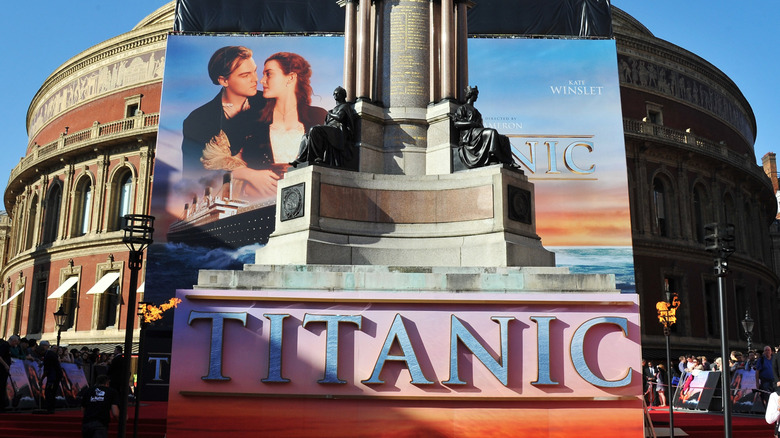
On December 19, 1997 James Cameron's "Titanic" was released in the United States. Headlined by Kate Winslet and Leonardo DiCaprio, the epic historical romance mixed fact with fiction to tell the story of the Titanic's infamous 1912 sinking. "Titanic" was the first movie to gross over $1 billion in original box-office sales. According to The Telegraph, the exact number stands at $1,843,201,268. "Titanic" was actually the highest-grossing movie of all time until 2009, when it was beaten by another Cameron film: "Avatar" (2009).
Considering the movie's success and how it launched Winslet and DiCaprio's careers, it's hard to believe that Jack was almost played by a different actor. With the film's 30th anniversary around the corner, no official celebrations have been announced just yet. Cameron has been busy not just with other works, but with exploring the ocean's deep waters. "I've seen plenty of aliens," Cameron joked to NPR in 2012. "I've done lots of deep dives, and I've seen stuff that I certainly never could have imagined."
Beanie Babies take the toy world by storm
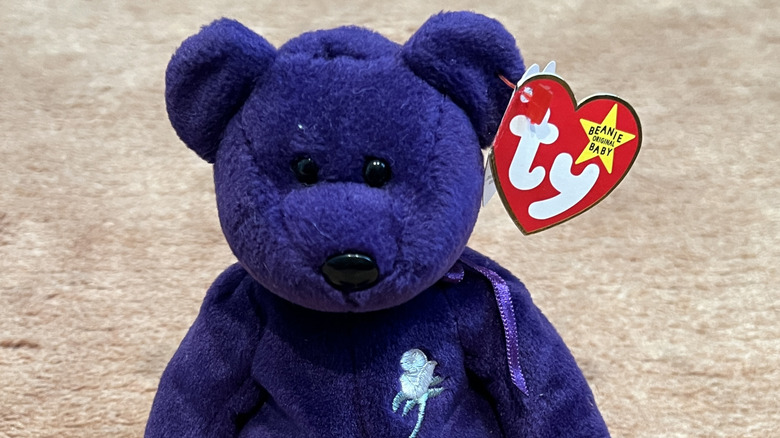
Beanie Babies were one of many toys that were all the rage in the 1990s — Polly Pocket, Tamagotchi, and Doodle Bear are just a few honorable mentions. Created by Ty Warner of Ty, Inc., Beanie Babies were first released in 1993 and initially faced a slow reception. It took a few years, but these little understuffed bears eventually became a hit in the late '90s due to their high collectability and low supply: According to Funding Universe, Warner allowed only 36 units of each bear to be sold in each store per month in 1996.
Beanie Babies set several precedents when they developed into an all-out craze, both in the name of pop culture and the free market. Ty, Inc. created one of the first e-commerce websites dedicated exclusively to one product, which helped drive up interest and overall sales. Another extraordinary thing they did was intentionally retire specific Beanie Babies, which gave way to frenzied trading, increased value in collections, realistic-looking fakes, and even some crime. In 1999, Ty, Inc. announced that Beanie Babies would be "retired" come 2000. After a lot of unsurprising uproar, the company took it back a few months later and instead vowed to release new bears.
The Disney Renaissance produces a slew of successful animated musicals
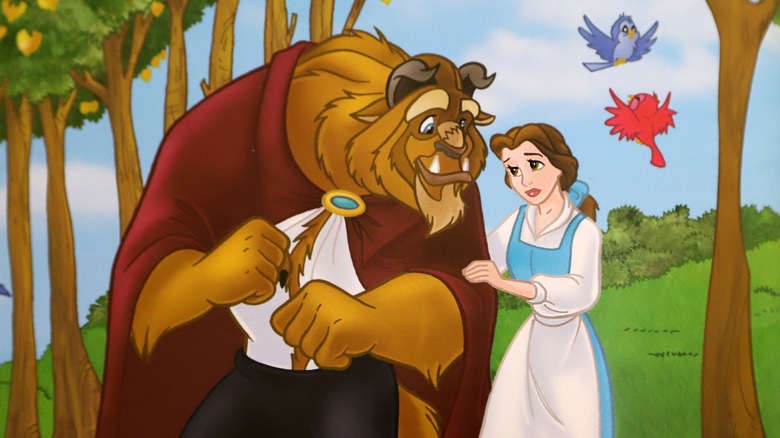
Walt Disney Animation Studios (then called Walt Disney Feature Animation) completely dominated the animated musical genre in the 1990s, so much so that the nickname "Disney Renaissance" was coined. Between 1990 and 1999, Disney released a slew of now-iconic movies like "Beauty and the Beast" (1991), "The Lion King" (1994), and "Mulan" (1998), which arguably changed Disney movies. These movies were critical and commercial successes across the board, raking in millions of dollars and dozens of award nominations.
Between their respective box-office numbers, hilarious one-liners, and catchy songs, each and every one of these Disney flicks made an enormous impact on the animation industry and pop culture as a whole. Try and find someone today who hasn't watched at least one feature under the Disney Renaissance umbrella — we'll wait. Kids and adults from any era can enjoy these particular '90s movies.
The first Pokémon games are released for Game Boy
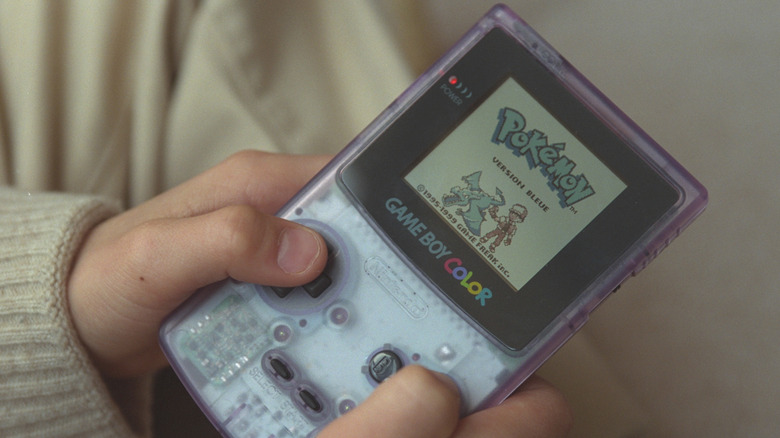
Created by Satoshi Tajiri, the "Pokémon" franchise officially kicked off on February 27, 1996: That day, people were introduced to Pikachu and dozens of other creatures when the first video games, "Pokémon Red" and "Pokémon Green," were released in Japan. These games were released for the Nintendo Game Boy and later the Game Boy Color; the latter was first released in 1998. Pokémon and the Game Boy Color essentially shot to fame at the same time, so from then on, more games and consoles were born.
The rest, as they say, is history. When it comes to "Pokémon" in particular, the franchise has expanded exponentially and has made a significant mark on pop culture, somewhat similar to "Harry Potter"—if there's a place to insert Pikachu and other Pokémon, best believe they will be inserted. Movies, TV shows, theme parks, costumes, card games, books, and the origin of the Surprised Pikachu meme are just a couple of examples of how influential the original video games were.
Amazon and eBay launch their websites within two months of each other
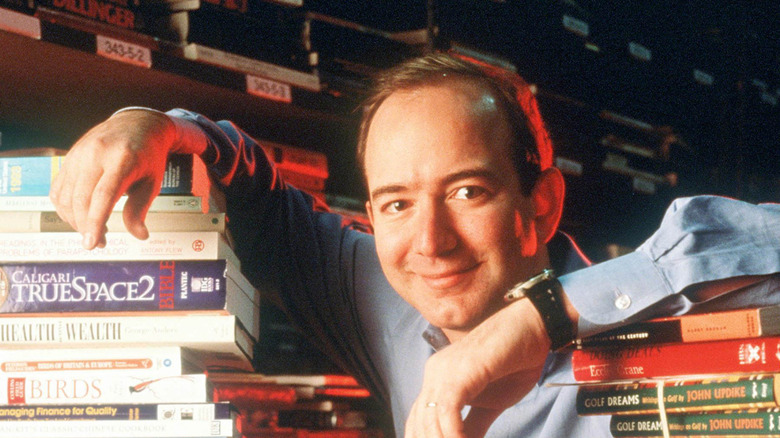
It's hard to imagine a world without Amazon or eBay nowadays, but in the first half of the 1990s, e-commerce was in its early stages. Jeff Bezos, who was born with a totally different name, founded Amazon in 1994 as an online bookstore; the website publicly launched on July 16, 1995. French-Iranian-American businessman Pierre Omidyar founded eBay in 1995; he was only 28 years old. The website, which was then called AuctionWeb, launched less than two months later on September 3, 1995.
Although Amazon and eBay went down two different paths, they delivered almost the exact same impact on '90s pop culture: cultivating an importance of e-commerce over brick-and-mortar, which allowed more flexibility and employment opportunities for everyone. "[T]his is Day 1 for the Internet and, if we execute well, for Amazon.com. ... Tomorrow, through personalization, online commerce will accelerate the very process of discovery," Bezos wrote to shareholders in 1997 (via the U.S. Securities and Exchange Commission).
J.K. Rowling releases Harry Potter and the Sorcerer's Stone
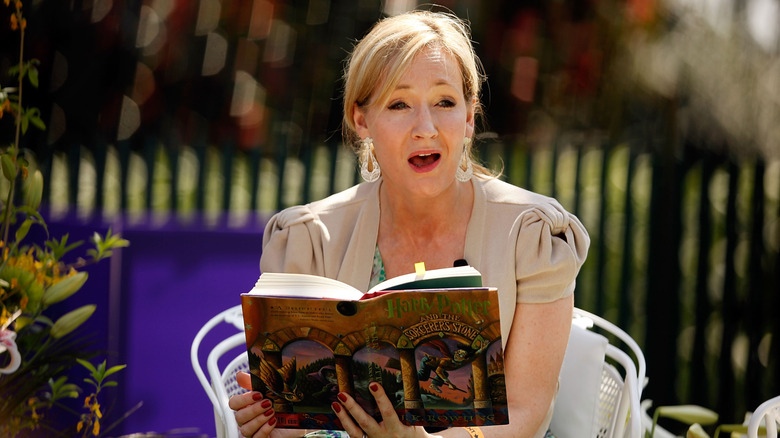
It's hard to imagine a world where "Harry Potter" doesn't exist nowadays, considering its massive impact on virtually every sector of society. J.K. Rowling's journey to publish "Harry Potter and the Sorcerer's Stone," which was released on June 26, 1997, (as "Harry Potter and the Philosopher's Stone") in the United Kingdom, was nothing short of a miracle. Before she shot to fame, Rowling was a struggling single mother on welfare who suffered several tragedies in short succession, including the death of her mother.
The legacy of Rowling's "Harry Potter" series and subsequent franchise cannot be understated. From theme parks to "Harry Potter and the Cursed Child" on Broadway, Harry Potter's evolution from an unsuspecting preteen to one of the most powerful in-universe wizards isn't just one of the world's best-known stories, but it has also been integrated into every area of pop culture possible. "[E]verything that's happened since has been well beyond my wildest expectations ... I still sometimes can't quite believe it's happened," Rowling said back in 1998 (via YouTube).
Nirvana, Pearl Jam, and Soundgarden spearhead the grunge movement
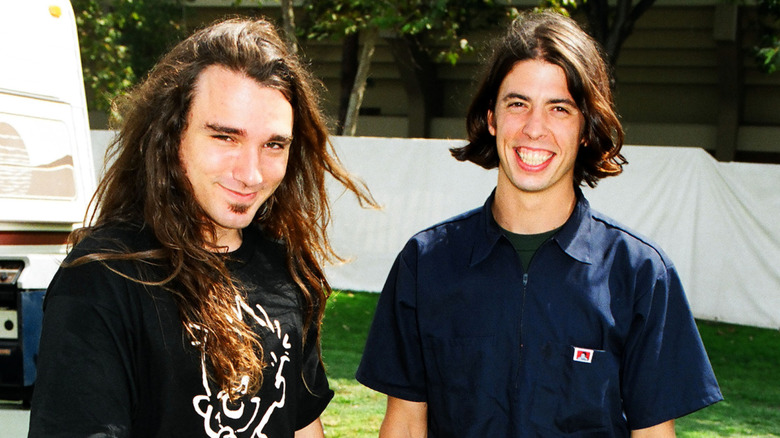
The grunge genre, at least from a musical standpoint, actually emerged in the 1980s. It wasn't until the following decade, however, that the grunge movement transformed into a global phenomenon, complete with a distinctive clothing style that many still replicate today. In the 1990s, grunge was most prominent in the Northwest, particularly out of Seattle. Nirvana, Soundgarden, and Pearl Jam — which all formed between the late '80s and early '90s — made some of the biggest musical and cultural marks at the time.
More groups fall under the grunge umbrella, but Nirvana, Soundgarden, and Pearl Jam were some of the biggest influencers in the '90s, not just for the specific movement, but for pop culture as a whole. While the '80s leaned toward over-the-top glitz, glamour, and a standout pop sound, these bands went the opposite direction and focused on grit and struggle, especially in their lyrics. While Kurt Cobain sadly passed away before age 30, musicians like Dave Grohl and Jerry Cantrell from Alice in Chains are still working hard today.
Magic Johnson retires from the NBA
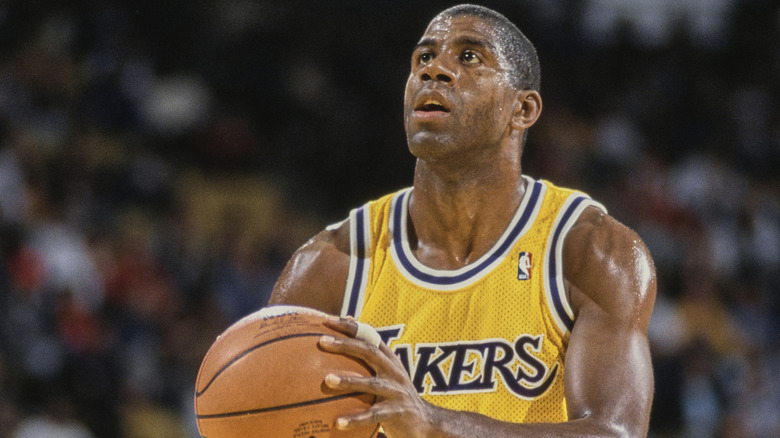
Magic Johnson may be best known among younger generations for his business ventures and philanthropy, but back in the day, he was one of the most highly regarded basketball players in the NBA. Johnson was drafted first by the Los Angeles Lakers in 1979, when he was only 20 years old. From then on, Johnson dominated the sport. As the team's point guard, Johnson helped the Lakers secure five NBA championships and received dozens of awards.
On November 7, 1991, Johnson unexpectedly retired from the NBA while his basketball career was at an all-time high. Johnson's retirement came as a surprise in and of itself, but it was even more of a shock when he revealed why: He had contracted HIV, something that was still taboo in the '90s. "Because of the HIV virus that I have attained, I will have to retire from the Lakers. Today," Johnson announced during a press conference (a historic moment available to watch on YouTube).
Tupac Shakur and The Notorious B.I.G die in separate drive-by shootings
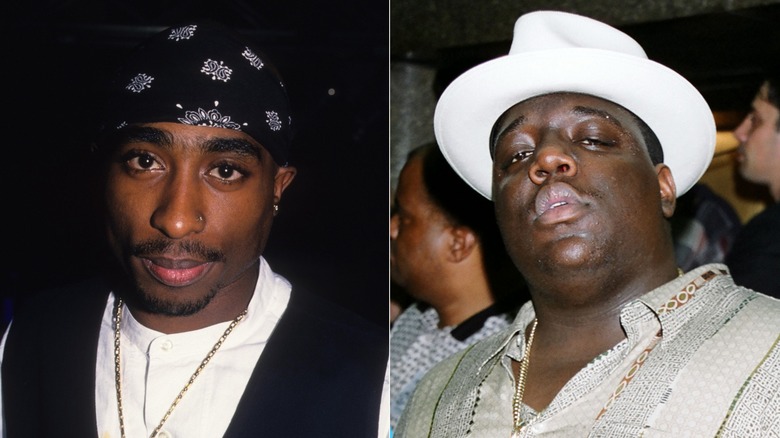
While Michael Jackson and Nirvana dominated their respective music genres, Tupac Shakur and The Notorious B.I.G (also known as Biggie Smalls or by his birth name, Christopher Wallace) were in control of the rap scene. Shakur, who had close relationships with Jada Pinkett Smith and Madonna, was a force to be reckoned with on the West Coast. Wallace, on the other hand, was highly successful on the East Coast.
Shockingly, Shakur and Wallace were murdered roughly six months apart under similar circumstances. Shakur was shot during a drive-by shooting in September 1996; he died from his injuries roughly a week later. Wallace died almost immediately after he was gunned down in another drive-by shooting in March 1997. Both murders took place when their respective cars stopped at red lights. Shakur was 25; Wallace was 24.
As of 2026, it's still unconfirmed who pulled the trigger on Tupac and Wallace, although recent developments in both cases have pointed to several individuals. It's widely believed that Orlando Anderson, who died in 1998, was the person who shot Tupac; Anderson's uncle was later charged with Tupac's murder in 2023. As for Wallace, Wardell Fouse (who died in 2003) and Suge Knight have been implicated.
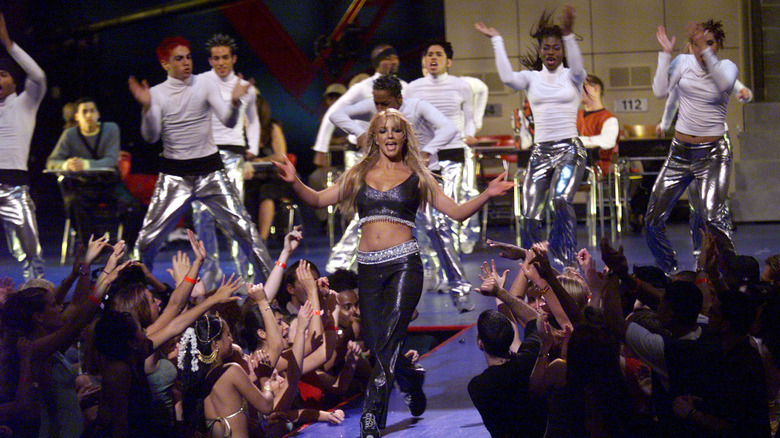
Britney Spears releases her debut single, ...Baby One More Time

The stunning transformation of Britney Spears is one for the history books, full of ups, downs, and everything in between. Spears appeared on "The Mickey Mouse Club" in the early 1990s before she pivoted to music. On September 29, 1998, Spears, who was then 16 years old, changed the music industry as we know it when she dropped her debut single, "...Baby One More Time." The song's music video, directed by Nigel Dick, was released a few months later (and readily available to watch today on YouTube).
Spears' entire discography is a force to be reckoned with, but "...Baby One More Time" remains her most perpetuated cultural reset moment decades later. Between the catchy chorus, distinctive vocals, natural dance ability, and the music video's iconic schoolgirl outfit, Spears' debut song helped introduce a new wave of teen pop that brought her a massive amount of fame and fortune across the board. "I knew it was a great song. It was different and I loved it," Spears reminisced to The Guardian in 2018.
Dance crazes like the Macarena introduce timeless moves
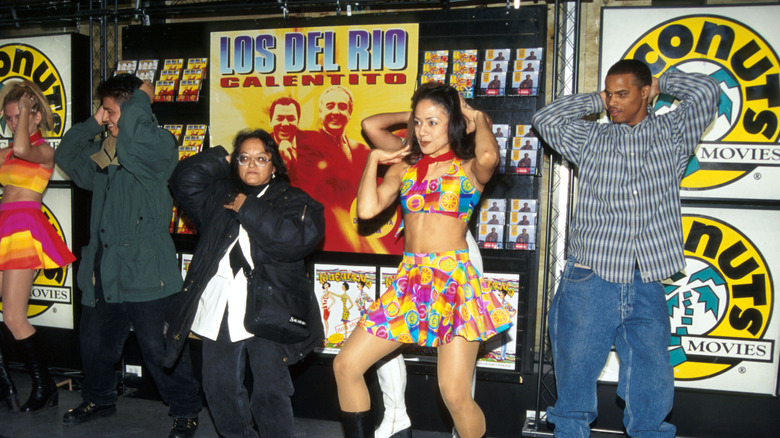
In 1993, one of the world's greatest one-hit wonders was released: "Macarena" by Los del Río, a Spanish pop duo. While the original song didn't gain much traction, its Bayside Boys remix and the accompanying music video (available to watch on YouTube) blew up for two catchy reasons: the beat and the chorus' choreographed dance. In virtually no time at all, the Macarena dance was a staple at home, small get-togethers, big parties, global events like the Olympics — you name a place, then and now, and there's a relatively high chance that the Macarena will be pulled out at least once.
The Macarena wasn't the only dance craze that emerged in the '90s, nor is it the only one that is still massively recognized and performed several decades later. M.C. Hammer, for instance, introduced the Hammer Time dance to the masses with his 1990 single, "U Can't Touch This." The same year, Madonna released the song "Vogue." While voguing was a thing long before Madonna's single dropped, she was credited with popularizing its sharp and precise movements.
People fear Y2K as the 1990s come to a close
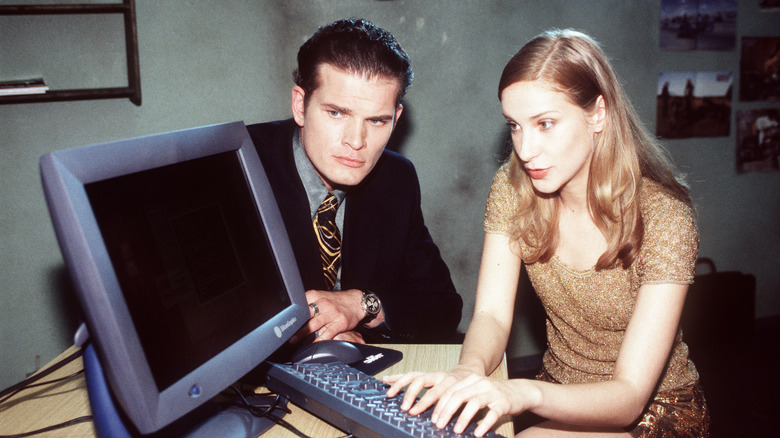
After a decade full of cultural resets and timeless classics, the 1990s ended, as T.S. Eliot might say, with more of a whimper than a bang. There was massive hype over the incoming 21st century as the months grew closer, which can't be denied. However, widespread fear made its way around in 1999 in the name of Y2K, otherwise known as the Year 2000 bug or by other similar monikers. Because computers at the time showed each year as two numbers — for example, "99" for 1999 — there was serious global panic that when the clock struck midnight, all systems would crash with disastrous consequences.
When January 1, 2000, finally came around, there were some minor technological issues across the world, but nothing compared to what the Y2K craze perpetuated. The world did gain some valuable lessons and ideas from this final '90s pop culture moment, though: more advanced technology, the sociological implications of "panic buying" supplies, and the subsequent emergence of 2000s fashion trends.