

Code Names The Royal Family Has Used To Go Undetected
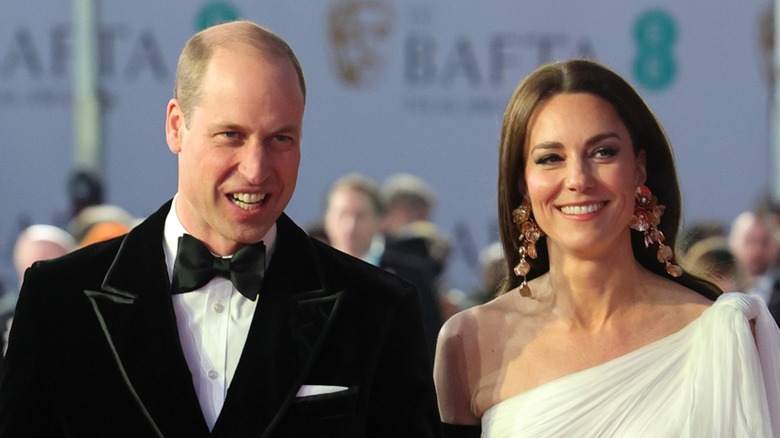
Important government officials are known for going by code names. The president of the United States and their family all have code names used by the Secret Service, for instance. The public, of course, are never party to these names until well after said president has left the White House. It's always fun to learn these secret names that were once only privy to a select group of people, and, as it turns out, the British royals have code names of their own, though they are decidedly less flamboyant than that of American politicians. While President Donald Trump went by Mogul during his first term, for instance, the British royals' code names are often very simple and un-royal, which, of course, is the point.
"Royal code names are used for security reasons," royal expert Laura Windsor told Reader's Digest, noting that they have been in use for decades. Even before social media and the internet were a thing, the royals needed a way to discourage switchboard operators from listening in on their conversations. News about members of the family needed to fly under the radar, and code names were invaluable in these situations. These secret names also come in handy should any royal aides displace or lose their phone. "If anyone got hold of a phone belonging to a royal aide or security team member, they won't find Harry Windsor and Meghan's names in it," a royal source once told the Daily Mail. "It is far too risky in the wrong hands. They get given code names but they are changed regularly for obvious reasons."
Queen Elizabeth II had an interesting code name
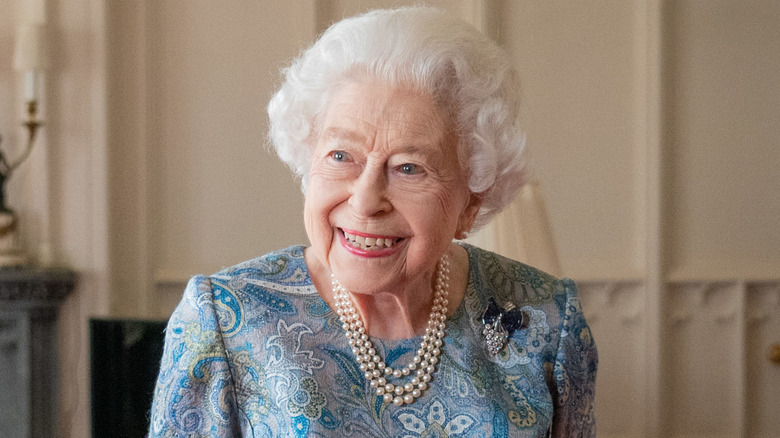
"Has anyone seen Sharon?" If you heard someone asking that in a public space, you'd hardly pay any attention, unless your name happens to be Sharon. What if we told you that Sharon was, at one point, a code name used by the late Queen Elizabeth II? Indeed, the monarch used to go by the name among her aides and security detail. They'd refer to her as Sharon when making preparations for travel or public appearances. Sometimes, they'd simply refer to the queen as "S."
The queen had another, more morbid code name as well, which expressly referred to her death — London Bridge. And at the time of her death, the phrase "London Bridge is down" was used to communicate her passing, and that her funeral plans needed to be set in motion. Each royal has a bridge code name that will be used upon their death, with former palace press secretary Dickie Arbeiter telling Yahoo! News in 2020, "The code 'Bridges' has been around for decades ... [E]very Royal knows the term, and every Royal signs off on his/her funeral arrangement. Bridges means the move from life to the hereinafter."
Of course, the royals also have some secret nicknames behind closed doors, courtesy of endearing family members. William, Prince of Wales, called the queen "Gary" — a name that stuck after he couldn't pronounce "granny" as a young boy. William's son, Prince George, referred to the queen, who was his great-grandmother, as "Gan-Gan."
Prince Philip's only known code name is the one that was used for his death
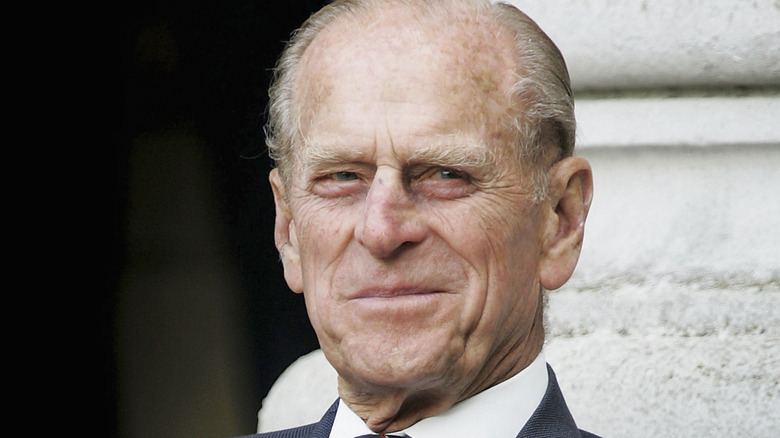
The heartbreaking death of Prince Philip sent shockwaves throughout the world and also revealed the code name that had been reserved for the royal's death. Philip was known as "Forth Bridge," and when he died, his death was communicated using this code name. Forth Bridge is located in Edinburgh, which made it a fitting name for the prince, given that he held the title of the Duke of Edinburgh.
Philip might have been Queen Elizabeth II's husband, but he reportedly didn't want all the pomp and circumstance associated with the expected funeral for a man of his stature. The prince wanted to have a small military funeral and didn't want to follow the tradition of lying in state in Westminster Abbey before his funeral service. Royals are known for breaking their own rules, and Philip did so even in death with his final wishes for his funeral. He also died while the world was in the thick of the COVID-19 pandemic, which meant that many of the royal protocols that were meant to be followed after his death could not proceed as normal.
While the announcement of Philip's death was put up at Buckingham Palace's gates, as royal protocol dictates, it only remained there for about an hour instead of the designated 24 hours because palace officials wanted to prevent a crowd from gathering to view it. Additionally, mourners were discouraged from leaving flowers at the palace gates, though about 100 bouquets managed to make an appearance. The prince's funeral was incredibly small, with only 30 people in attendance.
The Secret Service gave King Charles III a code name that no one saw coming
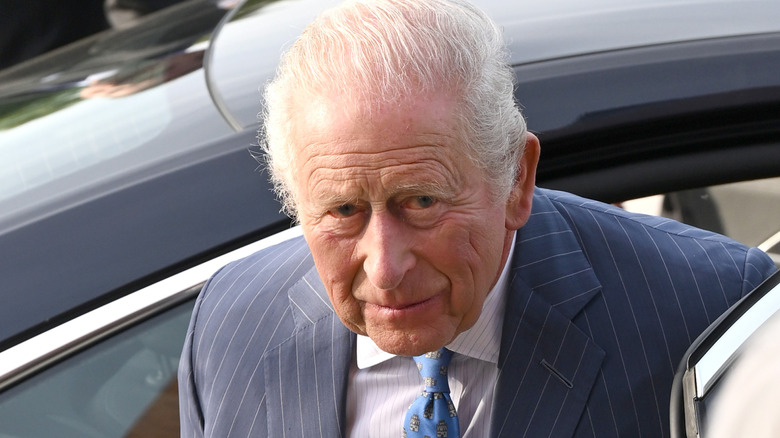
In keeping with their penchant for elaborate code names, the Americans once gave King Charles III an interesting code name when he visited the United States in 1971. In preparation for his arrival, the Secret Service referred to the then-prince as "Unicorn." This was reportedly in reference to Scotland's national animal, which, believe it or not, is indeed the mythical unicorn. It could also possibly have been in reference to the Prince of Wales' coat of arms, which features a unicorn.
The king also has a bridge codename, which made it into the public sphere when he was in a skiing accident in 1988. Charles went missing after getting caught in an avalanche, and the royal family and the world held their breath as they awaited news. In the meantime, the code phrase "Operation Menai Bridge" was used to refer to the possible funeral plans that would need to be enacted should the royal not have survived the ordeal. Menai Bridge is a Welsh suspension bridge, a fitting name for Charles at the time, given that he was the Prince of Wales. Luckily, he managed to make it out of the ordeal alive.
It's not clear whether Menai Bridge is still Charles' code name since he became king. Some have speculated that this might be Prince William's new code name and that Charles' have been changed to reflect his new title. Speaking of titles, Charles' coronation ceremony in 2023 also had its very own code name — Operation Golden Orb. And yes, this name was inspired by the crown jewel known as the Sovereign's Orb, which formed part of the ceremony.
Former Prince Andrew's code name was as basic as it gets
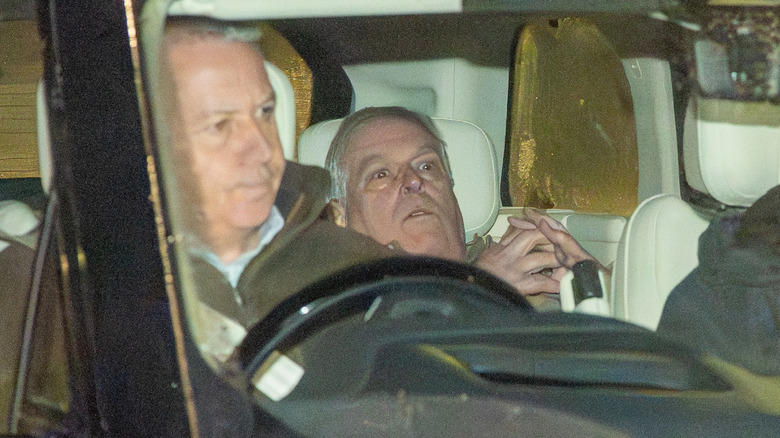
Disgraced former Prince Andrew has made history for all the wrong reasons, and some of those who were tasked with protecting him weren't all that fond of the scandal-ridden royal to the point that they even doled out their own special code name for him. However, Andrew's actual codename was a bit of a disappointment, compared to those of his relatives. He was simply known as "Purple 4-1," according to former royal protection officer Paul Page.
"[Andrew's] official code — so if he were to come into the Palace — his call sign was Purple 4-1. But he did have a nickname, but it's a bit rude to tell you," Page told "60 Minutes," per Reality Tea. Page proceeded to reveal the derogative nickname some royal protection officers had bestowed on the prince, which turned out to be "The C*nt." "Plain and simple, because unfortunately, he upset everyone he came across," Page explained. "He was the most unpopular member of the royal family while I was there. He was just rude and arrogant, and his sense of self-entitlement was breathtaking."
Andrew reportedly employed some code names of his own to discreetly sneak women into his quarters at the palace. "He would phone the duty office and always say the same thing — 'Mrs. Windsor will be arriving shortly — please let her in and show her up,'" a source told The Sun (via Sky News). "This was always via one of the out of sight staff entrances. It was so frequent that they used to just roll their eyes and say 'yes sir.' It went on for years."
Charles and Camilla had secret code names for each other while they had an affair
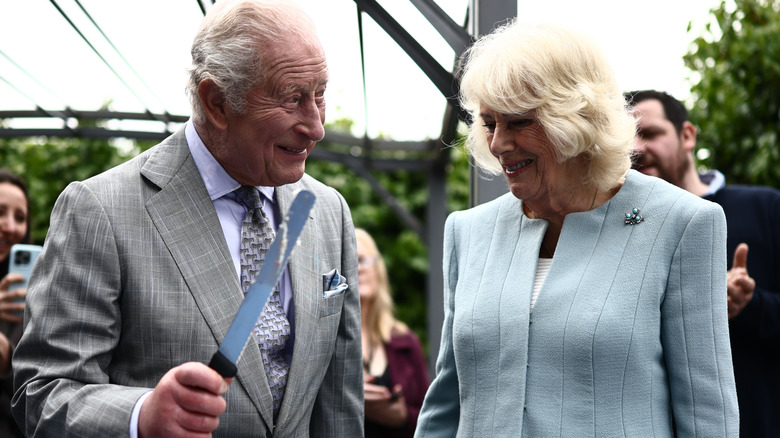
When you're the heir to the throne and having an affair, it is probably wise to use a code name for yourself and your mistress. King Charles III knew this all too well. His affair with Camilla, Queen Consort, is well documented. The two reportedly went by the names Fred and Gladys when they first started dating (this was before Charles started a relationship with Princess Diana), and the names stuck. "These are names they used before their marriage and chose them from characters in 'The Goon Show,' of which they are both fans," royal commentator Charles Rae told Slingo (via the New York Post).
Diana is said to have become aware of the duo's pet names for each other when she discovered a bracelet engraved with the initials "F" and "G" that Charles planned on gifting to Camilla. She recalled in conversations with Andrew Morton for his book, "Diana: Her True Story," how she discovered the bracelet. "I walked into this man's office one day and I said, 'Ooh, what's in that parcel?' And he said 'Oh, you shouldn't look at that.' So, I opened it and there was a gold chain bracelet with a blue enamel disc. It's got 'G and F' entwined in it, 'Gladys' and 'Fred' — they were their nicknames," she told the royal author, per Marie Claire. Additionally, in Howard Hodgson's tome, "Charles: The Man Who Will Be King," the author alleged that Diana once also came across a flower bouquet that Charles had sent to Camilla. He used their code names again on the card, which read, "To Gladys from Fred.'"
Prince William used a secret code name to go undetected at university
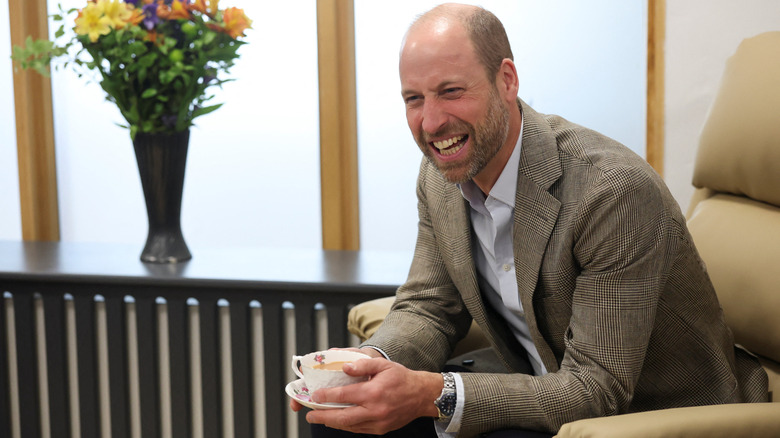
William, Prince of Wales, seemingly took a page out of Queen Elizabeth II's book of code names when he left the safety of the palace for his studies, as he went by a very common name during his tenure at the University of St Andrews — Steve. William reportedly thought the name would help him fly under the radar. The students mostly respected his privacy, as did the paparazzi, but that was only, in part, because the university made a deal with eager photographers.
"Andrew Neil, the Lord Rector of the university, being a very experienced newspaper man, helped us negotiate a deal with the British press, whereupon they would leave William alone in return for a photo opportunity once a semester. And on the whole, that worked," Dr. Brian Lang, who served as the Principal and Vice-Chancellor of St Andrews at the time, told Hello! Dr. Lang added that students were warned they would face dire consequences if they attempted to sell information about William to the tabloids.
Aside from going by Steve in an attempt to have a normal student life, William and Catherine, Princess of Wales, also coined their own code names when they started dating. "Occasionally, they checked into hotels, using the names Mr. and Mrs. Smith — which doubtless fooled no one," Robert Jobson wrote in his biography, "Catherine, the Princess of Wales." The couple also used code names when they traveled, going by Martin and Rose Middleton when they visited the Seychelles in 2007 shortly after they reunited following their brief split, according to Andrew Morton's book, "William and Catherine."
Catherine and William's royal code names aren't exactly creative
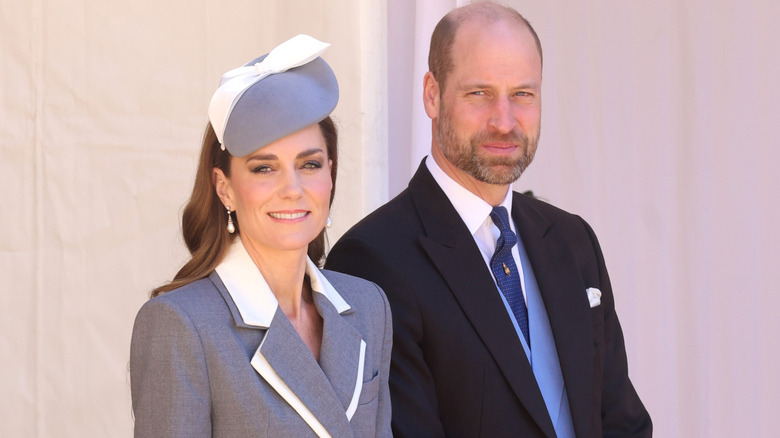
The stunning transformation of Prince William and Princess Catherine's relationship is amply chronicled, so royal fans got to see them go from college sweethearts to one of the most famous royal couples. While the two were known for using code names while they were dating, they received official royal code names when they got married, though it's not exactly very creative. Upon tying the knot, Queen Elizabeth II bestowed the titles of the Duke and Duchess of Cambridge onto the newlyweds, and their royal code names were derived from those initials. So, at one point, William and Catherine were known as Danny Collins and Daphne Clark.
What their code names are these days is anyone's guess. However, funnily enough, Kate Middleton once revealed her code name to a shop owner while she was visiting Wales in 2010. She wanted to buy a swimsuit but had forgotten her wallet at home, so she asked the shopkeeper, Dave Buckland, to hold it for her. As Buckland had not recognized her, he asked for her details, and she gave him the name "Mrs. Cambridge." "[Buckland] was looking straight at her and actually commented that it was quite an unusual surname. He hadn't a clue who she was. She just smiled and said she'd be back," a source told the Daily Mail of the incident. "He hasn't lived it down since."
Meghan Markle and Prince Harry had code names of their own while they were working royals
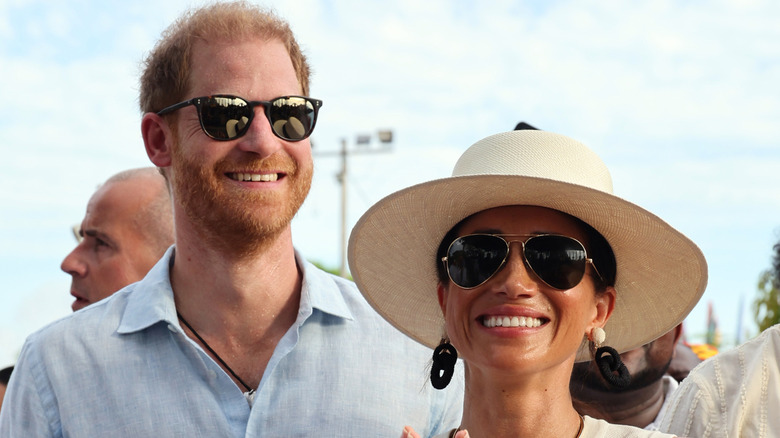
Before Meghan Markle and Prince Harry's abrupt exit from the U.K., they were senior working royals just like Princess Catherine and Prince William, and therefore also had their own designated code names for security. As with William and Catherine's code name, Meghan and Harry's names were also derived from their title as the Duchess and Duke of Sussex, so the two royals went by Davina Scott and David Stevens when the need arose. Of course, now that those names are out in the wild, it's very unlikely that they'd still use them in any capacity. "They've probably changed them or no longer even have code names," royal expert Laura Windsor told Reader's Digest.
Meghan also revealed that she and Harry used code names when they first started dating. While chatting to "The Jamie Kern Lima Show" in 2025, the duchess disclosed that she and Harry used secret names to keep anyone from finding out about their relationship before they were ready to share it with the world. "I couldn't tell anyone who I was dating ... So, I think we were just on a letter basis," she explained, meaning that she and Harry simply referred to each other as "M" and "H," respectively. "It stuck," she said, noting that they still call each other by these names. Harry also reportedly tried to fly under the radar on social media by creating an account with the name "Spike Wells." It's said that the prince bore the moniker of "Spike" during his youth, and he seemingly thought it a fitting code name for the wild world of social media. We certainly wouldn't have guessed said account belonged to the royal.
Prince George seemingly used to have a very interesting code name
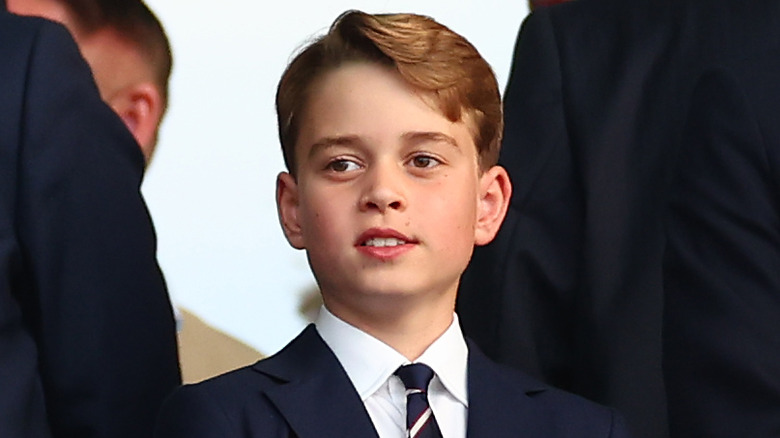
There's been plenty of speculation about the names Prince George could be called when he becomes king, but it's safe to say that the young royal, like his elders, has also been bestowed with a secret code name to keep his identity hidden when needed. In fact, George might once accidentally have revealed his pseudonym to a civilian while he was out and about with his grandmother, Carole Middleton.
A dog walker recognized Middleton, and subsequently the then 5-year-old George, who was playing with his sister, Princess Charlotte, during their visit to Berkshire. The woman, who preferred to remain anonymous, told The Sun that her suspicions about who George was was confirmed when a nearby police officer told her to refrain from taking pictures of the two children. But then George approached her, eager to cuddle her dog. "I asked George what his name was, even though obviously I knew it," she recalled. "To my astonishment. he said 'I'm called Archie' with a big smile on his face." Archie may or may not have been George's code name at the time. It's worth noting that this incident occurred before Prince Harry and Meghan Markle named their firstborn Archie.
There's no telling what George's code name is these days, but in 2024, it came to light that his classmates had christened him with a nickname — "P.G." — short for Prince George, of course. The nickname evolved from there, with even his family starting to refer to him by the moniker, but making it their own by calling him "P.G. Tips," a popular tea brand in the U.K. Word has it that the young prince's family often forgo his initials and simply refer to him as "Tips."