

The Stunning Transformation Of Anna Wintour
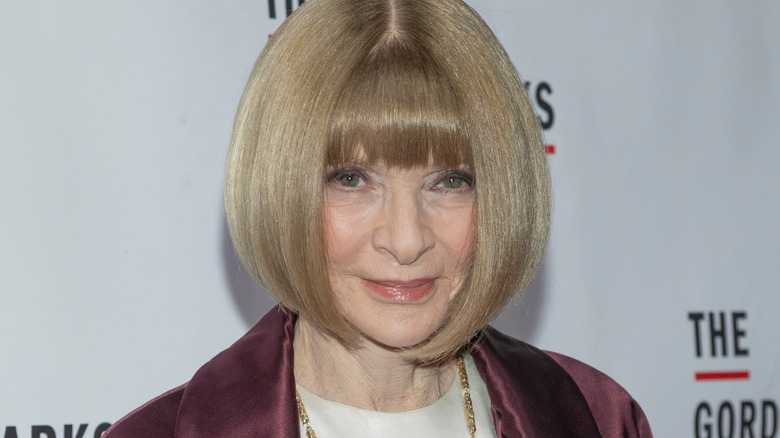
Anna Wintour is a fashion icon who transformed the world of style into the dynamic, youthful entity that it remains today. Prior to her meteoric rise at Vogue, cover girls were known for their overly formal sense of style. When Wintour took the reins as editor-in-chief of the publication in 1988, everything changed. Haute couture became something that one could add to an otherwise casual outfit, and expensive brands were marketed to the modern professional woman. Fashion became much more accessible, and it was all because of Wintour.
Throughout Wintour's tenure at Vogue, her influence only grew. She made and broke the careers of several talented designers. And, when she took over The Met Gala, celebs she couldn't stand were all but banned from it. However, while Wintour's career track is truly impressive, it's important to consider that she began her ascent with plenty of available resources — like family money and parental connections. As she rose to greater heights, Wintour used these tools to achieve her goals and transform the fashion world for the better.
Anna Wintour hailed from an important publishing family
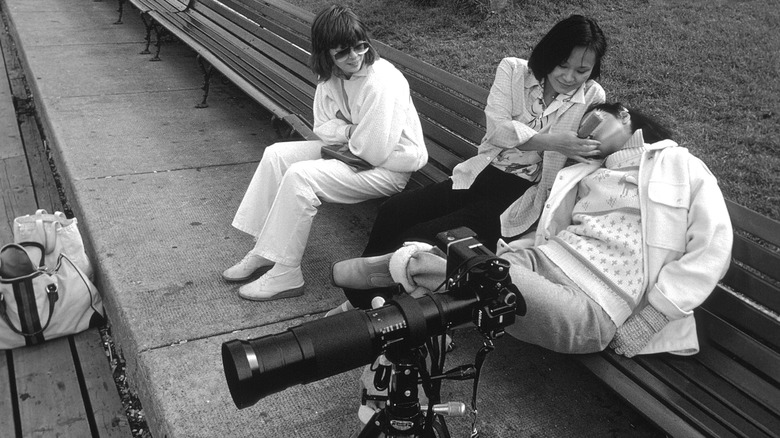
Anna Wintour has amassed so much success in the publishing world that it can seem like she was born to be an editor. And given her pedigree, it wouldn't be a stretch to say that she was. Wintour's parents, Eleanor (Nonie) Baker and Charles Wintour, both loved the written word and current events. Her mother worked in journalism and had cultivated a keen ability to understand different personalities. Her father was the editor of the Evening Standard. This unique background allowed Wintour early access to intense conversations about what made an article — or a publication — interesting.
Speaking on this to The New Yorker, Wintour recalled, "I grew up in a family of journalists where we were always being dragged home from vacation ... because some news was happening." From the very beginning of her life, Wintour was taught to recognize a good story. And even as a young girl, she understood that nothing in life was worth getting in the way of breaking news.
Of course, Wintour's informal training did not stop there. Her parents, Charles and Nonie, also exposed her to many different types of people from a young age. In the aforementioned interview, Wintour shared, "Our house was full of journalists and politicians and interesting people." This environment gave Wintour the confidence necessary to interact with important figures from high levels of British society.
She dreamed of working for Vogue from the age of 13
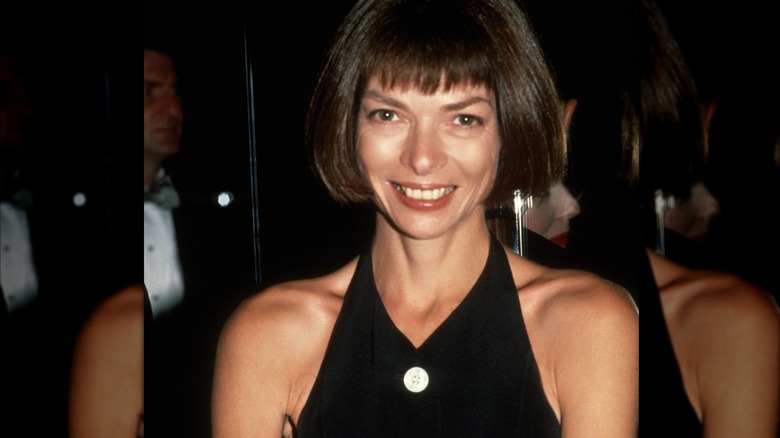
Anna Wintour's unique upbringing gave her a special interest in publishing from a very young age. When the future fashionista was just a teenager, her father, Charles Wintour, told her that she might consider one day working at Vogue. Wintour took this nugget of advice to heart, and ultimately, she dedicated much of her life to that magazine.
Reflecting on this goal-setting process to The New Yorker, Wintour admitted that her dream of working at Vogue was initially half-baked. Apparently, it all started when a 13-year-old Wintour was filling out a questionnaire for school. "I asked my dad, 'Well, what should I fill in when you write what you want to be?'" she recalled. His response was to scribble in "editor at Vogue." At the time, he had no clue what a huge impact these words would have on his young daughter.
From that point forward, Wintour imagined herself as the future editor of Vogue. While this goal wasn't initially very well thought out, it gave Wintour a sense of inspiration that propelled her for years. From the moment she recorded her response on that questionnaire, Wintour believed she could one day achieve huge things in the publishing world — no matter how grand they may have seemed. "So I wrote that [answer] in, and then I felt confident: yes, this was something I could work toward," Wintour explained.
She relied on family wealth to propel her in the publishing world
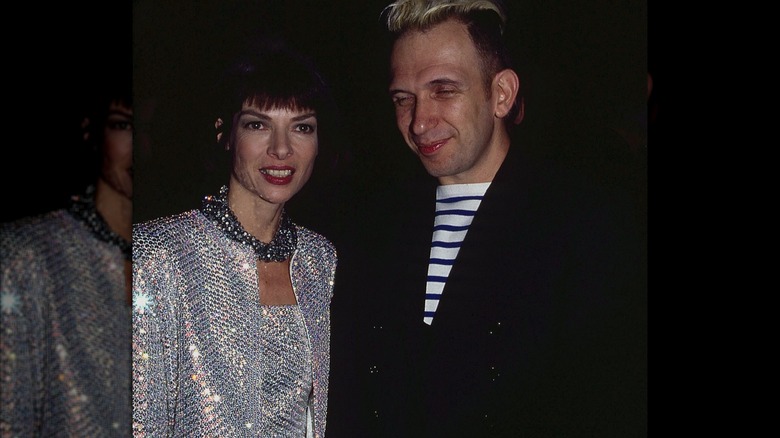
Anna Wintour may have worked hard toward her goal of becoming the editor-in-chief of Vogue, but that doesn't mean that she didn't have a whole lot of help along the way. Like many celebrity nepo babies, Wintour benefited from her parents' connections when it came to finding work. Her father, Charles Wintour, helped Wintour get a gig at the Biba fashion store, where she learned about style. Then, after she was fired, he secured her a position at the prestigious Harpers & Queen magazine.
Beyond this high-end networking, Wintour benefited greatly from her family fortune. She drew money from a well-endowed trust fund whenever she needed to boost her salary as a journalist. According to biographer Amy Odell in her book, "Anna: The Biography," this capital came in handy for arranging perks that weren't available to other writers and editors. One example? She used her own private funds to hire personal assistants to help her with the less glamorous parts of her publishing career.
Wintour's money was also helpful when it came to developing her confidence. Whereas many of the other young journalists in the magazine industry tried to play things safe to avoid losing their income, Wintour felt comfortable taking massive creative risks. At the end of the day, she didn't require any sort of employment to enjoy a certain lifestyle. This allowed her to push the bounds of the industry.
Anna Wintour was fired from Harper's Bazaar — and learned from the experience
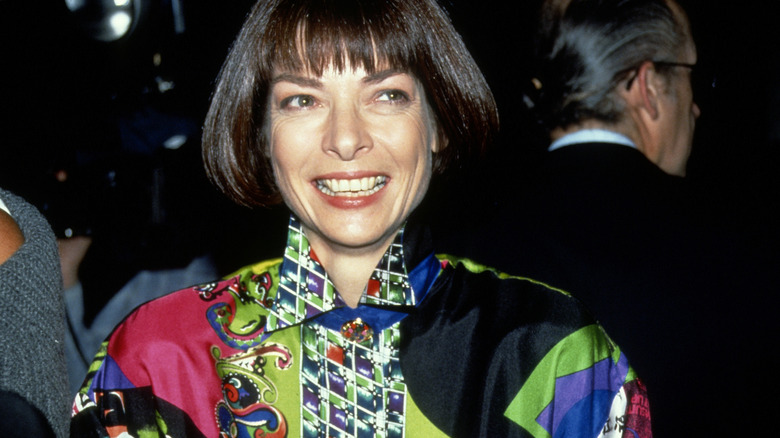
Because Anna Wintour hailed from such a well-to-do family, she did not mind taking creative risks at work. At times, though, this strategy backfired. When she moved to New York to work for Harper's Bazaar, Wintour felt quite confident she could rely on her family's money — even as she broke the rules at work. Eventually, the publication's editor-in-chief, Tony Mazzola, cut her loose. At a 1997 Women in Journalism conference, Wintour told the crowd that Mazzola had, quite diplomatically, cited the reason for her termination of contract as "too European" (via People).
Wintour was initially confused by this feedback. As she further revealed at the event, "At the time I didn't know what he meant, but in retrospect I think it meant that I was obstinate, that I wouldn't take direction, and that I totally ignored my editor's need for credits." Eventually, Wintour realized that she needed to change her attitude. She landed a job at New York magazine and focused on doing a job well rather than creating problems with her boss.
By transforming her approach to work, Wintour changed her entire career path. She performed so well that people across the industry noticed — including the editor-in-chief of Vogue. "[T]hat's where I caught the eye of Alexander Liberman — the editorial director of Condé Nast — and I moved over to American Vogue," Wintour told The New Yorker in 2025.
When Anna Wintour became the editor-in-chief of Vogue, she broke all the rules
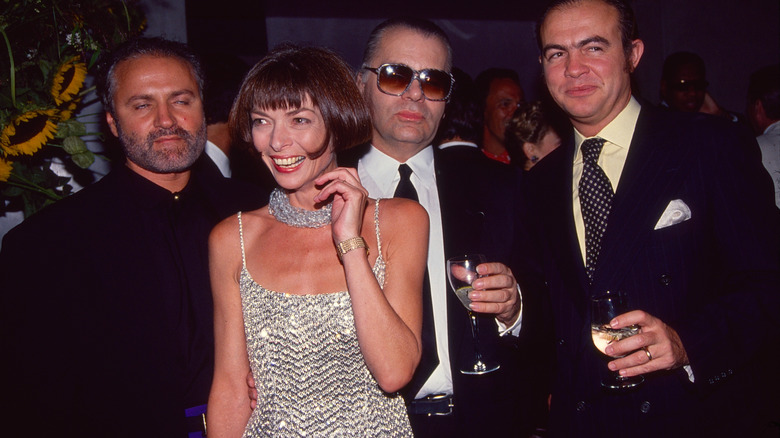
In 1988, Anna Wintour's childhood dream finally became a reality. She was appointed the editor-in-chief of American Vogue. Wintour was finally in a position to really shake up the fashion industry, and she proceeded to break all the rules of publishing as they were known at the time. That November, Wintour put together her first Vogue cover. The cover girl was Michaela Bercu, and although she was wearing a stunning Christian LeCroix top, she wasn't styled like a top model. Instead, she wore the LeCroix piece with some casual Guess jeans, and she was photographed looking totally laid-back. Her eyes were partially closed, and the wind was running through her hair.
Describing the photograph in a 2012 piece for Vogue, Wintour recalled, "It looked easy, casual, a moment that had been snapped on the street, which it had been, and which was the whole point." Nonetheless, the photo displayed something so different from the perfectly styled models that usually graced Vogue's cover that the printers contacted Wintour to ask if there had been a switch-up. "It was so unlike the studied and elegant close-ups that were typical of Vogue's covers back then, with tons of makeup and major jewelry. This one broke all the rules," Wintour wrote. Ultimately, though, the cover was a huge success, and Wintour's vision of wind-blown models became the industry standard. The editor shook things up from Day One.
She started mentoring young people by hiring them as her personal assistants
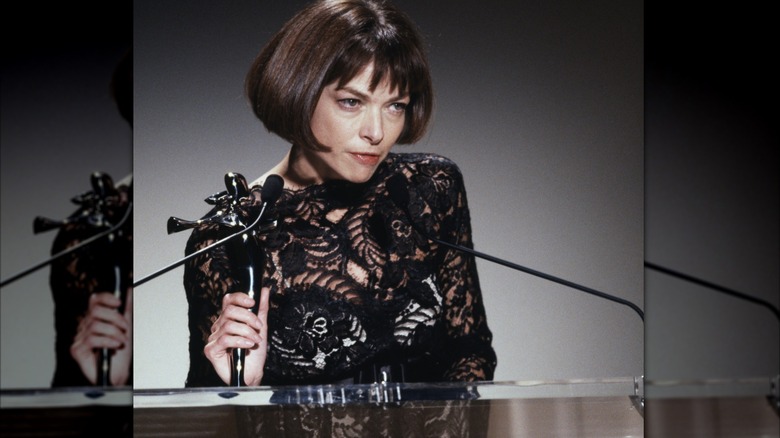
As Anna Wintour became an increasingly important figure in her field, she invested more energy into helping her personal assistants move up in the fashion world. Part of these efforts began with the interview process. As one of Wintour's former assistants, Marley Marius, told "The Run-Through With Vogue" podcast, it was understood that "Anna doesn't want a career assistant. She wants people in her office who, like, have [other] interests, and who want to do things with their lives. Like, have lives outside of work." During her interviews with potential assistants, Wintour tried to discern their long-term career goals. Then, she shepherded them toward these areas.
Occasionally, though, Wintour would find that she had a better grasp of someone's talents than they did. In these cases, Wintour would encourage that person to pursue a particular area. Speaking to Business Insider, another one of Wintour's former assistants, Laurie Schechter, described how the former Vogue editor-in-chief helped her discover her passion. "It was Anna who had the idea for me to become a style editor," Schechter shared. "One of the great things about her is she can imagine something for you and identify other people's talents. I got to translate my passion for fashion to the world of interiors." Because of Wintour's mentorship, many of her former assistants have interesting jobs in either fashion or publishing. Marius, for example, became a senior editor at Vogue.
At Condé Nast, Anna Wintour built her own wealth
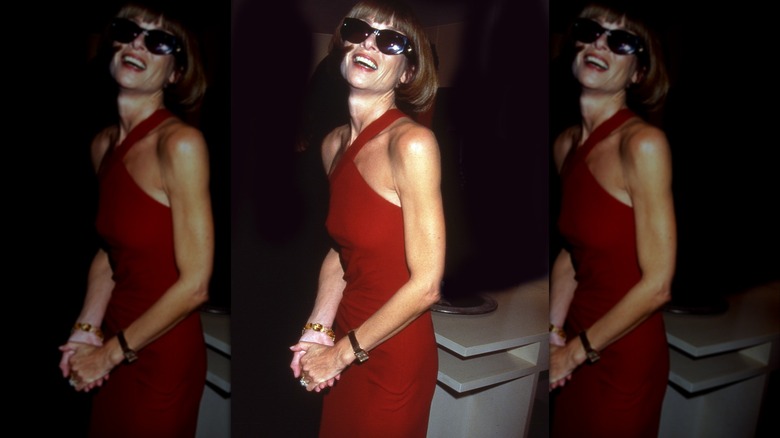
Early on in her life, Anna Wintour relied on trust funds to make ends meet. However, during her tenure at Condé Nast, she became extremely wealthy in her own right. While working as the editor of Home and Garden before moving over to Vogue, Wintour earned a very high salary. According to Biography, she earned a whopping $200,000 per year as a base salary — or approximately $575,000 per year in 2026 currency. She also earned a $25,000 annual bonus that she was allowed to spend on clothes. Additionally, she had access to frequent flights between London and New York, facilitating trips to see her family.
When Wintour became the editor-in-chief of Vogue, however, these numbers went up considerably. By the time 2005 came rolling around, Wintour was earning about $2 million per year, according to Grazia. That would amount to approximately $3.4 million in 2026 currency. Since then, Wintour's salary is believed to have increased considerably, with some sources estimating her preretirement salary at around $4 million per year.
These funds allowed Wintour to care for her two children, Bee (Katherine) Shaffer and Charles Shaffer. Everything you need to know about Anna Wintour's daughter is that she was born in 1987 and grew up surrounded by her mom's impeccable sense of style. Wintour's son, meanwhile, was born in 1985 and became a doctor. The editor's fortune, however, didn't save her marriage to Bee and Charles' father, David Shaffer.
Anna Wintour changed the fashion world and transformed the Met Gala into an institution
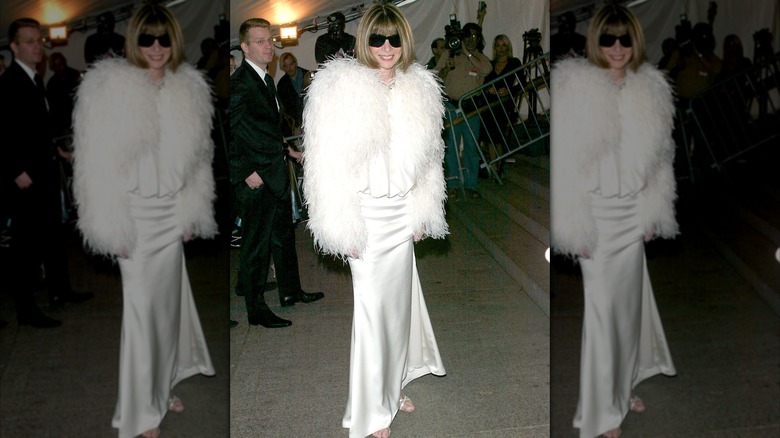
During Anna Wintour's tenure at Vogue, she revolutionized the fashion world. She discovered up-and-coming designers and propped them up by connecting them to the right brands. John Galliano attributes his early success to Wintour's keen eye, while Oscar de La Renta considered his friendship with Wintour one of the most important in his life.
Beyond her relationships with actual designers, though, Wintour transformed the Met Gala from an exclusive little gathering into the biggest celebrity event of the year. When she took over the event in 1995, Wintour invited movie stars, athletes, and musicians to the event. As an added bonus, she encouraged them to dress according to a unique theme. Some designers have criticized the editor for turning a fashion event into a haute couture fancy dress party. That said, Wintour's vision allowed the Met Gala to evolve into a cultural phenomenon that arguably defined fashion. One only needs to look at the best-dressed celebrities at the 2026 Met Gala to know who is on the up.
While the Met Gala's early days did include some nice ensembles, the most outrageous Met Gala outfits of all time were worn on Wintour's watch. The fashion guru inspired celebrities to fight for seats at the event. As Wintour's biographer Amy Odell noted in a piece for Time, the former editor-in-chief of Vogue, "turned [the Met Gala] into an event that had representatives for celebrities calling and asking for invitations."
Anna Wintour inspired The Devil Wears Prada
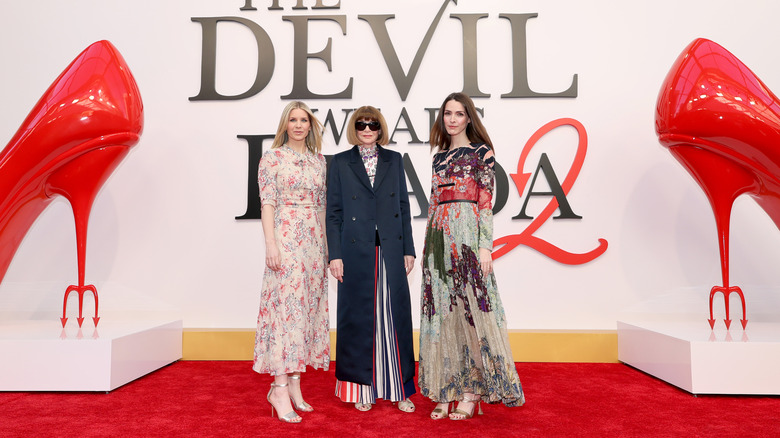
Although Anna Wintour was a giant in the fashion world, most normal people had no clue who she was. That all changed in 2003 with the publication of the book, "The Devil Wears Prada." The project began with one of Wintour's many assistants, a recent university graduate called Lauren Weisberger. Unlike most people at Vogue, Wesberger found the fashion world to be both baffling and bizarre. The young assistant's immediate superior at the magazine, Leslie Fremar, noted that Weisberger wasn't very interested in clothes. In an episode of "The Run-Through With Vogue" podcast, Fremar said that the team at Vogue actually encouraged her assistant to take writing classes instead.
Weisberger took that advice to heart. The aspiring author signed up for the classes that Wintour's team at Vogue had recommended. Then, she wrote a book satirizing her time at the fashion magazine. She even created a character — Miranda Priestly — based on Wintour. One of the things everybody ignores about "The Devil Wears Prada" is that many of Wintour's allies were initially suspicious of the book. However, when it became a giant success and was turned into a movie, Wintour became a much broader cultural icon. Wintour has gone on the record saying that she enjoyed the first movie. Speaking with The New Yorker, Wintour admitted, "I went to see the film, and I found it highly enjoyable and very funny."
Anna Wintour stepped down as editor-in-chief of Vogue
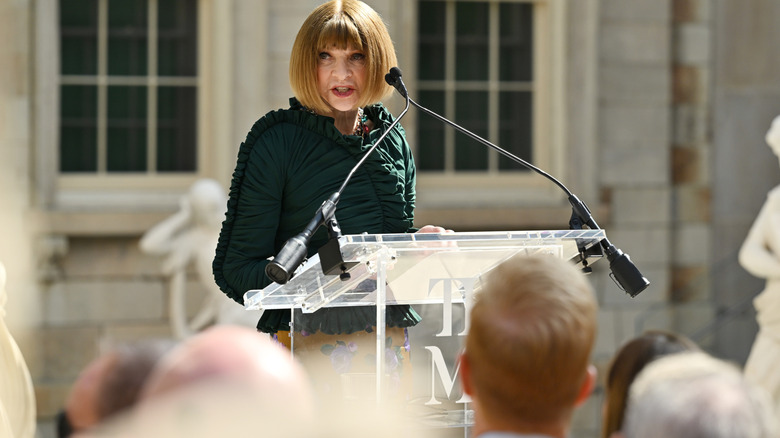
Anna Wintour may have been one of the most influential figures to ever set foot at Vogue, but all good things must come to an end. In 2025, Wintour retired from her position as the editor-in-chief of Vogue and named Chloe Malle her successor. Speaking with The New Yorker, Wintour described her reasons for choosing Malle to take her place at Vogue. "I love Chloe. I'm very happy for her. She's going to do a brilliant job. We've worked together for well over a decade," Wintour gushed. She went on to praise Malle for her leadership skills. Comparing the new editor-in-chief of Vogue with the other people who interviewed for the position, Wintour spilled, "Chloe consistently came back with the clearest vision and the most original ideas and understanding of what Vogue in ... two years is going to look like."
Just because Wintour stepped down from her iconic role at Vogue, however, does not mean that she was ready to abandon the magazine forever. Even after retiring from her decades-long job, Wintour remained an active part of the Vogue universe. She retained her position as the chief content officer of Vogue's parent company, Condé Nast. Additionally, Wintour continued on as the global editorial director of Vogue. In the previously mentioned interview, Wintour was asked if she could ever get bored with the publishing world. "Actually, no, because I love what I do," she clapped back.