

Happy Days: Marion Ross' Transformation From Struggling Actor To Beloved Sitcom Star & Beyond
We may receive a commission on purchases made from links.
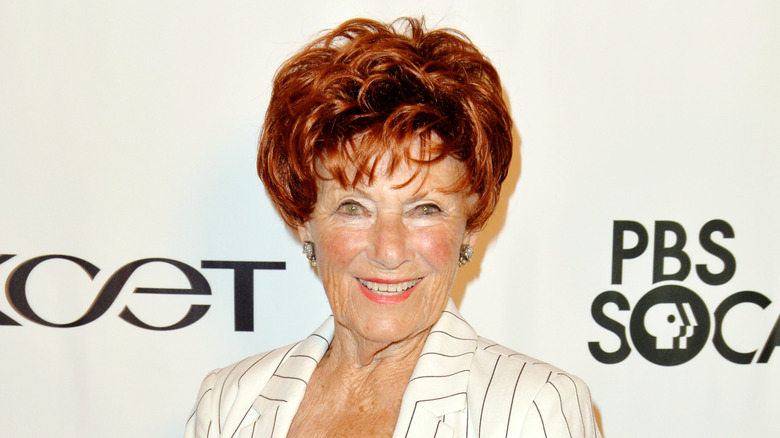
Marion Ross' image is forever tied to Mrs. Cunningham, but her career did not begin with "Happy Days." The actor who would go on to become one of the most beloved '70s sitcom moms had already spent close to two decades taking film and television jobs, often in smaller parts that kept her working.
In a 1988 interview with the Los Angeles Times, Ross recalled how early she learned to push past fear in order to perform. "Even in the 9th grade, the teacher would ask, 'Who wants to memorize this monologue from Shakespeare?' and I would raise my hand–'I'll do it, I'll do it'–even though I didn't want to do it," she said.
Ross later gave that ambition a more personal shape in her memoir, "My Days: Happy and Otherwise," writing, "My secret was a dream, one that has been shared by many young girls — to become a famous actress — although to me, being the determined and strong willed person I was, it was far more than a girlish dream. It was my destiny." But the path to that destiny was not smooth. After her 1969 divorce, she was raising two children while facing serious financial pressure. Looking back on the full sweep of her life, Ross wrote, "While the majority of my days have been happy ones, I have certainly had my share of those that were not."
Marion Ross wanted to escape her hometown
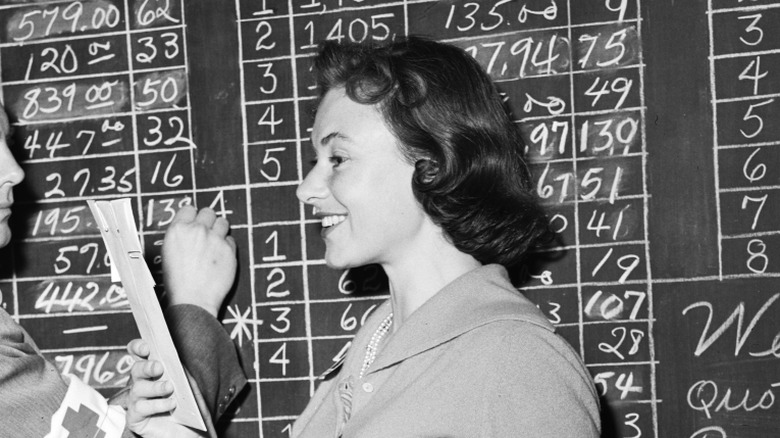
Marion Ross grew up in Albert Lea, Minnesota, and has spoken about how movies fueled her longing for something beyond small-town life. As she said in a 2009 interview with the Los Angeles Times, she remembers trudging across ice to the movie theater as a girl and feeling transformed by what she saw. "Coming home it was dark and you would cross the frozen ice," she said. "I would be weeping and standing under the streetlight with the light coming down and snow would be falling in my face. I would say, 'There is no music up and under my life. What's missing?'"
In a 2002 Television Academy interview, she shared, "Because the winters were so long, you would sit in study hall from February till maybe May thinking, 'I gotta get out of here. This is never gonna end, and I've got to become somebody and get somewhere.'" And that's precisely what she did: When she was just 22 years old, she was signed to Paramount Pictures. As she told the Los Angeles Times, "Now I realize how amazing that was."
Ross believes that her upbringing played a role in shaping her ambition and drive. "Had I been born in California and been a beach kid, maybe I wouldn't have had the compression of a desire to get out and ... conquer the world," she said in the same Television Academy interview.
After moving to San Diego, she was introduced to a thriving theater scene
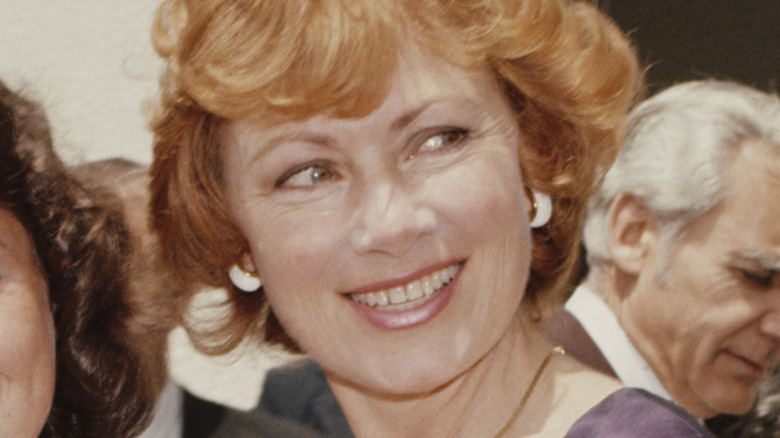
When Marion Ross was in high school, her family relocated from Albert Lea to San Diego. There, Ross dove headfirst into the theater world. Looking back on this time in a 1988 interview with the Los Angeles Times, Ross said she took her craft seriously at a young age.
"It was fortunate to come to San Diego because, as even today, theater abounds in San Diego," she said. "The Globe Theatre was renewing itself. We had the La Mesa Players, the Coronado Players, the La Jolla Players. You had little theaters everywhere all over the city. I would go and be in all their plays." She attended San Diego State University from 1946 to 1950, where she continued to hone her talent and get a foothold in the local theater scene.
While she was in school, Ross took on leading roles in various productions and quickly became one of the university's standout performers. A Congressional tribute from 1988 celebrated her academic achievements: "As a drama major at San Diego State, her raw talent was recognized, and she was voted the school's most outstanding actress during her Freshman Year." What seemed to charm Ross just as much as the performances was the culture around the theater community. In the aforementioned Los Angeles Times interview, Ross remembered going with her mother to meetings at the Globe and being enchanted by the people there. "Aren't these people wonderful?" she recalled thinking. "They all kiss each other and call each other darling."
She got through a hard marriage and a harder divorce
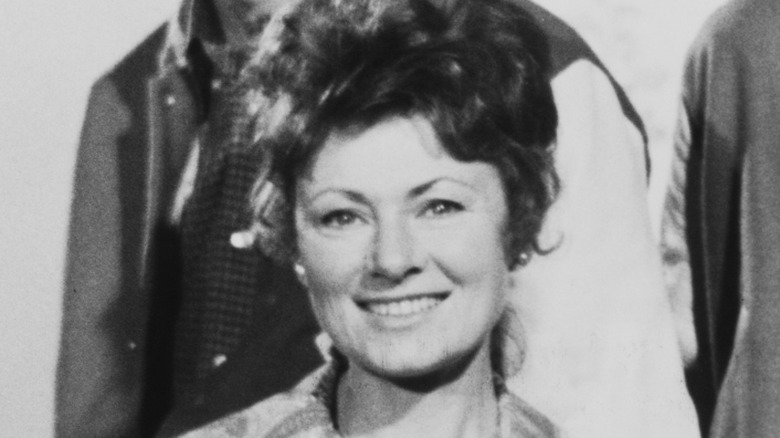
Marion Ross got married when she was young, and the relationship soon became far more difficult than she had imagined. In her memoir, "My Days: Happy and Otherwise," Ross wrote that while she was at San Diego State pursuing her dreams, she was determined "that romance would not get in the way." Still, she fell for Freeman "Effie" Meskimen after meeting him in the late 1940s when they were cast together in a local production of "Liliom." The two married in 1951 and had two children, Jim Meskimen and Ellen Plummer.
Ross noted that Freeman's struggle with alcohol took a toll on their marriage, writing in her memoir that in those years addiction wasn't treated like a disease. She also summed up the relationship with blunt honesty: "Our marriage was never one with any sort of balance." Remembering how Freeman reacted to her pregnancy, she wrote, "I never got the feeling he was really thrilled about our pending offspring."
After 18 years together, the marriage ended in 1969. The divorce left Ross in a financially and emotionally precarious place. She spoke about that period in a 2014 interview with Closer Weekly, saying, "When I was 40, I got divorced. Nobody had a job [for me], and I had two small children." In the same interview, Ross remembered: "I rented out one of the bedrooms in my house to pick up some money. I'd think, 'I made $35 today.' It was hard." In a 2020 YouTube conversation with his mother, Jim also reflected on how intense that period was for her.
Marion Ross got her Paramount contract at 22
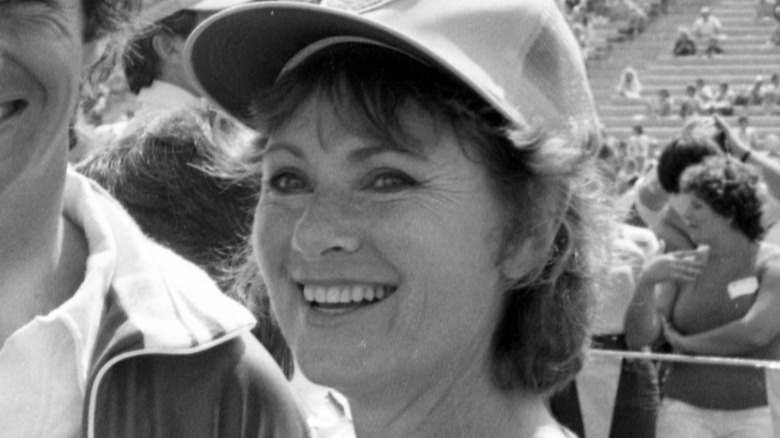
Fresh out of San Diego State, Marion Ross signed with Paramount. In her memoir, "My Days: Happy and Otherwise," Ross wrote, "I went from twisting and turning Scarfinets for thirty-five dollars a week at Bullock's to being a Paramount actress who made $150 a week." For a young woman just beginning her adult life, that kind of change must have made everything feel suddenly real. "I even went to a bank and opened an account so I could cash my checks," she recalled. "I had never had a bank account before, so seeing my name imprinted on checks was a very significant milestone."
In a 1988 interview with the Los Angeles Times, Ross credited her mother with helping shape her ambition from an early age. "Immigrants always want you to become somebody, make the most of yourself, that kind of talk," Ross said. "She was very inspiring, so wonderful. So I was programmed to be somebody, make the most of yourself, do something swell. And I did, but it was hard work."
Still, the hard work came with real excitement. As Ross wrote of those early Paramount days, "While a part of me entered into this new life with pragmatic maturity, there was, for sure, another part of me that tingled with excitement as I walked onto the Paramount lot each morning." Not before long, she was appearing in studio films such as "Forever Female" (1953), "Sabrina" (1954), "The Proud and the Profane" (1956), and "Teacher's Pet" (1958). Her early television break came with the 1950s sitcom "Life With Father," and from there, Ross kept building the steady career that would eventually lead her to "Happy Days."
She was careful to balance career and motherhood
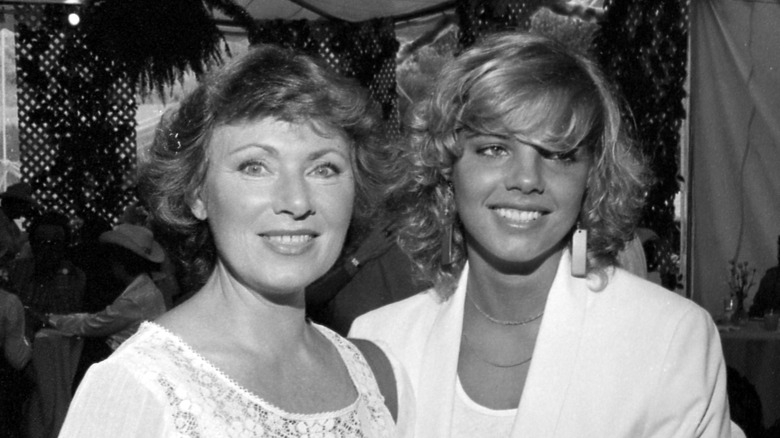
Motherhood shaped Marion Ross's choices long before "Happy Days" made her famous. She had two children: Jim Meskimen, who became an actor, and Ellen Plummer, who went on to work as a writer-producer on "Friends." In "My Days: Happy and Otherwise," Ross expressed that she always tried to put her kids' first. "In real life I many times questioned if I was doing a good job of raising my son and daughter," she wrote. "For the most part, I feel that I did. I think I even doubled up on my efforts to be as good a mother as I could because I knew their father, Effie [Freeman Meskimen], would be somewhat limited when it came to parenting."
After her marriage ended, Ross was not eager to let anyone disturb the home life she had built. She admitted as much in her memoir: "I was just not interested in a man coming into my life and invading the relationships I had with Jim, Ellen and my friends."
That need to stay close to home also shaped the work she chose. Television allowed Ross to keep earning while still being present for her family, and through the 1960s she appeared in shows such as "Rawhide" in 1962, "Route 66" in 1963, "The Outer Limits" in 1964, "Ironside" in 1968, and "The Brady Bunch" in 1969, where she played Dr. Porter. As she wrote in another passage, "I didn't feel I could commit myself to anything that was long-running or demanding or that would take me away from Los Angeles."
Her big break finally came in her mid 40s
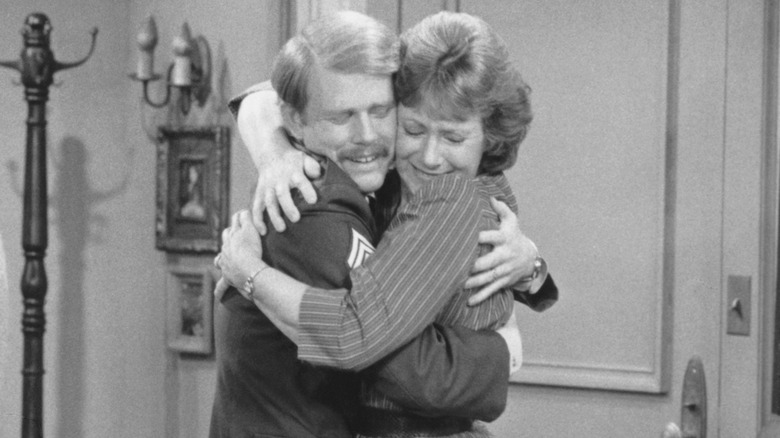
By the late 1960s, Marion Ross found herself in a somewhat difficult stretch. As she wrote in "My Days: Happy and Otherwise, " "I'm not quite sure as to why I hit a dry period of television work, but for whatever reason, I had to find something — anything — and fast." Everything changed when her agent called with news of a pilot called "Love and the Happy Days," and Ross went in for the role of the mother. "I was doing this play and then my agent calls and says, 'You have to try out for this pilot for 'Love and the Happy Days,'" she recalled to Fox News in 2018. I did the pilot as the mother and then I went back to the theater. My agent then said, 'Get out of that play. They've picked up this pilot...' And my part [in the show as Marion Cunningham] kept getting better and better."
The pilot aired as part of "Love, American Style" in 1972, two years before "Happy Days" became its own series. Ross, who was in her mid-40s by then, became a household name. Over 11 seasons, from 1974 to 1984, Marion Cunningham was the heart of one of television's most beloved families.
Even that success had a rough beginning. Ross later admitted that her early working relationship with Tom Bosley, who played Howard Cunningham, didn't click right away. "Tom didn't particularly want me to play his wife, so he was tough on me for a while," she told Boomer Magazine in 2009. But the tension did not last. "So we had to work our way through that," Ross shared on "Today" in 2018. "Because I learned to love him, I loved him and we became very close friends."
Marion Ross found love again in 1988
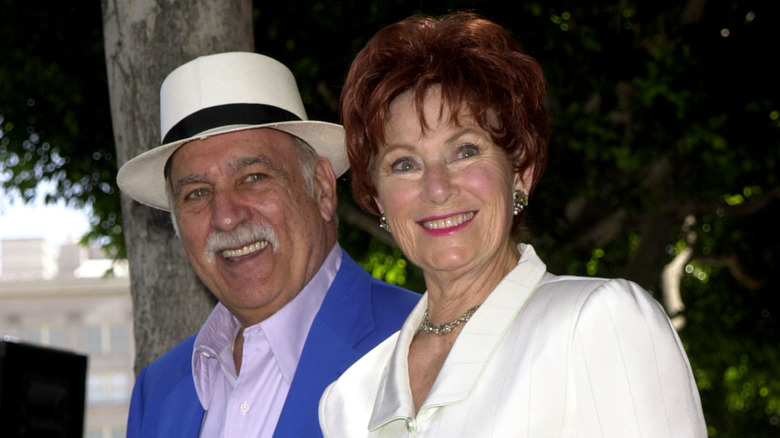
In 1988, Marion Ross met actor Paul Michael at the La Mirada Theatre, and she was drawn to him because he had no idea who she was. In "My Days: Happy and Otherwise," Ross wrote, "You become so accustomed to complete strangers knowing who you are ... that when you encounter someone who has no clue who you are, you are very attuned to it." Michael, a Broadway performer known for roles in productions such as "Zorba the Greek," had also appeared in TV shows like "Kojak," "Hill Street Blues," and "Dark Shadows."
Speaking to The Augusta Chronicle in 2006, Michael shared that he had never watched "Happy Days" and knew Ross only by name. "When she walked in the room, she looked really great," he recalled. "I didn't know if she was married, had a boyfriend, I had no idea, but I just opened my arms like this and she came right to me and we hugged each other without saying a word."
The two married the same year and remained together until Paul's death on July 8, 2011. He was 84 when he died of heart failure in Woodland Hills, California. In her memoir, Ross remembered the years they shared as some of the best of her life: "It may have taken until I was in my seventh and eighth decades, but my life in the 1990s and early 2000s was truly my happiest days." Losing him, she wrote, left her shattered: "I felt as if things weren't real, and when I would come out of my numb fog, I would feel such pain that I didn't see how I could move on."
In 2011, she and several Happy Days cast members sued CBS
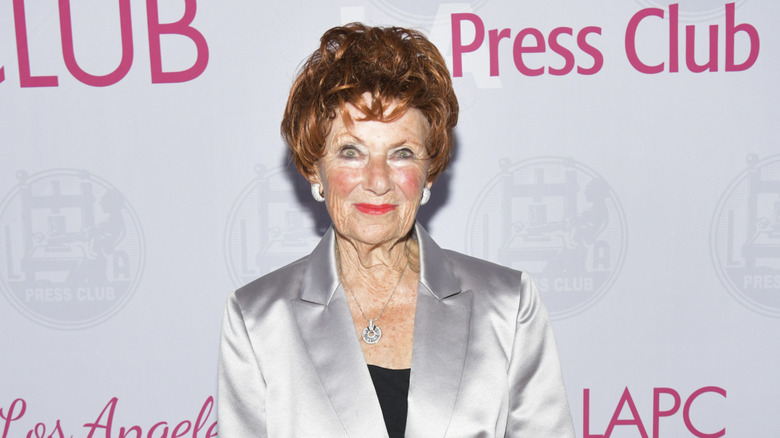
In 2011, Marion Ross joined several of her "Happy Days" co-stars in suing CBS over merchandising royalties they said had never been properly paid. As TheWrap reported at the time, the actors argued in court that their likenesses had been used on a long list of licensed products tied to the show without the compensation they believed their contracts guaranteed. They included items such as clothing, trading cards, lunch boxes, toys, and even slot machines.
The case lost some steam as it went along. According to the BBC, the court removed the actors' punitive damages claims. In a statement cited by the outlet, the company said, "We are thrilled that the court has thrown out all claims for punitive damages and significantly narrowed this to a case of contract interpretation." By 2012, the matter was resolved through a settlement. TheWrap reported that the actors were set to receive roughly $60,000 to $65,000 each, far less than the $10 million figure they had once asked for.
For the cast, the settlement was still presented as a meaningful result. Their attorney, Jon Pfeiffer, told TheWrap, "We are satisfied with the outcome. We will continue to receive all of the merchandising royalties promised to us in our contracts." Ross, however, did not let the lawsuit define her relationship with the show. She spoke fondly of the sitcom that made her famous in a 2018 Fox News interview and remembered the crew and cast of "Happy Days," some of whom had passed away by then, with affection. In 2020, she appeared alongside some of her former "Happy Days" castmates for a reunion.
In 2018, Marion Ross announced she retired from acting
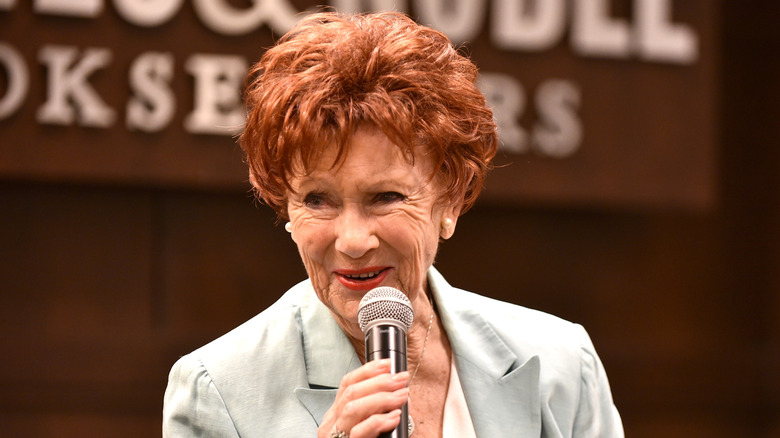
In February 2018, while promoting her memoir "My Days: Happy and Otherwise," Marion Ross told UPI that she had already considered herself retired for about two years. Ross said she had begun turning down offers for plays and television projects, explaining, "First of all, I've done it. And I want to enjoy my life and my children." She also told the outlet, "I just love being at the phase that I'm at now."
Speaking with Fox News a few months later, Ross, then 89, was clear about where she stood, stating, "I really am retired." Adorably enough, she did step out of retirement to reprise the role of Grandma SquarePants in a 2024 episode of "SpongeBob SquarePants," a character who made her first appearance back in 2001. The same year she made her "SpongeBob" debut, Ross was also honored with a star on the Hollywood Walk of Fame, a moment that literally cemented her legacy.
And yes, that legacy will always be connected to Mrs. Cunningham — and Ross is more than fine with that. In her 2002 Television Academy interview, Ross expressed how much it means to be associated with her "Happy Days" character. "I love being one of television's favorite moms. When people say, 'Do you mind when they call you Mrs. C.?' I say no. How lucky I am," she said.
In retirement, Marion Ross is all about spending time with loved ones
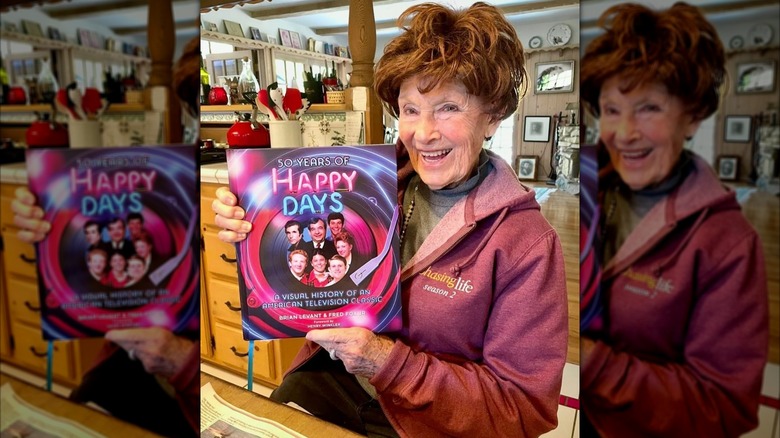
"Happy Days" star Marion Ross is almost a centenarian, and her family members continue to keep fans abreast of what she's up to. In October 2025, her son, Jim Meskimen, marked Ross' 97th birthday with an Instagram tribute, writing, "My mom and yours, Marion Ross, turns 97 today! She loves you, too!" The moment also drew attention from former "Happy Days" costar Henry Winkler, who honored her milestone birthday online. It's clear Mrs. C & The Fonz still got along in real life.
If there's one thing that can be gleaned from all of her social media content, it's that Ross radiates positivity. When Meskimen asked his mother what she'd do if she had access to a time machine in a 2020 YouTube video, for example, she replied, "I'm pretty happy to be right here, in this time, because I've been back, and I know what that is." In a 2023 Instagram video posted by Meskimen, Ross encouraged her fans to be true to who they are. "I just do whatever I want to do, and I'm free," she said. "I'm very free, and I want you all to be free."
Ross' joie de vivre runs deep. "My next goal will be to never die (I mean, I did promise Ellen, and a promise is a promise)," she wrote in her memoir. "I know that may sound ridiculous — like the most crazy, outlandish and far-fetched dream a person could ever have."