

Everything We Know About Bill Gates' Ex-Wife Melinda's Texas Childhood
We may receive a commission on purchases made from links.
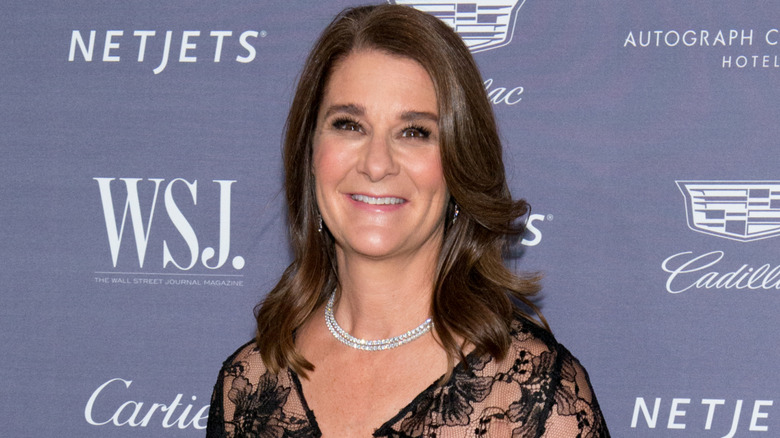
Melinda French Gates has always been a force in her own right. In the time leading up to her divorce from Bill Gates, she went through the difficult process of grieving the end of her marriage. "Thank God I had close, close friends who I could talk to on the hardest days and a good therapist," Melinda informed On Purpose with Jay Shetty. Now that the process is over, however, Melinda seems like she's better off without Bill, and the resilience she's displayed has deep roots dating back to her childhood in Dallas, Texas.
Born in 1964, Melinda grew up in a bustling household of six. Although her family relied on that era's typical division of family labor (single income, one parent full-time caregiver), her parents encouraged her to think beyond these norms. In her memoir, "The Next Day," Melinda tells a story about how she got busted at her Catholic school for wearing nail polish. Her mom, Elaine French, had to go to school to remove it. Luckily for Melinda, her parents were empathetic. Her dad, Ray French, gave Melinda an important message about gender equality. "The way the priests treated my mother and me that day was intended to diminish us . . . to reinforce a power hierarchy that placed us at the bottom," she wrote. "My father refused to see my mother and me that way, and in doing so, he taught me not to see myself that way either."
Computers were part of Melinda's home and school life
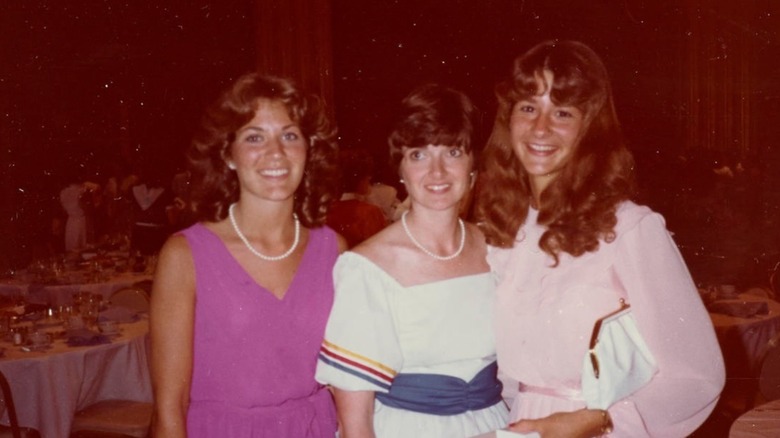
As an aerospace engineer, Ray French shared his tech interests by getting his family an early model Apple computer. Just like in the very early days of TV, home computers were rare in late 1970s and early 1980s households. Besides using their computer for coding, French Gates reveled in its early entertainment options. "I was just really curious about these adventure games and would play those mystery games on the computer," she recalled to the BBC. Even in her life before Bill Gates, she was focused on computer science.
Melinda also had access to computers at her high school, Ursuline Academy. Her math/computer science teacher, Mrs. Bauer, became a lifelong role model. This technology was so new that Mrs. Bauer was discovering its possibilities concurrently with her students. "Mrs. Bauer not only taught us how to code, but her dedication and encouragement changed what I imagined was possible for my future," Melinda captioned an Instagram post in May 2026. The admiration was mutual, long after Melinda was class valedictorian, her former teacher proclaimed, "She was one of the best students I ever had," in a 1995 interview with The Seattle Times.
Since Melinda's high school was all-female (students and instructors), she grew up believing women could do and be anything. Ursuline also encouraged its students to support the local community, and she volunteered at the county courthouse, a hospital , and a school. These experiences catalyzed her lifelong interest in philanthropy.
Melinda's parents instilled her with grit
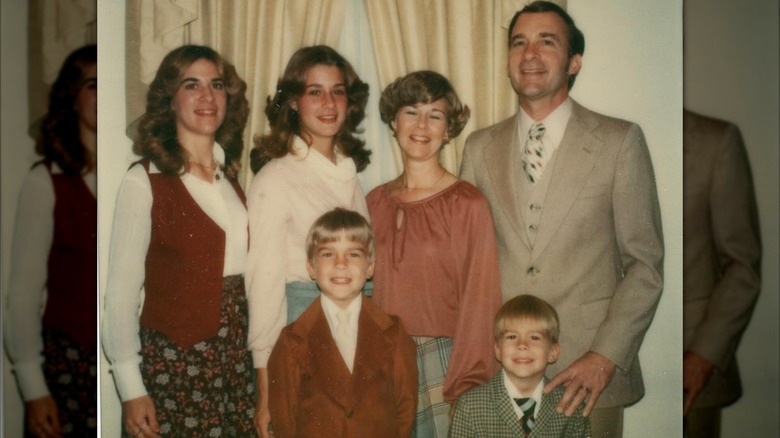
Elaine French, Melinda French Gates' mom, taught her daughter lessons about independence that have stuck with her since childhood. "'Set your own agenda, or someone else will set it for you,' was one of her mantras, and the answer I still give when people ask me about the best advice I've ever received," Melinda explained in "The Next Day." She later used her mother's timeless words to begin a 2024 op-ed in The New York Times, where she revealed an increased focus on supporting women through her philanthropic efforts.
Melinda's strong bond with her parents proved invaluable as she graduated high school and went to college. As another way to build resilience and independence, her parents had urged her and her siblings to spread their wings and seek post-secondary education far from home. After Melinda followed that advice and went to college over a thousand miles away at Duke University, her parents' trust and encouragement continued to resonate.
As a computer science major, Melinda quickly noticed that it was a male-dominated field. She also felt dismayed whenever she found gaps in her knowledge. Happily, Melinda achieved the education that her family had always envisioned. "I realized that maybe the thing that made me different wasn't that I was especially smart or especially motivated — it was that I was especially lucky because I had someone whose belief in me buoyed me through the hard moments," Melinda informed D Magazine in April 2025.