

Bizarre Commercials From The Early 2000s That Will Make You Miss TV Before Streaming
The early 2000s feel like yesterday to some people. Okay, time has marched on as some 2000s heartthrobs are barely recognizable today, but it seems like it just happened. It was an interesting time that mixed leftover sentiments from the 1990s and a sense of futuristic optimism. There's such a nostalgia for this era that companies are trying to recreate the commercial magic of the time, like with Justin Long's weird Ozempic commercial, in which he reunites with his 2000s computer commercial companion.
It must be remembered that this was a time right before streaming services premiered. Audiences watching television were unable to escape commercials. People had to watch them as they waited for their shows to return, or make a fast bathroom run during them to avoid missing any of what they actually wanted to watch. There was no skipping ads or paying more money to avoid them. Even though companies had the attention of potential customers, they had to stand out among the noise and onslaught of ads. That meant things could get a little weird. Sometimes it worked, while other times it made brands more infamous than famous. Here are some of the most bizarre commercials of the early 2000s.
Quiznos Spongemonkeys (2004)
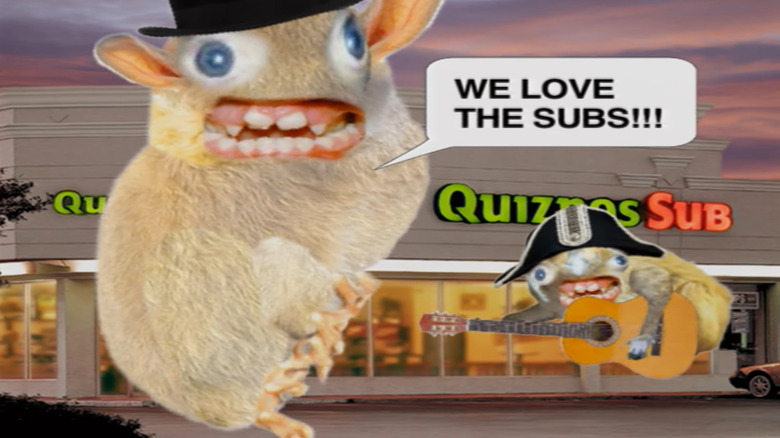
During the early 2000s, Quiznos, a chain of sandwich restaurants, was trying to compete in the competitive fast-food market. At the time, the big name in sub sandwiches was Subway, so Quiznos had to prove they weren't just like the other sandwiches in town to get people in the stores. Unlike most other sandwich places, Quiznos toasted the sandwiches upon order. Another way Quiznos stood out was the unhinged way they advertised the company.
The first time Quiznos made waves was with their ad featuring a pre-"The Big Bang Theory" Jim Parsons, playing a man who was "raised by wolves," and that is why he didn't understand that Quiznos toasted subs were better than the average sandwich. However, Quiznos really got noticed when they launched their bizarre ads featuring the singing "spongemonkeys," animated furry rodents with warped human eyes and mouths. Created by Joel Veitch, the spongemonkeys actually appeared on his website in the strange days of the early internet. Quiznos brought them into the new ad campaign that featured them singing about how much they "love the subs." The oddly catchy tune and unique animation made the campaign blow up. After the commercials aired, everyone knew that Quiznos had a pepper bar. It may have been odd, but it worked.
Luigi's Haunted Mansion Goth Girl (2001)
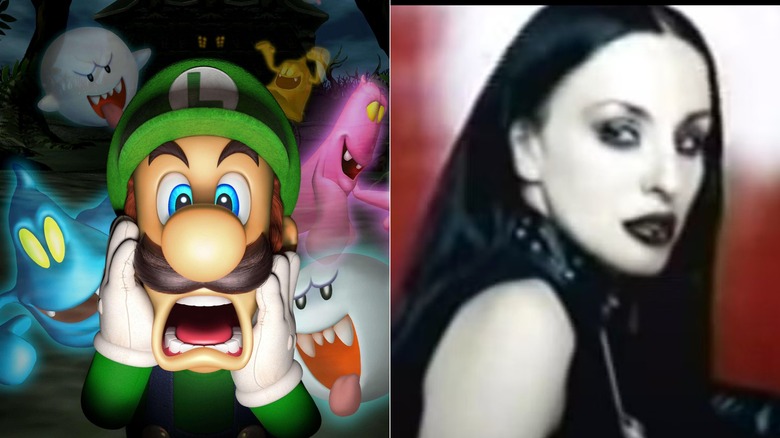
Since the games featuring the Super Mario Bros. became popular with the release of the Nintendo Entertainment System in 1985, Nintendo has created many Mario games. When Nintendo debuted the GameCube in 2001, the company soon released a new type of Mario game. "Luigi's Mansion" featured Luigi as the main playable character for the first time. In the game, Luigi had to bravely venture into a haunted mansion to fight off ghosts and other supernatural creatures while he looked for his brother, Mario.
The game, like all the other Mario games, was meant for people of all ages to play, so the main commercial for "Luigi's Mansion" seems very bizarre. The ad begins with a teen boy sitting on a couch in a strange red room next to a goth girl. He scoots closer, obviously interested in her, while she maintains a chilly exterior. When the boy gets right next to her, he leans down like he is going to kiss her neck, only to be distracted by the swirling red cube dangling from her necklace. Then he's transported into the creepy world of "Luigi's Mansion." After shots of the gameplay, the boy appears in the red room again, only this time the goth girl has turned into a GameCube. It makes one wonder, do GameCubes often disguise themselves as goth girls? And, if so, what does that have to do with "Luigi's Mansion"?
Snapple Boy Band (2002)
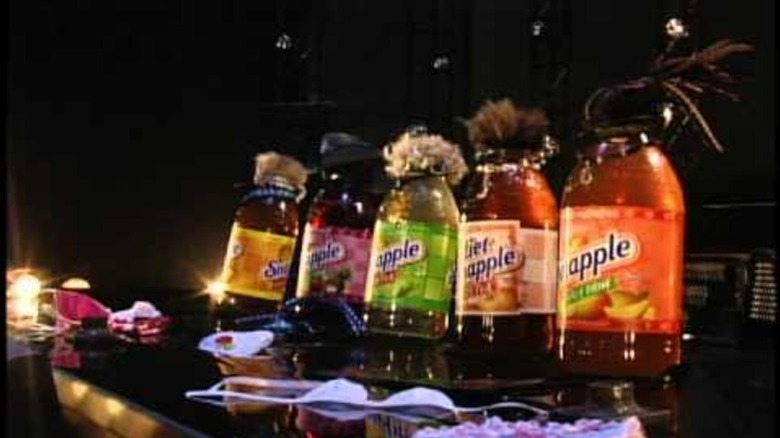
The late 1990s and early 2000s were the golden era for American boy bands. They dominated the music charts and fashion trends. Although they broke up in 2002, fans still want to know what each *NSYNC member is doing today. With that huge popularity, it makes sense that contemporary marketing would want to piggyback on the boy band trend. However, a juice commercial seems like a bizarre choice. In 2002, the juice company Snapple decided its drinks could fill the shoes of *NSYNC or The Backstreet Boys.
In the commercial, five Snapple bottles perform on a stage in front of a screaming audience of Snapple bottles. They dance and sing a song consisting of the lyrics "oh" and "yeah." To be fair, the song is kind of a banger. As they dance, as much as a glass bottle of juice can, one with hair similar to the questionable braids *NSYNC's Chris Kirkpatrick used to have in the early '00s catches on fire. Through the power of pop music magic and sweet moves, the bottle puts out the fire and continues the performance. As strange as the commercial may seem, it still had more cool points than the commercials featuring "The Snapple Lady," who responded to letters sent in by Snapple customers.
Nestea Launderette (2002)
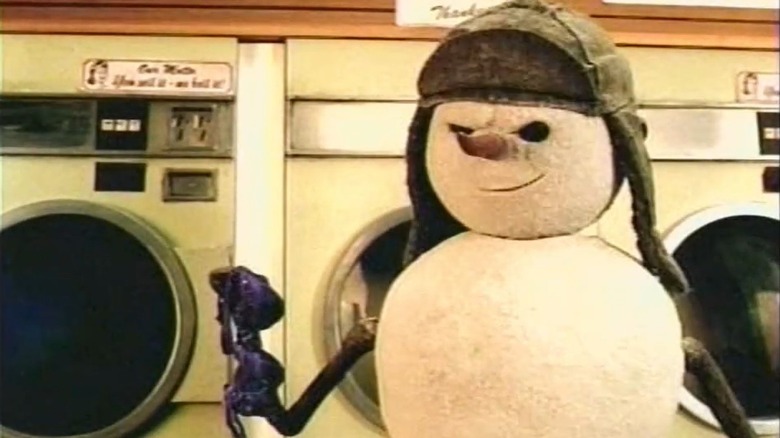
Nestea, a brand owned by Nestlé, makes bottled iced tea. Often, iced tea is associated with cooling off from the summer heat with a refreshing drink. So how could Nestea show this cooling effect in a hip new way during the early 2000s? With an edgy snowman. The snowman, unclothed except for a hat and boots, always remains cool no matter what time of year it is or what troubles he encounters because he drinks Nestea.
Out of all the Nestea snowman commercials, the strangest has to be the "Launderette" ad from 2002. The snowman is in a laundry mat drying his hat. He can't reach it, so he falls inside. Another laundry patron doesn't see the snowman and tosses her clothes in with the snowman before starting the dryer. The snowman melts, revealing that he had a skeleton under the snow for some terrifying reason. When he gets out of the dryer, he steals the Nestea that the sweaty woman who is trying to wash her clothes has. The skeleton drinks the Nestea to re-freeze himself into a snowman. When he's covered in snow again, he reaches inside his torso and pulls out the woman's bra before handing it to her. Besides the fact that a bra shouldn't ever go in the dryer because it can warp the elastic and underwire, this moment is strange because it seems like a flirtatious interaction between a woman and a snowman with a skeleton.
GEICO Caveman (2004)
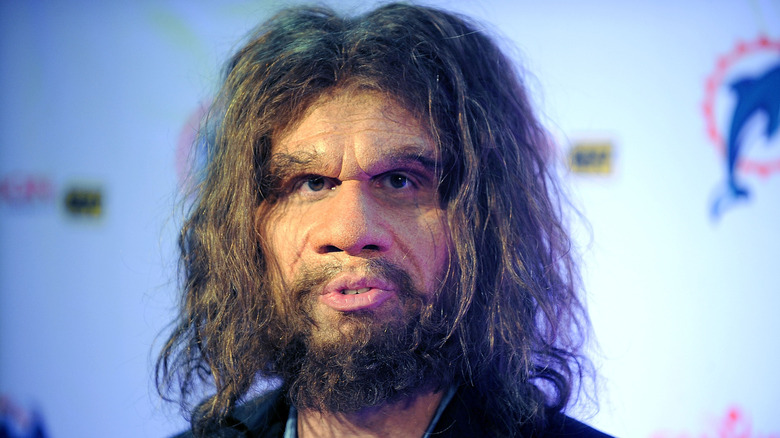
It's hard to make an insurance commercial interesting. Nobody wants to pay for insurance, regardless of how much it may save them in the future. GEICO tried to appeal to potential customers by showing how easy they made the process, so at least people could get it done quickly and without a hassle. The ad company, The Martin Agency, came up with the idea for GEICO to show how simple they make things so that "even a caveman can do it." The joke would be that a postmodern caveman would be offended by such a slogan.
The first ad featuring the emotionally but not physically evolved caveman premiered in 2004. A man in a suit explains how easy it is to use GEICO's website to get insurance that a caveman could navigate the site. The boom mic operator for the commercial drops the mic in outrage. He is a hairy, shirtless man with a sloping brow ridge, obviously a caveman who is upset that the company is using the cliché that cavemen are stupid. As unappealing as the cavemen were supposed to look, the GEICO caveman is a gorgeous hunk without the costume, and the characters had a charm to them. Maybe consumers of the early 2000s were the stupid ones because the campaign became so well-known and liked that the cavemen got their own short-lived sitcom on ABC called, of course, "Cavemen."
Six Flags Mr. Six (2004)
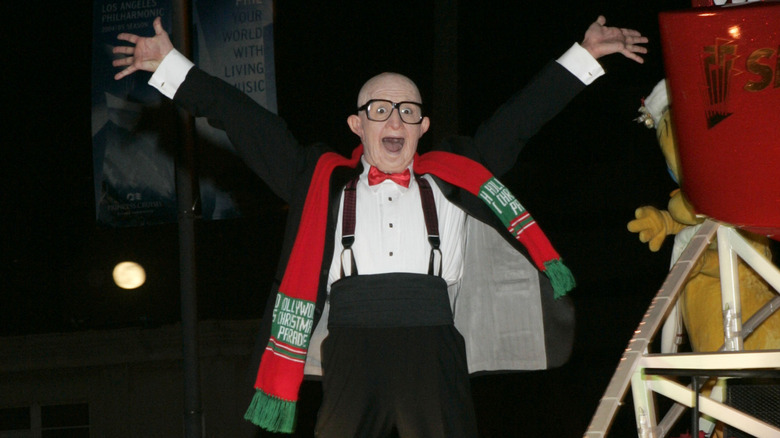
Apparently, in the early 2000s, Six Flags thought there was only one way to get people amped to go to an amusement park. No, it wasn't showing the death-defying rides as one would expect. It was a high-energy dancing old man named Mr. Six. The first commercials with Mr. Six appeared in 2004. Bored people in a suburban neighborhood don't seem to know what to do with their downtime. Thankfully, a bus pulls up, and a bald old man in a suit and oversized glasses comes out to dance for them. The song that he dances to, "We Like to Party!" by the Vengaboys, is a song that will never leave their heads after they hear it. The people follow the dancing man onto the bus like he's the Pied Piper, and they are off for a fun-filled day at Six Flags.
It seems odd, but people loved Mr. Six. Six Flags enjoyed a significant jump in park attendance after the Mr. Six commercials began. One Six Flags held a Mr. Six Look-Alike contest for which the winner received $2,500. Another park renamed its Pandemonium roller coaster "Mr. Six's Pandemonium" for two years.
Pepsi Gladiator (2004)
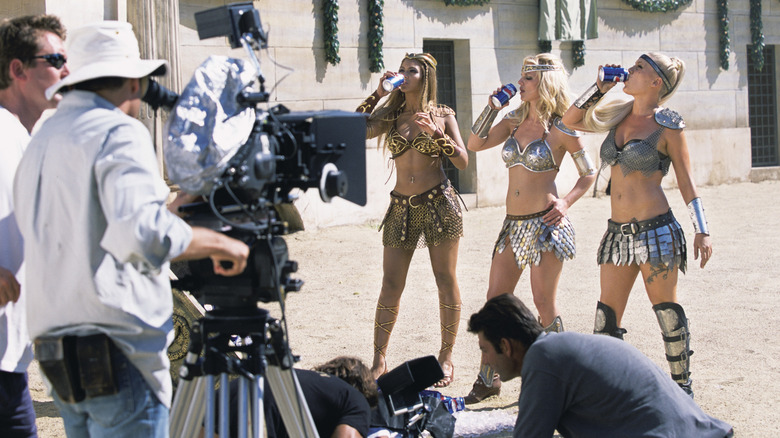
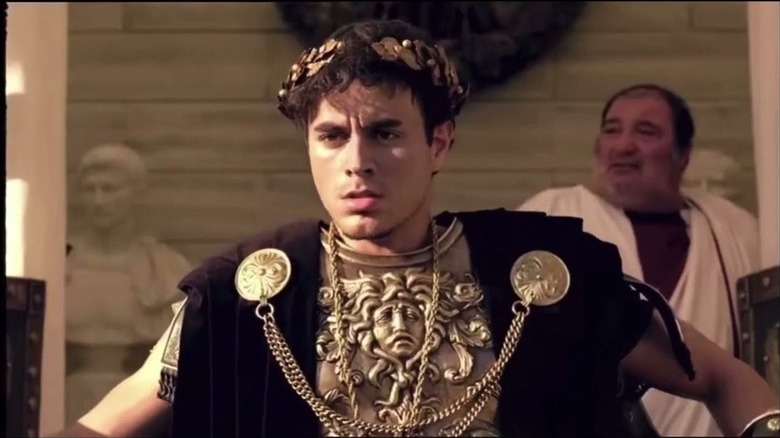
The Pepsi "Gladiator" commercial from 2004 is the stuff that iconic moments are made of. The soda ad set in a coliseum at a gladiator fight featured Britney Spears, Beyoncé, and Pink facing off against each other. This was a huge deal even at the time because these stars were part of pop culture moments that defined the '00s. In full gladiator gear, the singers take turns belting out Queen's hit "We Will Rock You." Seated in the stands are Brian May and Roger Taylor, two members of Queen. The performance and rowdy audience are presided over by the emperor, played by crooner Enrique Iglesias, who doesn't sing in the commercial. It's odd how Pepsi got so many famous people together for a short TV spot. Pepsi spent the time and money to get the stars to Rome to shoot not in, but near, the original Colosseum.
The funny thing is that the full ad never aired on American television. The director of the commercial, Tarsem Singh, said Pepsi thought it wouldn't work for American audiences, so the ad only played in other countries. Singh told Rolling Stone, "Like, 'This won't work for the American audience?' I'm saying, 'Really?' And somehow this never played during the Super Bowl. Otherwise, it would have been one of those iconic ads in America that people would have remembered."
Above the Influence PSA Sarah (2006)
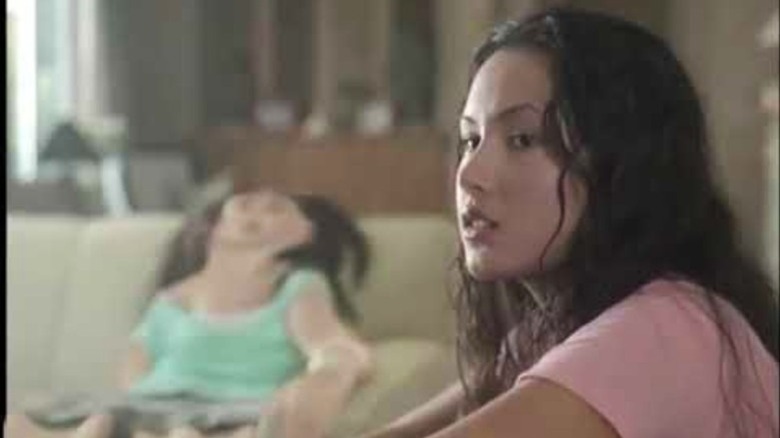
Public service announcements (PSAs) became cultural moments in the 1990s and early 2000s. Although they were meant to be serious and hard-hitting, many came off more comically than intended. In the early '00s, the National Youth Anti-Drug Media Campaign, part of the Office of National Drug Control Policy, made a series based on its "Above the Influence" campaign to show how drug use could negatively impact your life. The TV spots also had a link to the campaign's website for further resources on addiction or for help. Unfortunately, the spot about "Sarah" was so bizarre that it came off as funnier than it should have.
During the PSA, a crew member asks a girl named Sarah about her drug addiction problems. Sarah, sitting on a couch, looks more like melted wax or a deflated balloon than a person. Her friend, sitting in a chair closer to the camera, explains to those filming that since Sarah started using marijuana, that is all she does. Sarah has become too lazy to talk or move, so instead of doing fun stuff with her friend, she just lies on the couch. The extreme visuals mixed with the low-stakes consequences made the spot more memorable for how ridiculous it was, rather than deterring kids from trying pot.
Enzyte Smiling Bob (2004)
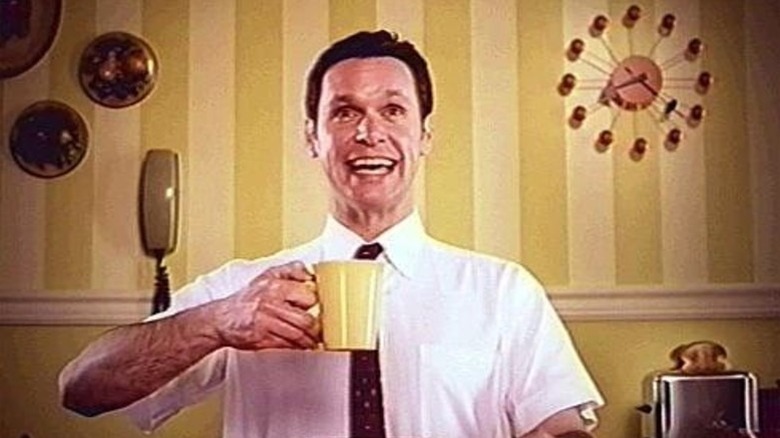
Some commercials haunt the nightmares of the children who saw them. The "Smiling Bob" ads from Enzyte were those types of commercials. Enzyte needed a way to advertise its "natural male enhancement" supplement in a way that was friendly enough to air on television. For some reason, Enzyte went with Bob. Bob, who is so shiny that he almost looks fake, has been smiling since he started using the "confidence booster" of Enzyte. But his smile seems too big and comes off more terrifying than as something to envy.
The colors around Bob are almost too bright and too happy. Even his wife, who is supposedly very happy with her husband, seems like she's wearing a mask of happiness rather than feeling it. The upbeat, simple tune of the background music makes it feel that much more ominous. The sexual innuendo of the male enhancement drug, like a neighbor's sagging garden hose, may have gone over the heads of kids watching the ads, but that never-ending smile stayed with them.
Steve Warshak, who was the creator of Enzyte as well as the idea for "Smiling Bob," was eventually sentenced to 25 years in prison for fraud. The promise of Enzyte's natural enhancements developed by doctors was a false claim made to sell a supplement that didn't work. Maybe creepy Bob was trying to tell audiences to stay away.
Kellogg's Screaming Pop-Tarts (2004)
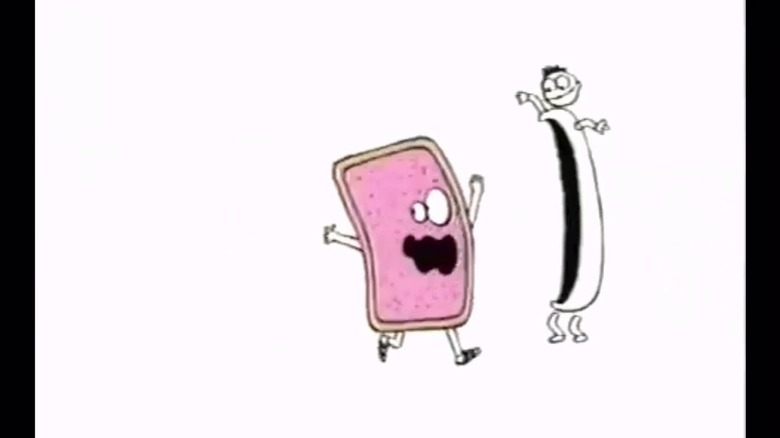
Sometimes, the best way to get attention is to scream. At least that is the angle Kellogg's went with during its early 2000s "Crazy Good" campaign for Pop-Tarts. The commercial featured simple animated line drawings with no background or details. The main focus of the ad is just a Pop-Tart screaming and running from everyone who wants to eat it. When the Pop-Tart thinks it is out of harm's way, it runs into a giant hole that is actually a kid's stomach.
It is bizarre, but the screaming got people's attention. It could draw people back from leaving the room to get a snack. Sometimes, a scream just cuts through the noise. It worked for Kellogg's because the campaign helped boost Pop-Tarts sales. The company thought it worked so well that they brought back a social media campaign in 2012 based on those earlier ads. Many at the time thought the art in the commercials was by animator Don Hertzfeldt, but Hertzfeldt has said he had no involvement in the ads.
Lay's Dentures (2004)
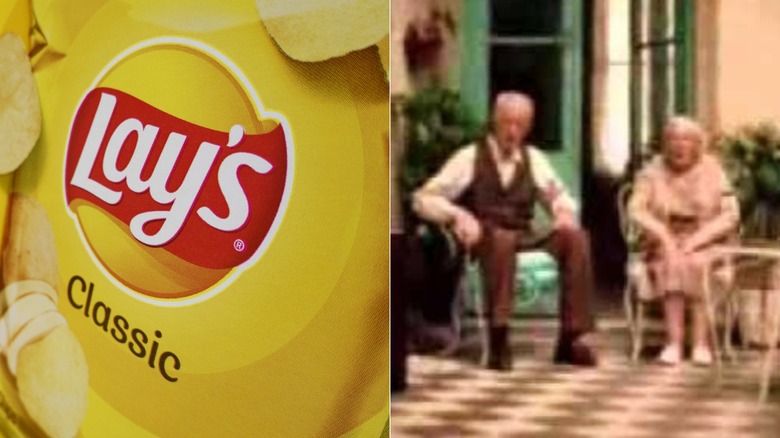
Lay's potato chips cut through the advertising noise in 2004 with an ad starring an elderly couple. The commercial begins with the couple's younger relative leaving. On his way out, the guest drops his bag of Lay's chips. The elderly man and woman both spring into action for the bag. While the old lady stands first, she slowly makes her way to the bag. The old man picks up his cane to hook her around her ankle, making her fall on her face. He hobbles past, even pushing her back down with his cane as she struggles to rise. The man reaches the bag first and picks it up in triumph. However, his victory is short-lived as the woman holds up the man's dentures.
Although the commercial is short, the bizarre visuals got people watching. Nowhere else do audiences usually see brutal fights between the elderly, especially a couple that appeared to be married or connected somehow. It's a pretty vicious sight while still not being brutal. If the chips are good enough for Grandma and Grandpa to have a knock-down, drag-out fight over them, then they must be worth buying, right?
Burger King Subservient Chicken (2004)
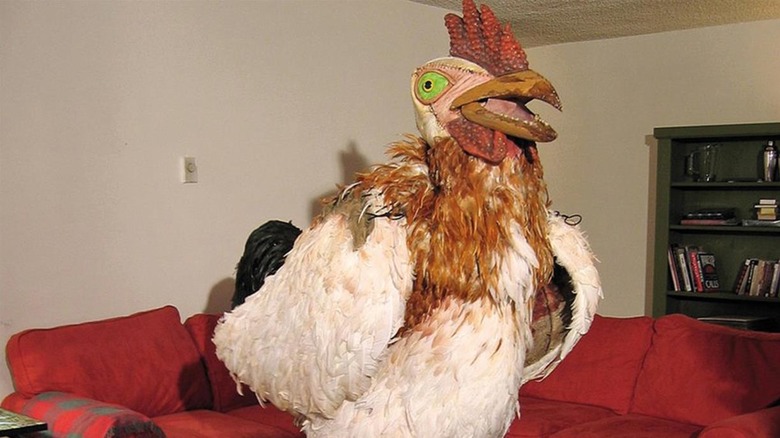
Food commercials used to star a lot of cute kids who would soon disappear after one or two ads, leaving audiences to wonder what really happened to the kids from old school commercials. One old Burger King commercial featured an unknown Sarah Michelle Gellar. But in 2004, Burger King went in an entirely new direction with the Subservient Chicken ads. The company wanted to boost sales on its line of chicken sandwiches, so what better way to sell them than a man in a creepy chicken costume obeying everyone's command? It apparently made a lot of people hungry.
As customers could "have chicken your way," the giant chicken followed orders on the commercials. The real bizarre moment came when Burger King and the marketing company launched the Subservient Chicken website, where a video of the chicken would obey typed commands. If the user typed something inappropriate, the chicken waved an admonishing finger at the screen. The ad campaign blew up as people kept forwarding the unhinged site to everyone they knew. It opened up a whole new idea for marketing that most large companies hadn't thought of before. The campaign was so odd and iconic that in 2026, the "Scary Movie" marketers launched a Subservient Ghostface site to promote the horror parody. Unlike the chicken, Ghostface will twerk on command.