

5 Modern TV Shows That Are A Must-Watch If You Miss Family Ties
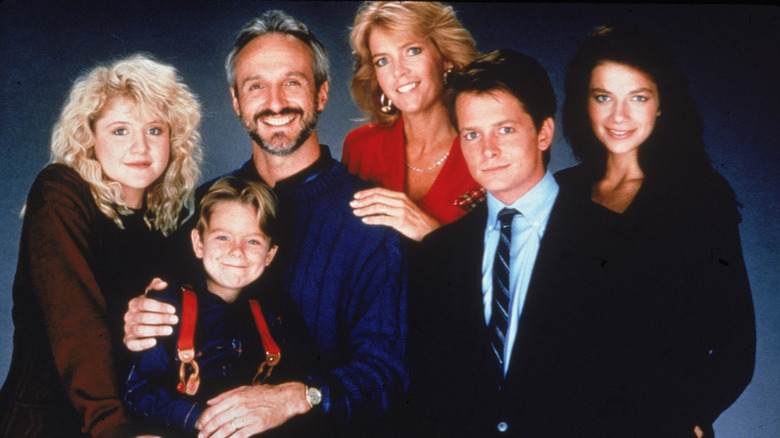
One of the greatest sitcoms of the 1980s, if not of all time, "Family Ties" mixed modern commentary with classic comedy. Two ex-hippies who still leaned left, raising three kids, one of whom is a Reaganite. The show opened the door for interesting conversations and big laughs, all while turning Michael J. Fox into an icon. It was how the show took a basic concept — two opposing sides butting heads — and added the family element that made it become such a big hit. And while "Family Ties" aired its final episode in 1989, the show has continued to inspire modern TV sitcoms.
While they may not directly follow the format that "Family Ties" did, these shows owe at least a part of what made them great to Gary David Goldberg's creation. The ability to blend political and social conversations with a cozy, light attitude that never singles out any person or group to be explicitly mocked, makes these modern sitcoms endlessly watchable. And, just like "Family Ties," they are each proving to be generational classics in their own right.
Schitt's Creek discusses class politics with plenty of humor
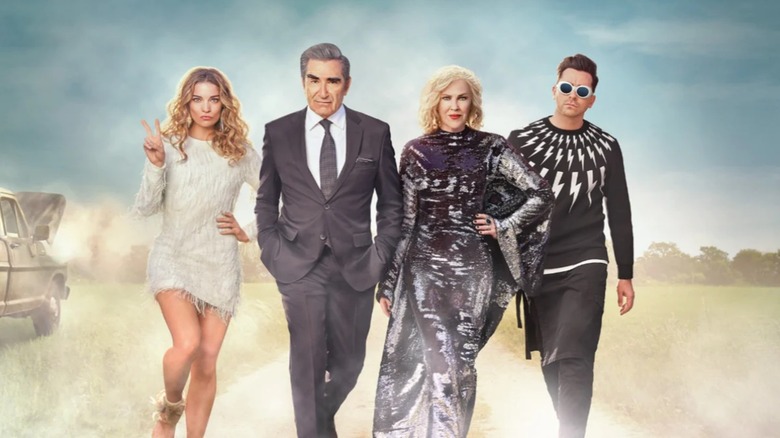
Created by and co-starring Eugene Levy and Daniel Levy, along with Annie Murphy and the incomparable Catherine O'Hara, "Schitt's Creek" takes the fish out of water trope and brings it to an extreme level. While the series may have more in common with "Green Acres," the elements it shares with "Family Ties" can be found on the edges. Like "Family Ties," a lot of the comedy in "Schitt's Creek" comes from differing generational and economic viewpoints. The once wealthy Rose family, suddenly finding itself trapped in a small town and living in a rundown motel, learns to see, for lack of a better term, "country folk" as their peers.
At the same time, Johnny and Moira Rose come to see their children, David and Alexis, as adults, as the two are forced to grow up and learn to live without the glitz, glamor, and privilege that come with being millionaires. While "Schitt's Creek" doesn't shy away from pointing out the oddities of the locals and the Roses, it also doesn't judge the characters for their peculiarities or initial biases. Instead, the series spends six seasons focusing on what makes everyone human and how we can all learn and grow together with plenty of laughs along the way. And while "Schitt's Creek" sadly came to an end after six seasons, there's more than enough laughs in each episode to keep fans rewatching for years to come.
Young Sheldon picks up where Family Ties left off
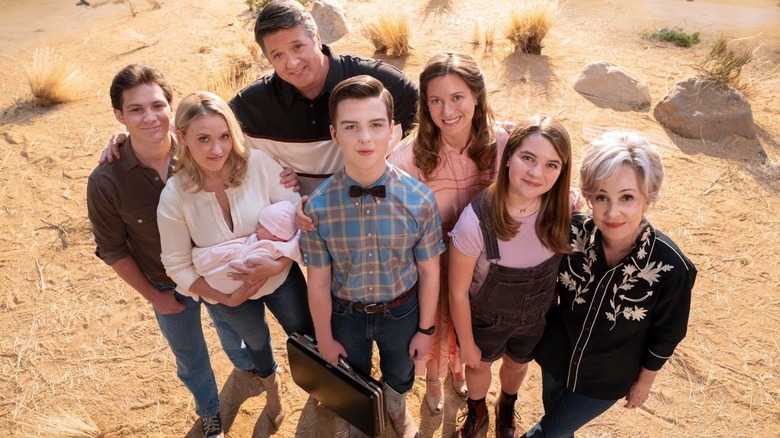
"Family Ties" came to an end in 1989, which also happens to be when "Young Sheldon" starts. The two series also share the overriding concept of a family made up of different types of people working to understand one another. It's hard not to see similarities in the children of both shows. Sheldon Cooper and Alex P. Keaton are academically minded, while George Cooper and Mallory Keaton struggle with their schoolwork, and Missy Cooper and Jennifer Keaton are athletic and often feel ignored by their families. And like "Family Ties," fans got to see the transformation of the cast of "Young Sheldon" as they grew up.
Both shows are also willing to take time to focus on serious issues, including mental health, death, and grief. But, like "Family Ties," "Young Sheldon" handles these issues with warmth and, when appropriate, humor. And, if watching all seven seasons of "Young Sheldon" leaves a fan wanting more, they have "Big Bang Theory" and "George & Mandy's First Marriage" to keep the laughs coming. Though each of the three shows has its own distinct style that may not work for every viewer. "Big Bang Theory" in particular is a little more blunt with its comedic stylings.
Parks and Recreation is Family Ties on a governmental level
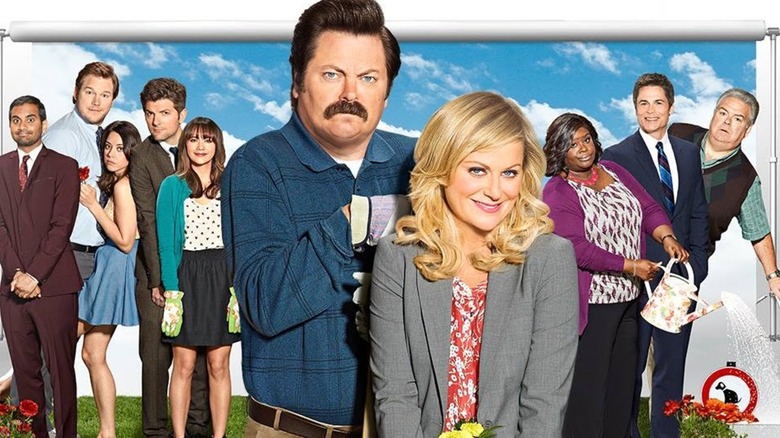
It's hard not to imagine that Nick Offerman's Ron Swanson wouldn't be friends with Michael J. Fox's Alex P. Keaton if the two characters met. The two share similar political beliefs and find themselves surrounded by people who very much disagree with their stances. And, in both cases, the characters grow and, while never changing their overall ideologies, come to better understand the other side. While "Parks and Recreation" struggles to find its way in the early seasons, the heart and tone are there from the start. The series, about Amy Poehler's Leslie Knope and the Pawnee, Indiana parks department, mixes humor with civics lessons, ensuring that fans will certainly laugh while learning something about local government along the way.
The series keeps viewers smiling from beginning to end, all while building a world around the characters, fleshing out the town, and introducing new foils or obstacles for Knope and the gang to deal with. The romance between Pohler's Knope and Adam Scott's Ben Wyatt is an added bonus, giving everyone a couple to root for. But what truly makes the series great is how each character constantly evolves into something more than what they were before. And there are few things as funny as how Rob Lowe puts so much emphasis on "literally" every time he says it.
New Girl's Schmidt is the millennial Alex P. Keaton
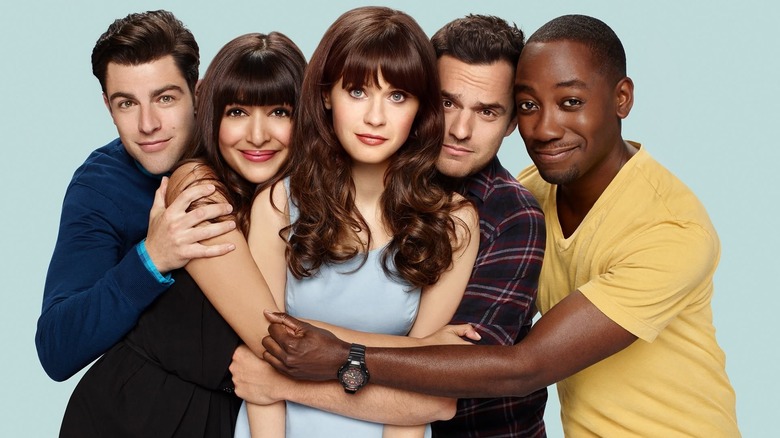
He dresses for success, is business minded, and has some conservative views that his friends and family don't really agree with. Max Greenfield's Schmidt on "New Girl" is essentially the Alex P. Keaton of the millennial generation. And, just like "Family Ties," he isn't the only one who keeps the laughs coming. "New Girl" is a found family sitcom that pretty much throws out its initial premise — Zooey Deschanel's Jessica Day is weird — to become an ensemble series, and it's all the better for it.
"New Girl" has a stacked cast that includes Jake Johnson, Hannah Simone, and Lamorne Morris. Trying to decide which "New Girl" is the best is like trying to figure out which slice of pizza tastes the best. Each character gets to shine in almost every episode. While the series does hit on some more cartoonish concepts than "Family Ties" ever did, the show keeps the focus on the characters. It also doesn't hurt that watching episodes almost feels like hanging out with some friends, which is more akin to another classic 1980s sitcom, "Cheers."
Modern Family is like Family Ties on steroids
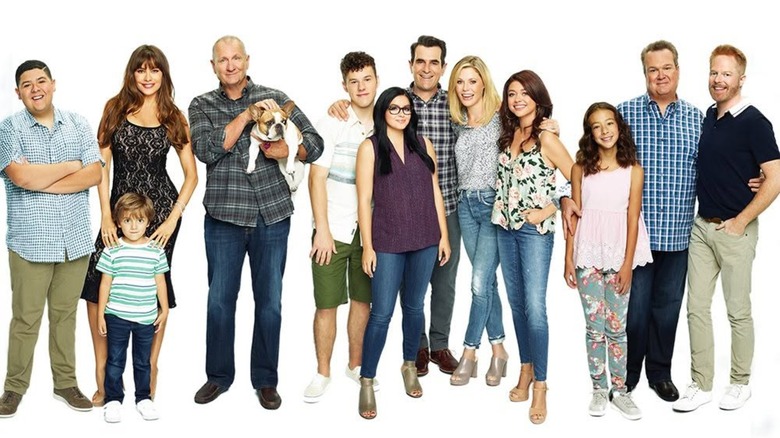
If the draw of "Family Ties" was watching a family of five (later six when Andy was born) work through their differences, "Modern Family" takes the same idea and dials it up to 11. Centered on three families all connected by the Pritchett bloodline, "Modern Family" has at least one character every viewer will fall in love with. And, similar to "Family Ties," much of the show's momentum comes from generational differences within the family, but where "Family Ties" sticks to two generations, "Modern Family" broadens the scope by bringing in a third.
Because of its focus on three generations of the same clan, "Modern Family" showcases how the actions of parents directly affect the upbringing of future generations. At the same time, the series also reflects how seeing one's own kids become adults can change a person and force them to consider their own shortcomings. And while "Modern Family" never gets too serious when looking at these elements, they play throughout the series, always informing the characters and the storylines. As for the comedy, while the show is all-ages friendly, "Modern Family" isn't afraid to get a little transgressive with the humor from time to time. Some jokes will go over younger audiences' heads, but the parents will love it.