

Not Queen Elizabeth, Not Prince Phillip: Meet The Longest-Lived Royal In British History
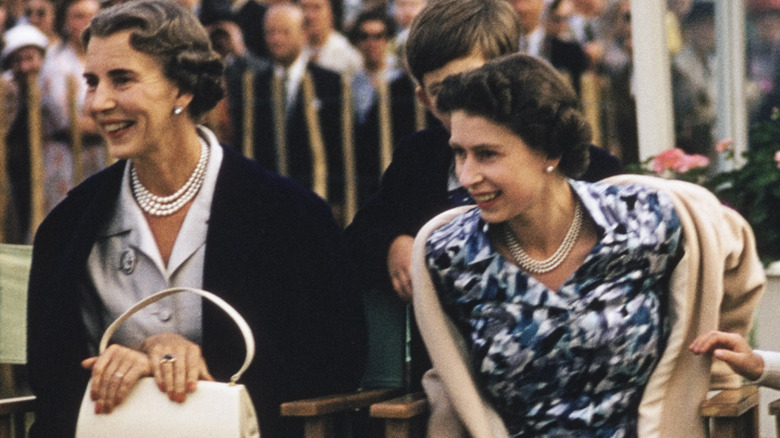
Princess Alice, Duchess of Gloucester died on October 29, 2004 at the age of 102. Although other royals, like Queen Elizabeth and Prince Philip were known for their longevity, neither made it to their 100th year. Even Elizabeth's famously long-living mother — Queen Elizabeth, The Queen Mother — died at the age of 101, just months shy of her own 102nd birthday. This makes Alice the longest-living royal in modern times.
A glance back at Alice's life shows that her many years of strength and fortitude were far from guaranteed. When Alice was born in December 1901, the child and infant mortality rate was still incredibly high. Per Statistica, 228 of every 1,000 children born in 1900 would die before their fifth birthday. Alice actually nearly died at the age of 14 after an incident at a popular swimming spot in Scotland thrust her into peril. Following this terrifying ordeal, Alice did not stop taking risks, instead traveling the world unchaperoned, attempting to hike Mount Kenya, and even smuggling herself illegally across borders.
Throughout all these adventures — and occasional misadventures — Alice remained faithful to the monarchy. Although she was not originally primed to take on a big role in the British royal family, the unexpected abdication of her brother-in-law, King Edward VIII, pushed her into the spotlight. Alice ultimately dedicated her life to duty, attending important royal events and sponsoring numerous patronages until the very end.
Alice, Duchess of Gloucester, hailed from an illustrious family
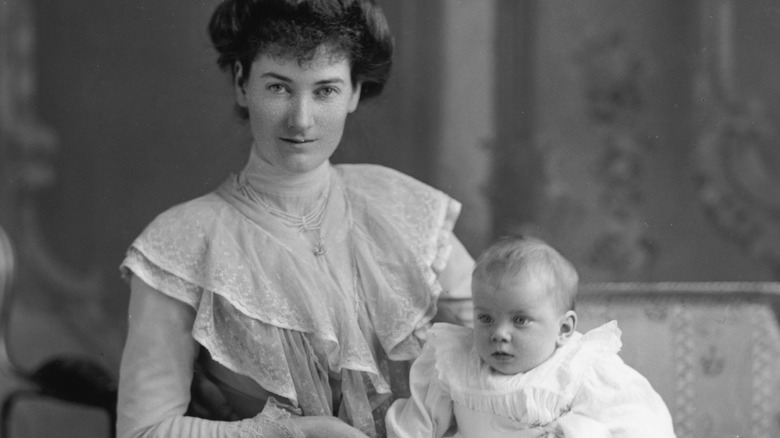
Alice, Duchess of Gloucester, was born into one of the most important families in the United Kingdom. Her father was John Charles Montagu Douglas Scott, the seventh Duke of Buccleuch and ninth Duke of Queensberry. Her mother was Lady Margaret Bridgeman, Duchess of Buccleuch and Queensberry. While all of these titles may sound beyond grand, Alice was not actually a duchess by birth. Instead, she received a lady title after her birth in London as was customary for the daughters of dukes. Her duchess title would only come many years later after marrying one of King George V and Queen Mary's younger sons. That said, it's important to note that Alice had royal blood in her own right.
Alice's family's Duke of Buccleuch titles can be traced back to the days of King Charles II, according to The Guardian. Apparently, the monarch had an extramarital affair with a woman by the name of Lucy Walters. When Walters gave birth to a baby boy, Charles decided to make him the Duke of Monmouth. The duke married the Countess of Buccleuch and had children with her. Although his Monmouth title was discarded after his death, the duke's eldest son — Charles' grandson — inherited Buccleuch, which by then had been made a Duchy. Thus, Alice could actually trace her heritage back to the days when her family was literal royalty.
She was presented at the court of King George V
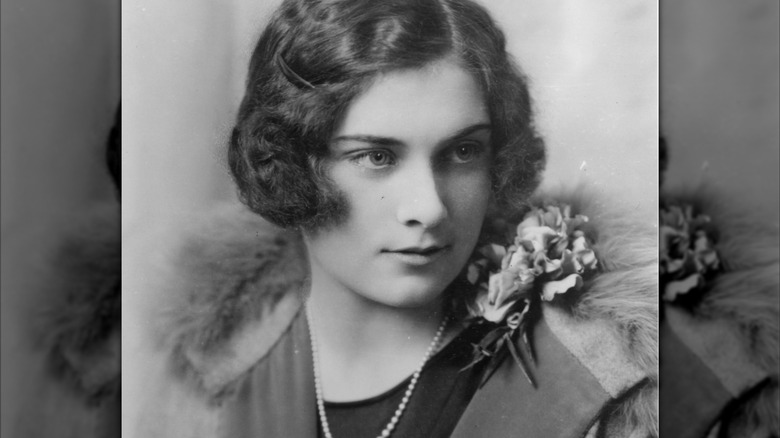
Alice, Duchess of Gloucester, was born in an era when women of a certain societal standing were expected to present themselves at court. Given her family's close royal ties, it would have been impossible for Alice to dodge this tradition — even if she really wanted to. Because of this, when King George V and Queen Mary threw a fete for their daughter, Princess Mary, in 1919, Alice's parents decided that it was time for her to make an appearance at court.
Many young women of Alice's era would have been thrilled with this opportunity, but Alice was not as enthusiastic as some of the other girls in her milieu. She was far too self-conscious about the shape of her body to look forward to this big moment, and when the actual day arrived, Alice felt so uncomfortable in her own skin that she actively hid from potential dance partners. In fact, the young aristocrat went so far as to hide behind the palace pillars so as to avoid being seen.
Alice did not enjoy herself in the slightest on that occasion, and she made that point relentlessly in her 1991 book, "Memories Of Ninety Years." Alice described the party as both "dreadful" and "miserable" (via The Guardian). She also thought that the women who spent their days preparing for the balls of season led a "pointless and boring" existence. Alice had a more exciting life in mind.
Princess Alice traveled extensively
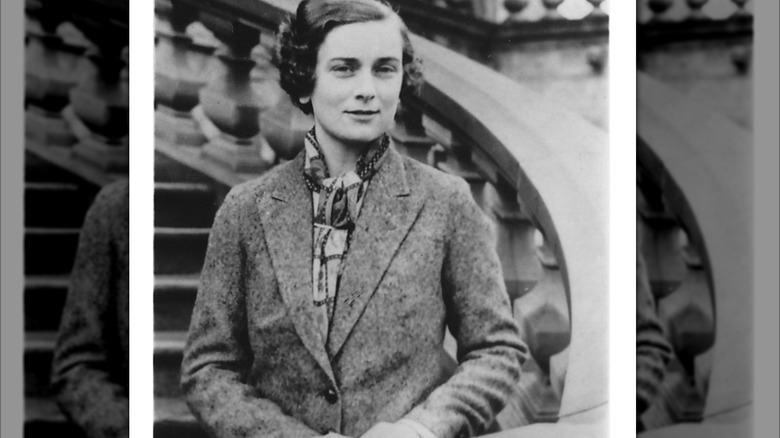
Although Alice, Duchess of Gloucester, was not big on debutante balls, there was something else that she found far more exhilarating — travel. Throughout her earliest years, Alice accompanied her parents as they bounced between family homes and estates throughout Britain. She learned how to shoot on the Scottish moors, travel down to London by train, and live a quasi-nomadic lifestyle between several grand homes. These unusual experiences gave Alice a healthy dose of curiosity about the world. When she became a young woman, Alice began to dream of faraway countries rather than new dresses or trendy hairstyles.
Back in Alice's day, it was unusual for a woman — especially an unmarried one — to travel unaccompanied. Nonetheless, Alice became a regular globetrotter, heading to countries including Kenya, India, and Afghanistan. While journeying through Africa, Alice crossed paths with fascinating people like Karen Blixen, the author of "Out of Africa." In India, she spent time with her younger brother, Lord George Francis John Montagu Douglas Scott, who was stationed there with the military.
Even though Alice had interesting experiences abroad, she rarely spoke of them to her friends or family. Instead, she kept her thoughts to herself. As reported by the Independent, her nephew, Group Captain Townsend, once wrote, "She was painfully shy, so that conversation with her was sometimes halting and unrewarding, for you felt that she had so much more to say, but could not bring herself to say it."
Alice, Duchess of Gloucester, experienced her fair share of peril
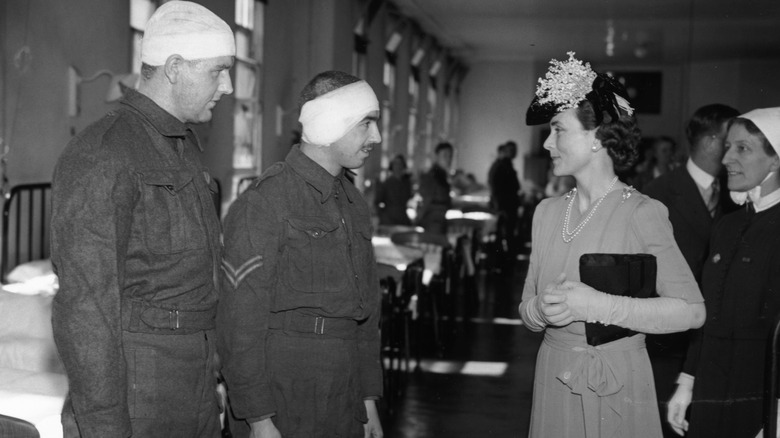
Alice's adventurous spirit may have led her across continents, but it also introduced her to a great deal of danger. Even when she was just a teenager, Alice chose excitement over safety — a move that almost cost her life. Indeed, at the age of 14, Alice waded into a dangerous current in Solway Firth. The waters carried her away and just as she was about to drown, Alice found herself praying for a miracle. "The next instant my feet touched rocks," Alice recalled in her 1983 book, "The Memoirs of Princess Alice, Duchess of Gloucester" (via Tatler). "I was able to stand up and get my breath back. ... In return for my life, I had promised to dedicate it to some useful purpose." Ultimately, for Alice, that purpose was public service.
The incident in Scotland was not the only time Alice's adventures led to danger. During her world travels, the future Duchess of Gloucester decided to sneak into Afghanistan. At the time, it was illegal for Alice to travel to the country, but she disguised herself as an Afghan boy and ventured into an area prohibited to women. While Alice was not caught, word of her actions eventually made way to Britain, where government officials were quite displeased with her antics. According to The Guardian, Alice would later write that her adventure sparked unpleasant disagreements with the authorities.
She became an artist but rejected the bohemian lifestyle
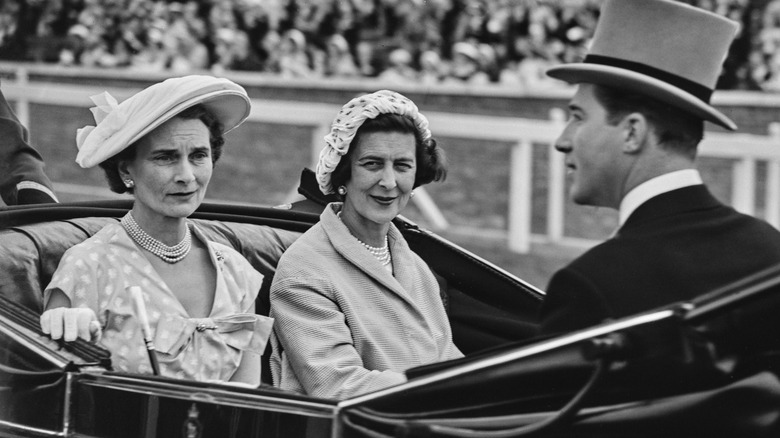
The Duchess of Gloucester's adventures were very unusual for a woman of her era. Because of this, Alice found that she had to fund many of her travels herself. Although Alice never had a job in the traditional sense, she did paint some lovely watercolors that very much appealed to the buyers of her time. She even held an exhibition at Walkers' Gallery in Bond Street, where her paintings of the Kenyan countryside proved especially popular. Describing the duchess' work on his personal website, Richard Stone, who once sketched Alice, wrote, "Princess Alice was a keen amateur painter, and in her youth produced some delightful watercolors on her travels. ... Her work was most impressive."
Interestingly, while Alice was busy making art in Kenya, she crossed paths with the famous Happy Valley set, which included the illustrious writer, Evelyn Waugh. Although she was an artist herself, Alice was unimpressed by the Happy Valley bohemians, whose behavior didn't combine well with her own more subdued personality. Indeed, while the remainder of the artists drank, smoked, and partied, Alice preferred to spend time painting in the great outdoors. She found solace in the gorgeous Kenyan wilderness — and humor in the local fauna, particularly the monkeys. Ultimately, Alice chose to focus more on making art than mingling with other artists. This allowed her to develop her craft, experience her adventures, enjoy herself without the drawbacks of the bohemian lifestyle.
Alice married the Duke of Gloucester at the age of 34
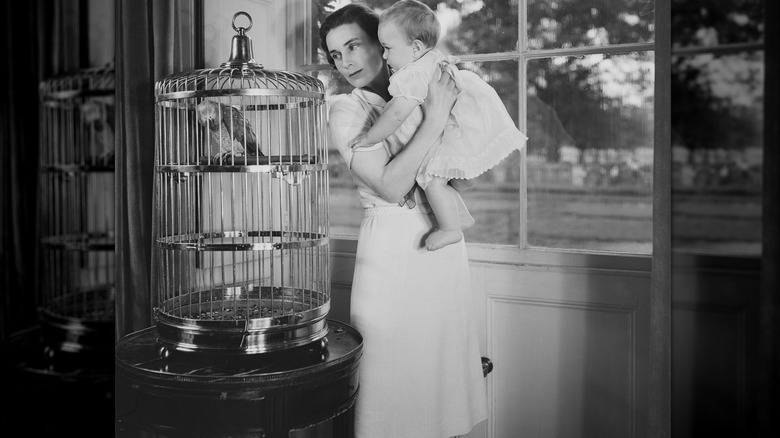
Alice enjoyed traveling the world, but when she was 34 years-old, she decided to settle down. In 1935, Alice married Prince Henry, Duke of Gloucester. The son of King George V and Queen Mary, Henry was the blue-blooded sort of man whom Alice had always been expected to wed. Because of the high-profile nature of the match, society expected Alice and Henry to celebrate with a massive royal wedding. However, when Alice's father died just before the big day, it was decided that a large ceremony would be unseemly. Ultimately, they said "I do" in a small, private ceremony held in the Buckingham Palace chapel. By the time the wedding was over, Alice was officially Princess Alice, Duchess of Gloucester.
Following their wedding, Alice and Henry set out to start a family, as couples of their rank were expected to do. Before long, though, it became clear that things would not be so simple. Alice and Henry experienced fertility issues, including several heartbreaking miscarriages. These medical events were taxing on Alice's health, and after one particularly challenging episode, Henry and Alice traveled to Kenya, where she could rest in a place full of good memories. That said, Henry and Alice's fertility issues continued, and it wasn't until six years after their wedding that they finally welcomed a son, Prince William. A second boy, Prince Richard, was also born in 1944.
Princess Alice continued her travels with the Duke of Gloucester
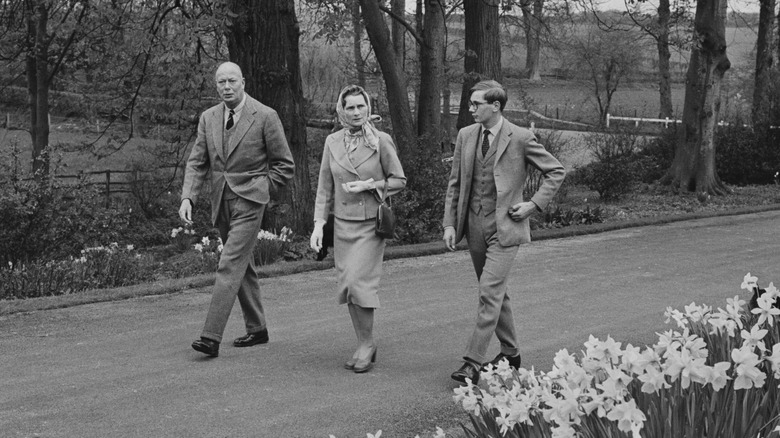
After starting a family, Alice, Duchess of Gloucester, and Prince Henry, Duke of Gloucester, decided to continue their travels together. However, as working members of the royal family, Alice and Henry found that many of their adventures involved their duty to the crown. This was true when the pair set off together to Paris to pay a visit to Henry's older brother, King Edward VIII ( the one royal Prince Harry has a lot in common with) and his wife, the mysterious Wallis Simpson.
Although the trip was disguised as a social event, it was really a way for the royal family to judge Edward and Wallis' popularity among Brits. In a letter, which was later quoted in The Guardian, Alice reported back, "The response from the public made it clear to the government that a reconciliation with the Windsors (and the other members of the royal family) would not be popular." Edward VIII and Wallis Simpson were thus banished from royal circles.
Alice and Henry also served the crown in Australia, where they resided from 1945 to 1947. During this time, Henry worked as the country's first royal governor general, and Alice supported him to the max. Both Henry and Alice were ill during this time, and they both risked death by traveling Down Under in U-boat-infested waters. Nonetheless, they focused on their duties to the crown and, ultimately, fell in love with Australia.
She held her head high in light of life's challenges
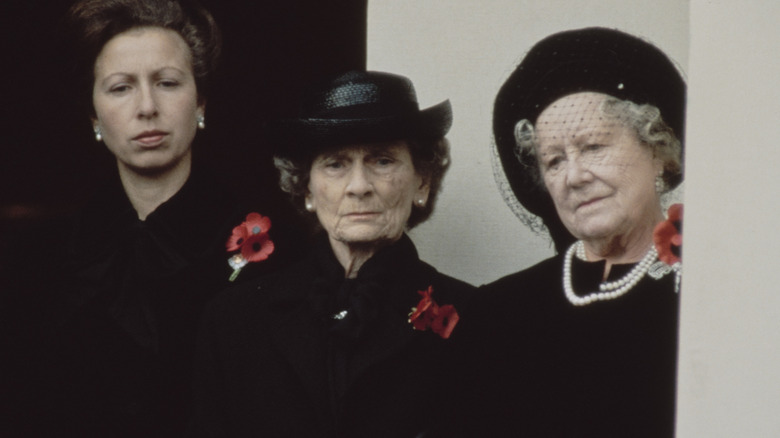
In some ways, it may seem that Alice, Duchess of Gloucester, lived a charmed life. After all, she lived in mansions, traveled the globe, and experienced no true financial hardship. However, there are many challenges that accompany living in close proximity to the royal family — including the strict rules that royals from are expected to follow. At times, these protocols dictated how Alice reacted to life's hardships, including a number of terrible tragedies that left their mark.
One of the hardest moments of Alice's life occurred in 1972 when her beloved son, Prince William, died in a plane crash. He was only 30 years-old at the time, and it had been expected that he would become the next Duke of Gloucester. Things grew even more challenging for Alice just two years later when her husband, Prince Henry, also passed away. Within a short time, Alice's family was reduced to just herself and her surviving son, Prince Richard.
Although these tragedies completely shook the British royal family, Alice found the strength and fortitude to carry on. Rather than locking herself away in her manor, Alice continued to perform royal duties, and in 1975, she became the first woman to ever receive the honor of becoming Dame Grand Cross of the Order of the Bath. The duchess continued to perform approximately 50 engagements per year throughout the 1980s — when she herself was in her 80s.
Princess Alice was an ardent monarchist until the end
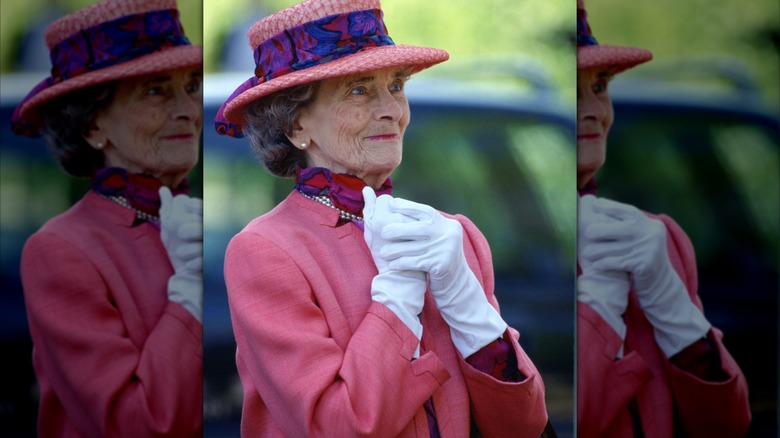
If Alice, Duchess of Gloucester, dedicated a lot of time and energy to the monarchy, it was because she truly believed in the institution. She was born at a time when the idea of abolishing the crown was essentially nonexistent. However, throughout her life, the social changes of both world wars, the abdication of King Edward VIII, and the assassination attempts made on the royal family all put the monarchy's future into question. Despite this, Alice believed that the monarchy could live on because of its symbolic value to the British people.
Alice even wrote, "Throughout my public life I have often wondered why such crowds should come to welcome me, both in my own country and overseas" (via The Guardian). Although she often questioned that purpose — wondering if her fashion sense or beauty routine had something to do with it — Alice concluded that the monarchy itself was the draw. "Or was it that I represented something that lay deep-rooted in their hearts; a loyal and loving respect for any member of their royal family? This last, I know, is the true answer," she mused. Even though the monarchy suffered several blows during Alice's lifetime, the duchess never stopped believing that the institution brought value to society, and she fought for its continuation until the end.
She bonded with her daughter-in-law and became a grandmother
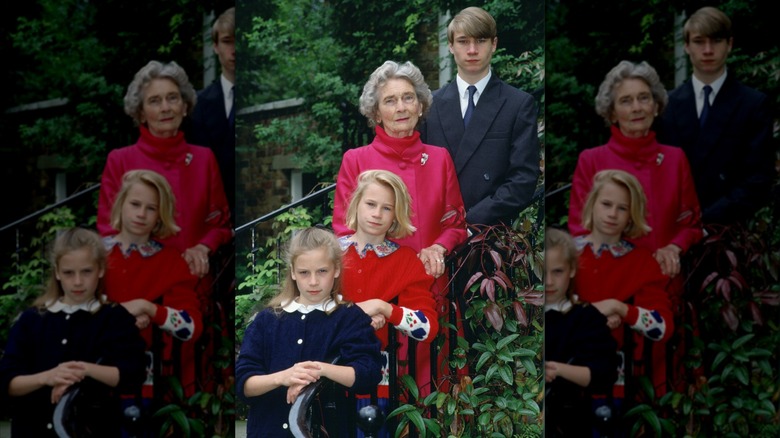
Alice suffered several losses in her family life, but that doesn't mean that her later years were without happy moments. In 1972, her son, Prince Richard, married a Danish woman, Birgitte van Deurs. After Alice's firstborn, Prince William, died, Birgitte became a pillar of strength for the whole family. She supported Alice in hard times and studied up on royal protocol so that she could take on as many duties as possible.
Birgitte's dedication toward Alice — and the monarchy — was so successful that she was applauded by royal expert, Helen Cathcart, just three years after her entrance into the royal family. "Today the whole London diplomatic community commends the new Gloucesters as a fresh and dynamic element in the younger age group around the queen," Cathcard wrote in Chatelaine (via Vanity Fair).
In 1974, Birgitte gave birth to a son, Alexander Windsor, Earl of Ulster. He was followed by a daughter, Lady Davina Windsor, in 1977, and another little girl, Lady Rose Gilman, in 1980. These days, all three of the Duke and Duchess of Gloucester's children are making waves in the world. While Alexander pursued a military career, Davina has enjoyed mothering two kids of her own. Rose, meanwhile, has enjoyed a successful career in the film industry, even working on two films from the "Harry Potter" franchise. For Alice, it was wonderful to see her three grandkids grow up.