

All The Drama Behind The Scenes Of '80s Sitcom Golden Girls
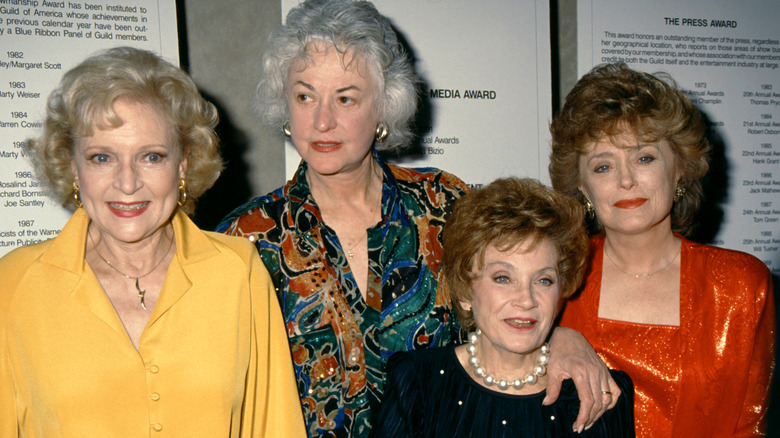
During its reign, "The Golden Girls" was huge. It ran for seven seasons from 1985 until 1992. Across the United States, people loved watching the women hilariously move through their lives. It was so big that even a member of the British royal family was a fan of "The Golden Girls." Created by Susan Harris, "The Golden Girls" proved that older women were just as entertaining as comedians half their age. The show starred Bea Arthur as sarcastic Dorothy, Betty White as ditsy Rose, Rue McClanahan as sexually liberated Blanche, and Estelle Getty as no-nonsense Sophia.
The women lived together in a house in Miami where they worked, dated, and ate cheesecake late at night. It seemed like a magical world that anyone would want to be a part of. Yet the untold truth of "The Golden Girls" might be different than their audience would guess. Here is all the drama behind the scenes of '80s sitcom "Golden Girls."
There was an ongoing feud between Bea Arthur and Betty White
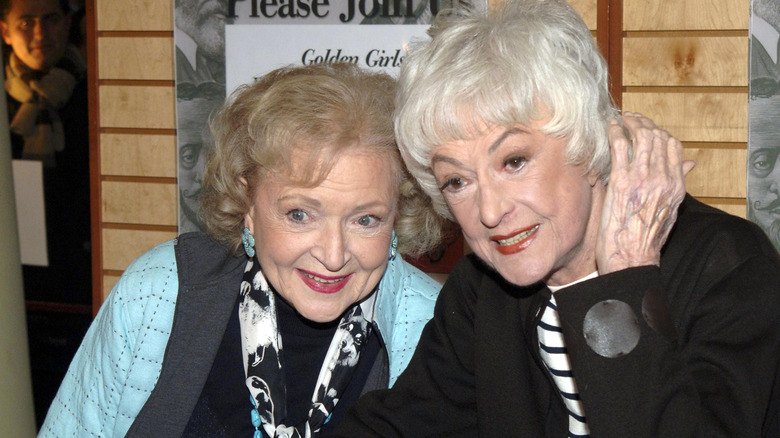
The women in "The Golden Girls" are a tight-knit group that operates like a family that has fun together and leans on each other in times of need. The truth was some of them didn't get along when the cameras weren't rolling. The reported rift between Bea Arthur and Betty White seemed to last throughout the show's production. White put it candidly in an interview with the Village Voice. Speaking about Arthur, White said, "She was not that fond of me. She found me a pain in the neck sometimes. It was my positive attitude and that made Bea mad sometimes. Sometimes if I was happy, she'd be furious!"
Co-producer Marsha Posner Williams thought much of the dislike came from how the two comedians came from different style backgrounds. Arthur was from the theater where actors separated themselves from the audience, while White was from television where actors would want to schmooze the crowd. Per The Hollywood Reporter, during a panel during Pride LIVE! Hollywood in 2025, Williams said, "Betty would break character in the middle of the show (and talk to the live audience), and Bea hated that." Williams also stated that while filming, both women were always professional. Matthew Saks, Arthur's son, put it even more bluntly to Closer (via Country Living), "My mom unknowingly carried the attitude that it was fun to have somebody to be angry at." Although the women weren't best friends off camera, they certainly delivered on screen.
Bea Arthur didn't like all the jokes aimed at Dorothy's physical appearance
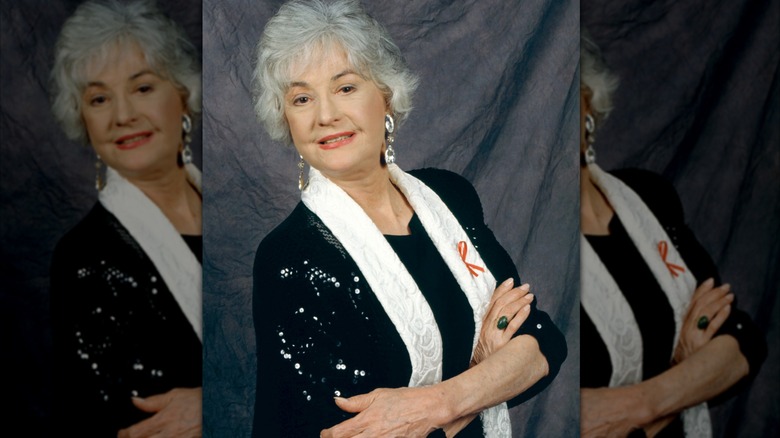
A key component of "The Golden Girls" was how the characters would often make little jabs at each other. However, some of the jokes fell a little flat and became hurtful for Bea Arthur. Jim Colucci, who wrote "Golden Girls Forever: An Unauthorized Look Behind the Lanai," revealed Arthur hated the "bashing" of her character Dorothy Zbornak. According to Colucci, the jokes about Dorothy centered too much on her physical appearance, like saying she was too big or ugly, so the insults became personal.
Colucci told Fox News in 2016, "When the writers called Rose (Betty White) dumb or Blanche (Rue McClanahan) a s*** or Sophia (Estelle Getty) old, it could roll off those women's backs because they were not like their characters." For Arthur, insults about Dorothy's physical appearance meant people didn't like her physical appearance. It is understandable how this would be too much for Arthur to take over the many seasons of the show.
Betty White covered up Estelle Getty frequently forgetting her lines
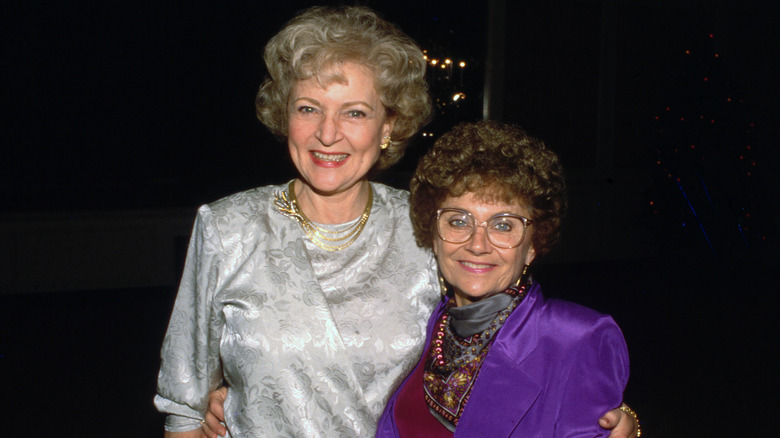
Estelle Getty played Sophia Petrillo, a matriarch and the eldest Golden Girl. Interestingly, the truth about Estelle Getty's age on "Golden Girls" was that she wasn't the oldest actor on set. Both Bea Arthur, who played Getty's daughter Dorothy, and Betty White (Rose) were actually older than Getty by about a year. Despite being one of the younger members of the cast, Getty sometimes struggled with remembering her lines. Stan Zimmerman, a writer on several "Golden Girls" episodes, detailed in his book "The Girls: From Golden to Gilmore" (via the Daily Mail), how many thought Getty forgot her lines because she didn't take enough time to study them.
According to Zimmerman, Betty White would cover for any of Getty's mistakes by making her character, Rose, be even more over the top so the audience would be distracted from Getty. White would also go to the audience and make jokes. At the time, Zimmerman felt White was making fun of Getty. Yet, after Getty was diagnosed with Lewy body dementia, Zimmerman believed White was doing what she could to try to help Getty in scenes.
Behind the scenes Golden Girls wasn't as progressive as its storylines
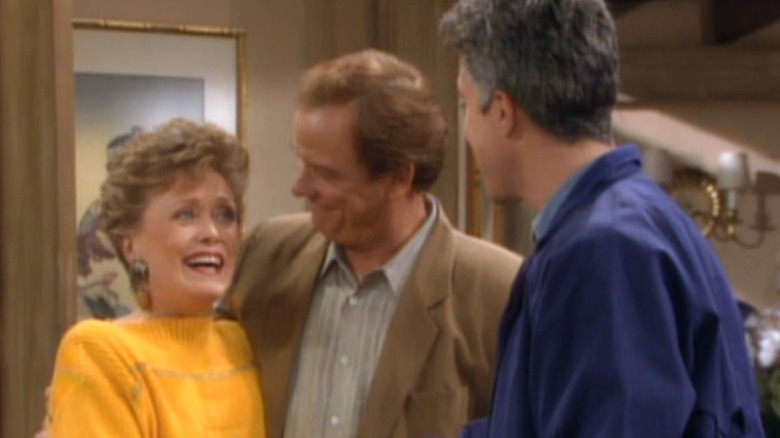
Looking back, it's easy to see how "Golden Girls" was a show ahead of its time. Not only was it liberating in its depiction of aging women, but several episodes featured positive LGBTQ+ storylines. In the late '80s and early '90s, "The Golden Girls" had many groundbreaking moments. The pilot episode even featured a gay live-in cook named Coco who was supposed to be a series regular until the show opted to make Sophia a main character instead. Another episode featured a lesbian falling for Rose. Blanche's younger brother comes out to her in an episode and later gets married on the show.
As much as the writers of the show had some wiggle room on screen, that wasn't how they felt in the studio. Writer Stan Zimmerman said at Pride LIVE! Hollywood, "People have to remember back then, we were told by representatives to stay in the closet, so nobody knew we were gay." He recalled an incident where co-workers told him to burn sweaters he bought at an estate sale because he might get AIDS. The comment was homophobic and ignorant, yet Zimmerman felt he had to keep quiet about the hurtful exchange. Marc Cherry, who would later go on to create the hit show "Desperate Housewives," co-wrote the gay marriage episode of "Golden Girls" and revealed after it aired the writers received hate mail that included death threats, just for showing a happy wedding.
Estelle Getty had stage fright
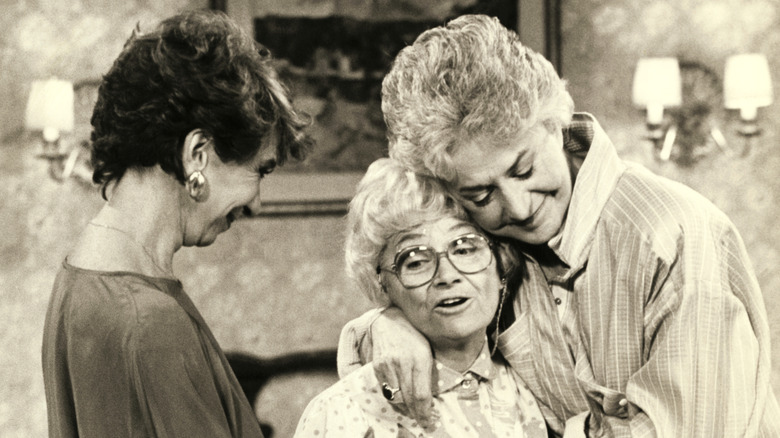
Estelle Getty played a confident and unapologetic character on "The Golden Girls." As Sophia Petrillo, Getty became outspoken and maybe a little too sure of herself. Sophia never backed down from a challenge. Despite being a character older than the rest of the women, she gave them all a run for their money. However, Getty herself didn't have the same self-assurance as her famous television character did. Despite trying to break into acting for years, Getty didn't find success until she was in her 60s.
Possibly due to being a latecomer in the industry, Getty revealed to "Entertainment Tonight" that she constantly questioned her abilities and if her rise to fame on "The Golden Girls" was some kind of fluke. When they went to film a scene, she felt nervous that people would see that she didn't have what it took to star in the hit show. "And every day I'm a little scared and every Friday I'm scared out of my wits," Getty said in a 1988 interview. "Wait until they find out I can't do it." Writer Stan Zimmerman also said in his book "The Girls: From Golden to Gilmore," that people on set knew Getty would have regular panic attacks when it was time to film. Thankfully, Getty was able to put her imposter fears aside to deliver great comedy.
One Golden Girl hated the show's iconic dessert
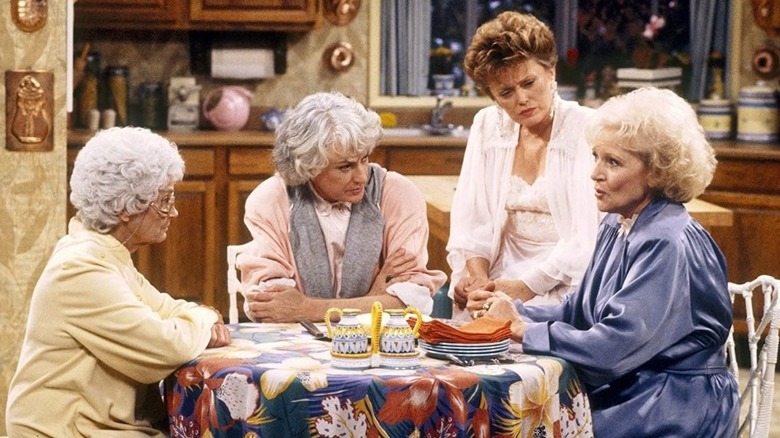
For fans of "The Golden Girls," cheesecake often felt like the unspoken fifth member of the group. When Sophia, Blanche, Rose, and Dorothy gathered around the kitchen table to have meaningful conversations, out came the cheesecake. Other times, the women wanted to celebrate, so they brought out a cheesecake. It begs the question: how many cheesecakes did their refrigerator hold at any given time? The first time cheesecake appeared on "The Golden Girls" was in Season 1, Episode 22, "Job Hunting," where Rose can't find a new job. The cheesecake is presented to cheer Rose up. It started a tradition that would span the rest of the series.
Chef George Geary was the creator of every cheesecake on "The Golden Girls." In a 2025 interview with People, Geary said he would have to make seven cheesecakes for each time a cheesecake appeared, just to ensure the production had enough for reshoots. He also revealed that Bea Arthur didn't like cheesecake at all. According to Geary, he only saw Arthur take a bite once when he rewatched the show. As iconic as the scenes are where the friends all eat cheesecake, it is almost hard to believe Arthur didn't enjoy the decadent dessert. Betty White, however, loved cheesecake and Geary made one special for White's birthday long after "The Golden Girls" ended.
Rue McClanahan played Blanche differently than planned
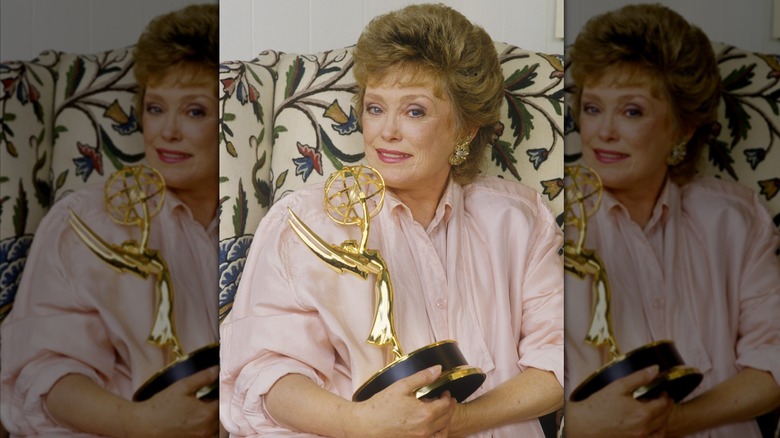
Rue McClanahan originally auditioned to play Rose Nylund on "The Golden Girls" as Betty White had already been given the part of Blanche Devereaux. However, after the initial reading, McClanahan was asked to read for Blanche. White would end up as Rose and McClanahan as Blanche, creating two iconic characters.
Blanche is often defined by openness about sexuality and her pursuit of any man she finds interesting. McClanahan strove to make sure Blanche still had heart and soul. "I've asked for so many things, and I've gotten just about all of them," McClanahan said of her character in a 1990 interview with The Evening Sun (via MeTV). "Every now and then, Blanche gets to be a little less shallow. This season she marched to save dolphins and swore off tuna. After the second year, I asked them not to make her so promiscuous."
In a 2006 Archive of American Television interview, McClanahan recalled series creator Susan Harris "would come to me many times and say, 'You're playing Blanche so much better than I wrote her. I really like what you've done with her,' you know, because I didn't play it in a standard way." McClanahan pushed back against the writers when she felt they had written Blanche as too cartoony and unrealistic. Because of her integrity, McClanahan ensured Blanche was a well-rounded character that audiences loved.
Bea Arthur pushed for Golden Girls to end
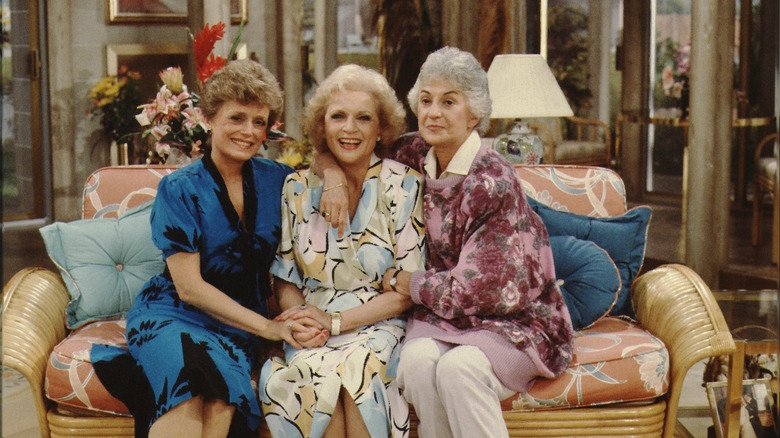
The real reason "The Golden Girls" was canceled had little to do with ratings and more to do with one cast member being ready to call it quits. Much of the show ending in its seventh season was due to Bea Arthur wanting to exit the long-running series. Some theories about Arthur wanting to leave were her wanting to pursue other projects or the fact that she was just burnt out on all of the jokes made at her character's expense.
According to the author of "Golden Girls Forever: An Unauthorized Look Behind the Lanai," Jim Colucci, the reason Arthur wanted to leave was simple. "She thought the quality was starting to slip. She wanted to go out while it was still a good show and she felt she was done with it," Colucci told Fox News. Arthur seemed to have her stubborn quirks, like not allowing people to chew gum on set or not wanting to wear shoes as much as possible, so it seems like once she had an idea in her head, she would stick to it no matter what. When Arthur was done, she meant she was done.
Without Bea Arthur the Golden Girls sequel didn't have the right chemistry for success
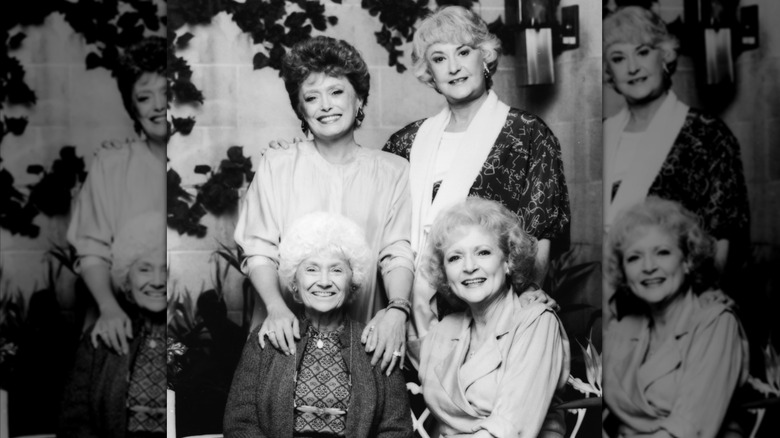
When the contracts of the stars of "The Golden Girls" were up, the executives were open to continuing the series. Rue McClanahan, Betty White, and Estelle Getty were all ready to keep going. With Bea Arthur saying she was done, though, that sadly meant the show was over. It was quickly decided to pivot and develop a new series called "The Golden Palace." This show wrote Dorothy off by having her marry and move to another state. Rose, Blanche, and Sophia decided to sell their house and buy a rundown hotel.
With the new setting, writers added new characters to keep the story fresh. The hotel's chef was played by Cheech Marin, of "Cheech and Chong" fame. Don Cheadle played Roland, the hotel manager, before his award-nominated performance in "Hotel Rwanda." Although "The Golden Palace" had its own charm, it didn't land the same way "The Golden Girls" did with audiences. As The New York Times wrote in a 1992 review, "When a sitcom begins making you cringe, trouble looms." Despite Arthur guest-starring in two episodes, "The Golden Palace" only ran for one season before its cancellation.