

Charlie Chaplin Made History When This Unspoken Rule Was Broken For Him At The Oscars
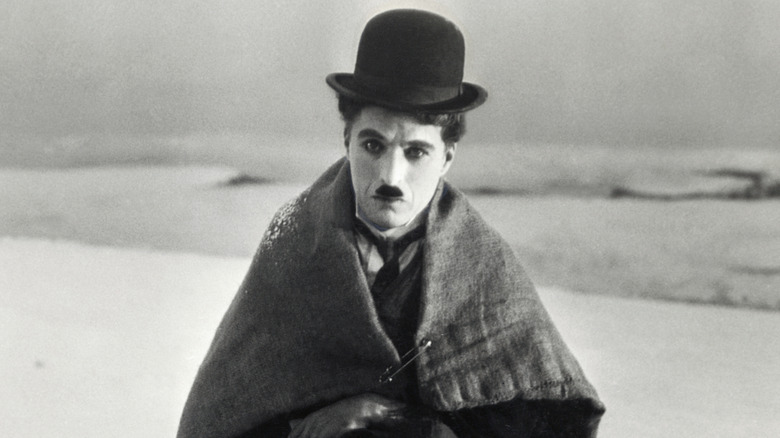
The silent film era ended nearly a century ago, but these films' pivotal role in cinema history reigns true despite 75% of them being lost to time (via Variety). While a few actors managed to maintain a Hollywood career following the transition to recorded dialog, fewer managed to remain as culturally relevant as English actor and director Charlie Chaplin.
Considered the first international movie star, Chaplin acted, wrote, and directed iconic films such as "The Kid," "City Lights," "Limelight," and "Modern Times." After receiving one of the first-ever Academy Awards at the initial 1929 ceremony, it seemed as though his potential to earn another was thwarted by his exile from the U.S. in 1952. Resigned to his fate and relocating permanently to Switzerland, Chaplin didn't return to the U.S. until the 1972 Academy Awards, where he was set to receive an honorary award for "incalculable effect in making motion pictures the art form of the century."
But the 82-year-old actor was stunned by his record-breaking reception when he received a 12-minute standing ovation. Once the applause died down, he declared it "an emotional moment for me, and words seem so futile, so feeble. I can only say thank you for the honor of inviting me here, and you're wonderful, sweet people." There has long been an unspoken rule regarding clapping at the ceremony, particularly due to the strict timeframe for broadcasting. However, considering everything Chaplin endured, the occasion seemed more than appropriate to honor the visionary risk-taker for his immense influence on all of their careers.
Charlie Chaplin's standing ovation was an apology
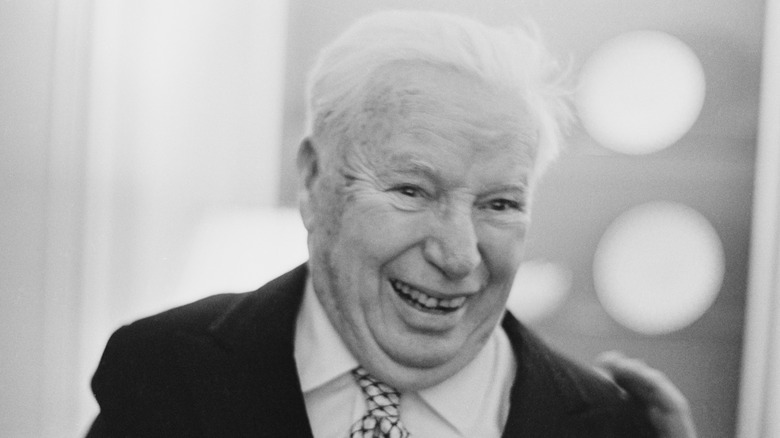
Charlie Chaplin's Hollywood career hit its peak when he released his 1940 film, "The Great Dictator." An unabashed criticism of Nazis and the rise of fascism in Europe, many American viewers completely supported the message. However, as his granddaughter, Oona, detailed in a 2024 BBC episode of "Celebrities in Exile," it was his support of Russia's army that made him an FBI target, as he suspected of being a communist.
The bureau originally opened a file on Chaplin in 1922, but no real opportunity to prosecute him arose until a 1941 affair with the young actress, Joan Barry. Chaplin had a plethora of sizable age-gap relationships over the years, but buying Berry a single train ticket to New York was enough to charge him with violating the anti-human trafficking Mann Act. Although acquitted, it made him a pariah in Hollywood, causing audiences and his industry peers to turn on him.
Considering the degree of political and social persecution, it makes sense that Chaplin chose not to make any attempts to return following his exile. However, by 1972, it was clear that he had been in the right all along. The Academy Awards' 12-minute standing ovation was not only a warm welcome home, but also a sincere apology for his unfair blacklisting and the witch hunt against him. He would die in 1977, but even his death would make way for one of the biggest celebrity scandals of the '70s when his body was stolen by grave robbers and held for ransom.