
What Happened To The Stars Of Little Shop Of Horrors?
The following article includes allegations of sexual assault.
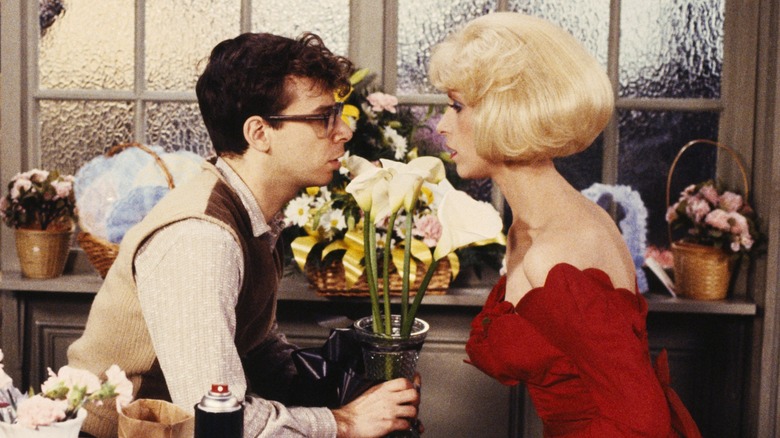
While it wasn't the box office smash director Frank Oz was likely hoping for, 1986's "Little Shop of Horrors" has become a cult classic. The movie is packed with amazing talent, and each actor gives their all, going over the top with their performances in whimsical (and sometimes terrifying) scenery to create something truly special. Add in the fantastic songs, the amazing Audrey II puppet, and the movie's distinctive look and dark humor, it becomes easy to see why "Little Shop" became a favorite among musical and horror fans alike.
Even decades later, the stars of the movie are still closely associated with it. For some, it stands as one of their greatest professional achievements, and they happily continue to join fans in celebrating the film. Others may be better known for other projects, but undoubtedly have fans who first saw them in "Little Shop" when it aired on TV or was the Friday family movie rented from the local Blockbuster. In either case, fans will always picture the actors as the characters they played, no matter how successful they have become in the years since.
Rick Moranis quit acting after a family tragedy
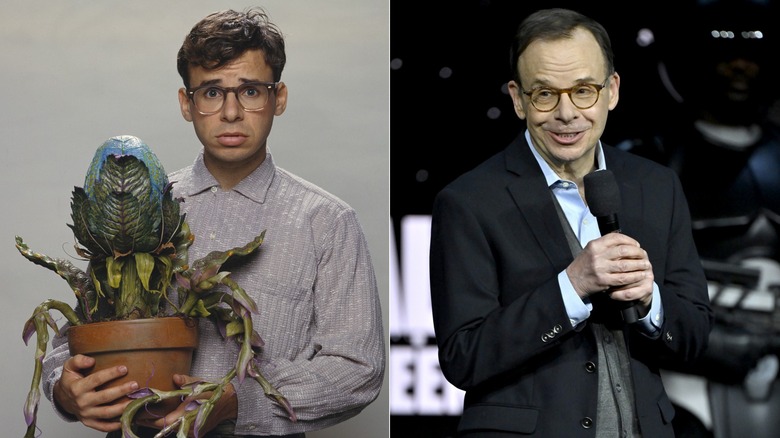
Rick Moranis became famous for his character, beer-loving Canadian Bob McKenzie, on "SCTV." The actor's theatrical debut saw him and fellow "SCTV" star Dave Thomas, who played Doug McKenzie, bring their iconic characters to the big screen in 1983's "Strange Brew." The next year, Moranis played Louis Tully in "Ghostbusters," cementing his place in the comedy hall of fame. His next leading role was "Little Shop of Horrors," playing Seymour Krelborn, the kind but meek florist who finds the carnivorous plant.
While "Little Shop of Horrors" struggled at the box office, Moranis was about to star in a series of hits, including "Ghostbusters II," "Parenthood," and "Honey, I Shrunk the Kids," all released in the same year. He would go on to star in "Honey, I Blew Up the Kid," "Honey, We Shrunk Ourselves!," and "The Flintstones," but a family tragedy would lead to an early retirement.
Moranis' wife, Ann Belsky, sadly passed away in 1991, and Moranis began to pull away from acting so he could be there for his children. While he continued to work throughout the decade, he did so sparingly, making just six movies. In the new millennium, Moranis stopped appearing in live-action movies, but lent his voice to three animated films, most notably Disney's "Brother Bear" and its sequel. In 2007, he collaborated with Thomas again for the "Bob & Doug McKenzie's Two-Four Anniversary" special before disappearing from public life. About 20 years later, it was announced that Moranis was making his return to the big screen, reprising the role of Dark Helmet for "Spaceballs: The New One" (a legacy sequel to Mel Brooks' legendary 1987 spoof of "Star Wars").
Ellen Greene will always be connected to Audrey
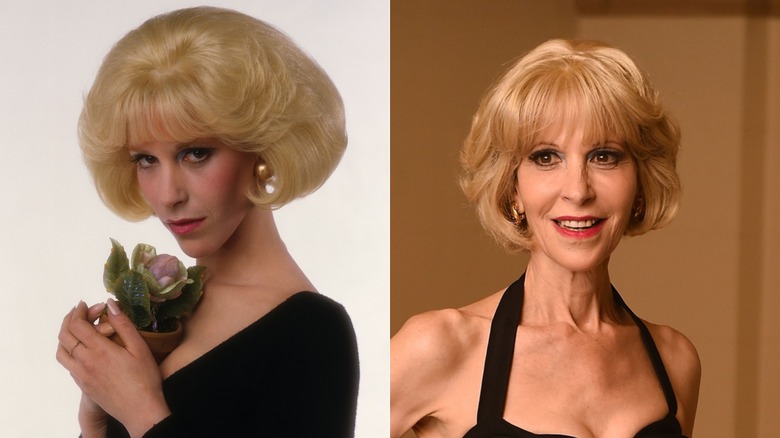
As Audrey, Ellen Greene is the beating heart of "Little Shop of Horrors." Her character, an insecure cashier at the flower shop who Rick Moranis' Seymour is helplessly in love with, is the most tragic character in a movie filled with tragic characters, but Greene's amazing voice is undeniable, making her songs "Somewhere That's Green" and "Suddenly, Seymour" classics. A Broadway performer, Greene originated the role of Audrey on the stage and received Drama Desk and Olivier Award nominations for her performance before bringing the character to movie theaters.
While "Little Shop of Horrors" is the role she is most associated with, Greene has appeared in a number of movies and TV shows since. On the big screen, she worked with George Clooney and Michelle Pfeiffer in the Oscar-nominated romantic comedy "One Fine Day," and appeared in "The Cooler" with William H. Macy and Alec Baldwin. On TV, Greene played agoraphobe Vivian Charles on "Pushing Daisies" and Primrose DeVille on "The Young and the Restless."
Greene returned to playing Audrey on stage in 2015, performing in a stripped-back version of the show with Jake Gyllenhaal filling in as Seymour. The show was met with rave reviews, and Greene herself was welcomed to the stage by the applause of adoring audiences. Speaking with Playbill, Greene recounted the experience, saying it " ... felt a bit overwhelming. And, yes, frightening, too, to receive that much love in such a roar of sound." She also praised Gyllenhaal, who, during the curtain call, left the stage so that Greene could receive all the love of the audience: "I was ready to take the final bow with him, and he actually said to me, 'Stay,' ... Then he threw me a kiss and walked off."
Tichina Arnold and Tisha Campbell starred in a hit sitcom together
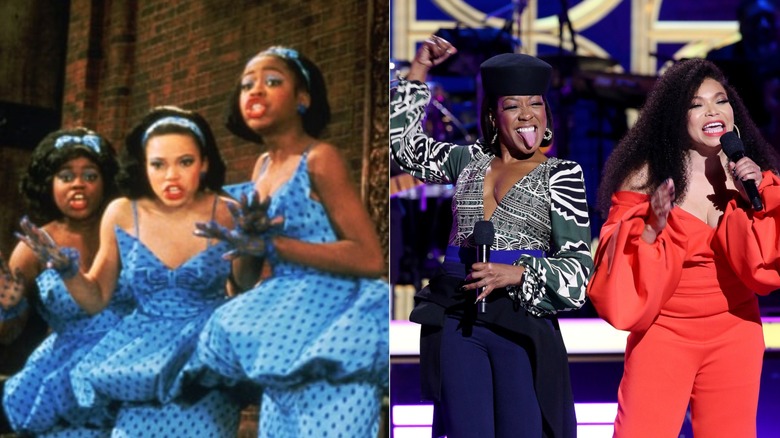
Throughout "Little Shop of Horrors," a doo-wop version of a Greek chorus — played by Tichina Arnold, Tisha Campbell, and Michelle Weeks — continually pops up to help keep the story moving and sing backup. Each of the actors were early in their careers when they made the movie, and for two, it served as a monumental part of a decades-long friendship.
Arnold and Campbell were children when they became friends while going through auditions, and became one another's rock through the grueling process. Campbell described the early days of their bond on the "Understand This" podcast in 2021, saying, "We would always call each other if the other one didn't hear about an audition and we'd just be like, 'Yo let's, let's go crash it, crash it with me.'" Working together led to getting roles, with each of them being cast in "Little Shop of Horrors."
The two continued to work; Campbell appeared alongside Laurence Fishburne and Giancarlo Esposito in Spike Lee's "School Daze," while Arnold played Sharla Valentine on "All My Children." They reunited on screen when they starred on "Martin." Arnold and Campbell's friendship faded somewhat after the series ended, but when Campbell found herself in the midst of a brutal divorce, Arnold was there for her. It was announced in 2021 that the friends were developing their own show, "Tisha & Tichina Have Issues," but it has not aired as of writing.
Steve Martin is closing in on an EGOT
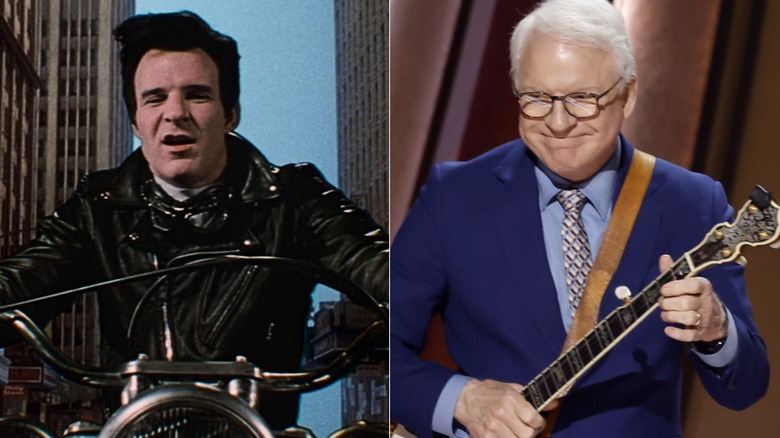
Steve Martin made a name for himself as a comedian, selling out arenas and having his albums go gold and platinum. His first starring role, "The Jerk," was a massive hit, grossing $73 million on a $4 million budget. By the time he appeared in "Little Shop of Horrors," Martin had already won an Emmy for writing on "The Smothers Brothers Comedy Hour" and two Grammy awards for his comedy albums. His "Little Shop" character, the sadistic dentist Orin Scrivello, steals every scene he is in, with the song "Dentist!" becoming a fan favorite. Martin's turn as the evil tooth puller allowed him to play to his strengths, showing off his cool nature while still letting him use his physical comedy skills to keep audiences laughing as he danced and moved about.
Following "Little Shop of Horrors," Martin entered a new phase of his career, taking on more traditional comedic roles in romantic comedies like "Roxanne" and "L.A. Story" as well as father figures in "Parenthood" and "Father of the Bride." He was still open to outrageous characters, working with Rick Moranis again on "My Blue Heaven," where he played a mafiosa who enters witness protection.
Martin also made his mark as a writer, crafting plays, most notably "Picasso at the Lapin Agile," and prose, including "Shopgirl," which he later turned into a movie. He went on to win three more Grammys for his music. In 2014, he was awarded an honorary Oscar, which leaves only the elusive Golden Globe for him to join the EGOT club. Martin has been nominated for 10 Golden Globes, five for his work on the hit series "Only Murders in the Building" alone — but as of writing, has yet to take one home.
Bill Murray went from playing lovable hucksters to downtrodden older men
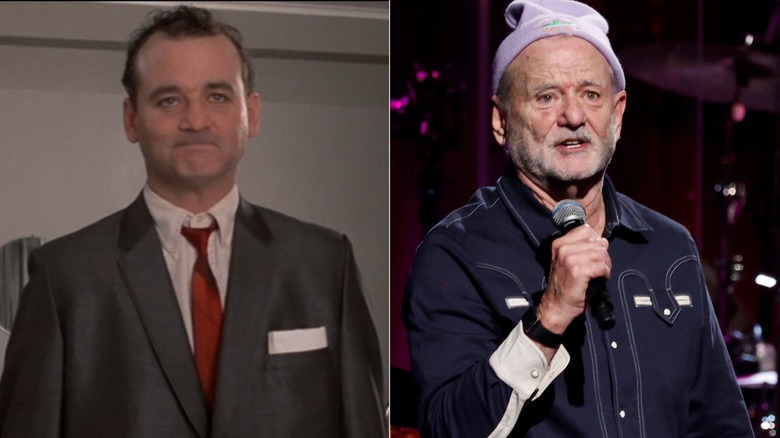
Bill Murray became a household name when he joined "Saturday Night Live" in the show's second season. In 1979, he took his TV fame to the big screen, starring in "Meatballs." That movie also kicked off a working relationship with Harold Ramis, leading to the two working together on "Caddyshack," which Ramis directed, and "Stripes," which they both starred in. In 1984, they teamed up again for "Ghostbusters," turning the stars into legends. Two years later, Murray lent his star power to "Little Shop of Horrors," making a cameo as Arthur Denton, a masochist who couldn't wait to have Steve Martin's Orin Scrivello tear his mouth apart.
In 1988, he starred in the Christmas classic "Scrooged" and followed it up with "Ghostbusters II." In 1993, he and Ramis worked together for the last time on "Groundhog Day," a movie that was loved by audiences but sadly tore their friendship apart. In 1998, Murray's career entered a new era when he co-starred in Wes Anderson's "Rushmore," starting a working relationship that would see the duo make 10 movies together (and it was announced in 2026 that they had another collaboration incoming). Under Anderson's direction, Murray played against his usual snarky cool style and showed that he had more to give as an actor, which he capitalized on with 2003's "Lost in Translation," earning the actor an Oscar nomination.
Along with appearing in Anderson's movies, Murray returned to playing Peter Venkman in "Ghostbusters: Afterlife" and "Ghostbusters: Frozen Empire." In 2022, Murray was accused of sexual harassment on the set of "Being Mortal." Filming on the movie, which would have starred Seth Rogen and Keke Palmer, as well as Aziz Ansari who was also directing, was shut down over the incident.
If you or anyone you know has been a victim of sexual assault, help is available. Visit the Rape, Abuse & Incest National Network website or contact RAINN's National Helpline at 1-800-656-HOPE (4673).