

Ross Martin's Transformation From Law School To Wild Wild West Secured His Status As A Hollywood Icon
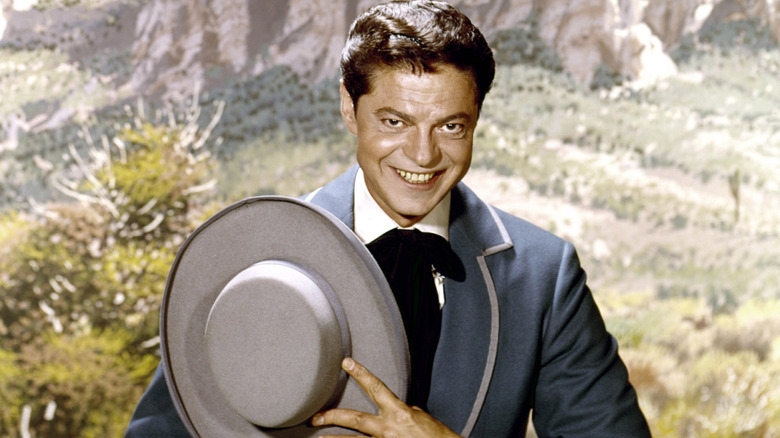
Nearly 45 years after his death, Ross Martin still inspires the kind of devoted fandom usually reserved for actors with far bigger filmographies. It is the sort of loyalty that keeps his name circulating whenever the forgotten 70s show, "Wild Wild West," resurfaces on streaming or in syndication.
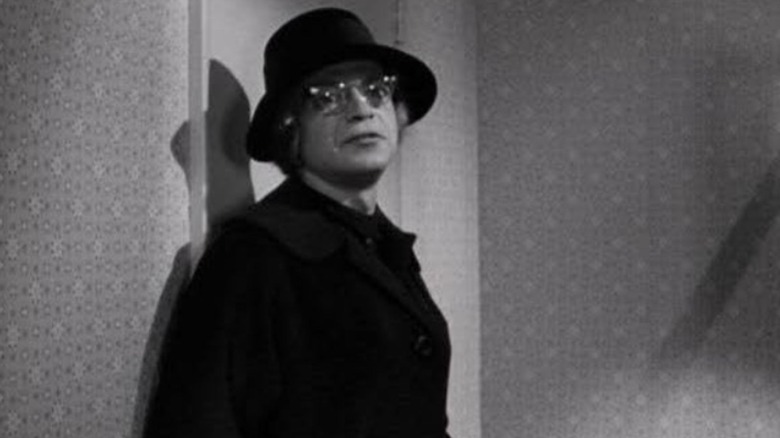
Martin, however, was initially reluctant to take the very role that made him famous. By his own account, he turned it down five times before finally saying yes. Gordon went on to become one of television's great sidekicks, in part because the role allowed Martin to turn a spy Western into something close to weekly repertory theater. Gordon's constant transformations into peddlers, professors, and assorted frontier oddballs gave Martin a canvas that few other series regulars of the era could have imagined. He took the work seriously enough to design many of the disguises himself. At times, the commitment bordered on absurd. "I went home one afternoon to pick up a script without bothering to change, and a half hour later the Beverly Hills Police were at my door because a neighbor reported a suspicious stranger lurking around Ross Martin's house. I had to peel off my beard to prove who I was," Martin once quipped (via IMDb).
Yet the path that brought Martin to "The Wild Wild West" was hardly a conventional Hollywood story. Long before Artemus Gordon made him a television fixture, he was a multilingual immigrant kid in New York whose parents envisioned a professional career for him. He studied law, supported his family through an assortment of jobs, and spent years building a career across stage, radio, film, and television before landing the role that would define his legacy.
His immigrant childhood shaped the talent audiences later came to know so well
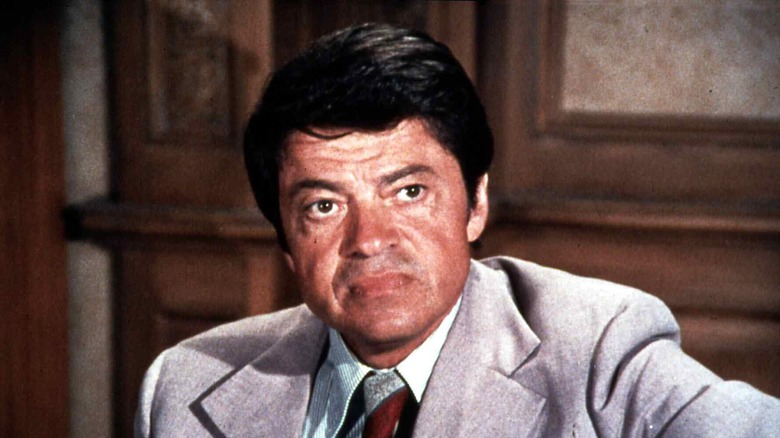
Born in Poland on March 22, 1920, Ross Martin immigrated to New York with his family as an infant. In its obituary after he died in 1981, The Washington Post said he grew up on the Lower East Side in a tenement district, "where he learned to speak four languages." The early multilingual upbringing helps explain, at least in part, the fluency and adaptability that later became central to his screen persona. A Baruch College biography says the Rosenblatts later moved to the East Bronx, where Martin attended public schools before theater became a major part of his life.
Martin recalled being taken, at about age three, to see Molly Picon in the Yiddish musical "Yankeleh." "The impression left on me was incredible. I was enchanted — mesmerized — by the magic of the theatre. It was like stepping into another world. The following day I pulled the sheet off the bed and in the backyard of our tenement, climbed onto my stroller and somehow rigged a makeshift stage curtain."
Those early impulses soon turned into habit as the child performer grew up to be stunning onstage. Martin played Foxy Loxy in a school production of "Chicken Little" at age six, and by ten he was entering amateur contests at the Loew's Boston Road Theatre in the Bronx, where one appearance reportedly ended in a tie with the future Red Buttons. Baruch's account also presents the Rosenblatts as a close family with limited means, and Martin himself said, "If my parents had problems, they kept them from me. Love permeated the house, and perhaps because they had very few possessions, they were able to find laughter and reward in the small things of life."
Before television fame, he followed an academic path
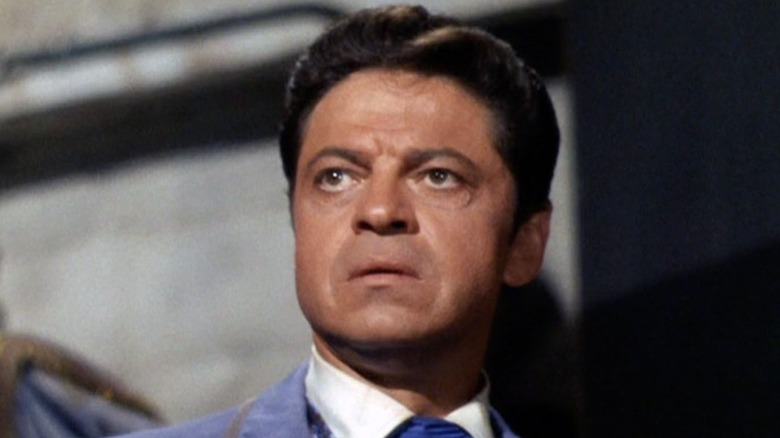
Ross Martin's parents, according to Baruch College's digital archives, hoped he would become "a professional man," even though they encouraged his interest in performance. Martin graduated from the Baruch School, then attended the National School of Law in Washington, D.C., on a scholarship.
The Baruch profile quotes Martin acknowledging that he had been distracted in high school by performance and school activities: "I was so busy politicking, performing, and chasing the girls, that my scholastic average suffered." He nearly failed to make the academic transition to City College, gaining admission through an entrance examination after scoring in the upper tenth percentile. Once at City College, he worked part-time for a lawyer for three dollars a week.
Then the president of the college drama group, Theatron, invited him to audition for Clifford Odets' "Awake and Sing!" Martin initially resisted because he feared the production would interfere with his studies. His drama teacher, Louis Levy, urged him to accept the role: "Take it, take it! It's not going to interfere with your courses. Do the part!" Martin later gave Levy substantial credit for redirecting his life. "Lou Levy is responsible for whatever joy I have found in the theatre," he said. "He taught me to find the fun in the theatre, and he encouraged me always. All the pleasure of my career finds its roots in this man."
Martin supported himself with a run of odd jobs
In the years after college, Martin seemed headed for a professional career, though hardly the sort of cushy gig actors walk away from for solo stardom. He married young and soon found himself balancing work with the demands of family life. At that point, the star had certainly chosen family over fame. Speaking about the instability of an acting career, he said: "My education taught me to make choices, but as an actor you do not always have that freedom." He also rejected the idea that his success had been sudden, saying, "All those 'overnight successes' and 'discoveries' you hear about have spent years working in preparation all over the place, going to classes and knocking on doors."
According to The Washington Post, Martin worked in several professions before acting became his full-time career, among them law, teaching, psychology-related work, and public relations for a national distillery. Looking back, he said, "I learned a lot about people in different walks of life — a kind of kaleidoscope of humanity, which I couldn't organize and make sense of. And all that time, burning to act professionally, it was just stored away."
The many occupations that preceded television seem to have given him not only patience but a store of observed behavior, something he later drew on memorably in "The Wild Wild West," where his character's disguises ranged from elderly preachers to gunfighters. His Broadway debut came in the musical "Hazel Flagg." He then toured as Nathan Detroit in "Guys and Dolls" in 1955 and appeared again on Broadway in "Shinbone Alley" in 1957. Notably, his stage work helped lead to film opportunities, including "Conquest of Space."
Ross Martin became famous for playing Artemus Gordon
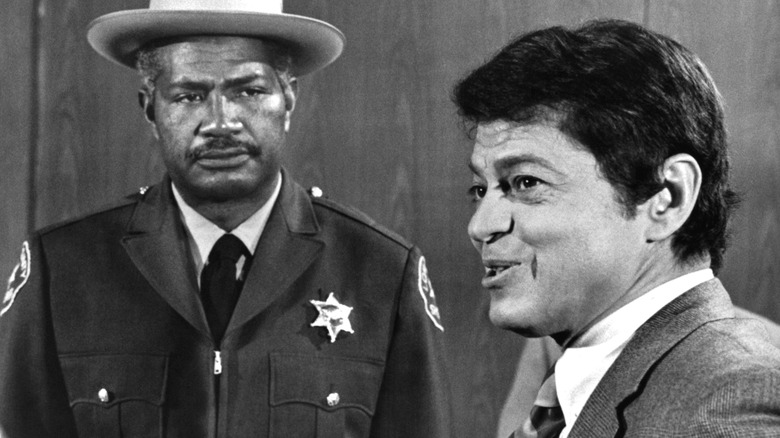
By 1965, Ross Martin had already worked in radio, Broadway, films, and television. He had appeared in the CBS series "Mr. Lucky," played the villainous Baron Rolfe von Stuppe in Blake Edwards's "The Great Race," and had accumulated the kind of character-actor experience that made him useful in many settings. Blake Edwards's earlier casting of Martin helped put him on the radar of the people developing the CBS series, "The Wild Wild West."
One of the more interesting details about the casting is that Martin had reservations about the role and about the direction in which it might take his career. He eventually accepted after being assured that Gordon would provide "the character actor's dream of a strong new role in each segment." Martin added that the promise was not immediately fulfilled: "I turned down the series five times" (via MeTV). Describing the early production difficulties, he said, "I accepted, and the producer was fired. It was three years before I got what was promised."
The Los Angeles Times, discussing the program's enduring appeal, described Gordon as West's "master of technology and disguises." In 1969, Martin was nominated for an Emmy for outstanding continued performance by an actor in a leading role in a dramatic series for "The Wild Wild West." He also received attention for playing the disturbed kidnapper Red Lynch in "Experiment in Terror" and appeared as Baron von Stuppe in "The Great Race."
His career-making opportunity arrived alongside a profound personal loss
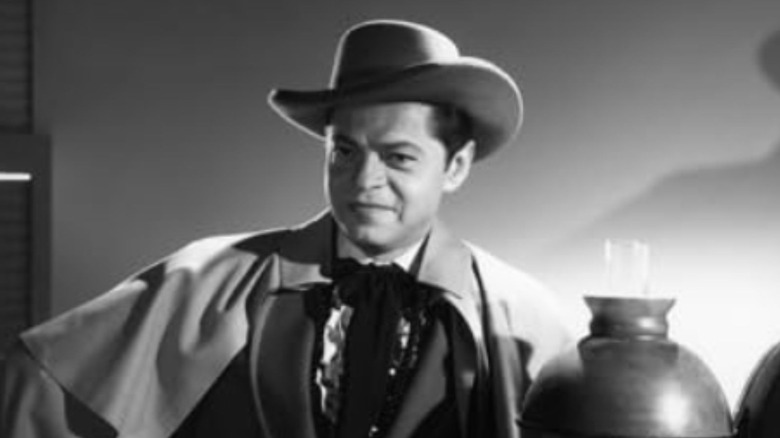
Ross Martin met his first wife, Muriel Beth Weiss, while she was a freshman at Hunter College. Martin was 21 when they married, and their daughter, Phyllis, was born the following year. The timing meant he became a husband and father while still completing his education and weighing possible futures in law, business, and performance. His family responsibilities likely contributed to his pursuit of steadier work. As the Baruch college archive puts it, "Martin as head of a family tried to settle down in one place."
That helps explain the practical jobs he took in the years before acting became a viable livelihood. Martin later described the uncertainty of choosing an acting career over more stable work in terms that help explain his hesitation. "The life of an actor covers the spectrum from boredom to hysteria; you're either marking time — treading water — or you're swimming furiously," he said.
Unfortunately, even as Martin took his responsibilities as a breadwinner seriously, his first marriage ended in tragedy. Muriel, whom he had married in 1941, died of cancer in 1965, the same year "The Wild Wild West" began airing. Though the couple had separated before then, his greatest professional opportunity arrived at almost the same moment that he was confronting a profound personal loss.
A serious health scare interrupted his rise
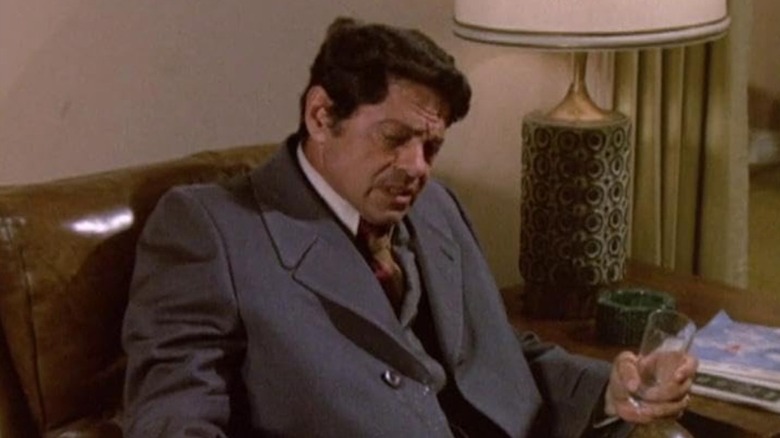
The success of "The Wild Wild West" came with demands that were not especially well suited to Martin's natural ease. Despite the elegance and comic assurance he projected onscreen, some of the role's physical requirements had to be learned the hard way. He was initially afraid of horses and had to take riding and fencing lessons for the part. During one early episode, a stuntman accidentally struck him on the head with a saber. Even so, Martin appears to have accepted the discomfort as part of the bargain. He said, "The personal discomfort is worth being in a hit series" (via UPI).
What he could not simply absorb as occupational inconvenience was the health crisis that followed. On August 17, 1968, Martin suffered a major heart attack that disrupted production for months. Although he was not among the actors who sadly passed away on set, the medical emergency forced him away from the series long enough for the show to bring in substitute agents and explain Artemus Gordon's absence by sending him to Washington on special assignment. Martin eventually returned in time to film the last three episodes produced for the series.
After recovering, Martin took up tennis seriously and became active in celebrity-tennis events. He appeared on "The Merv Griffin Show" in a program titled "The Ross Martin Celebrity Tennis Tournament" in 1972 and later participated in the television series, "Celebrity Tennis." In fact, he is credited with winning more than twenty celebrity-tournament trophies and playing doubles with figures such as Jimmy Connors and Rod Laver.
His final years kept him connected to television
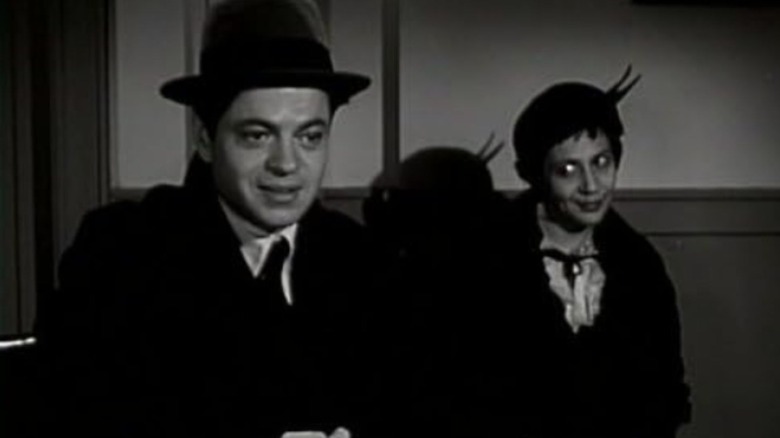
Ross Martin's post-"Wild Wild West" career showed that he was not confined to a single signature role. He appeared in Columbo as art critic and murderer Dale Kingston in "Suitable for Framing" (1971), played Charlie Chan in the 1973 television film "The Return of Charlie Chan," and took roles in programs such as "Night Gallery," "The F.B.I.," "Ironside," "Barnaby Jones," "Ellery Queen," "Sanford and Son," "Charlie's Angels," and "Fantasy Island."
In 1972, he voiced Dr. Paul Williams on the animated series "Sealab 2020" and later contributed voice work to productions including "Jana of the Jungle." Onstage, he returned in 1976 to play John Adams in a touring production of the musical "1776." Near the end of the decade, he took on one of his more substantial later television parts, playing the crime boss Tony Alika in a recurring role on "Hawaii Five-O" from 1978 to 1979.
In the last years of his life, television also brought him back to the role most closely identified with his fame. Martin and Robert Conrad reunited a decade after "The Wild Wild West" ended to reprise Artemus Gordon and James West in the made-for-television film "The Wild Wild West Revisited." The revival leaned more heavily into broad comedy than the original series had, but it was successful enough to produce a second film, "More Wild Wild West," in 1980. In a 1994 Los Angeles Times interview, Conrad said that after Martin's death he had no interest in reviving the series without him: "I wouldn't do it without Ross Martin."
Ross Martin began a second family chapter well before his final decade
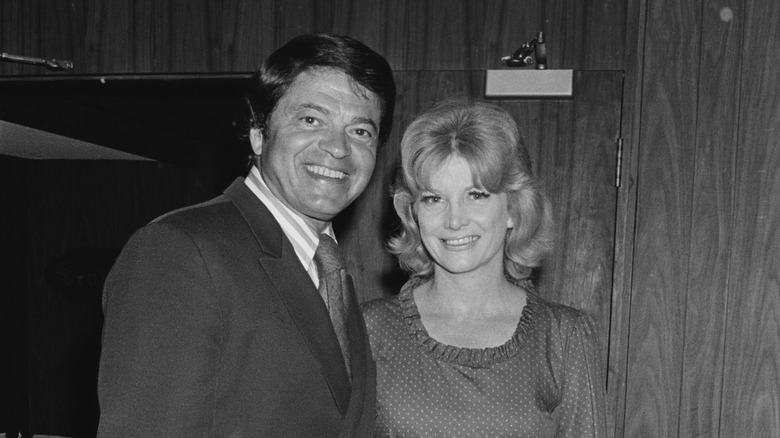
By the second half of his life, Martin had started over in a more personal sense as well. He married Olavee Parsons in 1967; she was a former high-fashion model and documentary filmmaker and brought two children from an earlier marriage, Rebecca and George, into the family. Martin became their stepfather and later adopted them.
By the end of his life, the couple was living in Beverly Hills, and Baruch's profile suggests Martin could hardly have spoken of Olavee with more admiration. Quoting him directly, the Baruch College archive notes: "My wife has an enormous circle of friends and acquaintances, and she's always helping people — to get jobs, find places to live."
That sense of partnership was visible publicly too. Olavee appeared with him on television programs including "The Merv Griffin Show" in 1972, "It's Your Bet" in 1972, and "Tattletales" from 1974 to 1976. On "Tattletales," they appeared as one of the show's married celebrity couples, alongside pairs such as Darren McGavin and Kathie Browne and Jerry Stiller and Anne Meara.
Ross Martin died at age 61, after collapsing while playing tennis
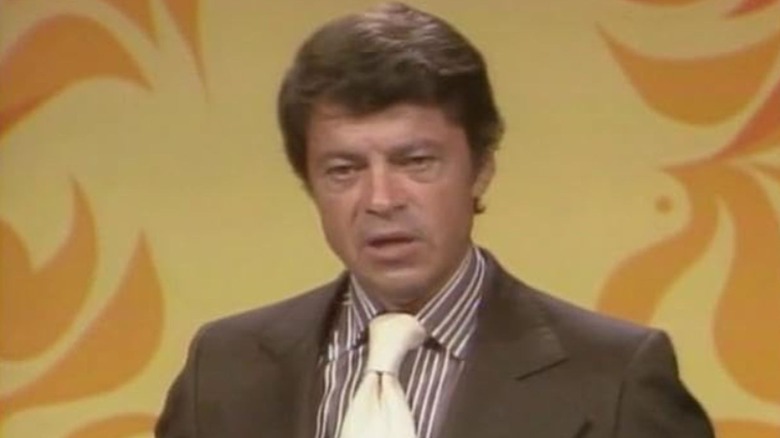
Martin's death came suddenly, and in circumstances that made it all the more jarring. On July 3, 1981, he collapsed while playing tennis at the Ramona Tennis Club in San Diego County and died at 61. UPI reported that a physician on a nearby court began emergency aid immediately, with paramedics continuing resuscitation efforts as Martin was taken to Pomerado Hospital in Poway. He was pronounced dead not long afterward, and the San Diego County coroner identified the cause as a heart attack.
Keith Boone, who knew Martin through the sport, said: "He happened to be doing something he loved when it happened. Ross always looked good to me. He made other people happy." Robert Conrad, his Wild Wild West co-star, responded with even greater emotion. A 1981 New York Times article quoted Conrad saying, "When I heard about it I wept." He added that Martin "was a credit to this world," and said that if more people had been like him, it would have been a better place to live.
Although Martin was not hospitalized while filming, his death still cut short work that was already in motion. The Washington Times, in the same report, noted Conrad's claim that Martin had been set to star as a corporate board chairman in a television series Conrad was producing for broadcast in January 1982. Martin's last broadcast appearance during his lifetime came earlier that year on "Mork & Mindy," in the episode "Mork and the Bum Rap," which aired on January 15, 1981. He also received a posthumous screen credit in the television film "I Married Wyatt Earp" (1983), in which he played Jacob Spiegler.