
Music, Movies & More: The Amazing Life Of Dolly Parton
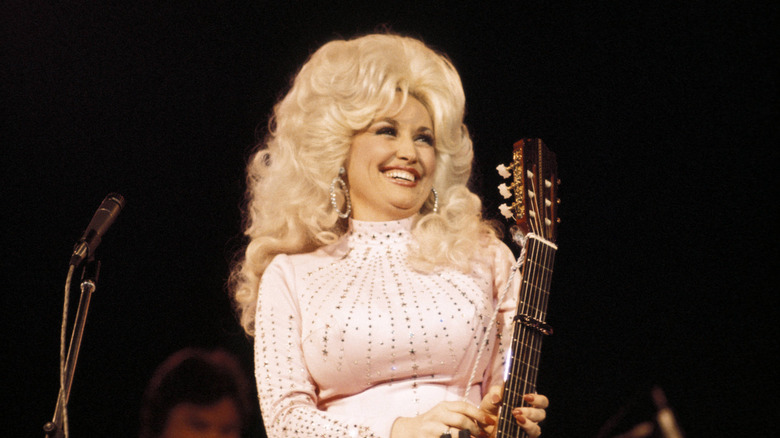
There are many facets to Dolly Parton's legacy. She was a legendary, Grammy-winning country singer. There was her unapologetic, in-your-face personal style. Many millennials were introduced to her as their favorite Disney Channel alum's godmother. To many, she was their beloved "Book Lady" who inspired them to dream big. And yet others were thankful to her for the magic land that was Dollywood.
It would be impossible to compress the cultural phenomenon that was Dolly Parton down to a single identity. Like her coat of many colors, Parton was an icon of varying talents throughout her incredible decades-spanning career that touched everything from film and television to social work, entrepreneurship, and, of course, music.
Few celebrities garnered universal appeal as steadily as Parton did. With her megawatt smile, big hair, and guitar in tow, the country legend carried whole generations forward with her art and love. That is why when she died on August 25, 2026, it hit extra hard, leaving people across the globe with a sense of personal loss and grieving her as their own. Here's a look back at the dazzling life of Dolly Parton — the legend that she was and the north star of originality she'll always be.
Dolly Parton was one of 12 children born into a farming family
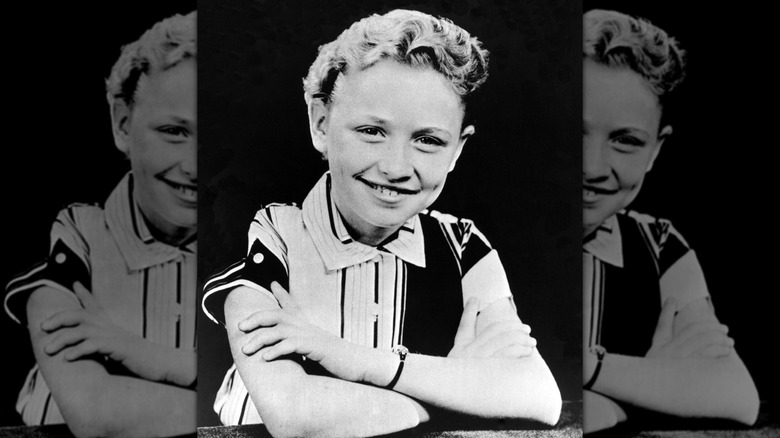
Her rhinestone-studded, glittering life may lead one to assume otherwise, but Dolly Parton came from incredibly humble beginnings. One of 12 children, she was born in 1946 amid the Great Smoky Mountains of Tennessee to a poor tobacco farmer, who paid the doctor for her delivery with a bag of cornmeal. Parton spent her early years in a small rural cabin in Locust Ridge that was devoid of electricity or running water.
Desolate as it may sound, her childhood was idyllic, spent in the midst of butterflies, misty mountains, a friendly Appalachian community, a stream of folklore and, of course, music. As she recalled in a 1984 conversation with Andy Warhol and Maura Moynihan for Interview magazine, "I lived in fairy tales and storybooks, and I knew that we were missing a lot that I saw in books, but we were real happy ... We lived close to God and close to nature. I think coming out of that gate gave us a real good solid foundation, a good wholesome attitude."
She found her love for music early in life
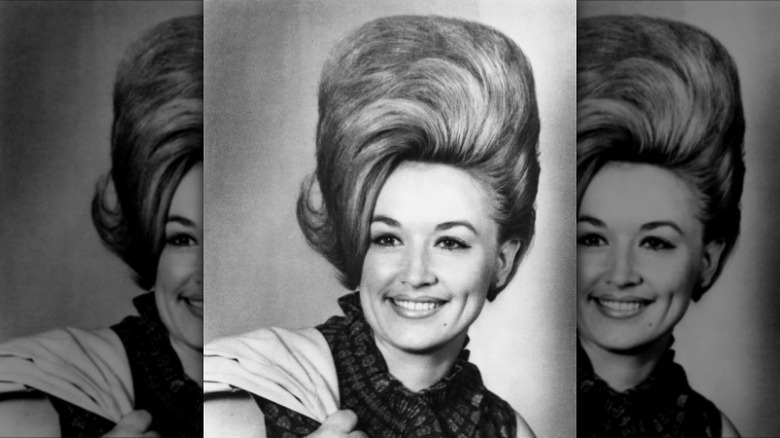
Dolly Parton's love of music was there from the start, thanks to her mother's side of the family. Right from her early years, the young dimple-cheeked Parton was raised on a healthy dose of musical traditions from the mountains, old gospel songs, radio broadcasts, and a variety of instruments lying around the house to choose from.
Parton's mother encouraged her natural inclination for music by putting her playful rhymes down on paper. One of their earliest such creations was "Little Tiny Tasseltop," written by Parton at age 5 for her doll. She also discovered her love of singing, and even created a makeshift microphone so she could, as she told People in 2025, sing for "the chickens and the dogs and the little kids in the yard." She recalled, "[I] felt like a star when I would stand on the front porch, put the tobacco stick down the crack on the porch back home on Locust Ridge and sing my little heart out."
It wasn't long before the stars began to align. Parton's uncle and mentor Bill Owens, a country songwriter himself, arranged for her to perform on a local Tennessee show when she was 10. And by age 13, Parton was rubbing shoulders with the likes of Johnny Cash, to whom she expressed her wish to sing at the iconic Grand Ole Opry in Nashville. She got that opportunity in 1959, after which, there was no looking back.
She began rising the charts as a country singer in the 1960s
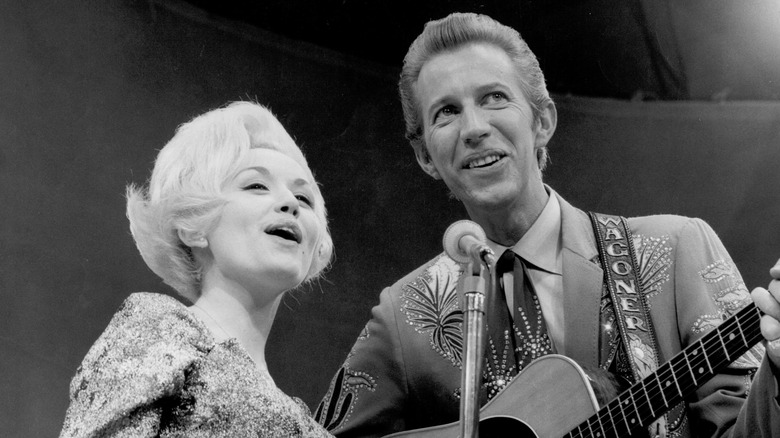
After years of making the local rounds, Dolly Parton packed up her bags and, just a day after graduating high school in 1964, took off to Nashville. It was here that the foundations of her rise as a country musician began taking shape — as well as her lifelong romance with Carl Dean, whom she met outside a laundromat soon after arriving in Music City. Parton quickly scored a record deal with help from producer Fred Foster and by 1965, she began working toward her big break alongside her uncle Bill Owens.
They hit the ground running as songwriters for country singers like Bill Phillips but Parton's journey to becoming a country singer wasn't all that easy. Believe it or not, her soprano voice was considered by some to be a wrong fit for country music — imagine! "My voice is pitched real high ... It sounded like people thought it was childish, so they thought I might have a better chance in rock-and-roll," she said (via "Dolly Parton's America").
Thankfully, she made it through that hiccup to bless the world with her first album, sweetly titled "Hello I'm Dolly," which featured early favorites like "Dumb Blonde." Not long after, she crossed paths with country singer Porter Wagoner, forming a professional partnership that would define her success for the subsequent few years.
Jolene took her career to a whole new level
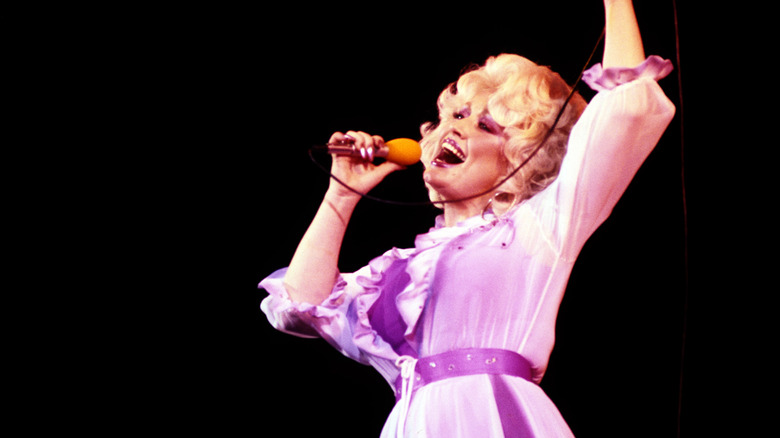
After scoring a spot on "The Porter Wagoner Show" in 1967, Dolly Parton's career turned irreversibly toward enduring fame. Together with Wagoner, himself a country legend and a steady mentor to young Parton, she evolved into a musical powerhouse and one half of a performing duo that had charting successes like "The Last Thing on My Mind" and several albums to their name.
The pair wasn't immune to creative clashes and in Parton's words, "fought like cats and dogs" (via "UNUM Short: How Dolly Parton Reclaimed Her Career"). Tensions only escalated when the spotlight began shining brighter on Parton, whose solo career was simultaneously taking off with hits like "Joshua," "Coat of Many Colors," and the Grammy-nominated "Mule Skinner Blues" in the mix. Then came 1973 and with it, the release of her earth-shaking, game-changing, era-defining signature song "Jolene."
Famously addressed to a local beauty who apparently had a flirtatious little thing going on with Carl Dean, the song propelled Parton to a new peak of stardom that was surpassed only by her other big hit of the decade: "I Will Always Love You." The ballad — eternalized by Whitney Houston in her 1992 version — was written by Parton as a farewell of sorts to Wagoner, whom she professionally parted ways with in the mid-'70s. In response to her goodbye, Wagoner replied, "That's the best thing you ever wrote."
With her big hair and rhinestone glam, she quickly became a fashion icon
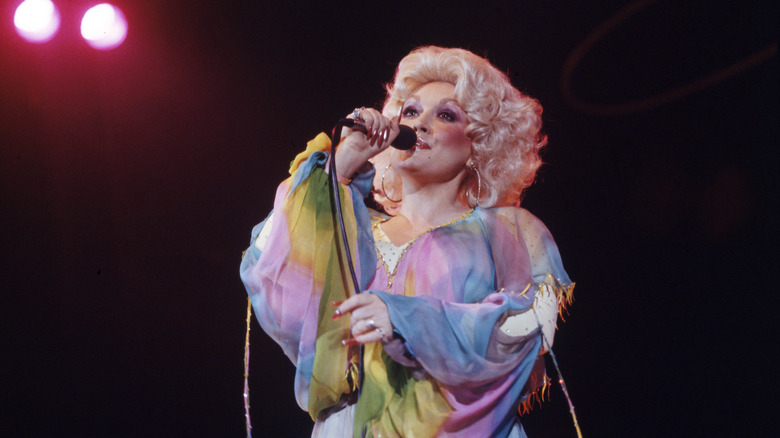
The only thing that could compete with Dolly Parton's mesmerizing voice was Dolly Parton's distinctive fashion sensibility. Right from her voluminous head of blonde hair, down to her bedazzled outfits cinched impossibly tight at the waist — not to mention, her signature long acrylics that magically never impeded her guitar-playing skills — Parton was a living, breathing statement of bold personal style that was unlike anything the fashion world had seen before.
And she borrowed it all, as she always proudly proclaimed, from a local, rough-around-the-edges woman she had encountered growing up in the mountains of East Tennessee. "She was flamboyant. She had bright red lipstick, long red fingernails. She had high-heeled shoes ... and I just thought she was beautiful," she told The Guardian in 2023. As the years wore on, the rhinestones on Parton's sparkly clothes increased, as did enhancements to alter her flamboyant appearance.
With her fuller bust and tightened face in tow, she walked confidently into interviews, ever ready to lampoon herself before others got to it — an endearing quality that presumably deterred any deeply vicious public commentary about her looks. As she once said on "The Ellen DeGeneres Show," "I'm a cartoon so it's almost like easy to look this way. I'll look this way probably when I'm 100."
Dolly Parton's magic also touched Hollywood in 1980
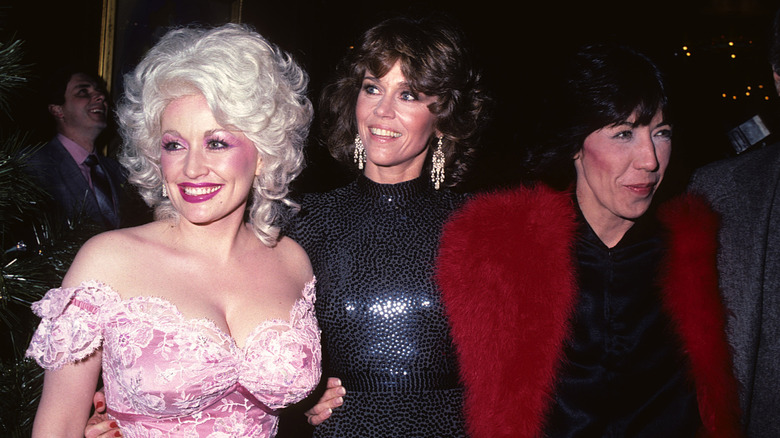
Having started her career with "The Porter Wagoner Show" and later starring in her own show called "Dolly!" in the '70s, Dolly Parton was no stranger to the television format. Hollywood, however, was something she only came around to in 1980 — and how. In the classic comedy "9 to 5," Parton landed the part of Doralee Rhodes, and it was a smashing acting debut propped up delightfully by her veteran co-stars Jane Fonda and Lily Tomlin.
Drawn from a real-life workplace equality movement led by the 9to5 National Association of Working Women in the '70s, the film was a rouser of sorts for women of the era and, with its themes signaling empowerment, became a (sometimes contentious) cornerstone of feminist cinema. "That was a special thing. I was real proud of that," Parton told Andy Warhol for Interview magazine.
Besides her natural penchant for humor, Parton also brought some of her signature musical magic to the movie, dreaming up a "9 to 5" theme song by famously tapping her iconic fingernails together. It got her two Grammy wins, an Oscar nomination, and became the defining soundtrack to her short but brilliant film legacy that went on to include other memorable titles like "The Best Little Whorehouse in Texas" and "Steel Magnolias."
She turned Dollywood into the happy place for millions
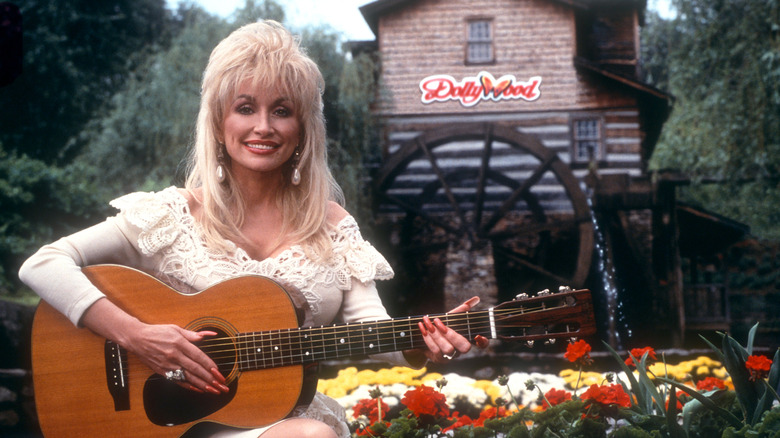
A multi-hyphenate through and through, Dolly Parton connected the world with more than just her music. In 1986, she opened the gates to the first of many such unifying personal ventures, unabashedly called Dollywood. A theme park nestled in the Great Smoky Mountains not far from where she grew up, Dollywood breathed new life into an already existing, old-time local attraction and turned Parton's 165-acre corner of Pigeon Forge into one of Tennessee's most visited destinations.
From rollercoasters to water parks and entertainment shows, Dollywood is hailed as nothing short of a wonderland infused with Parton's signature good vibes. "I was just hoping that people would really want to come visit a theme park with my name on it," she joked at an event celebrating Dollywood's 40th anniversary, as reported by People. But really, the motivation behind Parton's namesake mini-state went deeper than mock vanity.
"I just for years wanted to do something, take something back home for my people to be proud of," she told CBS News in 1986, ahead of Dollywood's opening. "This is going to also provide a lot of jobs for the people in that area ... I've always wanted to preserve our Smoky Mountain heritage." Sure enough, Dollywood's legacy has come to transcend entertainment and make grassroots change; as the Pigeon Forge Chamber of Commerce notes, Dollywood generates over 19,000 jobs and draws in excess of $221 million every year.
Imagination Library became a key part of her philanthropic legacy
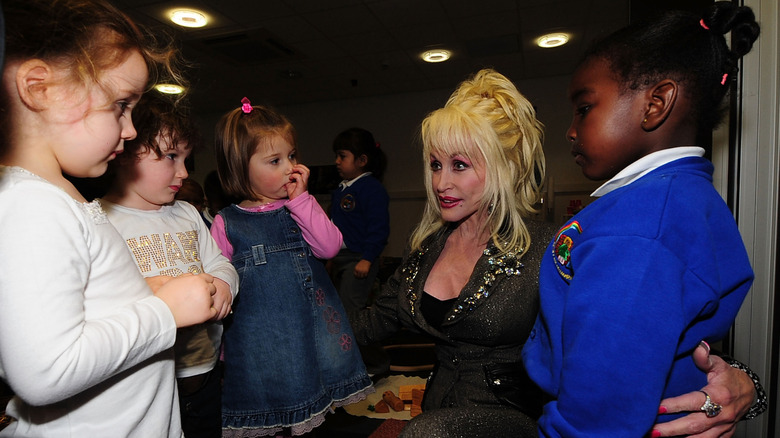
Dolly Parton's drive to do good landed her a place in millions of hearts that were touched by her philanthropic efforts, the most beloved of which was the Imagination Library. Founded in 1995, the initiative sought to promote child literacy by gifting free books to kids every month from the time they were born up until they were 5. To date, the program has distributed over 300 million books to children who knew (and loved) Parton simply as the "Book Lady."
"That's a very warm, loving, emotional thing for me to think that I'm the book lady and that I've done something for the little kids because, being from a big family, I have a special love for children," she told USA Today in 2025. The initiative was a fitting follow-up to the program she launched in the late '80s under her Dollywood Foundation, which reduced school dropout rates in her hometown by awarding $500 to kids who graduated.
At the core of Parton's educational campaigns was the memory of her farmer father, whose illiteracy moved her to action. "Daddy was a very smart man, but he was ashamed that he couldn't read or write," Parton told Oprah Winfrey in a 2020 sit-down, saying that her father lived to proudly see her initiative flourish. "I always know he's up there somewhere thinking, 'You go girl. You done good.'"
A whole generation of fans was introduced to her as Miley Cyrus' godmother
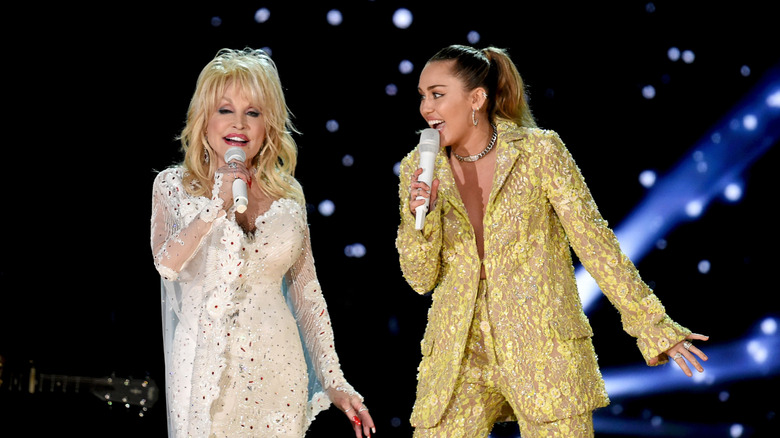
Many millennials' first introduction to Dolly Parton wasn't through her legacy as an award-winning country music icon. It was when they met "Aunt Dolly." A whole generation of young fans were left spellbound (and intrigued) when Parton walked onto our screens in 2006 as Miley Stewart's godmother on "Hannah Montana." The synchronicity of Parton being a real-life godmother to Miley Cyrus only elevated the magic of the moment.
Parton's Barbie-like aura — complete with a doll-like physique, dreamy clothes, and a sweet voice that dished out wisdom to not just Miley, but all teens watching — was like catnip for the noughties youth that admired her with oohs and aahs, not knowing that they were witnessing a timeless legend whose voice and style won over the world decades before they were even born. "[Cyrus] really made me a lot of new fans that follow me to this day," Parton told The Hollywood Reporter in 2023. "All those little kids now have grown up and they've followed Aunt Dolly all these years."
After "Hannah Montana" ended, Cyrus continued to musically collaborate with her fairy godmother, as Parton liked to call herself. Both powerhouse performers, Parton and Cyrus took many stages by storm with their joint renditions of each other's songs, particularly "Jolene" and "Wrecking Ball."
Dolly Parton is said to have written over 3,000 songs throughout her lifetime
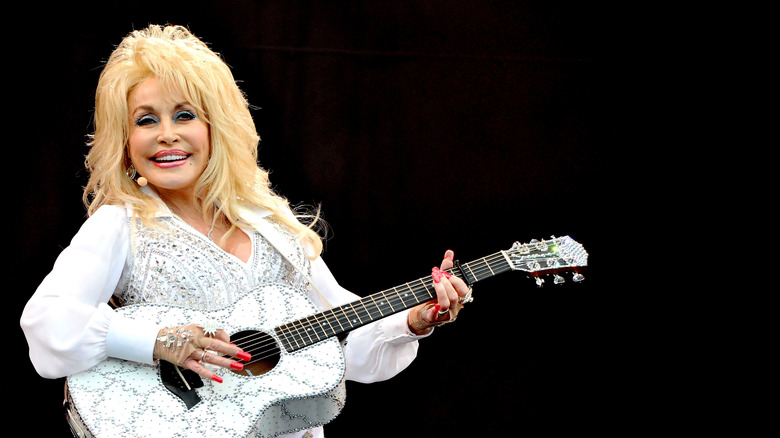
Dolly Parton was a storehouse of insatiable musical passion. The most delightful manifestation of that creative fervor she had to strum and write and sing was not her glittering collection of awards. Nor the fact that she could cover Led Zeppelin as effortlessly as she could perform a country classic. It was her songwriting repertoire of over 3,000 songs that made the best case for her seemingly bottomless wellspring of talent.
"There's not a day goes by that I don't think of something that I should write down," she told Bustle in 2020. "If I come up with an idea, [I'll take] whatever is in my pocketbook, [even] if it's the last receipt I got from the drive through at McDonald's. I'll write on a Kleenex box or even on the back of my hand if I don't have something else handy." One of those countless songs she wrote currently lies locked away in a vault in Dollywood, only to be released in 2045.
Her lyrics, besides being capsules of a simpler time, spoke directly to everyday, working-class realities and ordinary joys and hardships that resonated with millions. "Coat of Many Colors" — her 1971 real-life inspired ditty about a patchwork coat her mother made for her — stands out as a poignant example of the relatability that was so central to her inimitable storytelling. It was Parton's most personal — and personal favorite — song.
She was a lifelong messenger of peace and unity
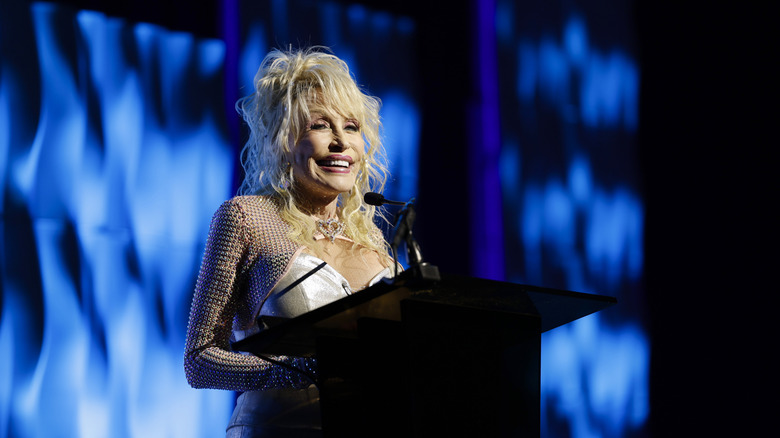
She was no politician, nor was she a spiritual leader. But there was something in the way that Dolly Parton dispersed messages of peace and humanity that made it near impossible not to sit up and take notice. Universally regarded as a humanitarian trailed by a long history of charity work, Parton seemed to always be committed to kindness.
"I really do ask God every single day to let me do something, say something, be something that matters to somebody else. To make somebody feel good. To let people see a spark of love," she told Vogue in 2016. "I want to be loved, and so I try to love everybody." She consistently credited her positive outlook toward life and acceptance of people to her mother.
Though Parton remained politically neutral as a celebrity, she used her platform to advocate for LGBTQ+ rights time and time again. That was just one of many reasons why she was hailed, by many accounts, as a gay icon. As she told AV Club in 2011, "I love the difference in people ... I appreciate getting accepted myself, because I know I'm unusual. And I love the unusual in other people." A few years later, she went on "Larry King Now" where she, once again, made her love for the LGBTQ+ community abundantly clear: "If you're gay, you're gay. If you're straight, you're straight. And you should be allowed to be how you are and who you are."
Dolly Parton died in 2026 from cancer
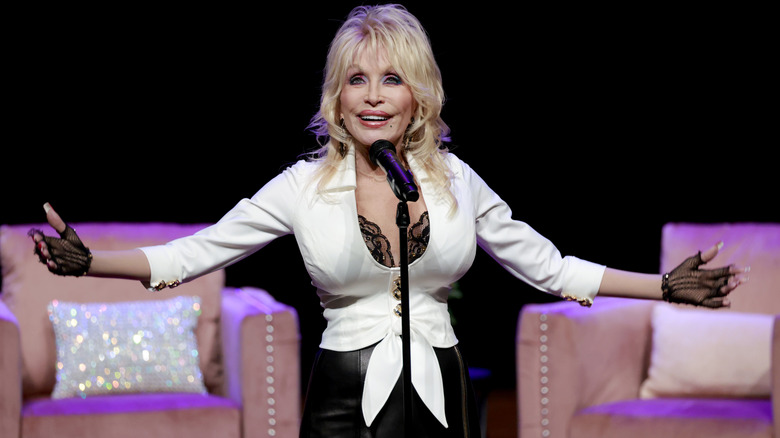
On August 25, 2026, the world lost one of its brightest sparkles with the death of Dolly Parton. She'd been dealing with cancer privately, although she previously shared with the public she was experiencing health issues. "The good news is I'm responding really well to meds and treatments, and I'm improving every day. Now, the bad news is it's going to take me a little while before I'm up to stage-performance level," she told fans in an Instagram video over a month before her death. President Donald Trump called for the flag to be flown at half-mast for one week in her honor.
Widely celebrated as one of the last standing unifiers between Americans across the lines of age, race, and political divide, Parton had been elevated from her country legend status to a luminous godmother figure to millions who didn't know her personally but felt an instinctive familiarity with her. Her death, unsurprisingly, unleashed a profoundly emotional outpouring of tributes from across the globe. But being the fairy godmother that she was, Parton — who in the months leading up to her death told People that she was "just getting started" — left glimmers of hope to carry fans through the grief. Her team announced that everything from shows to documentaries and even a biopic on the singer was in the works.