
Quote Of The Day By Jane Hirshfield: 'A Work Of Art Is Just This Kind Of...'
We may receive a commission on purchases made from links.
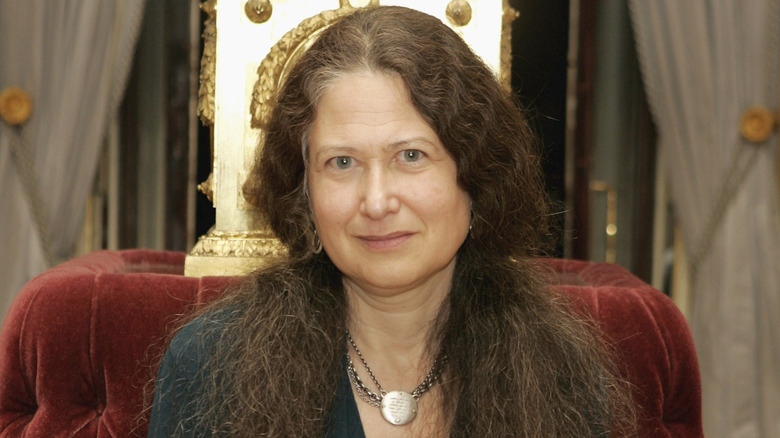
Born in New York City in February 1953, prolific poet and essayist Jane Hirshfield was right on time to experience some pivotal eras in the last century of American history — and even become a part of it herself. Hirshfield was a member of the the very first incoming class at Princeton University to include women, thus helping to pave the way for everyone from Michelle Obama to Brooke Shields. Upon graduating in 1973, Hirshfield went on to become one of the defining voices of her generation in poetry. And, to this day, she continues to use her chosen craft to advocate for the causes that mean the most to her, from environmentalism to social justice.
Hirshfield's efforts certainly haven't gone unnoticed either. Poets for Science, which Hirshfield founded in 2017, has achieved global recognition. Likewise, she was selected to join the American Academy of Arts and Sciences in 2019. Notably, we actually featured a quote of the day by Hirshfield before. But considering just how influential she is — not to mention her clever way with words that established her in the first place — we've chosen another Hirshfield quote for today.
Quote of the Day by Jane Hirshfield
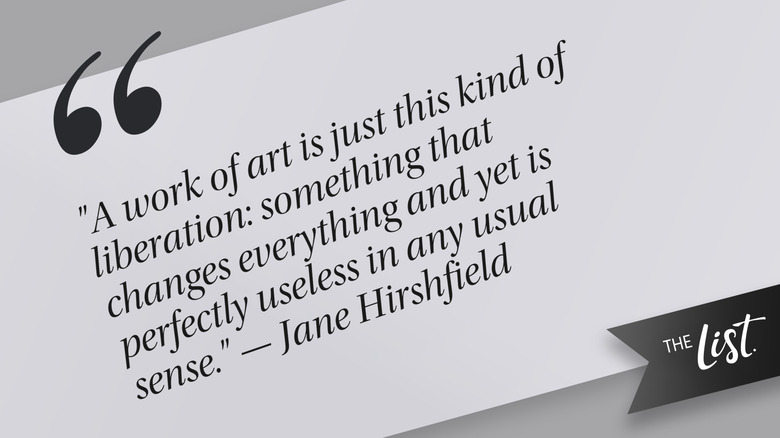
"A work of art is just this kind of liberation: something that changes everything and yet is perfectly useless in any usual sense."
Jane Hirshfield offered this piece of wisdom during an interview with AGNI in July 2006. At the time, she had only recently published her sixth poetry book, "After," which made the shortlist for the T. S. Eliot Prize that year ("District and Circle," by the since-departed Seamus Heaney, ultimately came away with the victory).
Hirshfield was specifically responding to a question about how some treat her collections almost as personal prayerbooks. While the poet confessed that she hadn't previously considered that comparison, it did make sense the more she investigated their line of thinking. "I think art plays much the same role in a human life as does spiritual ritual," the poet opined. Therein lies another telling detail about how she views creative works.
Deeper Meaning of Jane Hirshfield's quote — Art doesn't need to be practical to be profoundly impactful
Essentially, Jane Hirshfield is arguing that while a work of art — be it a poem, a song, or a painting — may not have any practical use in a utilitarian sense, it's still capable of having a profound impact on the observer and, by extension, the world around them. We can tie this into the fact that Hirshfield often uses her own art as a form of activism. She likely knows better than anyone that a poem, in and of itself, is not going to materially change anything that's wrong with the world. However, that same poem does have the power to touch someone in a way that may spur them on to put in that elbow grease, so to speak. To borrow another phrase, "The body follows the mind." In this case, the mind is the impact a piece of art has on you, and the body is what you then do about it.
All of this gets to the heart of what Hirshfield is asserting, which is that art does not necessarily need to be "useful" to be important, nor does it need to be "practical" to have value. Sure, paintings sometimes sell for millions of dollars and, in turn, become status symbols. But as Hirshfield went on to tell AGNI, the fact that poetry exists at all "proves that cannot be the whole story — no one gains social status from knowing a poem." So, the next time you find yourself reading a poem or something similar, instead of asking, "What did I gain from this?" wonder, "Am I the same person I was before I did?"
More Quotes From Jane Hirshfield
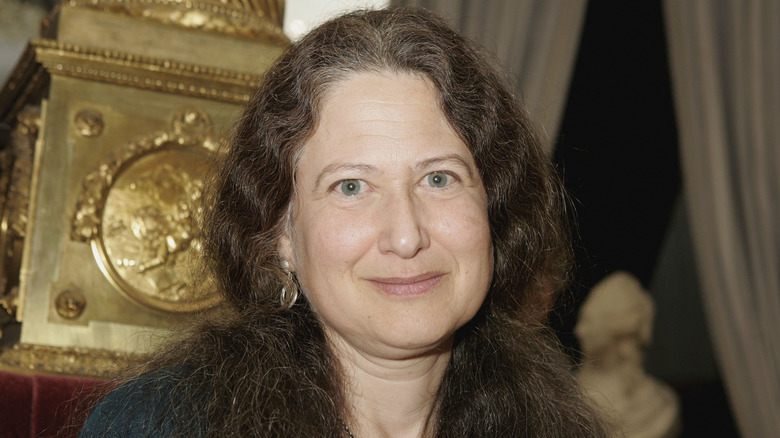
- "My job as a human being as well as a writer is to feel as thoroughly as possible the experience that I am part of, and then press it a little further."
- "It's my nature to question, to look at the opposite side. I believe that the best writing also does this. Great literature does not take sides with the small-minded. It's not partisan or narrow."
- "In poetry's current manifestation — and by current I mean at least the past couple of hundred years — it is the place where the thinking of the heart, mind, and body come together."
- "Neither a person entirely broken nor one entirely whole can speak. In sorrow, pretend to be fearless. In happiness, tremble."
- "The world doesn't need new poems. One shouldn't force oneself. The world will have enough good poems whether I myself am trying to write them or not."