

These '60s Sitcoms Were Filled With Behind-The-Scenes Feuds
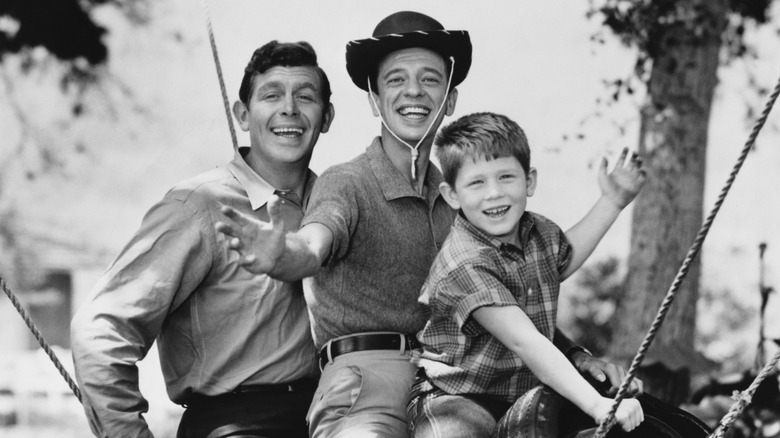
The '60s were a trailblazing time in Hollywood that introduced audiences all around the globe to some of the small screen's most beloved shows. During the decade, TV staples like "The Brady Bunch," "Gilligan's Island," and "The Andy Griffith Show" dominated the ratings, and fans fell in love with their talented cast members and iconic characters. However, it wasn't all fun and games during the production of these sitcoms.
Some major behind-the-scenes drama plagued many of these classic hits, as fierce feuds, arguments, and egos ran rampant both on set and off. Vivian Vance and William Frawley notoriously despised one another during their time on "I Love Lucy," and their bitter rivalry carried over into subsequent acting gigs. Similarly, the cast of "The Beverly Hillbillies" fought and bickered just as intensely as any real-life family.
Whether it was creative clashes, conflicting personalities, or a struggle for dominance, sitcoms in the '60s experienced their fair share of intense growing pains. While some shows overcame the feuds and fights, others never recovered from the turmoil.
Tina Louise tried to distance herself from Gilligan's Island
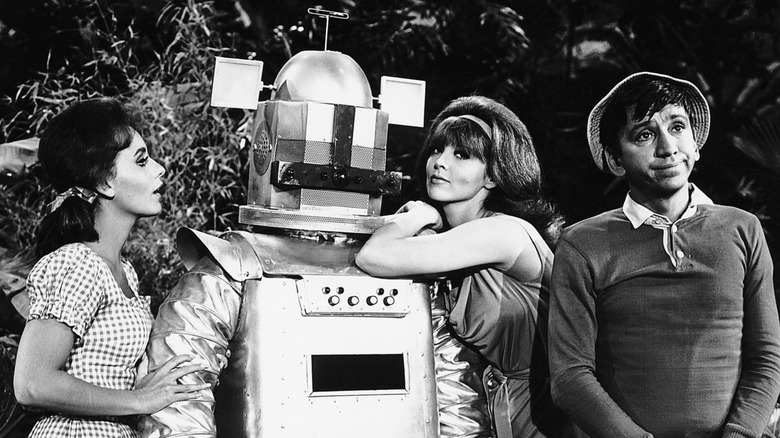
Known for her iconic role as sultry starlet Ginger Grant in "Gilligan's Island," Tina Louise reportedly clashed with castmate Bob Denver behind the scenes of the beloved sitcom. Louise had previously established herself as a serious actor following her Golden Globe-winning performance in "God's Little Acre," and she worried she would be typecast as the comedic character. Louise's reserved attitude toward the show and frustration with her role allegedly caused issues with Denver, as he became the central focus of the series.
"They had told her that she was the star of the show. My problem is if you get fourth billing, wouldn't that [be] a clue?" Denver said in a 1994 interview with Peter Anthony Holder. Fellow cast member Dawn Wells even opened up about Louise distancing herself from the cast and sitcom's legacy, as she refused to return for the three TV film sequels following the show's shocking cancellation in 1967.
"Tina thought she was a movie star, and I don't think she realized what it was that there were seven of us. She was never difficult. She was never part of the company, though," Wells told Studio 10 of working with Louise. "Even since then I have tried to kind of contact her; she doesn't want to admit she was in it. And she was wonderful. I don't think you could have cast anybody better. But I think she thought it was going to be about her."
Tensions ran high on the set of The Andy Griffith Show
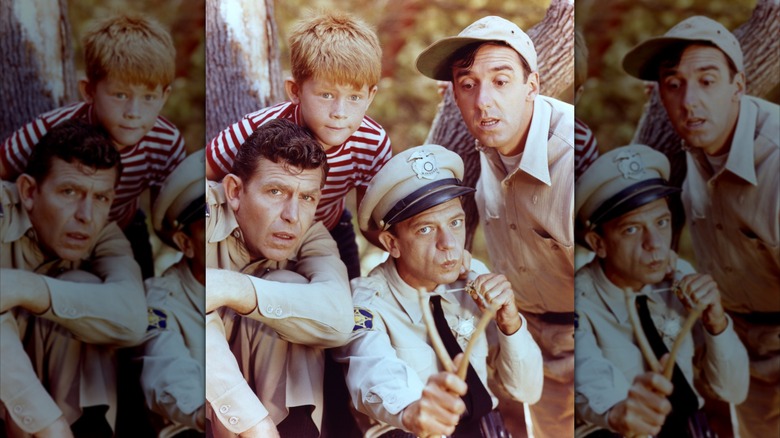
For 8 seasons, Andy Griffith starred as beloved Mayberry Sheriff Andy Taylor in the timeless classic "The Andy Griffith Show," the sitcom becoming a celebrated staple. Despite the show's wholesome premise, Griffith allegedly brought drama to the set and had an explosive temper when he was drinking, often putting his co-stars on edge.
"Most of us were deathly afraid of Andy," George Lindsey, who played Goober Pyle, wrote in his memoir "Goober in a Nutshell" (via OK! Magazine). "Every Monday night, he would call you if he liked your performance. If the call didn't come, I dreaded going back to work on Tuesday morning." Griffith's tumultuous marriage to his first wife, Barbara, only worsened his attitude, as they both had drinking problems; the couple ultimately divorced in 1972.
While not as difficult as leading man Griffith, Frances Bavier (Aunt Bee) was actually more reserved than her gregarious character. The no-nonsense Bavier frequently clashed with prankster Griffith, the actor remaining secluded from the cast during filming. "She kept to herself. Frances very much kept to herself. She was a New York stage actress, and I think she always loved the job and appreciated it was a big success, and was extremely professional," the sitcom's star Ron Howard told the Archive of American Television. "But I don't think she ever felt a part of what these boys were up to and their shenanigans."
Mary Tyler Moore and Rose Marie didn't hit it off during The Dick Van Dyke Show
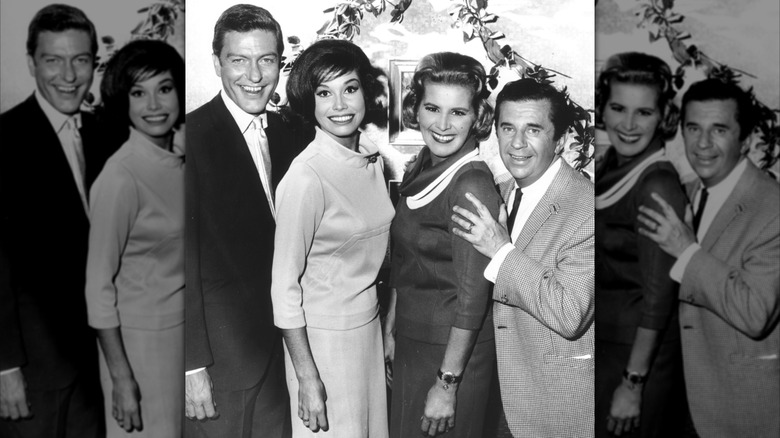
TV trailblazer Mary Tyler Moore and Rose Marie starred in "The Dick Van Dyke Show," but the leading ladies reportedly didn't hit it off while filming the show. Marie was already an established star when newcomer Moore was cast in the sitcom, and she was reportedly frustrated when producers shifted its premise from centering on her and Dick Van Dyke's characters in the writer's room to his home life with on-screen wife Moore.
Marie had gotten jealous over the attention Moore received and felt slighted when the storyline shifted. "As time went on, I realized that the focus was actually on the home life and on his TV wife, Mary Tyler Moore. I didn't like that. I was disappointed. I wanted to work more. The situation was made more difficult because Mary was younger and prettier than me and, I'll admit it, I was jealous of all the attention she was getting," Marie wrote in an essay for The Hollywood Reporter.
Despite their rocky beginning, the stars eventually became close, forming a friendship decades after the show concluded, as seen when the cast reunited for 2004's "The Dick Van Dyke Reunion Show." "We said to each other that we wasted a lot of time not being that close. So now and then we would write a note, and whenever she came here [to LA] we would go out to lunch," Marie told the New York Post.
William Frawley and Vivian Vance's feud carried over into My Three Sons
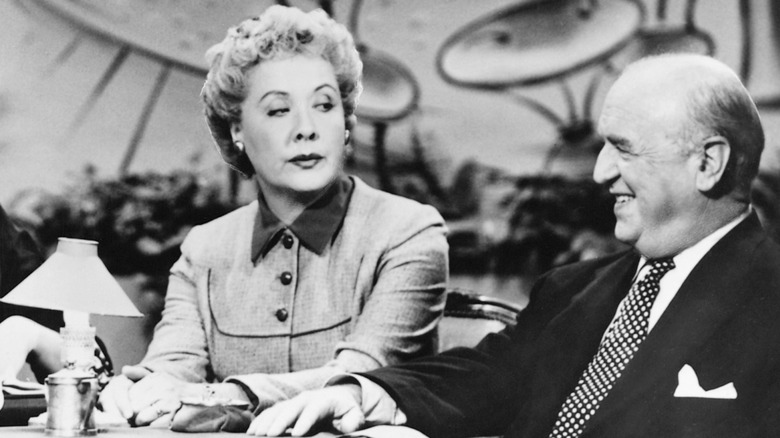
It's no secret that William Frawley and Vivian Vance despised one another while on the groundbreaking hit "I Love Lucy," and their feud carried on well after its conclusion in 1957. Frawley starred in "My Three Sons" from 1960 to 1965, and he enlisted his young co-stars Stanley and Barry Livingston to play practical jokes on Vance. She was starring in "The Lucy Show," and they shot on neighboring sound stages.
The TV stars first clashed after Frawley overheard Vance complaining about his age while on "I Love Lucy," fueling his vitriol. "It was under the cover of this little intrigue, like we were on a mission. We were Bill's little toadies in his little army—we would do his bidding to wreak havoc on Vivian whenever he felt like it," Barry recounted to Woman's World of their behind-the-scenes hijinks. Naturally, Vance was not amused by the constant pranks, and it only deepened her contempt for Frawley.
"Bill also went in there and made other noises, loudly saying nasty things about her if she was within earshot—not to her face, but about her. It was just little things; Bill just hung onto this feeling about her. The kids went along with him because they loved Bill," television historian Geoffrey Mark further told the outlet about Bill's behavior toward Vance. The bad blood between the pair remained constant, and they never reconciled.
Robert Reed resented his involvement in The Brady Bunch
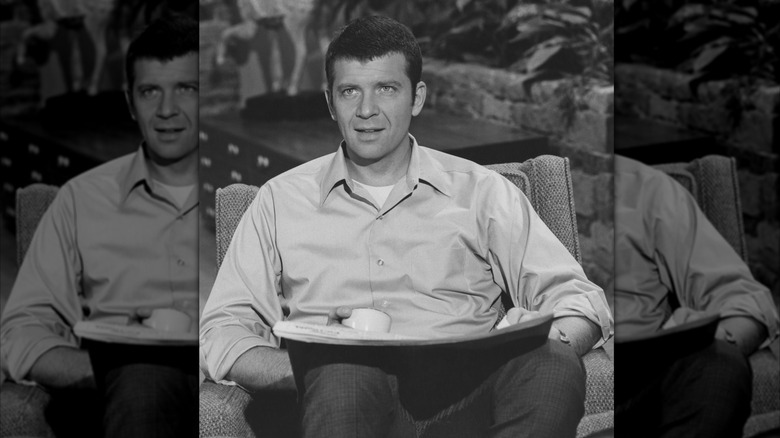
Despite the iconic family being portrayed as picture-perfect, the cast of "The Brady Bunch" were vastly different from their on-screen personas. Robert Reed starred as gentle patriarch Mike Brady, but in real life, the actor was unhappy because he felt forced to stay closeted to protect his career. Reed continuously clashed with series creator Sherwood Schwartz over storylines and visual gags, as he had been classically trained and viewed himself as a more serious actor.
Reed was candid about his thoughts on "The Brady Bunch" and never shied away from expressing his unfiltered views. "The ineptitude of the scripts can be overpowering. You get a script that's ludicrous. Sometimes the pages don't even match. It could be a good show, but we're operating at 30 percent capacity, I think," he told the Courier-Post in 1972 (per Me TV). "They think it's good. The others are not going to raise a fuss. I'm called a bad boy because I want to improve it."
Reed was absent from what ultimately became the series finale, and the sitcom was subsequently canceled in 1974. In an interview with ABC News, TV titan Schwartz explained that when it came to the actor, "television, in general was beneath him. And situation comedy was beneath television, in his opinion." Before adding, "He wound up on a show that he didn't want to do in the first place, and it became more and more difficult for him."
Egos clashed behind the scenes on I Dream of Jeannie
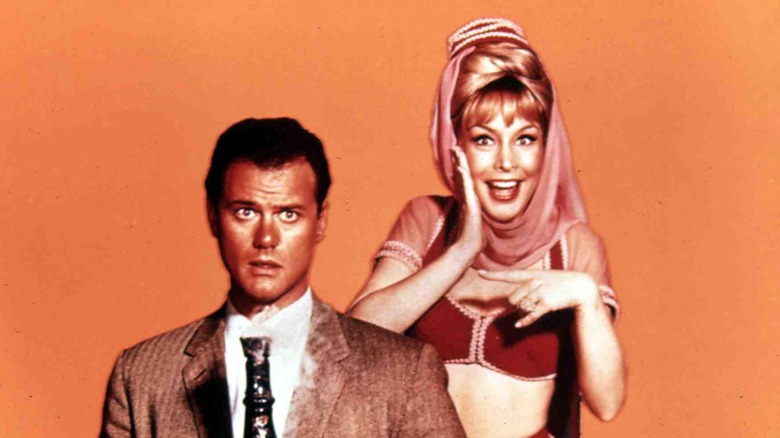
"I Dream of Jeannie" famously starred Barbara Eden as the beautiful, 2,000-year-old genie who falls in love with astronaut Tony Nelson, portrayed by Larry Hagman. Though the sitcom revolved around the pair's blossoming relationship and Jeannie's many hijinks, Eden quickly became its breakout star, and her media attention initially rubbed Hagman the wrong way. He allegedly engaged in wild on-set antics when he became frustrated and struggled creatively with the show.
According to Eden, Hagman would also butt heads with director Gene Nelson. "For Larry Hagman, the 'I Dream of Jeannie' years were not happy ones. To this day, I believe he prefers to be remembered for his role as J.R. Ewing in 'Dallas' rather than for his role as Major Tony Nelson," she wrote in her memoir "Jeannie Out of the Bottle" (via Do You Remember). "In many ways, Larry was like a very talented, troubled child whose tantrums sometimes got the better of his self-control. But when it came to [director] Gene Nelson... Larry hit hard and often."
At one point during production, Eden would even hide in her dressing room when Hagman and Nelson clashed. She wrote, "It was patently obvious that there was a lot of nastiness flying back and forth between the two of them." Despite the on-set turmoil and early tension, Eden and Hagman shared a lifelong friendship and spoke highly of one another in the many decades after the show.
Agnes Moorehead was enraged by a cast shake-up on Bewitched
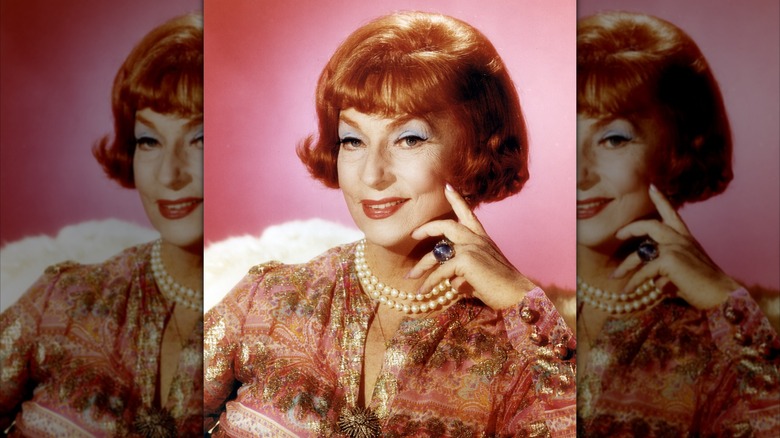
Hollywood veteran Agnes Moorehead portrayed Endora in "Bewitched," the magical mother of Elizabeth Montgomery's lead heroine, Samantha Stephens. When Dick York departed the sitcom in 1969 following a back injury and addiction to painkillers, Moorehead was devastated as the two had enjoyed a close friendship. York had starred as Samantha's husband, Darrin Stephens, in the fantasy sitcom, and she was extremely cold to his replacement, Dick Sargent.
Moorehead had been frustrated with how the studio handled York's departure, and she seemingly took her anger out on Sargent, even bringing him to tears on multiple occasions with her harsh treatment. "About the third or fourth show I was in she said to people in front of me, 'They should never meddle with success,' Meaning Dick York should never have been replaced which I thought was a very cruel and unthinking thing to say in front of me," Sargent revealed in a 1992 interview with Owen Keehnen.
Sargent took the high road and eventually got on friendlier terms with Moorehead during his three-season stint on the sitcom. "She was certainly the most professional woman in the world...and she was so good. Thank God we became friends eventually," he further shared. Interestingly enough, Sargent was the original choice to play Darrin Stephens but was forced to pass on the role after he signed on for the short-lived show "Broadside."
Cast members fought like cats and dogs on The Beverly Hillbillies
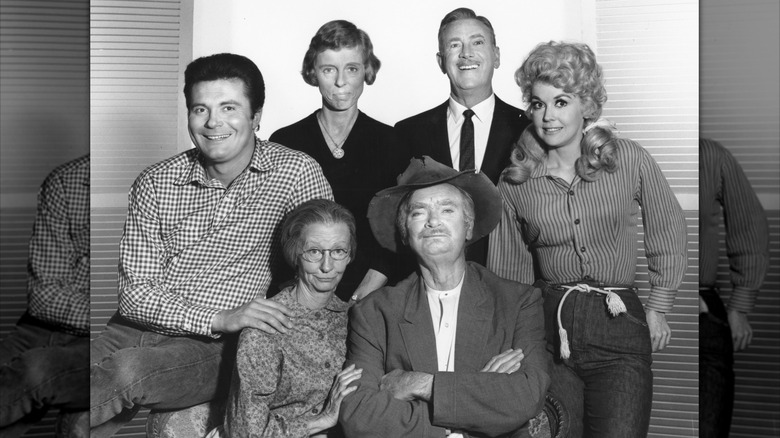
The cast members of "The Beverly Hillbillies" reportedly fought behind the scenes just as fiercely as any real-life family would. Max Baer Jr. revealed in Stephen Cox's "The Beverly Hillbillies: A Fortieth Anniversary Wing Ding" that they would sometimes fight like cats and dogs and squabble with one another. "That's normal living. You may like or even love somebody, but from time to time, you're gonna get p***ed off at them and tell them to get lost," he shared (via MeTV).
"I mean I yelled at Irene and she yelled at me, I'd get p***ed at Donna and she would cry or something like that. Buddy would get angry with me and just turn his back on me, or I'd say, 'Godda**it, Buddy, what's the matter?'" Baer Jr.'s co-stars Buddy Ebsen and Nancy Kulp often sparred over their differing political positions, getting into heated debates and screaming matches; Ebsen was a staunch conservative, while Kulp was liberal.
Ebsen supported her Republican opponent Bud Shuster over Kulp when she ran for Congress in 1984, even recording radio ads for Shuster's campaign. "He's not the kindly old Jed Clampett you saw on the show. I've worked so hard on this campaign. It's none of his business and he should have stayed out of it," Kulp said per The Rocky Mountain News. Ebsen and Kulp eventually reconciled before her death in 1991.
Cast shake-ups and uncertainty plagued The Lucy Show
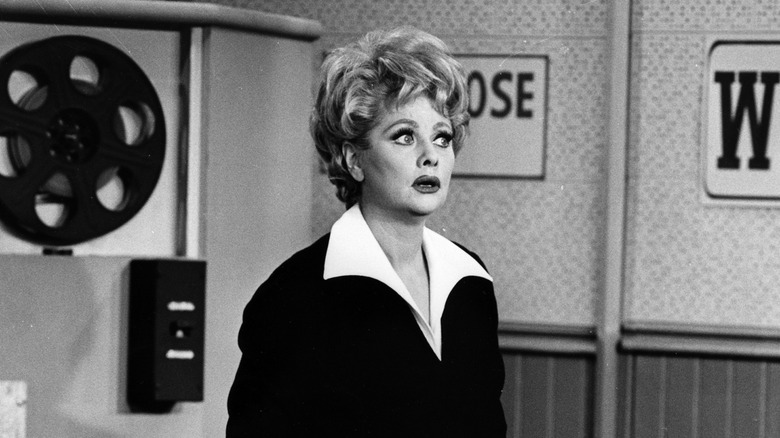
Comedian extraordinaire Lucille Ball once again dominated the small screen when she starred in "The Lucy Show" from 1962 to 1968, the sitcom reuniting her with Vivian Vance. The show was plagued by formatting and casting shakeups throughout its run, and Ball frequently clashed with producers. Following the conclusion of the second season, the TV titan got into a heated disagreement with head writers Madelyn Martin and Bob Carroll Jr. over a script, resulting in their departure.
Ball and Vance had a close friendship but found themselves at odds when Vance sought more creative control and financial security. When her true desires got lost in translation with their agents, Vance opted to walk away from the show. "I don't want anything to happen to my marriage," Vance shared according to the book "Desilu: The Story of Lucille Ball and Desi Arnaz" (via Showbiz Cheatsheet). "All this flying back and forth is difficult. ... I get up, go to the studio, go home, and fall into bed. It's lonely."
"Lucy cried in private talking to me because she depended on Vivian," fellow co-star Gale Gordon said (via Distractify). "She told me she could never do a show without Vivian. Lucy told me that, just prior to the break, Vivian was asking for more money than Lucy was willing to accept. It broke Lucy's heart, really." Despite the setback, Ball and Vance eventually made up and remained close friends the rest of their lives.
Doris Day was forced to star in The Doris Day Show
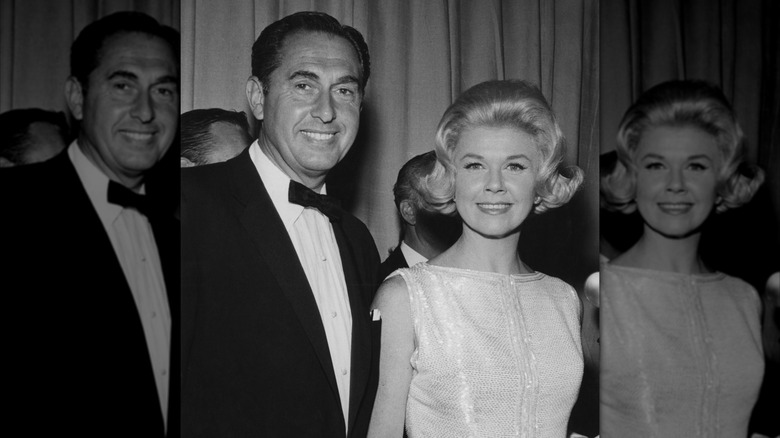
Hollywood sensation Doris Day was already an established cinema star by the time she appeared in her titular sitcom, "The Doris Day Show," though it wasn't her idea to make the jump to TV. After her husband Martin Melcher died in 1968, Day was stunned to discover he and his business partner Jerome B. Rosenthal had squandered her money and legally committed her to appearing in the series without her consent.
She initially loathed the sitcom's premise and clashed with producers but eventually gained more creative control and made the most of the bizarre situation. "It was awful. I was really, really not very well when Marty passed away, and the thought of going into TV was overpowering," Day told OK! Magazine in 1996 (via ET). "But he'd signed me up for a series. And then my son Terry took me walking in Beverly Hills and explained that it wasn't nearly the end of it. I had also been signed up for a bunch of TV specials, all without anyone ever asking me."
"The Doris Day Show" ultimately ran for 5 seasons from 1968 to 1973 and received two Golden Globe nominations, including Best Actress in a Television Series for Day. The actor infused her flair for fashion into each episode, helping the show become a classic. Most importantly, Day used her platform to highlight the hurdles single working women face.
Sally Field felt disrespected on The Flying Nun
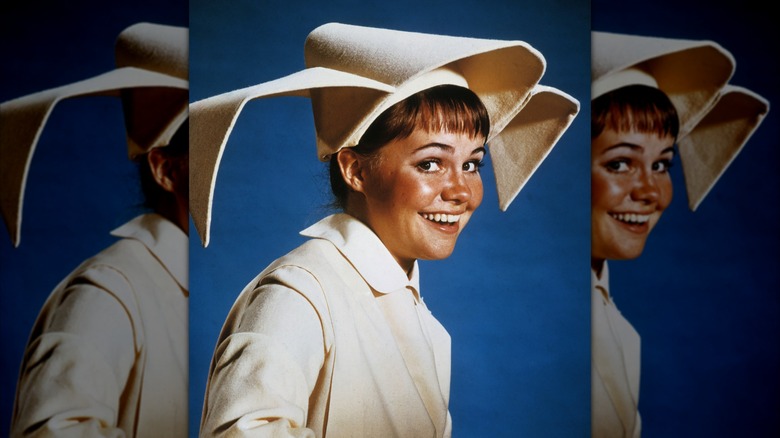
Oscar winner Sally Field starred as the titular character in the whimsical sitcom "The Flying Nun," which ran for 3 seasons from 1967 to 1970. Field did not want to star in the show but did so only on the advice of her stepfather, stuntman Jock Mahoney. She did not enjoy working on the sitcom, and the media constantly ridiculed her and the project.
"That job was three long, hard years, and 'The Flying Nun' became a huge joke," Field said in an interview with Oprah. "Bob Hope and all the other comics poked fun at it. I couldn't tell the difference between jokes about Sister Bertrille, my character, and jokes about me. It was deeply humiliating. I felt denigrated as a person." She also butted heads with many of the show's episode directors, and the actor was humiliated in an array of stunts and scenes that made her feel like a prop rather than a person.
Field has been candid about her mistreatment and credits castmate Madeleine Sherwood with encouraging her to take acting classes at the Actor's Studio and advocate for herself. The turmoil behind the scenes ultimately served as a major life lesson for Field. "It's important to learn how to survive things, things you like, things you don't like. I just had to put my head down and go to work and do the very best job I could," she told Variety.