

The Worst Outdated Hallmark Channel Movie Tropes, Ranked

There's no denying that the Hallmark Channel is a pop-cultural staple. The network rakes in millions of viewers each year, from those who tune in to gawk at the worst Hallmark movies of all time to the die-hard fans who enjoy watching the Hallmark's most popular movies on repeat. But what exactly is it that constitutes the network's mass appeal? According to some fans, the magic lies in Hallmark's masterful use of tropes.
Throughout the years, Hallmark has created its own brand of kitsch, which includes fake snow, disastrous wigs, and excessive holiday decor; but underneath all of that imagery, Hallmark movies are beholden to a plethora of weird rules. In 2018, two anonymous screenwriters dished about Hallmark's narrative guidelines, including the tropes that they employ. "The woman basically has to be a saint, but she still has to be a take-charge kind of female until she basically submits to the guy at the end," the writers told Entertainment Weekly of the female protagonists.
And of course, no Hallmark movie is complete without the infamous thwarted kiss. "You'll have at least one almost-kiss, where something happens to prevent it," the writers revealed. While these tropes might be easy to sneer at, most watchers don't mind a bit of repetition. In fact, many fans describe these elements as cozy and endearing. But for every harmless Hallmark trope, there are plenty of outdated cliches that we'd love to see less of.
10. The second chance

Ask any romantic comedy enthusiast and they'll tell you that there's something totally magnetic about a second chance. Hallmark clearly understands this phenomenon, as evidenced by the sheer volume of second chance romances in their rolodex. Let us set the scene for you: A woman returns to the hometown that she swore off, only to be greeted by the familiar (and excruciatingly handsome) face of her high school flame. Inevitably, these estranged sweethearts will rekindle their romance, and a beautiful love story will unfold. This trope is a Hallmark classic, serving as the basis for films like "Christmas Scavenger Hunt," "Kiss at Pine Lake," and plenty more.
While many viewers adore second chances, critics note that Hallmark often uses this trope as a means to glamorize small town life. "The premise I don't like is when a successful woman gives up her career to live in a small town with her old boyfriend," one viewer shared on r/HallmarkMovies. Another critic noted that this trope is unrealistic as many romances don't pan out the second time around. "There are reasons it didn't work the first time," the Redditor stated. "Occasionally it's alright, but there have been way too many." We agree with these viewer assessments; however, this one feels pretty harmless in the scheme of things. And, hey — call us hopeless romantics, but we still find this trope to be sweet and charming. Therefore, we're ranking this cliche at No. 10.
9. The enemies-to-lovers arc

The enemies-to-lovers arc is a timeless trope, dating all the way back to literary works like Shakespeare's "Much Ado About Nothing" while appearing in prominent stories like Jane Austen's "Pride and Prejudice." Therefore, it's no surprise that this trope has graced the pages of numerous Hallmark scripts throughout the years. This cliche is a staple in Hallmark cinema, rearing its head in films like "Winter Love Story," "In Merry Measure," and "Christmas on Duty," just to name a few. This trope follows a familiar narrative: The protagonists clash with each other upon meeting until unforeseen circumstances force them to spend time together. Eventually, their salty first encounter transforms into a happily-ever-after.
Speaking with Entertainment Weekly, a pair of anonymous screenwriters revealed that Hallmark has strict guidelines for how the enemies-to-lovers trope is to be executed. "They have a really rigid nine-act structure that makes writing them a lot of fun because it's almost like an exercise," the insiders shared. "You have to start with two people who, for whatever reason, don't like each other and you're just maneuvering through those nine acts to get them to that kiss in the snow." The caveat here is that animosity is only acceptable in microscopic doses. "They can't not like each other too much," the writers explained. Sure, this trope isn't totally implausible, and first impressions aren't always accurate — still, we have to ask: Whatever happened to trusting your gut? At any rate, this trope is generally well received by audiences, and we're not here to yuck anyone's yum. Therefore, we're placing this trope at a modest No. 9 on the list.
8. The small-town hunk who steals the protagonist's heart
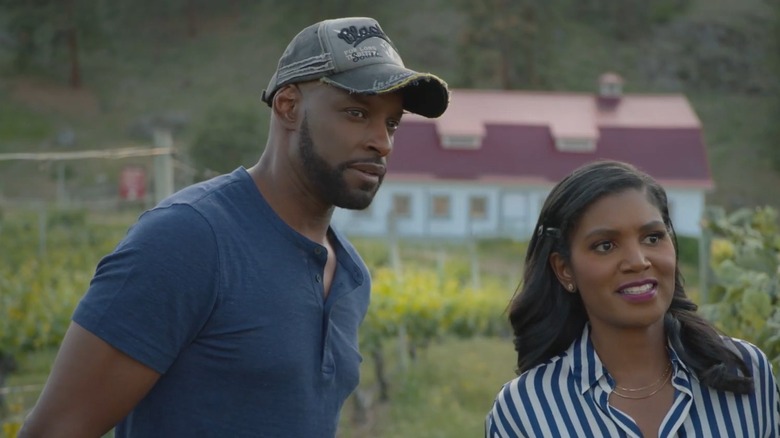
In Hallmark Land, no romantic comedy is complete without a small-town hunk who steals the protagonist's heart. This trope encompasses the ideal man: He's gorgeous, sensitive, compassionate, and a pillar of his community. Sometimes, our leading man is presented as a widower, whereas other times he's a local business owner who is determined to save his town from economic decline (bonus points if he wears a lot of flannel). In any case, his values are wildly different from those of the big city woman. Unlike his shallow, career-driven counterpart, he's devoted to small-town life, adores holiday traditions, and doesn't care about wealth or material success. When the small-town hunk meets the big city woman, he changes her entire worldview and inspires her to settle down with him in small town USA.
The Hallmark Channel is teeming with small-town hunks, the likes of which can be seen in "The Christmas Bow," "Falling for Vermont," "Napa Ever After," and many more. In each example, the leading man is billed as more of a Prince Charming archetype than an actual character with substance. Not only is it boring, but it gives us nothing to analyze or critique. To Hallmark's credit, this trope is far less prominent than it was in earlier films. However, it does remain a staple of Hallmarkian cinema. Overall, though, we don't mind seeing kind, emotionally intelligent men on our TV screens. Thus, we're ranking this trope at a solid No. 8.
7. The workaholic boyfriend who gets kicked to the curb
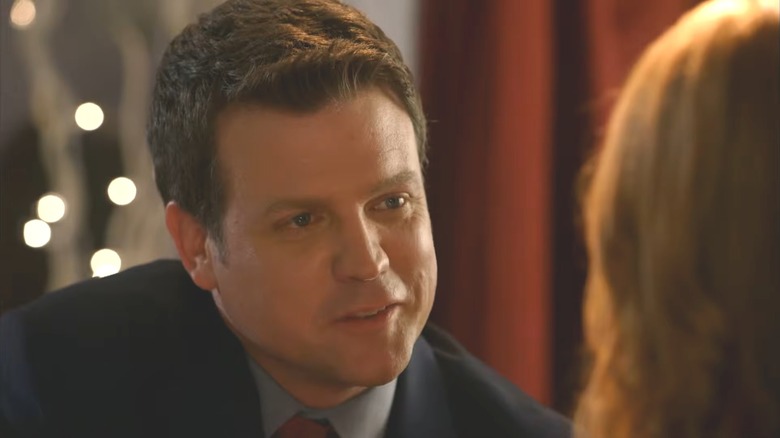
Hallmark characters are famously uncomplicated: You have your pure-hearted hero, an unabashedly evil villain, and a side character with absolutely no backstory. It might seem like the antithesis of good storytelling, but in Hallmark Land, that's the whole point: The writers want us to focus less on the characters and more on the archetypes that they represent. And one of Hallmark's favorite tropes is the workaholic who gets kicked to the curb. This trope is usually presented to us as the boyfriend or fiancé of the uptight city woman. He's a classic workaholic: wealthy and successful, yet emotionally unavailable. He's destined to be dumped by the city woman when she inevitably falls in love with the humble small-town hunk. Once the breakup occurs, he'll be cast into the narrative abyss, never to resurface again.
There are infinite reasons to hate this trope, starting with the fact that the workaholic serves hardly any narrative purpose — if you deleted him from the script, the story would be basically the same. His existence is even more confusing when you consider that the workaholic is never really a good match for the protagonist to begin with. As one Reddit user noted, "The sweetest woman ever who is obsessed with Christmas at the start of the movie is engaged to a jerk who hates Christmas, and doesn't seem to know or care much about her." This trope isn't the worst, but it also doesn't bring much to the table. Therefore, it lands seventh place on our list.
6. The uptight woman from the big city
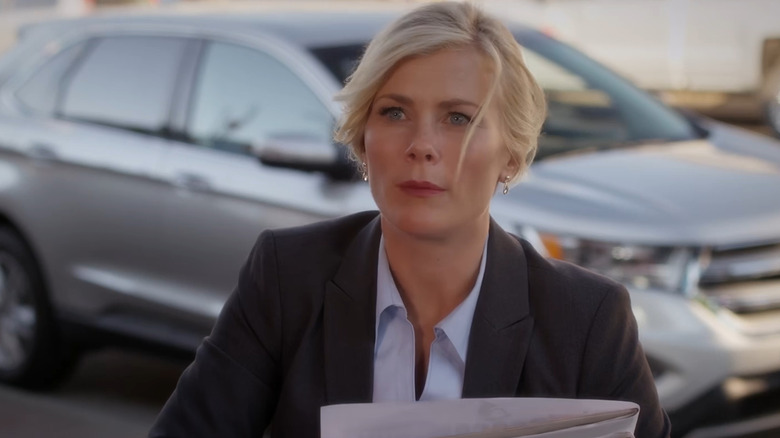
Spend any length of time surfing the Hallmark channel and you're bound to meet the uptight woman from the big city. She's famously high-strung, disciplined, and uncompromising; traits that mesh seamlessly with her high-powered corporate job. When an unforeseen event lands her in a charming rural village, she'll meet a handsome, laid-back townie who'll show her that there's more to life than her stuffy career. The uptight city woman is a staple in Hallmark cinema, appearing in films like "Harvest Moon," "The Irresistible Blueberry Farm," and "Christmas Town," just to name a few. So, w does this cliche work so well for Hallmark?
Well, for starters, the woman undergoes an incredible transformation that sets the stage for a satisfying character arc, and eventually, the coveted happily-ever-after. And while this narrative is designed to make us feel warmer than the ooey-gooey center of a Christmas cookie, critics maintain that the big city woman is an anti-feminist cliche because it characterizes ambitious women as uptight, shallow, and boring. Ultimately, we loathe this trope because it lacks depth and throws career-oriented women under the bus. The only redeeming aspect of this trope is that it has spawned countless reactions on social media, including a plethora of parody videos that poke fun at the absurdity of this cliche. Ultimately, the uptight career woman lands at No. 6 on our list: She's not the worst trope, but she's far from the most tolerable.
5. The misunderstanding that throws everything into turmoil
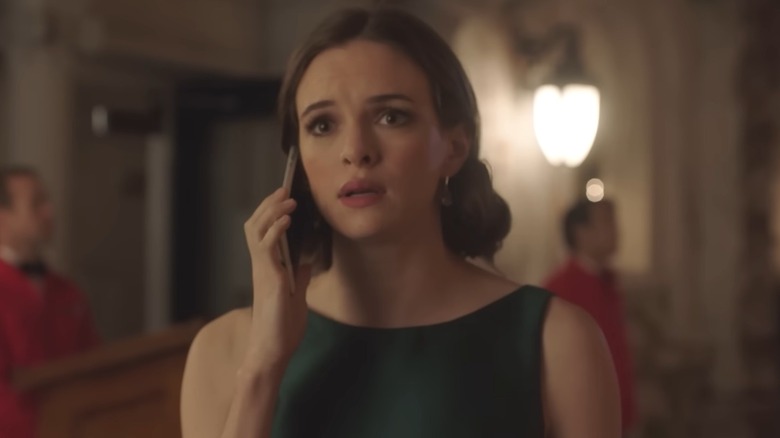
It goes without saying that nobody watches the Hallmark Channel for the drama. Hallmark films are famously void of intense situations, a deliberate move that upholds the fantasy of their storylines. However, Cinema 101 necessitates that any decent script must have a confrontation, and Hallmark typically meets this criteria by evoking a classic trope: the misunderstanding that throws everything into turmoil. The story goes like this: One of our protagonists misinterprets something that was said by their love interest. Instead of talking it over, the protagonist leaves under the assumption that the relationship is doomed. After a brief separation, the characters will finally discuss the situation, only to realize that it was nothing more than a misunderstanding. An apology ensues, and the characters fall deeper in love, having survived the greatest conflict that they've ever faced as a couple. Cue the happy ending.
According to critics, there's plenty to hate about this trope. For one thing, it endorses unhealthy communication and rewards partners who avoid difficult conversations. As one Reddit user put it, "I hate when they hear five seconds of a conversation, assume the wrong thing, and instantly leave. Like, you can't listen for longer? Or ask them about it? Or walk up and join the conversation?" This trope reeks of toxicity, which is why we're ranking it at No. 5.
4. The child who is way too invested in their parent's love life

While Hallmark films may abstain from intense drama, they don't necessarily shy away from giving complicated backstories to their characters. Take, for instance, the fact that Hallmark's movies often portray one or both protagonists as single parents. During Hallmark's early years, single dads were typically portrayed as widowers so as not to engage with any stigmas around divorce. Nowadays, though, the network has loosened up, and the divorcé is no longer a unicorn in the Hallmark universe. And alongside these single parents, you'll often find a chirpy, precocious child who is way too invested in the parent's love life.
Viewers have a lot to say about this trope, starting with its incredibly unrealistic portrayal of blended families. There's never any drama when the single parent falls in love, and children never seem to have complicated feelings about welcoming a new step-parent into their lives. "No tantrums, no anger over dad spending less time with them," observed one Reddit user. "In real life, it's usually the opposite. Just once I'd love a kid to tell their parent that they are jealous or don't like their new flame." Moreover, Hallmark loves to place adolescent characters in adult situations, such as when a child gives relationship advice to a grown-up. In some instances, children assume the completely age-inappropriate task of playing matchmaker to the single parent. We hate this trope because it endorses the adultification of kids, and that's why we're ranking it fourth on our list.
3. The protagonist who chooses small-town life over her career

In the Hallmark universe, nothing says romance quite like a protagonist who abandons her career to live in rural America with a man that she just met. This trope is a Hallmark legend, featured in films like "Winter in Vail," "Love You Like Christmas," and numerous others. And while some might argue that it's the pinnacle of Hallmark storytelling, critics assert that there's nothing lovable about this trope. One Redditor noted that this cliche is totally absurd, writing, "Women who are ready to break up with their fiancé of five years because a guy they've known for four days helped them pick out a Christmas tree."
This trope implies that women are inherently unfulfilled in their careers, and that true happiness is only obtained once they've fallen in love with a man. Not only is this trope belittling to career women, but it also perpetuates some pretty outdated ideas around gender and labor. Sexism and wage disparities present very real challenges to women in the corporate world — thus, it seems irresponsible for Hallmark to push the idea that women would be happier if they'd just abandon their career goals and move to the countryside to be with a man. And sure, there's nothing wrong with wanting a quiet rural life; however, we seldom see Hallmark women choosing their careers over small-town life. Ultimately, we find this trope to be totally regressive, which is why it has earned third place on our list.
2. The love triangle

In 2021, the network released "It Was Always You," starring Hallmark mainstays Tyler Hynes and Erin Krakow. In the film, Krakow plays Elizabeth, an uptight woman who secretly yearns for a more adventurous life. Things take a radical turn when Elizabeth encounters David, the free-spirited brother of her fiancé. Elizabeth inevitably grows closer to David, landing her in the middle of a love triangle with the two brothers. Naturally, this scenario is presented as the ultimate romantic fantasy — however, some viewers were quick to call it out as a classic case of cheating.
"It Was Always You" is hardly an anomaly within the Hallmark universe. Similarly adulterous plots can be found in "A Very Merry Mix-Up," "The Christmas Cottage," and a host of other Hallmark titles. This trope touches a nerve with viewers due to Hallmark's insinuation that cheating is, in fact, romantic as long as the cheaters are soulmates. Critics have pushed back against this cliche, noting that infidelity shouldn't be glamorized or shown as aspirational. "The amount of emotional affairs and cheating that happened in all of these movies," observed one Redditor. "Nothing irritates me more than someone being in a relationship, but full-on flirting and having intimate conversations with another person and then ends up breaking up with their current partner to be with said person." We couldn't agree more; hence, this trope lands at a disgraceful No. 2 on our list.
1. The whiteness and heterornormativity of it all

Among the Hallmark Channel's many controversies is the lack of BIPOC and LGBTQIA+ representation. Since its inception in the early 2000s, Hallmark has skewed disproportionately white and heterosexual, a fact that has not gone unnoticed by viewers and media professionals alike. In 2019, a former Hallmark star accused the network of firing her when she demanded that more BIPOC and LGBTQIA+ storylines be included in Hallmark's repertoire. A year later, the network was called out for allegedly banning the on-screen portrayal of interracial couples. In response to the backlash, Hallmark executives pledged their commitment to diversity — and initially, they seemed to be following through. In 2020, Hallmark released its first queer-centered movie, "The Christmas House." Two years later, the network started producing Black-led films under their Mahogany label.
Nevertheless, critics maintain that Hallmark isn't doing enough to provide meaningful representation of LGBTQIA+ and non-white stories. "I just want Hallmark to make an effort and not just do token diversity or give a few films a year," wrote a Reddit user. "I am tired of lip service and constantly bragging on how diverse they are — when they are barely making any effort." Lack of diversity is a major red flag within Hallmark's cinematic universe: Not only does it limit opportunities for actors of marginalized identities, but it also alienates viewers who exist outside of Hallmark's white, heteronormative vision. Representation should be non-negotiable across all media, and that's why we're declaring Hallmark's lack of diversity as its worst trope of all time.