

Jackie Coogan: The Life And Career Of The Addams Family Star
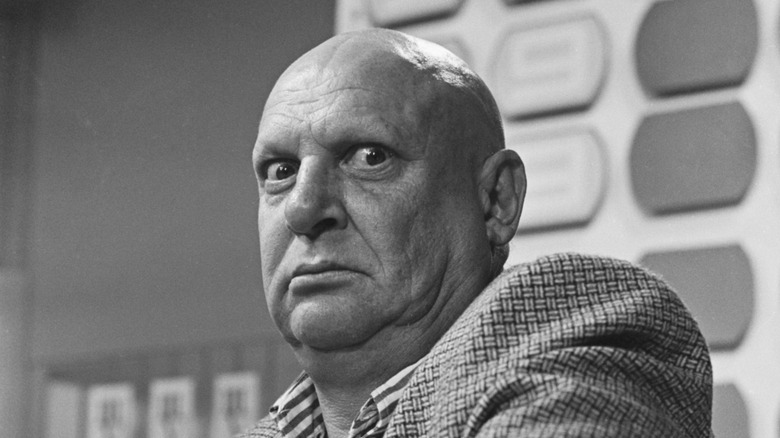
Long before famous child stars like Shirley Temple, Macaulay Culkin, and the Olsen Twins dominated Hollywood, Jackie Coogan was a silent film sensation who became known as "the most famous boy in the world" at the ripe age of 6. Coogan iconically shared the screen with trailblazing comedian Charlie Chaplin in the 1921 masterpiece "The Kid," the comedy catapulting him to superstardom and paving the way for his enduring career.
Coogan experienced an unprecedented level of fame and fortune as a young actor, the boy capturing the hearts of audiences everywhere with his animated expressions, charisma, and undeniable talent. Despite amassing such a dazzling repertoire before he was even a teenager, Coogan also dealt with the pitfalls of the industry and was plagued by one heartbreaking hurdle after another.
The movie star made headlines in the '30s when he sued his mother for squandering his massive fortune, the case ultimately leading to a crucial California law that helped protect child actors. He experienced many highs and lows throughout his decades-spanning career and enjoyed a major resurgence in popularity thanks to his unforgettable performance as Uncle Fester in "The Addams Family" in the '60s.
Jackie Coogan was a vaudeville star as an infant
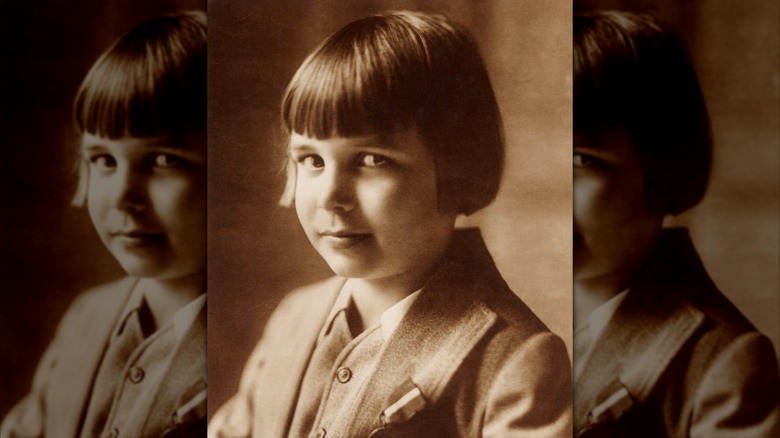
Born on October 26, 1914, in Los Angeles, California, to vaudevillian parents John "Big Jack" and Lillian, future cinema icon John Leslie "Jackie" Coogan first began performing in vaudeville shows as an infant. He was just 18 months old when he filmed his silver screen debut in the 1917 silent comedy "Skinner's Baby." Coogan had show business in his blood, as Lillian came from a family of performers; she was a child actor and was known in the vaudeville circuit as Baby Lillian.
After the couple exchanged nuptials and welcomed Coogan, they developed their own stage act and traveled around the country while their son stayed with his grandmother. John and Lillian returned for their son a year later, when he was a toddler, and began incorporating him into their performances on tour, and he quickly became beloved for his charming presence. As a boy, Coogan's parents frequently performed on stage at the Orpheum Theatre in Los Angeles, their son stealing the show with his natural charisma.
However, young Coogan did not truly experience Tinseltown until a big star saw him on stage. In the meantime, his father, John, gave him a small taste of fame when he starred alongside trailblazing comedian Fatty Arbuckle in three silent comedies in 1919: "A Desert Hero," "Back Stage," and "The Hayseed."
He starred alongside the legendary Charlie Chaplin in The Kid
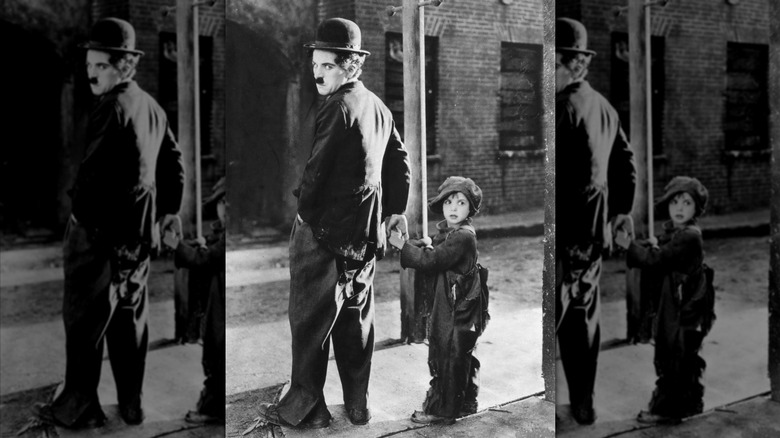
When Jackie Coogan was 4, global superstar Charlie Chaplin discovered him while he was performing onstage at the Orpheum Theatre in 1919. Coogan thoroughly impressed Chaplin with his animated rendition of the shimmy dance, and he swiftly cast him in a small supporting role in his short film "A Day's Pleasure." Coogan then famously starred opposite Chaplin in the acclaimed 1921 classic "The Kid," which became a hit at the box office and made him an overnight sensation.
"The Kid" has gone on to be regarded as one of the greatest and most important films of all time, and Coogan's performance as the titular abandoned child garnered rave reviews. It cemented him as a brilliant child star, and viewers loved him. Coogan's iconic portrayal led to a slew of subsequent roles in films like "My Boy" and "Oliver Twist," and he steadily emerged as one of the industry's most in-demand child stars thanks to Chaplin.
In 1923, Coogan signed a lucrative, multi-picture contract with Metro Pictures and received a staggering $500,000 signing bonus; he additionally made a whopping $1 million and a percentage of the profits for 4 films. "I think he is one of the finest actors, and one of the finest directors and knows more about camera angles than any man in the business," Coogan told KROC AM in 1939 of his beloved mentor Chaplin.
He became one of Hollywood's first celebrity humanitarians
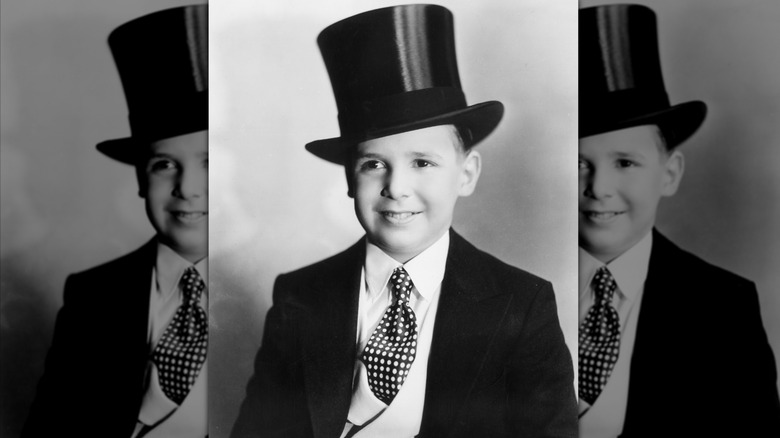
After achieving widespread stardom following his performance in "The Kid," Jackie Coogan emerged as one of the industry's most profitable child stars and became deeply involved in charity work as a young boy. Coogan worked with the relief organization Near East Relief, and in 1924, he toured across the country under the "Jackie Coogan Million Dollar Near East Relief Milk Campaign." The actor helped raise a staggering $1 million in funds, food, and clothing contributions for children, refugees, and orphans affected by the Greek-Turkish War.
Coogan had been dubbed "the most famous boy in the world," and he used his platform to help advocate for the foundation, traveling around Europe and fundraising with fans. The movie star eventually became known as one of Hollywood's first celebrity humanitarians. Pope Pius XI and Prime Minister Benito Mussolini honored him in Italy for his charitable efforts. The future dictator gave Coogan an autographed photograph that read, "To the Little Great One" in Italian.
He was also one of the first Hollywood stars to be massively merchandised, as countless products were used to promote him, including dolls, pencil cases, records, and even peanut butter. "We pioneered the commercial tie-up market," Coogan told the Associated Press in 1964 (via The Telegraph). "At one time my name was on 50 or 60 different items." Despite enjoying an unprecedented level of success throughout the '20s, Coogan's dazzling career stalled as he transitioned into adolescence.
He was the sole survivor of a deadly car crash at 20
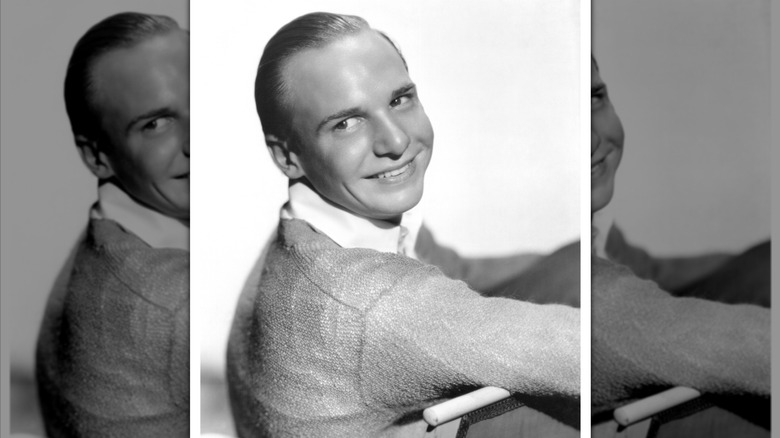
On May 4, 1935, tragedy struck Jackie Coogan when he was injured in a deadly car crash that involved his father, John, best friend and fellow actor Trent "Junior" Durkin, writer-actor Robert J. Horner, and ranch foreman Charles Jones. The group had been returning from a dove-hunting trip in the desert when they were accidentally forced off the road by another vehicle and down an embankment. Coogan suffered from broken ribs and painful bruising and was the sole survivor of the devastating crash.
"My father was forced to drive the car on the wrong side of the road. The next thing I remember, we were going off the embankment end over end, spiraling at the same time," he told the Associated Press about the harrowing experience (via Woman's World). "I was knocked down in the seat, but pulled myself up and leaped out." At just 20, Coogan's life was forever changed following the accident as he lost his beloved father and close friend Durkin, whom he met while filming "Tom Sawyer."
1935 proved to be a tumultuous year for Coogan, as he not only had to grapple with their deaths and his profound grief, but he also made a shocking discovery about his finances. Just a few months later, Coogan learned that his childhood fortune had been squandered by his mother, Lillian, and he was effectively broke despite having earned millions of dollars as a young boy.
He married screen siren Betty Grable in 1937
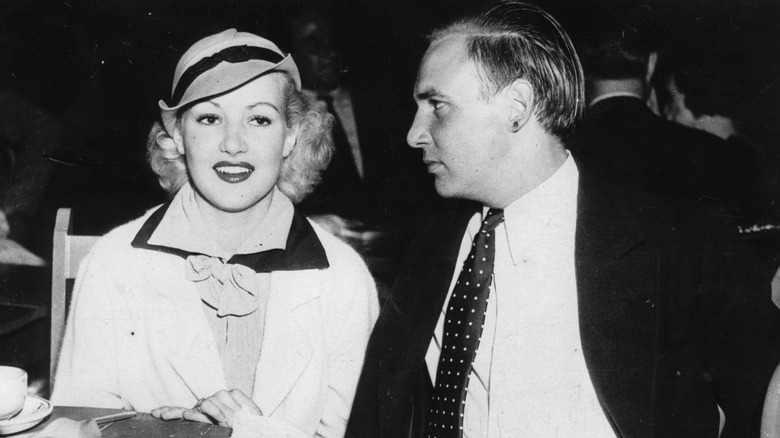
Jackie Coogan became engaged to pin-up girl and cinema siren Betty Grable in 1935; the couple tied the knot in November 1937. They would go on to share the screen in the comedy "College Swing" during their brief marriage, which suffered due to the highly publicized drama going on in Coogan's life. The actor was facing intense personal turmoil in 1938 as he was suing his mother, Lillian, and former financial manager turned stepfather over his childhood earnings, and the court case made headlines.
Grable even alleged that Lillian had pushed back against their relationship and claimed she was only marrying Coogan for monetary reasons. "I remember I had hardly met Jack when she began to intimate that he had no money," Grable said to San Pedro News Pilot. "If Jack had no money, that made no difference to me. Jackie and I were in love and money didn't—and doesn't—mean a thing. It didn't make me give Jack up, and it never will!"
The pair eventually divorced in 1939 amid Coogan's ongoing legal drama. Grable struck up a romance with bandleader Artie Shaw, a close friend of hers and ex-husband Coogan. Coogan would go on to marry three more times, including short-lived marriages to Flower Parry and Ann McCormack. His marriage to Dorothea Lamphere in 1952 ultimately lasted till his death in 1984, and Coogan welcomed four children throughout his relationships.
Jackie Coogan's mother stole his fortune, which led to the Coogan Act
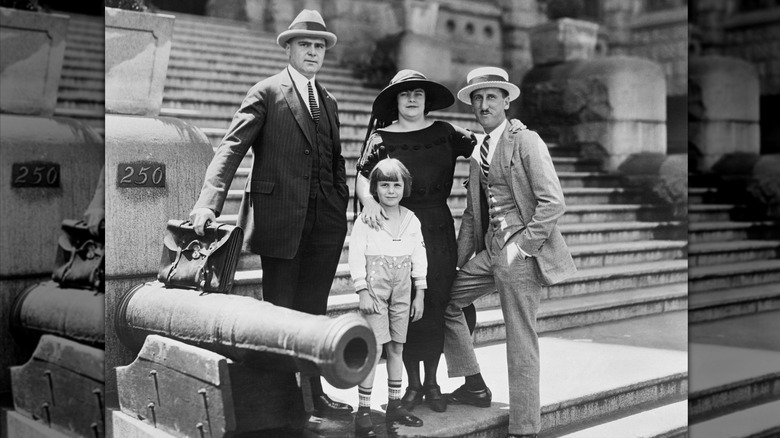
Despite being one of the silver screen's most talented young actors, Jackie Coogan's life as a child star was far from picturesque. During his early years in Hollywood, Coogan reportedly earned an astounding $4 million ($90 million in today's money), but when he turned 21 in October 1935, he shockingly discovered that nearly all his earnings had been squandered by his mother, Lillian, and financial manager Arthur Bernstein. Coogan had only received an allowance of $6.25 a week, and he was forced to take them to court over the massive missing funds.
Coogan sued the Bernsteins, who had married less than two years after his father's death, in 1938. They became embroiled in an intense legal battle that played out in headlines all around the globe. Lillian remained defiant when speaking to the media, telling The Journal Times (per First for Women), "He says that he has nothing and that I refused to give him any part of the estate. No promises were ever made to give Jackie anything. Every dollar a kid earns before he is 21 belongs to his parents."
In 1939, the former child star was awarded just $126,000 of his purported $4 million fortune after legal fees, though the case resulted in the 1939 enactment of the California Child Actor's Bill, also known as the Coogan Act. The groundbreaking bill helps protect child actors and their earnings by setting aside untouchable funds in a trust or savings account.
He left Hollywood to serve in World War II
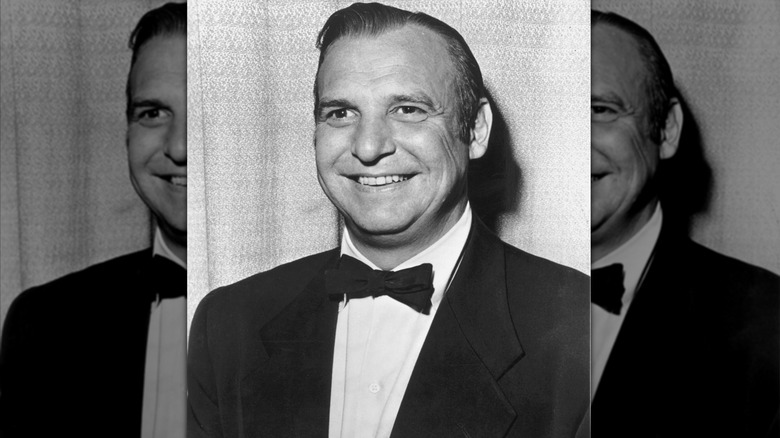
In March 1941, Jackie Coogan enlisted in the U.S. Army to serve in World War II, the movie star becoming a glider pilot following the devastating events of Pearl Harbor and achieving the rank of Flight Officer in the U.S. Army Air Forces. Coogan volunteered for hazardous duty with the U.S. Air Commandos and was heavily involved in the Burma Campaign in 1944, helping safely fly British troops from India to Burma as part of the dangerous mission.
Coogan was honorably discharged from the service in 1945 with a few decorations, and he subsequently became involved in war bond drives upon returning home. Though he largely kept his war experiences private, Coogan's "Addams Family" co-star John Astin revealed a terrifying ordeal the movie star survived during the war years later. "The Japanese soldiers came in and bayoneted everybody in the plane. And Jackie was the only one that they missed," Astin once disclosed via The Telegraph.
"He lay alone at the bottom of this pile of dead and dying men, and eventually he got out and escaped. But he was plagued with nightmares much of his life." After serving in the war, Coogan set out to return to acting following a multi-year absence from the industry; he quickly discovered it would be a frustrating uphill battle. "I got big hellos and backslaps, but no jobs," Coogan said about his lukewarm Hollywood welcome (via The Washington Post).
He regained his fame as Uncle Fester in The Addams Family
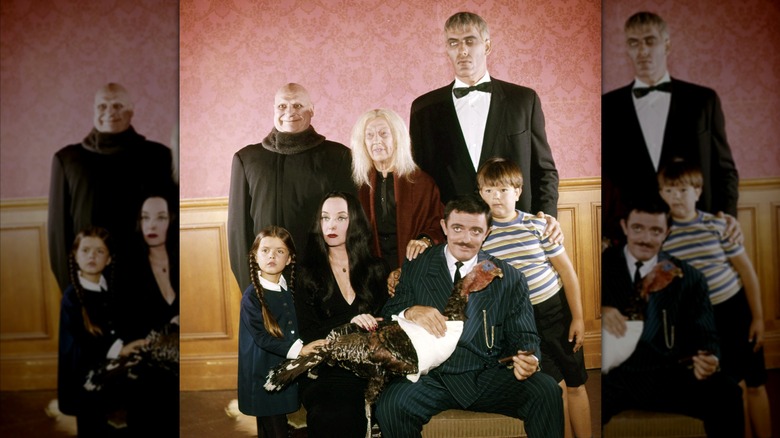
Jackie Coogan starred in the most memorable role of his adult career when he played the kooky Uncle Fester in the 1964 Gothic sitcom "The Addams Family," the TV series helping introduce him to a new generation of audiences. The timeless classic stars John Astin as iconic '60s TV dad Gomez Addams and Carolyn Jones as his wife, Morticia, as they live with their spooky family members in a sprawling, macabre mansion. The show spawned 64 episodes and ran for 2 seasons, with Coogan becoming synonymous with the delightfully bizarre Uncle Fester.
"Fester appeals to youngsters because he thinks like they do. Every time he suggests, 'Let's shoot 'em in the back,' the kids share his straightforward approach to the situation," Coogan said to The Press Democrat (per Woman's World). "Fester never talked in the Addams Family cartoons, so I raised my voice an octave and gave him a beetling look. He's my kind of people. He's an irascible old goat, and I can't honestly say why everyone loves him."
The celebrated series helped breathe new life into Coogan's acting career, and it became a beloved staple in American pop culture. The actor reprised the popular role for the animated spin-off and subsequent 1977 TV film. While some '60s sitcoms were filled with behind-the-scenes drama, the cast of "The Addams Family" had fun on set and off, and Coogan stayed in touch with Astin following its cancellation in 1966.
He stayed busy acting on the small screen in the '70s
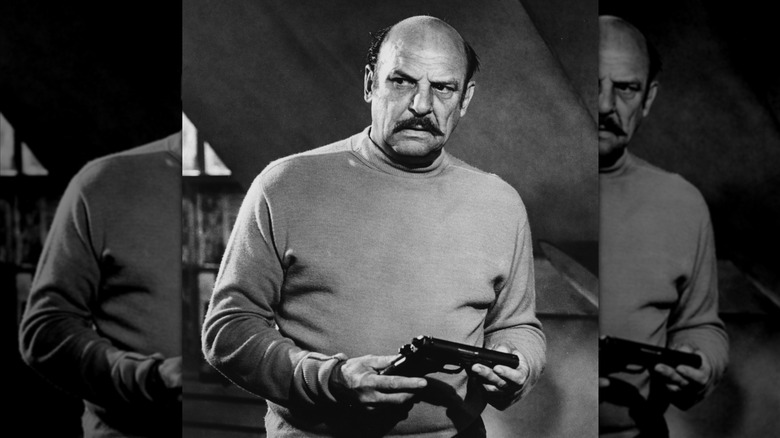
After becoming one of the most famous actors in the world during the '20s and enjoying a major career resurgence thanks to "The Addams Family," Jackie Coogan stayed busy following its cancellation and worked primarily on the small screen. He made notable guest appearances in a slew of fan-favorite shows including dramas like "Hawaii Five-O" and "McMillan and Wife" and sitcoms such as "The Brady Bunch," "The Partridge Family," and "Here's Lucy" throughout the '70s and beyond.
The seasoned star reunited with mentor Charlie Chaplin in 1972 at the Governor's Ball after the legendary comedian had received an honorary Academy Award for his cinematic contributions. "Remember, your husband's a genius," Chaplin allegedly whispered to Jackie's wife Dorothea at the ceremony (per The Telegraph). Jackie always remained a deep admirer of Chaplin and his meaningful legacy. "He was a beauty, he could absolutely do anything he set his mind to," he said while appearing on "The Great Late Movie."
Jackie also appeared in films in the ensuing years, nabbing roles in projects like "The Phantom of Hollywood," "Human Experiments," and "The Escape Artist." Jackie experienced yet another devastating loss when his younger brother Robert Coogan died in 1978 at the age of 53. Jackie had been plagued by countless health issues in his later years, and his final screen performance was in the 1983 slasher "The Prey," in which he portrayed forest ranger Lester Tile.
Jackie Coogan suffered major health issues and died in 1984
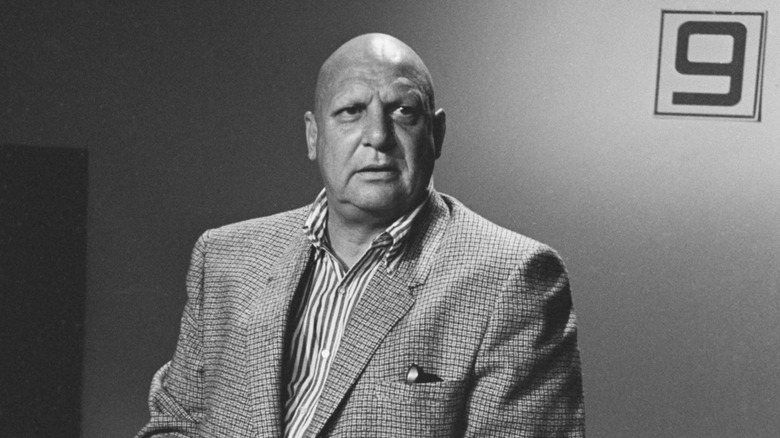
Jackie Coogan experienced many health hurdles during the final years of his life, as he had suffered from both kidney and heart disease and dealt with heavy alcohol consumption throughout the decades. Coogan had also suffered several strokes and sadly died from cardiac arrest on March 1, 1984, at the age of 69. His co-star John Astin, the last surviving "Addams Family" cast member, delivered the legendary actor's eulogy.
Astin told the Desert Sun that Coogan had a "gargantuan appetite for everything. He never stopped living or creating, being vital." The cinema icon left behind his wife of 32 years, Dorothea, and four children upon his tragic passing. Though Coogan cemented his status as a true Hollywood trailblazer and had once been a global sensation, he still struggled with the pitfalls of fame.
"One day my father came home from shooting an episode of 'The Addams Family,' crying – and sober – and said, 'I used to be the most beautiful child in the world and now I'm a hideous monster,'" Coogan's daughter Leslie once shared via The Telegraph. "It hit him. It really had to do with his lost childhood." Despite his many highs and lows in show business, Coogan's impact and legacy remain inspiring. "I have no regrets," he once reflected (per First for Women). "I manage to live the way I want to, and I've never had to worry about finding jobs."