

Carroll O'Connor: The Full Transformation Of TV's Archie Bunker
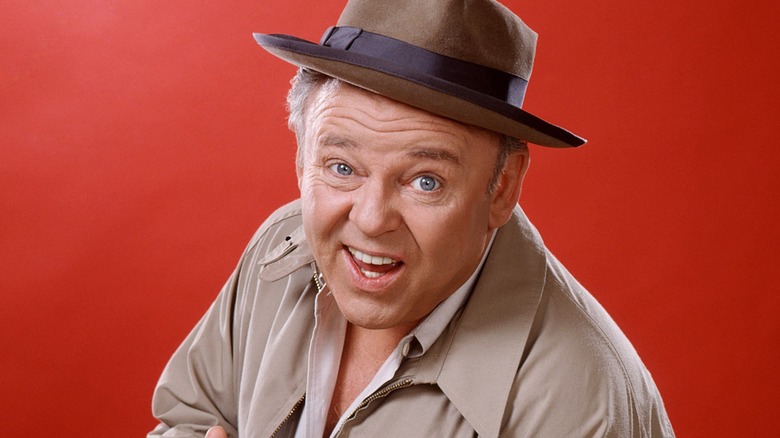
Undeniably one of the small screen's most recognizable faces, Carroll O'Connor became a pop culture icon and beloved presence on television when he starred as Archie Bunker in the sitcom "All in the Family." Created by industry titan Norman Lear, the classic series ran from 1971 to 1979 for 9 seasons, establishing O'Connor as one of Hollywood's most talented performers.
While many of the show's surviving cast members made career pivots, O'Connor stuck to what he did best: bringing joy to audiences everywhere. O'Connor continued showcasing his acting prowess and memorably headlined the spin-off "Archie Bunker's Place" before taking a dramatic turn in the crime drama "In the Heat of the Night."
Throughout his enduring career, the veteran star proved he was nothing like his bigoted TV counterpart and used his platform to make positive change, becoming a dedicated philanthropist and outspoken activist. When his son tragically died in 1995, O'Connor utilized his celebrity status to lobby against the drug epidemic, further demonstrating his desire to make a difference. In the many decades since the sitcom's run, O'Connor remains a celebrated Tinseltown legend.
Carroll O'Connor dropped out of school to serve in World War II
Born on August 2, 1924, in Manhattan, New York, to criminal lawyer Edward and retired teacher Elise, John Carroll O'Connor grew up in a predominantly Jewish community in Queens and was the eldest of three sons. O'Connor spent much of his early years in Forest Hills, and he graduated from Newtown High School in 1941 before attending Wake Forest University in North Carolina.
"I was a wretched student – utterly disinterested in the classroom learning situation," he once wrote in a letter (per Wake Forest Magazine). O'Connor dropped out of school in the spring of 1942 once the United States entered World War II, and he attempted to enlist in the Naval Air Corps when he was just 18. Though he was rejected for physical reasons, O'Connor persevered and went on to attend the Merchant Marine Academy, serving as a merchant seaman during the war.
"I wasn't afraid of it. When you're 17 and 18, you're not afraid of it," he told the Television Academy Foundation of his days in the service. "I wasn't afraid of anything. I just went to sea. I wasn't afraid of getting sunk. I never did get sunk but I d**n near got sunk a couple times. That'd be enough to scare you to death, but that didn't bother me. I knew what we were fighting for."
He developed a passion for acting after returning to college
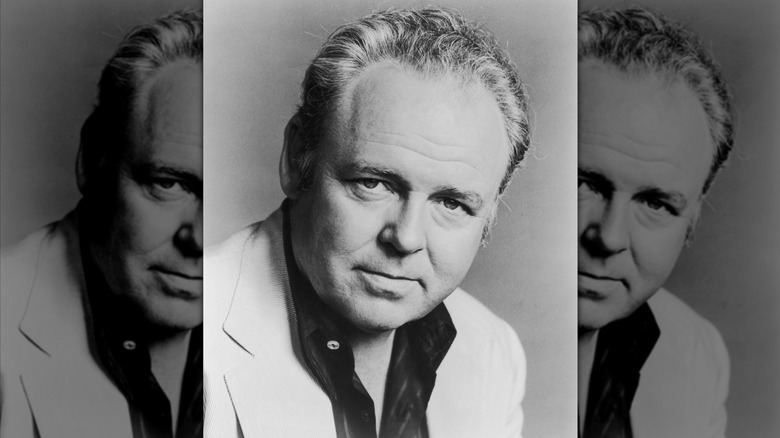
After serving in World War II, Carroll O'Connor enrolled at the University of Montana to pursue a career in English and worked for the student newspaper as an editor. He quit his position in protest of suppression by the university after it attempted to censor an issue of the paper, shifting his attention to the performing arts. O'Connor relocated to Ireland with his brother Hugh and attended University College Dublin, studying English literature and Irish history.
"When I moved to Ireland, the university there did an extraordinary production of a T.S. Eliot play called 'A Cocktail Party'. I was in it and I was very good. After that a producer invited me to be in a professional play. Just like that," he shared with the Television Academy Foundation. "So I played a part in a play, and it was a thrill. All these very good Irish pros made me feel so welcome. I can't tell you how happy it made me. I was hooked. My plans to be a historian, writer and teacher? Out the window."
O'Connor performed in multiple plays while at the university and was hired to perform professionally, joining the Gate Theatre in Dublin, while also appearing in the Edinburgh Festival. He frequently performed Shakespearean roles and developed a deep passion for acting, returning to New York in 1954 to pursue the craft.
He got married in 1951 and became a devoted family man
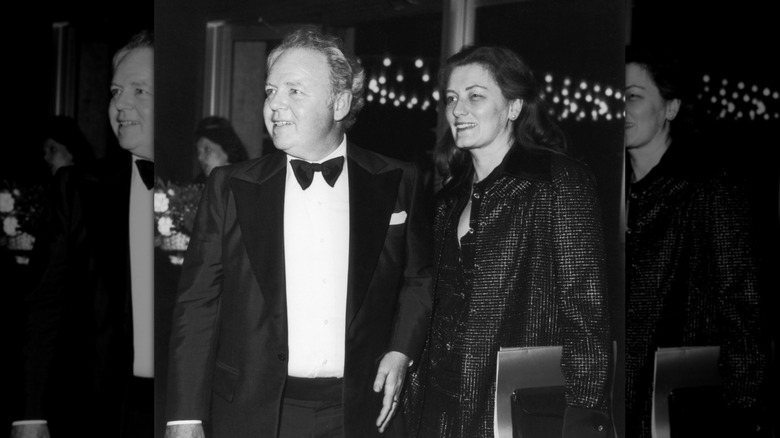
Carroll O'Connor married college sweetheart Nancy Fields in 1951; the couple first met at the University of Montana. They fell in love while performing in the drama department's production of "Life With Father" and tied the knot that same year in Ireland. Fields was supportive of her husband's career during its peaks and valleys, and she was the one who ultimately convinced O'Connor to sign on to "All in the Family."
"I turned down the role of Archie Bunker twice until Nancy finally said, 'Now listen here, Carroll, this is the role of a lifetime!'" he once revealed (via TheWrap). The pair adopted their only child, son Hugh, in Rome in 1962 while he was filming "Cleopatra." O'Connor named him after his younger brother, who had tragically died in a motorcycle accident the year prior. Hugh would eventually follow in his father's footsteps and become an actor, the two sharing the screen decades later in the TV series "In the Heat of the Night."
O'Connor looked back on his meaningful relationship with his philanthropist wife Nancy in an interview with the Television Academy Foundation. "Nancy Fields is a very important person, very important person. You know she's not only important to me, she's important to a lot of other people, too. She does a lot of wonderful things."
Carroll O'Connor became a gifted character actor in Hollywood
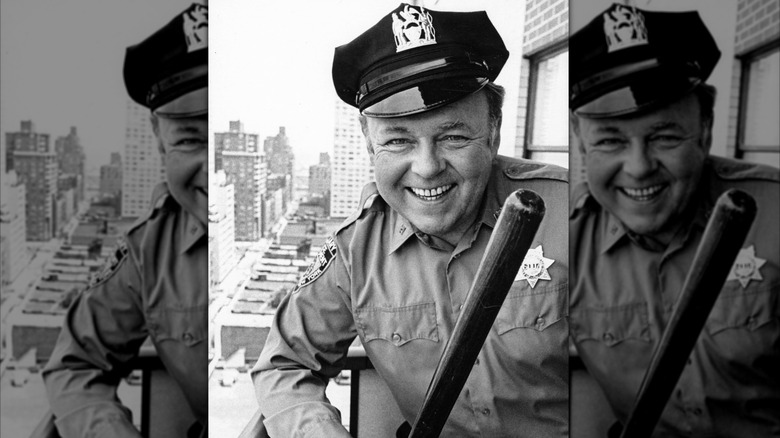
Following his successful time in the theater scene in Europe, Carroll O'Connor returned to New York in 1954 in hopes of pursuing an acting career. "I couldn't get any work. I couldn't get an agent. Everybody thought the world of me in Ireland and in England, but in my hometown I couldn't even get in the door," he reflected to the Television Academy Foundation. "I was 30, so I took a job as a substitute teacher. Then I went back [to school] and got a master's degree. I started doing off-Broadway work and did a television show in New York."
Despite receiving a lackluster welcome, O'Connor pushed on and stayed committed to pursuing the craft, eventually landing a featured role in the Broadway production of "Ulysses in Nighttown." He finally achieved a major career breakthrough in 1960 when he appeared in "Sunday Showcase," the gig leading to other roles in a slew of popular shows including "Bonanza," "The Outer Limits," and "Mission: Impossible."
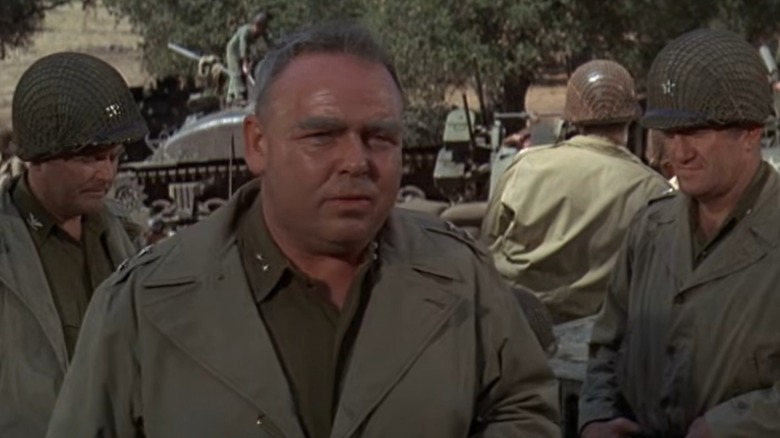
O'Connor continued to showcase his range as a character actor and managed to break into the cinema with supporting performances in films like "Cleopatra," "The Devil's Brigade," and "Kelly's Heroes." In 1968, the determined performer received the offer of a lifetime when legendary Hollywood producer Norman Lear came calling, offering O'Connor the lead role in the sitcom "Justice for All"; the show ultimately became known as "All in the Family."
He iconically portrayed Archie Bunker in the trailblazing sitcom All in the Family
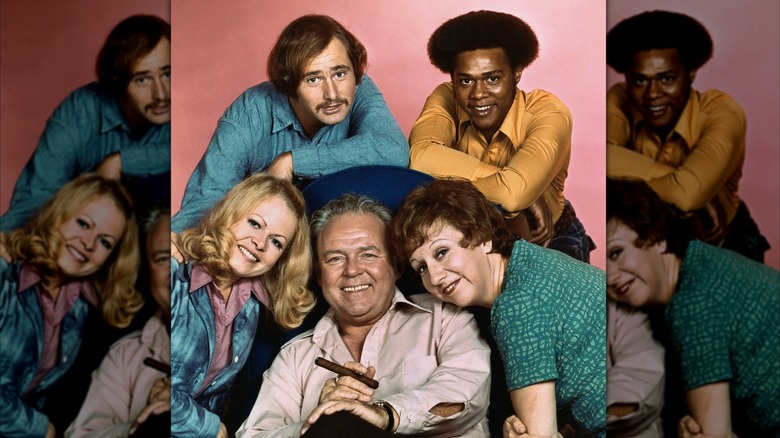
In 1971, Carroll O'Connor became an overnight sensation when he took on the iconic role of Archie Bunker in the groundbreaking sitcom "All in the Family." O'Connor appeared alongside Jean Stapleton, Sally Struthers, and Rob Reiner in the beloved classic, his complex portrayal of the notorious bigot pushing boundaries at the time. The openly liberal actor was the complete opposite of the controversial character in real life, but he nonetheless cherished his time as Bunker.
"I'll never play a better part than Archie. He was the best character, the most fulfilling character, and I never thought it was going to develop that way. There's no role that can top that," he declared in a 1994 interview via the Los Angeles Times. O'Connor starred as the Bunker patriarch for 9 seasons from 1971 to 1979, receiving a Golden Globe and 4 Primetime Emmys for his legendary performance.
O'Connor left quite an impression on his on-screen son-in-law, Reiner, the late "All in the Family" star, who later praised the veteran actor. "And from Carroll O'Connor I learned a lot about how you perform and how important the script and story are for the actors," Reiner told HuffPost about his experiences on the enduring sitcom. "Carroll O'Connor brought his humanity to the character even though he had these abhorrent views. He's still a feeling, human being."
He reprised the legendary role in Archie Bunker's Place
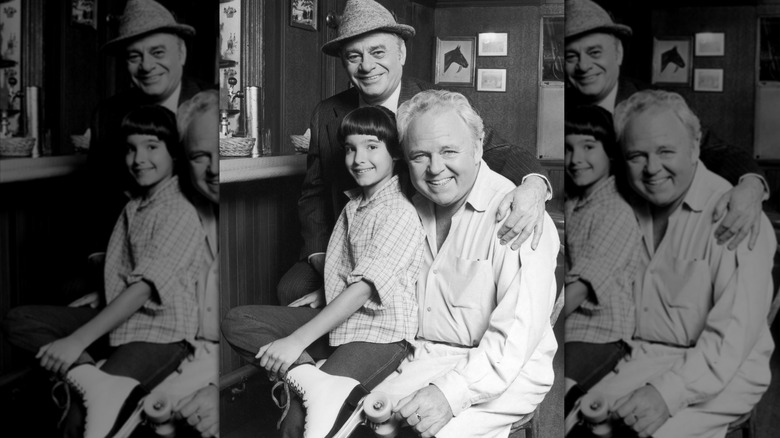
After the unprecedented success of "All in the Family," Carroll O'Connor signed on to headline the 1979 spin-off series "Archie Bunker's Place." He was the only core cast member to return for the show's entirety. O'Connor initially had some reservations about continuing to portray Bunker, especially without his on-screen wife Jean Stapleton. The chemistry between the beloved TV couple helped ground the '70s sitcom, and her character, Edith, was shockingly killed off in the spin-off.
"The show was over. Jean Stapleton had given notice that she would not come back. The young people didn't want to come back. Neither did I," he said to the Television Academy Foundation. "I'd had enough — we'd all had enough. Robert Daly, the president of CBS, came to me and said, 'I've got to have that show, Carroll.'" O'Connor eventually viewed the spin-off as a way to further flesh out Bunker and push back against his deep-seated prejudices and bigotries.
"The object was to bring Archie closer to the Jewish way of things, to show him that, in many ways, it was his way, too. It's everybody's way. That he was distrusting these people for no good reason," he further shared. When the sitcom was unceremoniously canceled in 1983, O'Connor had actually been relieved, as he wanted to pursue new opportunities and had grown tired of butting heads with CBS executives over creative control.
Carroll O'Connor struck TV gold again with In the Heat of the Night
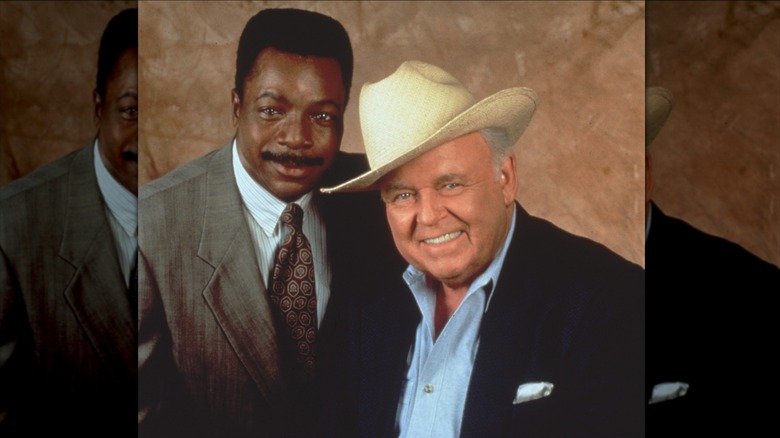
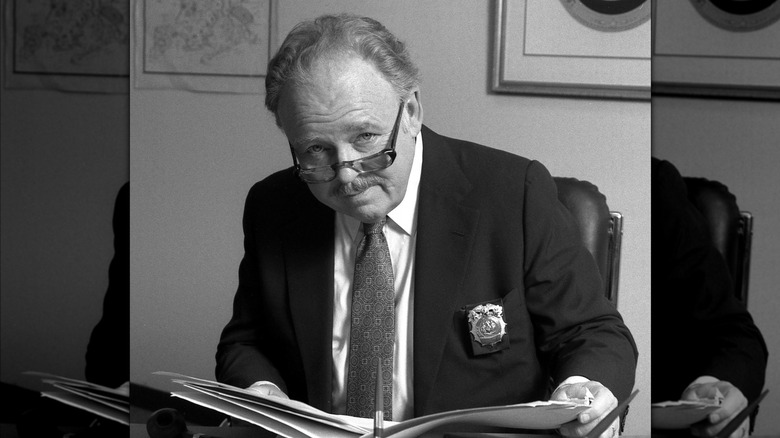
Carroll O'Connor continued proving he was one of Hollywood's most talented performers when he began portraying Police Chief Bill Gillespie in the 1988 drama series "In the Heat of the Night," an adaptation of the John Ball novel and '60s movie. During filming of the poignant show, O'Connor attempted to help care for his son Hugh, who was dealing with an addiction issue. He cast Hugh as Officer Lonnie Jamison, the father and son duo memorably sharing the screen.
In 1989, O'Connor made headlines when he was hospitalized while working on set. The actor subsequently underwent coronary bypass surgery and missed four episodes of the second season. He starred in the series from 1988 to 1995 and served as both a producer and writer, the veteran performer receiving a Primetime Emmy for his exceptional work. He felt creatively fulfilled while appearing in the crime drama, largely because he was allowed to be more hands-on than with "All in the Family."
"I prefer this character [Gillespie]," he reflected (via the Los Angeles Times) in 1994 as the series was winding down. "But I'm probably influenced in that by my augmented status with the show. I mean more to this show as executive producer, head writer, the star, the guy who even passes on the ladies' wigs. It involves me more than Archie did. So it's more fun."
He devoted himself to philanthropy and established a foundation
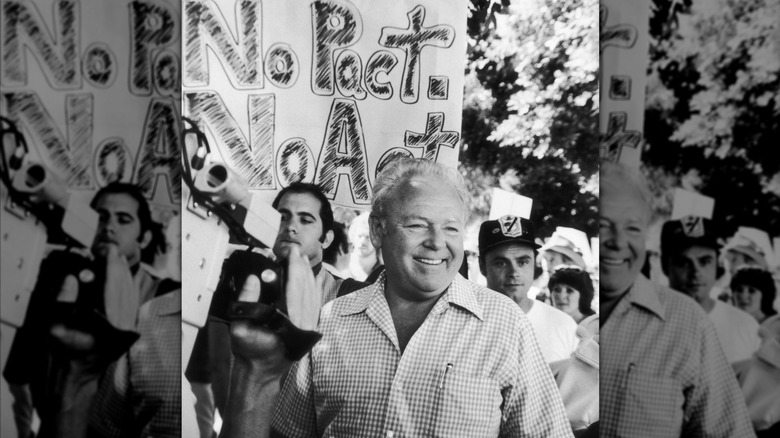
Carroll O'Connor and his wife Nancy established a foundation in 1990, setting out to help various charity organizations receive grants. Through the still-active foundation, the prominent couple was able to help provide crucial funds for a slew of organizations, including the American Access Institute and the Alzheimer's Association. Nancy was a member of the John Wayne Cancer Institute, and together they were honored with the Institute's Duke Award in 1990 for their support.
Throughout his career, O'Connor always stuck to his morals, and in 1972 he notably refused to shoot "All in the Family" during a CBS technicians' strike. The TV star stood in solidarity with the striking workers, and despite blowback from both the network and some of his peers, O'Connor remained defiant and supportive of the technicians. "I've been a trade union man all my life," he told The Plain Dealer at the time (via MeTV).
"I cannot work with strikebreakers. If I worked with management personnel, I'd be helping to break a strike line. But the point is that I cannot work — [as] the top comic actor on the top comic show on TV — in an atmosphere of labor strife." In 1997, the O'Connors further showcased their generosity when they donated $1 million to their alma mater at the University of Montana's Center for the Rocky Mountain West.
The actor's son, Hugh O'Connor, tragically died in 1995
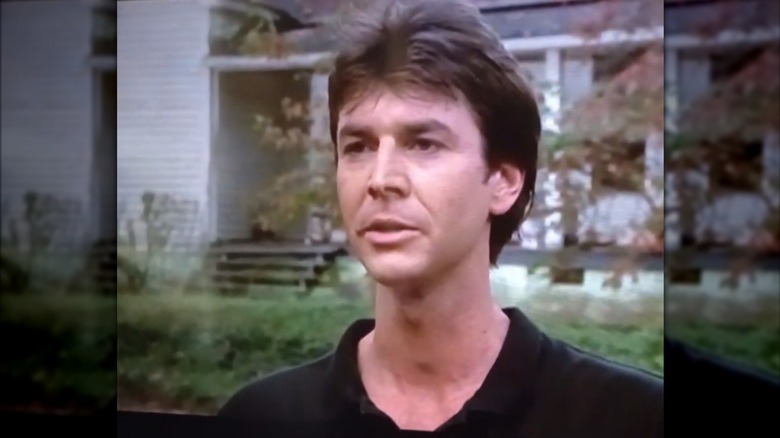
Carroll O'Connor was devastated when his son Hugh tragically died in 1995, the young man struggling with addiction throughout most of his life. He had become addicted to prescription drugs after he was diagnosed with Hodgkin's lymphoma at 16, entering recovery multiple times. O'Connor provided Hugh with a job on "In the Heat of the Night" to support his recovery, and he even hired a private investigator to keep an eye on his son.
Sadly, Hugh was unable to overcome his addiction and died by suicide at 32. His son's heartbreaking death shattered O'Connor, as both he and his wife Nancy had tried to help Hugh overcome his addiction. "I think of Hugh every day, but I don't think of him sadly every day. Most of my thoughts of him are very joyful. But then there are the times — thank God, not too many — when something makes me very sad," he told People in 1996 of his late son.
"Nancy will look at me and say, 'You look bad. Well, I was having a bad time an hour ago too.' And we put our arms around each other and say, 'It'll be alright soon.'" O'Connor channeled his unfathomable grief and used it to make a positive difference, the actor setting out and becoming an outspoken advocate against the drug epidemic in America.
If you or anyone you know needs help with addiction issues, help is available. Visit the Substance Abuse and Mental Health Services Administration website or contact SAMHSA's National Helpline at 1-800-662-HELP (4357).
Carroll O'Connor used his platform to become a fierce social activist
Following his son Hugh's tragic death, Carroll O'Connor devoted himself to crusading against the drug epidemic and set out to have his dealer held accountable. O'Connor went on to publicly condemn the man responsible, calling Hugh's supplier, Harry Thomas Perzigian, a "partner in murder"; the TV star was subsequently sued for $10 million for defamation and slander. The lawsuit went to trial in 1997, during which a civil court jury acquitted O'Connor of the charges.
O'Connor testified during the trial and was extremely emotional following the verdict, interrupting the news conference to personally thank the jury for their decision. "You did a great job," a teary-eyed O'Connor said to the panel (per Tampa Bay Times). "It cost me a bundle, but I was willing to spend the dough. I knew a jury wasn't going to say I was wrong. I knew a jury would back me up and you did. I'm very, very grateful. . . . I love you all."
Perzigian had previously been convicted of possessing and supplying Hugh with drugs, and he ended up serving a year in jail for his involvement in the actor's death. A year prior, O'Connor fiercely lobbied to help pass California's Drug Dealer Liability Act, which allows drug dealers to be sued by anyone affected by the narcotics, specifically loved ones and friends of an addicted person.
He wrote a memoir in 1998 to cope with his grief
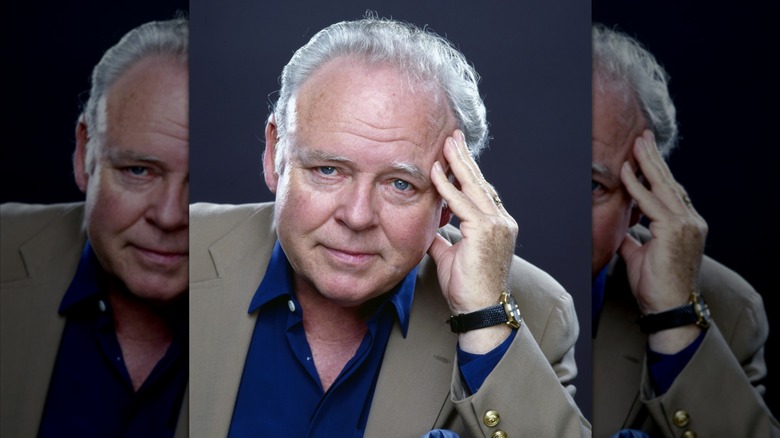
In 1998, Carroll O'Connor released the poignant memoir "I Think I'm Outta Here: A Memoir of All My Families," largely in an effort to cope with the grief surrounding his son's death. The veteran actor also recounted his experiences growing up in Queens, serving in World War II, and achieving his big break in Hollywood. O'Connor felt compelled to pen the autobiography when he discovered that writer Arthur Marx had intended to write an unauthorized version, the actor setting out to control his own narrative.
"So then I made a fast deal with Simon and Chester to write my own. But then I never did it," he recounted to the Television Academy Foundation. O'Connor further shared how his initial manuscript had been passed over by publishers and explained that he resumed writing a new version in the aftermath of Hugh's death. "That was a great turning point in my life, and I didn't really know what to do, how I was going to write about that."
O'Connor subsequently provided his unfiltered thoughts on the impact of "All in the Family," his character Archie Bunker, and co-star Jean Stapleton's meaningful portrayal of Edith. The release of the memoir proved timely, as O'Connor ultimately passed away just three years later.
The TV legend left behind an inspiring legacy upon his death in 2001
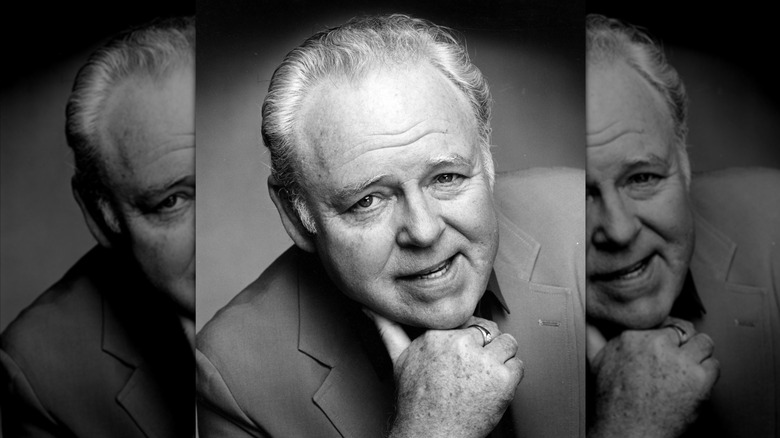
Carroll O'Connor remained a constant presence in Hollywood until the end of his life. The legendary actor died on June 21, 2001 at the age of 76 from a heart attack due to complications from diabetes. His "All in the Family" co-stars paid their honors to the late TV icon at his funeral, as did his best friend Larry Hagman, comedian Carl Reiner, and TV icon Norman Lear.
"I know that I feel a big hole in my heart," the beloved sitcom's last-living star Sally Struthers said (via CNN) at his funeral. "I know that people all over the world would be missing him too because he gave them so many years to laugh and to take a look at themselves." Tributes poured in honoring O'Connor and his lasting legacy and impact on the industry.
"Carroll O'Connor as Archie Bunker was a genius at work, God's gift to the world. He is etched permanently in our memories," Lear told KABC-TV (per News on 6). Throughout O'Connor's 50-plus years in show business, the actor headlined timeless TV classics, used his platform to advocate for change, and was a generous philanthropist. Though he will always be associated with his cantankerous character, O'Connor remains a pop culture icon in his own right.