

The Tragic, Real-Life Story Of Mister Rogers Is Heartbreaking
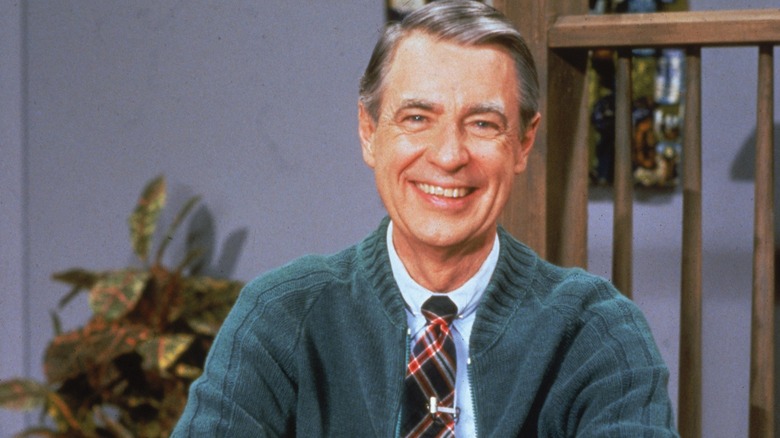
Every episode of "Mister Rogers' Neighborhood" began the same way. Fred Rogers entered his TV house, hung up his coat, changed into one of the sweaters that his mother knitted for him, and put on his comfortable sneakers. All the while, he sings the show's theme song, "Won't You Be My Neighbor?"
For several generations of kids, the ordained minister was not just another adult TV host. He was a friend who helped with everything from the grief of a loved one or pet to letting kids know that they didn't have to change in order to be loved. "I like you just the way you are," he regularly reminded his audience. He won four daytime Emmys, wrote 200 songs for the show, earned the Presidential Medal of Freedom, and was inducted into the Television Hall of Fame. There was also the 2018 documentary "Won't You Be My Neighbor?" and the 2019 movie "A Beautiful Day in the Neighborhood," which will make you wonder how Tom Hanks was able to transform into Mister Rogers. And while he was not an openly political person, there is the surprising way Mr. Rogers became part of the 2020 presidential campaigns.
But just because the children's host spread so much joy and love doesn't mean that his off-screen life was easy. Rogers had to overcome major obstacles and suffered great heartache over his 74 years. This is the tragic, real-life story of one of America's most-loved television icons.
Fred Rogers was bullied as a youngster
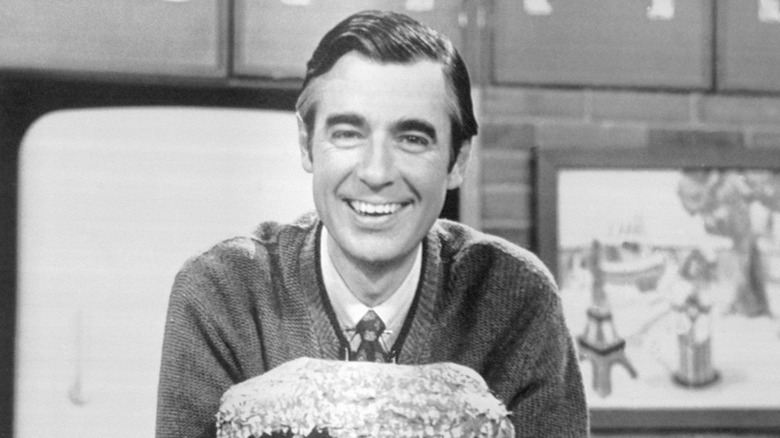
It wasn't always a beautiful day in the neighborhood where Fred Rogers was raised, in Latrobe, Pennsylvania. Latrobe is a small town in the Pittsburgh region. Rogers used Latrobe as a model for his future TV neighborhood.
The shy Rogers grew up with myriad health conditions that often kept him locked away from the outside world. A child wanting to be alone all the time is one of the signs that your kid is getting bullied. "I felt I had no friends," Rogers revealed in a 1995 speech he delivered at Saint Vincent College (via Reader's Digest). "I cried to myself whenever I was alone." He also relayed a bullying story of a group of kids chasing him and calling him "Fat Freddy." Thankfully, in high school, Rogers was able to overcome his shyness and become a popular student. He even served as the student council president in his senior year.
Getting bullied could have turned Rogers into a bully himself or kept him inside a lifelong shell. But instead, Rogers used his childhood isolation and torment to have empathy for the children that he met as an adult. Generations of children watched "Mister Rogers' Neighborhood" and saw a trusted friend. One of Fred Rogers' most endearing messages to his young TV audience was, "There is only one person in the whole world like you, and people can like you just because you're you (via MisterRogers.org).
Mr. Rogers was a sickly child
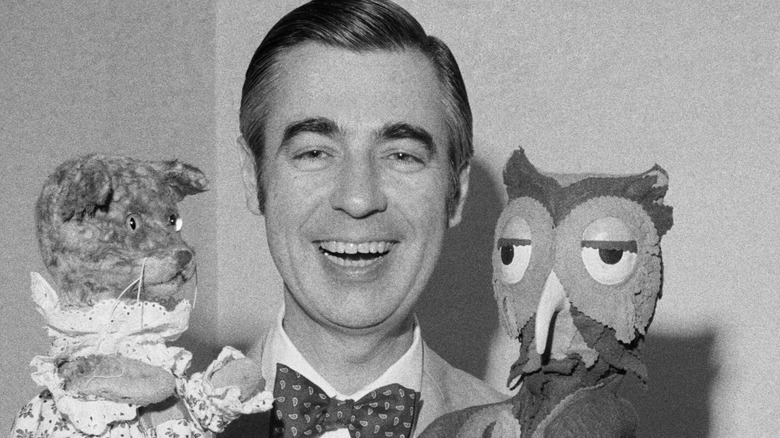
Fred Rogers was born in 1928, a time when medical science was not nearly as advanced as it is today. He was afflicted with several diseases, including asthma. "I had every imaginable childhood disease, even scarlet fever," Rogers revealed in the documentary "Won't You Be My Neighbor?" (via People). The shy young Rogers also contended with hay fever, which forced him to stay indoors during the summer months while other kids in his neighborhood were enjoying the season.
There are several ways your childhood experiences could affect your health. However, there was some light in Rogers' sheltered life as a youngster. "You know, they used to quarantine people for chickenpox and all of those things — I would be in bed a lot, and I certainly knew what it was like to use the counterpane as my Neighborhood of Make-Believe, if you will," Rogers said in a 2003 interview on "Fresh Air With Terry Gross."
Rogers used his time indoors to write music, create puppet shows, and imagine inventive made-up worlds filled with kindness and empathy. The children's television host then used those skills on his long-running television show "Mr. Rogers' Neighborhood." "I would put up my knees, and they would be mountains, you know, covered with the sheet, and I'd have all these little figures moving around, and I'd make them talk," added Rogers. "And I can still see my room, and I'm sure that was the beginning of a much later Neighborhood of Make-Believe."
Mr. Rogers mourned the death of his beloved childhood dog
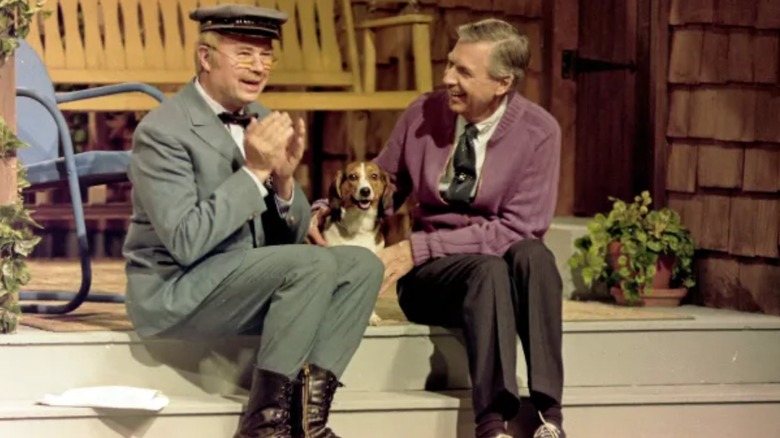
Fred Rogers made it a point to let kids know that talking about your feelings is an important part of life, even difficult emotions like grief. The death of a beloved pet is devastating for anyone at any age. Mr. Rogers sometimes brought up his beloved childhood dog Mitzi on "Mister Rogers' Neighborhood" to let kids know that he knew what it was like to miss a dear pet.
Additionally, in 1988, Rogers published a book called "When a Pet Dies." The book offers a helpful guide for young ones dealing with the loss of a pet. Mr. Rogers opened the book with a personal note to his readers. "When I was little and didn't have a sister yet, my best friend was a brown, wire-haired mongrel named Mitzi," wrote Rogers (via The Neighborhood Archive – All Things Mister Rogers). "We shared joyous times, exciting times, and sad times. ... When Mitzi died, I was very sad, and so were my parents. We had lost a member of the family. My parents encouraged me to talk about how I felt, and they let me know that grieving was a natural, healing thing to do. In grieving, we try to fill the empty space that was created in us by the loss. Because of Mitzi, I discovered it was all right to cry when somebody you love dies."
He was obsessed with weighing exactly 143 pounds
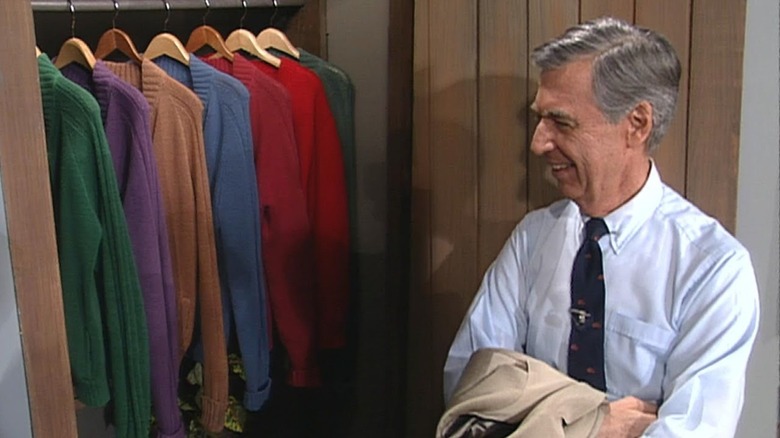
For Fred Rogers, it's all about love. America's favorite neighbor had an obsession with the number 143. "The number 143 means 'I love you,'" Rogers told Esquire in 1988. "It takes one letter to say 'I' and four letters to say 'love' and three letters to say 'you.' One hundred and forty-three. I love you. Isn't that wonderful?" According to Tom Junod's story about the beloved children's host in Esquire, Rogers said he hopped on a scale one day in the 1960s, and it read exactly 143 pounds.
Rogers made it a point from that day forward to maintain that exact weight. The Presbyterian minister was also a vegetarian, a non-drinker, and a nonsmoker with a strict 9:30 p.m. bedtime and an early 5:30 a.m. rise. He also threw in an afternoon nap. His daily morning routine included a swim and a weigh-in to make sure he was maintaining his ideal weight. It should be noted that Rogers performed his daily swim in the nude. If you're not into nude swimming, there are several other secret health tips celeb trainers swear by.
Rogers often talked of his love of love. In his book, "The World According to Mister Rogers: Important Things to Remember," he wrote, "Love isn't a state of perfect caring. It is an active noun like struggle. To love someone is to strive to accept that person exactly the way he or she is, right here and now" (via Goodreads).
Mr. Rogers hated television
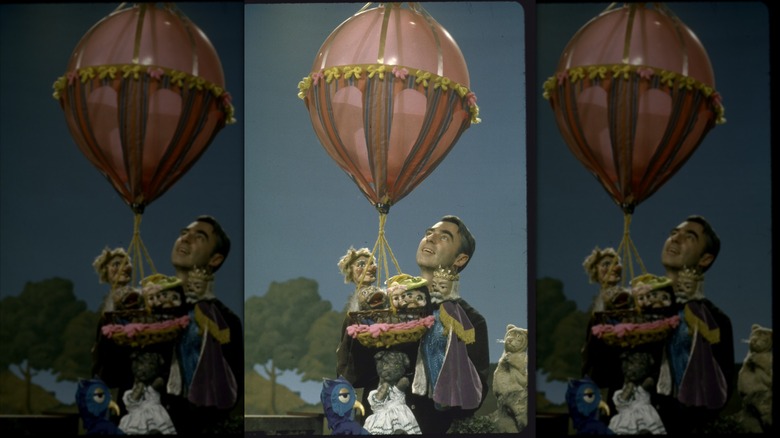
Fred Rogers hosted nearly 1,000 episodes of "Mister Rogers' Neighborhood" over 33 years on public television. Millions of children over multiple generations grew up with Mister Rogers as their beloved neighbor, teacher, and friend. The odd thing is that the television icon hated the medium that he dedicated his life's work to. "I got into television because I saw people throwing pies at each other's faces, and that to me was such demeaning behavior. And if there's anything that bothers me, it's one person demeaning another," he told Amy Hollingsworth, writer of "The Simple Faith of Mister Rogers." "That really makes me mad!" (via "Today").
Rogers went to work over the next three decades, putting something on the small screen that he deemed important. "I got into television because I hated it so," Rogers revealed in a 1999 interview with CNN. "[A]nd I thought ... '[T]here's some way of using this fabulous instrument to be of nurture to those who would watch and listen.' ... The whole idea is to look at the television cameras and present as much love as you possibly could to a person who might feel that he or she needs it."
He carried intense grief for years after his father's death
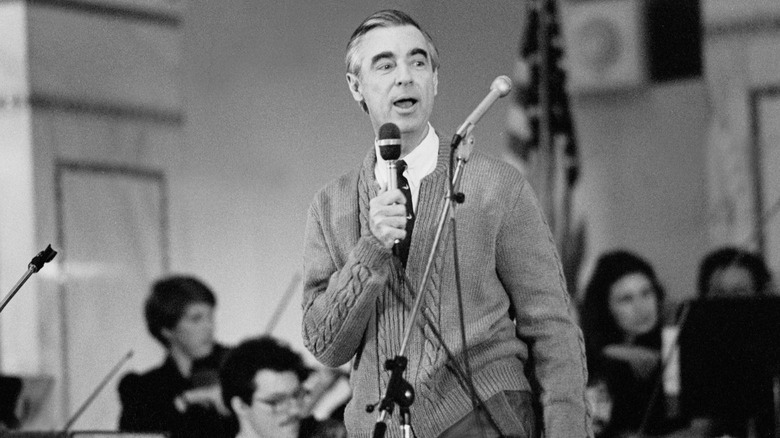
For kids, Fred Rogers was not just another adult telling them what to do or how to feel. He wanted kids to share how they were really feeling. Rogers made it a habit to never talk down to a youngster and encouraged kids to be open about all their feelings. One of his important messages regarding grief is that the sad feelings don't last forever. "The very same people who are sad sometimes are the very same people who are glad sometimes" (via MisterRogers.org).
In 2001, Rogers spoke about grief in a recorded message for the Highmark Caring Place, which is a bereavement support organization for kids. "There isn't any one of us here, not any one of us, who hasn't had loss in our life," he said (via YouTube). Rogers went on to talk about a book on grief that he was reading. It had a story about a boy whose dad suddenly died from a heart attack. "He was encouraged to write a letter to his dad," said Rogers. The children's host added that the boy mentioned that they didn't always get along, but he wanted to tell his dad that he missed him. "Now, when I read that for the first time, I just burst into tears," admitted Rogers. "My dad died in 1970, and I grieved, naturally. But it's obvious that I'm carrying that with me always. ... I still miss my dad."
Fred Rogers died of stomach cancer
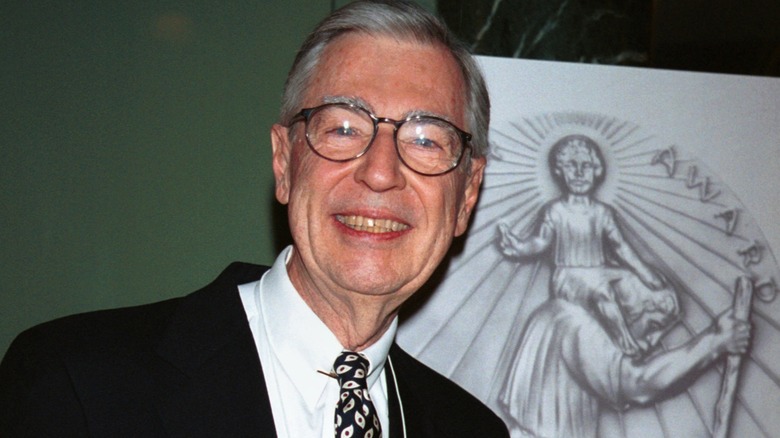
Fred Rogers watched what he ate, exercised every day, and did not smoke or drink. Even so, the TV icon was diagnosed with stomach cancer in 2002. Rogers' wife, Joanne Rogers, said that her husband was suffering from indigestion but did not go to the doctor until his condition became painful. By that time, the cancer had spread. "The chance of there being metastatic disease later is much higher than it is with [an early-stage] breast or colon cancer," said gastrointestinal oncologist Dr. Adam Bass (via Cancer Today).
Rogers had surgery to remove his stomach, but it was not enough to save his life. The television hero died on February 27, 2003, at the age of 74. The following month, the House of Representatives passed a resolution that "[honored] Fred Rogers for his legendary service to the improvement of the lives of children, his steadfast commitment to demonstrating the power of compassion, and his dedication to spreading kindness through example" (via GovTrack).
"Kids responded to him because he was genuine," wrote "Reading Rainbow" host LeVar Burton. "He talked to them, not at them. ... He simply sat there, and what he told them was powerful — that who you are matters, that your feelings count, that you are a unique creation, and that you owe it to yourself to rise to the best you can be" (via Entertainment Weekly). The world would experience another loss a few years later with the heartbreaking death of Mister Rogers' wife, Joanne Rogers.