

Tragic Details About The Backstreet Boys Band Members Are So Sad
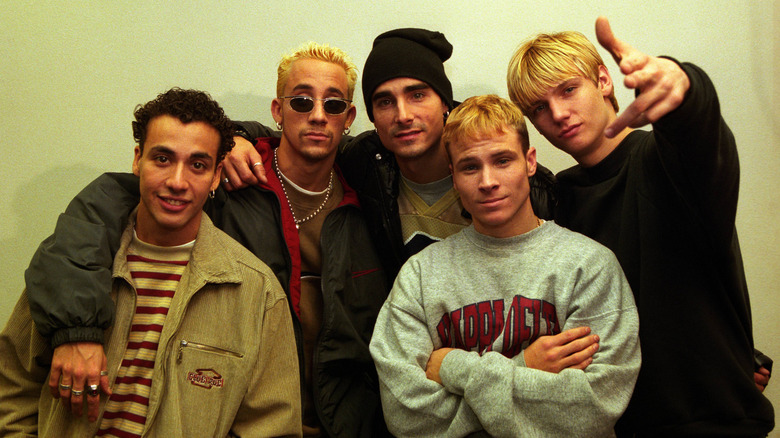
From afar, the Backstreet Boys appeared to embody the ultimate pop dream: five heartthrobs, a string of chart-topping hits, suave stage personas, sold-out arenas, and millions of fans across the globe. They defined the '90s fever dream of boy band frenzy. Up close, however, the cracks in their success story were visible, and over the years, the complications in their personal and professional lives became an inseparable part of the Backstreet Boys' larger-than-life legacy.
From serious health battles and deaths to long-drawn-out journeys with addiction, identity struggles, and legal controversies, layers upon layers of tragedy played out in parallel to the band's blinding popularity through the '90s and 2000s. Refreshingly enough, the five-part entity of Brian Littrell, Nick Carter, AJ McLean, Kevin Richardson, and Howie Dorough stood through the chaos with each other without giving in to sensational infighting or band breakups.
With the early mania surrounding the band having softened over the years, fans have been able to view the Backstreet Boys in all their imperfect but real, complete selves. Here are some tragic details about the Backstreet Boys band members that tell a tale beyond their glossy superstardom.
Brian Littrell was born with a hole in his heart
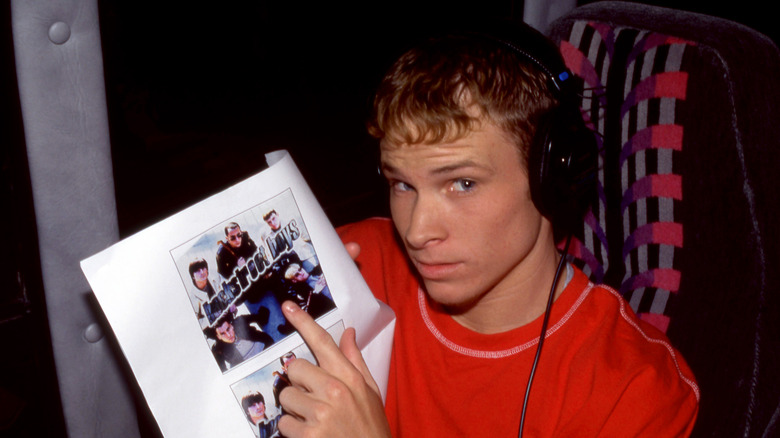
Brian Littrell's early years were nothing like the glossy pop life he would later come to lead as a member of the Backstreet Boys. The singer was born with a ventricular septal defect (VSD), a congenital condition that left him with a hole in his heart. When he was 5, a bacterial infection exacerbated his health problems and triggered a medical emergency. "I was in the hospital for two months, where I was clinically supposed to die. I had a 0% chance of living," he told Life of Dad.
Though Littrell survived that curveball, his heart condition could not be left untreated. As he shared in the 2012 documentary "The Heart of the Matter," VSD was causing his heart to enlarge. In 1998, he underwent open heart surgery to treat the problem. At the time, the band's success was soaring, especially following the release of their milestone album "Backstreet's Back." Littrell postponed the surgery to work around the band's touring schedule, and later admitted to feeling fearful about whether or not he would make it out of the life-changing operation alive.
Brian Littrell's son was diagnosed with a rare disease
One of the most tragic details about Brian Littrell's life relates not to him, but to his son. Baylee Littrell, at age 6, was diagnosed with atypical Kawasaki disease after days of sickness, hospitalization, and multiple rounds of testing for different diseases. "We didn't know what we were dealing with until we found his coronary artery three times the size it should be," People quoted Littrell as saying. A rare condition, Kawasaki disease typically triggers widespread inflammation in the blood vessels and, if untreated, can be fatal.
Baylee's diagnosis received significant press coverage, not least because it coincided with the tragic death of John Travolta's son Jett, who had incidentally also battled the disease in his childhood. Several weeks of treatment later, Littrell's son was on the path to recovery. "I remember I walked out of the hospital in a Batman costume," Baylee told ET. "I was like, 'I walked out of here, I survived this, and then everything is going to be amazing.'"
Baylee, who has proved himself to be an all-around performer like his famous dad, made his Broadway debut in "Disaster!" at 13. He later also appeared on Season 23 of "American Idol."
A vocal condition affected Brian Littrell's iconic singing voice
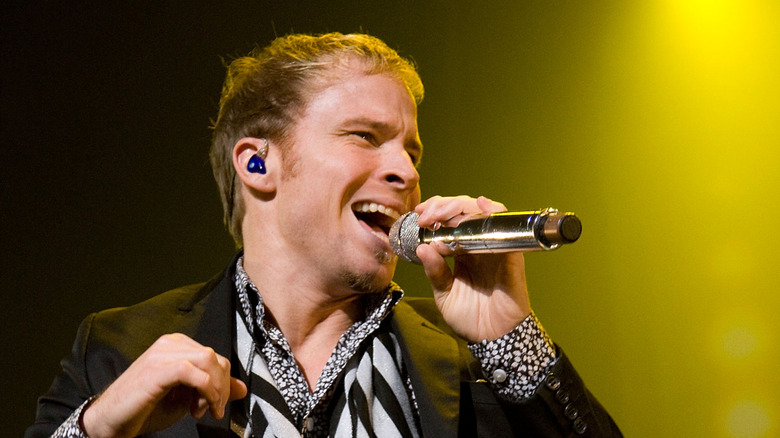
Health issues pursued Brian Littrell well into his adulthood, even to the point of potentially jeopardizing his career. In 2011, the Backstreet Boys singer revealed that he had been diagnosed with muscle tension dysphonia, a condition that affects a person's voice due to strain on the muscles around their larynx. Considering Littrell's longtime distinction as the band's most beloved and key singer, the change this caused to his voice wasn't hard to notice. Over the years, it became a subject of relentless discussion in fan circles on social media.
On his part, Littrell has been open about living with the disorder for over a decade and working with a vocal therapist to manage it. Talking to Cosmopolitan, he revealed that there were times when he even lost his voice. "If you talked to me probably four or five months ago, I wouldn't even be able to do the interview because I wouldn't have a voice to talk," he said. "But I've come a long way to be able to just have a conversation, much less make a new Backstreet Boys record." Littrell's vocal problem is sadly compounded by a related condition called dystonia, which Littrell explained causes "somewhat of a neurological disconnect between my brain and my vocal cords."
AJ McLean's journey with addiction has been long and layered
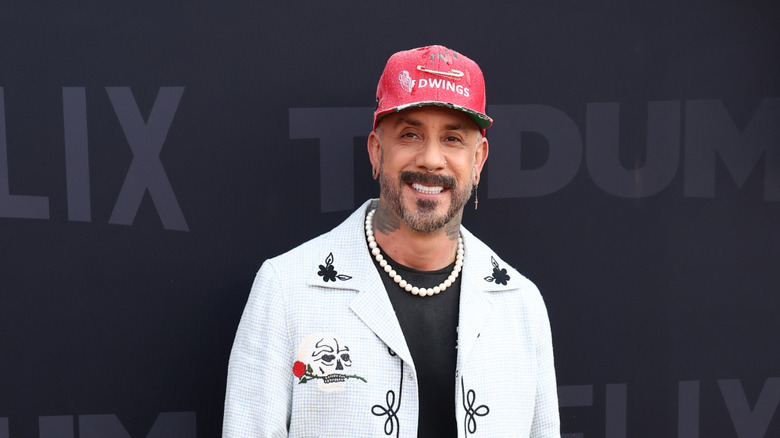
AJ McLean's experience with addiction is a layered story of setbacks and successes. The saga began in the 2000s, when the Backstreet Boys dominated the pop industry. Behind the scenes of the band's peaking fame, McLean's descent into struggles with drug addiction had begun. "Somehow someway, I kept it a secret from everyone for the next at least 18 months before the boys caught on," the singer told People. "I found a way to really keep it under the rug."
He eventually entered rehab to confront his drug and alcohol addiction, and also underwent treatments for clinical depression. To prioritize McLean's health, the Backstreet Boys even postponed multiple concerts in 2001, with Kevin Richardson leading the pack in voicing concern and support for their bandmate. McLean briefly bounced back before a relapse episode landed him in rehab again — a cycle that went on for about 20 years. In 2021, he came out to say that he was committing himself to sobriety for good.
Nick Carter comes from a troubled family

As a quintessential blonde heartthrob that defined '90s pop stardom, Nick Carter was, to a great degree, the front face of the Backstreet Boys. But away from the spotlight, his personal life told a very different story. To say that Carter grew up in a dysfunctional family would be an understatement. He was the oldest of five children, born to parents whose marriage was deeply fractured and steeped in drug and alcohol use.
"My siblings and I weren't particularly well-nurtured as kids. ... [Our parents] didn't demonstrate their love in ways that typically make kids feel safe and secure," Carter wrote in his memoir "Facing the Music and Living to Talk About It" (via Today). An influx of fame and money, brought on by the Carter siblings' early entry into showbiz, further complicated household dynamics.
Broken familial relationships persisted in the background of Carter's rise to fame throughout the 2000s — from his parents' eventual divorce to his complex bond with brother Aaron Carter. Carter's turbulent family life has been the subject of multiple productions, including "House of Carters" and "The Carters: Hurts To Love You."
Substance abuse has haunted Nick Carter for years

Nick Carter was only 13 when he began his pop career with the Backstreet Boys. As often happens with young stardom, the excesses of the industry caught up with him quickly and uncontrollably. "I began drinking heavily in my teens and then moved on to drugs at 18 or 19," he wrote in a candid confession in his 2013 memoir, listing out the variety of substances he relied on in the background of his fame (via ET).
In the midst of headline-making arrests related to drunk driving and violence, and a physical transformation that sparked health concerns, Carter's heartthrob status took a hit. It likely didn't help that Carter was also battling depression at the time. "In some ways, I don't know how I am still alive," he told ABC News.
A heart condition and moments of self-reckoning later, Carter was able to pull it together. But while he successfully made it through to the other side of his addiction struggles, several of his siblings weren't as fortunate.
Three of Nick Carter's siblings have died

Substance abuse and mental health struggles were recurring themes within the Carter family. Over time, those pressures took a tragic toll on several of Nick Carter's younger siblings. Leslie Carter was the first to succumb, dying of an apparent drug overdose in 2012. The 25-year-old, like her brothers and sisters, was a singer and reality TV personality and had reportedly been on medications for depression.
A decade later, in 2022, a similar tragedy came to haunt the family following the death of Aaron Carter, whose personal troubles — ranging from family feuds to drug addiction and legal run-ins — had fed into his legacy for years. A coroner's report stated that he died from an accidental drowning brought on by the ingestion and inhalation of certain substances.
"Sometimes we want to blame someone or something for a loss, but the truth is that addiction and mental illness is the real villain here," Nick Carter, with whom Aaron shared a famously strained relationship, wrote on Instagram. Unfortunately, the family was yet to bear more such pain. Just a year later, Bobbie Jean Carter died from an overdose of meth and fentanyl, leaving Nick and Angel Carter behind as the only surviving Carter siblings.
The Backstreet Boys sued their manager Lou Pearlman for fraud
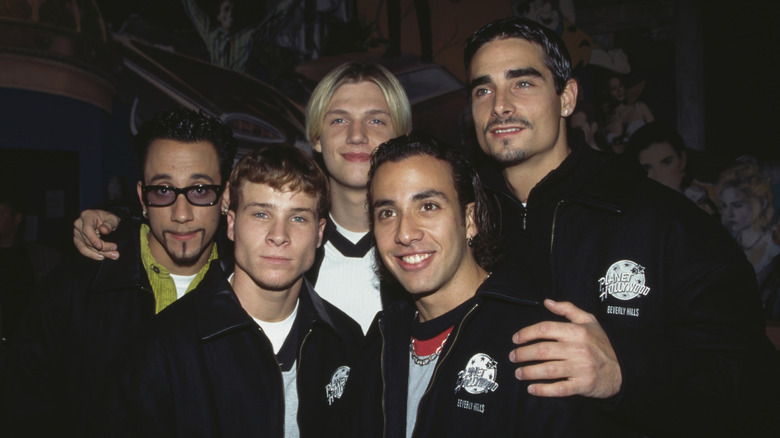
Behind the scenes of their meteoric rise in the '90s, the Backstreet Boys were going through a painful betrayal. Music manager Lou Pearlman — who was instrumental in the genesis of successful bands like the Backstreet Boys and NSYNC – was apparently running an elaborate exploitation scheme against his clients. While Pearlman's own profits ran in the millions, the Backstreet Boys reportedly made just $300,000 between 1993 and 1998 (via Forbes).
The financial fraud came to light when Brian Littrell flagged a gap in the band's earnings and initiated legal proceedings against Pearlman. "I asked him over and over again to fix it, or there would be repercussions from his actions. He never did ... I filed what's called an open-ended lawsuit, which allowed the other members of the group to jump on the lawsuit with me," Littrell told Cosmopolitan.
The Backstreet Boys' lawsuit marked the beginning of the end for Pearlman, whose business empire slowly began unraveling in the face of accusations from several musical artists. It eventually imploded when authorities discovered that Pearlman was also behind one of the longest-running Ponzi schemes that America had ever seen. While he fled the U.S., he was later arrested in Bali in 2007.
Kevin Richardson walked away from the group in 2006
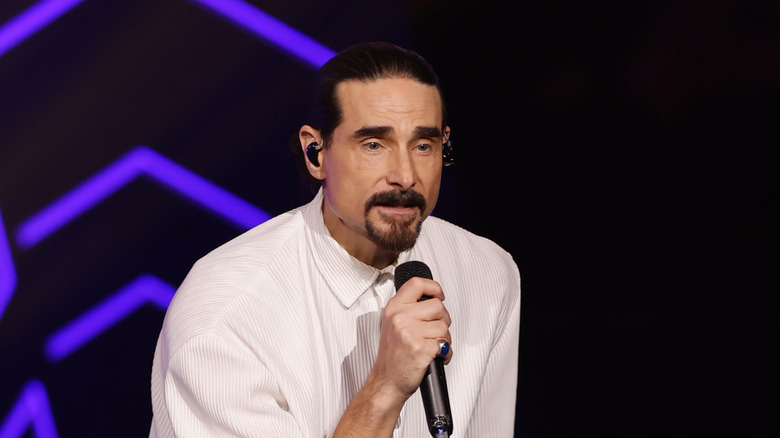
In 2006, the legacy of the Backstreet Boys took a sudden, tragic turn when Kevin Richardson bowed out of the band. The gloomy announcement was made on the band's official website, where Richardson said in a statement (via Billboard): "It was a very tough decision for me but one that was necessary in order to move on with the next chapter of my life." The other members of the band simultaneously echoed their support for Richardson, saying, "The door will always be open for him to return to the Backstreet Boys."
Though the terms of Richardson's exit weren't exactly sensational — and came about in a pursuit of interests beyond the pop band he had been with since its inception in 1993 — the moment of his departure was heartbreaking all the same. While fans mourned the void Richardson's decision left in the Backstreet Boys, production houses apparently rushed to fill it.
Talking to CBS News, the band revealed that many reality shows had approached them with a bid to replace their seniormost member. But they refused. "It's like building a house, and we built this career for 26 years with a part of Kevin's blood, sweat and tears, and we weren't gonna replace him," Richardson's bandmate and cousin Brian Littrell said. As fate would have it, Richardson marked his return to the band six years later.
Howie D's biracial roots caused him to struggle with his identity
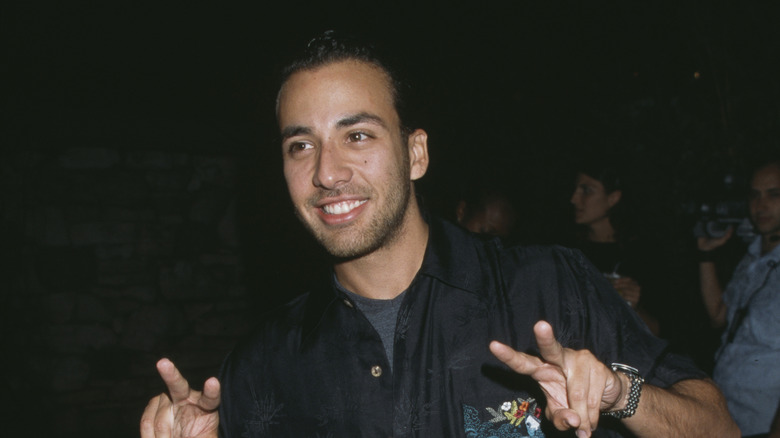
Owing to his mixed Puerto Rican and Irish-American heritage, Howie Dorough often found himself navigating a complex personal identity from a young age. During his school years in Florida, he was confronted with awkward situations that compelled him to reckon with his roots, such as when others would speak to him in Spanish and he wouldn't understand. "There's been a lot of instances where I was like, 'Wow, I look like this, but it's not totally me,'" he told ET. He added, "As I started getting older, I definitely felt challenged with finding my identity."
Dorough eventually began embracing his biracial background by learning how to speak Spanish and finding musical inspiration in his maternal culture. Dorough's 2019 album "Which One Am I?" revolved around these very themes that he has grappled with for most of his life. He admitted that the process of fully coming to terms with his complete, multidimensional self was still ongoing. "I never want to misrepresent myself, so even to this day it's a struggle to be comfortable in my skin, but I'm much more secure than I once was," he said. He's also expressed a desire to record an album in Spanish.
Anxiety and insecurities played a part in Howie D's boy band experience
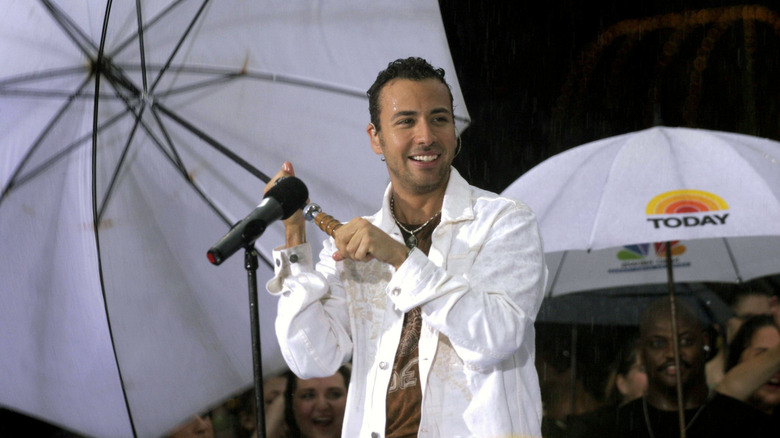
It wasn't just his cultural identity that caused Howie Dorough to struggle with understanding his place in the world. Similar questions also hung low over him vis-à-vis his footing within the Backstreet Boys. As one of the less spotlighted members of the band, Dorough often found his potential and popularity overshadowed by the attention heaped upon his other, more famous bandmates.
"In the early years, when the group first started, I was more of a lead singer, then little by little ... I got pushed more to the back," he said in an interview with the Recording Academy. "Me and Kevin [Richardson] were more in the background and I struggled with that for many years. I never wanted to just be a background singer."
Though he later managed to make peace with his position within the Backstreet Boys, he did reveal that it required some negotiations with his bandmates so he could "step up to the play in order to feel like I work in this group." Dorough's anxiety also compounded the issues plaguing him as a performer, with the singer saying that the stage makes him nervous to this day.
Nick Carter has faced serious sexual assault allegations

In recent years, several serious allegations relating to sexual assault have surfaced against Nick Carter, muddying the legacy of one of pop music's most clean-cut boy bands. These accusations against the Backstreet Boys singer describe alleged incidents that date back to the 2000s, when the band's success was only growing. Allegations from at least four women have gone public, with Carter hitting back at them with strong denials and even legal countersuits arguing defamation.
"These are exactly the same outrageous claims that led us to sue this gang of conspirators," a statement from Carter's team in 2024 read, per the BBC. Up until that point, three women had come forward with similar stories of being raped or assaulted by Carter during their teen years. In 2025, a fourth lawsuit materialized, with the accuser alleging that being sexually assaulted by Carter infected her with STDs that later led to cervical cancer, the Los Angeles Times reported. At the time of this writing, Carter's life is mired in legal battles related to these cases.
Kevin Richardson opened up about fertility struggles in his marriage
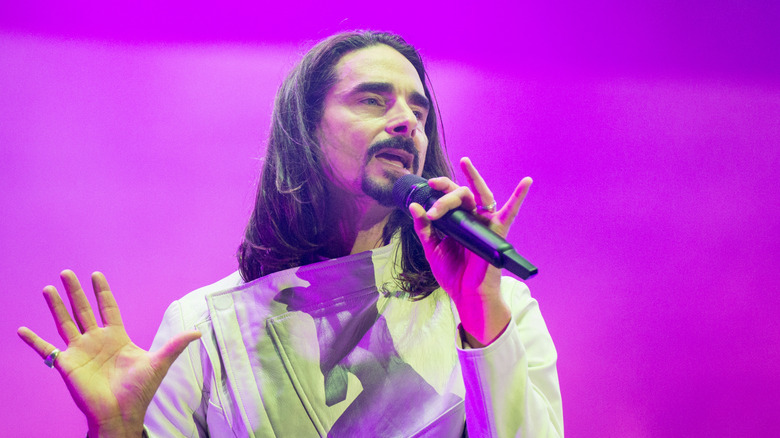
In a break from his reputation as one of the more reserved members of the Backstreet Boys, Kevin Richardson opened up in 2016 about fertility struggles in his marriage. The singer and his wife, Kristin Richardson — who have been married since 2000 after meeting in the early 1990s — welcomed their first son, Mason Frey, in 2007. A few years into their parenthood journey, the Richardsons began planning to expand their family, but soon hit a roadblock.
The couple was unable to conceive, and upon medical testing, found that Kristin's hormone levels at the time were not conducive to pregnancy. "We tried IVF, we tried artificial insemination, and none of that worked," Richardson told ET. "She was injecting her body with all kinds of hormones to make her ovulate, then on top of that was all the stress. ... I just tried to be as supportive as I could, let her lead and be there for her." The pair eventually found luck after visiting an acclaimed acupuncturist with a track record for helping parents conceive and became parents to a second son, Maxwell Haze, in 2013.
Howie Dorough lost his sister to lupus
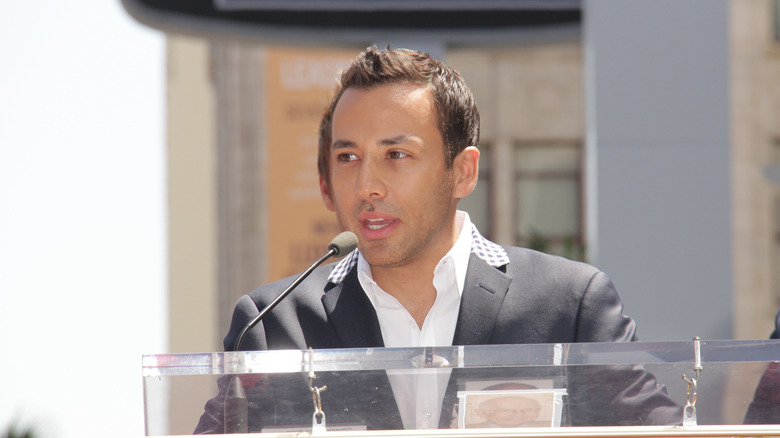
Howie Dorough's rising success as a member of the Backstreet Boys in the '90s coincided with a tragic event in his personal life: the death of his older sister. Caroline Dorough-Cochran succumbed to lupus in 1998 after a long-drawn-out battle with the autoimmune disease. "My sister Caroline was 12 years older than me, so she was always my babysitter — we were very close," the Lupus Trust quoted the singer as saying. He recalled that his sister wasn't daunted by the diagnosis at first, but that her condition gradually worsened and was further complicated by several difficult pregnancies.
When Dorough received word that his sister was critical, he was fresh off the band's first win at the MTV Video Music Awards. Unfortunately, he couldn't make it in time to bid her a final goodbye. "I've struggled with that a lot," he said. After missing his flight, he arrived at the hospital while a doctor was attempting to resuscitate Caroline. "But we lost her," he said. Following his sister's death, Dorough committed himself to supporting lupus patients and spreading awareness about the life-threatening disease through his family-run nonprofit, the Dorough Lupus Foundation.