

Things You Probably Never Knew About Lucille Ball & I Love Lucy
We may receive a commission on purchases made from links.
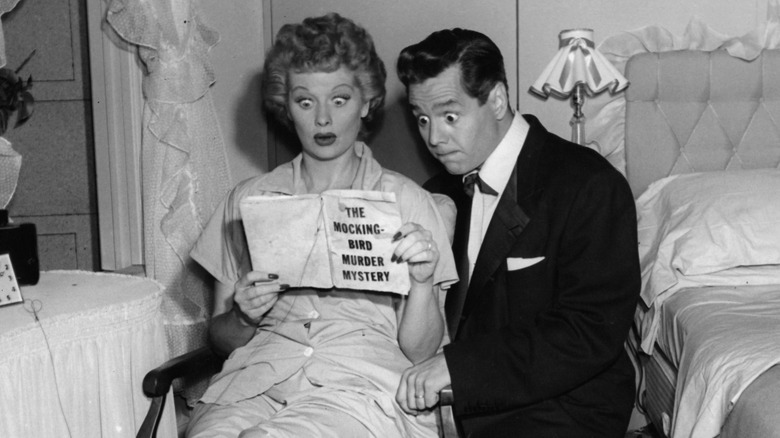
When "I Love Lucy" debuted in 1951, it became widely popular. It changed comedy and television sitcoms forever. The show starred Lucille Ball and Desi Arnaz as Lucy and Ricky Ricardo. Lucy's hairbrained schemes and wild antics created hilarious scenarios that Ricky had to help rescue her from each week. From almost the beginning, the ratings for "I Love Lucy" defied expectations. One episode, "Lucy Goes to the Hospital," had 44 million viewers, which was 15 million more people than watched President Dwight Eisenhower's inauguration that happened the next day. It remains one of the most-watched episodes of television.
Most of the historic moments the show ushered in over its six seasons were due in large part to the charismatic comedian star, Lucille Ball. She cemented herself so much in pop culture that fans still try to recreate Ball's makeup style. As of the 2020s, new products featuring Lucy are being produced. Funko even created an "I Love Lucy" series of their popular Pop Vinyl figures, even though the show hasn't been new in decades. Although the series and its star are still recognizable today, there are things fans probably never knew about Lucille Ball and "I Love Lucy."
Lucille Ball and Desi Arnaz were television's first millionaires
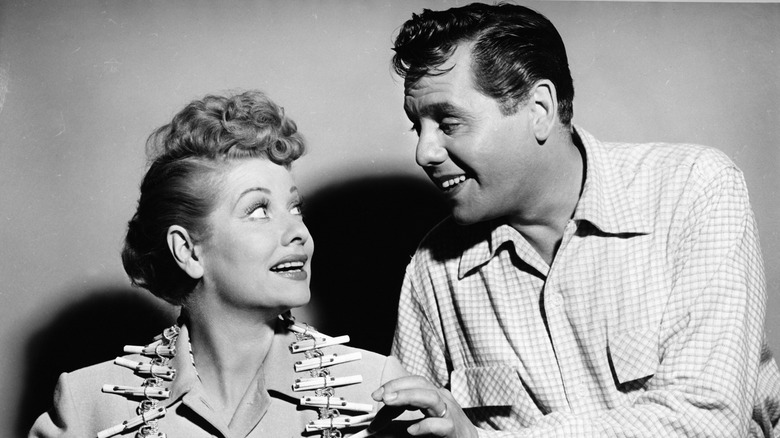
When working with CBS to turn "I Love Lucy" into a television show, Lucille Ball and Desi Arnaz had to prove they were committed to making the project work. Ball and Arnaz founded Desilu Studios with their own money to help produce the new sitcom. Instead of working for the network, CBS, they worked for themselves. This gave the duo control over their show and other series they wanted to produce. Using their own studio and money ensured that when their shows did well, they would benefit financially. It was a gamble that paid off for the couple as they became the first millionaires in the television industry.
In 1967, Ball sold her shares in Desilu to Paramount for $17 million (this came after her buying out Arnaz's shares upon his insistence). With inflation, that sales total would be closer to $170 million in 2026. Lucille Ball's net worth at the time of her death was surprising, estimated to be around $60 million in 1989. This is in part due to her sale of the company, as well as the sale of the syndication rights to "I Love Lucy." Ball proved to be not only a brilliant actress and comedian, but, along with Arnaz, a genius businesswoman.
Lucille Ball was one of the first visibly pregnant woman to appear on network television
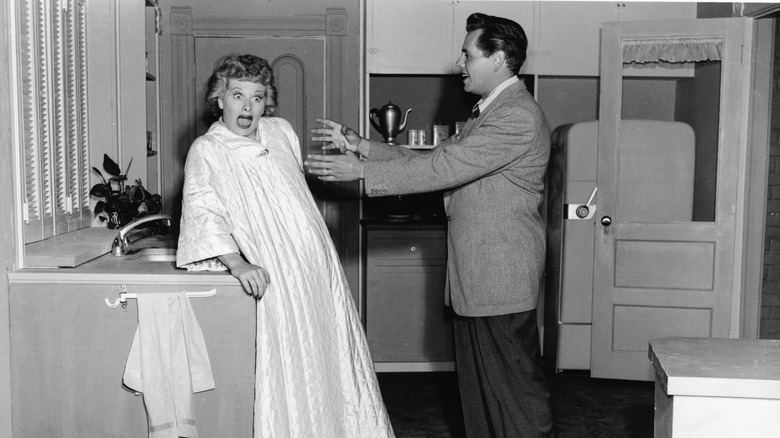
In the 1950s, women were often portrayed as happy homemakers, taking care of children while their husbands worked. In an odd juxtaposition to the push for motherhood, The Code of Practices for Television Broadcasters didn't allow anything sexual, or even the word "pregnant," to be said on television. Instead, euphemisms like "with child" or "expecting" were used. When Lucille Ball, who didn't exactly fit the mold of docile housewife, became pregnant with one of Ball and Arnaz's two children during production of "I Love Lucy," she was going to show the world she was pregnant.
At first, the network said she should hide behind things or sit at a table, so that the viewers couldn't see her ever-growing baby bump. The network and the show ultimately decided to write the pregnancy into the show. According to Time, Desi Arnaz said, "What is so wrong if she has a baby in the show as Lucy Ricardo?" and Arnaz pushed Ball to remain visible in the show. Eventually, the network gave in. The episode in which Lucy tells Ricky she's pregnant was titled "Lucy Is Enceinte," in which they used the French word for pregnant. William Asher, the director of the episode, told the magazine that when Ricky realized he was going to be a father, it became an emotional moment on screen and with the audience in the studio. "The audience was in tears. It was terribly emotional."
Lucille Ball is responsible for Star Trek's television debut
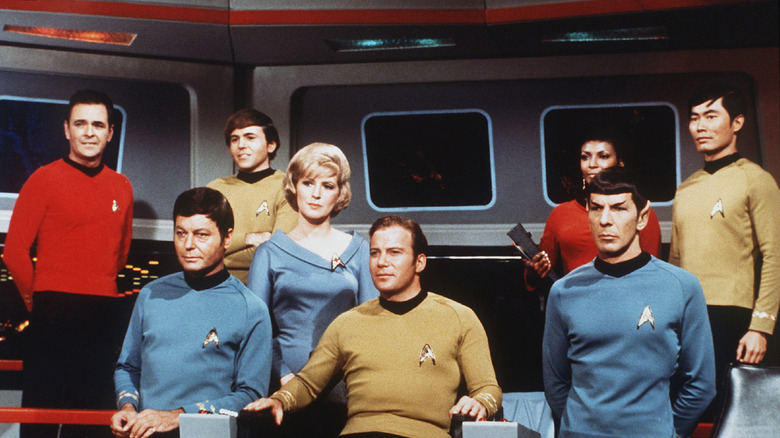
When people think about "Star Trek," they usually don't immediately associate it with Lucille Ball. However, without the enterprising comedian's help, "Star Trek" may have never happened. Back in the 1960s, series creator Gene Roddenberry had approached television networks with his idea for his futuristic show, but didn't encounter a lot of people who were excited about the project. Everything changed when he approached Desilu productions. According to the book "Inside Star Trek: The Real Story," although Ball misunderstood what the plot of the show was, she still jumped on board and pushed for production. With Ball's help, Roddenberry developed the original pilot, "The Cage," followed by a second pilot episode after NBC rejected the first.
Eventually, with the right cast, "Star Trek" hit the small screen in 1966, produced by Desilu Productions. The show launched the careers of several stars, including Leonard Nimoy, George Takei, and William Shatner. "Star Trek: The Original Series" went on to spawn several television shows and films, becoming one of the biggest science fiction franchises in history. Ball didn't just change sitcom history; she changed sci-fi as well.
Desilu Studios launched Mission: Impossible
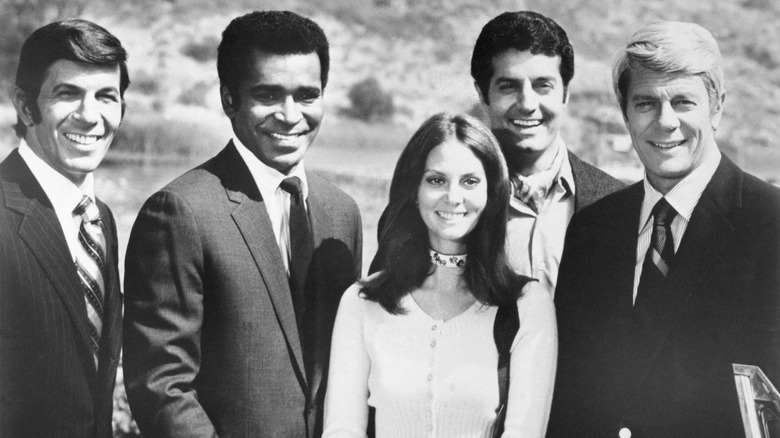
Much like "Star Trek," fans of the "Mission: Impossible" franchise have Lucille Ball to thank. During her time as head of Desilu, Ball signed off on the production of the Bruce Geller spy series "Mission: Impossible." Even though Ball didn't have a direct hand in the show's creative development, she was still reportedly involved with the casting. As revealed by actor Barbara Bain (who played agent Cinnamon Carter) in an interview with NBC, "The last person who had to approve me was Lucy, because she owned the show, she developed it."
First airing in 1966, "Mission: Impossible" followed top government agents on highly classified and complicated missions. It went on to become of the most iconic shows of all time. It didn't hurt that the show also had an iconic theme song that people know, regardless of whether they watched the series. Though the series was popular, arguably, the "Mission: Impossible" name hit its biggest success in 1996 when it was released in theaters as an action film starring Tom Cruise. As of 2026, there are a total of eight "Mission: Impossible" films, all of which would have never happened without Lucille Ball's initial support.
I Love Lucy featured television's first Hispanic lead
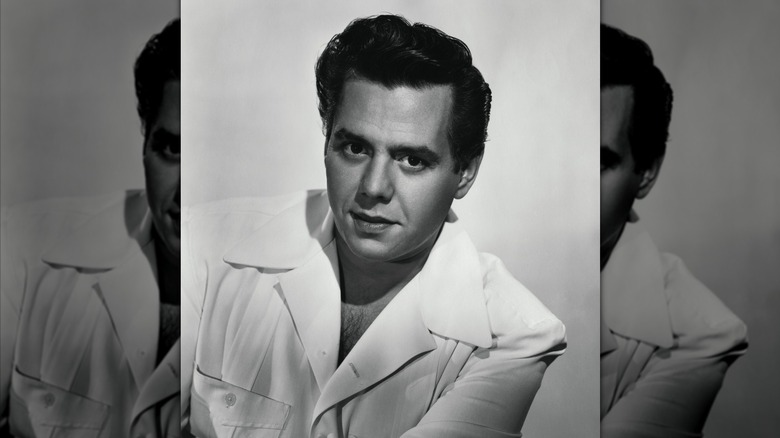
During the early days of television, most of the main characters on scripted shows were white. If the show featured a person of color, they were often a side character whose portrayal was built on stereotypes rather than a realistic and multi-dimensional characterization. "I Love Lucy" changed that by casting the first Hispanic lead of a series, Desi Arnaz. Lucille Ball and Desi Arnaz had been married for 10 years when Ball told CBS she wanted Arnaz to play her husband on "I Love Lucy." The couple had to fight to play husband and wife because CBS and the proposed sponsors felt audiences wouldn't believe the two would be married.
On "I Love Lucy," Arnaz played Ricky Ricardo, a fictionalized version of himself who worked as a singer and bandleader. In playing Ricky, a businessman who was successful at what he did, Arnaz challenged stereotypes and expanded representation for Cuban-Americans on television. Often, Ricky was the only level-head on the show, especially compared to his wife, Lucy, and her wild antics. However, he was still a fun character and had his own catchphrase of "Lucy, you got some 'splaining to do," after Lucy's schemes ultimately failed.
Lucille Ball had a specific vision for I Love Lucy
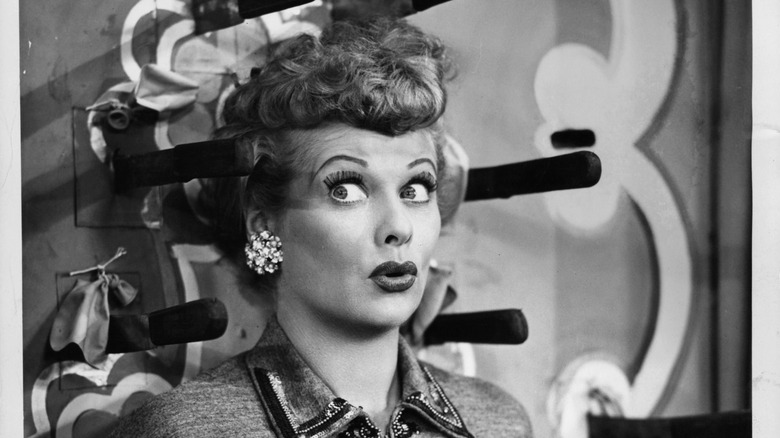
Part of what makes the comedy on "I Love Lucy" stand out is that the episodes always begin with nothing out of the ordinary – it's only with Lucy's antics that things go haywire. According to the Lucy Desi Museum, this was exactly Lucille Ball's plan for the "I Love Lucy" formula. "We start with a normal premise; then take our characters beyond that," Ball reportedly said. Everything that happened on "I Love Lucy" could happen; it just usually went to such lengths that it probably wouldn't. Although Lucy got into some unhinged situations, the way she got there always made some kind of logical sense. It is something that Ball referred to as "exaggerated satire." Obviously, the format worked, as the show was a hit for its original run and syndication.
Indeed, Lucille Ball's favorite episode was "Lucy's Italian Movie" — as she revealed on "The Dick Cavett Show" — which aired in 1956. The main gag starts with Ball and fellow actress Teresa Tirelli stomping grapes to make wine. Quickly, it devolves into an over-the-top food fight, making for a hilarious and iconic scene.
The real-life marriage of Lucille Ball and Desi Arnaz wasn't what it seemed on TV
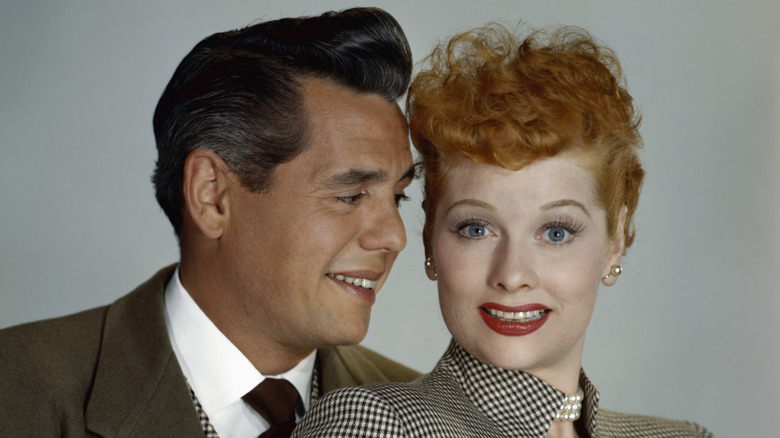
On television, Lucille Ball and Desi Arnaz played a happily married couple who were deeply in love, even if they got a little frustrated with one another. However, Lucy and Ricky Ricardo were fictional characters, and the truth about Ball and Arnaz's marriage was a lot more complicated. The pair met in 1940 on the set of a movie and got married soon after. Almost from the beginning, there were issues, such as Arnaz's rumored infidelity and excessive drinking. One reason Ball was so adamant about Arnaz playing her onscreen husband in "I Love Lucy" was to settle their family down.
After 20 years of marriage, and "I Love Lucy" went off the air, the couple divorced. Although some may see this as an unhappy ending, Lucille Ball and Desi Arnaz's daughter called their divorce "fantastic." It seems the end of their marriage wasn't happy, and this gave each person a new life. Even though they were no longer married and went on to wed different people, they remained in each other's lives. Their daughter, Luci Arnaz, told People, "Maybe those people were better for them at this particular time in their life, but I don't think it was ever as passionate as it was with just the two of them."
I Love Lucy started as a radio show
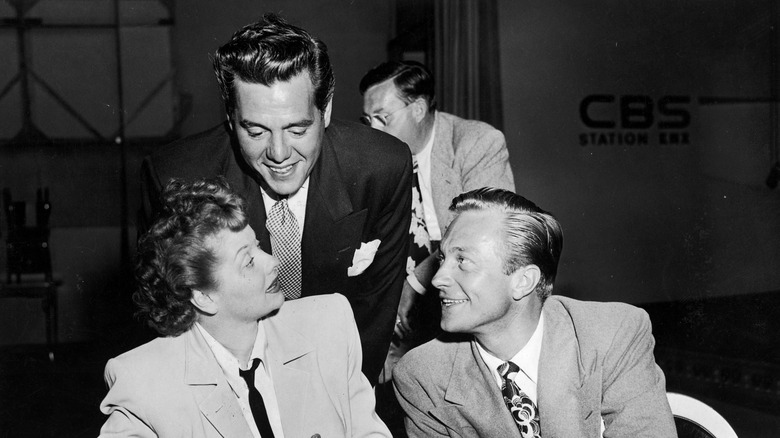
Before scripted television shows, people listened to radio shows. Some popular radio programs shifted to the new onscreen medium and had a second life on television, such as the beloved western, "Gunsmoke." Similarly, "I Love Lucy" was heavily based on a CBS radio show, "My Favorite Husband." Lucille Ball starred on the radio show alongside Richard Denning. The pair played a married couple named George and Liz Cooper. At first, their last name was Cugat, but the name was changed to avoid any connection to a real-life musician named Xavier Cugat.
The title of the show came from a catchphrase Liz would say after George helped her out of some sticky situation she found herself in. For "I Love Lucy," the premise changed a little. In the television show, they changed the names and jobs of the characters — such as Lucy being married to the bandleader Ricky Ricardo — yet the general vibe remained the same. The television presentation also allowed for more physical comedy that is hard to convey over the radio.
Desilu Studios created reruns
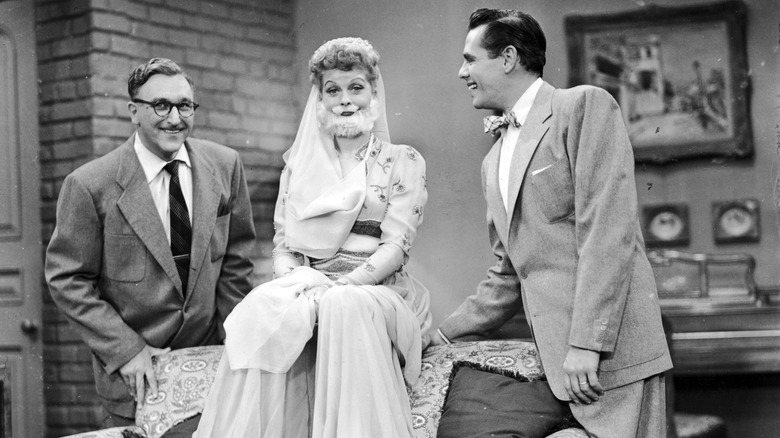
When "I Love Lucy" went into production, television shows were made on the East Coast. However, Lucille Ball and Desi Arnaz made it explicitly clear to CBS that wanted the show to film in Los Angeles. This caused an issue because, at the time, shows were broadcast live. Kinescopes could record live broadcasts and be played later, but they were often blurry and not up to the quality audiences liked.
To take care of this problem, Arnaz and Ball said each episode should be filmed on 35 mm film, meaning it could be played at a later date with the same quality as a broadcast version. Although it doubled the cost of production, CBS agreed to it when Arnaz and Ball said they would help cover the cost — so long as Desilu, not CBS, maintained the rights to "I Love Lucy." Since the episodes were filmed, they could be replayed, or "rerun" as much as the network wanted. According to Parade, CBS found the deal "laughable" since they believed no one would want to watch the show after it originally aired. This one decision created an entirely new aspect of television. CBS later paid $5 million for syndication rights of "I Love Lucy."
Lucille Ball was the first female head of a television studio
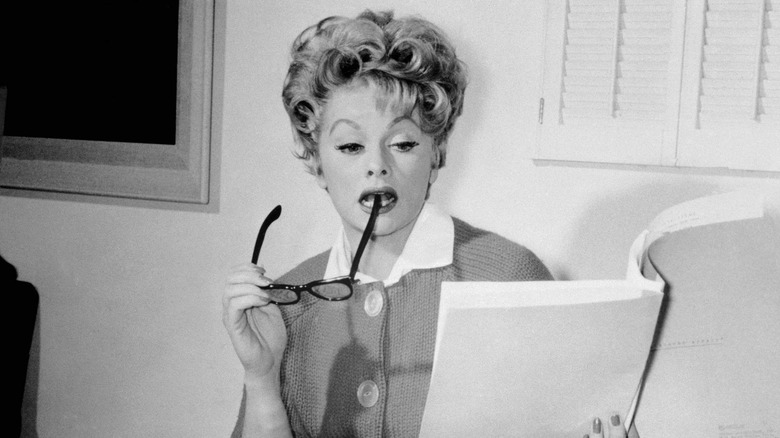
Old Hollywood has a certain prestige around it, but behind the scenes, it was difficult for women and people of color to get anywhere. The industry was dominated by white men who kept hiring people like themselves. As the 1950s rolled around, slowly, women started to gain more power in an industry that relied on their beauty and charm. Lucille Ball was one of those women to make major changes, even if they didn't seem monumental at the time.
There are many trials and tribulations for Ball in the television industry, but it seemed hard to keep the woman down for long. In 1962, after her divorce from Desi Arnaz, she purchased Arnaz's shares in Desilu for $2.5 million (upon his insistence). This move made the famous funny lady the first female head of a television studio. It was during her time as the solo head of Desilu that the studio produced many of the now-famous television shows. This success ushered in a new way for Hollywood, opening doors for herself and many women in the industry who came after.