

Trooping The Colour Throwback Pics Show How Much The Royals Have Changed Since The '70s
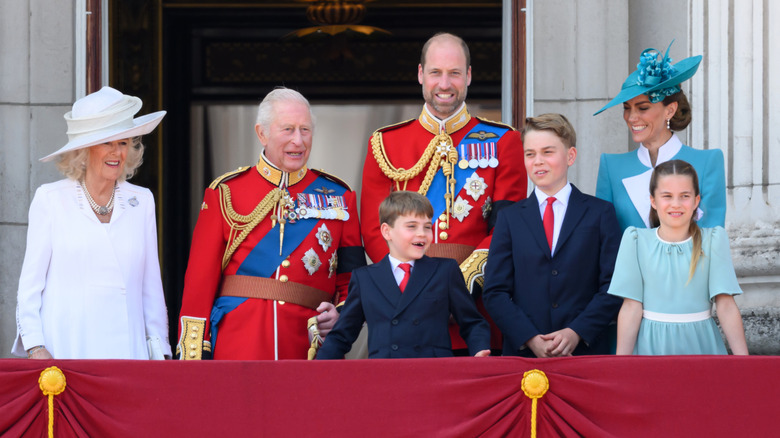
Most people would be content to get a cake and a couple of gifts for their birthday, but when you're the reigning British monarch, you expect just a little more fuss. That comes in the form of Trooping the Colour, the annual military parade held in honor of the sovereign's birthday. The tradition, originally held as a means of identifying military troops before battle — the "Colour" refers to the colors of the regimental flags — was officially established as a birthday celebration in 1748 during the reign of George II. Regardless of the monarch's actual birth month, the parade is always held in June to reduce the chance of bad weather. King Charles III's birthday falls in November, which can be a lousy time to stand outside for long periods. (Just ask anyone who's ever attended the Macy's Thanksgiving Day Parade.)
The popular event is a chance for royal fans to catch a glimpse of senior members as they view the parade from the balcony of Buckingham Palace. (Truth be told, it's a chance to get in a bit of snarking at the worst-dressed royals at Trooping the Colour, too.) The king or queen determines who gets the honors; in 2025, Charles and Queen Camilla were accompanied only by heir apparent William, Prince of Wales; future queen consort Catherine, Princess of Wales; and their three children.
For seven remarkable decades prior to her death, the parade was held in honor of the beloved Queen Elizabeth II, who was an active participant in her birthday celebration. Take a ride down memory lane and see how different she and other royals looked in the 1970s.
A lonely royal widow watched the parade
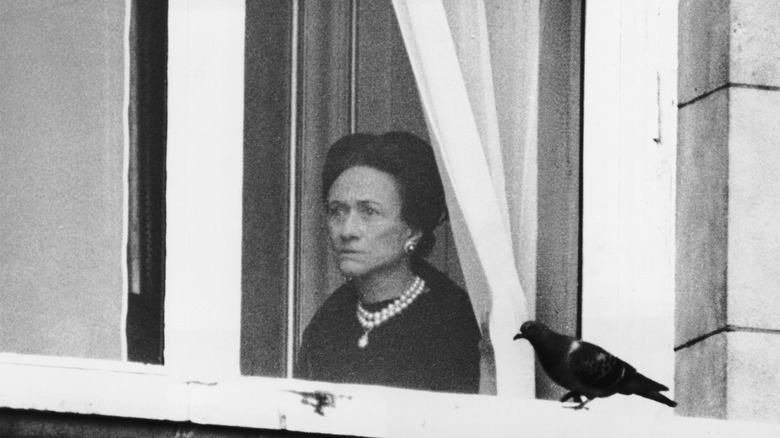
King Edward VIII abdicated his position in 1936 in order to marry American divorcée Wallis Simpson. His controversial decision put his brother George on the throne, thus paving the way for his daughter Elizabeth to follow. Edward died in May 1972, just weeks before the Trooping the Colour celebration. Cameras caught his widow Simpson, who had already led a tragic life, solemnly viewing the parade from a window that June. Had this happened today, the duchess' pic would be all over social media.
This royal sister got a free ride
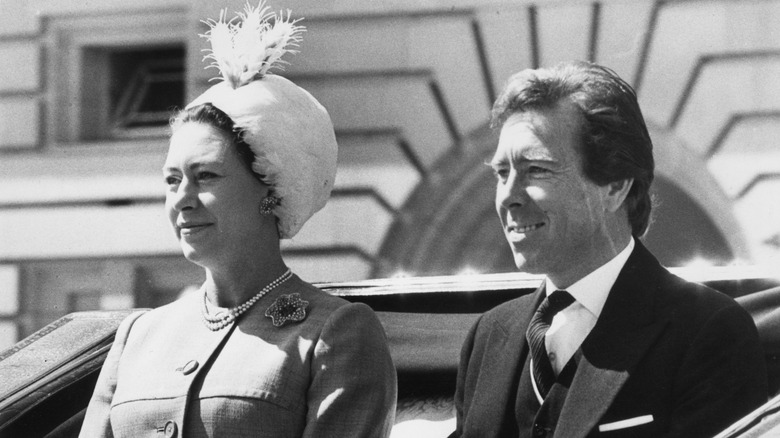
The palace may have been a bit embarrassed about Princess Margaret's party days, but she was still the younger sister of the queen, and as such she was entitled to certain privileges. Among them: riding in a carriage during Trooping the Colour in 1973. Her feathered cloche and collarless jacket were perfectly in style for that time. Accompanying her was then-husband Antony Armstrong-Jones; their marriage would end in a headline-making divorce just three years later.
A future king was under the huge hat
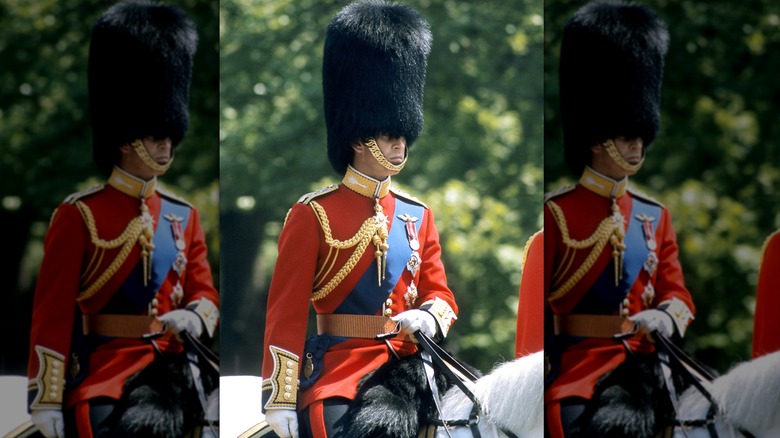
It's traditional for royal family members who have served in the military to ride in the annual parade. Then-Prince Charles cut a fine figure in 1976 as he sat on his mount. He wore a bearskin cap, the traditional fur hat with a chinstrap which is used in the formal dress uniforms of certain regiments. Bearskins stand an impressive 18 inches tall, yet they're surprisingly light; the frame is an open weave with a fur covering. Still, we hope it wasn't too hot that day!
Like father, like sons
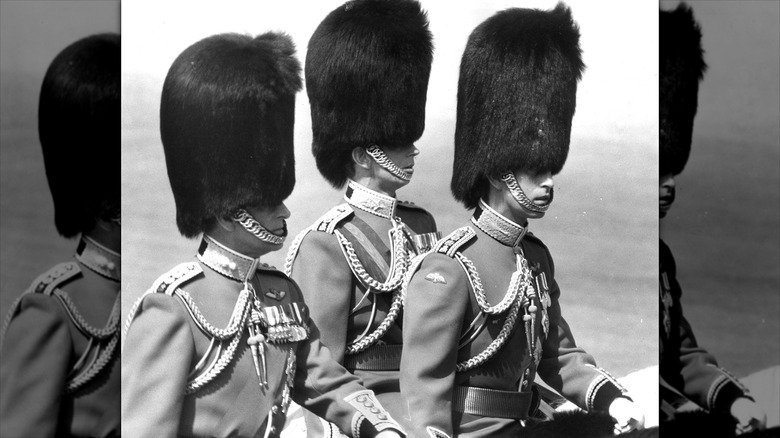
The royals have a long history of military service and leadership, which means many of them have participated in the Trooping the Colour tradition. In 1978, Prince Philip and his oldest and youngest sons, Prince Charles and Prince Edward, wore ceremonial Household Division uniforms, complete with bearskin hats, for the procession. In 2017, the Duke of Edinburgh opted to wear civilian clothing for the event for first time in six decades, having announced his forthcoming retirement from public service.
The queen and her real-life Black Beauty
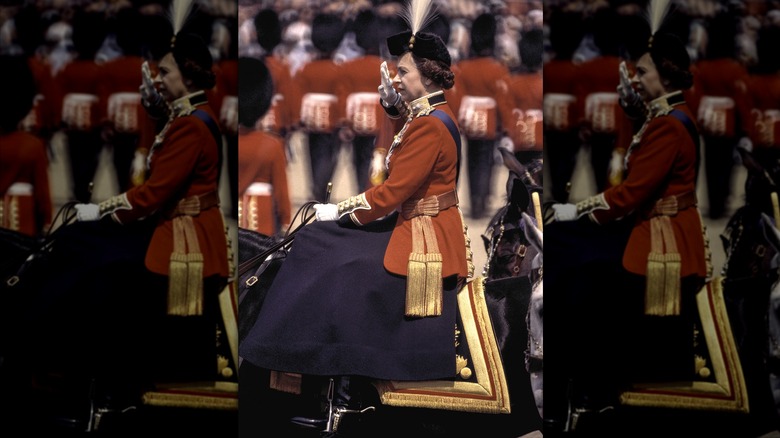
In this photo from 1978, Queen Elizabeth II saluted the assembled troops on horseback. Her Majesty rode in the parade nearly every year from 1947 until 1986, in the process partnering with a succession of horses specially chosen for the job. The magnificent black mare seen here is Burmese, gifted to the queen by the Royal Canadian Mounted Police. The two were a fixture of the ceremony starting in 1969 and until Burmese was retired in 1986. The queen opted to stop riding horseback in the parade after that; instead, she sat in a royal carriage.
The queen followed a centuries-old women's protocol
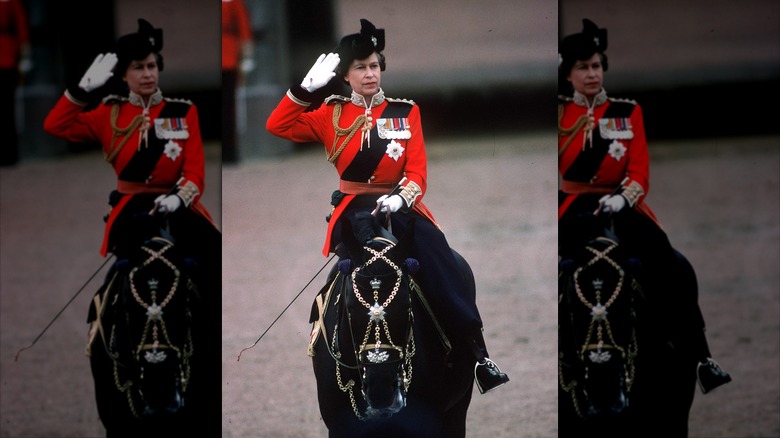
Her Majesty, again on Burmese, was photographed on her magnificent black mare in 1979. As in previous years, she wore the traditional long military dress skirt and rode sidesaddle. The practice began nearly 600 years prior to this photo being taken, when it was considered unseemly for women to straddle a horse, not to mention an uncomfortable task in heavy skirts. Outside the parade grounds, it was quite a different story. The queen wore equestrian pants to ride her beloved horses in the usual way during her private moments at Windsor Castle, Balmoral, and Sandringham.
A royal family greeting
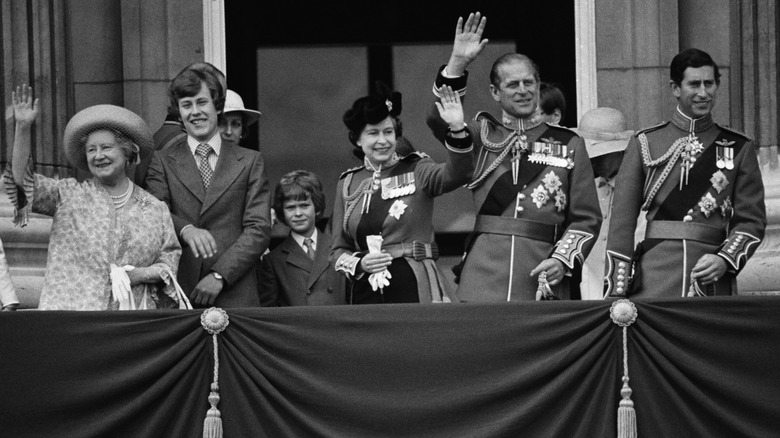
In 1979, Buckingham Palace's balcony was packed with royalty. Front and center was the queen, likely just back from her ceremonial ride. To her right were her husband, Prince Philip, and the future King Charles III in his dress uniform. On the far left stood the sovereign's mother, Elizabeth the Queen Mother (properly turned out in a broad hat and gloves). Believe it or not, just two years later, the world would be watching Charles' wedding to Diana Spencer, marking the start of a drama-filled and ultimately tragic union.