

Whatever Happened To Dick Cavett? What He's Been Up To Since His Talk Show Ended
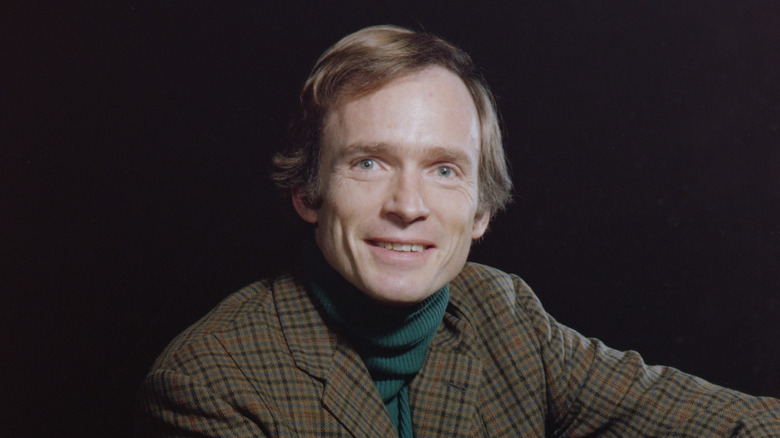
For those looking back at the history of late-night television during the 1970s, it's tempting to focus on the most famous moments of Johnny Carson's "Tonight Show." It's true that Carson ruled the late-night landscape for three decades, yet for a period in the late 1960s and early '70s, viewers were given another alternative with "The Dick Cavett Show." Premiering on ABC in 1968, the talk show featured erudite, intellectual, and wonderfully witty host Dick Cavett conducting long-form, probing interviews with the who's who of celebrities.
Far more than Carson, Cavett leaned into the counterculture of the era, eagerly interviewing rock stars such as Janis Joplin and Jimi Hendrix. Cavett also retained a fascination with old Hollywood, which led to discussions with long-in-the-tooth legends like Groucho Marx and Orson Welles. He also welcomed authors, playwrights, politicians, and more. It was the kind of show where a conversation could break out between surrealist artist Salvador Dali, baseball legend Satchel Paige, and silent-film star Lillian Gish (that actually happened, by the way).
ABC canceled "The Dick Cavett Show" in 1974. That might have been the end of "The Dick Cavett Show" (or at least that particular iteration of it), but that certainly wasn't the case for its host. To find out more, read on to explore whatever happened to Dick Cavett and what he's been up to since his talk show ended.
He played himself in movies and TV and hosted SNL
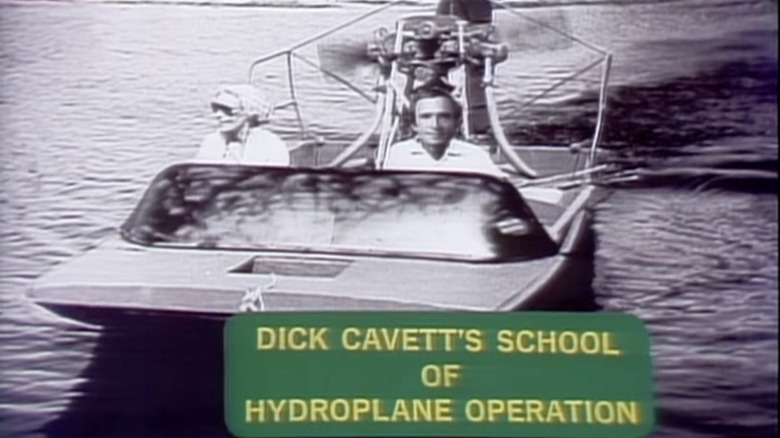
After his ABC talk show was axed, Dick Cavett (who'd started off as an actor) parlayed his celebrity status into a series of TV and film roles. In those projects, he was invariably cast as himself. That was a role he played — and quite hilariously — in TV series ranging from sitcom "The Odd Couple" to daytime soap "All My Children." Cavett also played himself on the big screen in "Power Play" and, more famously, Woody Allen's Oscar-winning comedy "Annie Hall," in which Allen's fictional TV comedian character, Alvy Singer, appears as a guest during a surreal interview on "The Dick Cavett Show."
During those years, Cavett also appeared on other talk shows, including "Dinah!" and "The Mike Douglas Show." "I like going on other people's shows ... I'm always a good guest on a talk show. This is just a fact, not an opinion, Cavett said confidently, in a 2015 interview with the Television Academy Foundation. "I just know I'm always going to be good because I know how to do it."
Meanwhile, Cavett may not have been among the late-night hosts that got their start on "Saturday Night Live," but he does hold bragging rights as one of the show's earliest hosts, appearing in both the first and second seasons. "That was fun and scary hosting 'Saturday Night Live,'" Cavett recalled of working alongside the original SNL cast.
Dick Cavett pivoted from TV to Broadway
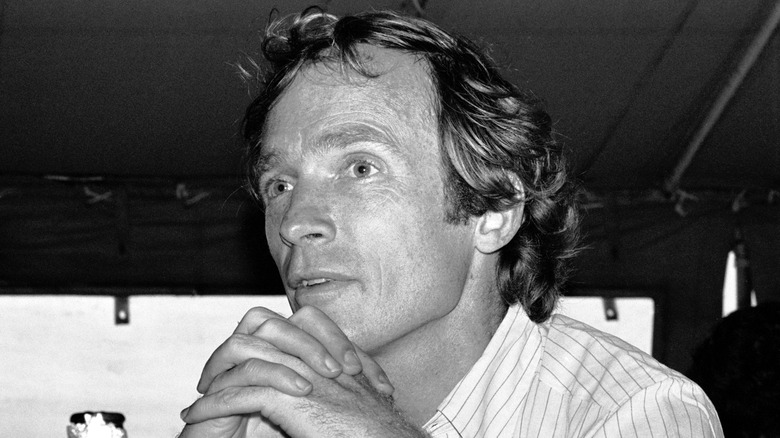
Dick Cavett made a move that few would have expected when he was cast in the leading role in a Broadway play. Written by playwright Simon Gray, "Otherwise Engaged," is a comedy focusing on publisher Simon, who is trying to enjoy a peaceful day to himself but is continually interrupted. Cavett stepped in to replace actor Tom Courtenay in the role, making his Broadway debut in July 1977. Under the direction of famed director Harold Pinter, Cavett proved a successful draw, and the play ran for several months before closing that October.
Cavett wasn't actually a novice, having started his career as an actor before shifting to television, initially as a writer for "Tonight Starring Jack Paar," which led to stand-up comedy, and then to hosting his own TV talk show. Speaking with The New York Times in 1981, he described his time on Broadway as "among the happiest weeks of my life. I loved every single minute of it. I wish I could have done it for a year.”
However, he was also quick to highlight his limitations, explaining that even if he did more acting in the future, it would be unlikely he'd be starring in, say, "King Lear," or "Death of a Salesman." ”I don't have any illusions about my qualities as a serious actor,” Cavett conceded.
Dick Cavett went to Sweden to interview ABBA
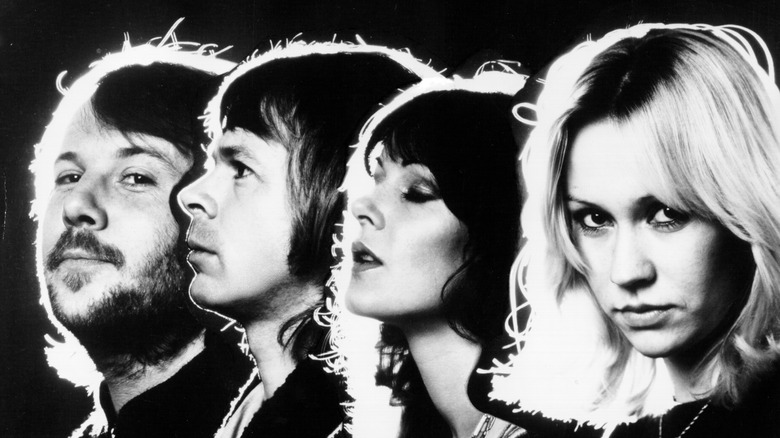
In the late 1970s and early '80s, there were few musical groups more popular than the Swedish quartet ABBA. In 1981, Cavett wound up traveling to Stockholm to interview them for a worldwide TV special that also included a concert to promote the group's upcoming album "The Visitors."
Cavett had been hand-picked by the band, believing he would be the ideal interviewer. "We thought long and hard and wanted to find someone who could make our 10th anniversary a memorable one," ABBA founder Björn Ulvaeus told a Swedish newspaper (via ABBAonTV.com). "We wanted someone who was fun and the thought came up 'Dick Cavett'. He is very skilled and humorous. We wanted a mix of singing and interviews." Ultimately, Ulvaeus was satisfied with the choice they'd made. "A happy conversation," he said of their chat, "more than just an interview!"
He co-starred with Freddy Krueger and Beetlejuice
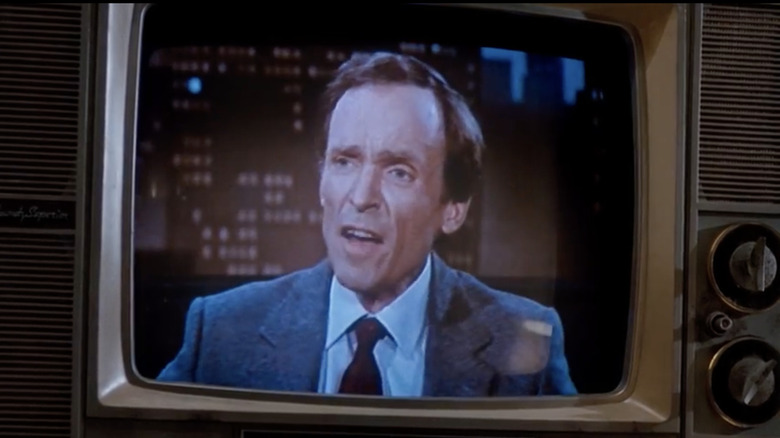
As the 1970s segued into the '80s, there was still high demand for Dick Cavett to play himself onscreen. That occurred in numerous TV series, including a 1983 episode of "Cheers," the drama "Hotel" in 1984, the sitcom "Kate & Allie" in 1986, along with "Amazing Stories" and "Guiding Light" that same year. He also appeared in seven episodes of the soap "The Edge of Night" — this time, for a change, playing someone other than himself, shady criminal Moe Eberhardt.
He returned to playing himself in the 1987 fright flight "A Nightmare on Elm Stree 3: Dream Warriors," appearing in a brief scene in which he's seen on a television being watched by one of the teenage targets of murderous maniac Freddy Krueger. As Cavett interviews Zsa Zsa Gabor, the victim — struggling to stay awake — succumbs to sleep, at which point Cavett transforms into Krueger and attacks Gabor with his razor-tipped gloves.
Arguably, Cavett's most high-profile movie role in that decade was in the 1988 comedy "Beetlejuice," playing a pretentious fellow named Bernard. Bernard has the misfortune of being one of the dinner guests of Delia Deetz (played by Catherine O'Hara, who's transformed from Canadian "SCTV" star to "Schitt's Creek" legend), who meets the title character in person while breaking out into a supernaturally spontaneous dance routine set to Harry Belafonte's "Day-O." Looking back at shooting that scene, star Winona Ryder recalled being starstruck by Cavett. " Dick Cavett! That was a big one for me," Ryder told Entertainment Weekly in 2024.
He opened up about his struggles with depression
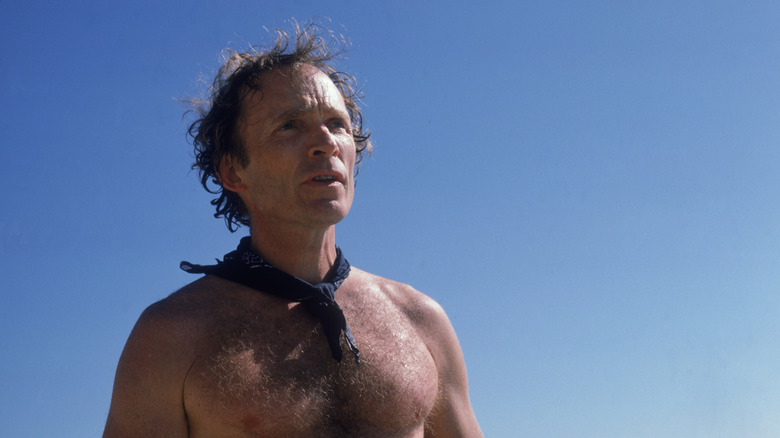
While celebrities opening up about their struggles with mental health had become de rigueur by the 2020s, it was certainly something that was not discussed in the early 1990s. It was Dick Cavett who busted that particular taboo with an unvarnished, remarkably candid interview with People in 1992 in which he revealed his lifelong struggle with depression. "Everything turns sort of colorless [...] You find yourself not wanting to go out of the house. You lose all sense of self-esteem," Cavett explained during a 1992 press conference, as reported by the Baltimore Sun. "You're in a permanent state of dismal, worthless, black despair that will not end no matter what anybody tells you."
Cavett turned to modern medicine and found relief in electroconvulsive therapy (ECT), in which small electric currents are passed through the brain. "In my case, ECT was miraculous," Cavett revealed during his interview with People (via ABC News). "My wife was dubious, but when she came into my room afterward, I sat up and said, 'Look who's back among the living.' It was like a magic wand."
Cavett's depression led to a notorious incident in 1997, when he failed to show up for a taping of a radio show. When he was sued for $35 million over breach of contract, Cavett's lawyer argued he was not able to appear because he'd experienced a manic depressive episode. The lawsuit against him was ultimately dropped.
Dick Cavett returned to Broadway
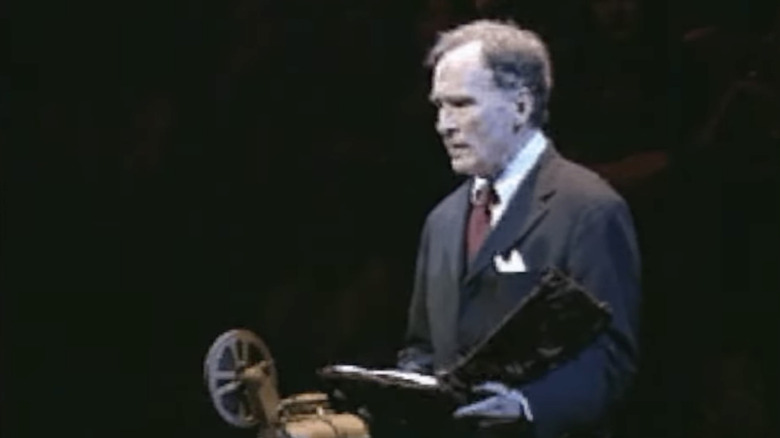
Starring in that 1977 production of "Otherwise Engaged" was not Dick Cavett's only experience on the Great White Way. A decade later, he joined a 1988 Broadway production of the Stephen Sondheim musical "Into the Woods," taking over the role of the narrator during the summer. Cast member Chuck Wagner shared his reminiscences of working with Cavett in an interview with BroadwayBox. "Dick was a huge star and an amazing gentleman ... I am still in awe of his power, and will always treasure working with him," Wagner recalled.
Cavett made one more return to Broadway in 2000, when he once again took on the narrator role, this time in "The Rocky Horror Show," part of a cast that also included rocker Joan Jett. The show's producer, Jordan Roth, told the Observer that casting Jett and Cavett represented his desire to create "this sort of outlaw, whatever-happened-to-these-people-that-you-loved-and-still-want-to-party-with show."
"The Rocky Horror Show" is not a typical Broadway musical, in that fans are not only encouraged but expected to yell at performers and throw various items at them at specific points in the plot. This, Cavett explained during a 2000 interview with Theater Talk Archive, was new terrain for him, but was not entirely unenjoyable. "The fun for me, and in many cases for the audience, is the shouting out," he said, "some of which are traditional, some of which are invented on the spot."
His efforts to rebuild his house after it burned down inspired a documentary
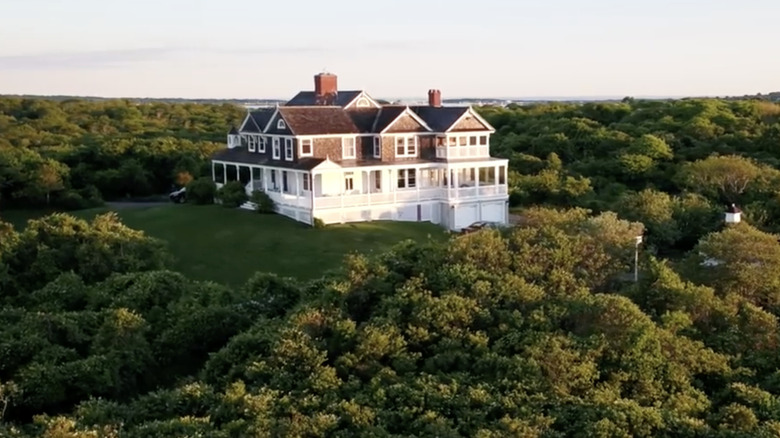
In the late 1960s, Dick Cavett and his wife, actor Carrie Nye, rented a historic mansion in the Hamptons, paying just $1,000 for the entire summer. They later purchased the home, dubbed Tick Hall, which at the time was a huge expense. "I'm a struggling beginner in show business," he told the New York Post in 2017. "I'm lucky to have a two-room apartment."
The couple lived there happily for decades, throwing legendarily star-studded parties attended by the likes of Marlon Brando and Mick Jagger. Then, in 1997, tragedy struck when a fire broke out while they were in New York. His beloved Tick Hall burned to the ground. When he saw the charred remains, with absolutely nothing left, he couldn't process it. "The mind can't quite take it in," Cavett recalled. "It's like the brain protecting itself. You just don't believe it."
He began the process of rebuilding; with the original blueprints long gone, the home — which had been built in 1883 — was reconstructed entirely from memory and architectural forensic evidence, replicating it precisely, right down to the tiniest detail. The process took three years, with the journey chronicled in a documentary titled "From the Ashes: The Life and Times of Tick Hall." In 2017, Cavett put Tick Hall on the market, with an asking price of $62 million. It sold in 2021 for substantially less, $23.6 million.
He mourned the loss of his wife, Carrie Nye
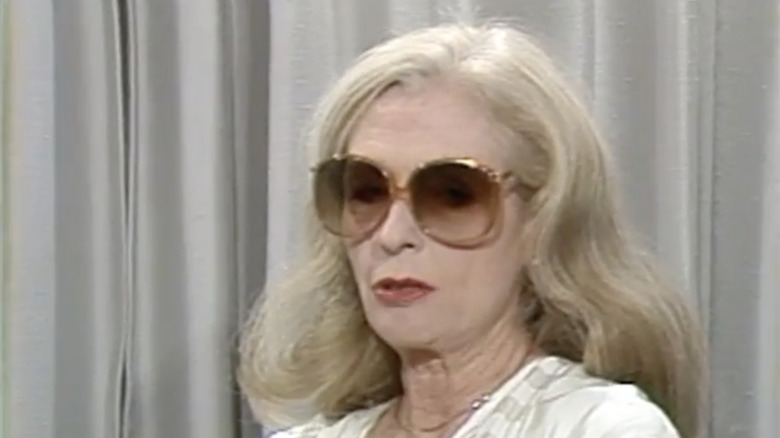
Once their beloved Tick Hall had been reconstructed, Cavett and his wife, Carrie Nye, moved back in. Sadly, they would not have long to enjoy the home together. She was diagnosed with lung cancer and died in July 2006. As Cavett told the Los Angeles Times, he would remember Nye as being "devoted and professional and disciplined in her art," and that she'd earned a reputation for being "wickedly witty." He also believed that a lifetime of smoking had led to her death. He told the Times that "she tried to quit a couple of times," but puffing on a cigarette "became part of her early persona; perhaps based on Tallulah Bankhead or Marlene Dietrich."
Four years later, Cavett revealed that he'd gotten married to Martha Rogers, an author and adjunct professor at Duke University. Recalling how he found love again after the death of his first wife, Cavett noted that they'd met randomly on a New Orleans street 30 years earlier, and had stayed in touch. She sent him a note after Nye's death, and they reconnected, and the rest was history.
He wrote a blog for the New York Times
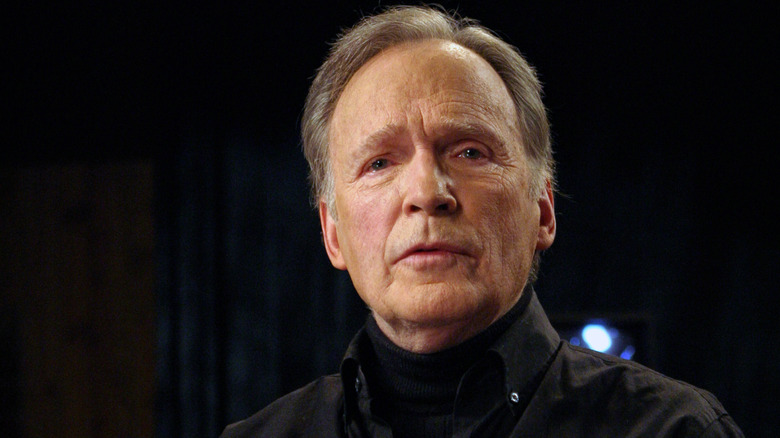
In 2007, Dick Cavett embarked upon yet another career, this time as a columnist for The New York Times. Topic-wise, Cavett was all over the map, writing about disgraced ex-president Richard Nixon, ghosts, and even a recollection of attending a high school reunion. In that latter column, Cavett noted some of the more bizarre aspects of meeting with people he hadn't seen in decades, writing, "Would I have the almost surreal experience of actually signing autographs for my classmates? (Yes.)"
A number of those columns were later collected in a book, "Talk Show," published in 2010, and he lent his voice to the audiobook version. Cavett, however, continued writing for the Times until 2013. His final column tackled the topic of sex, and he revealed himself to be less than prudish on the subject. "I am always shocked that there are still a handful of defenders of the dubious practice of abstinence, surely the worst idea since chocolate-covered ants," he wrote.
He's resurrected The Dick Cavett Show multiple times over the years
While ABC may have canceled "The Dick Cavett Show" back in 1974, that was far from the end of his career as a talk show host. In fact, there were several other iterations of "The Dick Cavett Show" over the years. The first arrived in 1977, airing on PBS until 1982. Then he revived the format for another show, which ran on the USA Network from 1985 until 1986.
In September 1986, ABC revived "The Dick Cavett Show" as a late-night offering. This version, however, was a far cry from his earlier show for the network, in that it was only a half-hour long, and aired just twice a week, on Tuesdays and Wednesdays. It also didn't last very long; in late November of that same year, ABC decided to pull the plug on all its late-night programming, including Cavett's show, which, he told The New York Times, he had yet to be informed of. "I don't think I have been notified of anything,” Cavett said. He returned to television in 1989, hosting a long-running talk show on CNBC that continued until 1996. Finally, a series of specials on the Turner Classic Movies channel aired from 2006 to 2007, in which Cavett introduced curated interviews from his original show, with a focus on Hollywood stars.
In 2007, DVD collections of his more celebrated interviews were released, with Cavett using his New York Times platform to plug the discs. "I could go on and on, but as I said above, I'm just a bit uncomfortable selling myself," he wrote in a 2007 column. "And I feel silly guaranteeing that the product is worth it. But it is," he continued, recycling his boast about being a great talk show guest. "That's merely a fact, not an opinion."
Dick Cavett returned to the stage in an Off-Broadway play
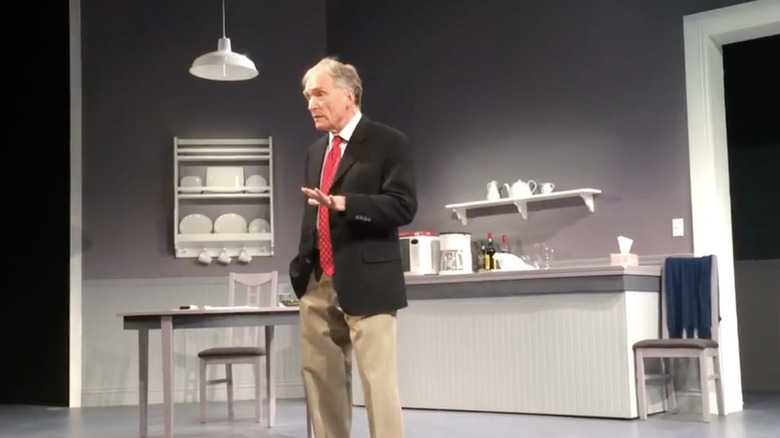
More than a decade after his last run on Broadway, Dick Cavett returned to the stage in 2014 — this time, Off-Broadway. Interestingly, he was playing himself, the first time he'd ever done so onstage, for the Abingdon Theater Company's production of "Hellman vs. McCarthy." In writing the play, playwright Brian Richard Mori used transcripts from Cavett's talk show and enticed Cavett to perform. "It's a little odd playing yourself," Cavett told The New York Times in 2014 of his "Hellman vs. McCarthy" role, jokingly adding, "The funny thing is I was the second choice for the role."
The play dramatized the furor that took place when author Mary McCarthy appeared on his PBS talk show in 1979 and, when asked which authors she found to be overrated, singled out Lillian Hellman, describing her as "dishonest." Hellman responded by suing McCarthy, Cavett, and the PBS affiliate WNET. The lawsuit went on for years, costing thousands of dollars for everyone involved, eventually leaving McCarthy teetering on the brink of bankruptcy. The legal battle finally ended when Hellman died. "Both women's health suffered from it," Cavett told The Hollywood Reporter in early 2015, when the show was taken to Los Angeles for a run at Beverly Hills' Saban Theater. "And barrels of ink were spilled about the controversy, virtually all of it against Lillian. But that didn't stop the old bag."
He recovered from a stroke and then starred in a music video
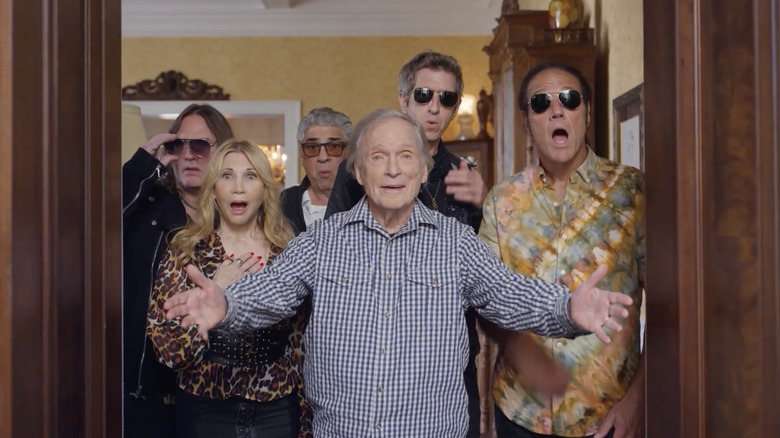
In early 2025, 88-year-old Dick Cavett revealed that he'd suffered a stroke a few years earlier. He was, he told Nebraska Public Media, pretty much recovered, but had taken to using a cane or a walker to get around as a precaution. "I don't feel permanently dramatically scarred or wounded by it," Cavett said. "A lot of people cannot say that. A stroke is a wicked, wicked thing."
Proof of his recovery was demonstrated when he appeared as the guest of honor in the 2024 music video for a song called "Dick Cavett" from musician Marc Ribler, who also appears in the video. Others featured include "Sopranos" actors Maureen Van Zandt and Vincent Pastore (at least partially revealing whatever happened to the cast of "The Sopranos"), in addition to a gaggle of celebrities via clips from classic moments from "The Dick Cavett Show."
As Ribler said in a statement to The Whole Kameese, he was inspired to pay tribute to Cavett for his role in interviewing so many rock legends. "I had a dream that one fine day I wrote a song called 'Dick Cavett.' In some 5th dimension magical, mystical reality, Dick heard the song, loved it and asked if I'd like to come to his house to make a music video," he said. "Either I'm in a '60s time warp tripping my a** off, or this dream has come true."