

Met Gala Outfits From The '70s You Probably Wouldn't See On The Carpet Today
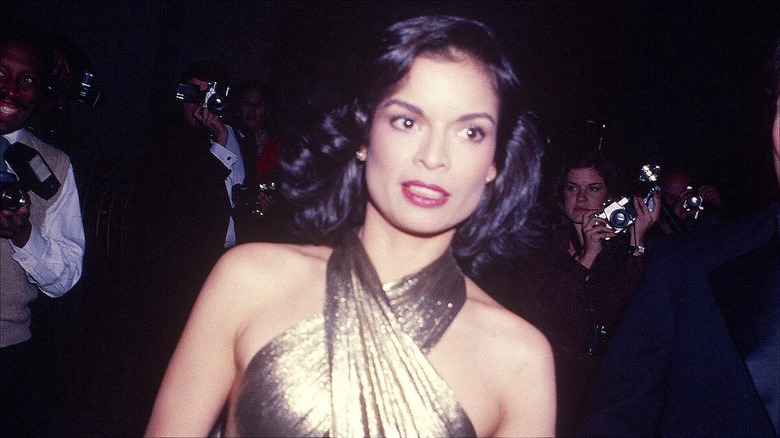
Often referred to as "Fashion's Biggest Night," the Met Gala happens annually at the Metropolitan Museum of Art in New York City and becomes the subject of fashion discourse for weeks afterward. When it comes to everything you should know about the Met Gala, some of the most important things to note are that it's hosted by former Vogue editor-in-chief and current Condé Nast chief content officer Anna Wintour, it's been held on the first Monday in May every year since 2005, and tickets cost around $100,000 — if you're lucky enough to get invited, that is.
Since its inaugural event in 1973, the Met Gala has set out a specific theme for attendees. Some of its most memorable themes over the years include 2023's "Karl Lagerfeld: A Line of Beauty," 2018's "Heavenly Bodies: Fashion and the Catholic Imagination," 2010's "American Woman: Fashioning a National Identity," and 2005's "The House of Chanel," to name just a few. Recent years have seen fashion at the Met Gala become more and more avant-garde, structured, and over the top. Particular highlights have included South African singer Tyla's sand sculpture dress, Kim Kardashian's controversial decision to wear a legendary Marilyn Monroe piece, and congresswoman Alexandria Ocasio-Cortez's "tax the rich" dress, which saw her under investigation. But in its early days, the Met Gala was much a much simpler society event that just called for evening wear and designer pieces, with many outfits you probably wouldn't see on the red carpet today.
Gold lamé was never a bad choice
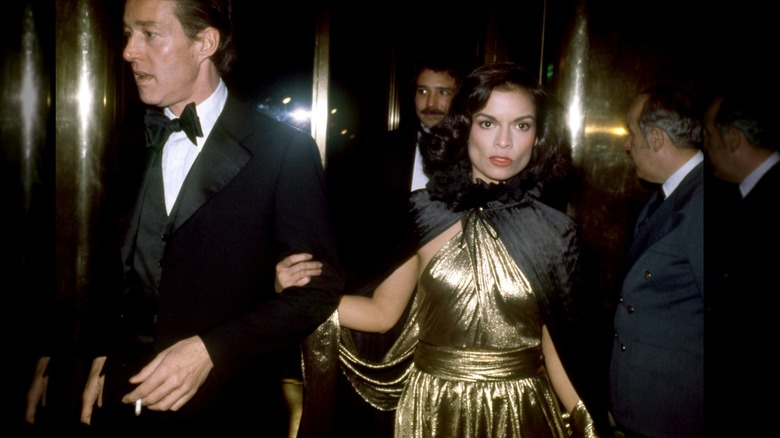
While the Met Gala themes back in the day might not go as all-out as they do these days, the 1977 theme was "A Treasure Trove". It seems appropriate, then, that Bianca Jagger arrived for the event on the arm of designer Roy Halston Frowick — known simply as Halston — wearing a striking gold lamé jumpsuit, while Halston wore a sharp tuxedo with an added waistcoat. These days, Jagger's outfit would definitely need a lot more structure to make an impression.
Big earrings were having their original moment
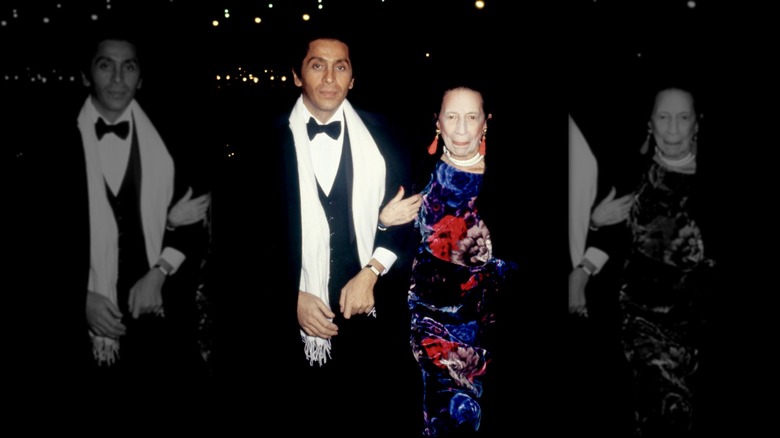
While the silhouette of men's formalwear fashion has changed to favor comfort since the days of the "white tie" style with the creation of the tuxedo, a grand occasion like the Met Gala would warrant something more crisply tailored. Italian designer Valentino added interest to his tuxedo by adding a white scarf, all clean lines next to the red and blue velvet florals, huge red earrings, and pearl necklace of fashion journalist and society icon Diana Vreeland on his arm.
Cher made a splash in a nude illusion
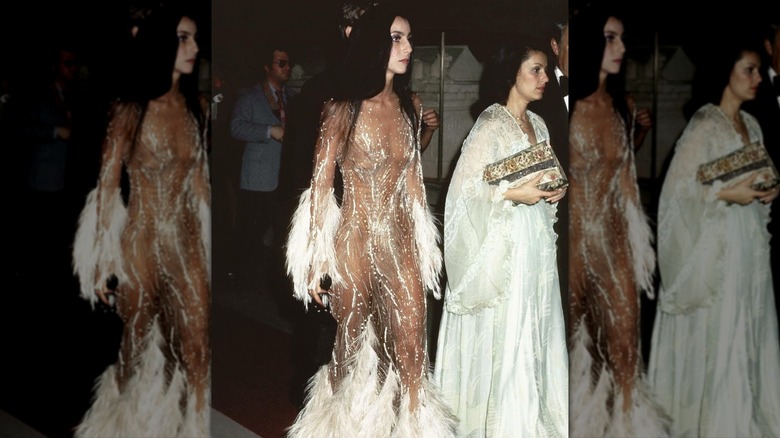
Cher has been a fashion icon for decades. Even if there's a chance Cher's outfit could hit all the wrong notes, one thing she's never done is shy away from daring style. Such is the case when she attended the 1974 Met Gala with prolific designer Bob Mackie in a nude illusion number. "People were horrified," Mackie told Interview (via People). "They thought, that's not fashion, she's just naked at the Metropolitan." The designer isn't known for mincing his words — Mackie once slammed Kim Kardashian for her 2022 Met Gala look.
Socialites gossiped the night away in fur stoles
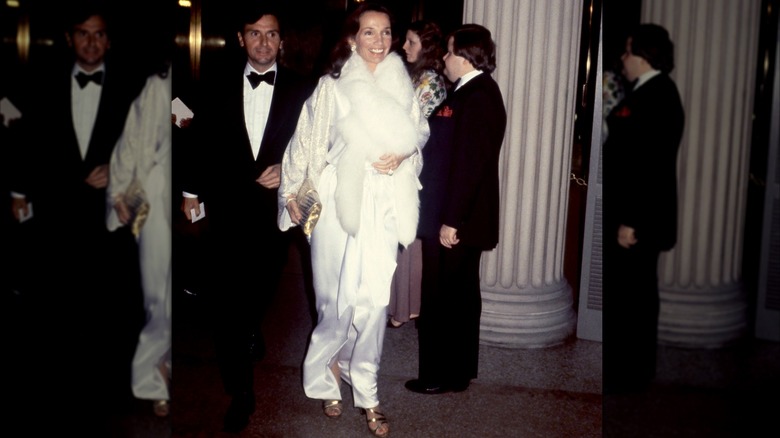
One thing you definitely wouldn't see at the Met Gala these days is an entire fox fur stole like the one socialite Lee Radziwill — younger sister of Jackie Kennedy — wore to the event in 1978. While Valentino's tuxedo could definitely be spotted in a more modern form, Radziwill's would be a big no-no, especially now that New York Fashion Week confirmed in 2025 that they wouldn't be allowing real fur at any of their shows.
Former royalty leaned back on conservative style
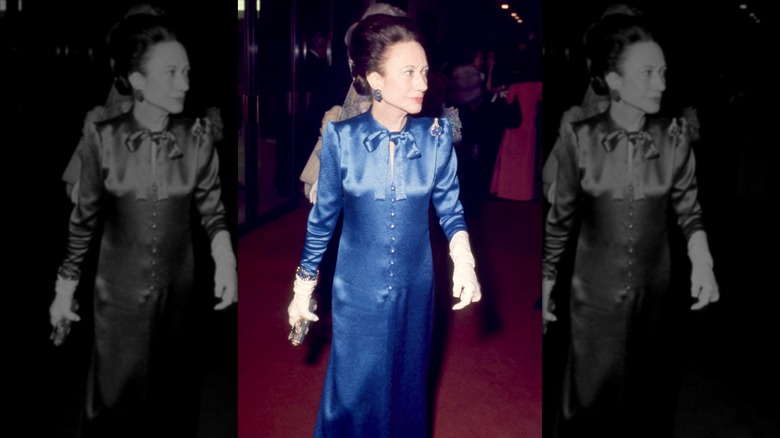
Once upon a time, American socialite Wallis Simpson was married to Edward Windsor, who abdicated his place as the British King in order to be with her. Simpson was known for her style, and designer Roland Mouret once said, "Love her or hate her, everyone is still obsessed by that woman" (via Vogue). While her loose blue dress at the 1974 Met Gala was a gorgeous shade, it would definitely seem too low-key and unstructured if someone wore it in 2026.
The gala was the perfect place for philanthropists
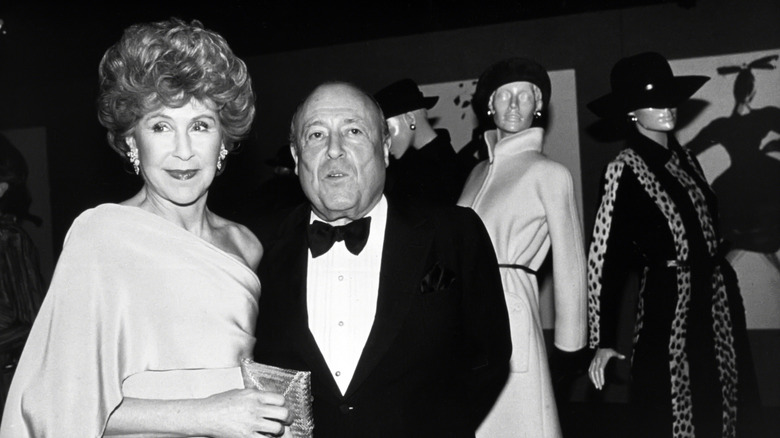
Any New Yorker knows the name Bloomingdale, and in attendance at the 1974 Met Gala was socialite Betsy Bloomingdale, who married into the high-society Bloomingdale family in 1946. Betsy was known for her love of fashion and for having 11 closets for all her clothes. She was the height of fashion at the Met Gala, dressed in a very era-appropriate puff-sleeved evening dress with her hair coiffed into immaculate pinned curls. The puff-sleeve silhouette has since fallen much out of fashion's favor and isn't something you'd be likely to see in the 2020s.
Sparkly togas and kaftans remain antiquated styles
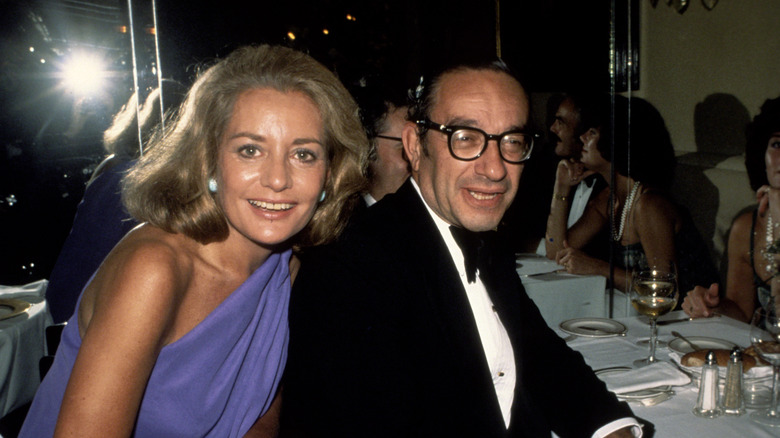
In 1977, TV journalist and queen of interviews Barbara Walters attended the Met Gala with make up and skincare maven Estée Lauder. Both looked like the height of 1970s glam, with Lauder dressed in a sparkly, chiffon, off-the-shoulder toga dress and minimal accessories, while Walters went for a somewhat similar silhouette in a red drape-front kaftan. Their outfits looked chic but would mostly likely seem too unembellished and simple for modern tastes.
Ruched dresses were once considered fancy
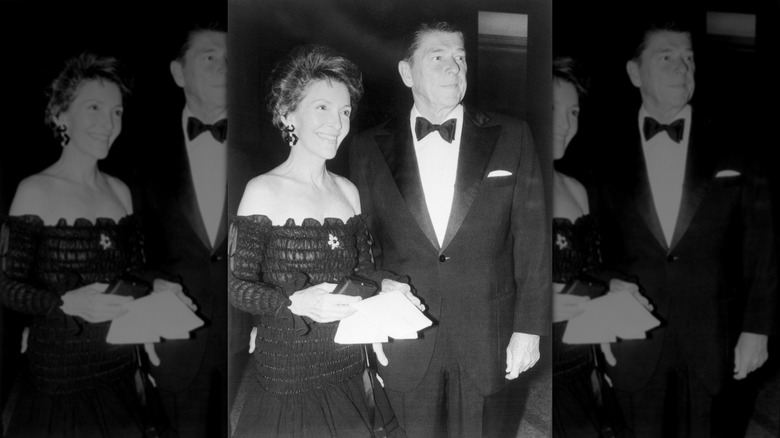
Former US President Ronald Reagan and future First Lady Nancy Reagan attended the opening of the Vanity Fair costume exhibit at the Met Gala in 1977, both looking dapper as they posed in black. President Reagan dressed for the event simply in a dinner jacket with silk lapels and black bow tie, whereas First Lady Reagan wowed in a black Yves Saint Laurent gown with the sort of ruching that seems extremely vintage now, even though it was stunning at the time.
Lamé jumpsuits were all the rage in the '70s
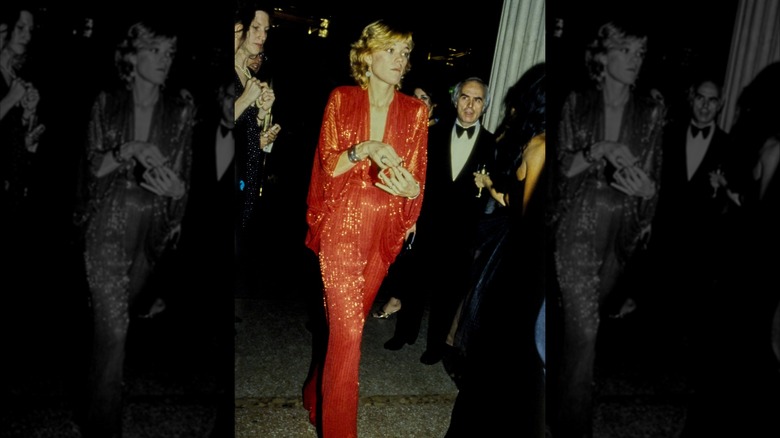
Model and photographer Berinthia "Berry" Berenson was known for her immaculate style, as well as her tragic death as one of the passengers on American Airlines Flight 11. While jumpsuits are still very much having their moment in the late 2010s and 2020s, the particular cut and silhouette of Berenson's orange-red lamé jumpsuit is distinctly 1970s with its high French cut in the seat, big and bold batwing sleeves, and its deeply plunging neckline — not to mention the shimmer of the material itself.
Satin Yves Saint Laurent jackets were the couture of the day
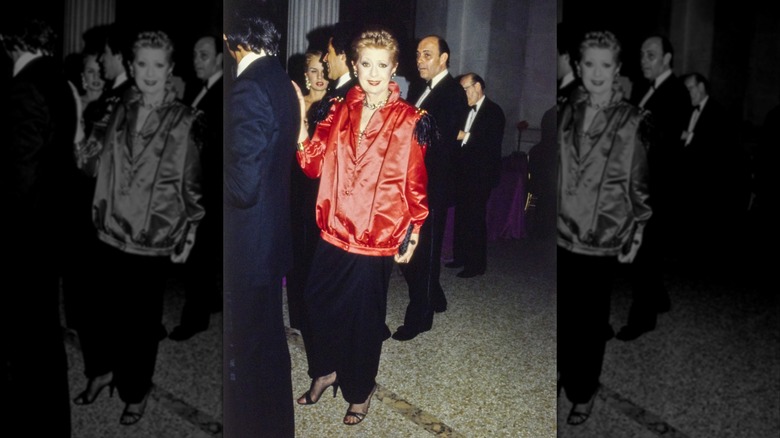
If you're a tastemaker, it seems that to make a splash at the Met Gala in the 1970s you needed to go for something a little bit out of the ordinary. Cue Eve Orton, the former Harper's Bazaar editor who started out at as a fabrics editor, who attended the 1979 gala event wearing a bright red satin jacket by Yves Saint Laurent paired with black trousers and black heels. It looked a little bit like she pre-empted Michael Jackson's "Thriller" music video look several years before 1982.
Ruffles were a very big deal in the late 1970s
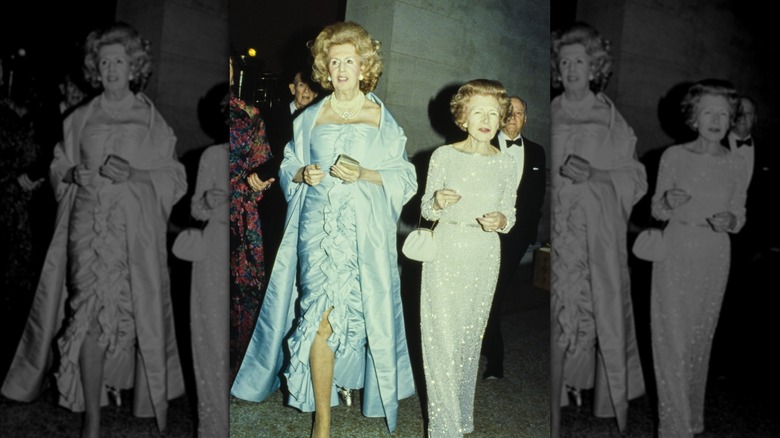
Ruffles definitely had their moment in the '70s; from shirts to skirts to dresses, a ruffle was never out of place. The era was known for mixing Victorian and Bohemian styles, and being a member of high society didn't mean you were exempt from the trends. For instance, philanthropist Audrey Zauderer attended the Met Gala wearing a sky blue Bill Blass gown and matching coat. The dress featured a huge ruffle from the middle of the bust down past the leg split, which would definitely look out of place nowadays.
Silhouettes were big and bold
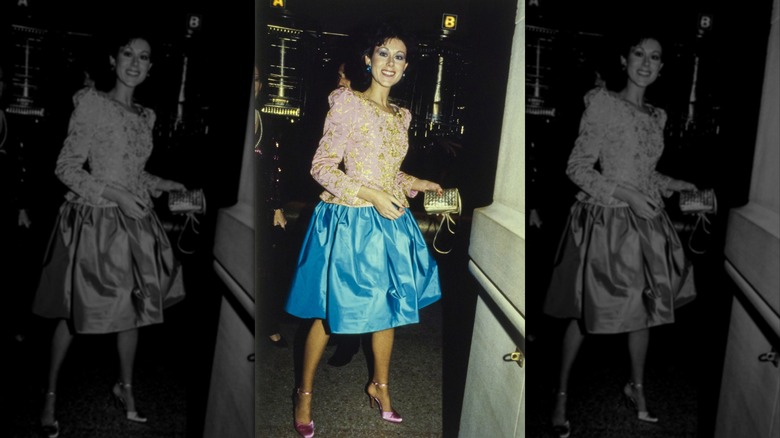
There are strict rules everyone who attends the Met Gala has to follow, but in the past, the rules were usually just that everyone had to wear formal attire — which meant many went looking ready for an appearance at Studio 54. While not as glitzy as some attendees, one guest paired a puffy turquoise Oscar de la Renta skirt with a gorgeous pink and gold jacket that, although very beautiful, would definitely seem tacky by today's standards, even if Oscar de la Renta creations are still very much present at the Gala.
Clashing colors really weren't a big deal
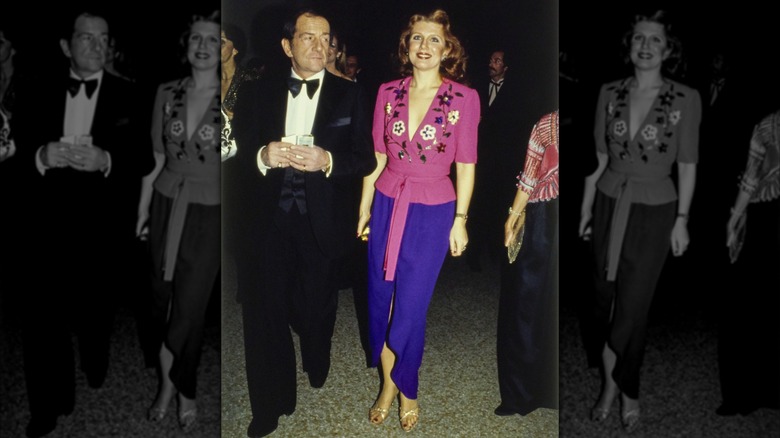
While this particular outfit is far from one of the Met Gala's most outrageous outfits of all time, the truly clashing colors is definitely not something you'd see at the more recent, super-coordinated Met Galas. An unidentified guest at the 1979 Met Gala certainly looks pretty in her pink wrap blouse and purple skirt, but the color clash and simplicity of the outfit would definitely be criticized today — not to mention that the cut and size of her companion's bow tie is distinctly 1970s.
The bigger the fur coat, the better
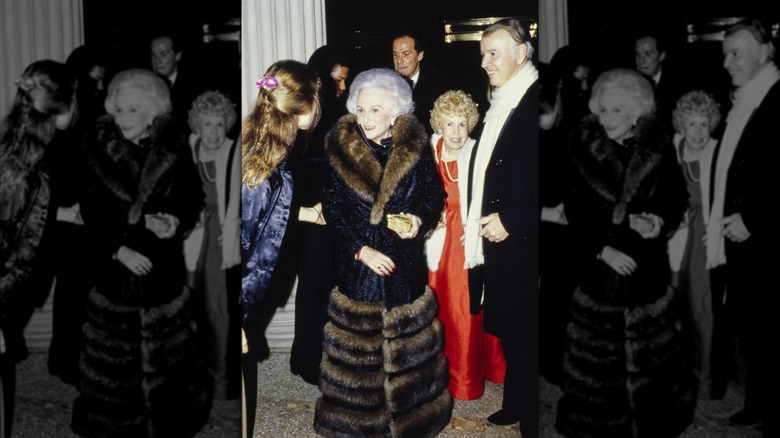
While some looks and trends are acceptable at the time, for civic leader, philanthropist, and doctor Doris Stein, her fur jacket wouldn't be okay to step out in for any event now, let alone the Met Gala itself. Although it's hardly one of the most questionable past Met Gala looks, real fur has certainly had its time and is mostly being phased out (despite recent appearances), so the huge fur trim and skirt of Stein's black coat would most likely be met with a few shocked glances in the current decade.
Velvet was really something to write home about
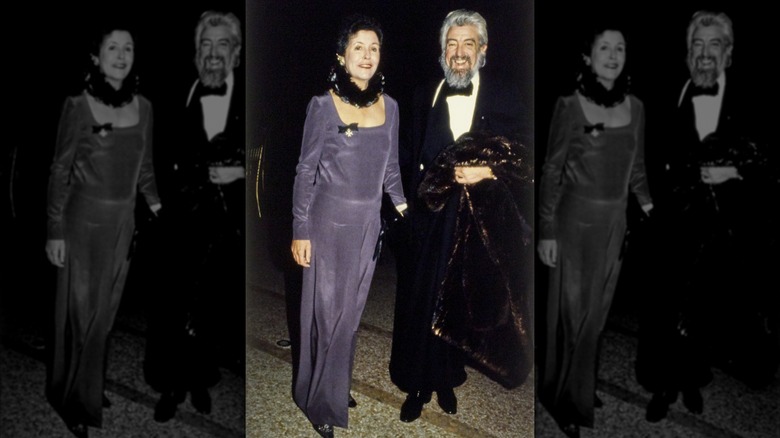
Synthetic fabrics were having their time in the spotlight in the 1970s, especially when it came to the use of polyester for evening wear. However, flashy materials such as sequins, satin, and velvet still dominated the runways and department stores. What that means is that when American journalist and art collector Lily Auchincloss attended the 1979 Met Gala wearing a purple velvet Madame Gres gown, she was right on trend with her fabric choice, even pairing it with a black and silver ruff accessory.
Halston was well represented in the '70s
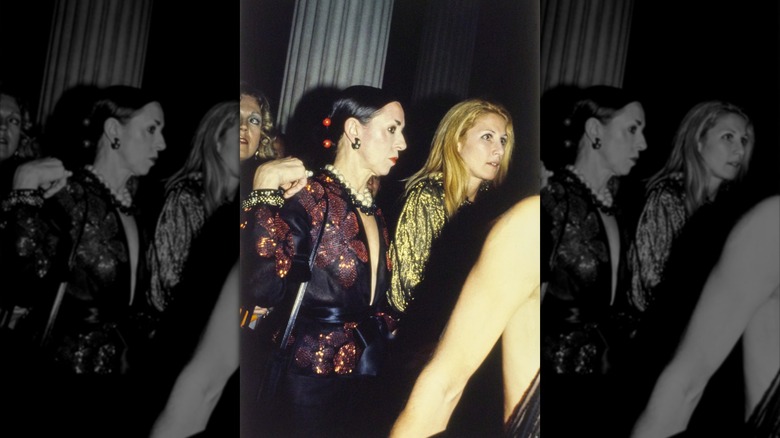
The influence and reach of Halston (aka Roy Halston Frowick), whose career hit its peak in the 1970s after popularizing the fabric ultrasuede, cannot be overstated when it comes to just how many Met Gala attendees in the 1970s wore his designs. His pieces can be seen on former Harper's Bazaar editor D.D. Ryan, along with model and Warhol muse Jane Holzer, who both wore different sparkling ensembles when they attended. You'd be unlikely to see Halston designs at the Met Gala nowadays due to the brand's decline in the '80s.
A royal blue velvet suit definitely didn't go amiss
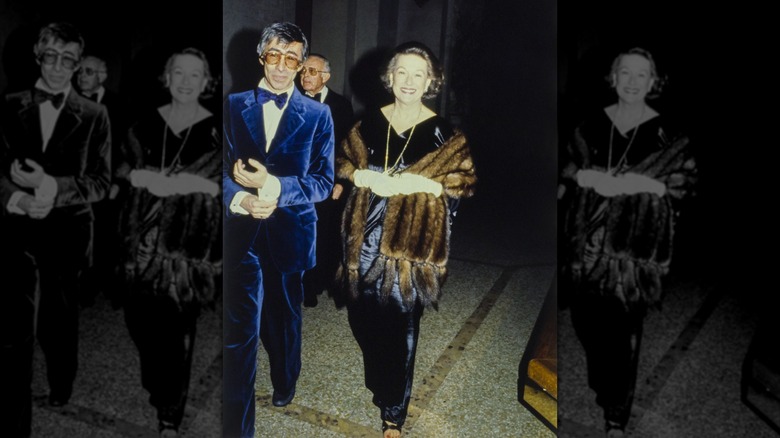
Sometimes, a picture is so of its time, it truly can't be placed in any other decade. Such is the image of artist and philanthropist Jane Cowles attending the Met Gala in the late 1970s accompanied by a man in a blue suit. Between the velvet of the man's suit, his large and droopy bow tie, Cowles' fur wrap made entirely of tails, as well as her shiny, latex-look top, these two look both fabulous but also like the epitome of the 1970s synthetic fabric craze.
Socialites loved fancy formalwear in the late '70s
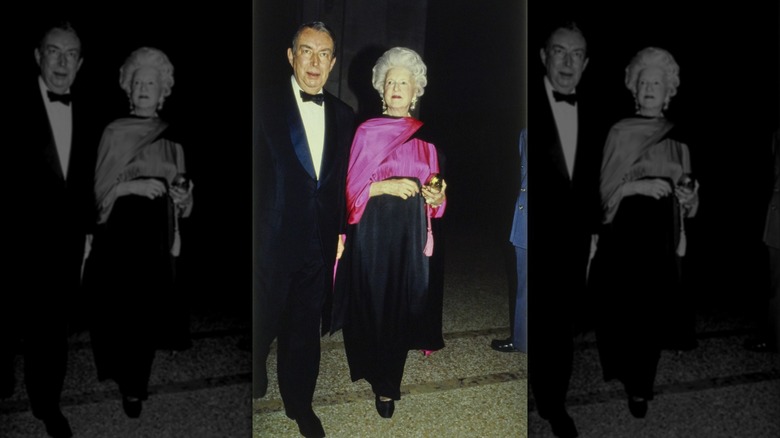
Philanthropist and arts founder Mildred Hilson definitely dressed more low-key for her attendance to the Met Gala in 1979, pairing a black and fuschia pink Yves Saint Laurent dress with close-toed black heels. This really shows that evening wear in the late '70s was leaning towards flashy formalwear. The bold color choice deserves to be celebrated, but the complexity is once again much less than any look you'd see at the Met Gala in the 2010s or even the 2020s, which leans into high-concept, almost surreal fashion.
A little bit of 1980s fashion took its first steps
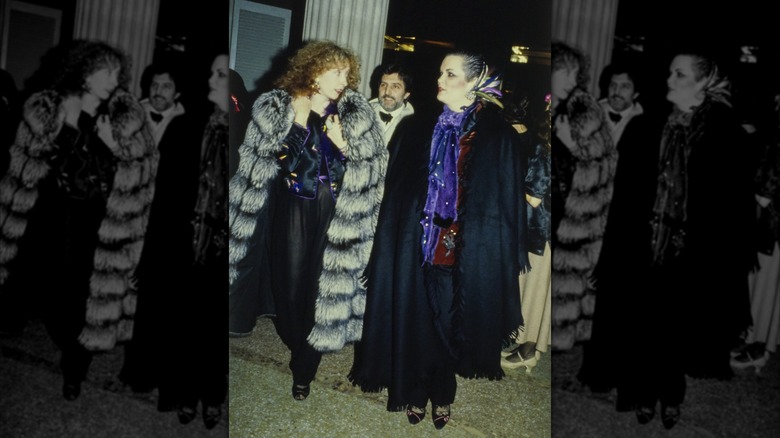
It makes sense that in 1979, the first glimmers of 1980s fashion would start seeping in, especially considering the song "Pop Muzik," which is considered a precursor to what 1980s music would become, was released that year. Journalist Ariane Brenner and an unidentified friend appeared to bring in some of that late '70s to early '80s glamor with cat-eye make up, a bold red lip, huge feather earrings, and layered garments, all very much miles away from the high structure of more modern Met Gala looks.
There were jewel tones as far as they eye could see
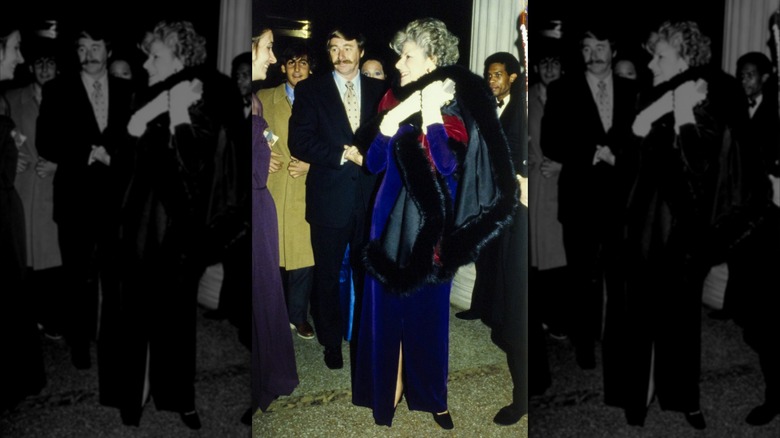
While we tend to associate fashion in the 1970s with muted, earthy tones — which definitely were popular at the time — it's no secret that the height of disco fashion also saw women's evening wear lean more toward looks that were more baggy, more revealing, and also more likely to be in sumptuous jewel tones. We can see this on philanthropist Jane Englehard's Met Gala look, where she paired a comfortable-looking, royal blue velvet dress with a black velvet and fur wrap featured crimson red lining.
It was a great time for a pill-box hat
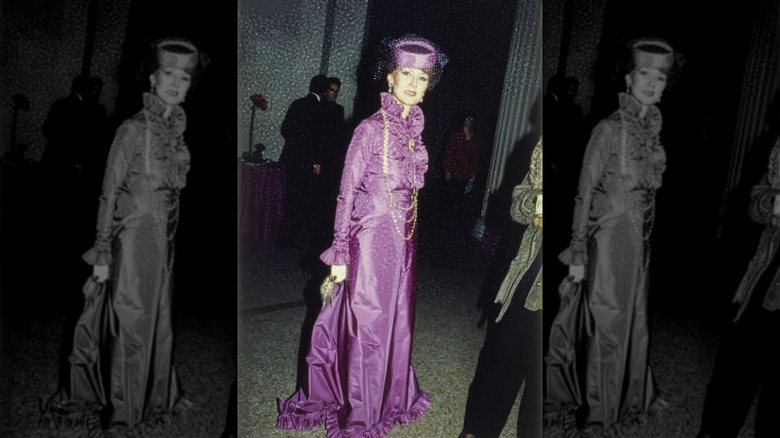
Certain designers become attached to a particular decade, and for the attendees of the Met Gala in the 1970s, those designers tended to be Halston, Yves Saint Laurent, and, to a lesser extent, the hat maker-turned-designer known as Adolfo Sardiña. Best known for his "Chanel jackets" and knitwear, Adolfo's work made an appearance on Met Gala attendee Gladys Solomon, who went to the event wearing a purple Adolfo gown with huge ruffles and matching pillbox hat. Today, pillbox hats are more common among British royals than Met Gala attendees.
You could never go wrong with gold
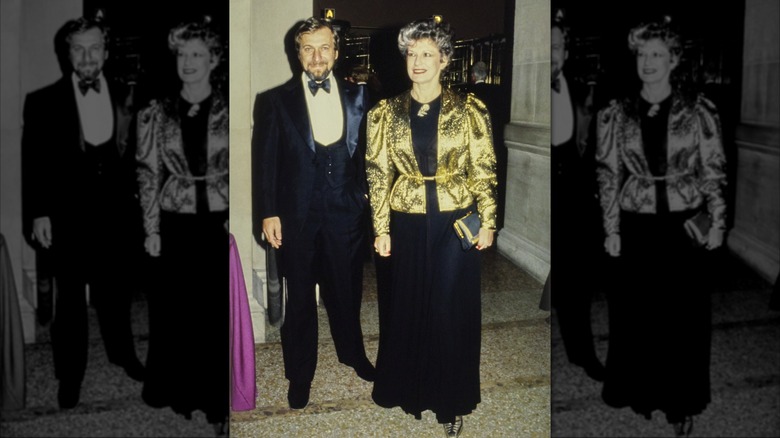
There was certainly enough lamé to go around in the 1970s. Made by weaving together silk or other fibres with metallic threads, lamé's secret is in the weaving process, which creates a smooth base that gives the metallic threads their unique sparkle. It certainly was eye-catching on arts patron Marion Javits, who attended the Met Gala in 1979 wearing a Scott Barrie-designed gold belted lamé jacket over the top of a floor-length black dress and metallic heels, looking very late-'70s disco chic.
Tailored pants were a total hit
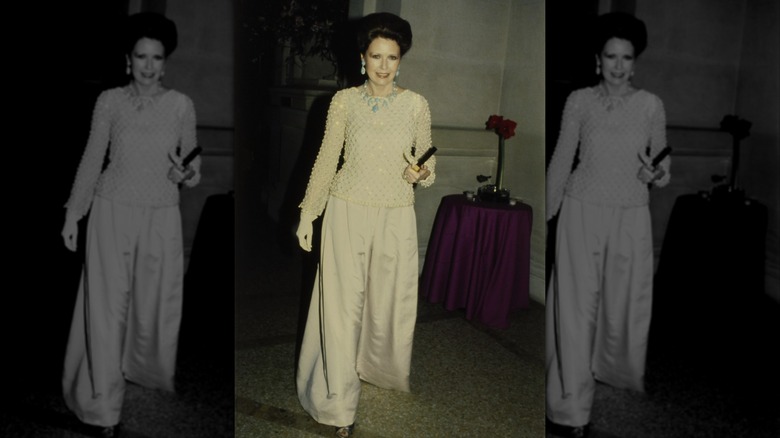
"The fashion of the 1970s ... put the female body on show like never before," wrote Vogue's Lilah Ramzi, and part of that included a shift to more unisex clothing options for women, including tailored trouser suits. This trend can be seen on style icon and charity chairwoman Jean Tailer, who arrived at the Met Gala wearing a pair of wide-legged satin pants designed by Adolfo, along with a jewelled top. Today, wide-legged trousers are a wardrobe staple, making it akin to trying to dress up denim jeans at the Met Gala.
Sparkles on sparkles were an absolute must
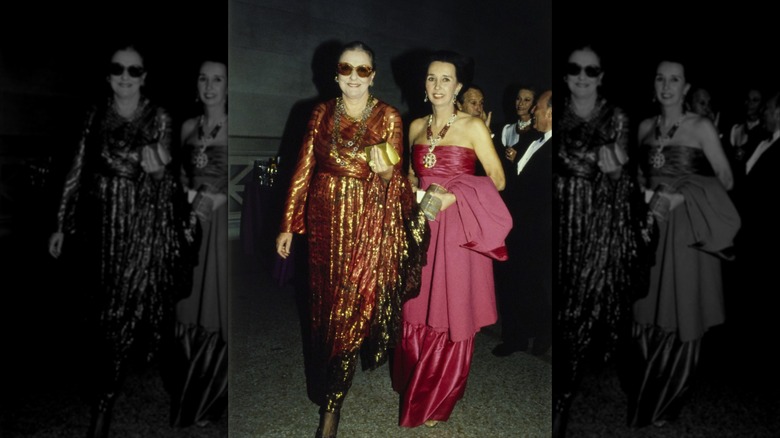
The story of Truman Capote and the glamorous socialite women he referred to as his 'swans' is infamously about high society betrayal, and one of those women happened to be self-styled "Fifth Avenue Princess" Nancy "Slim" Keith, who attended the Met Gala in the '70s decked out in a rust-colored kaftan gown with metallic threads, accessorized with a tiny gold clutch and gold jewelry. Keith's outfit managed to match both earthy and jewel tones, giving her look the ultimate 1970s color palette that folks would be hard-pressed to try and style today.
Tuxedo silhouettes returned to their more classic lines
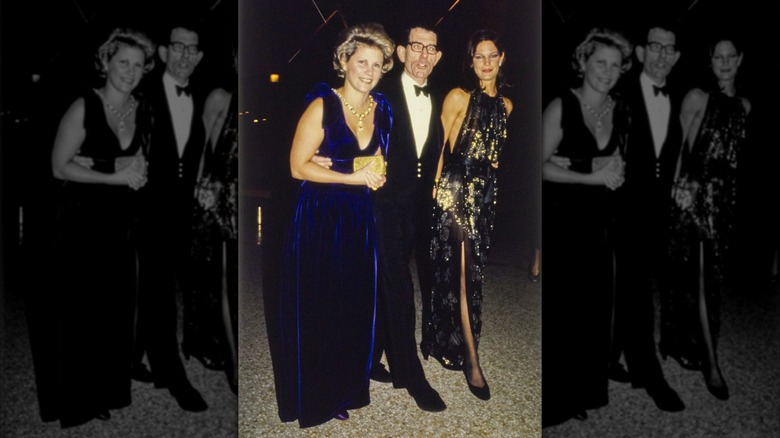
While men's formalwear fashion hasn't quite been through as many changes as formal fashion for women, there was a definite shift in the 1970s that saw the classic tuxedo look reborn, "combined with a return to conventional styling — looser cuts, narrower lapels, and straighter trousers" (via Gentleman's Gazette). This can be seen on Manhattan hotelier Peter Sharp, who attended the 1979 Met Gala in a mostly-classic black tuxedo with a white shirt and black bow-tie — the slight difference being the low button stance his jacket.
Fur stoles paired with velvet and lamé simply isn't done today
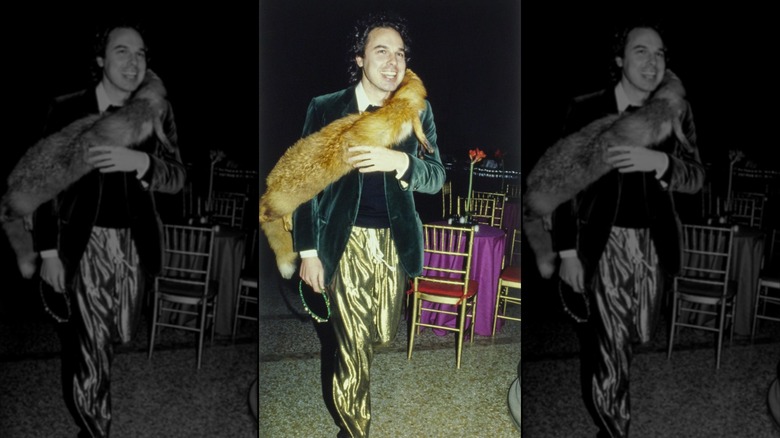
While there are some outfits in recent years that very much should be included in the worst-dressed celebs at the Met Gala list, many of the 'fits that fail tend to still be attempts at some kind of concept or fashion story. This wasn't the case in the 1970s, where one guest donned a velvet green evening jacket and gold lamé trousers, all topped off with a fox stole. This mess of an outfit simply wouldn't fly these days — hopefully, for obvious reasons.
Gloria Vanderbilt wowed in fluffy purple Chanel
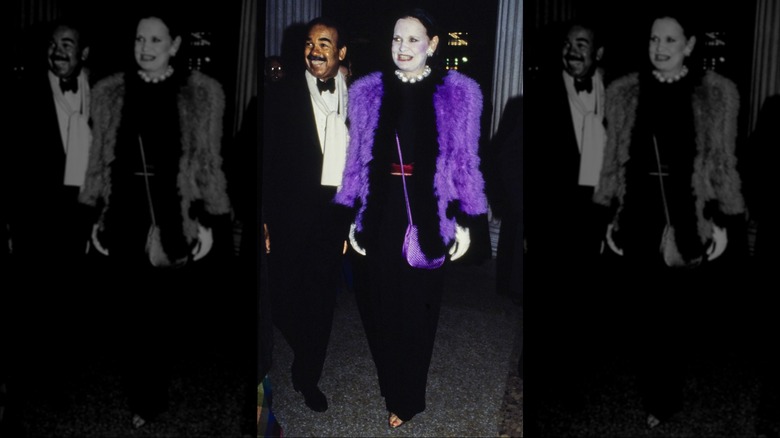
Born into an exceedingly wealthy New York dynastic family, Gloria Vanderbilt was an author, actress, artist, and fashion designer, and she was a mainstay of the early days of the Met Gala. Making a splash in 1979, Vanderbilt attended the gala wearing a bright purple, fluffy Chanel jacket with a matching purple handbag, a black Givenchy dress, and a massive pearl necklace. The jacket would almost certainly look out of place at a modern Met Gala, being far too vivid and clashing with her straightforward Givenchy number.