

The Downside Of HGTV No One Talks About

Home & Garden Television, aka HGTV, has stood strong since 1994 with no signs of slowing down any time soon. Plenty of design and renovation programs have blessed cable TV through the years, but when it comes to consistently keeping viewers engaged and eager to return for another episode, no show has maintained popularity quite like HGTV. In the early days of HGTV, the popular channel stole the hearts (and eyes) of many due to its easygoing DIY tips, then-modern renovations, and generally strict educational format. Today, the impact of social media not only naturally raises the stakes but also creates new levels of opportunity.
HGTV may be considered top-tier cable television in some respects, but that doesn't mean it's without flaws. Sure, plenty of HGTV stars live insanely lavish lives, but when it comes to the featured homeowners and their humble abodes, a lot more actually happens behind the camera than in front of it. For all the goodness HGTV has perpetuated, it's also been responsible for some incredible, less discussed downsides.
Renovations are way more expensive in real life

How much does it cost to renovate just one room in a house, let alone the entire property? The answer varies based on which HGTV show you've decided to tune into, but you'll be extremely pressed to find anything under five figures. On "Bargain Block," Keith Bynum and Evan Thomas bought homes for mere thousands, with renovation costing between $35,000 (per HGTV) and $90,000 (per Realtor). On "Property Brothers" and "Fixer Upper," renovations usually hit around $120,000 (via Yahoo!), but can also run much higher.
Now, we know that these numbers are anything but small. In reality, however, most of the home renovations on HGTV hardly scratch the surface of how expensive things can get and how quickly, too. According to Angi, the average cost to renovate just one bedroom in 2026 is $20,000. That number doesn't account for permits, contractors, or additional expenses related to staying elsewhere, either. So if you have a three-bedroom, two-bathroom house, let's just say $120,000 isn't actually all that much.
Another thing to consider regarding renovations on HGTV is that its operations involve quite a bit of free labor and products. "You would probably never be able to renovate for the same price that we do on our shows because any time we get a wholesale price we pass that savings along to the homeowner," Jonathan Scott revealed during a 2017 Facebook Live (via People).
Renovations also take an exorbitant amount of time
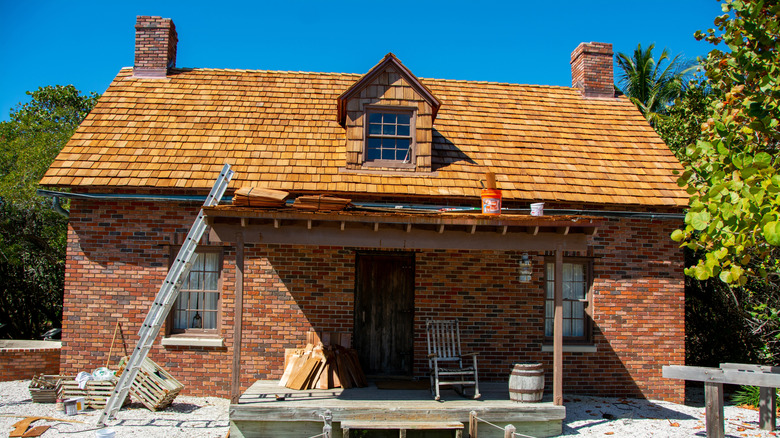
HGTV sure knows how to make a home renovation look easy, even if everyone knows that they're anything but. In approximately 45 minutes — depending on the show and how many commercials there are — viewers can witness some pretty astonishing transformations and-or home purchases. From Dave and Jenny Marrs' "Fixer to Fabulous" to the appropriately named "100 Day Dream Home," HGTV creates the expectation that, if you've got drive, vision, and the right person, a renovation can happen with a Thanos-like snap of the fingers.
This couldn't be further from the truth, though. According to the Marrses, HGTV renovations take up to three months in total, although filming can last closer to a year. "They usually take about 8 to 10 weeks each. So we'll start one block, finish it, start another block, finish it. We start filming around February, and we finish around December," Dave said during an Instagram Q&A.
Experts outside HGTV say renovations usually take longer than that, however. "A simple kitchen renovation often takes 6-9 months from beginning to end, so imagine what a full house renovation takes," interior designer Autumn Fuchs wrote on Fuschia Design. "I typically spend anywhere from 1-1/2 to 2-1/2 years on a project."
Major issues are usually identified before work begins

It's not easy to simply update or completely fix a house. Half of the time, we can barely appreciate a nicely vacuumed floor before dirt accumulates again, and that's the absolute bare minimum. If there's one thing that all HGTV shows have in common, it's that halfway through an episode, viewers can expect some sort of major issue to pop up. From faulty plumbing and mold or rot to unexpected structural damage and pesky bugs, right when things appear to be on a smooth track towards success, a wrench always gets thrown in somehow.
In actuality, the issues HGTV stars experience halfway through a renovation are usually discovered either long before anything physical even happens or shortly after the project begins — halfway misadventures can happen but are rare. "Any knowledgeable, experienced remodeling contractor or architect knows at a glance to expect ... those kinds of issues with older homes," Richard Taylor with RTA Studio wrote. "Design and construction professionals ... work to avoid drama, angst, and additional costs for their clients."
So is HTGV aware of these problems before production begins? More often than not, the answer is yes — but it would not be entertaining to fix these issues off-camera. This has been the very basis of "Help! I Wrecked My House" since its 2020 debut. Hosted by Jasmine Roth, the series is literally centered around big personalities, disastrous DIY attempts, and the process of undoing issues that could've been easily settled off TV.
It's not uncommon for homeowners to dislike the results
As cool as it may be to have your home renovation featured on national television, 15 minutes of fame can come with a high price. HGTV may be the crème de la crème of design and home renovation, but that's no guarantee the final result will be peaches. Plenty of HGTV home renovations have ended in tragedy over the years, and while some people took the high road, others aired out all their grievances as soon as their NDAs legally allowed.
Ron Onyon, who appeared on an episode of "Renovation Impossible," claimed on TikTok that their family lost over $150,000 due to poor workmanship (via New York Post). "HGTV could have killed someone in our house," Onyon captioned another TikTok video. Around the same time, Kelly Downs, who appeared on "Fixer Upper," told the Waco-Tribune Herald after a car smashed into her house: "We've lived here a year and a half and we feel deceived by the city of Waco and Magnolia Realty."
So what happens when a homeowner isn't satisfied with HGTV's work? Well, unless they want to be reminded of a bad memory every day, they have to cough up even more money to undo it all. "An acquaintance had his century-old home remodeled for a one-off show that appeared on HGTV but didn't get picked up for a full season," one Reddit user revealed. "Because the couple had signed a waiver giving the hosts free rein to their house, they had no recourse and were stuck with what they got. They ended up spending upward of $100k extra just to fix everything and get the house back into decent shape."
HGTV and its stars have been involved in a ton of lawsuits

At first glance, the results across all HGTV shows may look seriously stunning. From a new backsplash to never-been-sat-on furniture, it only takes a couple of changes to completely transform a humble abode. We've covered that there's a good chance the homeowners may not like the final product, but one major consequence can come from it: time spent in a courtroom instead of the job site.
Some of the most controversial stars in HGTV history have been hit with various legal battles over the years, as have the most adored. Many lawsuits have revolved around alleged poor craftsmanship and business practices. Infamous examples include when Dave and Jenny Marrs were sued in 2023 for alleged breach of contract, and when "Windy City Rehab" stars Alison Victoria and Donovan Eckhardt were sued for substandard work and alleged fraud.
On the topic of fraud, multiple HGTV stars have also been sued for payment-related issues and other eye-raising financial practices. Jonathan Schmier filed a lawsuit against "Flip or Flop" hosts Christina Haack and Tarek El Moussa in 2017, for instance, over alleged non-payment for services. That same year, Chip Gaines was sued by his former business partners for $1 million over alleged financial fraud and conspiracy.
Homeowners are expected to cough up their own money

Are people compensated for their time on HGTV? If they're a realtor, builder, or designer, generally, yes — although there's a good chance they will receive exposure or commission rather than an actual paycheck. Homeowners and other regular-shmegular participants may get paid for their time, but it depends on the show they agreed to be on and the contracts signed.
Homeowners aren't only minimally compensated for their time — or even paid at all — but they also only have a chance to be showcased on HGTV if they agree to fund their own renovation projects. HGTV may provide contractors and designers, but prospective homeowners have to meet the minimum budget required for their home to be considered. This amount usually ranges between $75,000 and $150,000, but can be substantially higher or lower.
In 2025, HGTV announced it was casting homeowners for a new series with Drew and Jonathan Scott. The notice's requirements included, "Have a minimum renovation budget of $150k (scope dependent) ready to go" and "Be willing to move out of your home for approximately 8-10 weeks during renovation."
Several hosts had other jobs before they pivoted to HGTV

Do all the hosts on HGTV have legitimate licenses to renovate, design, or construct houses? While a large group of them do, not all of them. In fact, several HGTV stars could be considered pure television personalities who were potentially hired for a job based on their outreach, not on a particular renovation or design portfolio. Jesse Tyler Ferguson ("Extreme Makeover: Home Edition") and Mario Lopez ("Supersize My Pool") were two prolific actors before they appeared on HGTV, for example. Chelsea and Cole DeBoer, on the other hand, secured their HGTV gig after they became famous on MTV's "Teen Mom" franchise.
To give credit where it's due, hosting gigs aren't a walk in the park. HGTV hosts are forced to follow rules that would make anyone beg for an extended coffee break before the workday's up, many of which are unrelated to laborious housework. "The microphones you wear record all. Day. Long," Erin Napier told Hooked on Houses in 2016. "It's hard to be really enthusiastic while discussing (and repeating) design ideas for hours on end."
Some of HGTV's biggest house trends aren't sustainable

When it comes to the artistic aspects of renovations, we could argue that HGTV is a trend follower, not a trendsetter. The network has capitalized tremendously on some easy-to-spot trends in recent years, including muted colors, minimal décor, granite countertops, open shelves, and open-room concepts. For those without cable or enough time to watch HGTV, the channel's official website offers plenty of design ideas, DIY guides, and photo compilations.
While most of the finished houses on HGTV are visually appealing, it's hard to believe these modern trends will stand the test of time due to their innate lack of uniqueness. There's a high probability that viewers will see the winds shift sooner rather than later. Della Hansmann made a good point on a 2024 episode of the MidMod Midwest podcast, noting that when HGTV and other renovators rely on popular trends to transform properties (especially older ones), they lose the personalized charm that helped them stand out in the first place.
"It's interesting to think about the fact that this idea of monoculture of standard designs, the standardization of what is a good idea for a house doesn't actually help people," Hansmann explained. "The message coming out of HGTV and other similar monoculture type media sources is that there is only one right way to do your house."
Dramatic conversations, confessionals, and road blocks are supposedly staged

While HGTV is a family-friendly channel, all things considered, it's certainly not the quintessential pillar of piety. Despite the great on-screen chemistry of HGTV couples, there have been plenty of arguments, ranging from little tiffs to full-out showdowns, that last some people a lifetime. Exes Christina Haack and Tarek El Moussa made headlines in 2021 when things reportedly got heated on the set of "Flip or Flop," for instance. Haack's issues with her other ex-husband, Josh Hall, reportedly peppered "The Flip Off" as well.
Plenty of less-serious arguments have occurred throughout HGTV's history, particularly when the married hosts have different visions for what needs to be done. While some of these spats are born of real frustration, a good majority are allegedly played up or even fabricated to generate interest. "TFW when you can't get enough ratings with celebrity designers, so you rely on manufactured drama with me, a nobody," Hall once wrote on an Instagram Story (via TODAY).
Hall isn't the only one who has made these claims against HGTV, either. "The only thing a little extra? The drama before commercial breaks," "Flip or Flop: Atlanta" star Ken Corsini wrote on Instagram. Corsini explained what an "act out" means and shared that the built-up cliffhanger "would elevate ... the tension a little bit to get people to come back on the back side of the commercial."
'House Hunters' is one of the fakest HGTV shows out there
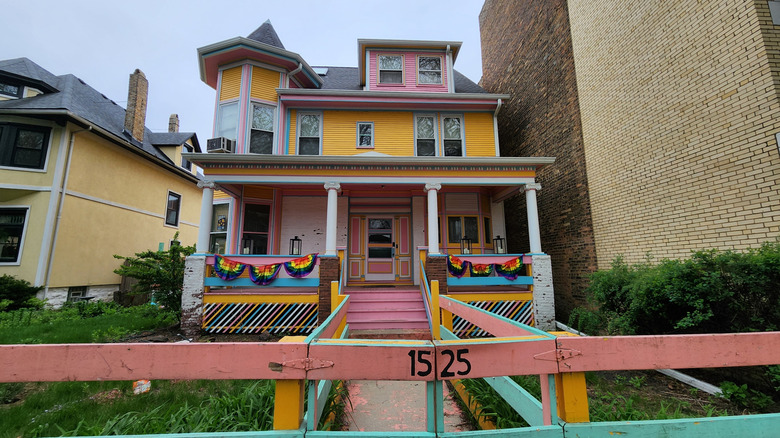
Don't get us wrong, "House Hunters" is one of the greatest HGTV shows out there (as are its respective spin-offs like "House Hunters International" and "Tiny House Hunters"). Despite the most awkward "House Hunters" moments caught on camera, the show tops the charts with its natural charm, stunning visuals, and easy pacing. It's perfect for those looking for a wholesome show to binge-watch that doesn't require much critical thinking.
That said, "House Hunters" is an HGTV highlight for another glaring reason: it's fake. Well, more fake than real, anyway. You know how prospective renters or homeowners view three potential homes, only to grumble about the costs and benefits of each? It turns out that all that inner turmoil is staged, since most of the properties are sold or rented long before the cameras show up. "I remember thinking I was less appalled by the idea that it was fake," a prospective "House Hunters" participant told House Beautiful in 2023. They ultimately declined an offer to appear because, "I just felt very busy and taking off for, you know, kind of a fictitious story didn't seem worth it to me."
Back in 2012, a woman named Bobi detailed their entire "House Hunters" experience to Hooked on Houses. "They didn't even 'accept' us being a subject for the show until we closed on the house we were buying," Bobi revealed. "The [houses] we looked at weren't even for sale...they were just our two friends' houses who were nice enough to madly clean for days in preparation for the cameras!"
Shortcuts and unsafe building practices are frequently displayed

HGTV's renovators and interior designers sure know how to get their hands dirty. Across the network, those at work cut and build things with pretty impressive speed, force, and supposed ease. They usually manage to look good doing it, too (especially the women), an aesthetic plus: hair down, nails out, and flip-flops on. Masks, gloves, and goggles seem to be optional, not mandatory.
While these HGTV stars do look cool, their generally unsafe practices range from lightly concerning to full-on anxiety-inducing. So many things can go wrong when basic safety measures aren't satisfied; for some people, that's the only thing they can think about while watching the show. What if dust flies into someone's eyes, nose, and-or mouth because they don't have PPE? What if someone steps on something dangerous because they aren't wearing appropriate footwear?
"There are so many unsafe practices on this show, it is completely irresponsible of HGTV to promote such dangerous behavior," one Reddit user wrote on the subject. Another commented, "The flippant way they demo things is [pretty] dangerous in general. Hopefully people are smart enough to do a basic Google before taking a sledgehammer to their kitchen."
HGTV prioritizes entertainment over everything else

Based on everything we've discussed, can HGTV be considered reality TV? Yes, to an extent. The people featured, the labor performed, and the final products and-or decisions displayed at the end of each episode (with "House Hunters" out of the equation) are all real. When we compare HGTV's protocol to the unspoken rules of reality TV no one talks about, however, there's a notable difference: the former focuses on the physical, while the latter highlights the emotional.
HGTV provides solid home inspiration and practical life advice, but it does not reflect real life as many may think. Why do people like to watch TV? At the end of the day, it provides an entertaining way to escape our mundane lives. After all, those looking to be educated can just pick up a book or descend down the Wikipedia rabbit hole like the rest of us.
Besides the rushed timelines and supposed manufactured drama that the network has routinely displayed, HGTV has undeniably proved that its number-one focus is entertainment through ads and product placement. Take a glance at PR firm Revolver, for instance. It has placed products for exposure on programs like "Property Brothers," "Farmhouse Facelift," and "Celebrity IOU" and has even partnered with Scott Brothers Entertainment (Drew and Jonathan Scott's company).