

From Leading Man To Graphic Novelist: How John Cusack's Career Has Changed Over The Years
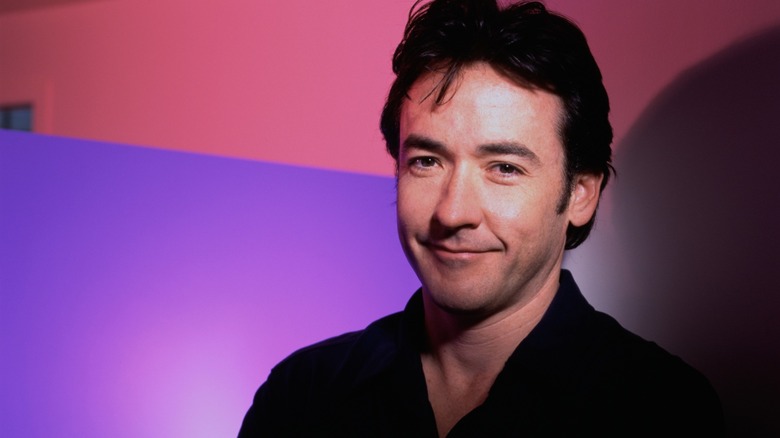
If there's one thing to know about John Cusack, it's that he doesn't much like being famous. All the way back in 2000, when his career was still riding high — still starring in, for example, "High Fidelity," – Cusack told The Orlando Sentinel that he wasn't a fan of having fans. "Celebrity can be sinister. Celebrity is death," he said. "Celebrity is actually the worst thing that can happen to an actor."
Despite his best intentions, Cusack is still quite famous. Even though his heyday might have been several decades ago, the star of films like "Hot Tub Time Machine" and "America's Sweethearts" still commands a certain amount of cachet in Hollywood. That's why he's been able to last so long in the business, in fact; Cusack isn't afraid to pivot with the times, to control his own level of exposure to make sure that he's comfortable with just how many people know his name.
Back in the 1980s, a whole lot of people knew his name. He's been a teen heartthrob, a critically respected actor who writes his own roles, and even a blockbuster leading man. In recent years, he's explored filming internationally, and he's even moved into writing graphic novels, which might be a surprising turn for the actor until you remember that he told The Orlando Sentinel simply, "Life is complicated and messy." After all, he said he hardly recognizes himself when he's the one on the cover of a magazine. "I'd like to meet that guy," he said, "because what they've portrayed isn't the real me."
John Cusack orbited around the Brat Pack kids
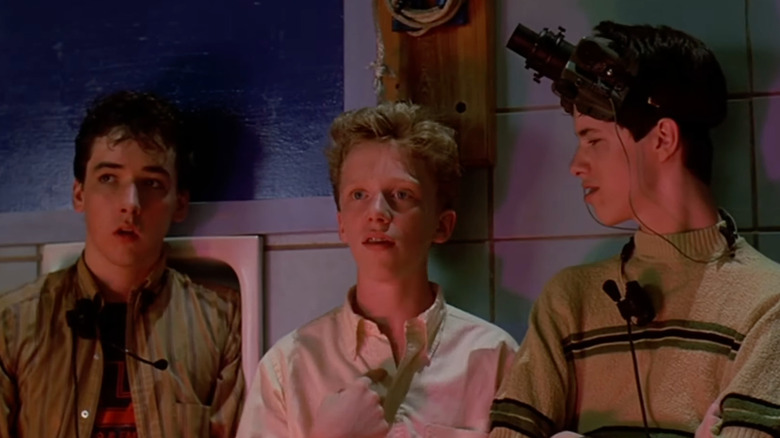
In the early years of his career, John Cusack often found himself acting opposite fellow teen stars who counted as members of the Brat Pack. The 1980s were a great time for coming-of-age films, and a new crop of young stars acted in a whole subgenre of teen films together in various combinations. Cusack wasn't technically part of what the media considered the Brat Pack to be, but his first big film role was in "Class," opposite Rob Lowe, who definitely counted.
He followed that up with a part in "Sixteen Candles," a full-blown Brat Pack film directed by John Hughes. Cusack was cast as Bryce, one of the dorky best buds of Anthony Michael Hall's lead geek Ted. Hall later told Business Insider that he's the reason Cusack got the part. Hughes wanted their chemistry to be believable, and he let Hall have a say in the casting process. "He said, 'They are going to be your buddies in the movie, so I want you to cast them,'" Hall recalled in the 2024 interview. "I was stunned. I was a 15-year-old kid."
On a 2012 episode of "Movie Talk," Cusack chalked those early successes up to luck. "They happened to start making movies about teenagers, and I happened to be a teenager with experience," he said, "and they happened to be shooting them in Chicago. So I parlayed that into a couple of parts."
After The Sure Thing, John Cusack's career was a sure thing
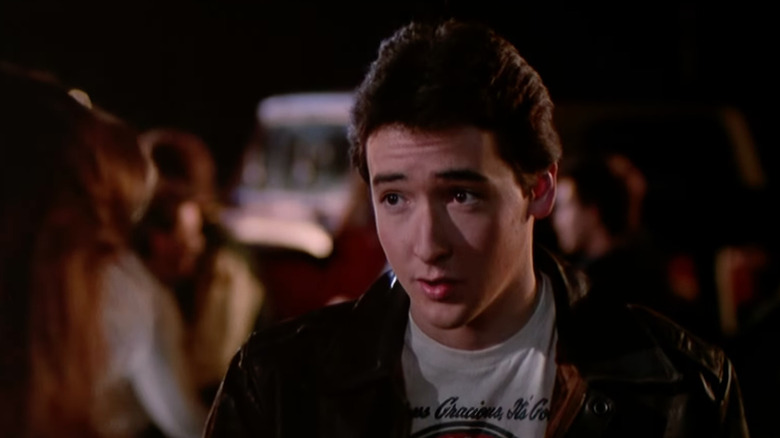
In his 2012 appearance on "Movie Talk," John Cusack credited one movie with really kick-starting his career: Rob Reiner's 1985 comedy "The Sure Thing." He recalled, "I got a lead role when I was 17, and then I sort of was off to the races."
The movie is about a teenager who travels to Los Angeles after he hears that sleeping with girls out there is a sure thing, and Cusack told NPR in 2000 that the movie's plot kind of mirrored what he was doing at the time. "I was flying out to Los Angeles and sleeping on my agent's couch and, you know, doing auditions," Cusack recalled. "Rob Reiner gave me my first break ... and the film did pretty well critically and commercially."
While it makes sense that Cusack now understands that "The Sure Thing" put him on the map, it seems like it's actually something he was already thinking about back in 1985. In an interview with The Moving Picture Show to promote the film, Cusack said he wasn't really interested in conquering Hollywood. "It's like you're royalty. People treat you like you're larger than life, like you're some kind of prince. And that's not reality. Not at all," the teen actor mused. "Everybody wakes up in the morning, and feels lousy on Mondays." He would continue talking like that for the rest of his career.
Say Anything... made John Cusack an iconic '80s heartthrob
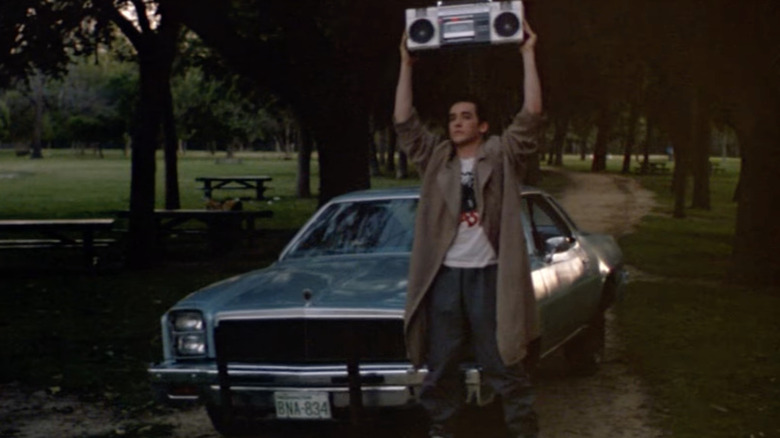
When you think of the 1980s, there are plenty of decade-defining pop culture moments we just can't forget. Those years were defined by Michael Jackson moonwalking, the Fall of the Berlin Wall, the launch of MTV ... and Lloyd Dobler (John Cusack) hoisting that boom-box into the air at the end of "Say Anything...," blasting Peter Gabriel's "In Your Eyes" so loud that the whole neighborhood would know he was in love.
Looking back at that moment in 2019, Cusack told Worcester Magazine that it didn't take too many takes to get the scene just right. "What makes it interesting is the character had a look of defiance in his eyes," he pointed out.
In fact, Cusack credits the film's unusual tone for its enduring success. "It definitely had a darker soul underneath," he said, noting that the movie isn't just a love story, but also deals with a girl who discovers that her father's been lying to her. "The kids graduating high school being afraid of the future," he mused. "I think there was a mixture of a kind of dark soul and romance and lightness to it." It makes sense, then, that "Say Anything..." cemented Cusack's star image in the public eye as a complicated romantic hero with an edge. It's typecasting he would bump up against many times in the decades to come.
He launched New Crime in Chicago
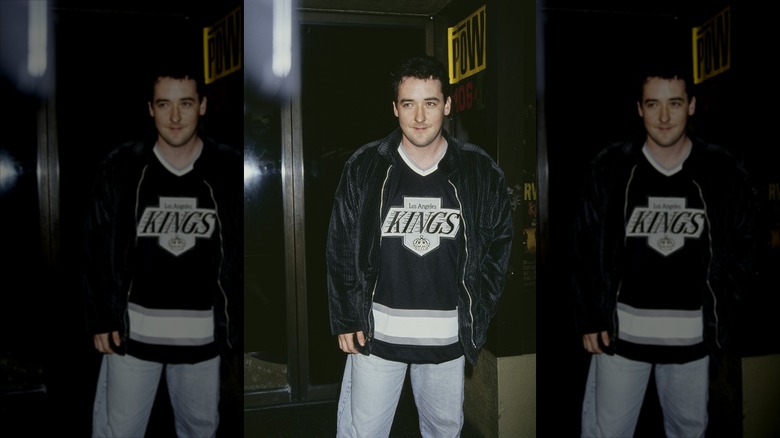
Just as his movie stardom really took off, John Cusack did something that a lot of actors do when they realize their career is getting away from them: he returned to the theater. He'd first met Tim Robbins while starring in Rob Reiner's "The Sure Thing" together, and Cusack told NPR that he'd loved his fellow actor's energy. "He's a very deranged individual in a lot of ways," Cusack joked, "so we just got along great, and very, very funny and smart and — so we just became fast friends."
In the early 1990s, Cusack looked to Robbins' involvement with The Actors Gang for inspiration. Robbins was part of a theater troupe that staged productions in the tradition of the commedia dell'arte, which he explained to NPR was based in stereotypes. "It's the stock characters, the Harlequino, the Max, the Pantalone. They're sort of, like, the archetypes," he said.
Along with his friend Steve Pink and future "Entourage" star Jeremy Piven, Cusack launched New Crime, a theater company in Chicago that staged similar shows. "It was kind of turned into ... this punk rock Kabuki del'Arte," he explained. Whereas Cusack had begun to find film acting limited, these theatrical productions loosened him up again. "[Hollywood] seemed to only want personality and charm and jokes," he explained. "And here I saw this style that was as limitless as the imagination, and visceral and powerful. And as a young person, I was just drawn to it in a very intense way."
John Cusack co-wrote and starred in Grosse Pointe Blank
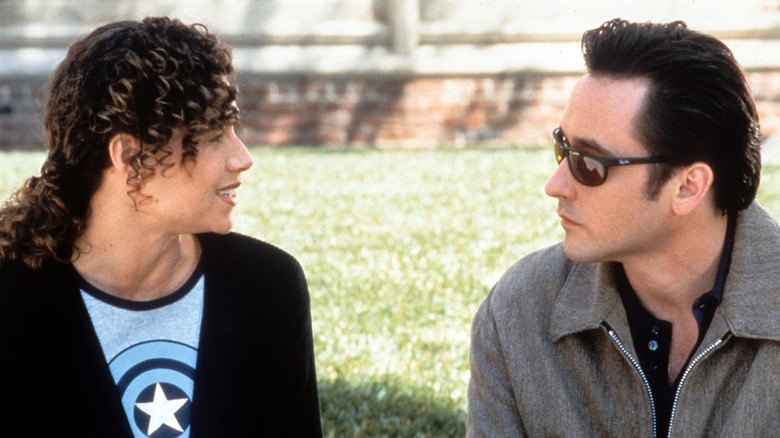
Toward the end of the 1990s, John Cusack began to explore what other roles might be out there for him in Hollywood. In 1997, finding the opportunities lacking, he wrote his own. Alongside writers that included his New Crime co-founder Steve Pink, Cusack co-wrote "Grosse Pointe Blank," a film about an assassin who returns to his hometown for his high school reunion.
In a 2020 interview with The New York Times, Cusack explained that the movie got financed in exchange for him having starred in "Con Air," a Nicholas Cage thriller about prisoners on an airplane. With "Grosse Pointe Blank," he got to explore questions he was interested in about his own stardom. "That was me trying to figure out, What does it mean to be a success in America?" he explained. "It's psychotic: the mercenary mindset. The killer instinct."
He also said he'd begun to use his roles to explore how other people could possibly do what they do. "A killer's a bad thing, right? But we could all be that person," he reasoned. "You want to understand how you could be what you're seeing in the world."
He didn't like how typecast he had become in the 2000s
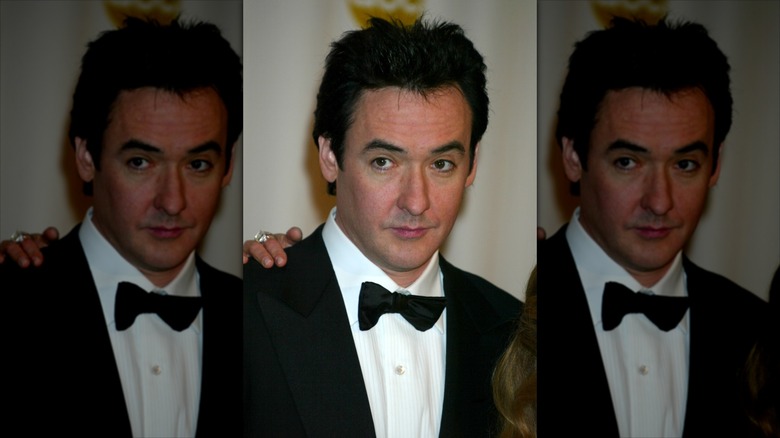
By 2007, John Cusack had begun making it very clear that he was not particularly a fan of his own career. That year, he opened an interview with The Guardian by telling the writer, "I've made 10 good films. I'm sure you know which ones they are." The ones that hadn't worked out, Cusack said, he'd all but forgotten.
It seems that Cusack had become tired of playing into the persona that people expected from him as a leading man, and he'd gotten even more tired of pretending otherwise in press interviews. "I suppose I have a certain thing I do well that people seem to like," he said, before allowing that he was certainly starting to lose fans, too. "Some people like it, other people don't." He added, "There's this brand that they think I am, and I get sent stuff that corresponds to that. I have to do it."
There are plenty of celebs who made it big in Hollywood and then abandoned their fame for a normal life, but that's not quite what Cusack was after as the 2000s came to a close. He told The Guardian he wasn't planning on going anywhere, insisting that he'd continue doing the big movies if it meant he'd get to make smaller, more interesting ones, too. "I get to do the stuff I want," he said. "I have a good voice, I think, and it comes through in my work."
John Cusack tried to be a blockbuster leading man
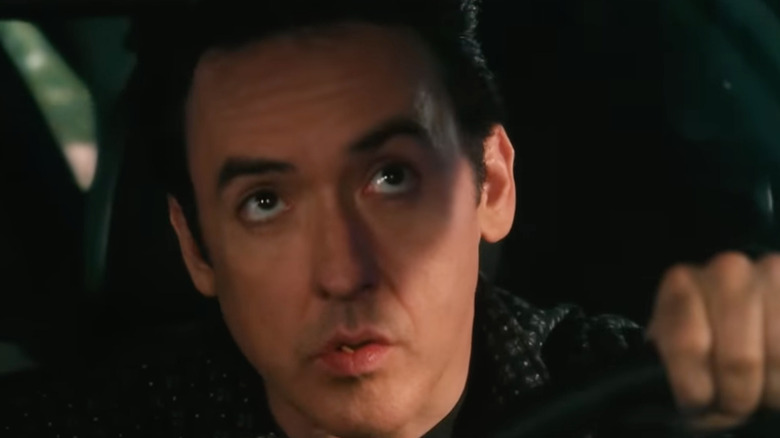
Two years after he told The Guardian that he was happy to get his name and face on a billboard if it meant he could finance something more interesting later, John Cusack starred in "2012," a massive disaster movie directed by Roland Emmerich. Released a few years before the supposed prophecy was meant to come true, the movie played into the theory that the Mayans had predicted the world would end in 2012. It meant a lot of filming in front of green screens, lots of explosions, and not much for Cusack to sink his teeth into as a serious actor.
He spoke to The Guardian about the film, once again laying out his career move in brutally honest terms. "If you do one type of movie it makes it a lot easier to do other kinds of movie that you want to do," he said in the 2009 interview. Still, Cusack admitted that he didn't mind the attention sometimes. "It's nice to get that call. 'It's Sony's big release of the year, you've got the lead role,'" he recalled. "I thought, 'Why not?'"
Cusack confessed that not every role requires the same amount of effort. The man who has been in some of the best romantic comedies you've never seen admitted, "If I'm doing some commercial movie just to keep my name in the public eye, then it's just a job. You don't have to sweat it too hard."
He might've burned some bridges by criticizing Hollywood loudly
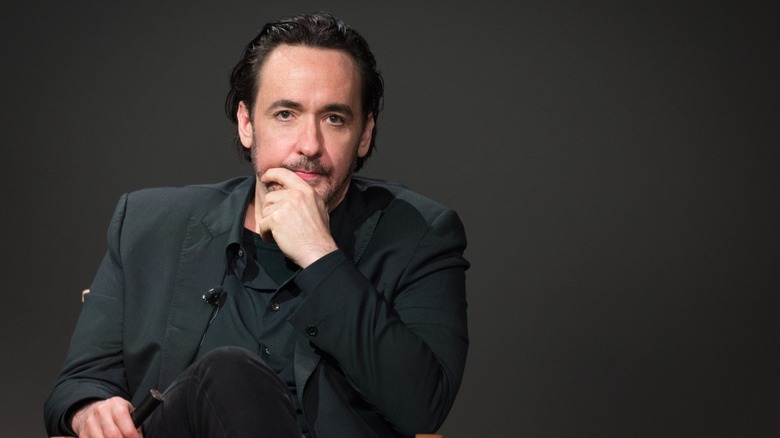
As the 2000s became the 2010s, John Cusack's studied career strategy went a bit off the rails. If you're wondering why Hollywood won't cast Cusack anymore, it might be because of an infamous 2014 interview with — you guessed it — The Guardian. Something about that outlet seems to be able to get Cusack to open up about how he really feels about Hollywood, and in 2014 — while promoting the David Cronenberg film "Maps to the Stars" — he may have finally said too much.
"Maps to the Stars" follows Cusack as a self-help guru who works with a middle-aged, cruel actor named Havana (Julianne Moore). He also worked alongside Robert Pattinson, fresh off the "Twilight" franchise. Reflecting on how Hollywood has changed since he got his start, Cusack pointed out that, as a newcomer, he was taken under the wing of legends like Rob Reiner and Al Pacino. "Now it's different. The culture just eats young actors up and spits them out," he said. "It's a w****house and people go mad."
John Cusack explored fame in China and in lower-budget films
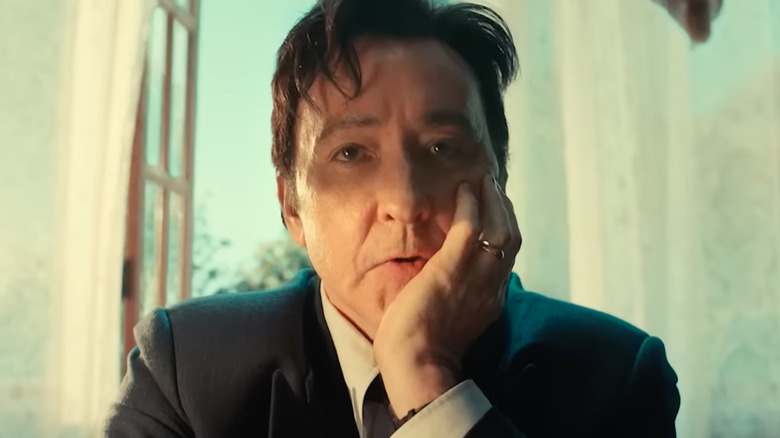
John Cusack had a few more critical successes after "Maps to the Stars," including 2015's "Love & Mercy," in which he played Brian Wilson of The Beach Boys. For the most part, though, his output after the mid-2010s earned far more "rotten" tomatoes on Rotten Tomatoes than "fresh" ones.
Cusack knows it, too. In a 2020 interview with The Guardian, he confessed, "I haven't really been hot for a long time." When the writer pressed him on what he meant by that, Cusack admitted that he'd begun to struggle. "In the last few years, I haven't been able to get projects financed," he said. "That could be a function of getting older. Or it could be a function of being cold."
Intriguingly, Cusack has instead explored stardom in Asia, starring in several Chinese blockbusters like "Dragon Blade" and "Detective Chinatown 1900." A.J. Donnelly, his co-star in the latter film, said on Instagram that Cusack was refreshingly normal on set. "I got to watch not just his performance, but his process," he said, admiring the way that Cusack was not only prepared for each scene, but invited collaboration. "Someone with the history and career of John Cusack is just asking me, a nobody, what my opinion is!" It paid off; "Detective Chinatown 1900" was a massive success, crossing $500 million at the worldwide box office, per BoxOfficeMojo.
John Cusack is a graphic novelist now
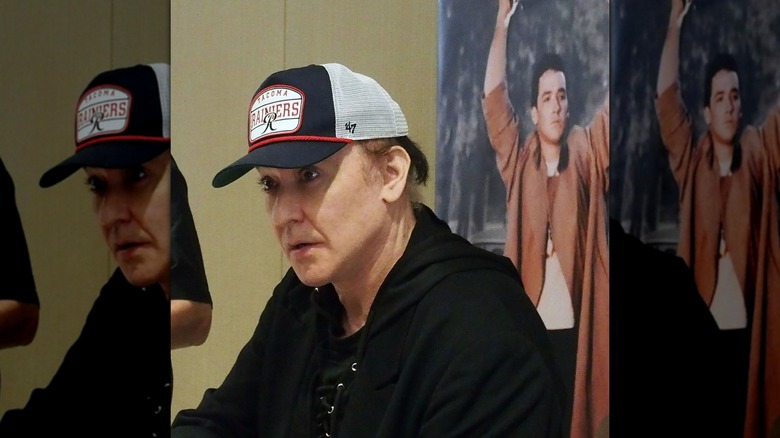
These days, John Cusack isn't as focused on making movies as he used to be. Instead, Cusack is exploring quite the career shift. His debut graphic novel, "Momo," will be released in late 2026. Summing up the story for Publishers Weekly, Cusack said, "[It's] a wild fusion of theological noir, cosmic satire, and darkly comic Americana in a mind-bending odyssey."
You might think Cusack writing a graphic novel is a surprising direction for the actor, but plenty of film stars have written books; that might be something you never knew about Gene Hackman. Plus, Cusack said he's always been a fan of graphic novels. "It's the closest you can get to film while still being a book," he explained. That meant partnering with an artist who could bring his vision to life, and he settled on Ignacio Noé. Calling the collaboration "bliss," Cusack gushed, "He is an absolutely brilliant artist."
It seems that Cusack is well-aware that it's unusual for his career to take this turn, but he told the outlet that he's looking forward to diving into what it means to be part of the world of comics. "I know telling stories is integral to being human — we need stories and need to tell them," he said. "This is another way to tell a story, and I was delighted to enter this world."