
The Amazing Life Of Beverly Hillbillies Star Nancy Kulp
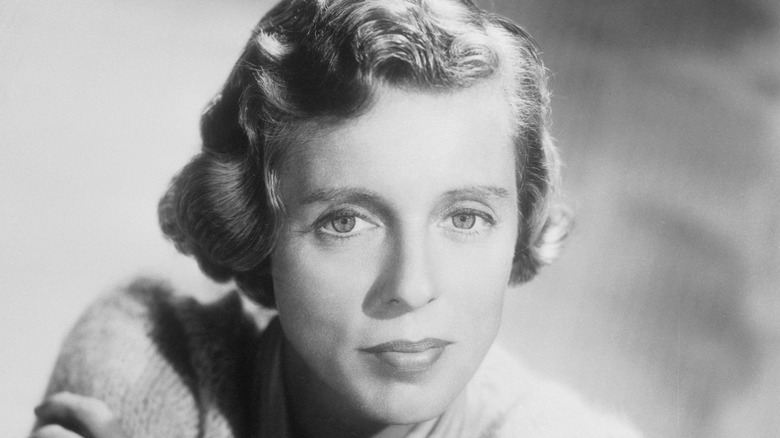
When people hear the name Nancy Kulp, they're most likely to think of her as Miss Jane Hathaway from the 1960s sitcom "The Beverly Hillbillies." Kulp's Miss Hathaway was the strait-laced secretary assisting Mr. Drysdale in helping the Clampetts with their oil money and new life in Beverly Hills, hilariously clashing with their country ways and pining for the family's nephew, Jethro. It was the type of character Kulp would be cast in for years to come, though she embraced it over time, even laughing off when people would call her "Miss Jane" or ask her "Where's Jethro?" when she was out and about.
Kulp also was quick to defend the show. Though "The Beverly Hillbillies" was a smash hit with audiences, it was often panned by critics. "I ask them, since when is it wrong to laugh?" she said in a 1962 interview with the Minneapolis Star (via MeTV). She went on to suggest that the show's detractors were actually secret fans: "They're afraid to admit they like it because it isn't intellectual. We do it for laughs, that's all. There's no message."
The sitcom — and Kulp's acting career, for that matter — is only but a piece of her story. Here's what "The Beverly Hillbillies" cast member's life looked like before and after the show.
Before acting, Nancy Kulp served during WWII and studied journalism
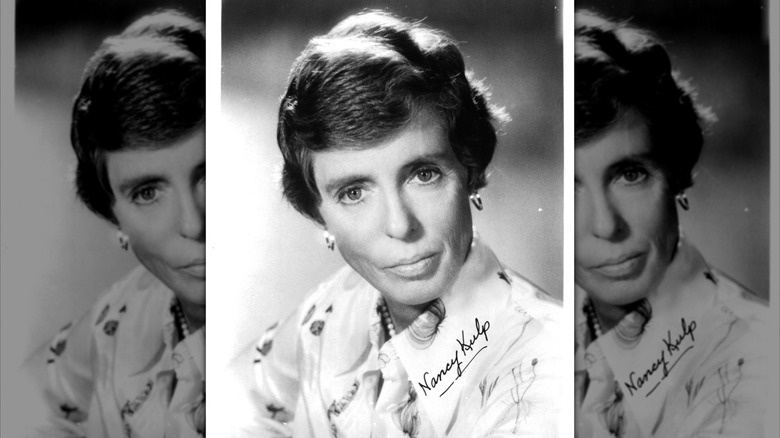
Nancy Kulp was born in Harrisburg, Pennsylvania on August 28, 1921, the daughter of a salesman and a schoolteacher. The family relocated to Florida in 1935, where Kulp went on to study journalism at Florida State University. Kulp wrote for the Miami Beach Tropics in the early 1940s and once said in an interview, per the Los Angeles Times, "My first love has always been journalism." Among her subjects, according to Kulp, were famous names such as the Duke and Duchess of Windsor, Clark Gable, Myrna Loy, and Errol Flynn.
During World War II, Kulp signed up with the U.S. Naval Reserve, reaching the rank of Lieutenant Junior Grade with the WAVES, or Women Accepted for Volunteer Emergency Service. The WAVES did mostly clerical work, but also "served as nurses, physicians, storekeepers, weather forecasters, aeronautical engineers, parachute riggers, cryptographers, and pigeon trainers, among many other jobs," per the National World War II Museum website. Kulp left the military after the end of the war and worked in publicity at a radio station in Miami.
Nancy Kulp had a brief marriage to Charles Malcolm Dacus
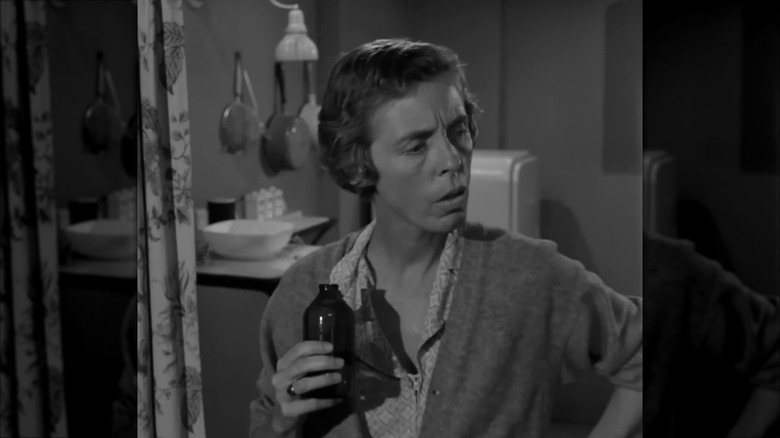
Nancy Kulp was married only once and briefly, to a man named Charles Malcolm Dacus in 1951. Their Miami Herald marriage announcement noted their plans to move to Van Nuys, California, after the wedding, where Kulp would eventually transition into acting. There are conflicting reports on whether it was Dacus or director George Cukor who encouraged Kulp to get into acting, but regardless, she did to great success.
Kulp and Dacus divorced in 1953 with no children shared between the two. Very little is known about Dacus and Kulp spoke very little about him. The GBLTQ Archive reported that there was speculation regarding Dacus' sexuality, pointing to an unnamed interview in 1989 where Kulp reportedly refused to speak on whether he was even alive or what his profession had been. The Advocate also notes that she "refused to discuss [him] in later years." Kulp never remarried and had no children.
Nancy Kulp started her career in Hollywood in supporting and guest starring roles
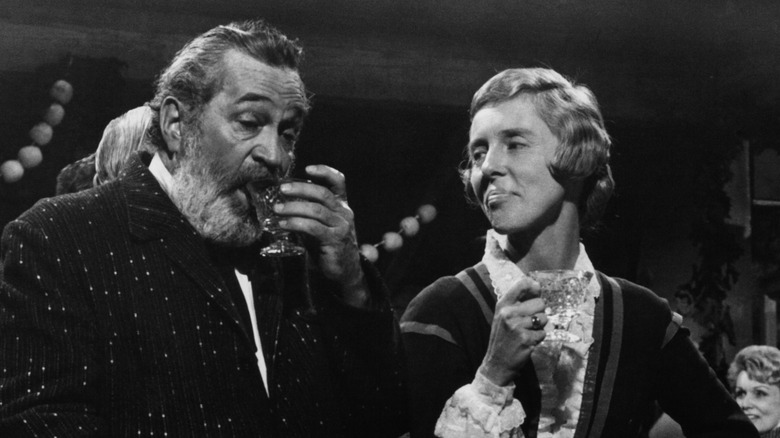
Nancy Kulp had a not-so-easy journey to stardom, not unlike her "Beverly Hillbillies" co-star Irene Ryan, beginning her Hollywood career mostly in non-speaking, and uncredited roles in films like "Sabrina" and "A Star is Born" before landing speaking parts in "The Model and the Marriage Broker," "The Parent Trap" and "Shane." In the 1950s and early 1960s, Kulp began to rack up guest appearances on hit shows of the day like "I Love Lucy," "Perry Mason," "The Twilight Zone," "Mr. Ed," and "My Three Sons." It was these appearances that began to showcase her comedic abilities, laying the groundwork for her breakout part on "The Beverly Hillbillies."
One of her early notable roles was that of the bird-watching Pamela Livingstone on "The Bob Cummings Show." Many of her roles cast her as a spinster or uptight individual to serve as a foil for other shenanigans on screen. Kulp had a unique look and voice, as her Los Angeles Times obituary noted: "The face of a shriveled balloon, the figure of a string of spaghetti and the voice of a bullfrog in mating season."
Nancy Kulp's breakout role on came with The Beverly Hillbillies
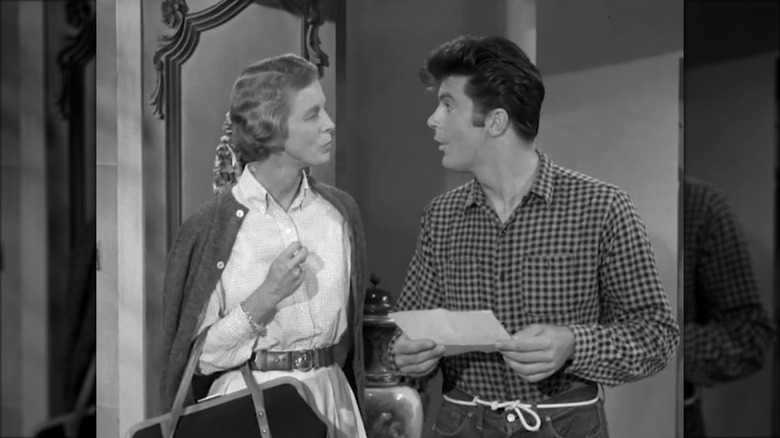
While it wasn't her first acting gig, Nancy Kulp's most memorable and beloved role was, without question, Jane Hathaway on "The Beverly Hillbillies," which ran from 1962-1971. Kulp was the straight woman to the Clampett's antics, supporting the family's new life in Beverly Hills while also lusting after their nephew, Jethro Bodine, played by Max Baer Jr. Her performance earned her an Emmy nomination in 1967 in the best supporting actress in a comedy category.
Though she became a star thanks to her timing, Kulp didn't always think of herself as funny. As she once said in an interview with the Longview Daily News (via MeTV), "When I'm being serious, people think I'm being funny. It used to bother me, but I'm getting used to it." She recalled a high school play where she played a character who wasn't funny on paper, but she put a humorous spin on it without even trying. "I was supposed to be the prim and proper wife of a nutty professor, but it didn't turn out that way," she said. "The audience was so hysterical laughing at me that I went backstage and cried."
Nancy Kulp felt typecast after The Beverly Hillbillies
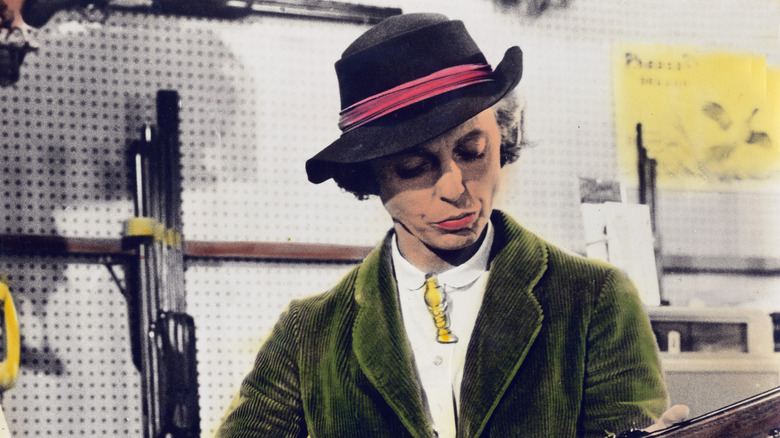
After the end of "The Beverly Hillbillies" in 1971, Nancy Kulp continued to act, making appearances on popular shows of the decade, like "Sanford and Son," "The Love Boat," and "CHiPs," among others. She also reprised her role as Jane Hathaway in an episode of "Petticoat Junction" and the TV movie "Return of the Beverly Hillbillies." Kulp's last credited onscreen role was in an "ABC Afterschool Special" titled "Private Affairs." Her last acting role was in a production called "Morning's at Seven" on Broadway.
Though she seemed to enjoy acting, she admitted she felt typecast. She told The Abilene Reporter-News (via MeTV), "I've been typecast as Jane Hathaway for so long, that I might as well be her." While it may have irked her to a point, she acknowledged the impact the character had, adding, "I cannot go anywhere in this country without being recognized. They yell at me — 'Miss Jane, Miss Jane!' It's really remarkable how the memory of that show has stayed in the public's mind and memory."
Nancy Kulp's late in life political career caused a feud with her Beverly Hillbillies co-star
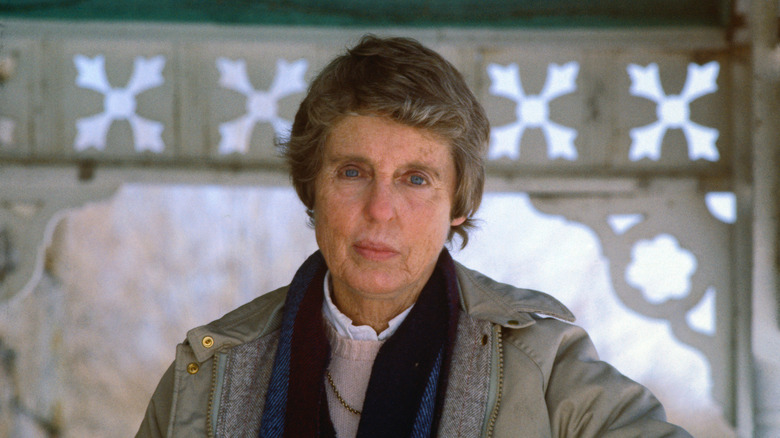
In the '80s, Nancy Kulp launched a political career — not unlike fellow actor Shirley Temple. She ran unopposed in the Democratic primary for Pennsylvania's 9th congressional district. As Kulp told The New York Times at the time, "I think a man in office for 12 years should be opposed and the people given a choice." She added, referring to her Republican opponent E.G. Shuster, ”I think he should be asked to answer for his voting record. He hasn't been asked to do that for some time.” Kulp also addressed the criticism she faced as an actor running for office, noting that President Ronald Reagan was first an actor. She added anyone who ”listens and cares” can be fit for office.
Kulp had support from actors like Ed Asner, but as "Beverly Hillbillies" fans may know, her co-star Buddy Ebsen was critical of her campaign. In a campaign ad for her opponent Shuster, Ebsen said she was "too liberal for me." Kulp ultimately lost the election and appeared to blame Ebsen in part. According to The Rocky Mountain News, Kulp said, "I've worked so hard on this campaign. It's none of his business and he should have stayed out of it." Publicly, Kulp and Ebsen never reconciled, but they were reportedly on better terms before her death in 1991.
Following her political career, Kulp taught at Juniata College in Pennsylvania, telling the Lakeland Ledger, "I think it's going to be absolutely wonderful. I love being part of something." She later moved to Palms Springs and was involved in charities like Humane Society of the Desert, the Desert Theatre League and United Cerebral Palsy, as well as serving on the SAG Board of Directors.
Nancy Kulp addressed her sexuality in a final interview
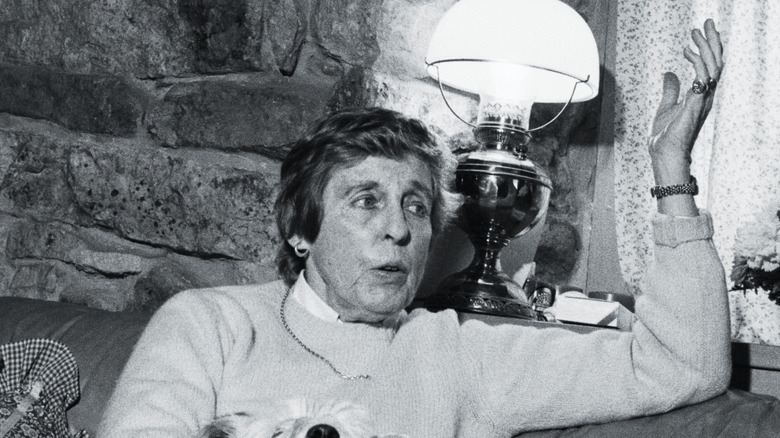
There was some speculation about Nancy Kulp's sexuality over the years, but she never formally came out like other stars from the 1970s who are members of the LGBTQIA+ community. Kulp was intensely private and remained that way until her final years when she gave an interview to author Boze Hadleigh for the book "Hollywood Lesbians" in 1989. Kulp's statement is fairly cryptic, but she explained herself thusly (via The Advocate): "As long as you reproduce my reply word for word, and the question, you may use it. I'd appreciate it if you'd let me phrase the question. There is more than one way. Here's how I would ask it: 'Do you think that opposites attract?' My own reply would be that I'm the other sort — I find that birds of a feather flock together. That answers your question."
The Advocate also noted that Kulp spoke positively about Congressman Barney Frank, the first openly gay member of Congress. Asked if she would have come out had she been elected to Congress, Kulp said, "Not voluntarily. If I were outed, then I would not deny it." Hadleigh's book wasn't published until 1994, three years after Kulp died of cancer.