

M*A*S*H Star Loretta Swit's Stunning Transformation
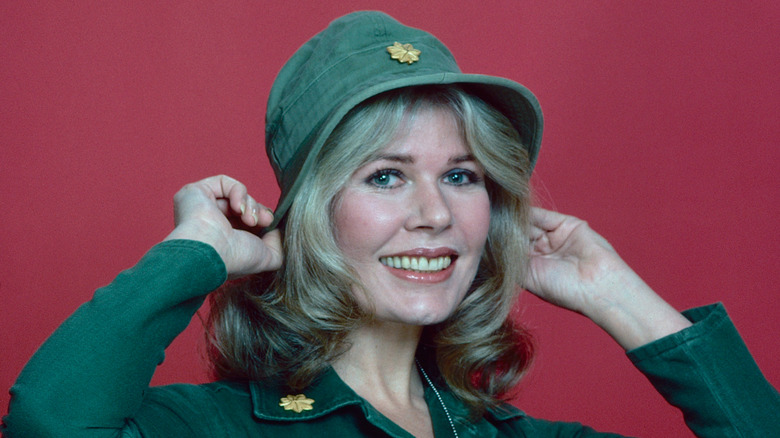
Actor, activist, and artist Loretta Swit made a name for herself in television with her role as the stern and determined head nurse, Major Margaret "Hot Lips" Houlihan, in the hit 1970s war comedy "M*A*S*H." Though Swit's role as Houlihan was her most famous one, her experience and accomplishments in the performance world are extensive. Outside of acting, Swit was a dedicated animal rights activist and an avid artist.
From an early age, Swit devoted herself to excellence on stage as a performer through education, grit, and risks that would ultimately result in her becoming one of the most recognizable faces on-screen in the 1970s. Though Swit never fully departed from her love affair with traditional theatre, the waves she made in the world of television cannot be understated. Swit was a trailblazer against misogyny in a sexist and male-dominated industry. She not only demanded respect from the cast and creators of "M*A*S*H," but she was determined and disciplined enough to demand the fair development of her character. Swit's desire for equality extended to her love of animals, and, from early on in her career, she dedicated immense time and personal funds toward protecting wildlife, fighting avidly against animal abuse, as well as overconsumption of animal products.
Loretta Swit grew up in New Jersey
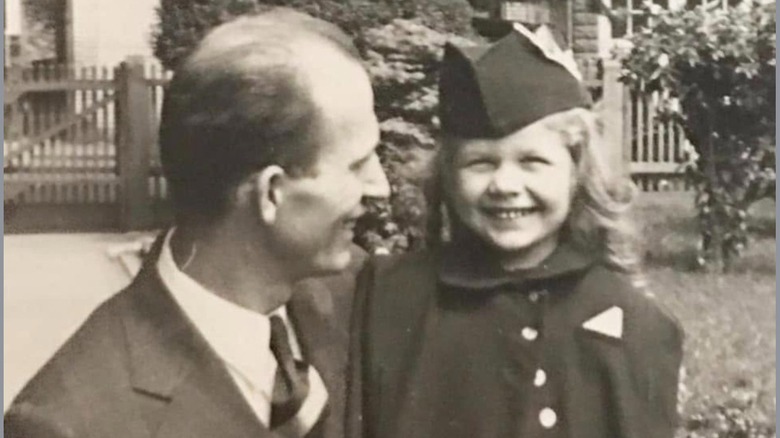
Loretta Swit was born in Passaic, New Jersey to her parents, Nellie and Lester Szwed, who later changed the spelling of the family's name to "Swit." Swit and her older brother, Robert, had a traditional and conservative upbringing, which included attending a private Catholic high school and participating in such extracurriculars as being in her church's Girl Scout Troop. Her most impactful hobby, however, was participating in her school's theatre program, since it was during those formative years that Swit began to develop her love for performing arts.
Despite her expressiveness on stage at that time, Swit noted in a 1975 interview with the Miami Harold via MeTV that she felt constrained by her parents' expectations of her. "When I was a child, my family wanted nothing more for me than marriage and at least four kids," she said. "When I told them I had other plans, there was a lot wondering if they'd done something wrong. You know, 'It must have been something we fed her to make her turn out like this.'" Despite the subversion of the expectations set for her, Swit blazed her own way and pursued an acting career after graduating from college.
Despite differing opinions and mismatched expectations for Swit's life and aspirations, Swit maintained a close relationship with her parents. In an interview with The Toledo Blade, Swit confessed that she still depended on her parents for comfort and reassurance.
Swit moved to LA in the 1970s to start her career in television
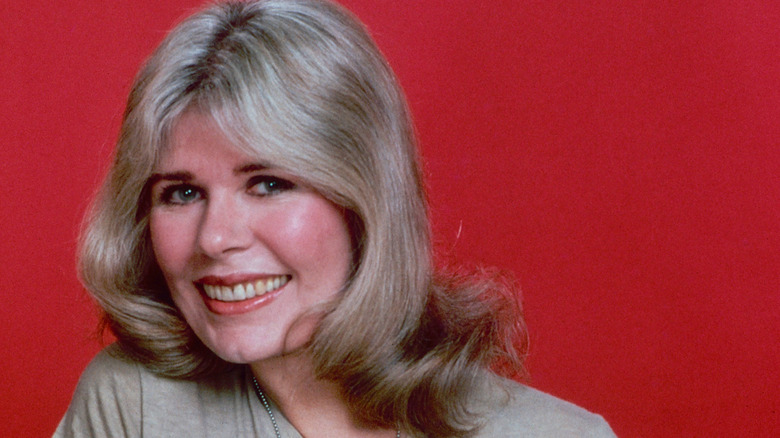
Almost a decade in New York provided Loretta Swit with knowledge and experience on stage that assured her she was ready for a leap. She participated in off-Broadway productions and performed around the United States as a member of the national company in the touring cast of "Any Wednesday," proving to herself that she had the skills to take her to the screen.
In pursuit of a television career, Swit moved to LA in 1970, though it wasn't the first time she'd found herself in that part of the country. A couple of years earlier, Swit had starred in the Los Angeles run of a play created by Neil Simon called "The Odd Couple," a play about two unlikely roommates with opposite standards of household cleanliness and personal vices. Swit performed as one of the Pigeon sisters, the protagonist's upstairs neighbors. The role was sultry but humorous, and Swit credited her sensuality in such roles to her triple Scorpio astrological placement, per an interview in the Toldeo Blade.
After deciding to move to California full time, she didn't instantly find herself in the limelight with starring roles. In the first couple of years of her time spent on the West Coast, she put her nose to the grindstone, taking on smaller guest roles to build up her experience and resume. She participated in episodes of iconic shows such as "Hawaii Five-O" and "Gunsmoke" during that time in her career.
She joined cast of M*A*S*H at the very beginning of the series
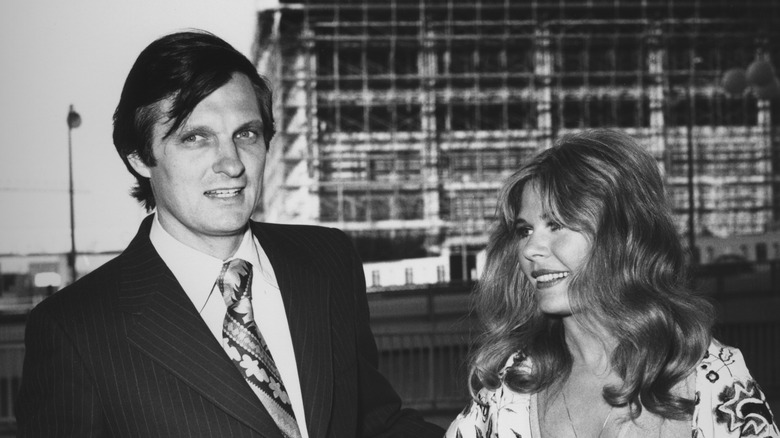
Loretta Swit received her big break in 1972 when she was called on by Fox to participate in the pilot for "M*A*S*H" after the network recalled the quality of her work during a guest appearance in "Cade's Country." She was one of two members of the cast, the other being Alan Alda, who played Captain Benjamin Franklin "Hawkeye" Pierce, who was a part of the "M*A*S*H" cast from the series' pilot episode to the finale in 1983.
From that first fateful episode, Swit put her all into her character as Major Margaret Houlihan. She wanted to honor the stern, no-nonsense nurse who was overlooked and underestimated by her male counterparts despite being in the same dangerous and stressful conditions, and the world loved her for it. She was the only female lead in the entire series, and she made the most of her time, garnering admiration and respect not only from viewers, but from her fellow cast-mates and the creators of the show as well. "She was the head nurse, and her ambition was to be the best damn nurse in Korea, and I tried to help her achieve that," Swit was quoted in her obituary published by The Hollywood Reporter.
Swit fought hard to develop her M*A*S*H character
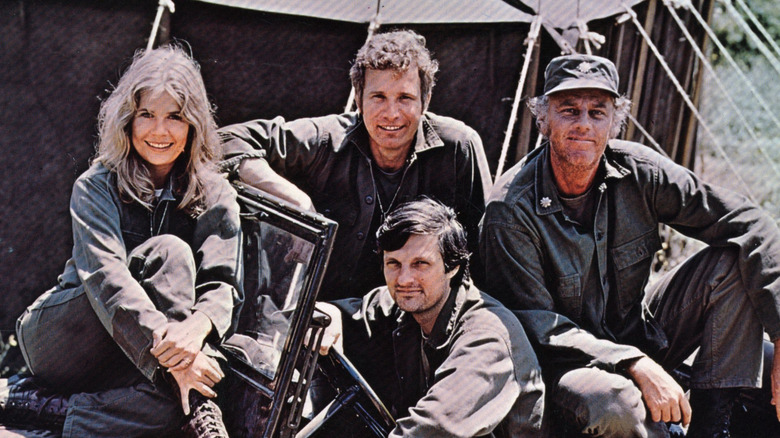
Being one of the few women apart of "M*A*S*H," Loretta Swit faced years of sexism, being offered up to her male counterparts as the butt of misogynistic jokes and a flat character without room to flesh out what being a female nurse during the Korean War was like. Her on-screen persona was flattened into a one-note, lusty character, and Swit fought for years for show writers to give Houlihan dimension and depth. Eventually, Loretta Swit had enough and took action.
According to ABC's quoting of "The Complete Book of "M*A*S*H," Swit explained, "Around the second or third year I decided to try to play her as a real person, in an intelligent fashion, even if it meant hurting the jokes... I took each traumatic change that happened in her life and kept it. I didn't go into the next episode as if it were a different character in a different play. She was a character in constant flux." Swit's heartfelt contribution to the character of Houlihan was a testament to her feminist values, which she held dear throughout her career. "I am a feminist, from the top of my head to the bottom of my toenail, and I favour playing strong women," she told Closer Weekly, via The Guardian, and the sentiment was visible through her choices on-screen. She succeeded in making the character more human, and, by the fifth season, Swit was portraying Houlihan as an intelligent, determined, and indispensable character.
She won two Emmys for her performance on M*A*S*H
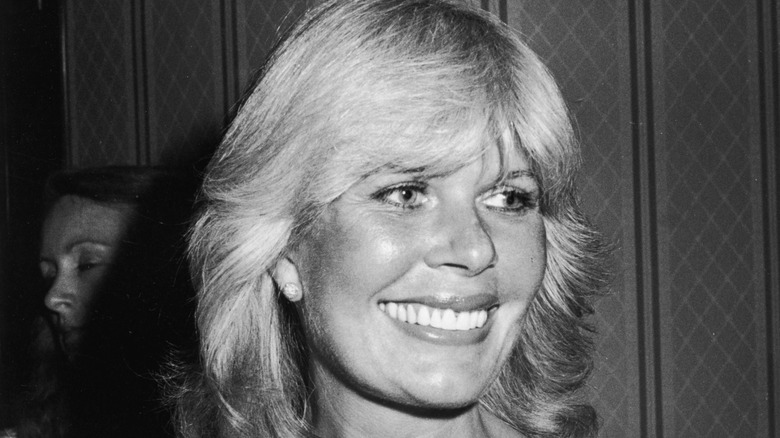
Loretta Swit's efforts to make her character more nuanced, warm, and well-rounded did not go unrewarded. After taking her stand for her character's sake, viewers and professionals in the field took notice of Major Margaret Houlihan's shift and how it positively affected the quality of the show. Swit's commendable performance earned her two Emmys, the first of which first came in 1980 for Outstanding Supporting Actress in a Comedy or Variety or Music show, and the second in 1982 for the same category. What is even more impressive was that she was not only awarded the Emmy for Outstanding Supporting Actress in a Comedy or Variety or Music show twice, but she was nominated for the award 10 times over the course of her time on "M*A*S*H."
Despite winning her first award in 1980, she did not receive the award publicly due to a writers strike at the time. She did however accept her second award in-person, and though she had been nominated for the award so many times, she was still incredibly surprised to receive it, stating in her acceptance speech, "I've been an actress for 15 years, and I've never been on a stage so unprepared in my entire life... This is so wonderful because the last time it happened, I didn't have a chance to come and thank all of the people who were responsible."
She married a man she met while working on M*A*S*H
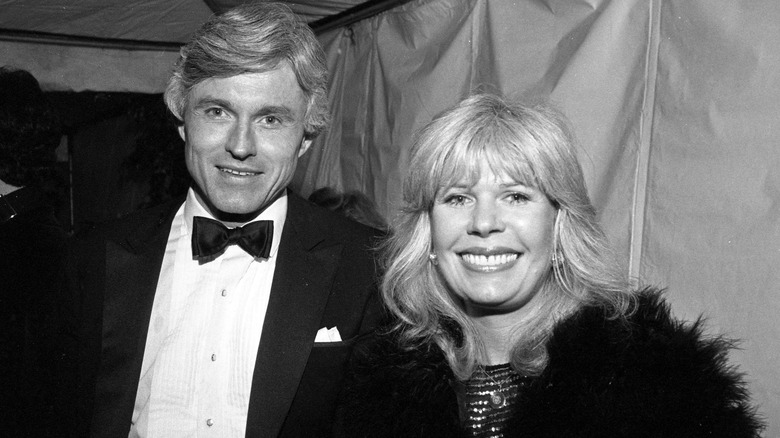
For Loretta Swit, "M*A*S*H" wasn't only the driving force behind so much success in her career, but also the means by which she met fellow actor Dennis Holahan, the man she would marry — though she wasn't searching for love at the time. In a 1973 interview with The Toledo Blade, Swit stated that she had never been married at that time, but wasn't against marriage; her career had taken her in such a direction that she couldn't see it for herself at that moment. Ten years later, that moment would come.
Holahan was guest-starring as Swedish diplomat Per Johannsen in the episode "U.N. The Night and the Music," which aired toward the end of the series in 1983. Swit and Holahan's relationship was kept largely private, and their choices regarding the celebration of their marriage reflected those sensibilities.
The wedding occurred in December of 1983 in a small church ceremony in the San Fernando Valley in California. Though the ceremony itself was very intimate, the newlywed pair celebrated with friends and family, along with a few members of the "M*A*S*H" cast, at a slightly larger reception in Beverly Hills. Afterward, the couple enjoyed their honeymoon in Egypt, and little is known of the relationship that ensued except that the marriage lasted until 1995, and the pair decided not to have children.
Swit hosted a Korean War documentary after her success from M*A*S*H
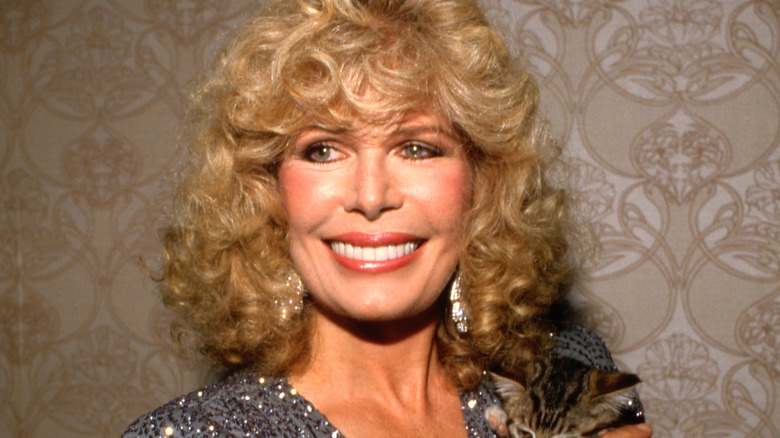
In 1988, Loretta Swit went to Korea after 11 years of acting in a show set there. Her purpose was to host a documentary about the conflict entitled "Korean War – The Untold Story," which included film segments from the fighting and interviews with veterans who were wounded during their time in service. Swit's presence during the production of the documentary was a testament to how "M*A*S*H" had been a driving factor in keeping the memory of the conflict alive in the eyes of the American public over three decades after the fighting ended, and how profound Swit's role in that series was.
Despite "M*A*S*H" being a comedic television show that skated over much of the horrific realities of the conflict, Swit brought gravity and solemnity to her hosting role, lending a somber and reflective air to the grim work of documenting the realities and impact of war. Swit brought attention to the lack of public knowledge about Korea and the United States' participation in the conflict, and is quoted in the Chicago Tribune stating, "Up until this documentary, 'M*A*S*H' was the only sort of knowledge the people in our country had about Korea... It really was the forgotten war. They forgot it even during 'M*A*S*H.' I recall giving interviews where people would say things about Vietnam and I would have to remind them that this was Korea."
Swit was an avid animal rights activist
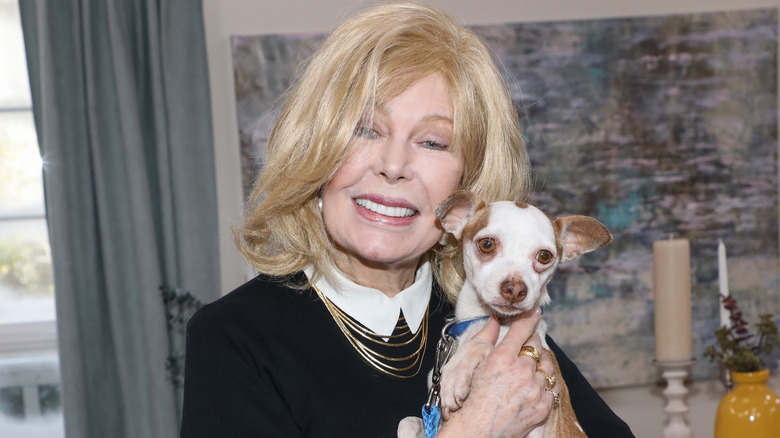
Though Loretta Swit's recognitions and awards in the acting world are plentiful, she is equally accomplished in her philanthropic endeavors in the realm of animal activism. She has received a multitude of awards for her preservation work, including "Woman of the Year" awards from the Animal Protection Institute and the International Fund for Animal Welfare, the Westminster Animal Welfare & Leadership Award, the Global Wildlife Conservation Award, and many others.
Swit also served on the board for Actors and Others for Animals, a non-profit organization with the mission to promote responsible pet ownership, and provide financial support for economically challenged pet guardians to ensure the humane treatment and high quality of life for domesticated animals, as well as the board for The Wildlife Waystation, a wildlife sanctuary for abused, abandoned, and orphaned animals which closed due to financial strain in 2019.
In 2016, Swit created her own non-profit, Switheart Animal Alliance, which, according to the website exists, "to prevent cruelty and end animal suffering, to promote and cooperate with numerous nonprofit organizations and programs that protect, rescue, train, and care for animals and preserve their habitat, while raising public awareness about issues that concern domestic, farm, exotic, wild, and native animals and their well being." Swit was among the most recognized actors who prioritized animal activists alongside Betty White (who also had a stunning transformation) and Brigitte Bardot (another actor with a complete transformation herself).
Swit was a talented artist
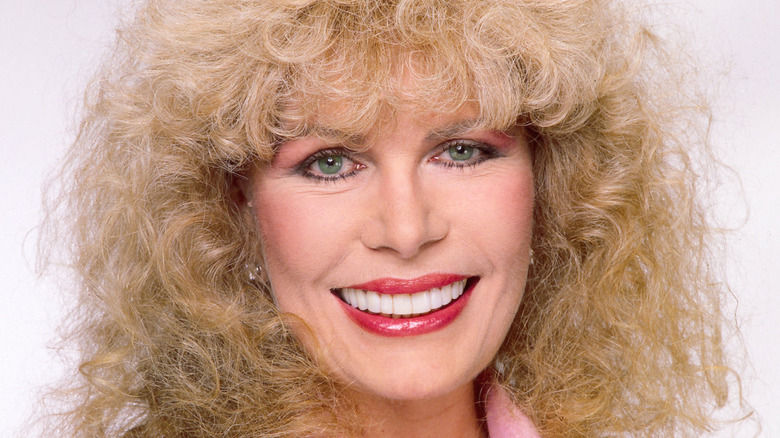
In an interview with the Huffington Post, Swit explained that art had been a part of her life since she was a young child, and she gained a preference for watercolor painting by chance. She told interviewer Jed Ryan, "I didn't know that watercolor was the most difficult of the mediums to work in. I just loved it, and I didn't know any better!... I love the expedience of watercolor: that you have to really work fast, and you can't allow yourself to have mistakes — because then you have to start over! For me, it's like the challenge of theater: You can't stop and say, 'Can I do that again?' like you can with TV or film. It's the love of my life: watercolor!"
She crafted a collection of her animal paintings for her book, "Switheart: The Watercolour Artistry and Animal Activism of Loretta Swit," which she created as a means to share her passion for both artistic expression and activism. All of the proceeds from her book go directly to her non-profit, Switheart Animal Alliance and its work to educate the public on matters of responsible pet ownership and conservation. In the true way of an artist, Swit's talent was bolstered by the depth of her values and a mission that extended far beyond aesthetics.
Swit was active in the theatre world before, during, and after M*A*S*H
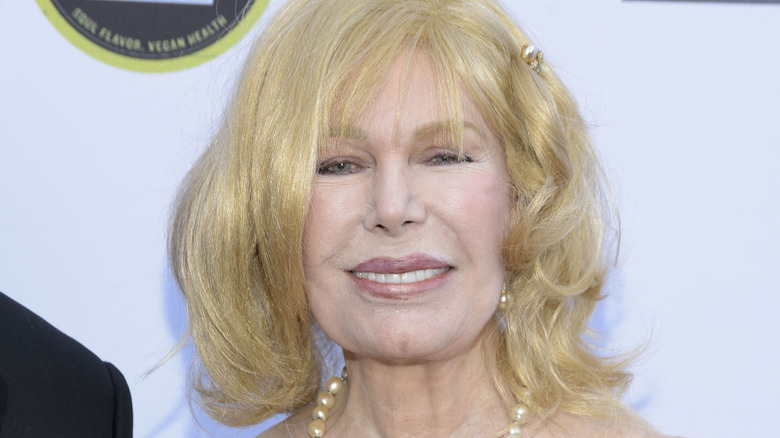
After studying acting in New York, Swit performed on-stage for many years before her move to Los Angeles to begin her journey in television. She continued performing in a theatrical capacity even during "M*A*S*H's" run, partaking in such productions as "Same Time, Next Year," a play about two individuals, married to other people, who meet at an inn, have an affair, and decide to meet once a year for the foreseeable future, growing an odd and profound emotional connection. Swit played the female protagonist, Doris, opposite of Ted Bessel from autumn 1975 to spring 1976.
In 1986, Swit played Princess Puffer in the musical adaptation of Charles Dickens' "The Mystery of Edwin Drood," but Swit didn't stop there. She had a monumental run performing as Shirley Valentine in its namesake one-woman-play about a worn-down woman's journey of self-rediscovery and the joys of life after accompanying a friend on a surprise trip to Greece. Swit was the star of the production's 1995 U.S. national tour. The Chicago Tribune extolled Swit for her performance, stating, "Though she is big and muscular in her acting, Swit is not sloppy. She has found the heart of the play-which is the tale of a woman who happily rediscovers herself-and has extracted from it a delicate poignancy that probably will hit a sympathetic chord within any member of her audience who is longing, like Shirley, to reaffirm her value and to revitalize her life."
Swit left an incredible legacy in both the worlds of acting and activism
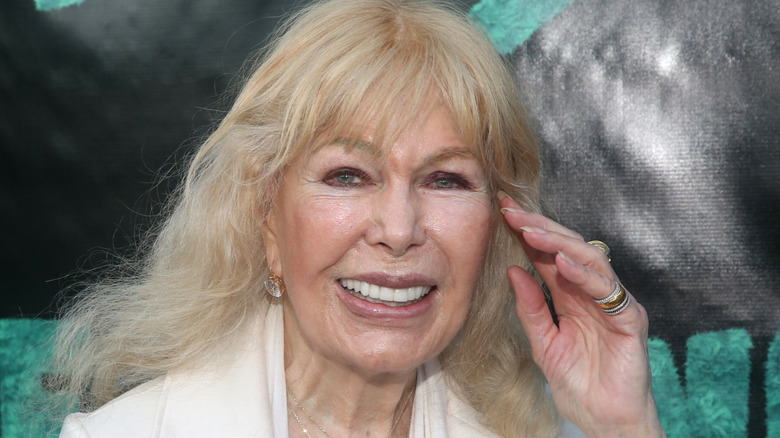
Loretta Swit's tireless work as an actress fighting against a deeply sexist industry and an activist seeking the humane treatment of all animals has made her an inspiration to many who wish to make the world a more equitable place. Her integration of art, both of the performing and aesthetic varieties, into her life has left a body of commendable work that reflects the deeply rooted values that she held so passionately.
Swit remarked upon the legacy and impact of "M*A*S*H" and her character, telling People, "My character broke a barrier in terms of growth. Most of the characters on television in my category, let's say, stayed the same for as long as they're on. They never grew. They never changed. That makes it unreal. We change every five minutes. When I leave. I'm gonna be changed by the time I get home." To her point, "M*A*S*H's" ability to shift and resonate with audiences decades after the show's conclusion accounts for its lasting status as an iconic series. Without Swit's performance and insistence upon developing the character well, a large part of that lasting impression would have never been formed.