

Fact Vs Fiction: Which Fashion Rules Do Royals Actually Have To Follow?
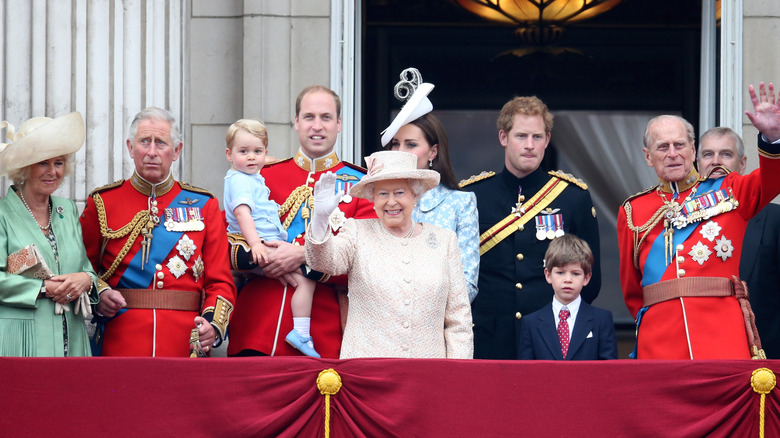
Royal outfits generate so much buzz on the internet that you'd be forgiven for thinking the House of Windsor operates under an unbending rulebook that leaves no room for even a bad hair day, much less personal taste. But if you look more closely, you'll realize that most of those "rules" are just the personal preference of a long-reigning monarch or a piece of old-fashioned etiquette that keeps resurfacing.
That doesn't mean the royals dress however they please. There are genuine practices that need to be respected — Princess Charlotte is already following some of these fashion rules, and breaking others in equal measure. It's not the existence of the rules that's in doubt, but the fact that gossip can dramatize them beyond all proportion. There were times when royal fashion got weird, and there were times royal outfits scandalously showed too much leg — despite the supposed rule against it. But more often than not, the "breach" was just the headlines overreacting.
So, the question is: What is fiction and what is fact? Here we have a handful of the most repeated royal fashion rules, and how much stock you should actually put in them. And maybe the next time a royal steps out of a car and the internet loses its mind over the length of her dress, you can tell whether it's a genuinely protocol-breaking moment or just the usual panic reserved for the wardrobe of Britain's most scrutinized family.
Fact: Every royal travels with a black outfit in case of tragedy
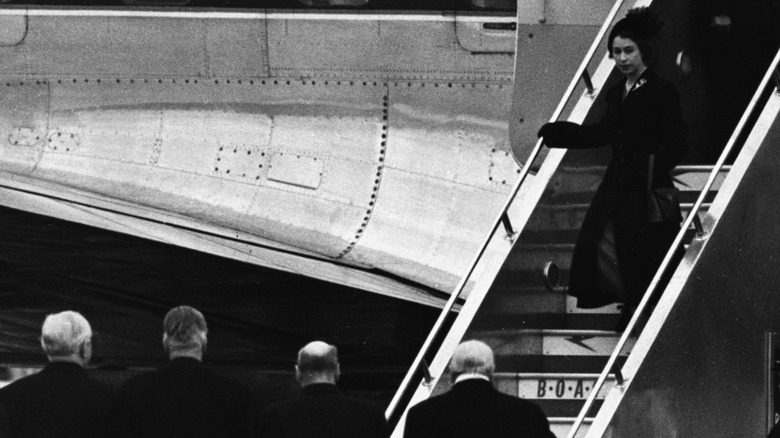
When King George VI died on February 6, 1952, Princess Elizabeth was away on a trip to Kenya fulfilling royal duties in his stead. Thousands of miles separated the young princess from home when she learned that she was the new queen, but a more immediate problem for the staff was her dress. A new monarch couldn't be photographed emerging from a plane in a cheerful travel dress hours after her father's death. "A black dress was quickly smuggled on board because we didn't have a black dress," Elizabeth's lady-in-waiting, Prince Philip's cousin, Pamela Hicks, recalled on her daughter's podcast, "The India Hicks Podcast."
That last-minute accommodation for Princess Elizabeth turned into a new convention, and now royals travel the world with a black ensemble in tow just in case tragedy strikes. The precaution proved prudent in 1992 when Princess Diana and Prince Charles hurried home dressed in black after learning Diana's father had suffered a fatal heart attack.
Another royal found herself in a similar situation in 1938. Queen Elizabeth's mother was preparing for a high-stakes visit to France when her own mother died. Europe was on the brink of World War II, and there were concerns that wearing dark mourning clothing on the diplomatic mission would send the wrong message to France. The royal made the journey in an all-white wardrobe instead, calling back to a time when white, not black, was the traditional mourning color of queens.
Fiction: Royal women can't appear in public without nude pantyhose
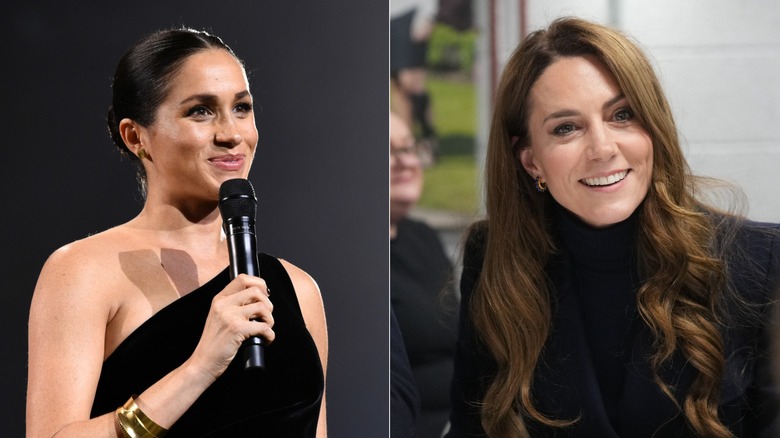
While nude pantyhose was once a staple in women's wardrobes, by the '90s, it had largely fallen out of fashion – but not among the royals. Queen Elizabeth II continued to wear pantyhose throughout her life. Elizabeth Holmes, a royal-style expert based in Los Angeles who wrote a book on the subject, told Business Insider that royal women simply wore nude tights out of deference to how the queen dressed. "Meghan did not wear a lot of nude stockings, but then when she and the queen appeared together, she did. Kate leans into this stuff much more than Meghan did," she said.
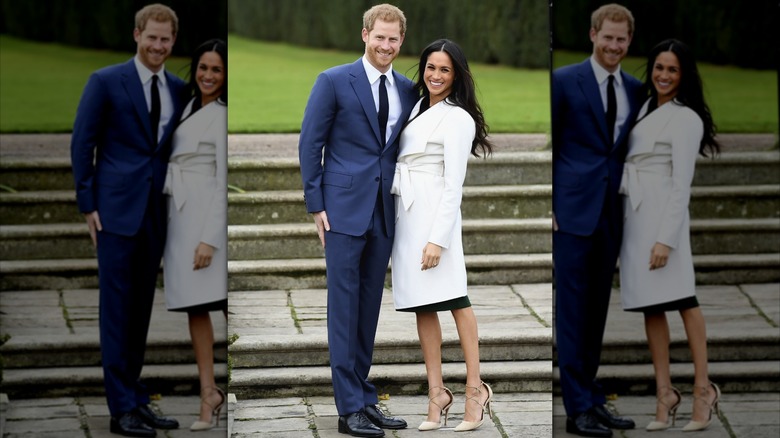
Indeed, when Meghan Markle, Duchess of Sussex, announced her engagement in 2017, the internet treated it like an existential crisis for the royal line, simply because it didn't appear she was wearing pantyhose in the photos. While it was never an explicit rule that a royal couldn't bare their legs, free of pantyhose, it seems that this is the one preference the monarch genuinely expected the family to observe. "I would say that's really the only hard, steadfast rule in terms of what the queen requires," Victoria Arbiter, a royal commentator, told Business Insider.
Even so, Catherine Middleton, Princess of Wales, traded pantyhose for other styles on plenty of engagements, and Meghan branded the convention "inauthentic" to her true self in an August 2025 appearance on "The Circuit with Emily Chang," which could explain why she flouted it so many times. For a supposed ironclad rule, the pantyhose thing had an awful lot of give.
Fact: The queen's hemlines were weighted to avoid wind-assisted mishaps, and others followed suit
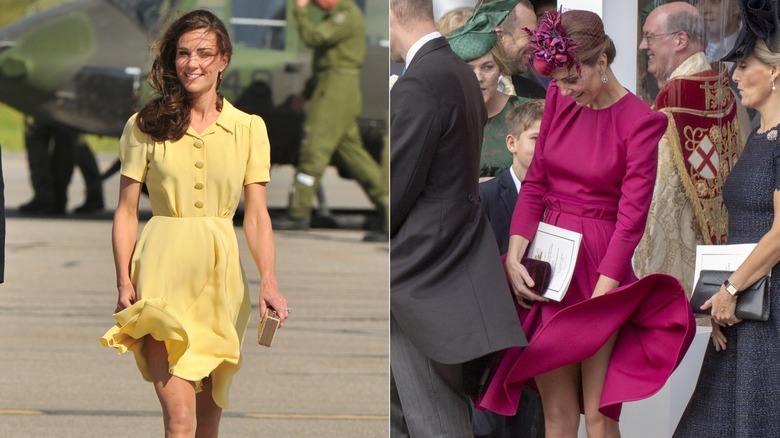
There's a type of wardrobe malfunction that has nothing to do with how a dress was put together. It comes down to a well-timed gust of wind, catching the hem in a moment when all cameras are unfortunately pointed at the person. Queen Elizabeth II had the perfect workaround for this, using weights to keep her skirt in place. Royal stylist Stewart Parvin said the hardware was inspired by ordinary curtain weights. "I just pop a couple of weights into the hemline of her dresses and coats and it makes them hang beautifully," he told the Daily Mail in 2012. "If there is a flap in the coat then I will sew in one on each side of the split to even it up."
Kate Middleton has had her fair share of run-ins with it, but both she and Meghan Markle started to employ the approach, turning it into something of a convention for the royals. Nobody is technically required to weigh their hem, but the dressmaker's fix serves as a functional precaution against a wayward breeze that has betrayed many a celebrity before. It's one of the royal fashion hacks that anyone could borrow – which is fitting, because royal style choices that hold up tend to be practical fixes, not the dramatic bans the tabloids love. Think of all the edicts that did have a precedent but were blown out of proportion — the covered-up shoulders rule, the no-open-toe shoes, the no-thigh-baring lengths — each treated as law right up until a royal ignored it, and the world kept turning.
Fiction: Royals are forbidden from wearing black during the day
It's not often that you'll see a member of the British royal family wearing black during the day, unless they're in mourning. In practice, it's more a convention than a prohibition.
After all, it's worth bearing in mind that the most famous dress in modern royal history exists precisely because Princess Diana understood the subtle distinction between a custom and a command. She was testing the limits and going against the norm even then, but the iconic black dress she debuted at the 1994 Vanity Fair dinner ended up immortalizing her in the one color she was told to avoid. The truth about Princess Diana's "revenge dress" is that its defiance was the whole point, since it landed the same night Prince Charles admitted his infidelity on national television.
Though the color black is genuinely avoided at weddings and happy milestones for its mourning association, the protocol has proven to be one of those rules that can bend without breaking. Kate Middleton, Princess of Wales — known for adhering to the dress code most of the time — has made her own exceptions, and Meghan Markle, Duchess of Sussex, has also been photographed doing the same on multiple occasions. Curiously, the black mourning dress gained more significance under Queen Victoria, who made a habit of wearing it all the time after Prince Albert died in 1861. The natural evolution of that tradition can now be seen in the strict dress code royals follow at funerals – where the musts include black attire, knee-length hems, and bare nails, tiaras, bright colors, and anything casual are off the table.
Fact: During state visits, royals dress to flatter the guest or host nation
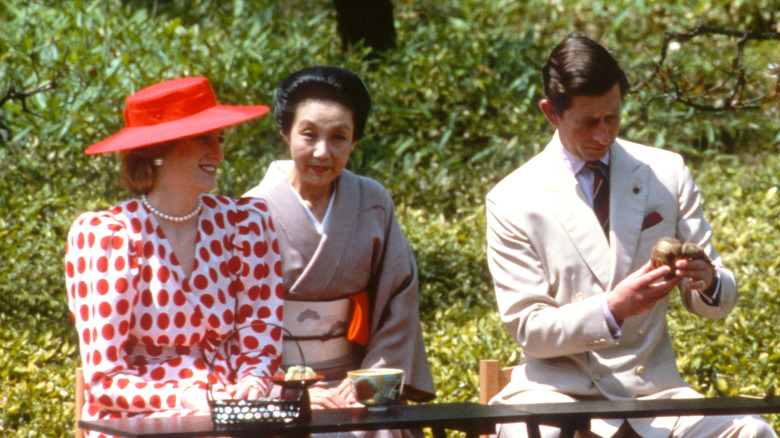
Everything about a royal, from their style choices to what they eat and how they interact with politicians and the public, is calculated to send a message. That's why when royals travel, their clothes are expected to do diplomatic work as well, and it usually manifests in how they arrange the colors or the fabrics in homage to a host nation's flag or symbols.
Amanda Wakeley, a British fashion creative whose clients have included both the Princess of Wales and the Duchess of Sussex, described the practice as "sartorial diplomacy" in a chat with Hello! Magazine, and further elaborated: "The sophistication comes through interpretation, subtle shifts in tone, fabric, and cut. It's highly intentional, but always balanced so it never feels overly obvious or contrived."
On a 2017 tour of Germany, Catherine Middleton, Princess of Wales, and the family stepped out in a blue color palette. In Dublin, she leaned into greens and even opted for on-theme accessories. When Princess Diana visited Japan in 1986, she came out in a polka-dot dress that paid tribute to the country's flag. When King Charles turned up to the COP28 summit in 2023, he wore a Greek-flag tie that some interpreted as a nod to the tensions over Greek museum artifacts. It could also have been a nod to his heritage, as his father was from Greece.
Fiction: You can't wear the same color as the queen, and you can only wear one nail polish
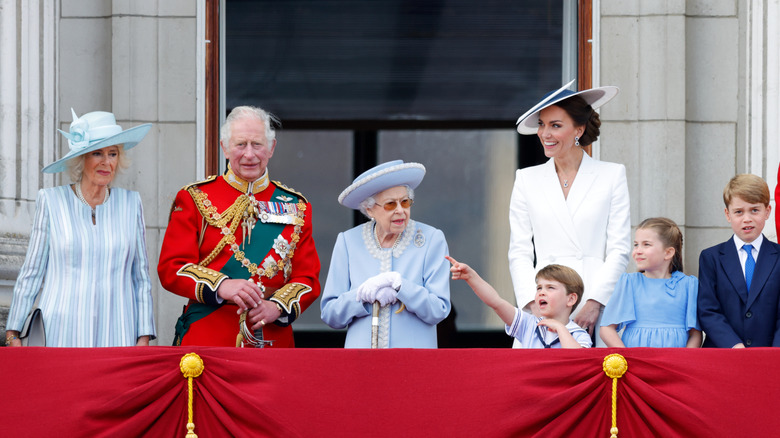
A lot has been said about why turning up in the same shades as the monarch or upstaging the sovereign is a breach of protocol — even by the royals themselves. But there's an easy way to disprove the theory, and it comes from the one person who'd actually know. In her memoir, Queen Elizabeth II's longtime dresser Angela Kelly wrote that within the family, showing up in the monarch's color was actually a non-issue. "Other guests, though, feel they shouldn't be in the same colour as Her Majesty," she wrote, per People. And even if they did, she added, it wouldn't have bothered the queen in the slightest.
In fact, far from avoiding the overlap, the royals sometimes coordinate on purpose, like at 2026's Trooping the Colour, where Kate Middleton's adorable style bond with her children Louis, Charlotte, and George caught the eye. It's the same principle with the nail polish story or the no wedge heels story. The former says royal women are limited to a single low-key hue, tracing back to 1989 when the queen's hairdresser reportedly asked for a pale pink and called it "the only color Her Majesty would wear" (per Marie Claire). But the late queen hardly wore polish at all.
As for the wedge shoes, it has been said that the queen considered them inappropriate. Kate respected that preference when she was attending her, but freely wore them elsewhere.