
Why You'd Never Catch Dolly Parton Without Her Signature Style
We may receive a commission on purchases made from links.
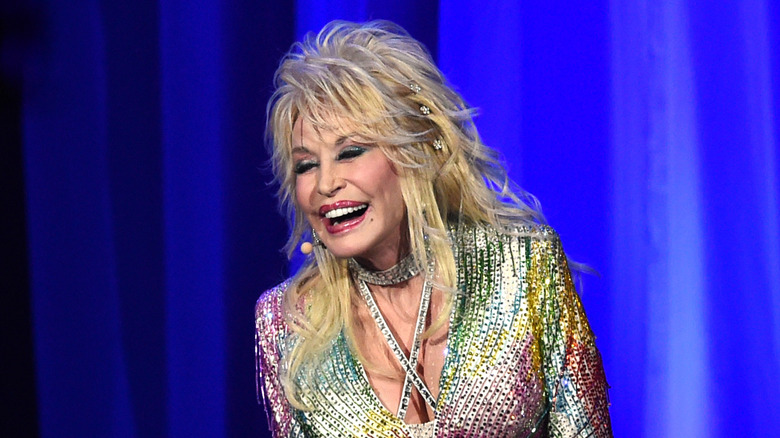
The name Dolly Parton immediately conjures an image of a larger-than-life figure with big hair, loud makeup, dazzling clothes, enhanced features, and a personality as magnificent as the music legacy associated with it. This multi-dimensional visual is only fitting for a cultural icon who fashioned a persona so colorful that to honor Parton's amazing life as an artist would be incomplete without celebrating her unmatched style.
The Grammy-winning country singer, who died on August 25, 2026, of cancer, was a truly original fashion icon — even though she demurred at the notion of being considered one. Right from her girlhood days in Tennessee, where she grew up as a poor farmer's daughter who found creative ways to beautify herself, to her time as a globally beloved celebrity who, despite relentless lampooning, stayed true to her authentic tastes, Parton was a masterclass in catching every curveball and turning it into an opportunity for greatness.
The best part was that she refused to compromise. "It took me probably years longer to be taken serious, but I wasn't willing to change it, and I figured if I had the talent, it'd show up sooner or later," she told The Guardian. And she did; the industry could overlook a talent as exceptional as Parton for only so long. There have been few, after all, who could play perfect chords with extra-long acrylic nails. Here is the significance behind Dolly Parton's signature style and why she was never seen without it.
Dolly Parton discovered her taste for flamboyance early
People spend entire decades looking for a personal style that speaks to who they are. Dolly Parton found it early in life. Growing up in the rural environs of Locust Ridge in East Tennessee, the future country legend lived a simple youth in the mountains as far removed from showbiz glam as could be. For those who look, however, fashion inspiration is everywhere. And Parton found it — in the magazines and fantasy books she read, in the local people she observed, and what can only be described as an inborn instinct for flamboyance.
"I wore my skirts so tight I couldn't hardly wiggle in them. Even as a little bitty kid. Even before I had a figure I liked my clothes snug and tight," she told Lawrence Grobel for a Playboy feature (via Blank on Blank). Fashion was something Parton was seemingly never indifferent to. Even during her initial days of performing as a local teen singer around Tennessee, she was particular about how she dressed.
As she wrote for Time magazine, she "never wore just 'whatever.'" She found a trusty collaborator in her mother, who was far more supportive of her daughter's dress-up adventures than convention allowed at the time and would quietly sew push-ups into her dresses or cut their necklines low and make them super tight, just the way Parton liked it.
Her style inspiration came from unusual places
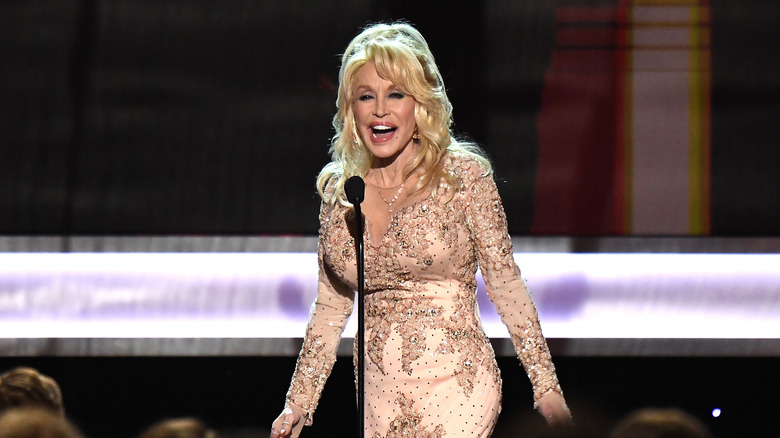
Dolly Parton didn't discriminate while finding style inspiration in her youth, picking up tidbits from anything and everything that caught her eye. As she often reiterated throughout her career, some of her earliest influences came from local women in Tennessee, whose bold dressing didn't go down well with her conservative mountain community but piqued Parton's interest. "She was flamboyant. She had bright red lipstick, long red fingernails. ... short skirts, low-cut tops, and I just thought she was beautiful," Parton told The Guardian, recalling one such woman she admired and wanted to be like.
Parton also audaciously searched for her look in catalogs published by the lingerie brand Frederick's of Hollywood, whenever she could get her hands on them. "[That] seemed to be my style and seemed to fit my personality, so I just went for it," she told People. It helped that young Parton, with what seemed like an inborn disposition for authenticity, didn't set too much store by what society thought of her choices. "I felt if I was comfortable in whatever I was wearing, then people would be comfortable around me."
Her love affair with makeup began when she was young
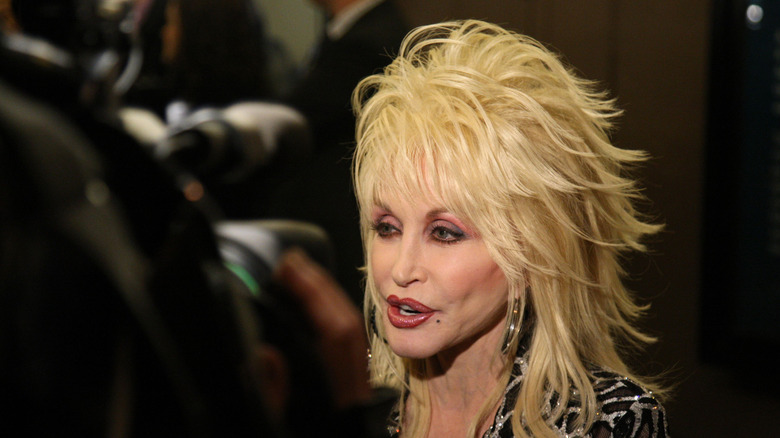
As a young girl with a growing appetite to beautify herself but with scant resources, Dolly Parton improvised and made the best of what was available around her beloved Tennessee mountain home. Nature became her makeup store, presenting her with pokeberry juice for lipstick and honeysuckle blossoms for fragrance. With flowers and fruits all around, Parton also didn't have to look far for jewelry to accessorize her looks.
"If a girl has dreams and creativity, she can come up with all kinds of ways to look, and feel, pretty when she doesn't have the real thing," she wrote in her fashion memoir "Behind the Seams: My Life in Rhinestones" (via Marie Claire). Simple household items, like the burnt ends of matchsticks and colored antiseptic ointments, were also part of Parton's wild and wonderful vanity kit.
Creative as they were, Parton's beautification rituals didn't go down well with her father, who, like many in their community, held certain stereotypes about women who indulged in makeup. Across multiple interviews, Parton recalled being physically punished for her fashion experiments at home, until she began buying real makeup and found enough gumption to stand her ground.
She tried changing her look once and didn't like it
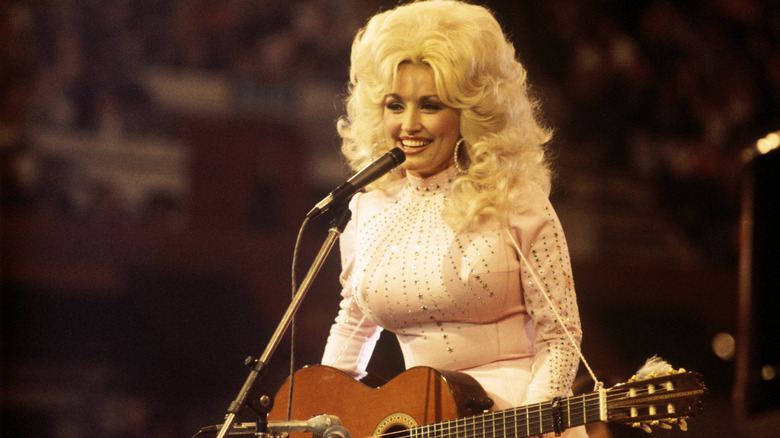
The entertainment industry, which runs on tried-and-tested formulas of beauty, unsurprisingly took time to come around to what Dolly Parton always said was "a country girl's idea of glamor." Coming from a tradition of watching legendary performers like Jean Shepard and Rose Maddox, and drawing on their country chic, Parton brought her own notes on fashion when she entered showbiz in the 1960s.
"Country stars had to have big hair and some sparkles, and you had to have a Cadillac," she wrote in a piece for Time magazine. "I related to the clothes that were worn then." Her early superiors, however, had other plans for her. In a bid to mold her into a pop figure, record producer Fred Foster and his team tried to turn Parton's personal style around by flattening her hair and putting her in clothes that didn't speak to her.
"I might as well have been naked, because they took away my own look," she wrote. In all her youthful earnestness, Parton tried to reason with them: "I have to dress like me. I can't do what I'm supposed to do as a performer if I don't feel comfortable within my own skin." She fortunately made it through to the other side with her sparkle intact. Later, when people told her to do less or be less, she'd simply say: "Go to hell. I ain't doing it" (via "What Would Dolly Do? Radio").
Dolly Parton wanted to be – and was – an original through and through
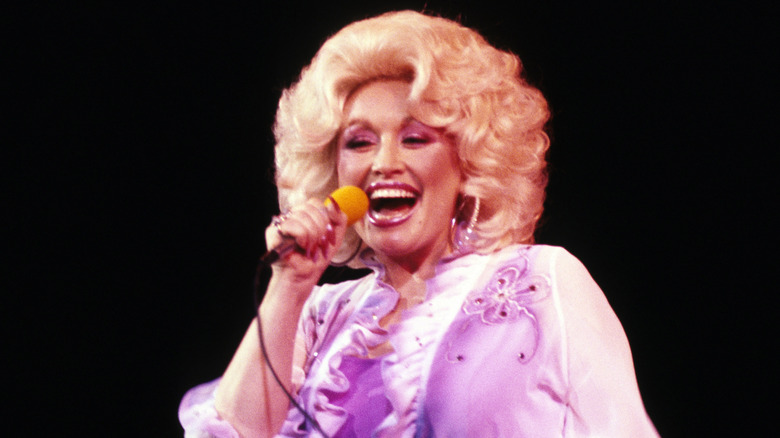
"I would never stoop so low as to be fashionable." This is what Dolly Parton said to ABC News' Barbara Walters back in 1978, when the legendary interviewer questioned why she wore "extreme clothes." That mantra of originality lay at the crux of Parton's style sensibilities throughout her life, instilling in her enough bravado to stray from trends and, despite it — or rather because of it — remain relevant to the fashion world.
She reiterated on multiple occasions that her wardrobe was driven by sheer desire; she liked snug fits and shimmer on her clothes, so "really tight and really sparkly" (via The New York Times) became her go-to fashion rule. "I never cared what other people did, and I never cared what other people said about what I wore. It was more important that I be comfortable in my own clothes and in my own self," she told British Vogue, asserting her individuality in the same breath that she called herself "an eyesore" and chuckled about it.
She didn't consider herself a natural beauty, so dressing up helped
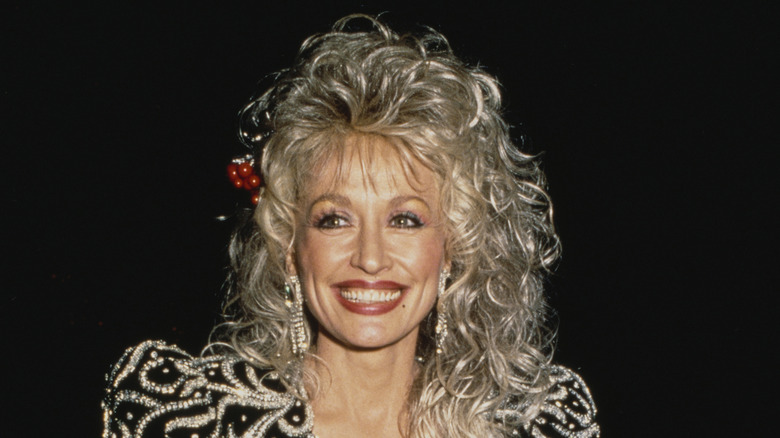
The dimple-cheeked, wide-grinned Dolly Parton didn't consider herself beautiful — a belief that, in large part, shaped her iconic fashion sense. She once told Andy Warhol for Interview magazine: "I wear long nails because I have short, little, fat hands, I wear high-heeled shoes because I'm short, and I wear my hair real big because my hair won't do everything I want it to." These self-deprecating hot takes about herself often elicited a surprised reaction from whichever interviewer she sat with. But Parton insisted that she put in a lot of effort to look the way she did, and took pride in it.
Her lack of defensiveness about her appearance — a rare quality to come by in show business — was perhaps why audiences embraced Parton, in all her painted glory, without judgment. She didn't belong to the "woke up like this" club and was surreally honest about enhancing her features to feel a little more glamorous than she did naturally. As she told CBS News' Tony Dokoupil with a laugh, "I wasn't naturally pretty, so I make the most of anything I've got. [Y]ou should've seen me this morning before I got ready to see you."
Her wigs were both practical and an inseparable part of her image
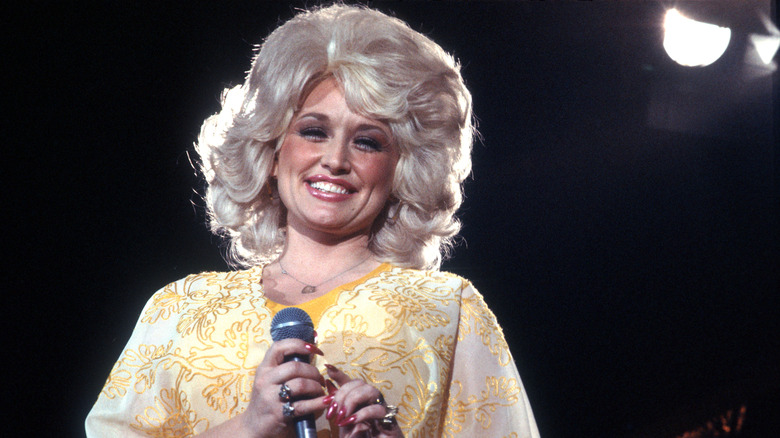
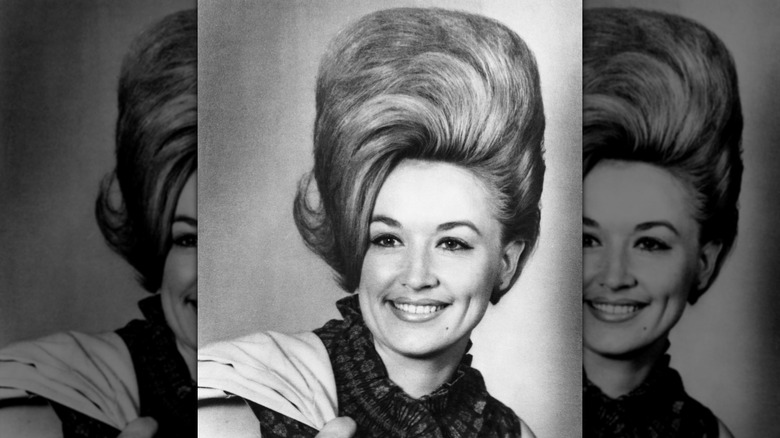
It wouldn't be a stretch to say that Dolly Parton's wigs were inseparable from her stardom. Try to imagine the country legend without her signature platinum bouffant that rose several inches above her head; the thought alone feels blasphemous. As one of the earliest, most definitive trademarks of her big bold fashion aesthetic, Parton's textured golden locks were a key part of her public persona. Though the total number of wigs she owned remains a mystery, Parton once famously joked that she had at least 365 — one for every day of the year (per People).
Parton was inclined toward experimenting with her hair from a young age, long before she discovered the power of wigs as a performer. "When I was a freshman in high school, hair teasing came out. I'd already bleached my hair and got in big trouble," she recalled for Interview magazine. "Being creative with my hands, I started teasing. I fixed everybody's hair. I had the biggest hair in school."
When she transitioned to showbiz in the '60s, the golden era of voluminous styles like the beehive, Parton and her love for big hair fit right in. She eventually incorporated wigs into her wardrobe as a healthier, more practical alternative to styling her hair every day. As she told British Vogue, "It was handy to have several looks that I could just choose from, and never have a bad hair day."
The joke was on people who thought her style came cheap
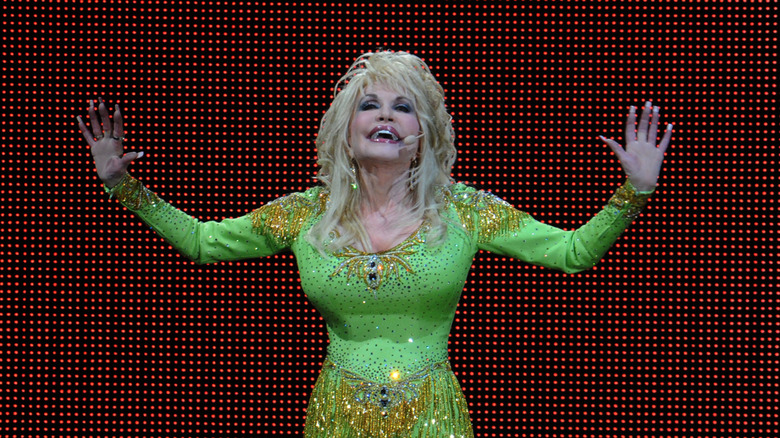
As one of the richest country singers in the world, with a staggering net worth of $450 million as of this writing, Dolly Parton was certainly not hurting for money. So one can best believe that her maximalist aesthetic — that in the face of traditionally quiet, bare-toned markers of luxury could be perceived as tasteless or inexpensive — came about as a matter of pure choice. In fact, the funniest, sharpest punchline to the running gag about the way she looked memorably came from Parton herself: "It costs a lot of money to look this cheap" (via The Guardian).
What her detractors often didn't realize was that Parton was in on the joke from the beginning. She melded her early penchant for loud, in-your-face glamor with her awareness of the theatrics required to make it big in entertainment, creating a character people would be compelled to sit up and notice.
"Show business is a money-making joke, and I've just always just liked telling jokes," she once quipped to Barbara Walters for ABC News. "All these years the people, you know, have thought the joke was on me, but it's actually been on the public. I know exactly what I'm doing, and I can change it at any time ... I am sure of myself as a person. I'm sure of my talent."
She didn't believe in the mantra of less is more
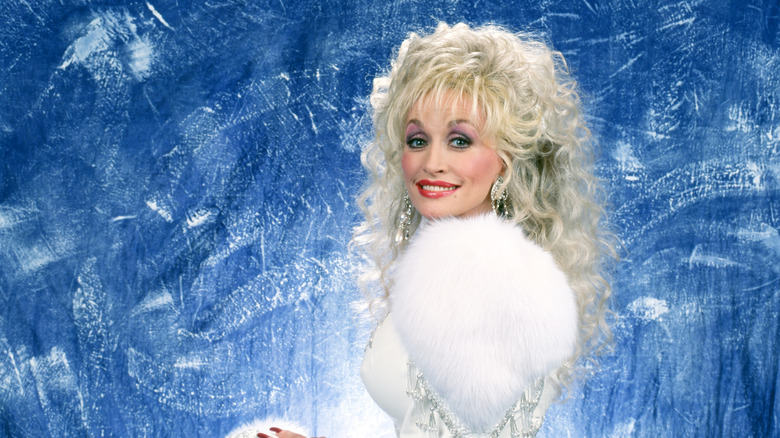
Dolly Parton left no rhinestone unturned when it came to decking up. Always dressed to the nines, the Grammy-winning legend was an unabashed believer in the fashion philosophy of maximalism and, on more than one occasion, denounced the "less is more" ethos often equated with elegance. "More is more" was famously the motto she lived by. "Whoever made up that 'less is more' is full of it," she once proclaimed to Vogue.
Massive hairdos, sequins and beads, embellished outfits cinched extra tight at the waist, painted talons, stiletto heels — Parton was synonymous with everything extravagant, and proudly so. The "I Will Always Love You" singer made no bones about the fact that these signature elements made her feel both beautiful and noticeable to the public.
But at the heart of the discourse, there seems to have been a girl who simply liked to play dress-up. So much so that she famously said that if she were born a man, she would have been a drag queen. "[J]ust 'cause I'm so damned gaudy. Because I like all the flash and the glitter," she told Terry Gross on the "Fresh Air" podcast. "I'm comfortable being myself, even if I make other people uncomfortable with the way I look."
Dolly Parton was just as well-dressed at home
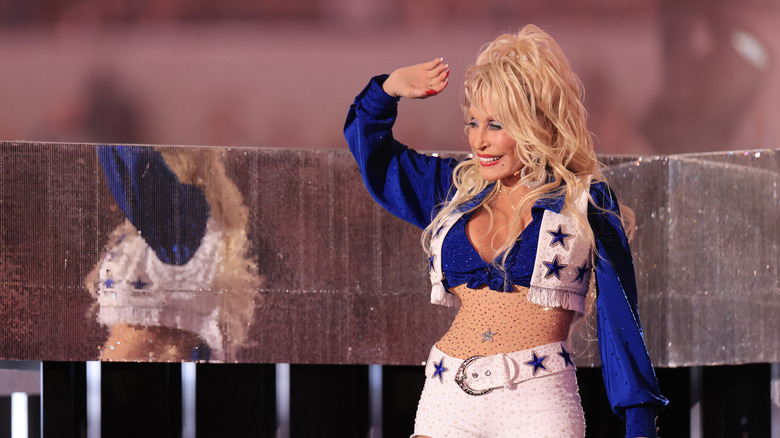
Dolly Parton was so committed to the bit of looking the way she did that, beyond a few photos from her early childhood, no pictures publicly exist of what the country legend looked like underneath all that makeup and those wigs. One of the most enduring pieces of lore about the country legend was that she wore makeup to bed. "Because I never know if there's going to be an earthquake or a tornado or a storm and I'm going to have to go out in the middle of the night," she joked to the Wall Street Journal Magazine.
Apparently, the only time Parton was barefaced was during a brief window in the morning when she replaced the previous night's makeup with a fresh layer. "I don't like to go home and just tear down completely, because my poor husband has to look at me," she said — a sentiment she echoed throughout her career, referring to her husband of 58 years, Carl Dean.
That is not to say that the forever camera-ready diva didn't let up at all. Parton revealed that she roamed largely wig-free at home and, unbelievable as it sounds, also threw her natural hair into a scrunchie at times (see what Parton's real hair looks like). She drew the line at sweatpants, though.
She was unapologetic about enhancing her body with surgery
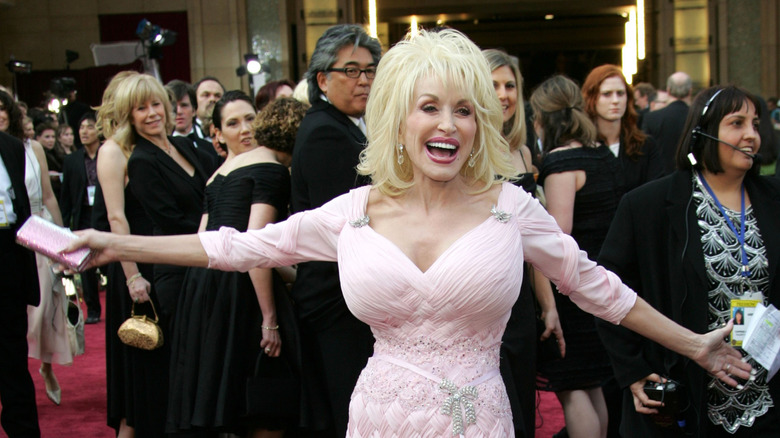
In an industry where cosmetic surgery and artificial enhancements are as commonplace as they are hush-hush, Dolly Parton was among a rare breed of truth-tellers who spoke candidly about getting work done on their bodies. Some of her most iconic Dolly-isms come from her unapologetic, often hilarious commentary on her self-maintenance procedures. "If something is bagging, or sagging, or dragging, I'll tuck it, suck it, or pluck it," she once famously told Saga Magazine.
Her augmented breasts were easily her most caricatured feature, with Parton herself leading the chorus of jokes for years. As one of her most famous quips on the subject went: "I was the first woman to burn my bra – it took the fire department four days to put it out" (via The Yorkshire Post). From facelifts to Botox and fillers, Parton indulged in everything that could keep her looking youthful.
But, as she often proclaimed, these cosmetic updates were far less extensive than people believed. "If you live with your face out there, you got to be careful. So I try to do just little bits at a time. I don't do like, you know, really big stuff," she said on "The Howard Stern Show," saying that good doctors and prudent judgment were key considerations before going under the knife.
A self-assured woman, she knew she was real beneath it all
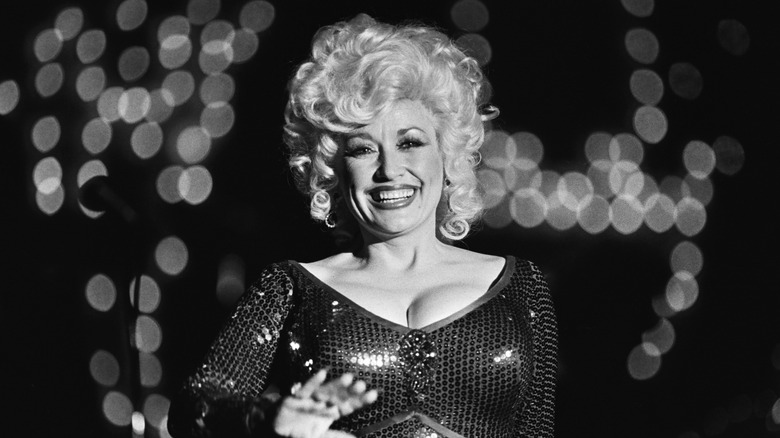
"Cartoon," "artificial," "phony-lookin'," "gaudy" — these weren't criticisms hurled by people. Dolly Parton used these labels to describe herself. And this, perhaps, was the late country legend's most enduring quality. Few celebrities are as self-assured and self-deprecatory as Parton. From poking fun at her larger-than-life persona to speaking brazenly about her efforts to look pretty, Parton rarely missed an opportunity to be refreshingly honest about herself, always with a wisecrack at the ready. As she told Elle: "I look totally artificial, but I am totally real, as a writer, as a professional, as a human being. A rhinestone shines just as good as a diamond."
Parton drew confidence from her strong sense of self that, underneath all her famous embellishments, was secured firmly by the trust she maintained in her music abilities. Not to mention, her large portfolio of humanitarian work — from Imagination Library to disaster relief and healthcare donations — which only furthered the idea that Parton was about way more than what met the eye. "The thing that's always worked for me is the fact that I look so totally artificial, but am so totally real. It gives me something to work against. I have to overcome myself. I have to prove how good I am," she told The Guardian.