
7 Iconic Female Writers & Poets Who Used Male Names
21st-century women are deeply involved in writing and publishing, but it took centuries for them to get there. Despite women's contributions to the humanities in the ancient world, men dominated writing and publishing for many years. Men's control of the writing industry didn't prevent women from gaining an education and a hunger for life common among writers and poets. However, many had to compromise to get their foot in the door.
Before the 20th century, many female writers often used male names, and some lived their entire lives without the public knowing they birthed some of the greatest literary works. The reasons for using a male pseudonym varied from avoiding prejudice to keeping their lives as private as possible. From the Brontë sisters to Louisa May Alcott, female writers achieved so much under male names that their works inspired essential period pieces similar to "Bridgerton" and romance dramas like "Queen Charlotte."
All of the Brontë sisters wanted privacy
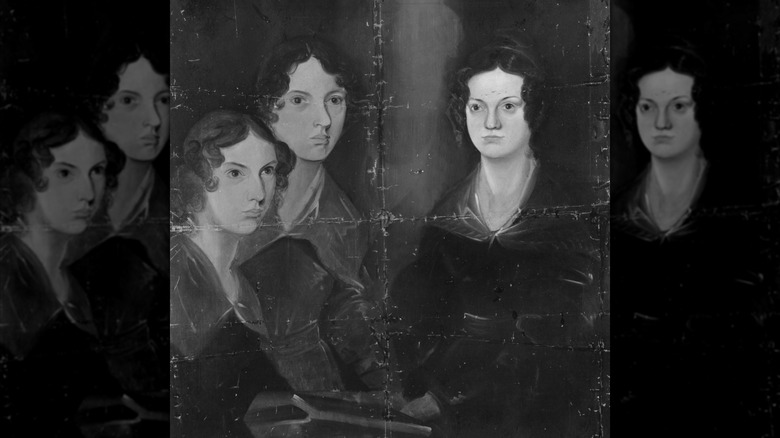
Charlotte, Emily, and Anne Brontë were born in the 1810s and 1820s to an Irish minister father who valued all his children's education. With their mom and two eldest sisters dying within four years, the Brontës' hardships influenced their gothic novels. In the 1840s, all three sisters decided to take the last name Bell and went by Currer, Ellis, and Acton, respectively. The trio published a collection of poems under these pseudonyms in 1846, which includes Emily's famous quote, "Love is like the wild rose-brier." The following year, Charlotte published "Jane Eyre" while Emily published "Wuthering Heights," and Anne published "Agnes Grey."
Although the Brontë sisters wrote and published more after their first novels, Charlotte revealed their gender identities in the "Biographical Notice of Ellis and Acton Bell," released after Emily and Anne's deaths. Charlotte explained that they didn't want the public scrutiny that comes with being a female writer. "Averse to personal publicity ... we did not like to declare ourselves women, because — without at that time suspecting that our mode of writing and thinking was not what is called 'feminine' — we had a vague impression that authoresses are liable to be looked on with prejudice," she wrote (via The Brontës).
Elizabeth Gaskell's pen name foreshadowed her novel's topic
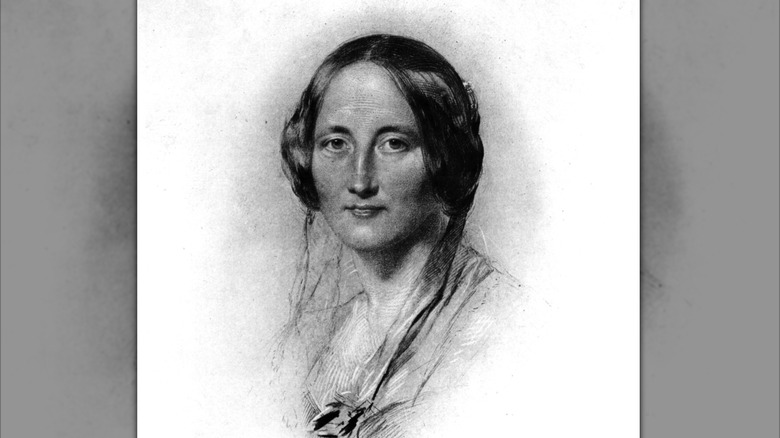
Many know the Brontës, but their contemporary — and one of Charlotte's friends — Elizabeth Gaskell is often overlooked. Gaskell was born as Elizabeth Cleghorn Stevenson in 1810 and grew up in northwestern England. Like the Brontës, she drew inspiration from her childhood and the hardships in adulthood to create her novels. Gaskell also published shorter works under the pseudonym "Cotton Mather Mills" before becoming a novelist. Her odd pen name pointed towards the subject she explores in her most famous work, "North and South."
Gaskell anonymously released her first novel, "Mary Barton," in 1848 and was listed as "the author of 'Mary Barton'" on the title page of "North and South" (via Dickens Journals Online). Using a pseudonym and being anonymous definitely got her foot in the door. Though the English author didn't keep the pen name for her entire career, which spanned 8 novels and some novellas and nonfiction books by 1866. She printed her name as "E. C. Gaskell" in the 1857 biography "The Life of Charlotte Brontë," possibly due to the increased recognition of "North and South," "Mary Barton," and "Cranford."
George Eliot protected her unconventional love life
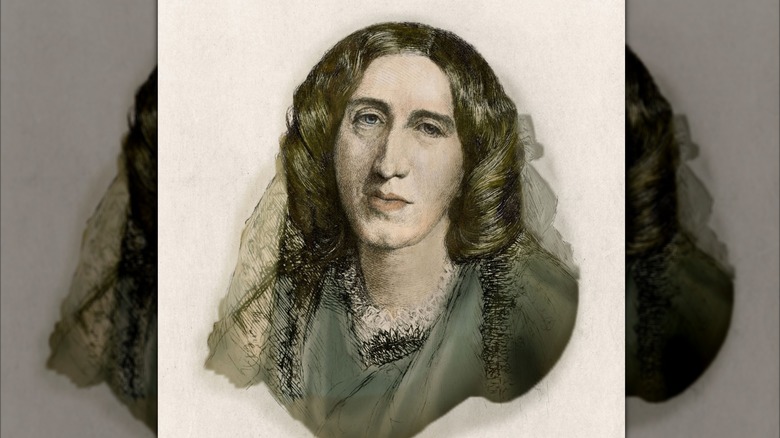
English author George Eliot was born Mary Anne Evans in 1819. Her father, Robert Evans, invested in her education not only because she was a bright child, but also because he thought her looks would make her a less favorable bride. Robert was wrong about his daughter's desirability. However, her life partner, George Henry Lewes, was married. Mary Anne created a pen name from her philosopher lover's first name and the last name Eliot to conceal her identity and unconventional lifestyle from the world.
From the 1850s to the year before her death, George Eliot published seven novels and dozens of poems. Eliot's second to last novel, "Middlemarch," received mixed reactions while she was alive, but was praised after she died in 1880. Virginia Woolf called it "one of the few English novels written for grown-up people" in the Times Literary Supplement, and Barbie director Greta Gerwig considers "Middlemarch" a must-read for different stages of life (via The New Yorker).
Harriet Beecher Stowe used an alias after writing her most famous book
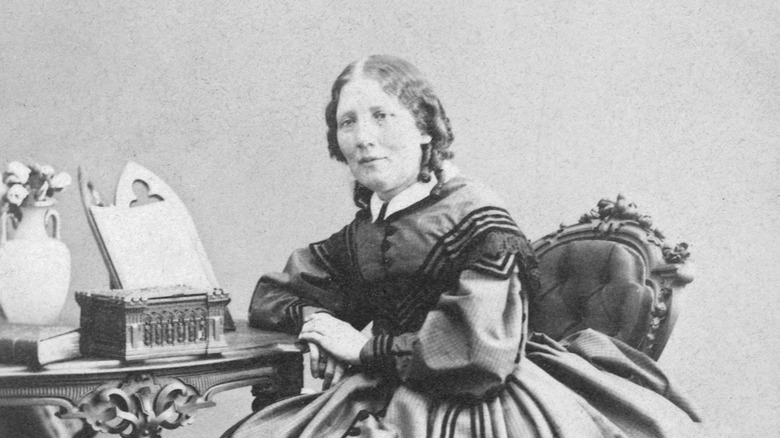
American writer Harriet Beecher Stowe was well-known for penning "Uncle Tom's Cabin" and other anti-slavery novels. Like other female authors trying to break into fiction, Stowe wrote shorter works before "Uncle Tom's Cabin." However, she used her name early on in her career, and the time she used an alias came a while after writing her most memorable book.
In 1863, her husband Calvin stopped working at a theological school in Massachusetts, and their household moved to Connecticut for a fresh start. Stowe's writing proved successful, and the family depended on her income. The following year, she started writing for The Atlantic Monthly under the pen name Christopher Crowfield. Her essays included tips on household management and decorations, likely inspired by settling into her new home, which she described in a letter as "a scene of the wildest chaos" (via Library of America). Her son Frederick fought in the American Civil War, so writing about an imaginary wife under a male name might have relieved Stowe from the stress of war.
Although Stowe never stated her reasons for becoming Christopher Crowfield, her name change wasn't really a secret. The Atlantic Monthly credited Stowe in Crowfield's pieces, and a review in The Ladies' Repository complained about the new name. It read, "The veil is no veil, and should therefore not be worn" (via The Library of America).
Louisa May Alcott's short stories were too dark to use her real name
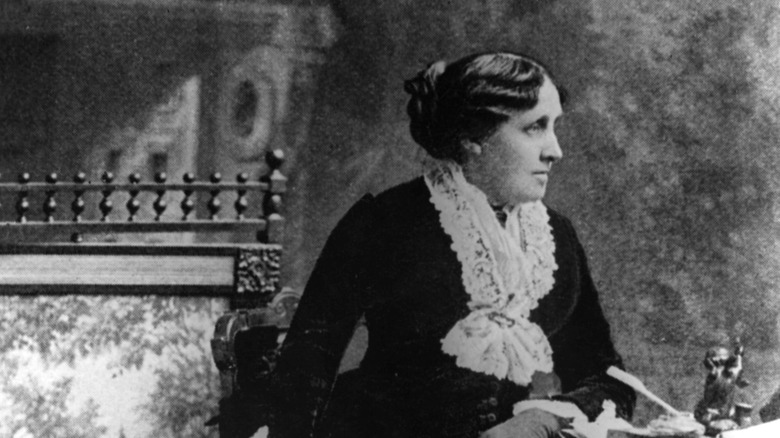
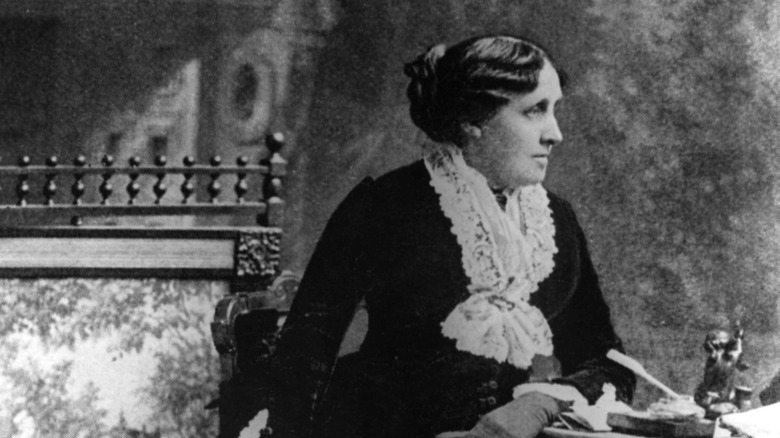
Louisa May Alcott is an impactful American writer who had to use a masculine name for her short stories. Alcott didn't grow up wealthy. Her middle-class parents were part of the Transcendentalist movement, which resisted the increasing preoccupation with money and encouraged self-improvement through intangible things. Writing was a solution for Alcott's poverty, but her early work was very different from her novel "Little Women." Under the name A. M. Barnard, Alcott's short stories criticized how marriage was the only source of financial security for women and explored darker topics like substance use.
It was a smart move to use a different name for her more controversial works since it didn't alter her reputation as a children's writer and likely protected her family from public scrutiny. It took years after her death for people to find out who Barnard truly was. Her journey from writing as Barnard to writing under her real name served as inspiration for her "Little Women" character Jo March. Alcott's lifestyle also seemed to embody the novel's famous quote: "I am not afraid of storms, for I am learning how to sail my ship."