

What Happened To '70s Star Lee Grant? The Centenarian Has Had An Incredible Life
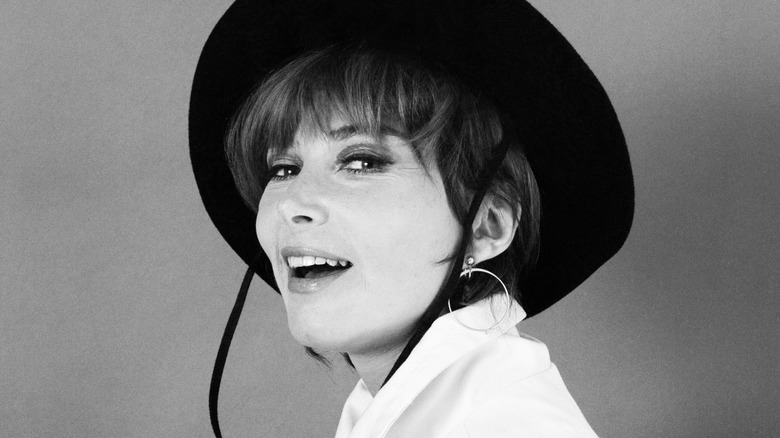
With an astounding career spanning eight decades, actor and filmmaker Lee Grant has lived quite the extraordinary life and is one of the last living stars of Tinseltown's notorious blacklist era. The prominent centenarian celebrated the monumental birthday in 2025, with her cinematic contributions and inspiring attitude endearing her to audiences all around the world. As an old Hollywood star who has faced tragedy, Grant's longevity in the industry is truly something to marvel at.
Instead of wallowing in her 12-year exile, Grant pivoted her focus to the theatre and remained fiercely defiant against the system, refusing to cooperate and rat out her peers. She experienced a major career resurgence after her name was removed from the Hollywood hit list, going on to dominate the screen in the '60s, '70s, and beyond. The Academy Award winner memorably starred in classic films such as "In the Heat of the Night" and "Shampoo." She further showcased her talents by directing critically acclaimed documentaries like "Nobody's Child" and "Down and Out in America." Her story and fighting spirit continue to resonate with people and have proven to be truly transcending.
Lee Grant attended Juilliard and joined the American Ballet Theatre
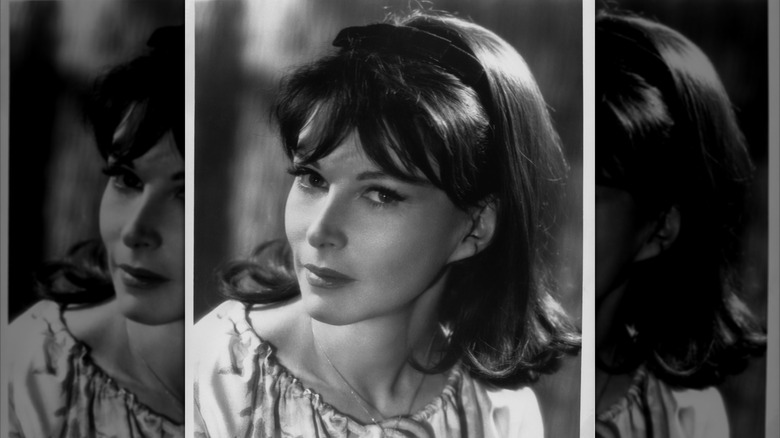
Born Lyova Haskell Rosenthal on October 31, 1925, in Manhattan, New York, Hollywood legend Lee Grant was the only child of childcare worker Witia Haskell and educator Abraham W. Rosenthal. The future starlet was the pride and joy of her parents, as her mother had been a Russian Jewish immigrant who had fled the Ukrainian city of Odessa to avoid the pogroms, a series of violent antisemitic attacks and riots.
"My mother's job was to mold me into her American Dream. Didn't young Witia from Odessa expose the child in her belly to every art museum in New York City, every day that she could carry me on her long legs? The magic of transformation was real in her young life," Grant poignantly wrote in her memoir, "I Said Yes to Everything" of her upbringing (per CBS News). "From the time I can remember remembering, I was my mother's beloved thing, little girl, petted, brushed, combed, bathed, fed, beautiful, lived through. Her life. Her lovely sweet breath. The light in her hazel eyes."
In 1931, Grant made her stage debut at the Metropolitan Opera in "L'Oracolo" and became a member of the American Ballet Theatre when she was just 11. Grant attended many prestigious schools during her youth, including Juilliard and the Art Students League of New York to study ballet, music, and the acting craft, helping pave the way to her enduring career on both the screen and stage.
She studied the craft under Sanford Meisner and Uta Hagen
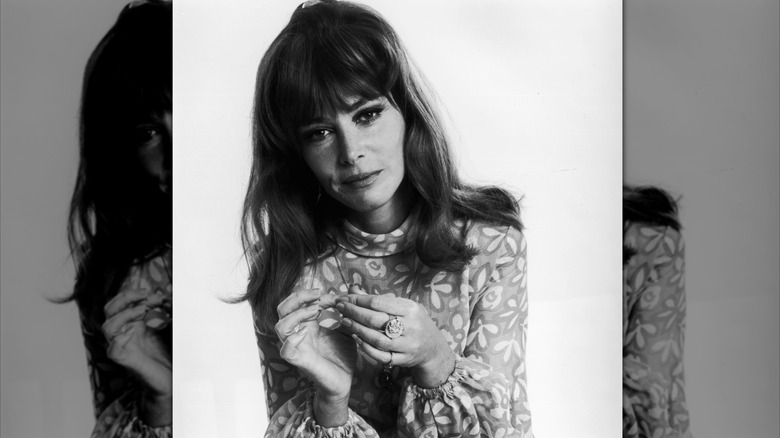
After graduating from high school, Lee Grant was awarded a scholarship to the prestigious Neighborhood Playhouse School of Theatre and studied under decorated teacher Sanford Meisner. More than 37 actors who studied under Meisner went on to receive Academy Award nominations, with his notable students including Hollywood icons like Grace Kelly, Gregory Peck, Jack Nicholson, and Kathy Bates. Grant's experience at the Neighborhood Playhouse helped set the foundation for her future acting career.
"When I went to the Neighborhood Playhouse in New York, I found the road into myself, a belief system, and a way to transform into whatever character. I was given a chance to explore, and the exploration was mind-blowing to me," she told Film Talk about her time at the conservatory. "The doors that opened in me as an adolescent were so astonishing, rewarding and fulfilling, that it was like a religion to me. Finding [acting teacher] Sanford Meisner, and finding all these emotions that I never used before."
She continued to pursue knowledge of the craft and enrolled at both the legendary Actors Studio and HB Studio, further learning under fellow theater teacher Uta Hagen. Much like Meisner, Hagen became a highly renowned acting teacher in New York who taught a slew of famous stars, including Whoopi Goldberg, Jack Lemmon, and Liza Minnelli. Grant's work with the two influential teachers ultimately paid off, as she would go on to make her professional stage in 1944.
She made her screen debut in Detective Story and won at Cannes
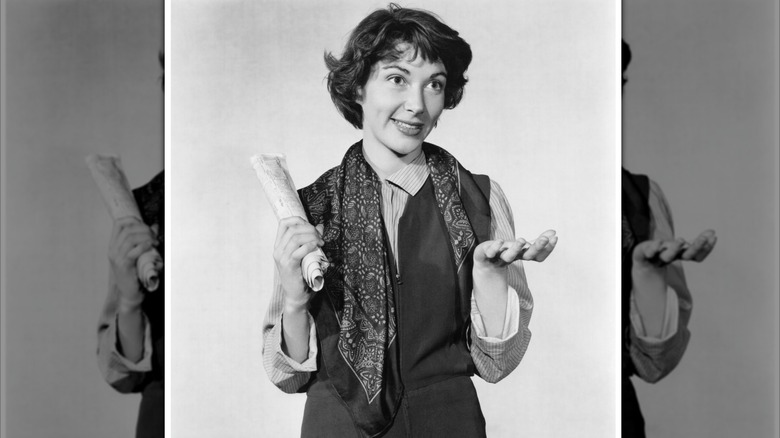
In 1944, Lee Grant kicked off her professional stage career when she served as an understudy for the role of Ado Annie in the Broadway musical "Oklahoma!" She then made her official debut in 1948's "Joy to the World." In 1949, Grant portrayed a shoplifter in "Detective Story" and reprised the role in the 1951 film, marking her first silver screen appearance. She starred alongside Kirk Douglas in the adaptation, with her performance earning Grant an Academy Award nomination for best supporting actress.
"Lee was only a kid, a beautiful young girl with extraordinary talent and a big future. You could see it. She was so good that she earned a best supporting actress nomination for her very first film role," Douglas wrote of the actor in his memoir "I Am Spartacus: Making a Film, Breaking the Blacklist" (via Alchetron). Grant also won big at the Cannes Film Festival and walked away with the best actress award, an impressive feat for the rising star. "That was a period of great growth for me," Grant told students at the Fordham Theatre Program of her early success. "I was very lucky to have this happen when I was so young, because I think I was the only one of that crowd, except the writers of course, who made it back to where they were when they were blacklisted." Despite making such an impressive splash in Tinseltown, Grant's promising career was tragically derailed.
Her blossoming career stalled after she was blacklisted for 12 years
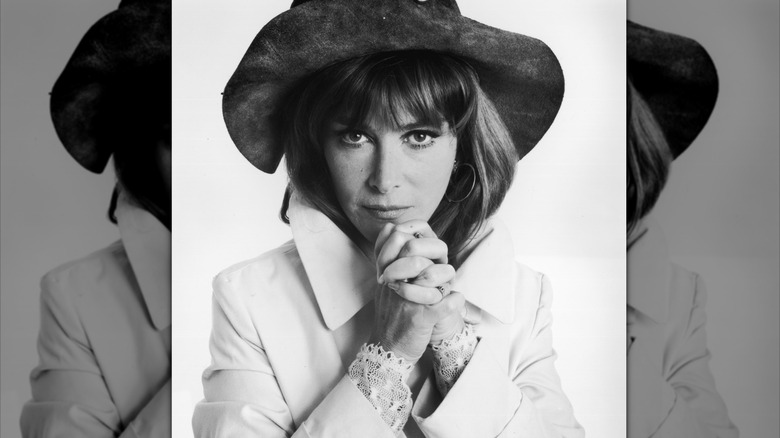
Following her meteoric rise to stardom, Lee Grant gave a heartfelt eulogy for friend and actor J. Edward Bromberg in 1951, who had been blacklisted by Hollywood after he was investigated by the House Un-American Activities Committee for suspected communism. Her speech garnered unwanted attention from the committee and her name appeared in the Red Channels publication. Grant had married screenwriter Arnold Manoff that same year, and he too had been named a communist by director Edward Dmytryk. "I was blacklisted," Grant said in an episode of the YouTube documentary series "The Thread." "And so for the next 12 years, I couldn't work in film or television. I kept on being called by the Un-American Activities Committee to name my husband, Arnie Manoff, who was a communist. And that's all they wanted. They wanted me to name my husband."
The starlet was blacklisted from the age of 24 to 36 and her once blossoming career was completely derailed because she was deemed guilty by association. During the tumultuous time in her personal and professional life, Grant remained defiant and refused to provide names to the committee. "NOT EVEN A SECOND! Never, never, never!" she fiercely told The Guardian when asked if she ever contemplated giving in. "I was filled with rage and frustration at the blacklisters, who I was living among," she further told the publication.
Lee Grant became a mother during her exile from Hollywood
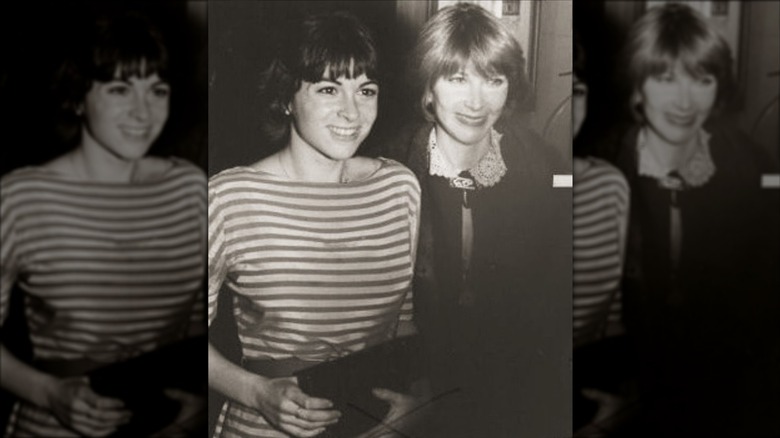
During her unjust exile from Hollywood, Lee Grant and her screenwriter husband Arnold Manoff (who also was blacklisted) welcomed daughter Dinah Manoff in 1956. She became heavily involved in the New York theatre community and remained defiant against her status in the industry, connecting with fellow creatives who also were blacklisted. Grant still found success on stage and starred in the Broadway show "Two for the Seesaw" while making appearances in a few minor films. "I had no film career anymore, but I still had Broadway because there was a contract between the Actors Equity and the Broadway theater producers never to have a blacklist in the theater," she said to Film Talk. "With that open to me, and with the New York theater community being so rich, loyal, and beautiful, it freed me to learn how to fight."
During this turbulent period, Grant found comfort in motherhood and her daughter Dinah, as she subsequently divorced Manoff in 1960. "Dinah was my grail, my constant; nothing and no one could get between us. Dinah and my need to support her financially, morally, viscerally, and my rage at those who had taken 12 working, acting years from my life, were what motivated me," she wrote of her daughter in "I Said Yes to Everything" (via The Town Line). Dinah went on to find her own success in the industry, notably portraying Marty Maraschino in "Grease" and Carol Weston in "Empty Nest."
She persevered and returned to the screen in the '60s
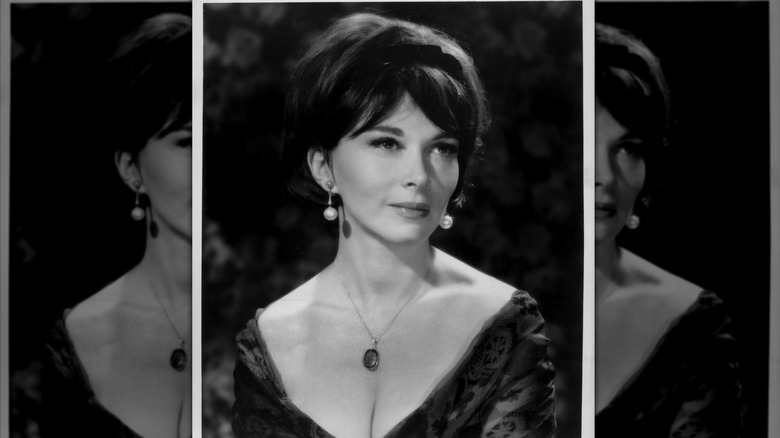
Despite being blacklisted by Hollywood for 12 years, Lee Grant persevered and managed to re-establish herself in the industry when she was officially removed from the list in 1964. She has been candid about what the blacklisting did to her psychologically and how her mistreatment shook her confidence as a performer. Grant got a facelift at just 31 in hopes of reclaiming some of the youth that was lost during her banishment from the industry. "I think that, psychologically, I was really damaged," she told The Hollywood Reporter. "I think that mentally I was really at a dead end. I was trapped. And I looked it. I didn't look like a kid anymore. I didn't know how I was going to make it. It was a very desperate time, and I needed it to really reassure myself because what I saw in the mirror was such a victim."
Grant re-discovered her confidence following the procedure, adding, "It was absolutely the best thing I could have done for myself." Following her physical and emotional transformation, Grant won an Emmy Award in 1966 for her role as Stella Chernak in the prime time soap opera "Peyton Place" and memorably appeared opposite Sidney Poitier in the Oscar-winning drama "In the Heat of the Night." She swiftly reestablished herself as one of Hollywood's most talented actors, nabbing roles in "Valley of the Dolls," "The Big Bounce," and "Marooned" while earning another Emmy nomination for "Judd for the Defense."
She delivered award-winning performances in acclaimed classics
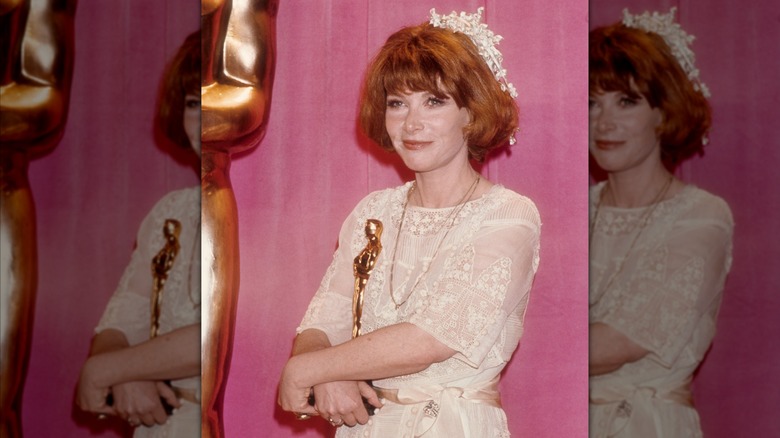
By the '70s, Lee Grant was thriving on both the big and small screen, once again proving herself to be one of the industry's most talented stars. Grant teamed up with director Hal Ashby for "The Landlord" and "Shampoo," the latter of which also starred famous '70s Hollywood heartthrob Warren Beatty. She received two Academy Award nominations for her commanding performances in each film, with Grant ultimately winning best supporting actress for her work in "Shampoo.""I would like to thank the artistic community for sustaining me in my wins and losses and sitting on the curb," she said in her acceptance speech before going on to praise Ashby. "My director, Hal Ashby, who encourages an actor to fly without a net because you know that he's there to catch you."
Grant stayed busy working, appearing in horror movies like "The Spell" and "The Swarm." She also starred as First Lady Grace Coolidge in the Emmy-winning miniseries "Backstairs at the White House." The '70s proved to be a formative period for Grant, as she reclaimed her former glory and triumphantly overcame her blacklisting status. "Whatever the decade, the '70s, had been, it was a good decade; artistically in film, a great decade," she wrote in her memoir (per Vulture). "Those people at that moment adored me almost as much as my mother did. I could celebrate the work and leave behind the torment. And probably my need to prove myself was over."
Lee Grant became an accomplished director and made Oscars history
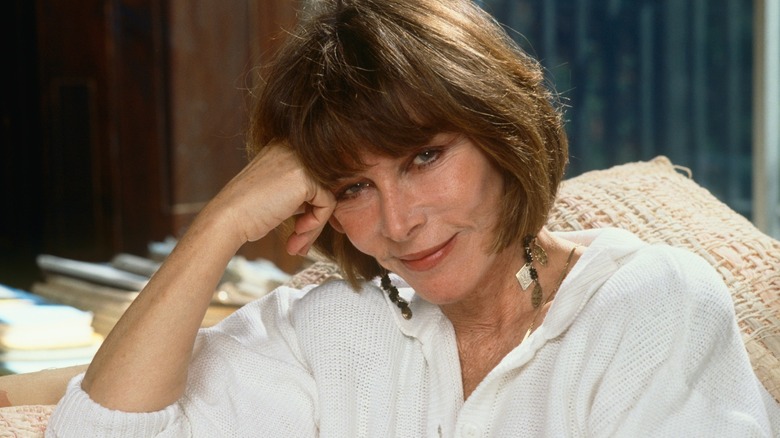
After her unprecedented success and return to Tinseltown, Lee Grant pivoted her focus to working behind the camera after she participated in the first AFI Directing Workshop for Women in 1976. She adapted the play "The Stronger" while involved in the workshop, with the class helping pave the way for her 1980 directorial debut, "Tell Me a Riddle." Grant directed documentaries centering on social issues, including "When Women Kill" and "Battered," before helming her acclaimed 1986 film, "Down and Out in America." Grant won the Academy Award for best documentary feature, tying with Brigitte Berman's "Artie Shaw: Time Is All You've Got," becoming the only Oscar-winning actor to also direct an Oscar-winning documentary.
The film examined poverty in the United States and provided scathing commentary on Reaganomics, with Grant enjoying the chance to finally use her voice. "Well, from 12 years of not being able to express your opinion unless you were punished for it, it was being able to explore all of the social problems that were happening," Grant told CBS News. The veteran performer knew that her acting career had an expiration date, so she put her efforts into directing. "It was an absolute gift. It was so delicious. And I had such a good time," Grant said to CBS News of her foray into filmmaking. "It was like going from one rock over the rapids to the next. It was some place I really wanted to go."
She became an outspoken advocate against Hollywood and the system
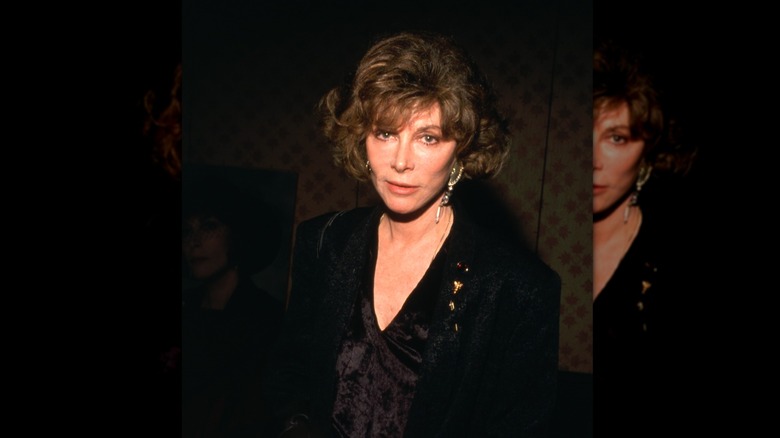
After being persecuted in Hollywood and blacklisted for 12 years, Lee Grant became an outspoken advocate against the pitfalls and ugly side of the industry. Throughout her staggering eight decades in show business, Grant has spoken candidly about the mistreatment she received as a result of her blacklisting and how it motivated her to speak up and use her platform. "Actually, it politicized me more than it radicalized me," she told the Walker County Messenger of the impact her blacklisting had on her. "I hadn't read a newspaper before the blacklisting. I just never understood it. I think it was a button that was pushed. I have a very strong sense of unfairness."
Grant used filmmaking as an outlet and documentaries as a way to expose the shortcomings of the system, speaking out about a wide range of social issues such as sexism, homelessness, and beauty standards. In 1988, she received the Women in Film Crystal Award, which honors those who use their work to promote women in the entertainment industry. Grant drew upon her own experiences and mistreatment to advocate for the disenfranchised. "If more directors had come from my background, and got kicked out of the industry for 12 years, maybe they would be more clued up," she said to The Sunday Post. "But that's how a girl who almost failed to graduate from high school became a force for something that really mattered."
She released a revealing memoir about her incredible life
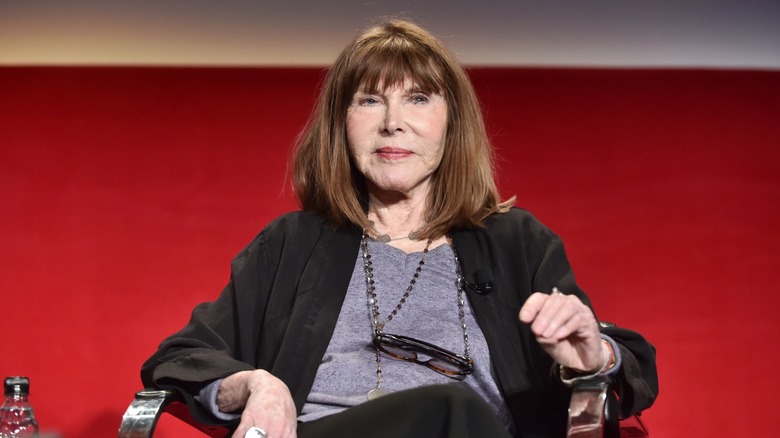
With such an illustrious and complex career, Lee Grant opted to pen a candid memoir about her incredible life entitled "I Said Yes to Everything" in 2015. The book chronicled her transformation from an ambitious actor to an accomplished filmmaker, with Grant sharing juicy details about Hollywood, her blacklisting, and tales from behind the scenes of her movies. Her memoir showcased her fighting spirit and inspiring resilience throughout her storied life. "Yes, I'm happy to say that I am a survivor. I think the 12 years of the blacklist created the woman I am," she shared with Film Talk. "You know, all the directing I did and all the documentaries I've done were based on learning how to stand up for myself and for others. It turned out to be a great education a little Jewish girl could get."
The memoir earned rave reviews from critics, who praised Grant's refreshing vulnerability and unapologetic approach to telling her story. "I Said Yes to Everything" addressed an array of topics like her flirtation with Warren Beatty during "Shampoo," the destruction of her marriage to Arnold Manoff, and her Hollywood exile. "It's warm, it's touching, and it's a book that speaks of the human experience — the wonders of it, the magic of it, the difficulties of it, the history of a life's unfolding, beautifully and brilliantly with purpose and with guts," her friend and co-star Sidney Poitier wrote in a review of the memoir. In turn, Grant was one of many co-stars who paid tribute to Poitier in 2022.
She celebrated her 100th birthday in 2025
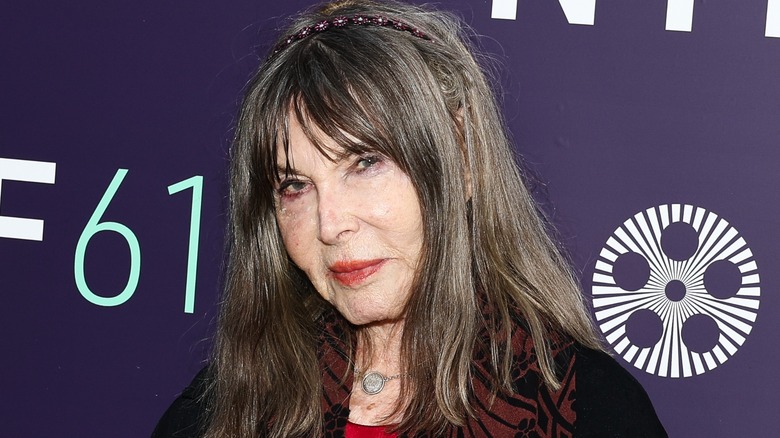
Although her true date of birth had previously remained a mystery in Hollywood, Lee Grant celebrated her monumental 100th birthday in 2025 and reflected on her phenomenal career. Grant had changed her birthday after she was welcomed back to show business in the '60s, convincing the mayor of Los Angeles to knock five years off her age in hopes of preserving more acting opportunities. In 2020, she then made her triumphant return to the screen after a 15-year acting hiatus and voiced Ms. Hunter in the musical "Killian & the Comeback Kids." In 2024, she attended the New York Film Festival where two of her documentaries were screened, with the veteran star discussing her directing journey in a TCM panel.
Throughout the years, Grant has remained an inspiring presence in Hollywood as a centenarian and has reflected on what she's learned throughout the extraordinary journey. "I was a pretty shallow little girl, uneducated, younger than my age, adolescent, really. Being blacklisted gave me the fight of my life," she told SFGate. "I think the most important impetus in life is that it not be boring. The fear of boredom drove me more than any yearning for something I wanted to achieve." As for her personal life, Grant has been married to producer Joseph Feury for over 50 years; the couple raised Dinah Manoff together and adopted daughter Belinda Feury shortly after their nuptials.