

Buddy Ebsen: The Life Of The Beverly Hillbillies Star After The Show Ended
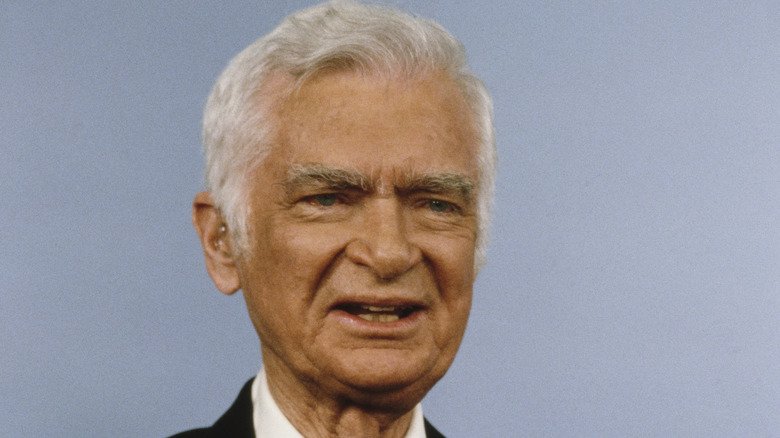
Buddy Ebsen gained countless fans when he portrayed Jed Clampett on "The Beverly Hillbillies" (1962-1971). His performance on the show combined old-school vaudevillian humor with a fatherly wisdom and dignity. During a 1993 interview with the Los Angeles Times, Ebsen revealed he remained a fan of the show long after it ended. "It's therapeutic," he said. "When I have a low period, I just put on a cassette and I look at a half-hour of the 'Hillbillies' and I'm smiling and I don't hurt anymore."
During a separate, earlier 1993 interview with the Los Angeles Times, Ebsen had also discussed the appeal of "The Beverly Hillbillies." "We came along at a time when there were a lot of hospital, agony shows," Ebsen said. "All we did was try to entertain people rather than remind them of the terrible plagues and sicknesses of the world." The television legend said he was happy to know the sitcom was still popular decades after its premiere.
After the show was canceled, Ebsen continued to have a successful career. He starred in a horror movie with an iconic baseball player. He came close to an Academy Award-winning role in a film by a major director. Ebsen even reprised his signature role of Jed Clampett one last time. Here's a look at Ebsen's life after "The Beverly Hillbillies" was canceled.
Buddy Ebsen was in a horror movie with Chuck Connors
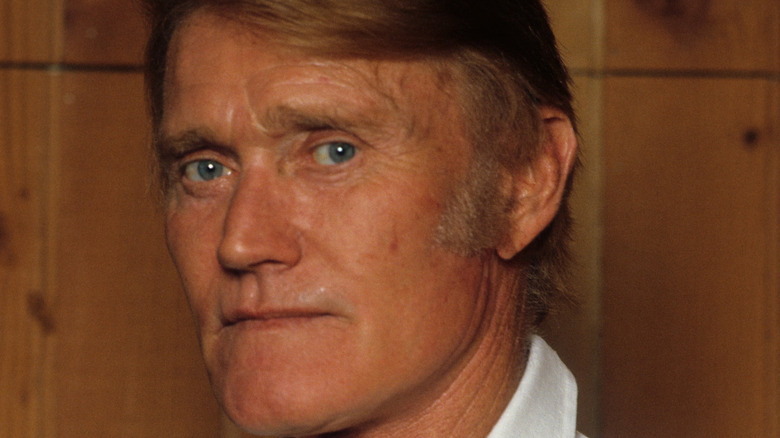
After "The Beverly Hillbillies" was canceled in 1971, Buddy Ebsen continued to regularly appear on television. Notably, this era was the cultural peak of television movies. CBS' series "Movie of the Week" gave us many of the most famous TV movies of all time. Ebsen co-starred in a "Movie of the Week" titled "The Horror at 37,000 Feet." The film focused on a group of airline passengers who are besieged by supernatural forces.
"The Horror at 37,000 Feet" also featured Chuck Connors. Connors was a baseball player who had a second career as an actor. Today, he may be most well-known for playing the protagonist of the Western television series "The Rifleman" and the villain of the cult classic supernatural horror film "Tourist Trap." "The Horror at 37,000 Feet" also featured an appearance by William Shatner during the period of his career between the conclusion of "Star Trek: The Original Series" and the release of "Star Trek: The Motion Picture." While "The Horror at 37,000 Feet" is not one of the more famous television films of the 1970s, it is interesting in that it features a trio of icons.
Buddy Ebsen starred in a major hit detective series
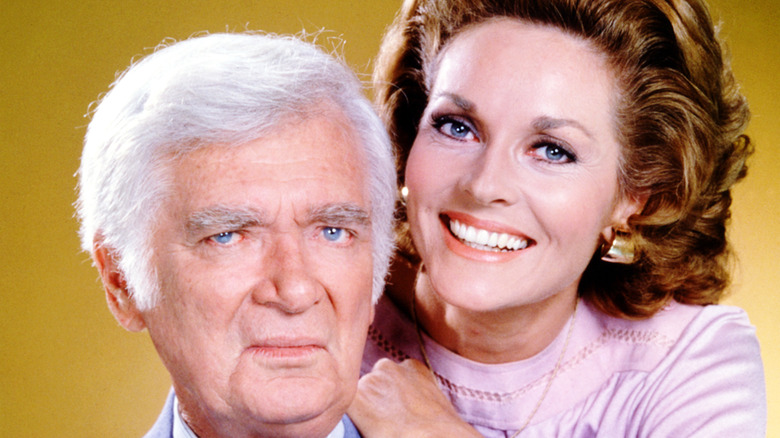
In his 1994 book "The Other Side of Oz," Buddy Ebsen said he was filming "The Horror at 37,000 Feet" when his agent, Jimmy McHugh, pulled him aside. McHugh told Ebsen that television producer Freddie Silverman wanted him to star in a new detective show without even shooting the pilot. Ebsen hesitated to commit to the part because he knew Silverman had canceled "The Beverly Hillbillies." Ultimately, Ebsen decided to play the title character in "Barnaby Jones."
During an interview with The Associated Press (via MeTV), "Barnaby Jones" creator Quinn Martin discussed the appeal of the series. "It's a classic idea with a star that's well done," Martin opined. "It will never be a show that gets a lot of attention. I think it can go on for as long as Buddy wants to do it. I don't think it could go on without him. The key to the show is Buddy."
Barnaby Jones lasted much longer than expected
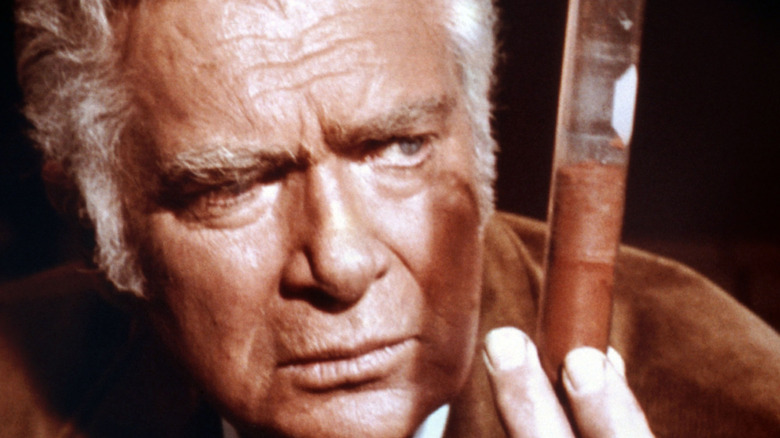
In "The Other Side of Oz," Buddy Ebsen said "Barnaby Jones" premiered during a television showing of the epic movie "Lawrence of Arabia." While that could have been a disaster, "Barnaby Jones" outperformed "Lawrence of Arabia" in the ratings; it was the 17th most popular program of the evening, while "Lawrence of Arabia" was the 37th.
Despite the initial popularity of "Barnaby Jones," critics were not impressed. "They discounted the strong premiere against 'Lawrence of Arabia' as a fluke and predicted 'Barnaby's' disappearance from the tube in just a matter of weeks," Ebsen wrote. "Just as in the case of 'The Beverly Hillbillies' the ratings confounded and annoyed the critics. The show played out its original 13 weeks, bouncing about among the first 10 or 20 in the ratings with a healthy audience."
At the start of the third season of "Barnaby Jones," Freddie Silverman told Ebsen the show would soon end. Then, the series was picked up for a fourth season. Ultimately, "Barnaby Jones" lasted an impressive eight seasons and 178 episodes. The show remains a classic detective series.
Buddy Ebsen played Jed Clampett one last time after The Beverly Hillbillies was canceled
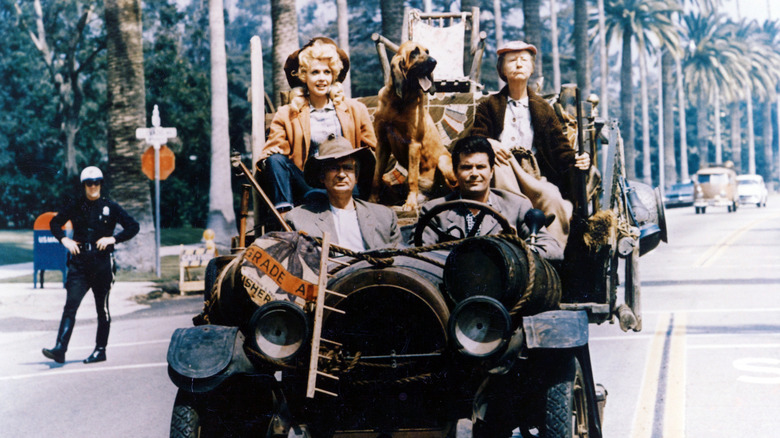
"The Beverly Hillbillies" was given a second chance. In 1981, the reunion television film "The Return of the Beverly Hillbillies" premiered. The movie was part of a larger trend of original sitcom cast reunions for television film spinoffs. Several cast members from the original show reprised their roles for this belated sequel, including Buddy Ebsen as Jed Clampett, Donna Douglas as Elly May Clampett, and Nancy Kulp as Jane Hathaway. Sadly, Irene Ryan had passed away in 1973; she was replaced by Imogene Coca as a new character named Ma. Meanwhile, Max Baer Jr. declined to appear in the movie because he was tired of getting typecast as simpletons similar to Jethro Bodine. Instead, Jethro was played by Ray Young, who is most famous for portraying Bigfoot on the children's television series "Bigfoot and Wildboy."
The reunion film received a lukewarm reception from both critics and the public. During his 1993 interview with the Los Angeles Times, Ebsen revealed he preferred the theatrical film "The Beverly Hillbillies" to the reunion TV movie. Regardless, "The Return of the Beverly Hillbillies" will always have an important place in the hearts of many fans because it featured Ebsen's last performance as his most famous character.
Buddy Ebsen made a film with Ron Howard
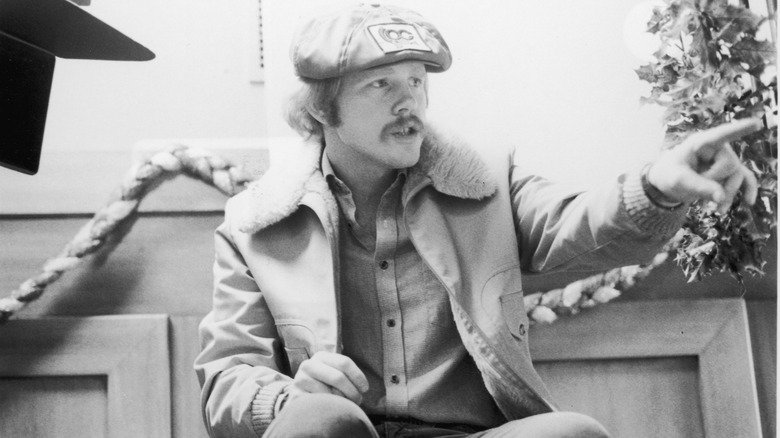
Thanks to his roles on the classic sitcoms "The Andy Griffith Show" and "Happy Days," Ron Howard is a television legend. Since then, he has made a name for himself as a film director, helming major movies such as "Apollo 13," "A Beautiful Mind," "The Da Vinci Code," "Dr. Seuss' How the Grinch Stole Christmas," and "Solo: A Star Wars Story."
Buddy Ebsen held Howard in high esteem. In his book "The Other Side of Oz," Ebsen said Howard was in the same league as other directors such as Steven Spielberg or George Lucas. He also said that Hollywood was like Oz and Howard was one of its wizards.
The "Beverly Hillbillies" star recalled working with Howard on the television movie "Fire on the Mountain." "He and I co-starred in this movie, where I portrayed a rancher who decided to fight back when the government attempted to take his land for a missile base expansion program," he recalled. "Ron played a money-hungry young man whose values slowly changed until he finally sided with me. Ron and I got along very well working together, and we often reminisced about Mayberry. While we made the picture, Ron was spending a lot of his time between shots carrying a video camera and interviewing people. Little did anyone suspect that this activity may have been part of his preparation for a major transition from actor to director." Notably, however, Howard had already directed films before the release of "Fire on the Mountain."
Buddy Ebsen came close to an Oscar-winning role
According to "The Other Side of Oz," Buddy Ebsen once received a call from composer Jimmy McHugh, who told him Ron Howard wanted the "Barnaby Jones" star to play a role in his upcoming film "Cocoon." The offer excited Ebsen, but he was busy due to his prior commitment to the television series "Matt Houston." Though he had no hard feelings about "Matt Houston," Ebsen seemed more interested in the opportunity to work with Howard on "Cocoon."
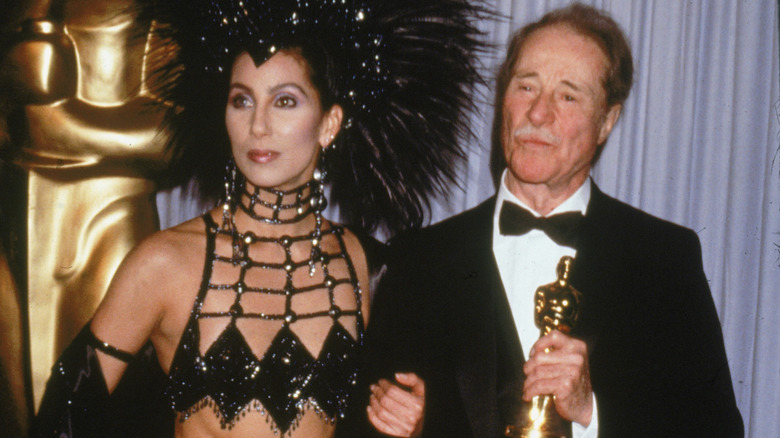
"I was unavailable, so the part went to Don Ameche," Ebsen wrote. Ameche's role in "Cocoon" served as a launching pad for his career resurgence. In 1985, he was named one of the sexiest men in America by Playboy. The following year, Ameche won the Academy Award for best supporting actor for his performance in "Cocoon."
In "The Other Side of Oz," Ebsen reflected on Ameche's Oscar win. "[E]ven though he got what might have been mine, Don Ameche will always receive my highest marks as a talented gentleman of rare humor and humility," he said. During a speech, Ameche thanked Ebsen for not having room in his schedule for the role. Ebsen said this comment made him laugh.
Buddy Ebsen got hypothermia on a movie set
In "The Other Side of Oz," Buddy Ebsen recalled the plot of his television film "Stone Fox." "The story we were shooting concerned a Wyoming rancher in failing health; his 12-year-old grandson, who in the course of the story must shed his childhood and grow up enough to shoulder the responsibilities of the ranch; [and] the boy's dog, that becomes a pivotal character in the dogsled race," he wrote.
Ebsen portrayed the rancher and had the unfortunate idea of wearing cowboy boots for the part. His choice of footwear was not ideal for a location shoot in Edmonton, Alberta, Canada. The subzero temperatures caused Ebsen to come down with a case of hypothermia. People from the film's wardrobe and makeup departments had to rub Ebsen's feet to make him feel better. Ultimately, Ebsen's wife, Dorothy, nursed him back to health.
"Stone Fox" was still a success. The film aired during the same time slot as the Academy Awards, and The New York Times predicted it would fail to gain an audience. Ultimately, it was the 31st most popular show of the night.
How a director convinced Buddy Ebsen to appear in the Beverly Hillbillies movie
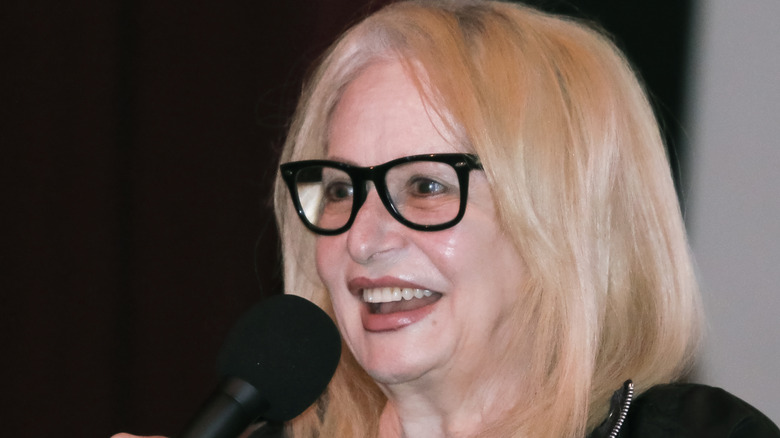
The 1990s were the heyday for film adaptations of classic television shows. Shows such as "Lost in Space," "The Addams Family," "The Flintstones," "The Brady Bunch," and "The Wild Wild West" were now on the big screen. "The Beverly Hillbillies" was part of that wave. The big-screen adaptation of the classic sitcom was helmed by Penelope Spheeris, the director of the acclaimed punk rock documentary "The Decline of Western Civilization" and its sequels, as well as the popular comedy "Wayne's World" and the film version of "The Little Rascals."
The roles of the Clampetts were recast, but Buddy Ebsen had a comic crossover cameo as Barnaby Jones. During one of his 1993 interviews with the Los Angeles Times, Ebsen revealed he hesitated to appear in the movie. "I was reluctant to do it ... because I didn't think I had any business in this picture because it was gonna be all new people," he recalled. "And then Penelope got on the phone and finally persuaded me to do it. She felt that it was a good comedy notion, and I think it turned out she was right." Ebsen enjoyed working with Spheeris, calling her "a comedic directorial genius." Spheeris' "The Beverly Hillbillies" was his final movie.
Buddy Ebsen revealed his thoughts on the Beverly Hillbillies movie
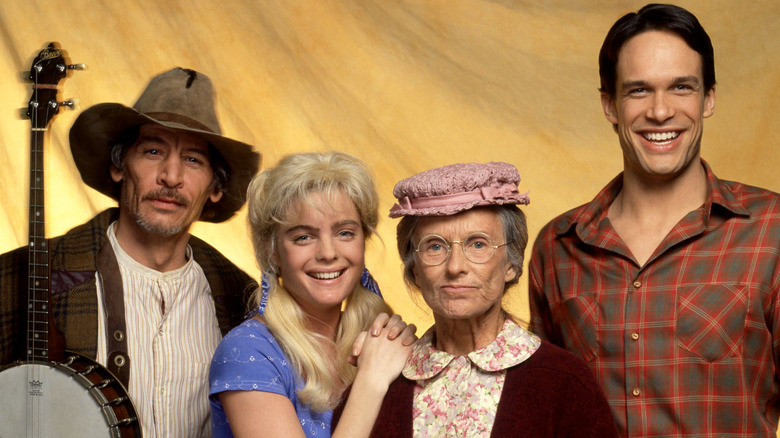
"The Beverly Hillbillies" earned $57 million at the box office, but it was not a critical darling. Roger Ebert gave the film a half star out of a possible four, describing it as one of the worst movies ever made. One vocal proponent of the film was Buddy Ebsen. During one of his 1993 interviews with the Los Angeles Times, Ebsen said fans of the show would appreciate the movie. "After people get over the shock in seeing that the people they're gonna look at don't really look like the originals, after they accept them for what they are and then settle back and enjoy the story, I think it works very well," he said.
In the film, Jed Clampett is played by Jim Varney, who is most well-known for playing the comedy character Ernest P. Worrell in a series of commercials and movies. Ebsen was enthusiastic about Varney's casting. "I want to welcome Jim Varney into a very exclusive club," Ebsen said. "That's the Uncle Jed Club. There are hundreds of actors that have played Hamlet, but only two have played Jed Clampett." Ebsen had but one criticism of Varney's performance: He felt that Varney did not pronounce Jed's catchphrase "Wellllllll doggies!" correctly.
Buddy Ebsen lost interest in acting on television
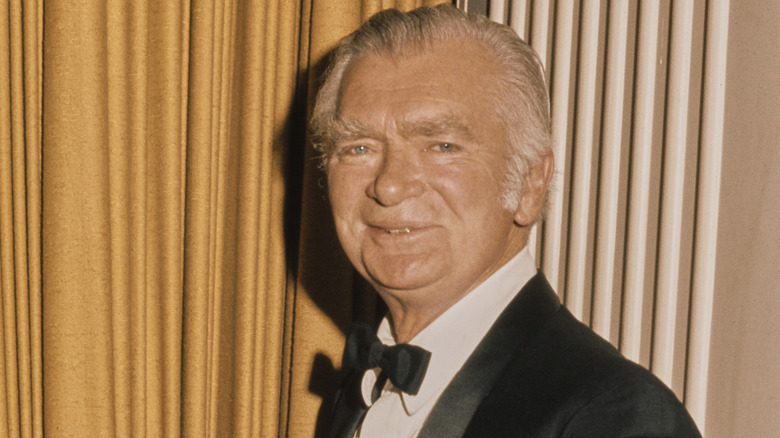
In "The Other Side of Oz," Buddy Ebsen discussed the prospects of returning to television. "For people who ask me, 'When are you going to do another series?' I have this answer: After performing in several series, most of which are still playing worldwide, I can truthfully say, 'I've done that. What else is new?'" he said. "What is so old for me that it seems new is the stage. At the Ahmanson Theatre recently, I played an ex-president in 'The Best Man' with Mel Ferrer and received the best reviews of my life."
Despite Ebsen's comments, he appeared on television twice between 1994 and 1998. In 1994, he was on a single episode of "Burke's Law," a revival of the 1960s television series of the same title. In 1998, he had a voice-acting role on the popular adult animated sitcom "King of the Hill." Ebsen served as a bridge between the over-the-top portrayal of Southerners in "The Beverly Hillbillies" and the more restrained and realistic portrayal of Southerners on "King of the Hill."
Buddy Ebsen gave fans some advice straight from Oz
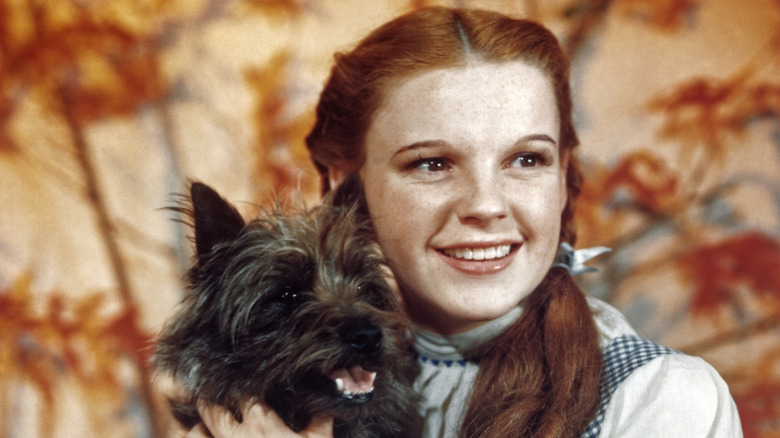
The most famous behind-the-scenes fact from Buddy Ebsen's career is that he was originally going to play the Tin Man in "The Wizard of Oz." However, his aluminum dust makeup made him deathly ill, so he was replaced by Jack Haley a mere 10 days after getting cast in the role. Sadly, the toxic makeup gave him a bronchial cough that lasted for the rest of his life.
Despite this change in casting, Ebsen never lost his association with Oz. In his book "The Other Side of Oz," Ebsen gave his fans some memorable advice. "Just as Dorothy, the Scarecrow, the Cowardly Lion,
and the Tin Woodman stood up to the Wizard and won — so can you!" he wrote. "Life's a brand-new ballgame every day! Remember that of all the elements that comprise a human being, the most important, the most essential, the one that will sustain, transcend, overcome, and vanquish all
obstacles is — spirit!" Ebsen said his advice applied to people of all ages, and it's as timeless as "The Wizard of Oz" itself.
Buddy Ebsen died at age 95
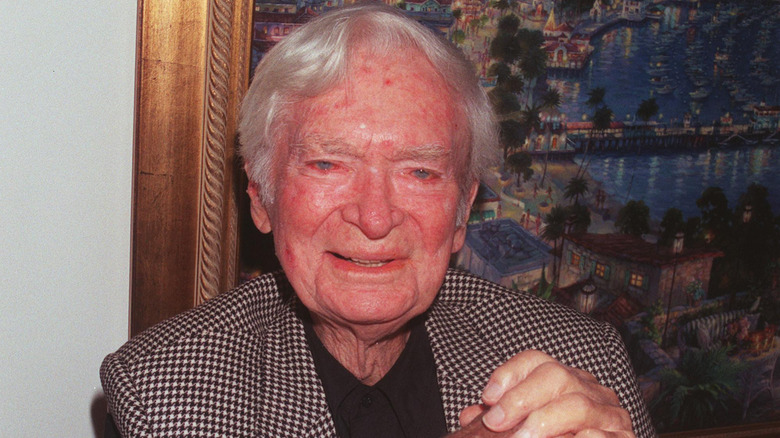
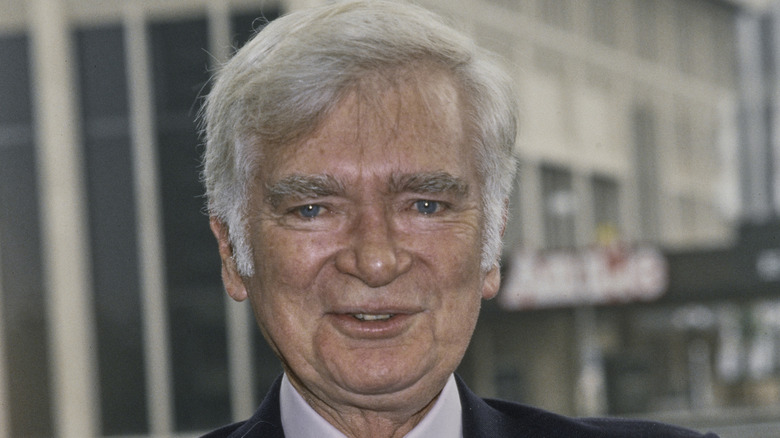
Buddy Ebsen died in 2003 at the age of 95. During a 2003 interview with the Orlando Sentinel, Max Baer Jr. paid tribute to Ebsen following his death. Baer felt Ebsen was perfect for the role of Jed Clampett. "When they wrote that character, they wrote him as having dignity and class," Baer said. "He embodied that. He was the glue, the straight man that made that show work. I think he's what made that show funny."
Baer said he remained close to Ebsen after the sitcom ended and that he considered Ebsen a father figure. "He taught me to respect my fellow actors, to respect my profession, and to be patient," he said. "He'd been a big success onstage. Then, he kind of dropped out of sight when musicals went out of fashion. But he stuck around long enough to have a comeback. I tell you, that was inspiring."
Ebsen left behind a tremendous body of work as well as a huge impact on popular culture. Without the success of "The Beverly Hillbillies," other classic sitcoms such as "Petticoat Junction" and "Green Acres" never would have been made. Thanks to "The Beverly Hillbillies," "Barnaby Jones," and Ebsen's incredible talent, he will forever be considered a television legend.