

13 '60s Sitcom Catchphrases That Boomers Will Never Forget
During the swinging '60s, television was really starting to hit its stride as the new epicenter of popular entertainment. Viewers didn't have to leave the comfort of their living rooms to enjoy a good laugh at the antics of talented comedic actors, and their favorite sitcom stars' most memorable catchphrases were securing permanent spots in the pop culture lexicon.
Sitcoms were also taking viewers to all sorts of exciting places, from the homes of modern Stone Age families and the dazzling bejeweled interior of a genie's bottle to the shores of a deserted island and a superhero's lair. The characters who inhabited these colorful spaces seemed designed to leave a lasting mark on generations of viewers; fans still dress up in their iconic outfits for Halloween, hum their shows' opening numbers, and drop some of their most-repeated lines into casual conversations. And while Boomers might best remember these legendary catchphrases from '60s sitcoms, younger TV fans will likely recognize many of them, too.
'Nip it in the bud' from The Andy Griffith Show
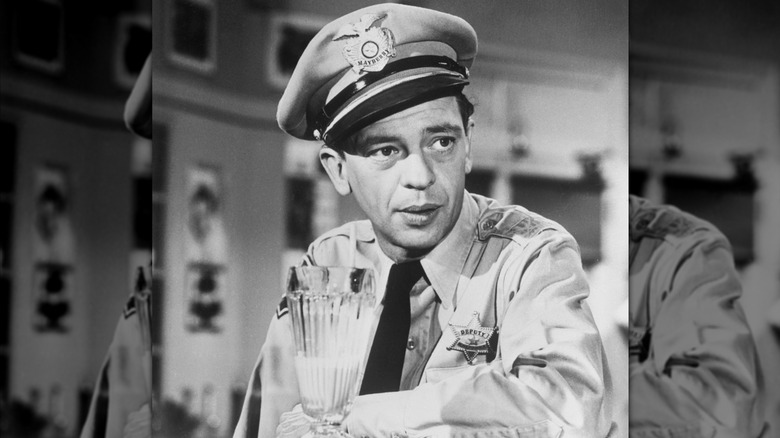
As a constant source of exasperation for Sheriff Andy Taylor, Barney Fife wasn't always the best at his job, but he clearly took a lot of pride in being the deputy sheriff of Mayberry, North Carolina. The bombastic but lovable lawman even had a catchphrase that perfectly embodied his work ethic: "Nip it in the bud." A common eggcorn of the idiom is "nip it in the butt," an action that would result in spending more than a few nights in one of the Mayberry Courthouse jail cells. The correct saying refers to grabbing the bud of a nuisance plant and yanking it off. To inject this weed metaphor with a little Devo, the basic gist is this: When a problem comes along, you must nip it. By getting ahead of it, you prevent it from becoming a much bigger issue — so nip it, nip it good.
Of course, if Barney was always successful at following his own advice and eliminating problems right away, "The Andy Griffith Show" wouldn't be nearly as much fun to watch. Today, fans are also still so fond of actor Don Knotts' animated delivery of the catchphrase that they make compilation videos of him arguing that "budding it" is the solution to all of society's ills. If only his castmates had listened and avoided one of the biggest behind-the-scenes sitcom feuds of the '60s.
'Oh, Rob' from The Dick Van Dyke Show
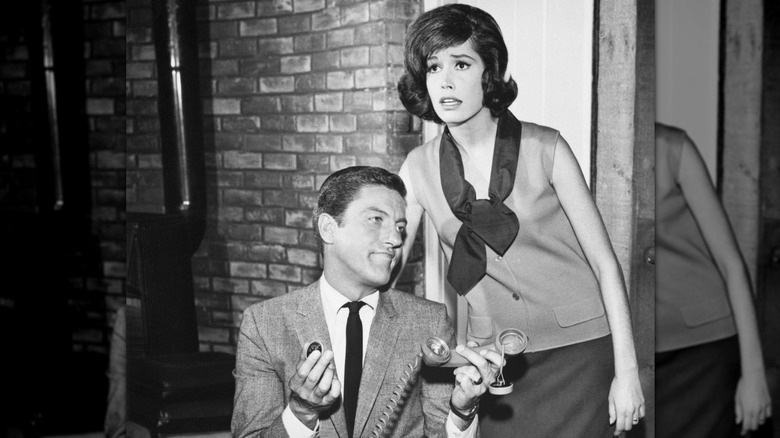
Sometimes the simplest of catchphrases can convey a key characteristic of a character. For Mary Tyler Moore's Laura Petrie, it was that she was a long-suffering housewife. When she uttered the words, "Oh, Rob" on "The Dick Van Dyke Show," it was usually to express her frustration with her husband Rob Petrie, who was portrayed by the sitcom's titular star. Moore played around with the delivery, placing extra emphasis on the "Rob" when she was really angry, spitting the phrase out quickly in frantic situations, and even adding a little quiver if she was supposed to be scared or on the verge of tears.
"The Dick Van Dyke Show" creator Carl Reiner, father of the late Rob Reiner, told ABC News that Moore came up with the catchphrase herself. "That became a thing. People were saying that, even if their husbands weren't Rob," he said. According to Moore, she devised it in the episode where Laura's attempt to go blond goes horribly wrong. "There was definitely a cracking in the voice and an inability to maintain a tone and a certain amount of verbal yodeling that took place," she recalled on NPR's "Fresh Air." Her catchphrase became so memorable that it landed in the 26th spot on the Paley Center for Media's list of TV's 50 funniest phrases (via the Milwaukee Journal Sentinel).
'Missed it by that much' from Get Smart
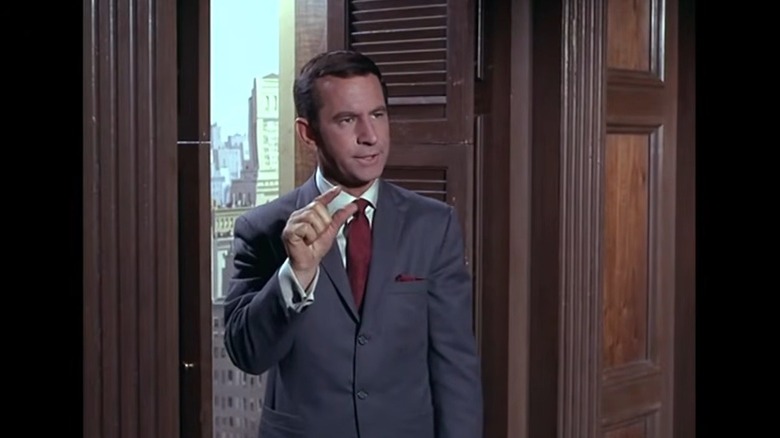
Running from 1965 to 1970, the sitcom "Get Smart" gave the world of espionage a comedic spin. While the perpetually suave James Bond went undercover as Agent 007 on the big screen, Don Adams spoofed his adventures as Maxwell Smart, aka Agent 86, on its much smaller counterpart. The show's writers and stars coined several catchphrases that caught on like Bond's famous drink order, including "missed it by that much." Agent 86 would deadpan the line after something went catastrophically wrong for CONTROL agents or criminals. It was what he would say, for example, after a villain's failed escape plan that involved leaping from a five-story window onto a pile of mattresses.
On the catchphrase's origin, producer Leonard Stern said in a Television Academy Foundation interview, "We all sweated looking for [it], and it wasn't as effective as others. But that was a collaborative creation." It was, perhaps, more impactful than he realized; on social media, sports fans absolutely love using it to ridicule athletes who make major blunders. It also appeared on the Paley Center's funniest TV phrases list, landing in the 49th spot (but it doesn't feel right that it missed being left on the list completely by that much).
'Shazam' from Gomer Pyle, U.S.M.C. and The Andy Griffith Show
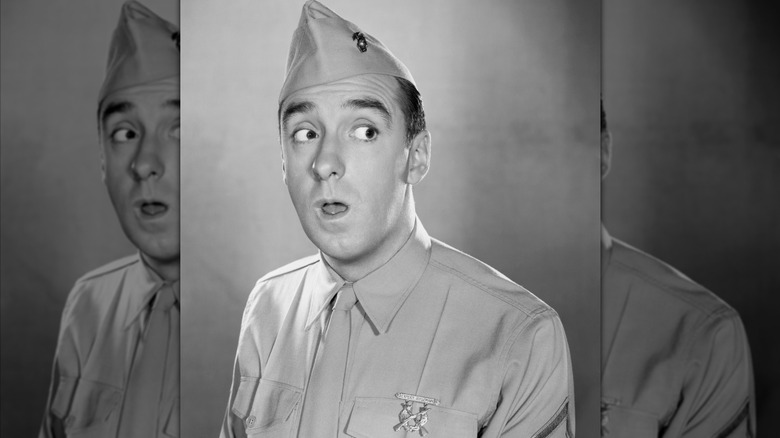
Before Sheldon Cooper's "bazinga" catchphrase on "The Big Bang Theory" had a bee species named after it, another comic book fan helped popularize a similar exclamation. On "The Andy Griffith Show," affable goofball Gomer Pyle began using the catchphrase "Shazam!" to express surprise or amazement. He also brought it with him when he joined the military for the spinoff series "Gomer Pyle, U.S.M.C." It was one of several repeated expressions actor Jim Nabors delivered in the character's iconic Southern twang, along with "golly" and "surprise, surprise, surprise." In some situations, "Shazam!" also served as a friendlier replacement for a curse word.
In "The Andy Griffith Show" episode "The Great Filling Station Robbery," we learn its origins when Gomer says to Barney Fife, "Shazam! Captain Marvel wouldn't have thought of that, Barney." In the old Captain Marvel comic books, Billy Batson used to say "Shazam!" to magically transform into a superhero. And it's not just a word that was conjured up by someone who thought that it sounded like it belonged in a comic book; it's an acronym for Solomon, Hercules, Atlas, Zeus, Achilles, and Mercury. Nabors must have been particularly fond of the phrase, because he used it as the title of a 1965 studio album and song, which he recorded in Gomer's voice. In 2014, he also joked to Indianapolis Monthly, "I wish I had registered 'Golly' and 'Shazam.' They've become bywords in American vernacular."
'I know nothing' from Hogan's Heroes
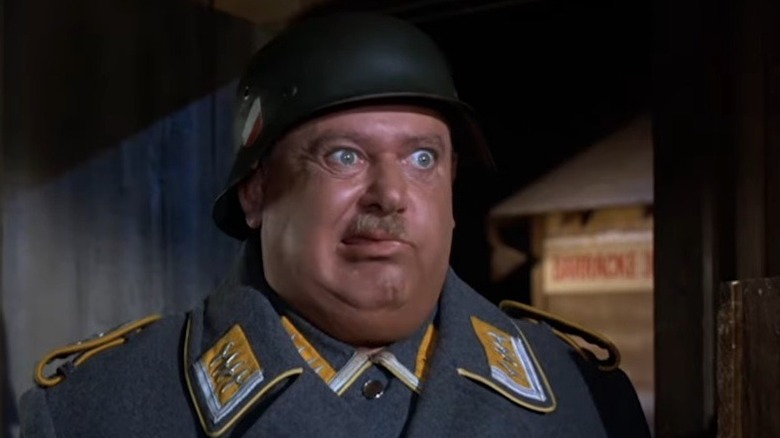
On "Hogan's Heroes," the approach Sergeant Hans Georg Schultz took to dealing with problems was directly opposed to Barney Fife's mantra. Instead of nipping them in the bud, the seemingly incompetent Stalag 13 guard would avoid getting involved altogether and plead ignorance by declaring, "I know nothing." His top priority was always preserving his own hide and ensuring that his ineptitude didn't draw the attention of his superiors, which allowed the P.O.W.s under his watch to get away with a lot.
"Hogan's Heroes" was surprisingly lighthearted, considering that its setting was a World War II prisoner-of-war camp. And while Schultz was supposed to be one of the bad guys, fans couldn't help but love the bumbling German. It certainly helped that it's still impossible not to smile at John Banner's blustery delivery of his "I know nothing" catchphrase. Banner often found himself defending Schultz from those who were uncomfortable with the idea of a likeable Nazi. He argued that the character wasn't actually a Nazi, and he also insisted that Schultz wasn't as much of a dunderhead as he seemed. "You think Schultz is stupid? Notice that he survives," he told TV Guide in 1967. So, maybe he did know something after all.
'Well, doggies!' from The Beverly Hillbillies
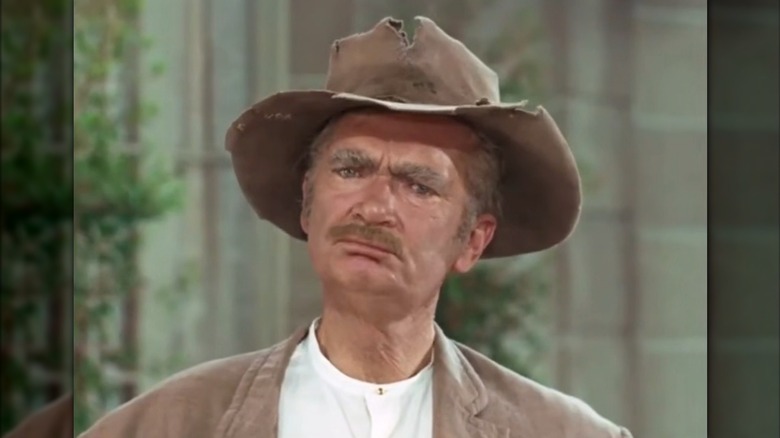
When the Clampetts left the Ozarks and headed to California, it wasn't just their wardrobe choices that advertised that they weren't from those parts; their colorful, country-fried vocabulary let everyone know that they had traded the backwoods for Beverly Hills. As family patriarch, Jed Clampett was a wealth of rustic wisdom, dropping kernels of truth such as, "Now the way I see it, folks hadn't ought to never scrap unless they is provoked beyond all reason." He also used a lot of folksy phrases on "The Beverly Hillbillies," with one of the most memorable being "Well, doggies!"
But what in tarnation did it mean? Well, Jed usually used it to express delight over something, the same way Jethro Clampett would sometimes say, "Well, hot diggity dog!" Actor Buddy Ebsen took great pride in his catchphrase, even after "The Beverly Hillbillies" ended. When he passed Jed's well-worn hat to actor Jim Varney for the 1993 movie about the millionaire mountaineer, Ebsen even criticized Varney for saying it wrong. "He fell into the trap that many other imitators of that particular phrase do. They say 'eeee e-doggies,'" Ebsen told the Los Angeles Times. "That's not it. It's wellllllll doggies!" If you're going to serve a heapin' helpin' of that hillbilly hospitality, we reckon you better do it right.
'Little buddy' from Gilligan's Island
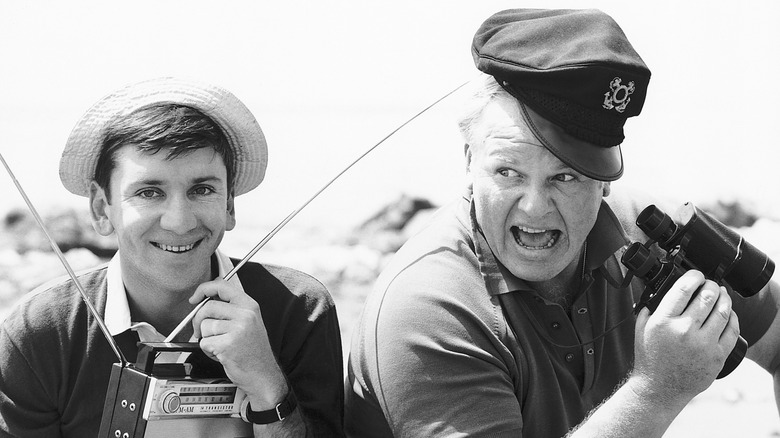
When Gilligan got on the wrong side of Skipper (aka Jonas Grumby) on "Gilligan's Island," it would often earn him a good wallop. But while the Skipper smacked poor Gilligan with his captain's hat — a lot — he clearly cared about his sailing companion, even affectionately referring to Gilligan as "little buddy." Sure, he would sometimes use the term of endearment when insulting Gilligan, but the love was still there. The actor who wore the Skipper's iconic hat, Alan Hale Jr., once said of the dynamic duo's relationship, "They were really great friends ... They really were fond of each other" (via Neatorama).
Some fun behind-the-scenes trivia about "Gilligan's Island" is that Hale coined the catchphrase himself and used it before getting cast as a castaway; he even bestowed the pet name upon his wife. And Gilligan actor Bob Denver isn't the only star on this list who had the privilege of hearing Hale call them his "little buddy." Before "Gilligan's Island" hit the airwaves, Hale guest-starred on "The Andy Griffith Show" and used the affectionate expression to refer to Barney Fife. In an interview with the Asbury Park Press (via MeTV), Denver shared that he enjoyed working with Hale and said that his co-star had a deep fondness for the character he played. Apparently, Hale also brought a lot more to the Skipper than his catchphrase. "In many ways, he was the Skipper," said Denver. "He was always laughing, always having a good time."
'Yabba dabba doo!' from The Flintstones
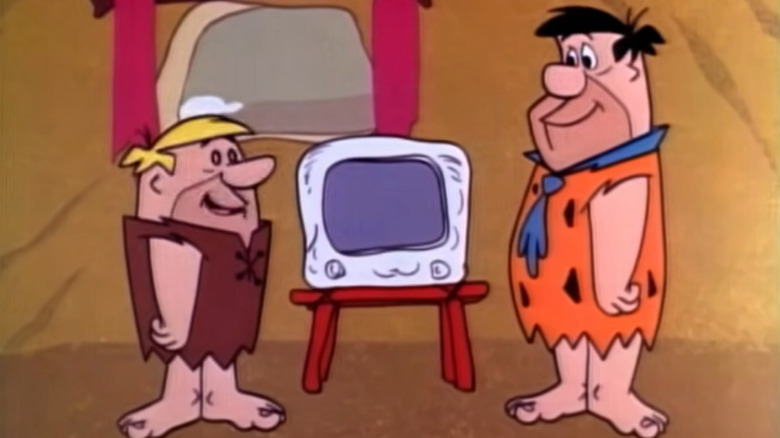
A cartoon caveman gave us one of the most creative sitcom catchphrases of the '60s. "The Flintstones" animated series opens with Fred Flintstone's enthusiastic "Yabba dabba do!" exclamation, which captures how thrilled he is that he can finally slide down that brontosaurus tail and head home from work. Fred was voiced by Alan Reed, and as the story goes, his jubilant catchphrase came courtesy of his mother. According to The Spokesman-Review, she was a fan of the Brylcreem slogan, "A little dab will do ya." Reed played with the words and used his shortened adaptation in place of Fred's planned catchphrase, "Yahoo!" And the rest is TV history.
Reed's on-screen partner in crime, Barney Rubble, was voiced by Mel Blanc, and it sounds like the two had a yabba-dabba-doo time working on the Hanna-Barbera show with their co-stars. "It's like an old-time radio gathering," Reed said in a 1965 radio interview (via Mark Christiansen). "We kick the ball around, we have fun, we sit leisurely, and read the script over and joke with it."
'Yes, master' from I Dream of Jeannie
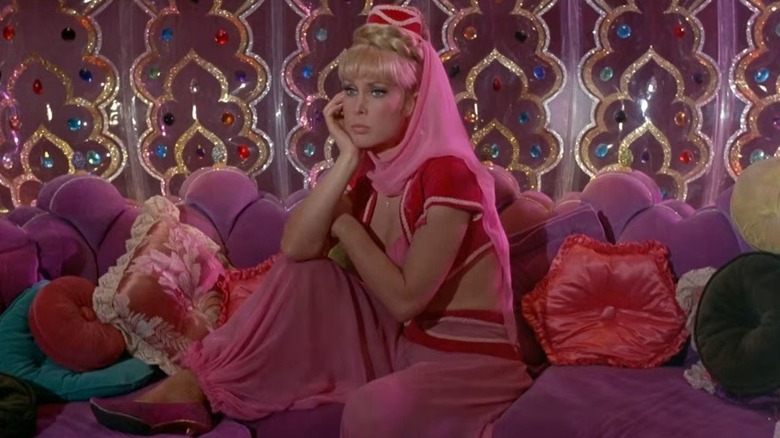
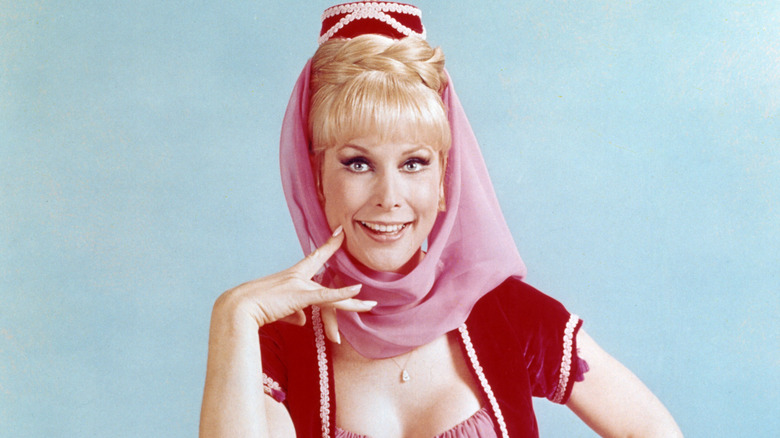
Some people might view Barbara Eden's "I Dream of Jeannie" character as a woman to be pitied: a slave whose lot in life is to serve whomever finds the bottle she calls home. Throughout the show, viewers are constantly reminded of her unconventional relationship with astronaut Tony Nelson (Larry Hagman) when she refers to him as "master," often when complying with his commands. Uttering that word over and over again didn't bother Eden, who has always argued that Jeannie is not a repressed, unhappy woman with no agency. "It was Jeannie who dominated Major Nelson, not the reverse," she writes in her memoir, "Jeannie Out of the Bottle." "She invariably got her way and liked it."
Eden held the view that Jeannie was a magical being, which is why she disliked the "I Dream of Jeannie" wedding episode. "She was an entity. She wasn't a human," Eden argued in a 2025 Forbes interview. Eden also said, "'Master' is just a word and it was in her vocabulary. She didn't really say she was a slave. Never, you know?" But this isn't exactly true — Jeannie describes herself as a slave in the very first episode. Maybe it's just wishful thinking on Eden's part that her wish-granting genie didn't consider herself as such.
'Oh my stars!' from Bewitched
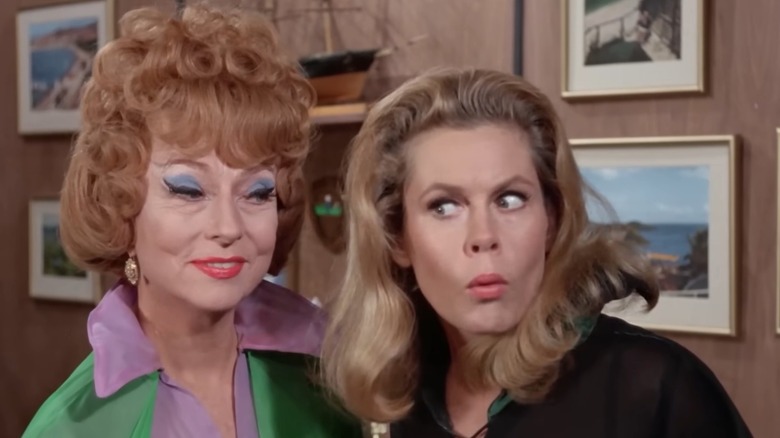
While Elizabeth Montgomery played a happy wife on "Bewitched," her character's supernatural powers (and those of her family) regularly caused mayhem. So, Samantha Stephens only let her favorite astronomical exclamation fly whenever the magical mayhem was dialed up to 11. And considering that her beloved '60s sitcom begins with an animated version of Samantha riding a broom through the sky on a moonlit night, "Oh my stars" was a fitting choice for her catchphrase.
Examples of when the hexed housewife invoked the heavens include the time her mother Endora (Agnes Moorehead) gave her husband Darrin Stephens (Dick Sargent) a pig head and zapped him onto the roof; the time her daughter Tabitha Stephens (Erin Murphy) turned a classmate into a frog; the time Aunt Clara (Marion Lorne) made a purple polka-dotted pachyderm appear in the living room; and the time her father Maurice (Maurice Evans) trapped Darrin inside a mirror. With family members like that, it's amazing that Samantha didn't resort to using much stronger language. However, she did mix things up a bit when one of housekeeper Esmeralda's (Alice Ghostley) magic sneezes made Mother Goose appear on her lawn. When she saw the nursery rhyme character, Samantha exclaimed, "Oh, my goose, it's Mother Stars!"
'You rang?' from The Addams Family
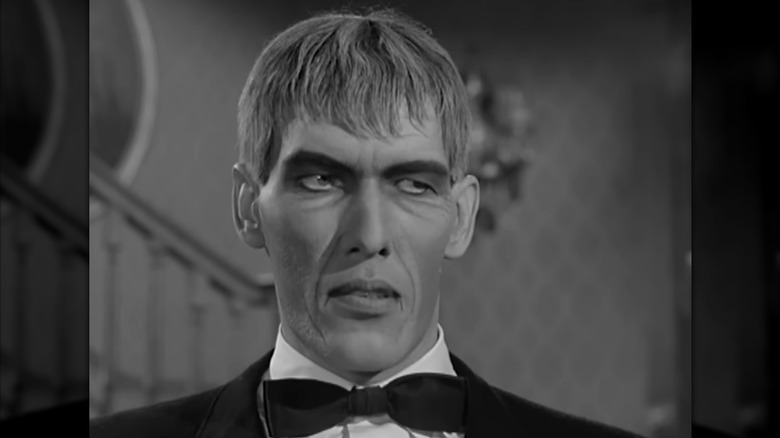
It's hard to imagine keeping Ted Cassidy's distinctive voice buried on "The Addams Family," even if his baritone was so deep that it sounded like it came from six feet under. But Cassidy's character, the Addams' hulking, wooden-faced butler Lurch, was initially written as being silent. Then Cassidy came up with his "You rang?" catchphrase on the fly when the cast was shooting the very first episode of the show. Obviously, it was too hilarious not to have Lurch repeat it every time an Addams summoned him with their loud hangman's noose bell pull. He didn't speak, however, when he played a second character on the show: Thing the hand.
While Lurch is the character who comes to mind first when thinking of the rhetorical retort, "Gilligan's Island" star Bob Denver actually uttered it first when he played Maynard G. Krebs on "The Many Loves of Dobie Gillis." However, it just didn't pack as much of a punch coming from the beatnik as it did coming from the faithful butler who bore a striking resemblance to Frankenstein's monster.
'Nevermore' from The Munsters
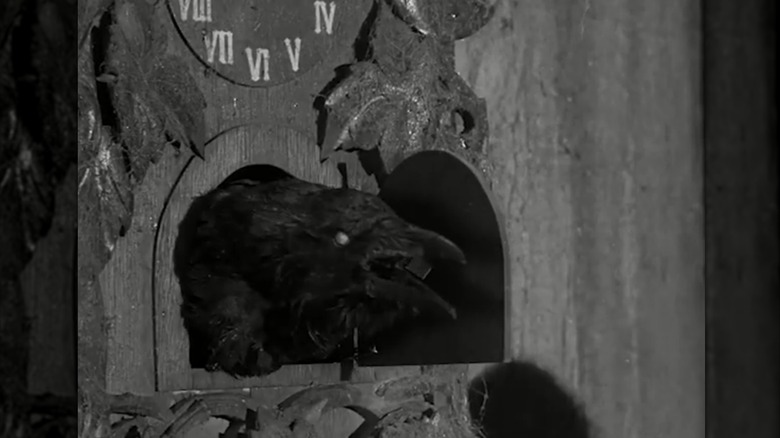
The '60s introduced viewers to another spooky sitcom family: the Munsters. Just like the Addamses, they lived in a creepy mansion, didn't seem quite human (or at least all the way alive), and had some unconventional pets. One of these pets was a raven named Charlie who made his home inside a cuckoo clock.
The bird was fond of repeating the word "nevermore," an obvious reference to Edgar Allan Poe's famous poem, "The Raven." Charlie was also voiced by a famous name: Mel Blanc. As previously mentioned, the prolific voice artist helped bring Barney Rubble to life on "The Flintstones," and he was also the man who originally voiced most of everyone's favorite Looney Tunes characters, including Bugs Bunny, Yosemite Sam, Daffy Duck, Tweety Bird, and so many more. Occasionally, the raven was also voiced by "McHale's Navy" star Bob Hastings, who guest-starred on a few of the other sitcoms on this list, including "Hogan's Heroes," "I Dream of Jeannie," and "Batman."
'Holy _______' from Batman
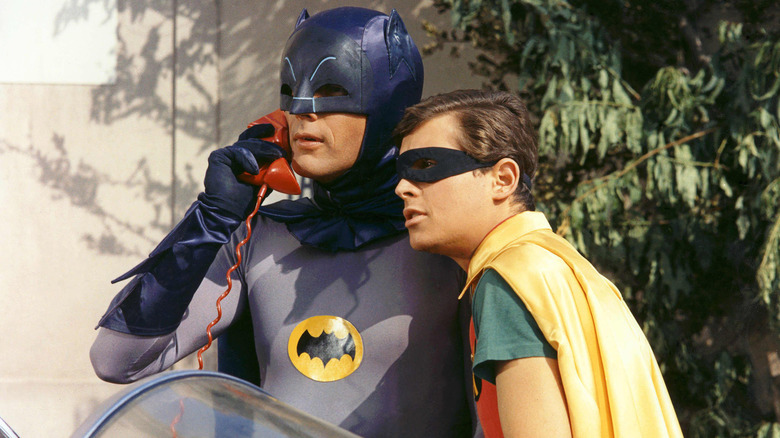
It's easy to imagine comic book fan Gomer Pyle watching the campy "Batman" series in slack-jawed delight — and being impressed with how versatile Robin's catchphrase was. As the Boy Wonder, Burt Ward called a lot of things "holy." Ward even counted the number of times he said the word on the series, saying in a 2016 interview (via CinemaBlend), "There were 378 'holys' in Batman, in the original series, and it worked out to be about three per half-hour." The 1966 Batman Pages website compiled a list of words and phrases Robin used to complete his "holy" catchphrase, and they include some rhyming and a lot of alliteration, such as "Holy ravioli," "Holy hole in a donut," "Holy human pressure cookers," and "Holy rising hemlines."
According to the man who sported those expressive bat brows, Adam West, his partner in fighting crime took his catchphrase very seriously. "Burt took on the challenge of always trying to polish the holies," he said in a Television Academy Foundation interview, explaining that this meant changing whatever the script writers had come up with. "It was almost a hobby with Burt to somehow find the holy that was appropriate for the moment," West added. Sadly, when Robin and Batman were climbing a building in one episode and none other than Lurch popped his head out of a window, Robin didn't have a holy-ism ready. However, Lurch's employers would probably appreciate "Holy homicide, "Holy taxidermy," and "Holy fate worse than death." Holy humorous catchy expression — the '60s really were a wild time for television.