

The Tragic Truth About Aretha Franklin's Life
We may receive a commission on purchases made from links.
The following article contains mentions of domestic abuse and alcohol addiction.
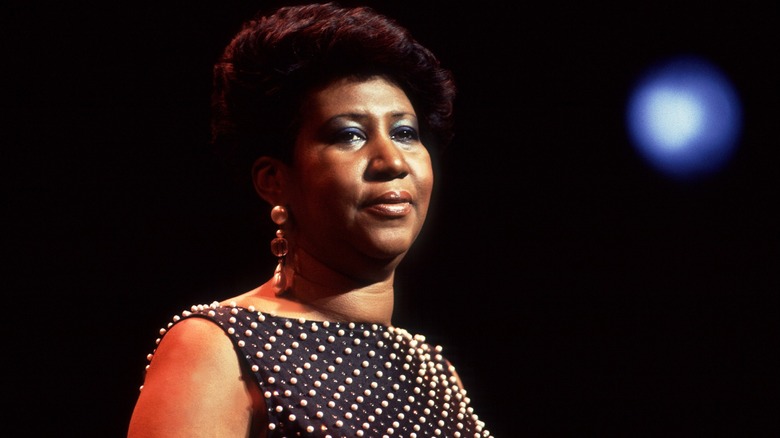
Legendary singer and songwriter Aretha Franklin was hailed as the "Queen of Soul" and became one of the industry's most successful music artists, selling over 75 million records while earning an astounding 18 Grammy Awards. Not only was the powerhouse performer known for timeless songs like "Respect" and "I Say a Little Prayer," but she also used her platform and voice to fight for both civil and women's rights.
Despite ultimately achieving the status of a music icon, Franklin's journey to fame was plagued by endless heartaches and hardships. Behind closed doors, the musician dealt with her fair share of tragedies, as she not only became a teenage mother at a shockingly young age but was also trapped in an abusive marriage that led to an addiction to alcohol.
Over the years, Franklin found herself the target of relentless tabloid scrutiny, as her weight, drinking habits, and romantic partners all became endless fodder for the media. As a result, the trailblazing singer remained fiercely protective of her private life and did not mince words when it came to her critics. As impressive as her six-decade career was, Franklin's rise to stardom was even more remarkable as she overcame adversity and earned the respect of millions.
Aretha Franklin had a tumultuous childhood
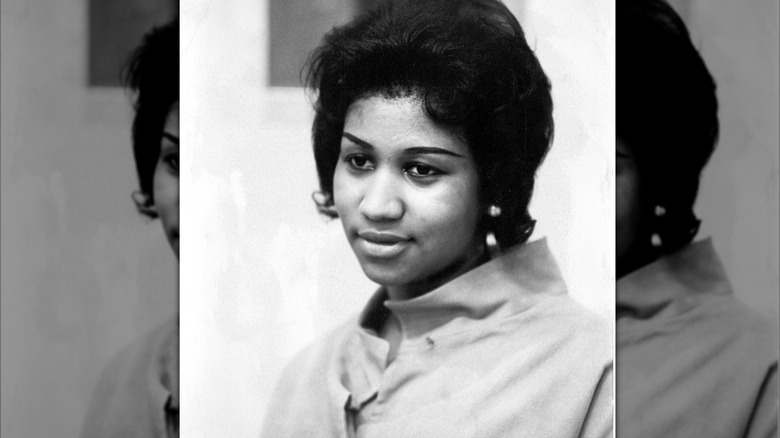
Born on March 25, 1942, in Memphis, Tennessee to a Baptist minister and a gospel singer, the legendary Aretha Franklin experienced a great deal of turmoil in her childhood after her parents separated in 1948 — reportedly due to the many infidelities of her father, Clarence LaVaughn "C.L." Franklin. Adored by the public and touted as the "Million-Dollar Voice," C.L. preached all across the country and was involved in the civil rights movement, even becoming friends with Martin Luther King Jr. However, the minister had quite the scandalous private life and would supposedly host discreet wine and weed-fueled sex parties within the walls of his church.
C.L. had also reportedly fathered a child with Mildred Jennings, a 12-year-old member of his congregation who gave birth to their daughter, Carol Ellan, in 1940. Aretha's mother, Barbara Siggers Franklin, eventually left C.L. in 1948 because of his numerous affairs, moving from Detroit to Buffalo and leaving the 6-year-old and three of her siblings in the care of their father. The children would later travel to New York to visit their mother in the summertime after their separation.
"Aretha was a severely shy and withdrawn child who was especially close to her mother," her sister Carolyn said in David Ritz's 2015 biography "Respect" (via Vanity Fair). "Aretha and I shared a room, and after Mother left, I saw her cry her eyes out for days at a time ... Days before those trips to see Mother, Aretha would have her little bag packed and be ready to go."
Her mother died suddenly before her 10th birthday
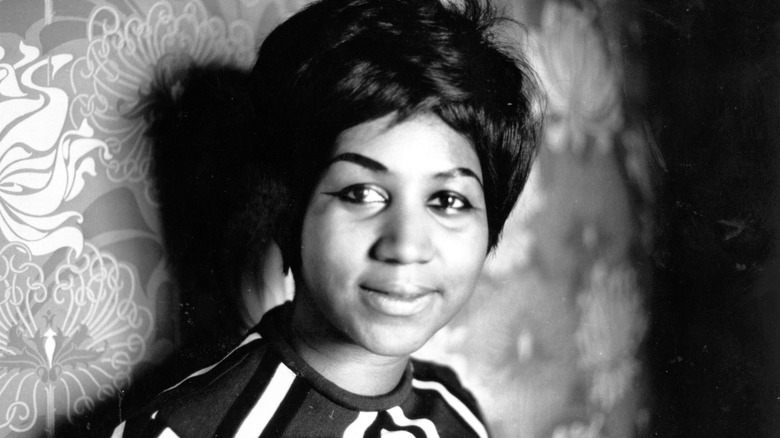
Though Barbara Siggers Franklin left C.L. Franklin and her family and moved to Buffalo, she remained in close contact with daughter Aretha Franklin. However, on March 7, 1952, Barbara devastatingly died of a heart attack at 34, just a few weeks shy of Aretha's 10th birthday. She was a huge influence in Aretha's life, and the future star was plagued by grief upon her shocking passing.
"I cannot describe the pain, nor will I try. Pain is sometimes a private matter, and the pain of small children losing their mother defies description," Aretha said in her 1999 autobiography "Aretha: From These Roots" (via Jet magazine). The Grammy-winner also pushed back against claims that Barbara had abandoned her children when she left Aretha's father, saying, "In no way, shape, form or fashion did our mother abandon us. She was extremely responsible, loving, and caring. She never lost sight of her children or her parenting responsibilities — and her visits continued regularly."
Aretha turned to music as a way to cope with the crippling loss of her mother, learning the piano aurally and performing music solos at New Bethel Baptist Church. Just a few short years later, in 1956, a 14-year-old Aretha recorded her first live album, "Songs of Faith," in the church and signed a record deal, though the project took nearly a decade to be officially released.
Aretha Franklin was a teenage mom
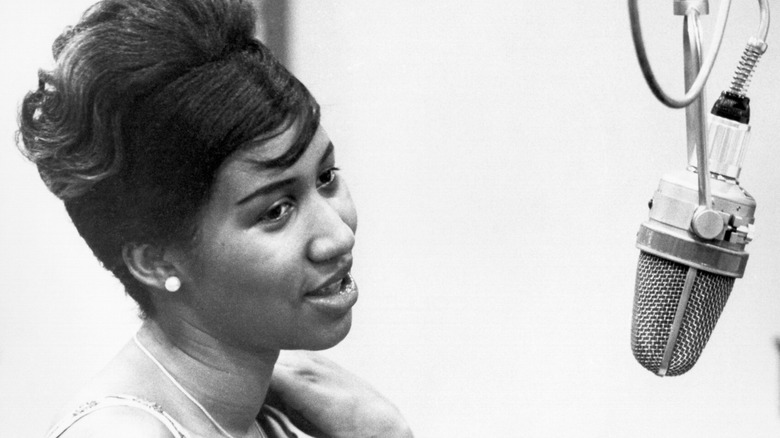
What you might have never known about Aretha Franklin is that she became a mother at a shockingly young age, as she had her first child when she was just 12 years old. She gave birth to her son, Clarence Franklin, on January 28, 1955, and welcomed son, Edward Franklin, two years later on January 22, 1957 — the identity of their father being revealed as Edward Jordan Sr. decades later via a handwritten note Aretha left behind after her death in 2018.
"I still wanted to get out and hang out with my friends," Aretha told Ebony of becoming a mother so young. "So I wanted to be in two places at the same time. But my grandmother helped me a lot, and my sister and my cousin. They would babysit so I could get out occasionally." At 16, two years after the birth of Edward, Aretha dropped out of school to focus on her blossoming career, though she struggled being away from her boys while chasing her dreams.
Aretha's children were her pride and joy, and she had two more sons between 1964 and 1970. Erma Franklin later touched on the sacrifices her sister, and other female performers, made for their careers. "We were part of that generation of young female singers who definitely sacrificed time with our kids to attend to our careers," she said in David Ritz's "Respect" (via People). "We did so knowingly. We also did so with heavy guilt."
She faced racial segregation while pursuing her career
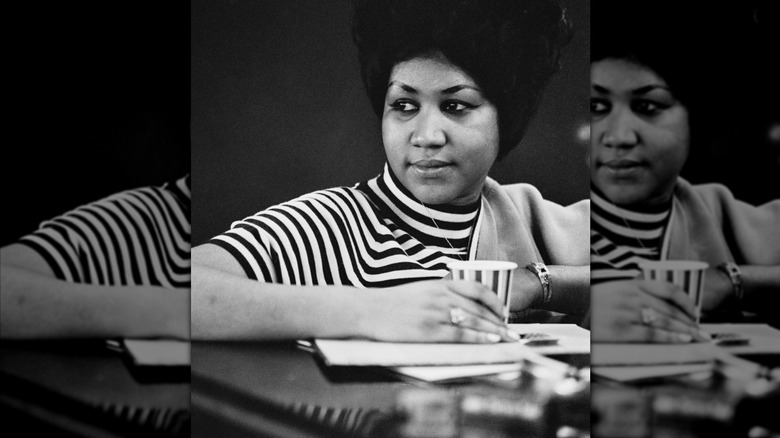
Early on in her spectacular career, Aretha Franklin went on tour with her father and occasionally the gospel group The Soul Stirrers, traveling to churches in the Deep South where she experienced racial segregation. The songstress and her bandmates were often forced to eat in the back of a restaurant and were turned away from using public bathrooms, something she was not used to dealing with while living in Detroit.
As a young woman, Franklin was mentored by famed gospel singer Mahalia Jackson, who, like her father, was close friends with Martin Luther King Jr. and whose voice was hailed as "the soundtrack of the Civil Rights Movement," per NBC News. After being immersed in civil rights efforts at such a young age, Franklin became a powerful champion of the cause herself and frequently performed at protests and benefit events, using her platform and voice to fight for both women's and equal rights.
Her iconic rendition of Otis Redding's "Respect," which was Franklin's favorite song she ever sang, became the singer's signature song and an anthem for these powerful social movements. "It [reflected] the need of a nation, the need of the average man and woman in the street, the businessman, the mother, the fireman, the teacher — everyone wanted respect," Franklin wrote in "Aretha: From These Roots" (via W Magazine). "It was also one of the battle cries of the Civil Rights Movement. The song took on monumental significance."
Aretha Franklin was trapped in an abusive relationship
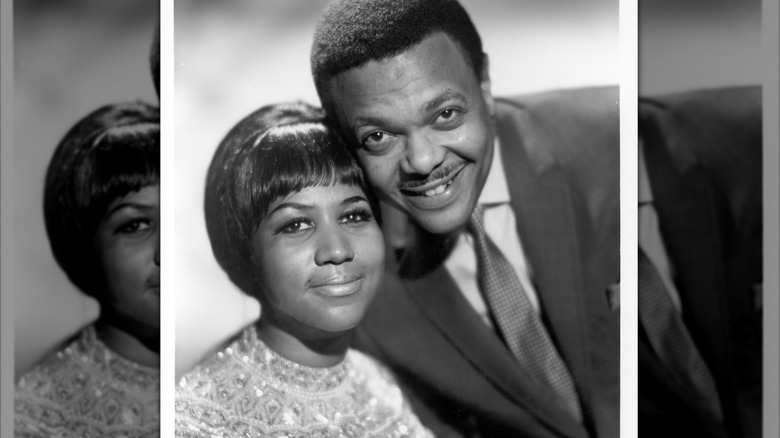
In 1961, when Aretha Franklin was 19 years old, she married her first husband, Ted White, who played a pivotal role in the early days of her career and subsequently served as her manager. Aretha's father, C.L. Franklin, did not like White and was opposed to the marriage, as White was allegedly involved in shady business dealings and was described by Time in 1968 as "a former dabbler in Detroit real estate and a street-corner wheeler-dealer."
White was abusive to his wife and drank heavily. According to what Aretha's brother, Cecil Franklin, said in "From These Roots" (via Rolling Stone), C.L. "knew Ted was something of a shady character" and "thought the association would hurt Aretha." The "Think" hitmaker was a young, single mom of two when she met 30-year-old White, and despite her father's objections, the pair were married shortly after they first began dating. Their eight-year marriage was plagued by violence and booze, as Aretha grew dependent on alcohol during their tumultuous union.
The singer left White in 1968, and their divorce was finalized in 1969 – her song "I Never Loved a Man (The Way I Love You) was allegedly written about White. A look inside Aretha's love life will tell you that she endured plenty of hardships while on her journey to becoming the "Queen of Soul." She told Vanity Fair in 1994: "Trying to grow up is hurting, you know. You make mistakes. You try to learn from them, and when you don't it hurts even more. And I've been hurt — hurt bad."
If you or someone you know is dealing with domestic abuse, you can call the National Domestic Violence Hotline at 1−800−799−7233. You can also find more information, resources, and support at their website.
She struggled with alcoholism
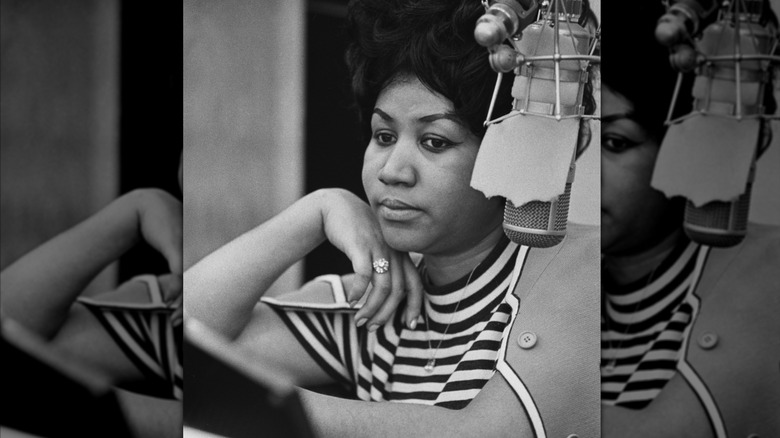
Aretha Franklin was wildly unhappy in her marriage to Ted White before their 1969 divorce, and she reportedly used alcohol as a crutch, drinking excessive amounts both on stage and off during their stormy relationship. While performing a show in Columbus, Georgia, in 1967, Aretha broke her arm after falling off the stage – she later claimed she had been blinded by the bright lights. However, her publicist Ruth Bowen refuted this detail, once claiming (via Rolling Stone): "She'd been using booze to numb the pain of her lousy marriage."
During this difficult period in her life, Aretha was arrested for disorderly conduct in 1969 after attempting to assault police officers. She also canceled upcoming concerts without explanation. "She was drinking so much we thought she was on the verge of a breakdown," her sister, Carolyn Franklin, said in the biography, "Respect" (via the Daily Mail). Aretha struggled with her mental health, and alcohol didn't help, as the singer was crippled by the stress of her career.
"I don't know what to call it but deep, deep insecurity," Carolyn also expressed to biographer David Ritz. "Her style was to either drink away the anxiety or, when that stopped working, disappear for a while, find her bearings, and go right back onstage and wear the crown of the impervious diva." Following her divorce from White, Aretha got her alcohol addiction under control in the '70s, though she became dependent on food.
If you or anyone you know needs help with addiction issues, help is available. Visit the Substance Abuse and Mental Health Services Administration website or contact SAMHSA's National Helpline at 1-800-662-HELP (4357).
Aretha Franklin faced weight struggles all her life
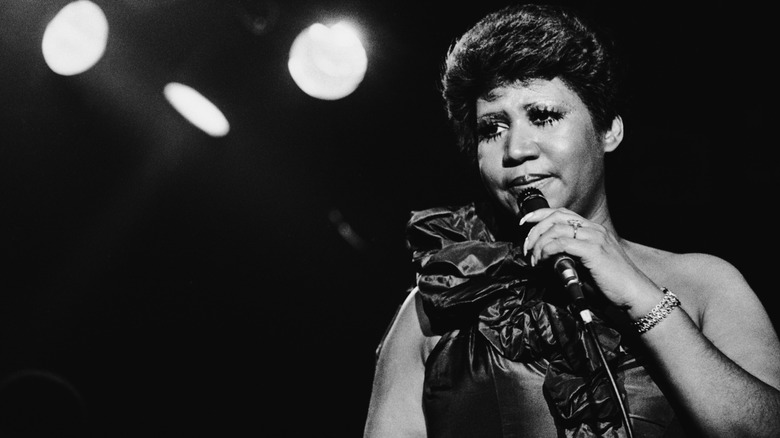
Aretha Franklin struggled with her weight throughout much of her life, often finding comfort in food in response to the personal trauma she endured. At her heaviest weight, Franklin was reportedly over 300 pounds. Her size fluctuated throughout her enviable career, with tabloids relentlessly criticizing her figure. In 1970, the music legend did a crash diet that helped her lose 40 pounds, but she later had trouble keeping it off and would find herself battling against her eating habits.
"All the girls will understand the change in attitude and self-appreciation when they learn that I dropped from a size 15 dress down to a size 9/10, and I can even wear a size 8 in some things," Franklin told Ebony of her weight loss. "Any woman knows that kind of thing makes you feel mighty good." Franklin gained and lost weight in the ensuing decades, and by 2011, she had lost a staggering 85 pounds after saying she was "entirely too fat" on "The Wendy Williams Show" (via People) — she also underwent an undisclosed medical procedure at the time, which apparently helped her lose weight.
Franklin had diabetes as a result of her constantly fluctuating weight, and she kept her thinner frame up until her death in 2018. "I feel wonderful, I've got more energy, I've changed my diet, going to Whole Foods now, getting the best stuff," she said on "The View" in 2011 (via HuffPost). "Dropped the chitlins, drop the ham hocks, getting some — I won't say better food, I'll say other food."
Her father was shot in a robbery & in a coma until his death
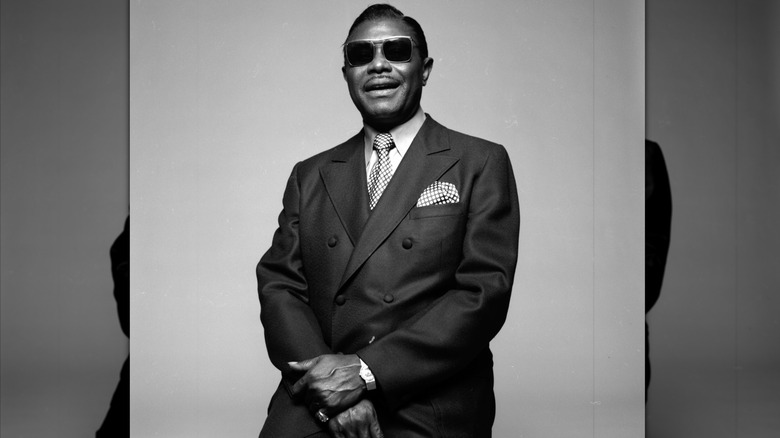
Aretha Franklin's coping mechanisms were amplified in 1979, when her beloved father, C.L. Franklin, was shot twice at point-blank range in a botched robbery at his Detroit home. Aretha had been busy performing in Las Vegas when the robbery occurred. C.L. remained in a coma during this time, and Aretha spent a lot of time at home to be closer to her father, whom she and her siblings ensured would receive 24-hour nursing care.
C.L. subsequently spent the next five years in a coma, never regaining consciousness and dying at 69 on July 28, 1984, from complications from his injuries. Aretha was never the same after the death of her father, as she had turned to food and smoking as a way to deal with her grief. C.L. had a profound impact on Aretha's life and career and always encouraged his daughter to follow her musical passions.
"She was the 'Queen of Soul' to the world, and she was in so many ways. She had entertained presidents and popes and kings and queens," Harvard professor Jonathan L. Walton, who had become friends with Aretha after the university awarded her an honorary degree in 2014, told CNN. "But she was always very clear that she was proud to be the daughter of the Rev. Clarence LaVaughn Franklin. She had no problem still being recognized that way."
Aretha Franklin lost two siblings within just one year
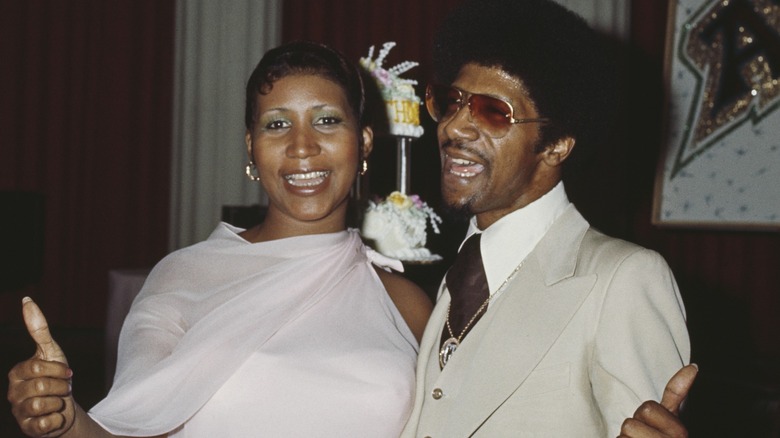
Aretha Franklin was very close to her sisters Erma Franklin and Carolyn Franklin, as they were both also talented musicians who helped her achieve global success with their support and creative contributions. The music icon kept things in the family throughout her dazzling career and had her brother, Cecil Franklin, as her manager for decades after her divorce from Ted White. Though sibling rivalry often ran rampant, the family remained very close with one another while she chased her dreams.
Tragically, Aretha lost two of her siblings within barely a year of one another. Her sister Carolyn died from breast cancer at just 43 in 1988, while Cecil passed away from a heart attack in 1989 at 49. Cecil followed in his father's footsteps and became a reverend while managing Aretha's career. At the same time, Carolyn released five solo albums and helped Aretha behind the scenes before retiring from the music industry in 1976. "People won't let me out of [Aretha's] shadow and I think that's wrong," Carolyn once said of her career (via Bustle).
After Erma died in 2002 from cancer, Aretha stepped in and became a comforting, maternal presence for her siblings' grieving children. "She was the last one of the siblings, and when my aunt Erma and my dad died within a couple months of each other, she stepped right in and put her feelings aside even though she was grieving a loss that was two months apart," her nephew Tim told People.
She privately faced a cancer diagnosis
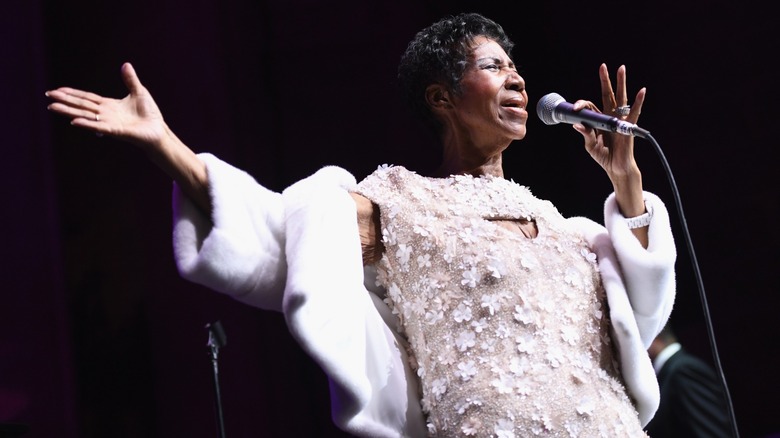
In 2010, Aretha Franklin underwent a mysterious surgery and was forced to postpone concerts, later denying that the procedure had anything to do with pancreatic cancer as speculated by the media. She remained tight-lipped when it came to her health, and in the following months, Franklin lost 85 pounds, leading to rumors that she had secretly had weight loss surgery. Franklin ultimately revealed that her slimdown was a result of the surgery, as well as diet and exercise.
Fiercely protective of her private life, the defiant music legend told Jet (via People), "I don't have to talk about my health with anybody other than my doctors. The problem has been resolved." She continued to perform during her health setbacks, though she reduced her public appearances while dealing with the illness. Franklin, the trailblazing "Queen of Soul" who broke the glass ceiling and inspired millions, passed away on August 16, 2018 from advanced pancreatic cancer at 76.
Her reps confirmed that she had dealt with cancer for eight years, with a close friend of Franklin's telling People after her passing, "She has been ill for a long time. She did not want people to know and she didn't make it public." The Grammy-winner never created a formal will, but her sons shockingly discovered one of her handwritten wills stuffed beneath couch cushions. A service was held in Franklin's honor at New Bethel Baptist Church, and after her death, Rolling Stone declared Franklin as "the greatest singer of her generation."