

Gut-Wrenching Details About Drew Barrymore's Childhood Will Break Your Heart
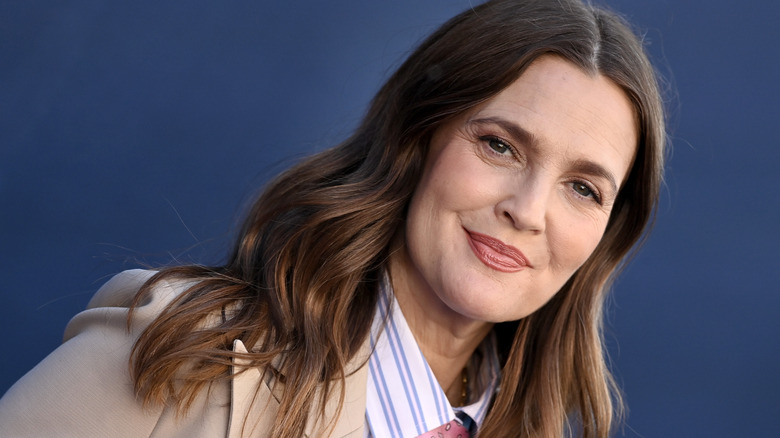
Hailing from a distinguished family of acting royalty, leading lady Drew Barrymore has been a beloved staple on both small and big screens for over four decades; her infectious personality and stellar acting chops make her an adored figure. Barrymore kicked off her enduring career with quite a bang, as her first major performance was in Steven Spielberg's 1982 masterpiece "E.T. the Extra-Terrestrial." Despite being one of the industry's most recognizable stars, her Tinseltown journey was marred by tragedy and heartbreak.
She has long been open about her tumultuous childhood, from her complicated relationship with her mother, Jaid Barrymore, to her heartbreaking addiction to alcohol and drugs before she was even a teenager. Barrymore's stunning transformation from a wild party girl making headlines for all the wrong reasons to becoming one of America's most cherished sweethearts is truly a testament to her strength and determination.
Many child stars are unable to make the intimidating leap from child to adult actor, yet Barrymore did so spectacularly and has starred in cinematic hits like "The Wedding Singer," "Never Been Kissed," and "Charlie's Angels." She overcame her disheartening childhood and has inspired millions to never give up, no matter the obstacles they face.
Drew Barrymore begged Steven Spielberg to be her father
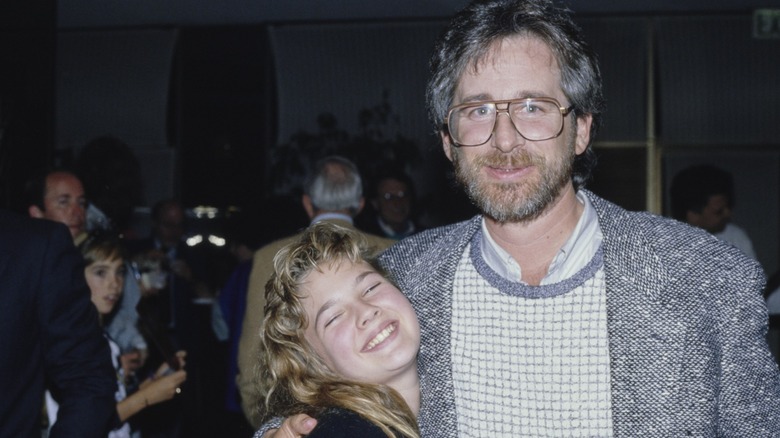
Drew Barrymore, born on February 22, 1975, is the daughter of screen star John Drew Barrymore. Her family's acting roots trace back to 19th-century London, and she followed in her famous clan's footsteps. Growing up, her home life was plagued by chaos and uncertainty — John left when she was only 6 months old and was largely absent during her childhood.
Barrymore began appearing in commercials at just 11 months old and landed her breakthrough role as Gertie in Steven Spielberg's 1982 blockbuster hit "E.T. the Extra-Terrestrial" at age 6, going on 7. During production, Barrymore developed a deep bond with Spielberg and his family and viewed the director as a surrogate father. In an interview with Vulture, Barrymore described Spielberg as "the only person in my life to this day that ever was a parental figure" and recalled the time when she begged him to be her father.
After gently telling her no, he instead agreed to be her godfather, a poignant moment that stuck with the director. "She was staying up way past her bedtime, going to places she should have only been hearing about, and living a life at a very tender age that I think robbed her of her childhood," Spielberg told Vulture (via the Los Angeles Times). "Yet I felt very helpless because I wasn't her dad. I could only kind of be a consigliere to her."
She started drinking when she was just 8
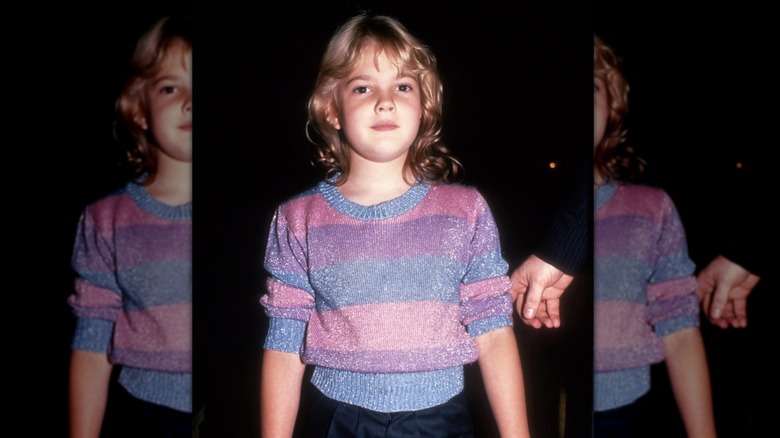
After the massive success of "E.T. the Extra-Terrestrial," Drew Barrymore became one of Hollywood's most adored child stars, and her newfound fortune and fame came with their own unfortunate pitfalls. In her 1991 memoir "Little Girl Lost," Barrymore wrote that she used to pour liquor over her ice cream when she was just 7 years old and that when she was 9, she got drunk for the first time at Rob Lowe's birthday party. Her alcohol dependency only intensified in the ensuing years, and she was a casual drinker before she turned 10.
At the wrap-party for her 1984 film "Firestarter," the brazen Barrymore bet a couple of skeptical crew members she could down two glasses of champagne. "I was tipsy, and bubbly, and the life of the party," she said to Oprah Winfrey in a 1990 interview via Mamamia. "I felt so good. All my problems had seemed to disappear for that hour that I was out of it." She became rambunctious and unruly while inebriated, staying in hotels largely unsupervised during film shoots and causing trouble.
In the same interview with Winfrey, Barrymore shared how she suffered from low self-esteem growing up, telling the host, "I never looked in the mirror and thought I was beautiful." Her mother often turned a blind eye to her daughter's drinking and shocking behavior, largely because she, too, engaged in the partying lifestyle and reaped Hollywood's benefits.
Her mother used her to get into clubs as a child
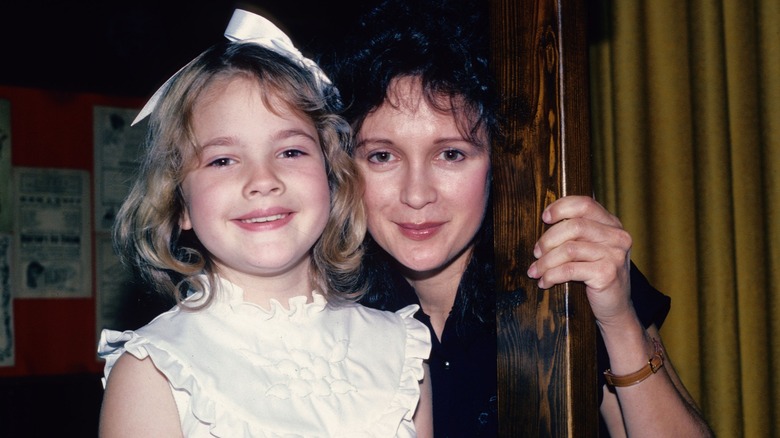
Drew Barrymore often spent her nights partying when she was just a little girl; her mother, Jaid Barrymore, used her to get into elite clubs and Hollywood hotspots. The starlet was one of the silver screen's most recognizable talents, and despite being a child, Barrymore had no problem getting in. Studio 54 became popular for its endless celebrity guest list, and the nightclub was frequently a breeding ground for debauchery.
When Barrymore was 11, she ran into rock stars Matthew and Grayson Nelson (from the band Nelson), twins and sons of rock-and-roll legend Rick Nelson. They recalled bumping into Barrymore and her mother at a club in 1986, immediately feeling protective over the young actor and suspicious of Jaid. "Her mother was a piece of work — she took her there, basically, to get into the club," Matthew told Page Six. "We just saw this really sweet little girl. We thought, 'We need to help this little person.'"
The brothers were concerned for her safety as the club was full of grown men. "There were a bunch of creepy guys coming up. Matt sat on one side and I sat on the other side and all we did was tell them to f – – k off. Drew never forgot that," Gunnar revealed. Barrymore was so immersed in the nightlife scene that she even celebrated her 10th birthday at a bar in New York City.
Drew Barrymore started doing drugs at 10
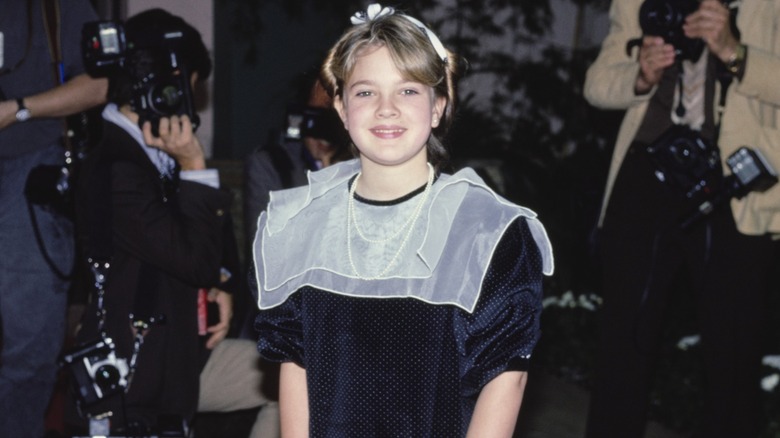
Drew Barrymore has been open about her tumultuous childhood and how she earned a reputation as a party girl, so it's unsurprising that she experimented with drugs early on. She was 10 when she first tried marijuana, and by 12, she had graduated to using cocaine. "I used to get high with my mum's friend at like 10," she said in Demi Lovato's documentary "Child Star" via Mamamia. "And I thought she was so cool, she would give weed to me and her son."
Barrymore is the mother to daughters Olive and Frankie, and she has since realized just how crazy her own adolescent years were. "Having a 10 year old daughter now... it's unfathomable. But that's just how I grew up," she told Lovato in the documentary. "I can't believe how much I respect life, knowing that I disrespected it so many times. I think there was plenty of my life where I was a human walking cautionary tale."
She has also detailed how drugs and alcohol served as a coping mechanism amidst all the turmoil in her personal life. In her memoir "Little Girl Lost," Barrymore alleged that when her father did seldom come around, he was a violent alcoholic, and she also claimed she had suffered abuse at the hands of both her parents. Her addictions eventually got so out of control that she was sent to rehab at 13.
If you or anyone you know needs help with addiction issues, help is available. Visit the Substance Abuse and Mental Health Services Administration website or contact SAMHSA's National Helpline at 1-800-662-HELP (4357).
If you or someone you know may be the victim of child abuse, please contact the Childhelp National Child Abuse Hotline at 1-800-4-A-Child (1-800-422-4453) or contact their live chat services.
She constantly worked and wasn't able to have a childhood
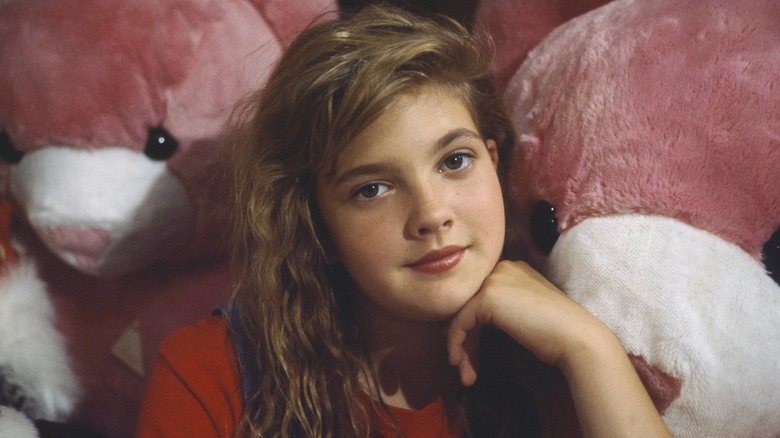
When he appeared on her talk show in 2025, Hollywood veteran Michael Douglas recalled meeting Drew Barrymore for the first time when she was waiting tables at 11. He was shocked to discover that she was working despite her young age, prompting her to admit that she "didn't really have family" during that period in her life (via HuffPost). "I'm in a restaurant called Columbus, and this is back ... in the early '80s. It was this real hot restaurant ― the hot spot up in the Upper West Side on Columbus Avenue," Douglas shared alongside his son Cameron Douglas.
"And we're heading there one night, and this waitress comes over to serve me, and it's this 11-year-old young lady here." In the interview, Barrymore acknowledged how she worked and clubbed despite being a minor. Douglas asked her at the time, "Is it past your bedtime?" Since she came from such a famous Hollywood family and had high expectations placed on her, she was never allowed a proper childhood.
By the time she was a teenager, Barrymore had already achieved worldwide fame and was a fixture in Hollywood. However, her unprecedented success was overshadowed by her infamously troubled personal life and heartbreaking struggles with addiction, which sadly came to a head when she was sent to rehab.
Drew Barrymore attempted suicide as a teen
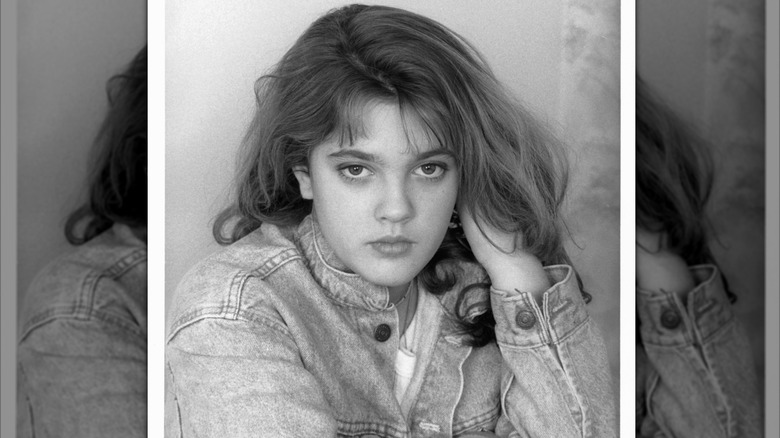
Drew Barrymore went to rehab for the first time when she was just 13, and after achieving a period of sobriety, she celebrated by doing cocaine in a New York City club. The guilt from relapsing caused severe depression for the starlet, as she was also ironically working with First Lady Nancy Reagan on her "Just Say No" campaign against drugs. Struggling with her inner turmoil, Barrymore attempted suicide, leading her mother to send her to a psychiatric hospital to save her life.
During an episode of her talk show "The Drew Barrymore Show," the actor shared a poignant conversation about the subject with singer Madison Beer, touching on her own experiences with suicide. "Me as well, twice. I don't know if I really wanted to leave the earth. I was so desperate that I did not know where else to turn," she said. The dark chapter in Barrymore's life eventually proved to be the catalyst that helped her finally want to get and stay sober.
"I was a child lost in a world of adult vices, trying to find my way back to innocence," she wrote in her 2015 memoir "Wildflower" via Us Weekly. "Addiction was my escape, but it also became my prison." Realizing she had allowed Barrymore to become completely out of control, Jaid Barrymore sent her daughter to an intensive rehab program that would span 18 months.
If you or someone you know is struggling or in crisis, help is available. Call or text 988 or chat 988lifeline.org
She was sent to an inpatient psychiatric hospital at 13
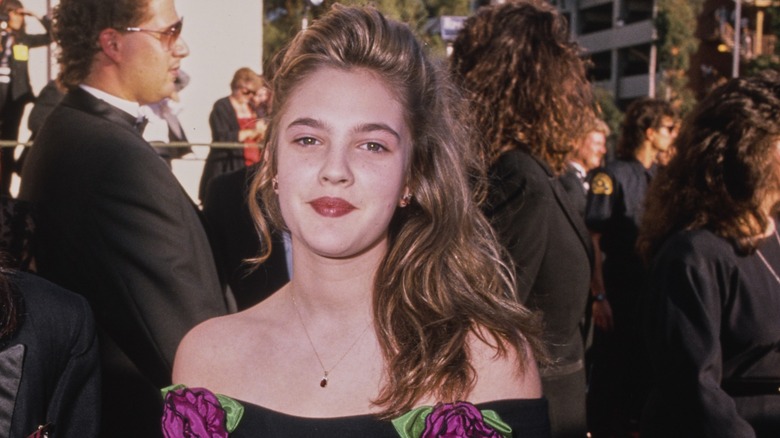
Following her relapse and heartbreaking suicide attempt, Drew Barrymore was sent to a psychiatric hospital when she was 13 for alcohol and drug addiction. Barrymore did not know where she was going because had she known: "I would have run away. I would never, never have let that happen to myself," she told The Guardian. The idea of a child being locked away for a year and a half is difficult to digest, especially since she was also trying to overcome her addictions.
However, Barrymore has since found peace with her mother's decision and acknowledged that she was in desperate need of a wake-up call. "It was like serious recruitment training and boot camp, and it was horrible and dark and very long-lived, a year and a half, but I needed it. I needed that whole insane discipline," she said to the publication. "My life was not normal. I was not a kid in school with normal circumstances. There was something very abnormal, and I needed some severe shift."
She was lonely throughout her inpatient experience; her mother only visited occasionally. In the decades since her rehab stay, Barrymore's relationship with her mother experienced many highs and lows, and she had to let go of her anger towards her. The institution even recommended that Barrymore become legally emancipated as a way to heal and keep her sobriety, something she quickly pursued after completing the program.
She became emancipated when she was 14
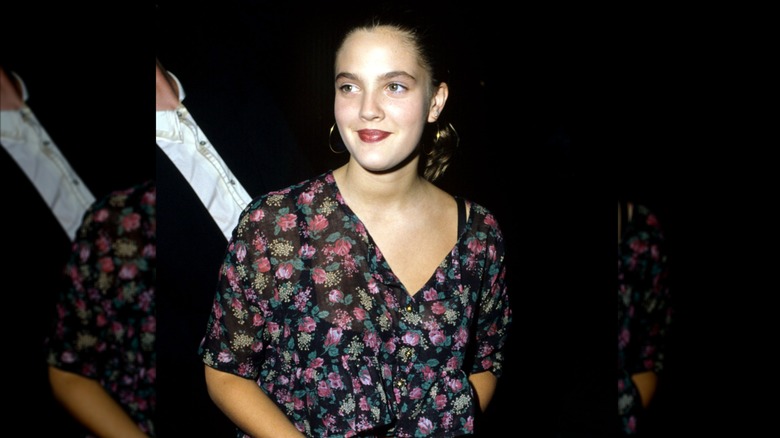
After a tumultuous childhood and difficult relationship with her mother, Drew Barrymore set out to become emancipated at 14, feeling as though Jaid Barrymore was not capable of being a responsible parent. Barrymore also knew she'd earned a reputation as a wild child and that her mother's influence only made things worse, especially since she had been estranged from her father since she was a little girl. "I had to part ways from my mother because we had driven our relationship into the ground," she wrote in her memoir via The Guardian.
"She had lost credibility as a mother by taking me to Studio 54 (so wrong, but so fun) instead of school. And I was out of control due to working since I was 11 months old and what that had done to my childhood, which made me grow up too fast." She was legally considered an adult in the eyes of the state of California and was eager to start both her personal and professional life over.
Barrymore subsequently got a rundown apartment in Los Angeles when she was 15 and had to figure out how to properly handle her finances and manage her household. She also revealed in her memoir that she had dropped out of school once she was emancipated, taking a step back from communicating with her mother in an effort to achieve her own independence. Barrymore quickly learned that being an adult came with its own pitfalls and hurdles.
She struggled to support herself and felt like a has-been
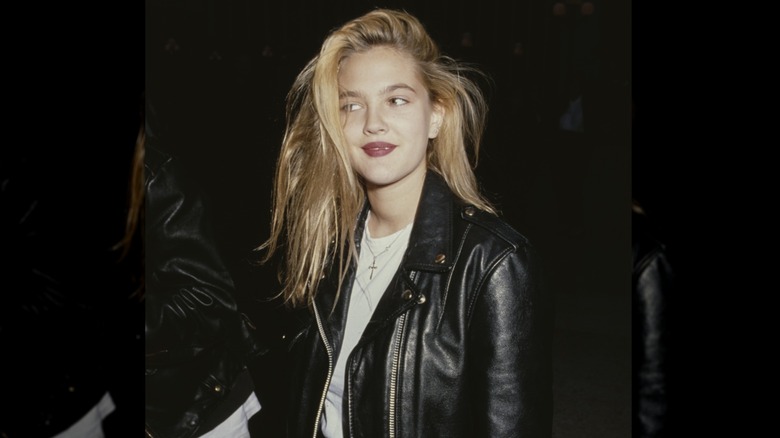
After successfully emancipating herself, Drew Barrymore struggled to keep her head above water, though she felt like she was finally able to start anew. Despite being just a teenager, Barrymore felt insecure in Hollywood and washed up, as she had just gotten out of rehab and had had a lengthy absence from the big screen. She worried she would be unable to return to the profession and felt blacklisted by the industry.
Barrymore realized a world of independence could be downright scary. "I'm so terrified, I could not sleep at night in that apartment. The thing that kept me feeling safe is my television," she recalled at the Broadcasting+Cable Hall of Fame via Hello! Canada." "That godd**n TV is still on today in my kitchen, and I have a sign on it that says 'Please do not turn off this television.' It saved me. It made me feel like I was a part of something that other people were a part of at the same time."
The young actress took a temporary job as a waitress as she plotted her return to the screen, and in 1992, she reintroduced herself to audiences in the erotic thriller "Poison Ivy." While the film failed to make a splash with critics, it helped get Barrymore's foot back in Hollywood's door and proved that she still had a place in the industry she loved.
Drew Barrymore controversially posed naked at 17
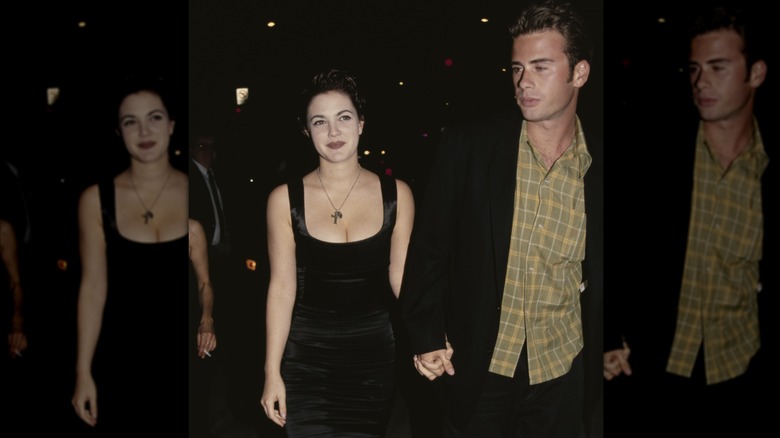
Enjoying her newfound freedom, Drew Barrymore posed naked in a 1992 spread for Interview Magazine at just 17, appearing alongside her then 23-year-old fiancé Jamie Walters. It was one of Barrymore's most scandalous career moves, and as expected, caused quite the controversy as she was underage. She posed naked again in 1995 for Playboy. The actor has since opened up about her choice to bare it all in a 2023 episode of her talk show.
"I was taking my power back," she admitted to guest Pamela Anderson in the interview via Decider, adding that she was "being a wild child and being free and discovering myself and growing up." Barrymore's tragic life and personal battles have vastly shaped the way she wants to raise her daughter, protecting her like she so desperately wanted to be.
In a powerful Instagram post, Barrymore discussed the parental guidance she yearned for as a little girl and pointed out how a lack of discipline ultimately set her on a troubled path. "I wished many times when I was a kid that someone would tell me no. I wanted so badly to rebel all the time, and it was because I had no guardrails," she wrote, before acknowledging her time in rehab and its impact. "It made me appreciate everything. And since there isn't a time machine to go back and redo anything, I will keep loving my journey."