

Sean Hannity's Transformation From Painter To Polarizing Fox News Anchor
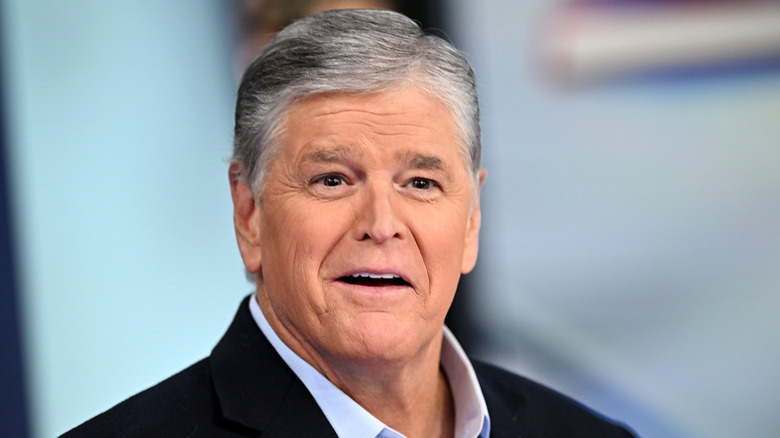
Sean Hannity remains one of the highest-rated cable news hosts in the United States. But high ratings don't tell you what you don't know about a person. They don't tell you what he thinks he owes that audience, or what standards he holds himself to when the camera is on.
On that front, Hannity has never been entirely clear. When scrutiny over his warm relationship with Donald Trump hit a peak during the 2016 race, Hannity responded to the New York Times: "I never claimed to be a journalist." A year later, he refined his answer. "I'm a journalist. But I'm an advocacy journalist, or an opinion journalist," he told the New York Times.
Hannity dropped out of college before finishing a degree, and spent time doing construction, bartending, and painting houses. All of that changed in 1996 when Roger Ailes, then launching Fox News, offered him a co-hosting gig on "Hannity & Colmes" alongside liberal counterpart Alan Colmes. When Colmes left in 2009, Hannity inherited the full spotlight, and his solo show has occupied the 9 p.m. primetime slot ever since. He also spent decades hosting his nationally syndicated radio program, "The Sean Hannity Show," maintaining a dual-platform career few broadcasters can match. Ultimately, Hannity has been with Fox for so long — and watched by audiences for so many years — that he's outlasted almost everyone else who launched with the network.
Sean Hannity dropped out of college because he was bored
Sean Hannity's relationship with school was never a long-term commitment. After growing up in Catholic schools, he briefly enrolled at New York University, Adelphi University, and the University of California, Santa Barbara, but none of them kept him there for long. As he put it to The New York Times, "I just wasn't that interested in school. It bored me to tears."
He has since turned that absence into a point of pride, dismissing the value of elite credentials altogether. In an interview with GQ, he said, "I'm not impressed by people's degrees. Harvard doesn't impress me, Yale doesn't impress me, Columbia doesn't impress me." Despite his disregard for prestigious academic institutions, Hannity accepted an honorary degree from Liberty University in 2005.
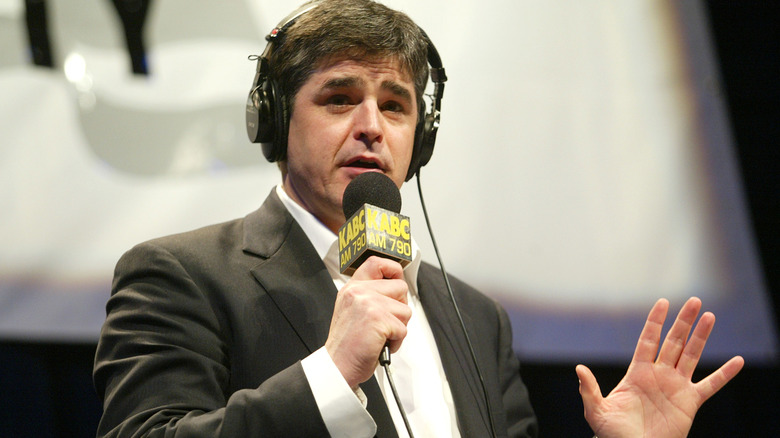
After leaving college behind, Hannity painted houses and did contracting work, but he also started testing himself behind a microphone at KCSB-FM, UC Santa Barbara's college station. It was not a smooth debut. "I was terrible," Hannity later said about his first attempts at radio (via New York Post). Even so, that uneven start gave him a foothold in the medium that would eventually make him.
Sean Hannity was fired from his first radio job for making bigoted comments
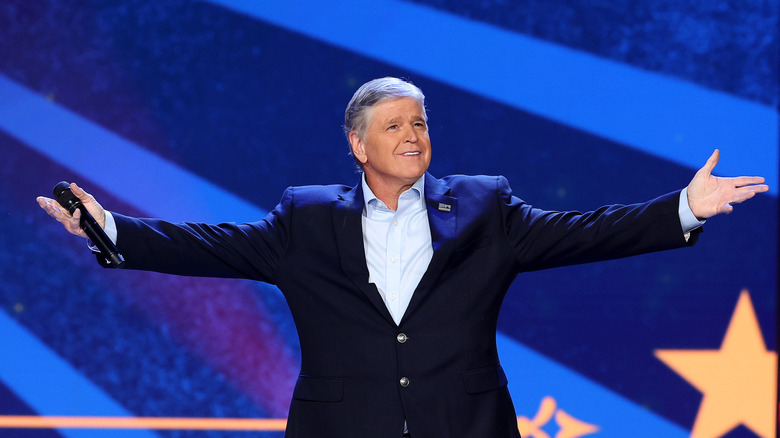
Sean Hannity's first major embarrassing on-air blunder was when he was still a volunteer host at KCSB-FM. Hannity used the platform to air inflammatory claims about homosexuality, and the station was soon flooded with complaints. The Washington Post reported that one segment featured Gene Antonio, author of "The AIDS Cover-up? The Real and Alarming Facts About AIDS," and that Hannity leaned into the idea that the public was being kept from real information about the disease. "They won't let you say it's a gay disease," Hannity said, according to The Washington Post.
Around the same time, The New York Times reported that Hannity also told listeners, "I think anyone that believes, anyone listening to this show that believes homosexuality is just a normal lifestyle has been brainwashed." KCSB pulled him from the air, but the dispute took an unusual turn when the ACLU argued that his First Amendment rights had been violated. The station's board reversed the decision, yet Hannity did not return. He wanted a public apology and more airtime. The station would not give him either.
Years later, Hannity tried to separate himself from that early version of his radio persona. In a statement to The Independent, he said, "Almost 30 years ago when I was starting out in radio in my 20's, I interviewed a controversial guest who made several incendiary comments." He also admitted, "I was young and stupid with no clue how to do a show."
Roger Ailes discovered Sean Hannity when he was bouncing between jobs
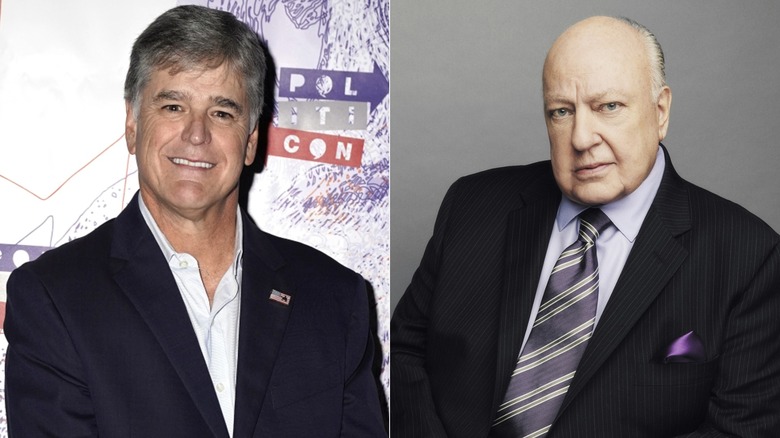
Following his controversial stint as a volunteer host, Sean Hannity moved through a couple of professional radio jobs, first at WVNN in Athens, Alabama, then at WGST in Atlanta. It was the Atlanta gig that put him on Roger Ailes' radar. Ailes was launching Fox News at the time and hired Hannity in September 1996 to host a show.
In September 1996, Ailes offered Hannity a television program with an unusual working title, Hannity and LTBD ("liberal to be determined"). Speaking about Ailes' decision, Hannity reflected, "In true Roger Ailes form, he saw something in me that no one else did" (via Fox News).
Their relationship grew personal over time. Hannity lost his father shortly after joining the network, and has described Ailes as someone who partly filled that gap. "In many ways he was like a second father after I lost my father 6 months after I started at FNC in 3/97," he said, as reported by Variety. When Ailes was pushed out of Fox News in 2016 over sexual harassment allegations from multiple women, Hannity defended him publicly. After Ailes died in 2017, Hannity referred to him as a "great patriotic warrior."
He stood by Donald Trump from the very beginning
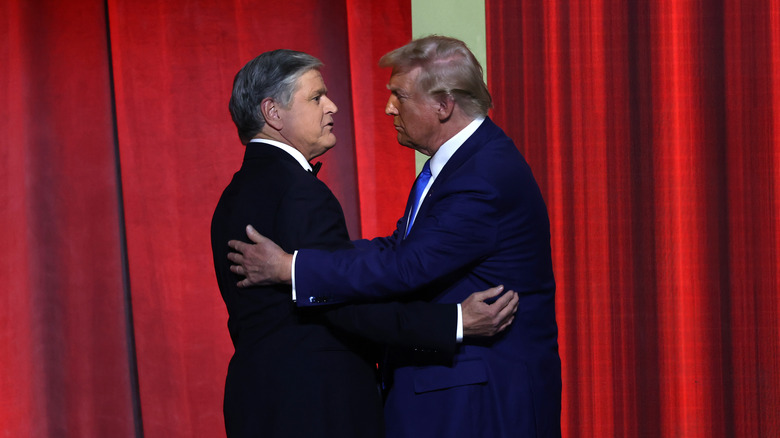
Sean Hannity's support for Donald Trump has been unwavering from the very beginning. In 2011, long before Trump officially entered politics, Hannity gave him a platform on Fox News to promote the birther conspiracy against Barack Obama. By 2012, Hannity was already talking like someone in Trump's orbit, saying he'd advised Trump not to run as an independent.
When Trump ran in 2016 and then took office, Hannity became his most reliable TV backer. His show gave Trump an open door to push false claims, like Ted Cruz's father being involved in JFK's assassination, and to promote conspiracy theories about Hillary Clinton's health and the death of DNC staffer Seth Rich. Hannity's loyalty wasn't a secret. "I'm not hiding the fact that I want Donald Trump to be the next President of the United States," he told The New York Times.
According to the Los Angeles Times, Trump would regularly call Hannity after his show to discuss strategy. And in 2020, texts made public between Hannity and then White House Chief of Staff Mark Meadows showed Hannity directly engaging in the re-election effort. When Meadows asked Hannity to push his audience to vote, Hannity replied, "On it. Any place in particular we need a push?"
Hannity spent most of his life as a Catholic, but something changed in 2019
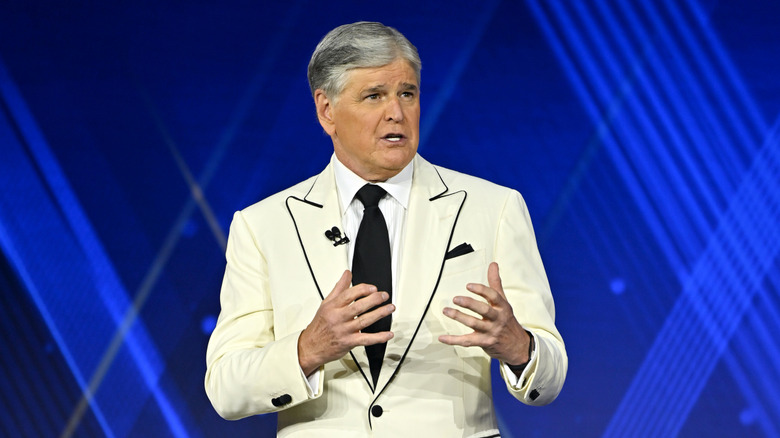
Sean Hannity has shown over the years that his loyalty to Donald Trump runs deeper than almost anything else in his life, including, it seems, the Church he was raised in. On April 16, 2026, he talked about leaving Catholicism on his primetime show. "While I am a Christian, I left the Catholic Church in large part because of institutionalized corruption, and it was at the parish level, to the Bishop level, Cardinals, all the way to Rome," he said on "Hannity." He also alluded to scandals he believes were never properly dealt with, and argued that figures in the Vatican have lost the true meaning of the Bible and its teachings.
Still, Hannity spoke warmly about what Catholicism gave him. "My parents were devout Catholics, and while I wasn't particularly engaged at the time and the teachings of the Catholic Church as a young person, it entered my consciousness and made me a better person," he said. "It has been a positive force in my life in so many ways." Hannity's comments came after Donald Trump's very public clash with Pope Leo XIV over America's war in the Middle East.
Hannity actually left the Catholic faith back in 2019. That same year, he appeared on "Ainsley's Bible Study" on Fox Nation and spoke openly about where his spirituality stood. "My faith actually has gotten stronger as I've gotten older," he said. "I would say I realize more than ever that I not only need, but I want, God in my life," according to Fox News.
His personal life hasn't always been as put-together as his career
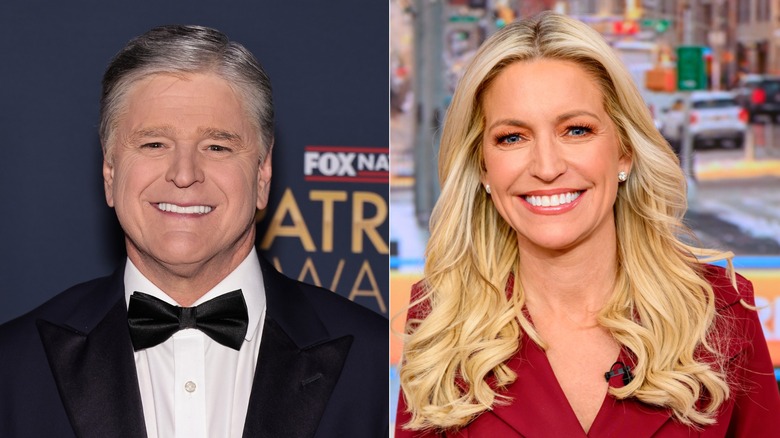
Sean Hannity may have built one of the most successful careers in cable news, but his personal life has taken a lot more careful framing. He married Jill Rhodes in 1993, and by his own account, the red flags showed up early, at least to everyone around them. In a 2011 Newsmax interview, Hannity said Rhodes' coworkers tried to talk her out of marrying him after hearing his radio show. Even their pastor wasn't exactly cheering them on. Hannity recalled him telling Rhodes, "You're crazy to be marrying this guy," after Hannity picked a fight over what he saw as the church getting too liberal.
The couple stayed married for more than two decades and had two children, Patrick (born in 1998) and Merri Kelly (born in 2002), before quietly finalizing their divorce in 2019. At the time, a source told the Daily Mail, "Personally, the reason for the divorce, Sean does three hours of radio each day in the city followed by TV in primetime, his workload created a lot of time away and it was tough on the marriage."
Not long after, Hannity was linked to "Fox & Friends" co-host Ainsley Earhardt. They first showed up publicly together at a wedding at Trump National Golf Club in Bedminster in August 2019, though a source told People in 2020, "They're together all the time, but in private ... for years, not just months." During COVID, Earhardt reportedly rented a home near Hannity and recorded from his studio. Hannity proposed in December 2024, and, as The Daily Beast reported, he's joked about the 15-year age gap by calling himself a "grandpa" and an "aging lesbian."
Sean Hannity found himself on the wrong end of some disturbing claims from a fellow conservative commentator
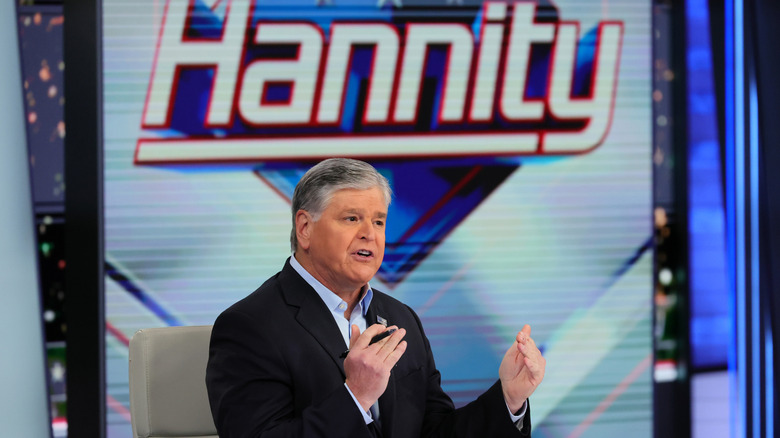
In 2017, Sean Hannity was hit with a set of allegations that caught even conservative media watchers off guard. Conservative commentator Debbie Schlussel told Newsweek that, during her appearances on Hannity's show in the early 2000s, he acted in ways she felt were inappropriate and uncomfortable. She also shared a series of bizarre encounters, including one where Hannity got upset about her changing her hair color. She also said that Hannity commented on her clothing size.
Hannity wasted no time firing back, calling her allegations "100% false and a complete fabrication." "This individual is a serial harasser who has been lying about me for well over a decade," Hannity said in a statement to the New York Daily. "The individual has a history of making provably false statements against me in an effort to slander, smear and besmirch my reputation." At the time, Hannity and his legal team left open the possibility of taking action against Schlussel for what they deemed an attempt to damage his reputation.
Later, Schlussel seemed to backpedal on the more serious implications of her accusations. "I never thought I was sexually harassed by Sean Hannity," she said. "I thought he was weird and creepy, not someone I liked" (via the Los Angeles Times).
The pundit has a habit of entertaining conspiracy theories on air
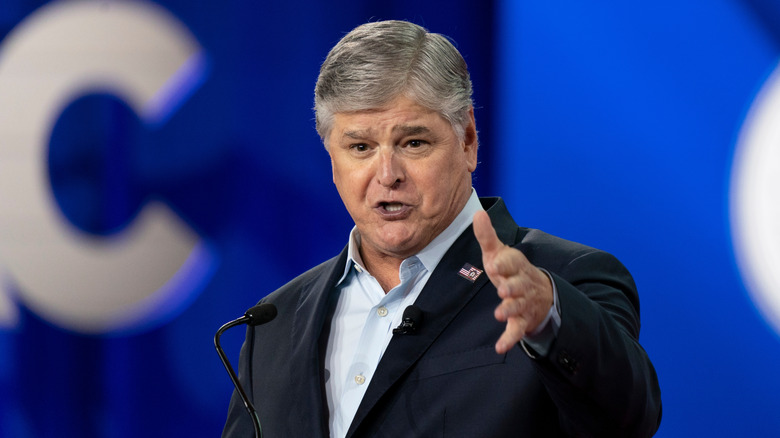
Sean Hannity has never been particularly careful about what he amplifies on air. In 2017, he devoted significant airtime to the theory that Seth Rich, a 27-year-old DNC staffer shot and killed in Washington, D.C. in July 2016, had leaked emails to WikiLeaks and was murdered for it. There was no evidence for this. Fox News eventually retracted the story, admitting it did not meet the network's editorial standards, according to Axios.
After the Capitol attack on January 6, 2021, Hannity falsely claimed that Donald Trump had authorized up to 20,000 National Guard troops to secure the Capitol but was stopped by Nancy Pelosi and Chuck Schumer. PolitiFact reviewed the allegation and found it was false. In 2024, Hannity claimed Democrats were behind both assassination attempts on Donald Trump. One problem was the identity of the shooter: Thomas Matthew Crooks was a registered Republican.
This wasn't some sudden lapse that only showed up in the Trump era. During the early battle over Barack Obama's Affordable Care Act, Hannity boosted Sarah Palin's "death panels" claim. He said, "Perfectly healthy senior citizens are going to be forced to undergo, quote, 'end of life counseling,' apparently to encourage them to check out before their time is up" (via Media Matters). PolitiFact branded the claim the "Lie of the Year" in 2009.
Hannity also took a shot at the movie world with a Christian drama film
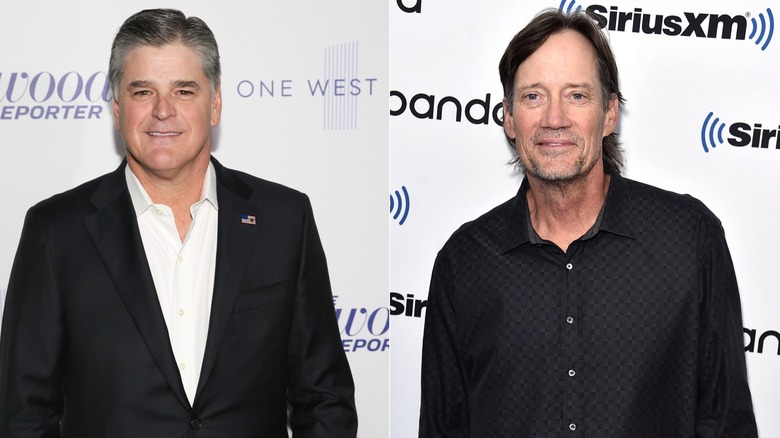
Hannity's closest brush with Hollywood came in 2017 when he executive-produced "Let There Be Light," a faith-based drama about an atheist who survives a near-death experience and converts to Christianity. The film is directed by Kevin Sorbo, who played Hercules in the '90s and has since reinvented himself as one of MAGA's most vocal fans online.
Promoting the film, Hannity argued that the entertainment industry is hostile to his worldview. "I've always felt that Hollywood has a contempt for conservative values and Christian values," he told CBN. "It impacts you intellectually, it impacts you emotionally – many people were crying during this film – it impacts you spiritually," he further said. "I know a lot of people have said, 'This changed my life.'"
Meanwhile, Gary Goldstein from the Los Angeles Times described the film as a "bonanza of conservative, Christian-centric ideals, mores and speechifying." Hannity probably wouldn't disagree with that. The whole point was to offer something to an audience he felt Hollywood had been ignoring for decades. On that level, it delivered. The film expanded to 700 theaters nationwide, according to the Christian Post.
Hannity played a key role in the scandal that cost Fox $787.5 million
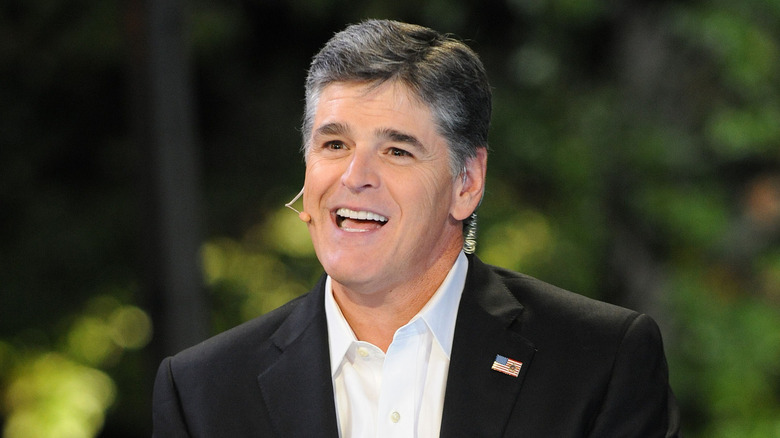
The Dominion Voting Systems lawsuit is probably the most expensive thing Sean Hannity has ever been tangentially involved in. After the 2020 election, Trump attorney Sidney Powell appeared on his show and made sweeping allegations that Dominion's machines had been rigged to hand Joe Biden the presidency. Dominion called the claims false and defamatory, and in March 2021, sued Fox News for $1.6 billion. The lawsuit accused Hannity and other hosts of knowingly amplifying lies about the company's voting systems. "Fox set out to lure viewers back — including President Trump himself — by intentionally and falsely blaming Dominion for President Trump's loss by rigging the election," the complaint stated, as reported by The Guardian.
Dominion's original filing argued that Hannity failed to challenge Powell's claims. According to the Financial Times, the company alleged, "Hannity did not correct Powell or notify his millions of viewers that he and his show's producers had seen direct evidence disproving those false claims." Under oath, however, Hannity tried to distance himself from Powell's allegations. "I did not believe it for one second," Hannity said (via the New York Times). Fox ultimately settled with Dominion in April 2023, just before the trial was set to begin in Delaware.
Sean Hannity has been involved in controversies related to his real estate dealings
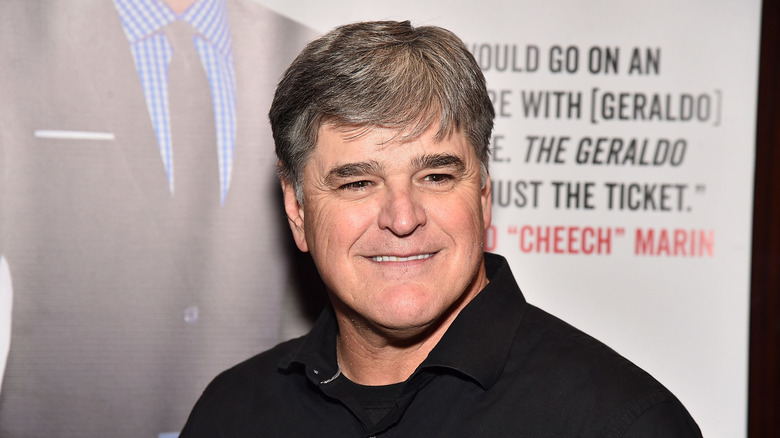
Whatever "regular guy" image he sells on TV, Sean Hannity arguably lives a lavish life off camera, and the gap between the persona and the lifestyle has long fed speculation about his net worth. That contrast became a lot harder to ignore in 2018, when The Guardian traced a web of shell companies back to the Fox host and reported he was tied to more than $90 million in residential property buys. Fortune separately confirmed that Hannity had purchased real estate through more than 20 shell companies registered in Georgia. The Week put the total at 877 properties for just under $89 million. Until reporters started connecting the LLCs to his name, none of this was publicly known, according to The Guardian.
Part of what drew scrutiny was where the money came from. According to The Guardian report, Hannity used HUD-backed loans to acquire two lower-income apartment complexes in Georgia for $22.27 million. This is the same Hannity who, in January 2016, told his audience that millions of Americans were suffering because of foreclosures (via Fox).
After the controversy broke, Hannity responded with a statement on his website. "It is ironic that I am being attacked for investing my personal money in communities that badly need such investment and in which, I am sure, those attacking me have not invested their money," he wrote. Hannity added, "I believe in putting my money to work in communities that otherwise struggle to receive such support."