

The Richest Royal Family No One Talks About
When you think about the most famous people on the planet, names such as Taylor Swift, Cristiano Ronaldo, and Donald Trump probably come to mind. Beyond celebrities and politicians, there are plenty of royals who are certainly global household names, too. Members of the British royal family have always been popular. Princess Diana's heartbreaking funeral in 1997, for example, was watched by billions of people worldwide. And in the present day, Prince Harry and Meghan Markle regularly dominate headlines across the world. But while the likes of King Charles III and Catherine, Princess of Wales, are familiar faces to many, there are other royals across the globe who often go under the radar. Take the Liechtenstein family as evidence of that.
Despite consistently being named as one of the richest royal families in the world, members of the Princely House of Liechtenstein would probably go unrecognized by most. After all, could you name the current monarch of Liechtenstein? Or even point Liechtenstein out on a map? If the answer was no, you're not alone.
From its principality to its politics and, of course, the family's massive net worth, here's everything you need to know about the Princely House of Liechtenstein, aka, the richest royal family nobody talks about.
The Liechtenstein royal family rule a principality
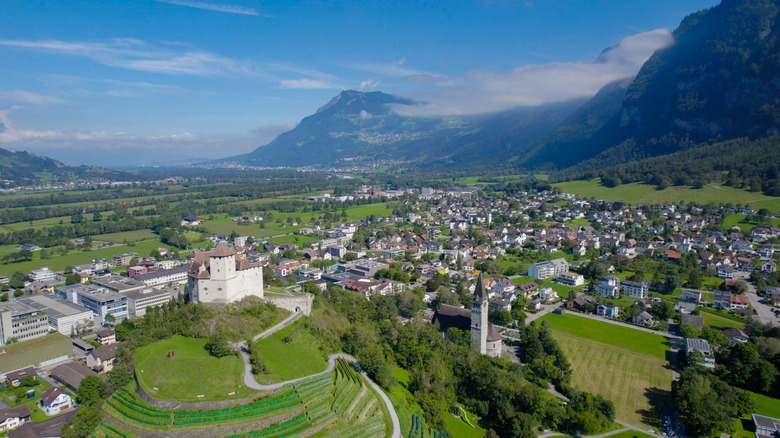
The Liechtenstein royal family rule over a principality, which is a territory smaller than a kingdom and ruled by a prince or princess. There are lots of different principalities across the world, with the likes of Liechtenstein, Monaco, and Andorra internationally recognized as independent countries. Others, such as Asturias in Spain, form parts of kingdoms rather than being independent countries themselves.
Liechtenstein is a doubly landlocked country, which means it's surrounded entirely by other landlocked countries. Put it this way, from a doubly landlocked country, you have to cross at least two borders to reach the sea. Thankfully, Liechtenstein has plenty of other scenic landscapes that mean the absence of a beach isn't missed. Liechtenstein is located between Switzerland and Austria, and boasts stunning landscapes that stretch from mountain ranges to the Rhine River. The country's capital city is Vaduz and, in keeping with its scenic reputation, features traditional alpine-style architecture rather than towering gray skyscrapers.
As for its people, Liechtenstein has a population of roughly 40,000. The country's official language is German, so you'll hear that if you tune into the TV while visiting. However, most residents actually speak an Alemannic dialect, which is closer to Swiss Standard German.
Prince Hans-Adam II is the head of the Liechtenstein monarchy
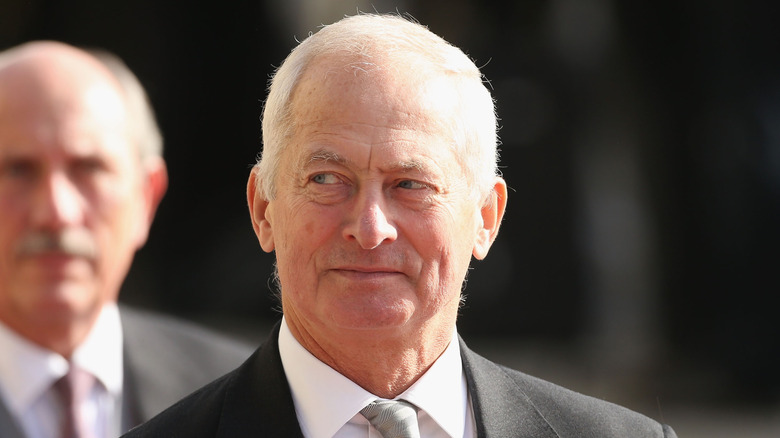
Prince Hans-Adam II became head of state and Prince of Liechtenstein in 1989 following the death of his father, Prince Franz Josef II. He was born on February 14, 1945, in Zürich, Switzerland, and is the eldest of five children. The prince grew up in Vaduz Castle, located in Liechtenstein's capital city. He attended primary school there and was also a member of the local Boy Scouts. Later, the royal enrolled in prestigious schools in both Austria and Switzerland, as well as working as a bank trainee in London for a short time.
Upon returning to Liechtenstein, Prince Hans-Adam got stuck into royal life. In 1972, he took over management of the princely estate, and in a 1984 ceremony, he was appointed as his father's permanent representative and entrusted with the administration of state affairs. This set him up to take the throne just five years later.
Since taking over, Prince Hans-Adam has received strong support from the citizens of Liechtenstein. But his reign hasn't been entirely scandal-free. He has faced scrutiny at times over tax evasion investigations regarding the royal-owned LGT Bank, as well as some controversial comments made about World War II.
Prince Hans-Adam II and his wife have four children
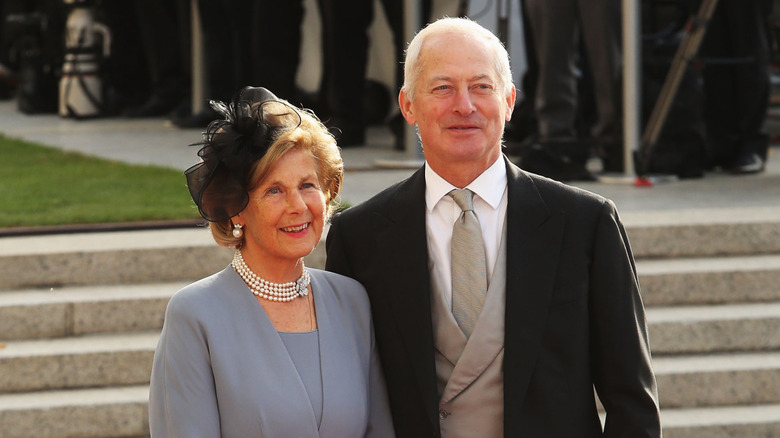
Prince Hans-Adam II and his late wife, Countess Marie Kinsky of Wchinitz and Tettau, had four children. The couple's first child, Prince Alois, was born June 11, 1968, and just one year later, they welcomed another son, Prince Maximilian, born May 16, 1969. On March 15, 1972, Prince Hans-Adam and his wife welcomed another son, Prince Constantin, and then had their fourth and final child, Princess Tatjana, who was born April 10, 1973.
As of publication, Prince Alois is the hereditary prince and heir of Liechtenstein. Like his father, Prince Alois has four children, whom he shares with his wife, Sophie, the Hereditary Princess of Liechtenstein and Countess of Rietberg. The couple also has three sons and a daughter. To that end, it will be interesting to see how many children each of Prince Alois' children has. And whether they, too, will have three sons and a daughter each.
Prince Alois' four children are well-traveled and well-connected
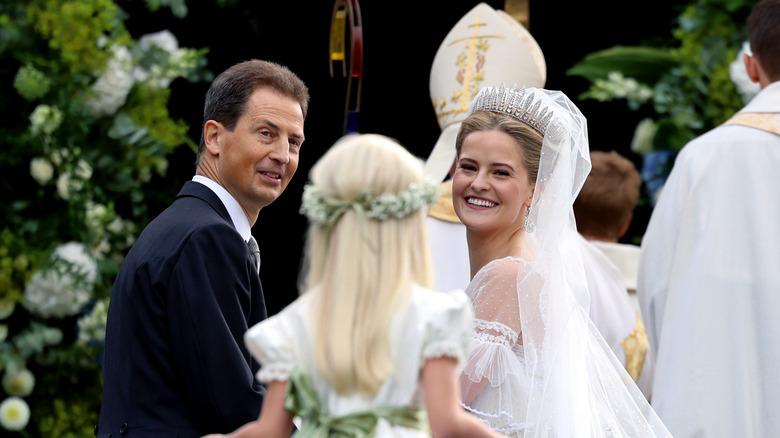
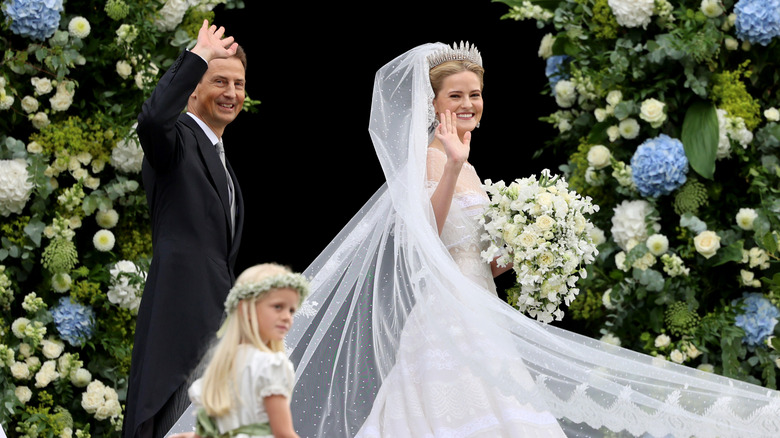
Prince Joseph Wenzel, who is the eldest son of Hereditary Prince Alois and Hereditary Princess Sophie, is second in line to the throne and is one of many royal children who live quite the lavish life. He was born in 1995 and, after graduating from Malvern College, an independent boarding school in England, he enjoyed a gap year. During that time, he worked in the U.S. Senate, and also traveled around Peru and Bolivia. Prince Alois' second child, Princess Marie Caroline, born in 1996, also studied at Malvern College after attending schools in both Liechtenstein and Switzerland. She later studied at Parsons School of Design in both Paris and New York, before settling into a career in the fashion industry in London. In 2025, she married Leopoldo Maduro Vollmer, a Venezuelan investment banker, in a lavish royal wedding.
Prince Georg Antonius, born in 1999, is the third child of Prince Alois. In 2025, Georg sparked rumors of a royal romance when a viral image appeared to show him spending time with Princess Elisabeth of Belgium. The potential for a happily-ever-after love story was quickly dashed, however, as a Liechtenstein palace representative wasn't even certain the photo was real (via HNL). Later, the palace told Soir Mag that the image was indeed fake. The youngest of Prince Alois' four kids, Prince Nikolaus, was born in 2000, and has maintained a pretty low profile.
The Liechtenstein line of succession is male-only
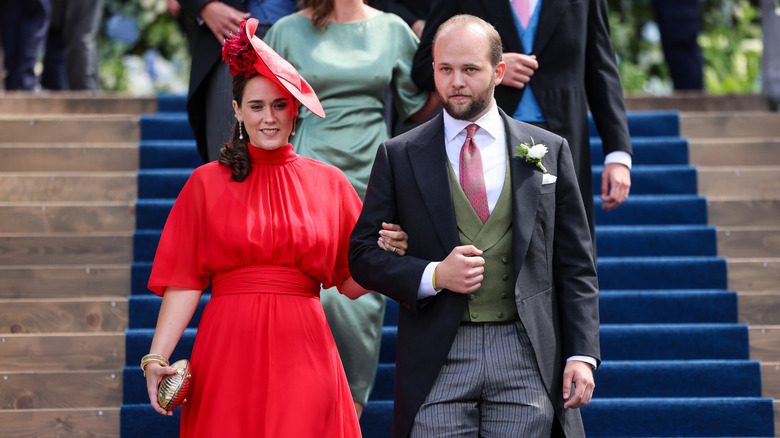
Unlike the British royals, who amended a centuries-old succession law to allow female members of the family to maintain their position in line to the throne regardless of birth order, the Liechtenstein line of succession is male-only. In fact, it is the only monarchy in Europe which operates under agnatic primogeniture rules, which state that female royals cannot inherit the throne, even if they are the eldest child of the monarch. Sounds like a pretty outdated royal rule, right?
The questionable nature of the male-only line of succession has not gone unnoticed in the modern day. In fact, in 2004, a United Nations committee criticized the principality of Liechtenstein for excluding women from inheriting the throne. Unfortunately for the country's women, nothing came of this, with Prince Hans-Adam II defending the law because it is older than Liechtenstein itself.
In the case of the current line of succession, the male-only lineage doesn't have too much of an impact, as Prince Hans-Adam's eldest child is his son. Prince Alois is the heir apparent and is first in the Liechtenstein line of succession. His three sons, Prince Joseph Wenzel, Prince Georg, and Prince Nikolaus, are then second, third, and fourth in the line of succession, respectively. Princess Marie Caroline is then skipped over, and the next royal in line is the siblings' uncle, Prince Maximilian.
The Liechtenstein family tree goes back to the 12th century
Although Liechtenstein didn't acquire its present name and become an independent principality of the Holy Roman Empire until 1719, then remaining under the German Confederation until 1866, when it became fully independent, the Liechtenstein family tree stretches back much further. The name was first used by Hugo von Liechtenstein in 1136. He likely named himself after the Liechtenstein Castle, which sits in Lower Austria, bordering Vienna, and still exists today.
The name continued on for some years after the 12th century, but in the 13th century, some of the then-Liechtensteins splintered off and established themselves as the Rohrau and the Petronell lines. However, things didn't last long for the latter two lines, who all died out in the next generation.
Nonetheless, the Liechtenstein name was carried on by others. In the 18th century, the Princely House of Liechtenstein formed when, as mentioned, the country became an independent principality. Going into the, quite frankly, pretty confusing details of all that would require a major history lesson. So, the short story is this: All living members of the current Liechtenstein monarchy are descendants of Prince Johann I, who helped establish the royal dynasty as it's known today.
The Liechtenstein monarchy is involved in politics
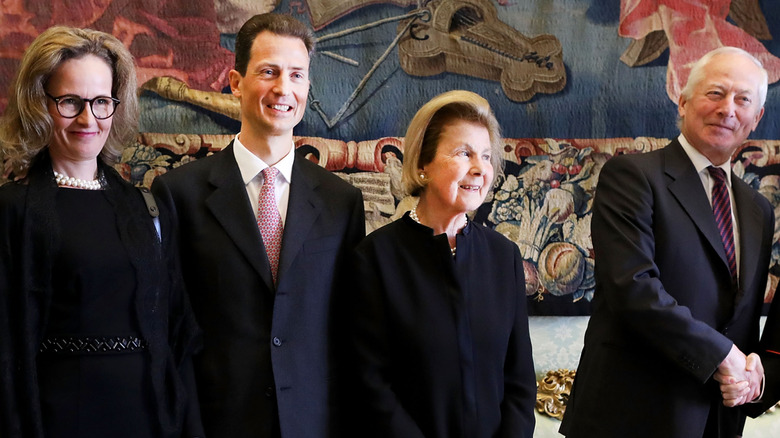
Britain has arguably one of the world's most famous royal families, and it's no wonder. From gilded ceremonies to important international state visits and celebrity-filled weddings, the Windsors have a very public image, but they certainly don't have a political one. Although the sovereign is head of state and undertakes constitutional and representational duties in that role, such as appointing the prime minister after a general election and opening new sessions of parliament, the position is not one of political decision-making.
In Liechtenstein, however, things are very different. The Princely House of Liechtenstein actually has a significant political role in the reputation and the development of the country. Like King Charles III, the Liechtenstein monarch holds the head of state role, but that comes with far greater political power, such as involvement in foreign policy, the approval of parliament, and the appointment of judges in the judicial system. The head of state's assent is also required for the validity of any law; if he does not grant this, it is classed as refused.
Notably, while Prince Hans-Adam II is the legal head of state, he actually hasn't had any day-to-day involvement in governmental decisions for decades. That's because he appointed his eldest son, Hereditary Prince Alois, as his regent in 2004.
Prince Alois has previously threatened to quit
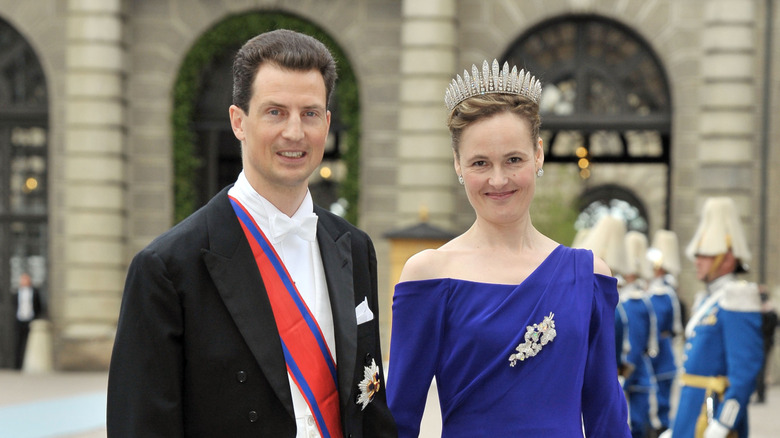
The average person will go through many jobs in their lifetime, but it's not every day that a prince threatens to quit royal life. It has happened before, though. Prince Harry claimed he'd eyed a royal exit before Meghan Markle came on the scene, and prior to him, King Edward VIII abdicated the throne for a marriage to Wallis Simpson. In 2011, Hereditary Prince Alois also toyed with the idea of leaving palace life.
Alois has political veto in Liechtenstein, but divided residents by suggesting to use this power to shut down a move on decriminalizing abortion. The following year, the principality held a referendum to determine if the monarchy should retain its right to political veto, with Alois announcing he would quit if the vote passed.
"The royal family is not willing to undertake its political responsibilities unless the prince ... has the necessary tools at his disposal," Alois told parliament on March 1, 2012 (via AFP). "If the people are no longer open to that, then the royal family will not want to undertake its political responsibilities and ... will completely withdraw from political life." Luckily for Prince Alois, however, his power was reaffirmed during the referendum when 76% voted that he should be allowed to retain his right to political veto.
The Liechtenstein family has a massive net worth

Despite being relatively unheard of, the Liechtenstein family are among some of the wealthiest royals in the world. As of 2026, The Brussels Times estimates their net worth to be between €4.6 and €9.2 billion, which is roughly between $5.3 and $10.7 billion. By comparison, Britain's King Charles III (only!) has an estimated net worth of £640 million, according to The Sunday Times, which converts to nearly $850 million.
As for where the Liechtenstein family's massive amount of money comes from? Well, the royals have various streams of income, and they're all pretty lucrative. The Liechtenstein's main source of income is the private banking and asset management group they own, called LGT Group. Interestingly, it's the only one in the world still owned by a royal family, which is perhaps why they are one of the richest. Alongside their private banking organization, the Liechtensteins also have an extensive portfolio of landholdings, forestry, and agricultural businesses.
The Liechtenstein monarch doesn't pay tax on their massive income
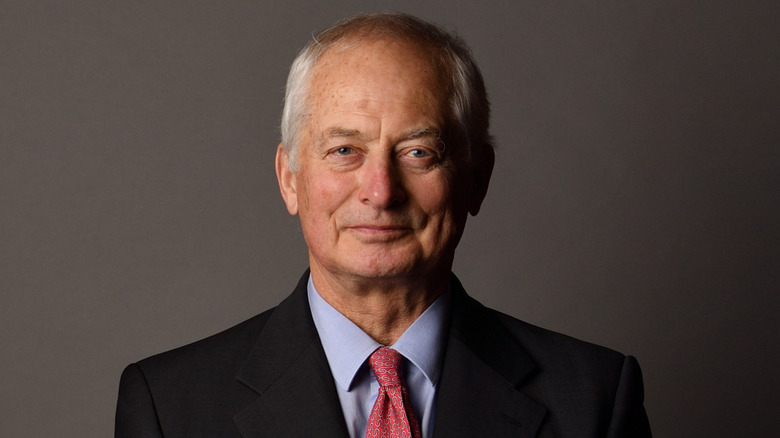
If the billions (and billions and billions) that the Liechtensteins have sat in the bank didn't make you green with envy, this certainly will; the monarch doesn't pay tax on his massive income. The principality of Liechtenstein isn't just a sought-after tax haven for wealthy businesspeople and big corporations, but also for its very own royal family.
As it turns out, the reigning prince is exempt from taxation, which includes personal income tax, capital gains tax, and inheritance tax. Not paying any taxes might seem unfair, but it's worth noting that the monarch doesn't receive an official salary for holding that position nor does he receive his earnings from taxpayers. Instead, he relies on his own personal wealth and is allocated an annual token expense allowance of 250,000 Swiss francs, which is roughly $320,000. Even that, to the average person, is still a pretty sizable salary. But the Liechtensteins aren't your average people, so that token salary, big or small, probably makes very little difference. They are multi-billionaires, after all.
The Liechtenstein family has been collecting art for centuries
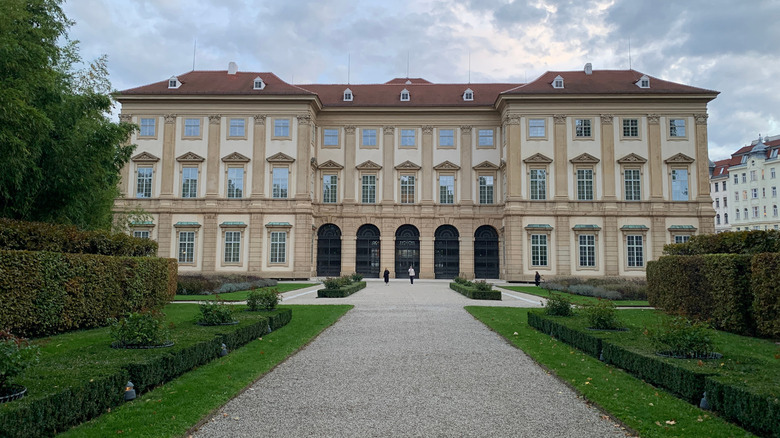
With so much money, it's no wonder that the Liechtensteins own one of the largest private collections of art in the world. The Princely Collections, which have been collected over centuries, have around 700 sculptures and 1,600 paintings, including works by Raphael and Rembrandt.
"The Princely Collections are the only private art collection whose origins go back more than 400 years and which has been formed and constantly expanded over this long period," Dr. Johann Kräftner, former director of the Princely Collections, told LGT Wealth Management. "Each of the reigning princes of the House of Liechtenstein has contributed to its contents, and it is still owned by the family today."
As impressive as the Liechtenstein art collection is, it's not just the family that is able to enjoy it. If you fancy taking a look at some of history's most significant artworks, a trip to Austria ought to be on your bucket list. Many art pieces in The Princely Collections can be viewed by the public at the Liechtenstein Palaces in Vienna, while other pieces have been loaned out to other museums and special exhibitions.
Vaduz Castle is Prince Hans-Adam II's main residence
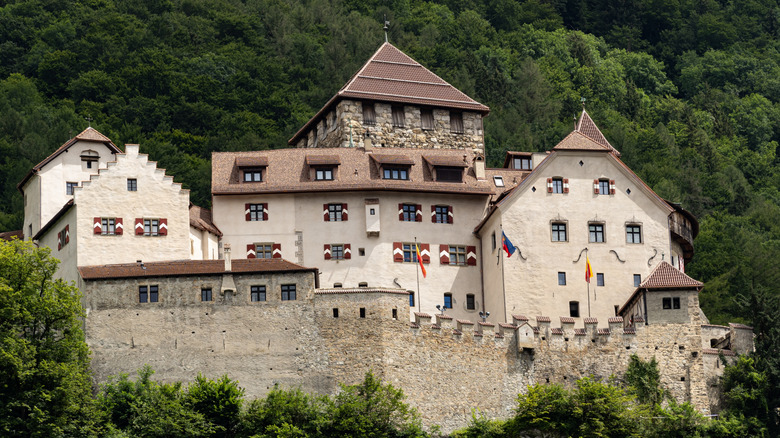
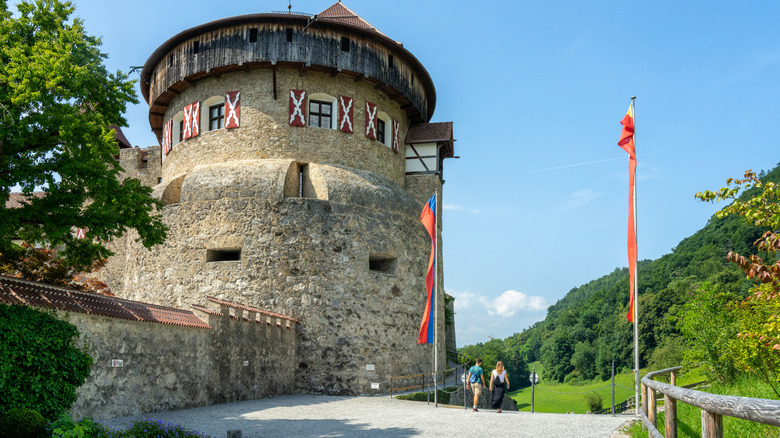
Vaduz Castle, located in the capital city of Vaduz, is the main residence of Prince Hans-Adam II. The castle dates back to the 12th century, but didn't come into the possession of the House of Liechtenstein until 1712. After centuries of falling into disrepair, the castle was restored in the early 1900s, and the royals took up permanent residence there in 1939.
The public loves to wonder what a royal resident really looks like inside, and although Vaduz Castle is a very visible landmark in the capital due to its hillside positioning, it's not open to the public, so little is known about its interior. However, there's one day each year that locals get to enjoy the castle — or, at least, its gardens. On the country's national day, or Staatsfeiertag as it's known in Liechtenstein, there is an official reception on the castle's lawn, followed by a drinks reception in the rose garden, and finally a fireworks show.
By comparison, there are plenty of other royal family residences — such as Buckingham Palace and Windsor Castle — that are open to the public, offering a glimpse into the life of a monarch.