

Forgotten Sitcoms From The '80s That Almost No One Talks About
The 1980s sitcom boom left behind more than the classics people still talk about, such as "Cheers," "The Golden Girls," "Family Ties," and "Night Court." It also produced a large middle layer of shows that filled schedules and then slipped out of circulation. The decade was changing fast. Cable was growing, VCRs were altering viewing habits, Fox launched as a new broadcast network in 1986, and first-run syndication became a more serious route for sitcoms outside the "Big Three," meaning ABC, CBS, and NBC.
The Los Angeles Times reported that cable was in 22% of U.S. homes in 1980 and 56% by 1989, while VCR ownership rose from 1.43% in 1979 to 64% by 1989. The same report said the prime-time audience share held by the major networks fell from 85% in 1980 to 67% in 1989. That is why many forgotten '80s sitcoms are not simply "bad shows."
Some were experiments that did not fit the habits of weekly network viewing. Others were midseason replacements, spin-offs, star vehicles, or shows that never reached enough episodes to become rerun staples. First-run syndication gave some canceled or marginal sitcoms a second path, with titles such as "Mama's Family" and "Charles in Charge" finding new life there, but many others did not get the same afterlife, even if some sitcom stars later proved more durable in TV movies, dramas, and cable comfort programming, including some who found new lives as Hallmark stars and some '80s sitcom stars who disappeared from Hollywood entirely.
Nearly Departed
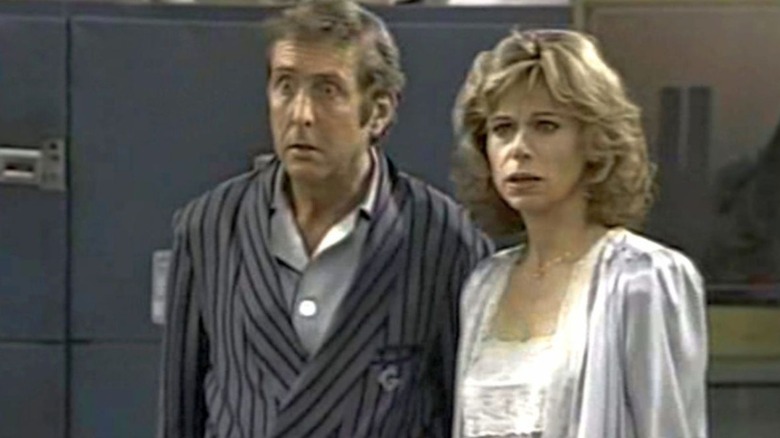
NBC's "Nearly Departed" was one of the network's shortest-lived sitcoms of the 1988-89 season, airing only from April 10 to May 1, 1989. The sitcom was gone in less than a month, leaving almost no time for word of mouth or character chemistry to develop. The series had six episodes produced, but two remained unaired, according to TVDB.
Created by John Baskin and Roger Shulman, the half-hour fantasy comedy followed Grant and Claire Pritchard, a deceased married couple who return to their former home and find it occupied by a new family, the Dooleys. Its clearest television and film lineage was "Topper," the earlier supernatural comedy about ghosts intruding on ordinary domestic life, though its 1989 release also placed it in the shadow of "Beetlejuice."
The show's most notable casting choice was Eric Idle, whose name gave NBC an identifiable comic hook because of his association with Monty Python. But that recognition did not translate into critical support. A Los Angeles Times column criticized the casting of Idle at the time, stating: "NBC had what really could have been an enjoyable series... Then they put that clown, Eric Idle, in the show and ruined it." Another Los Angeles Times review from 1989 was blunt in its assessment, stating, "'Nearly Departed' is a zero."
Free Spirit
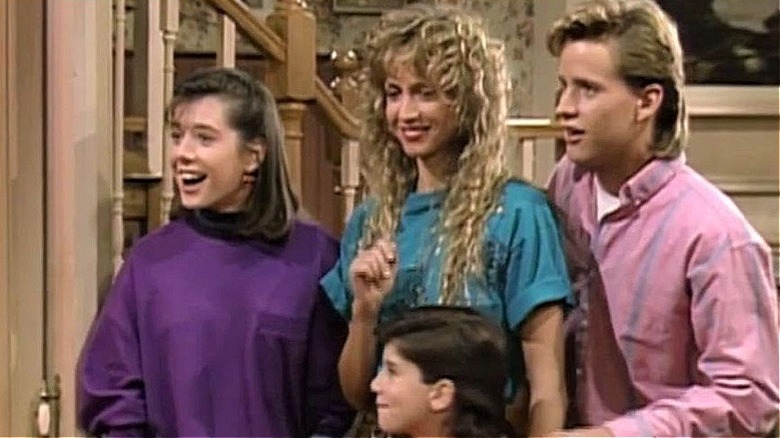
ABC's "Free Spirit" belongs to a very specific late-1980s broadcast experiment. Created by Leslie Ray and Steven Vail, the series starred Corinne Bohrer as Winnie, a witch who becomes part of the Harper home while hiding her powers from the children's recently divorced father, Thomas, played by Franc Luz. The setup gave ABC a sitcom that could sit near traditional family programming while also offering magical complications every week.
The reason "Free Spirit" still has a traceable afterlife is largely because of its cast. Bohrer was the face of the show, giving Winnie a bright, impulsive quality that made the character more playful than mysterious. Edan Gross played Gene, the youngest Harper child, while Paul Scherrer and Alyson Hannigan played his older siblings. For Hannigan, the series became an early television credit before her later success on "Buffy the Vampire Slayer" and "How I Met Your Mother." She also received a Young Artist Award nomination for best young actress starring in a television series for the role.
The series struggled because its concept was easy to recognize but harder to distinguish. Any sitcom about a helpful witch living among mortals was going to invite comparisons to "Bewitched," and "Free Spirit" did not have much time to prove that it could stand on its own terms. According to Starburst Magazine, the ratings "started out low and didn't get any better," and critics in one survey voted it the worst show on television for the 1989 to 1990 season. The show was canceled after one season, with the final episode reportedly not airing in the United States, though it was seen in some international markets.
AfterMASH

CBS's "AfterMASH" arrived directly behind one of television's most admired series, drawing from the cast of "M*A*S*H" and using familiar faces from the original. The show aired from September 26, 1983, to May 31, 1985, and followed Colonel Potter, Father Mulcahy, and Maxwell Klinger into civilian life at a veterans hospital. The original series had spent years arguing that war did not end neatly for the people who lived through it. "AfterMASH" tried to pick up that theme in peacetime, but it did so inside a conventional sitcom frame that often made the material feel smaller than the subject required.
"AfterMASH" kept three beloved characters, but none was designed to function as the central force. Co-creator Larry Gelbart later acknowledged the imbalance in an interview for "TV's M*A*S*H: The Ultimate Guidebook," saying (via SlashFilm), "The series needed a top banana, and we didn't have one." Gelbart said in the same interview, "If I had to do it all over again ... I would make it an hour show, more dramatic in nature, with comedy overtones rather than the other way around."
In a Television Academy interview, Gelbart acknowledged "AfterMASH" was handled the wrong way and should not have been treated primarily as comedy. That criticism was echoed by actor William Christopher, whose Father Mulcahy gave the original "M*A*S*H" much of its gentler moral weight. Speaking to the author of "TV's M*A*S*H: The Ultimate Guidebook," Christopher said, "I think there was one tragic flaw — it wasn't serious enough." The show's reputation hardened over the years. Time included "AfterMASH" on its 1999 list of "The 100 Worst Ideas of the Century."
Together We Stand
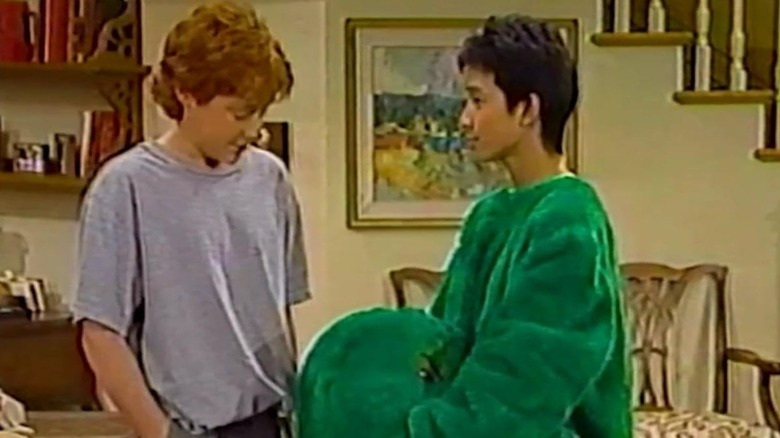
CBS's "Together We Stand" starred Elliott Gould and Dee Wallace as David and Lori Randall, a white middle-class couple raising a household that included biological children and adopted children from different racial backgrounds. Ke Huy Quan, already known from "Indiana Jones and the Temple of Doom" and "The Goonies," played their adopted teenage son, while the family also included a young Black daughter adopted into the home.
"Together We Stand" premiered on September 22, 1986, but CBS pulled it after six episodes as part of a larger attempt to repair weak spots in its schedule. According to the Los Angeles Times, CBS was making changes while facing strong competition from NBC, whose lineup had become the dominant force in prime time. The Washington Post also reported at the time that CBS was overhauling its Wednesday schedule, with "Together We Stand" among the shows affected.
When CBS brought the show back in early 1987, it was no longer quite the same series. The title changed to "Nothing Is Easy," the credits and theme were replaced, and the network attempted to reposition the comedy around Lori and the children. The most dramatic change was the absence of Gould. The series removed David Randall from the story, reportedly killing off the character while leaving some of Gould's filmed episodes unaired.
Life With Lucy
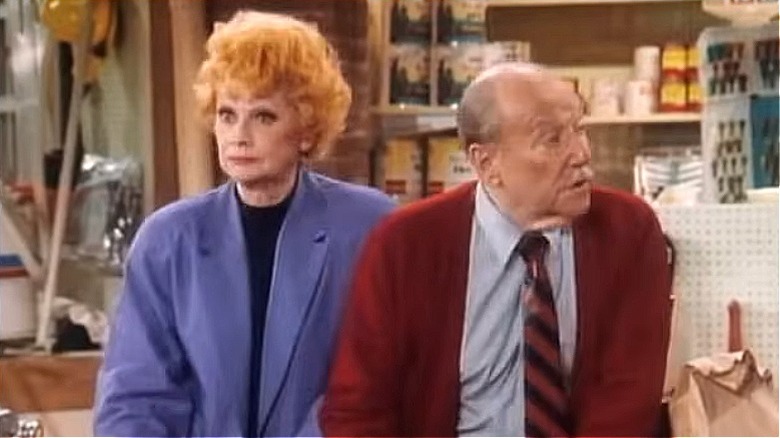
ABC's "Life With Lucy" was Lucille Ball's return to weekly television after decades in which her name had become almost inseparable from the sitcom form itself. Unlike her earlier major series, this one aired on ABC rather than CBS, the network most associated with her television career. The premise put Ball in familiar territory as Lucy Barker, a widowed grandmother who becomes co-owner of a hardware store and works alongside her late husband's business partner, played by longtime collaborator Gale Gordon. The show seemed designed to reassure viewers that the old Lucy formula was still viable.
However, early critical response was unusually unforgiving because the expectations were so high. In the Los Angeles Times, critic Lee Margulies wrote after the premiere, "We sat and waited for the laughs to start. They never came." Even before the premiere, The Washington Post reported the industry's skepticism with the observation, "Around Hollywood, the word on 'Life With Lucy' is that it is a show in tune with the times, but the times are 1965." ABC canceled the series after only eight aired episodes, although 13 had been filmed.
After the cancellation, Ball largely withdrew from series television, closing a career whose earlier breakthroughs still leave room for things viewers probably never knew about Lucille Ball and "I Love Lucy." Her final major public appearance came at the 61st Academy Awards on March 29, 1989, where she appeared less than a month before her death. Lucille Ball died on April 26, 1989, at age 77, at Cedars Sinai Medical Center, with the reported cause being a ruptured abdominal aortic aneurysm.
The Hogan Family
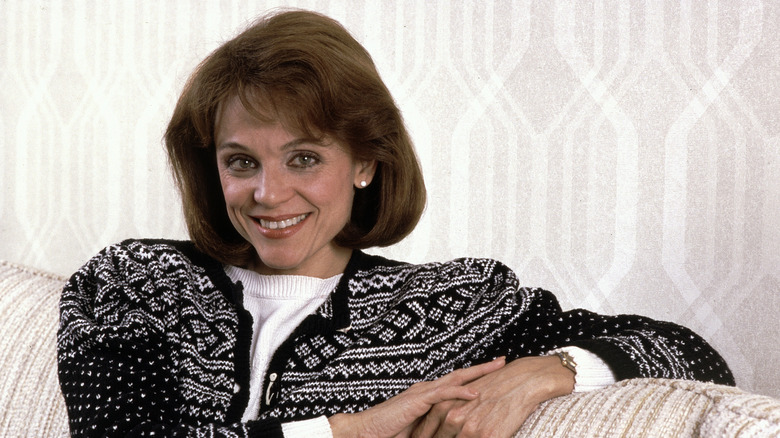
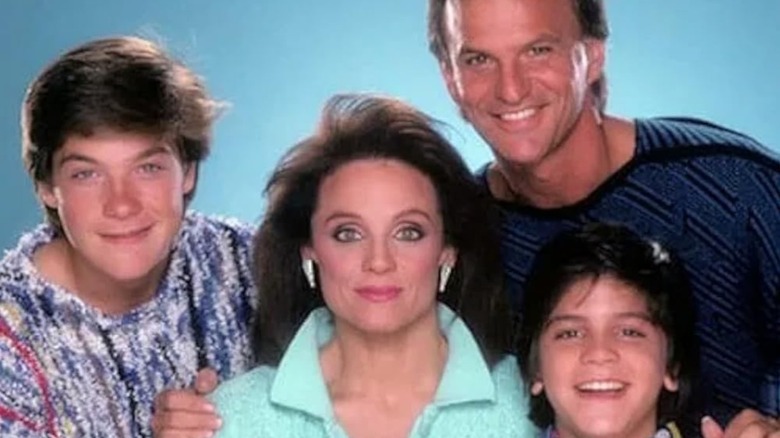
NBC's "Valerie" started as a star vehicle and turned into one of the decade's most unusual sitcom survival stories. Created by Charlie Hauck, the show cast Valerie Harper as Valerie Hogan, a Chicago-area working mother holding together a household of three sons while her airline-pilot husband was frequently away. The family included Jason Bateman, Jeremy Licht, Danny Ponce, and Josh Taylor, giving NBC a domestic comedy with both a familiar adult lead and a young cast that could carry teen-centered plots.
The series performed well enough for NBC to renew it for a third season in May 1987, but the show soon became caught in a contract dispute between Harper, her husband and producer Tony Cacciotti, and Lorimar. According to the Los Angeles Times, Lorimar claimed Harper wanted nearly double her salary and 35% of the profits. Harper was fired from the series and later sued Lorimar over her dismissal.
The show was eventually renamed "Valerie's Family" and later "The Hogan Family," with Sandy Duncan added as Sandy Hogan, the boys' aunt and new maternal figure. According to the Los Angeles Times, producers announced that the third-season premiere would explain Valerie Hogan's absence by revealing that she had died in an accident. That decision gave the series a dramatic rupture, as the sitcom lost the simple identity that keeps a series alive in reruns and nostalgia. However, the series kept going, surviving five seasons on NBC and a final sixth season on CBS, while broadening into family comedy and issue-based episodes about grief, teen sex, drunken driving, and AIDS.
The Duck Factory
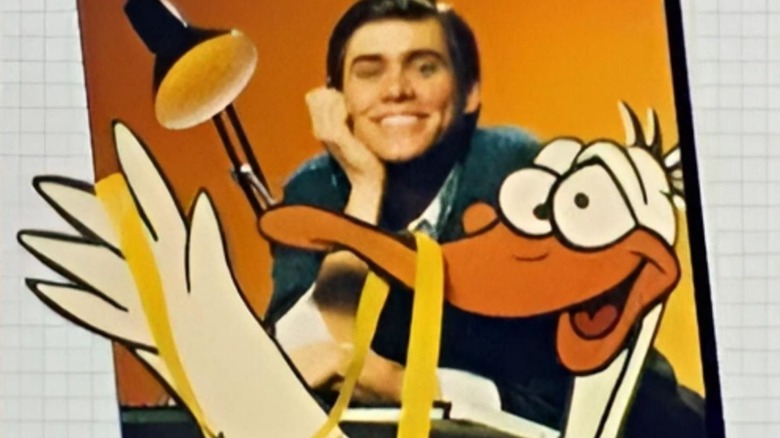
NBC's "The Duck Factory" is remembered now as an early snapshot of Jim Carrey before the version of Jim Carrey everyone knows existed. The 1984 sitcom put him inside a shabby Hollywood animation office, playing Skip Tarkenton, a young cartoonist trying to find his place after the studio's founder dies.
The series also had a small insider charm. Its fictional studio produced "The Dippy Duck Show," and the cast included Don Messick, the legendary voice of Scooby-Doo, in a rare live-action role as a cartoon voice performer. Entertainment Tonight later noted that Carrey was only 21 when it interviewed him on the set of his first lead role in 1983.
In a 1984 Washington Post review, Tom Shales captured the show's modest ambition with the line, "The Duck Factory is not a scream, but then it doesn't try to be." "The Duck Factory" lasted only 13 episodes, ending on July 11, 1984, and quickly became a footnote once Carrey's career found its real ignition point (though his rise was hardly seamless — he famously didn't pass his SNL audition).
Roomies
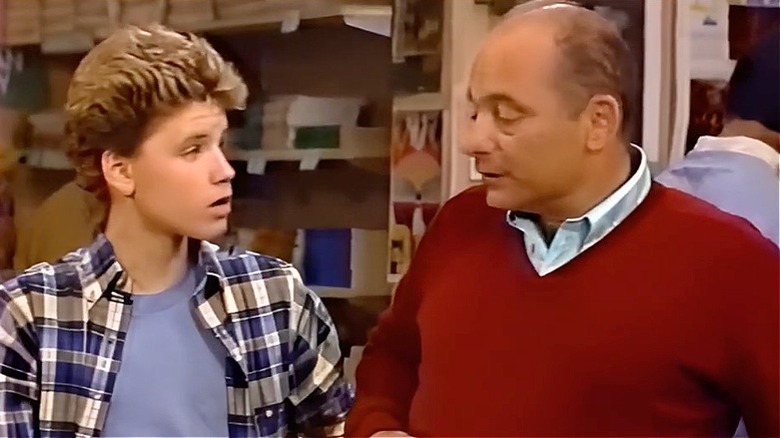
NBC's "Roomies" was a midseason sitcom built around an unlikely college roommate pairing. Burt Young played Nick Chase, a 42-year-old retired Marine drill instructor attending college on the GI Bill, while Corey Haim played Matthew Wiggins, a 14-year-old prodigy studying marine biology. IMDb summarizes the premise as "A 42-year-old Marine sergeant and a 14-year-old fish-obsessed genius strike a perfect and reciprocal balance as college freshmen roommates."
The timing made the show a small detour in Haim's career. He had appeared in "Lucas" in 1986, and later in 1987 "The Lost Boys" would make him much more visible to teen audiences. "Roomies" aired in the short gap between those two moments, from March 19 to May 15, 1987, and lasted only eight episodes. Young brought familiarity from the "Rocky" films, but the sitcom did not build enough audience support to continue.
The show is mostly remembered for how quickly it went away. One Reddit user in the r/80s community wrote, "And then it just disappeared and I never heard a thing about it." Another retrospective comment from r/ForgottenTV said, "This must have bombed badly..." NBC did not bring it back for the fall season. In its 1987 fall schedule announcement, the Los Angeles Times reported, "Also failing to win renewal were four midseason entries: 'The Tortellis,' 'Nothing in Common,' 'Roomies' and 'Sweet Surrender.'"
Empty Nest
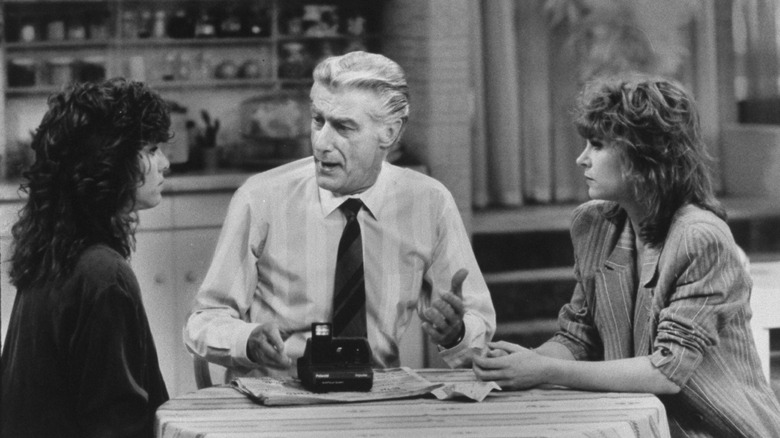
"Empty Nest" was, arguably, a successful show that became easy to overlook because it lived in the shadow of "The Golden Girls." Created by Susan Harris, the sitcom starred Richard Mulligan as Dr. Harry Weston, a widowed Miami pediatrician whose adult daughters move back into his life. At launch, NBC placed it directly after "The Golden Girls," and the Los Angeles Times described it as premiering "following the return of 'Golden Girls.'"
"Empty Nest" crossed over with "The Golden Girls," and later helped produce its own spin-off, "Nurses." For a time, the three shows gave NBC a connected Saturday-night world set around overlapping characters and locations. The Los Angeles Times later noted how closely NBC treated the Susan Harris shows as a programming block, with Harris even discussing the value of keeping the "Golden Girls" and "Empty Nest" together in the lineup. So, "Empty Nest" became remembered as adjacent to a classic rather than as a major sitcom in its own right. Another Los Angeles Times review called it an "unknown hit."
She's the Sheriff
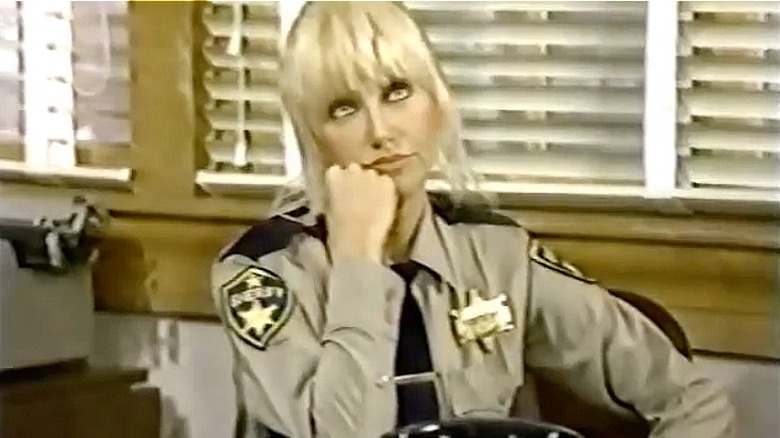
"She's the Sheriff" was meant to be Suzanne Somers' television comeback after "Three's Company," but her name recognition alone could not carry the sitcom. The series aired in first-run syndication from 1987 to 1989, with Somers playing Hildy Granger, a Nevada widow who is appointed sheriff after her husband's death despite having no law-enforcement background.
The idea had been tried earlier in a CBS pilot called "Cass Malloy," but that version was not picked up. IMDb's episode guide notes that the later pilot was originally built around Priscilla Barnes before Somers took over the role, an odd bit of casting history since Barnes had replaced Somers on "Three's Company."
In 2002, TV Guide ranked "She's the Sheriff" No. 44 on its list of the 50 worst television shows. Somers would later find a better fit on "Step by Step," where her persona worked inside a family-sitcom structure instead of being stretched around a badge-and-uniform concept.
Steambath
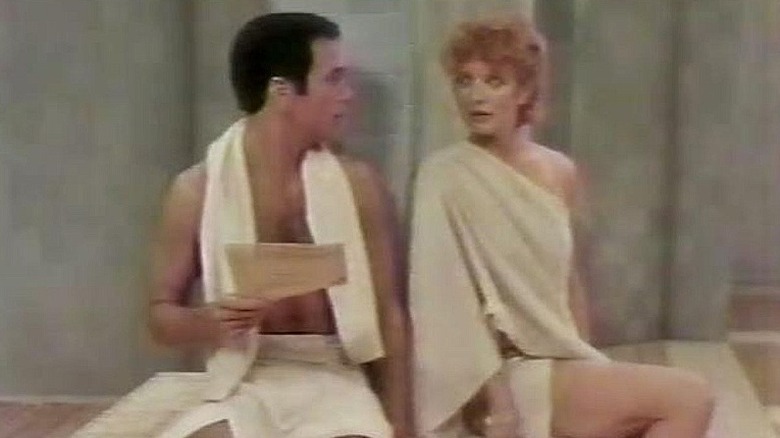
"Steambath" was a short-lived Showtime sitcom adapted from Bruce Jay Friedman's off-Broadway play. The series used a steam bath as its version of the afterlife, where newly dead characters waited and talked through their lives. José Pérez played Morty, the bath attendant who is eventually understood to be God. TV Guide describes the setting as a limbo-like steam room where Morty watches over the dead before deciding where they go next.
The show should not be confused with the earlier 1973 PBS version, which was a separate one-time television play based on the same source material. That PBS production became controversial because of its nudity, language, religious satire and depiction of God as a Puerto Rican bath attendant. PBS SoCal says the production is remembered as the first television program to show "brief full nudity."
A U.S. Congressional record from July 31, 1973, even mentions controversy and stations being "afraid to run 'Steambath.'" Showtime's "Steambath" ran for only six episodes in 1984. The show ultimately disappeared because its premise may have been too unusual to sustain as a routine weekly sitcom.