

Lost Sitcoms Of The '70s That Are Best Left Forgotten
The 1970s ushered in a new era for TV comedies. With "The Beverly Hillbillies," "Hee Haw," "Green Acres" and similar country-humor shows canceled in the so-called "rural purge," the world was ready for sharper-edged, more daring fare like "All in the Family," "The Mary Tyler Moore Show," "Good Times," and "M*A*S*H." Audiences who preferred milder sitcoms relied on "Happy Days," "Welcome Back, Kotter," and "The Partridge Family" to get their laughs. But before anyone gets too smug about "how good TV was back in my day," we gently remind you that this golden age of television also had some massive clunkers.
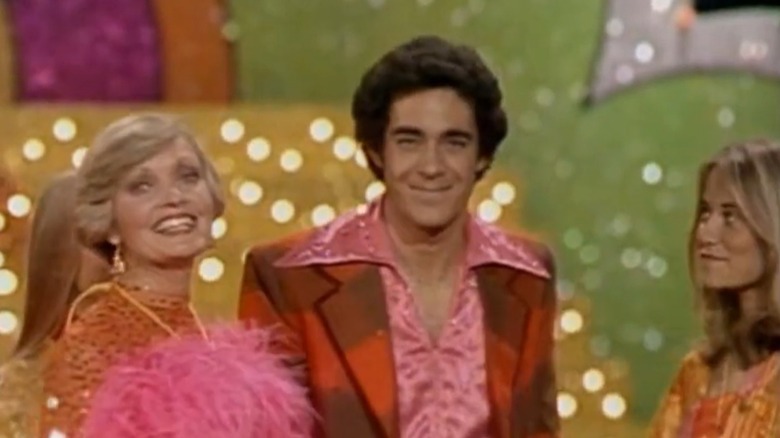
Yes, the '70s had "Taxi," "Maude," and "Alice," but it also had "Brothers and Sisters" and "Co-Ed Fever," two dreadful attempts to cash in on the popularity of the 1978 college comedy "Animal House." Kids could tune in on Saturday morning to "Scooby-Doo, Where Are You!" and "Josie and the Pussycats," but they also had the likes of "Lidsville" and "Lancelot Link: Secret Chimp" inflicted on them. Hour-long variety shows hit their peak with "The Carol Burnett Show," and plunged to new lows thanks to the ill-conceived "Brady Bunch Variety Hour" (with a new Jan!), and "Shields and Yarnell," featuring two married mimes whose specialty was doing robot skits. (The schtick got old reaaallly fast.)
We now take you on a cringey trip down memory lane with some of the worst sitcoms of the decade. Thankfully, most of these shows didn't last past a season or two — and some far less — but it's a wonder that they even made it into production at all. If you remember any of them, you have our sympathies; if you were weren't around then, consider yourself very lucky.
Holmes and Yoyo
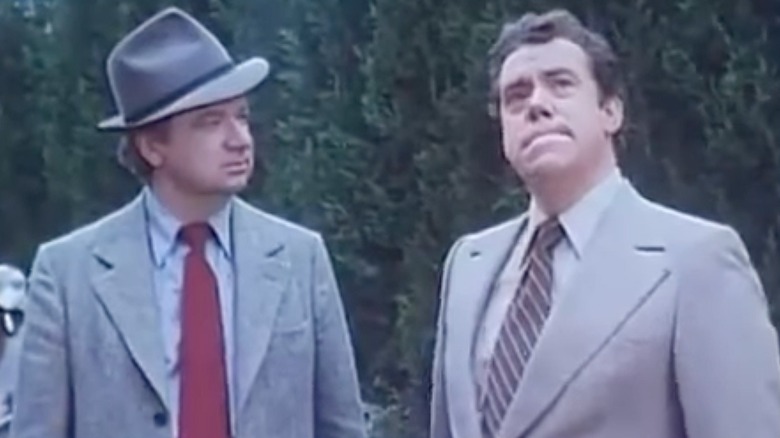
What happens when you pair a klutzy cop with an android? "Holmes and Yoyo," from one of the creators of "Get Smart," answered the question no one really wanted to ask. Running on ABC from 1976 to 1977, the comedy starred Richard B. Shull as Alexander Holmes, a hapless police detective who keeps injuring all his partners in the line of duty. (In the pilot episode seen here on YouTube, his exasperated supervisor yells, "You're the only cop I know who should be on a wanted poster!" Yet the police commissioner still assigns Holmes as the test partner for Alexander "Yoyo" Yoyonovich (John Schuck), a prototype of a robotic officer that they hope will eventually revolutionize law enforcement.
The brass doesn't let Holmes in on Yoyo's true identity, but it isn't long before the detective realizes his new sidekick sticks to metal objects and does flip-flops when someone presses a garage door opener too close to him. By the time the duo solve their first case together, Holmes realizes he likes Yoyo better than his human coworkers, and vows to keep his secret. "Holmes and Yoyo" lasted just 13 episodes before viewers wearied of watching Schuck take Polaroid pictures by pressing his nose. But would we have had "RoboCop" a decade later if Yoyo hadn't led the way?
Mr. T and Tina
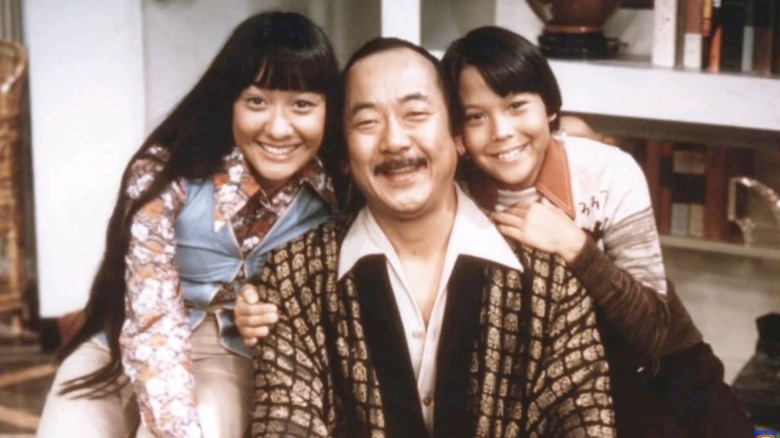
Not to be confused with the "I pity the fool!" actor, "Mr. T and Tina" was a 1976 spinoff of "Welcome Back, Kotter." Rather than create a new series around Vinnie Barbarino or Arnold Horshack — why go for the obvious? — the show's creators chose to highlight a one-shot character from Season 2. Noriyuki "Pat" Morita left "Happy Days" to play Taro Takahashi, a single dad and inventor transplanted from Japan to Chicago. To help look after his two children, he hires Tina Kelly, a ditzy woman from Nebraska. The culture clash was mined for feeble laughs.
"Mr. T and Tina" was groundbreaking as one of the first American shows to have a predominantly Asian cast, but ABC never had high hopes for it. "Kotter" story editor Mark Evanier revealed in a blog post that it was thrown in as a place-holder in the Saturday night lineup until a better show could take its place. Evanier was told by the head of production that he'd soon have a bigger office space once the show was pulled. After just five episodes, it was. "Word of the cancellation came down at 1:00 and by 4:00 PM, there was no trace of 'Mr. T and Tina' in the Komack offices," Evanier recalled. "Every bit of the show was gone ... except for Pat Morita, who spent the next few weeks hanging around the office, using the phone to call everyone he knew all over the world to line up work."
Happily for Morita, "Mr. T" didn't spell the end of his career. He eventually returned to "Happy Days" before a little film called "The Karate Kid" helped cement his place in Hollywood history.
Blansky's Beauties
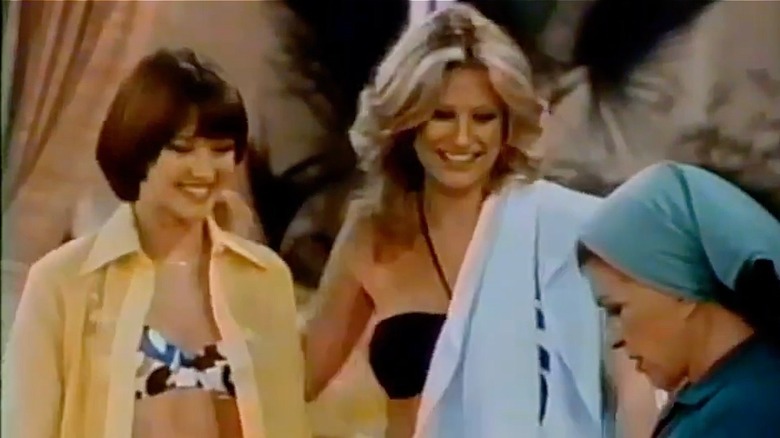
"Happy Days" is almost as famous for its spinoffs as for the nostalgic show itself. "Laverne & Shirley" and "Mork & Mindy" became equally huge hits. Others ... not so much. "Joanie Loves Chachi," for one, lost its audience after its time slot was moved in Season 2. But an even bigger flop was "Blansky's Beauties," which lasted all of 13 episodes in 1977. The show starred Nancy Walker as Nancy Blansky, who had been previously introduced in "Happy Days" as Howard Cunningham's cousin.
Here's where it gets weird. Jumping ahead a decade, the show took place in modern-day Las Vegas, where Nancy worked as a manager and den mother to a group of showgirls. Living with her were her two nephews, Joey and Anthony DeLuca, played by Eddie Mekka and Scott Baio. Apparently trying to appeal to everyone, the producers added a Great Dane named Blackjack and two "Happy Days" alums. Roz Kelly appeared in the pilot as Fonzie's ex, Pinky Tuscadero, and Pat Morita, post- "Mr. T. and Tina," reprised his Arnold character.
Somehow, audiences didn't warm to a show featuring scantily clad women introducing themselves: "I'm Sunshine. I'm looking for a man."/"I'm Bambi, and men look for me!" (per YouTube) After "Blansky's" was axed, Morita and Baio made the time-machine leap over to "Happy Days." Morita's Arnold went back to dishing up burgers at the diner, while Baio was reinvented as Chachi and...well, you know what happened next.
The Dumplings
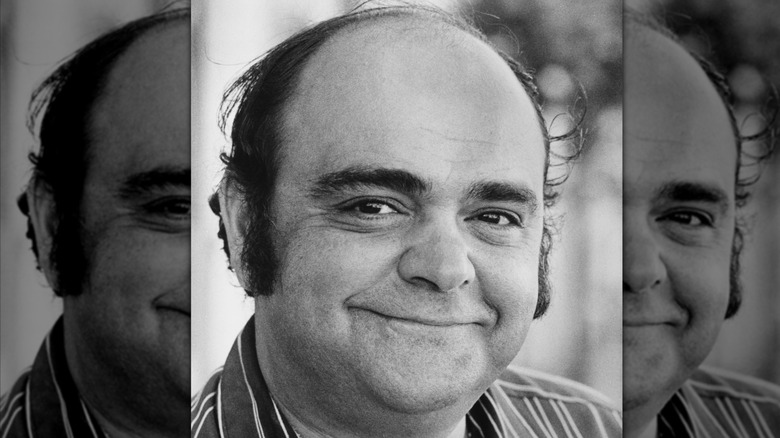
Based on a comic strip, "The Dumplings" starred James Coco (seen here) and Geraldine Brooks as Joe and Angela Dumpling, a couple running a lunch counter on the ground floor of a luxe Manhattan office building. The hook? Both of them are overweight and proud of it; the opening credits show them affectionately sharing their snacks as they make their way through the city.
Much as it tried to embrace body positivity in the era of Figurines diet bars and the Scarsdale Diet, "The Dumplings" sank like a lead pierogi. Joe and Angela were madly in love and relentlessly upbeat about everything and everyone, leaving the supporting cast to provide the conflicts. And even in that non-PC era, it was hard to sustain a show that relied heavily (pun intended) on fat jokes. The sitcom lasted just 10 episodes before being canned in March 1977.
The big surprise here was that "The Dumplings" was written by television icon Norman Lear. Yes, the same genius behind "All in the Family," "Maude," "Good Times," "One Day at a Time," and "The Jeffersons" had his share of flops as well. Among Lear's other 1970s bombs were "Hot l Baltimore," set in a sketchy hotel with controversial characters including a gay couple and two, um, ladies of the evening. It managed one 13-episode season before shuttering. "Hanging In," about a former pro football player who becomes a college president, fared even worse; it was yanked after four airings.
Hello, Larry
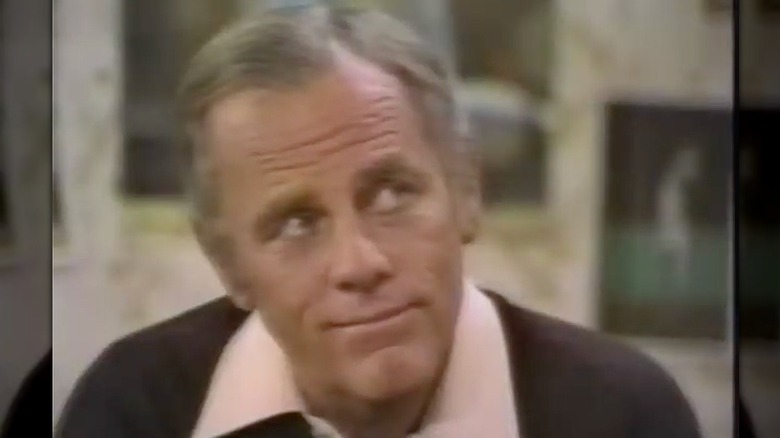
Beloved "M*A*S*H" star McLean Stevenson left the series after three seasons; after playing the supporting role of Col. Henry Blake, he was ready for leading-man projects. Alas, the ones he found didn't quite live up to expectations. Over the course of the 1970s, Stevenson starred in three different sitcoms, all of which flopped. In "The McLean Stevenson Show," Stevenson played the patriarch of a full-nest house; it lasted all of 12 weeks. He followed that with 1978's "In the Beginning," (another Norman Lear bomb!), in which he portrayed a conservative priest running a mission alongside a liberal-minded nun. That one was yanked after nine airings.
Stevenson's final attempt at stardom was "Hello, Larry." As divorced dad Larry Alder, he moved from L.A. to Portland, Oregon, where he hosted a psychology radio call-in show. The plots dealt variously with Larry's work headaches and his teen daughters' love lives. It was critically panned; the Hartford Courant called the show "yet another ill-fated attempt by the unfortunate McLean Stevenson to find a successful niche on TV," and slammed its lack of subtlety and wit. "What is supposed to be very racy dialogue is just smutty and — sin of all sins — unfunny." Still, "Larry" hung on through 38 episodes before it got the ax in 1980.
Ironically, 13 years after "Hello, Larry" ended, another sitcom about a divorced, relocated radio psychologist became a massive, long-running hit. Of course, Frasier Crane was already a well-known character on "Cheers" before he got his own series. Stevenson didn't have that advantage: Since Henry Blake was killed off on his final "M*A*S*H" appearance, it would have been kind of tough to create a "Hello, Henry" spinoff.
Turnabout
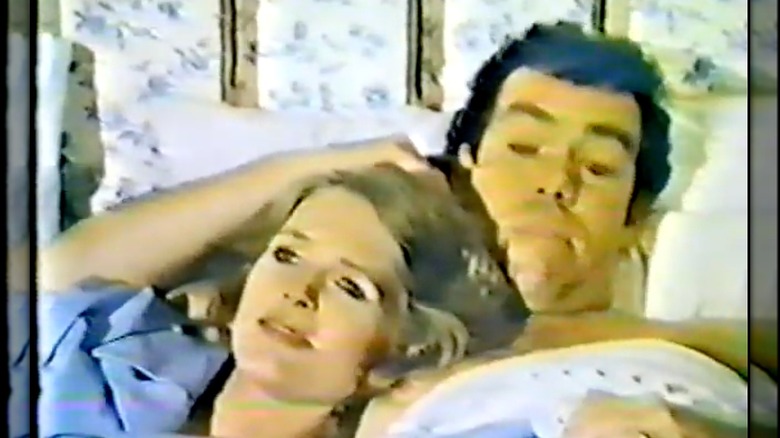
"Turnabout," another late-'70s stinker, could be called the weird cousin of "Freaky Friday." Based on a short story, this NBC comedy starred a pre-"Cagney and Lacey" Sharon Gless and John Schuck (couldn't the poor guy catch a break this decade?) as Penny and Sam Alston, a couple with successful careers but a dull marriage. On a whim one day, Penny buys a statue that has the power to grant one wish. Later, the Alstons bicker about who has the more interesting life. Penny wishes they could trade places — but oops, she happens to do it in front of the magic statue. You guessed it: The next morning, Sam and Penny wake up in each other's bodies.
The humor, such as it was, came from the couple's attempts to adjust to gender-specific routines and each other's workplaces (he's a sportswriter, she's a cosmetics executive). The Hartford Courant allowed that "Turnabout" offered "a few halfway amusing wheezes," but compared to the other shows that ran on the network's 1979 Monday-night lineup — "Hello, Larry" among them — it was comedy gold. "Turnabout" lasted just seven episodes, ending abruptly and leaving poor Sam and Penny stuck in a sex-swap limbo.
C.P.O. Sharkey
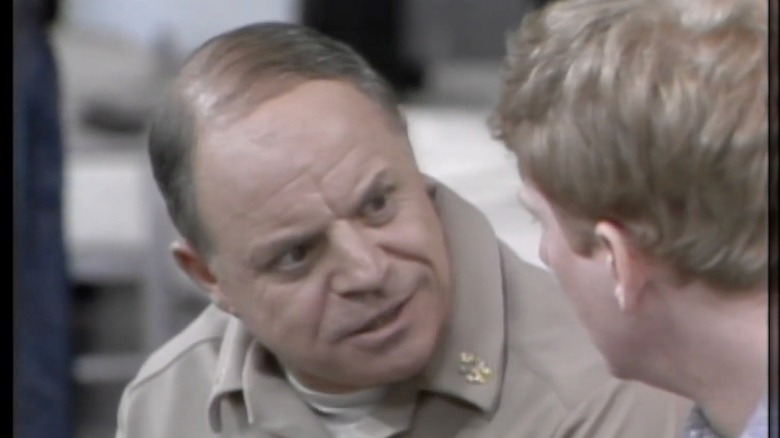
Millennials and younger generations know the late Don Rickles mainly as the voice of Mr. Potato Head in the "Toy Story" movies. But older fans remember him as a famous insult comic, a persona that inspired producers to create a show for him. "C.P.O. Sharkey," which aired on NBC from 1976 to 1978, starred Rickles as a decorated chief petty officer in charge of a company on a California naval base. When he wasn't shouting into the recruits' faces or dealing with their antics, he showed his softer side by helping them with their personal problems.
While the premise of the show wasn't as wince-y as some of the others on this list, the humor would never fly today. The men of Company 144 embodied almost every offensive racial stereotype — a jivey Black guy, a nerdy Jewish kid, a naive, drawling Southern boy — and Rickles' jokes about them were equally belittling. One scene in this episode shows Sharkey threatening Puerto Rican recruit Rodriguez, "I'm gonna put you on a pickup truck and send you back home to the annual banana festival. And if that don't work, I'm going to shoot your donkey!"
The plot lines were similarly stale, often involving the recruits trying to hide forbidden things from their stern commanding officer: an inflatable sex doll, a pizza party. Yet somehow "Sharkey" dragged on for 38 episodes before sailing off into the sunset. We prefer to remember the Emmy-winning actor for his other works and for his lovable off-camera self; Rickles and Bob Newhart enjoyed a decades-long friendship.
Me and the Chimp
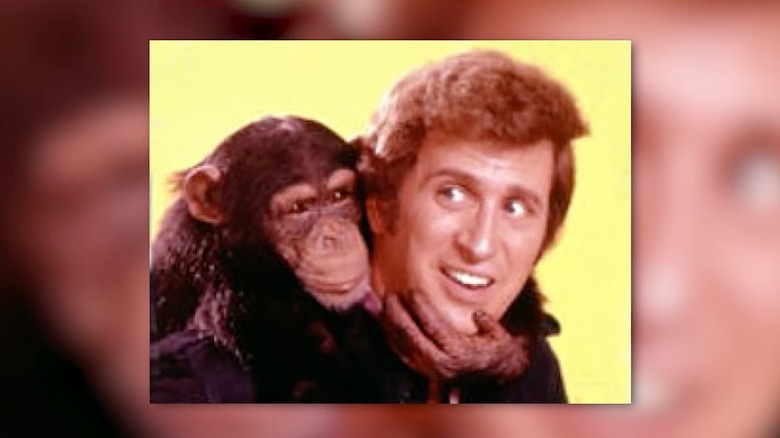
The award for Most Forgettable '70s Sitcom has to go to "Me and the Chimp." Yes, you read that right, and yes, it was a real show. Ted Bessell of "That Girl" fame starred as a married dentist whose young kids bring home a chimpanzee they found at the local park. Defying all common sense and health regulations, the family keeps "Buttons," and thus followed week after week of predictable primate antics. Buttons variously let a burglar into the house, played in a kids' basketball game, painted the house, and scribbled on the family's map, sending them to a ghost town rather than a ski resort. Of course, no one seemed the least bit concerned that the chimp might become aggressive or, um, soil the house's wall-to-wall shag carpeting.
Despite being created by Garry Marshall in his pre-"Happy Days" heyday, the sitcom failed to live up to the ads' promise of "more fun than a barrel of monkeys" (via IMDb). Its premise wore thin quickly, and the tension between the human stars didn't help. Bessell reportedly insisted on changing the show's title from "The Chimp and I" to put the emphasis on his character. His co-star, Anita Gillette, recalled finding him difficult to work with and predicted critics would hate the show. "The name invites it," she told Florida Today in an interview quoted by the Tralfaz blog.
She was right. After 13 episodes, "Chimp" was sent packing, to the disappointment of no one; even today, it ranks among TV Guide's "50 Worst Shows of All Time." But the show's cancellation proved lucky for at least one cast member. Kami Cotler, who played daughter Kitty Reynolds, immediately went on to join another, far more successful show: "The Waltons."