

'70s Heartthrob David Cassidy Seriously Transformed After Partridge Family Fame
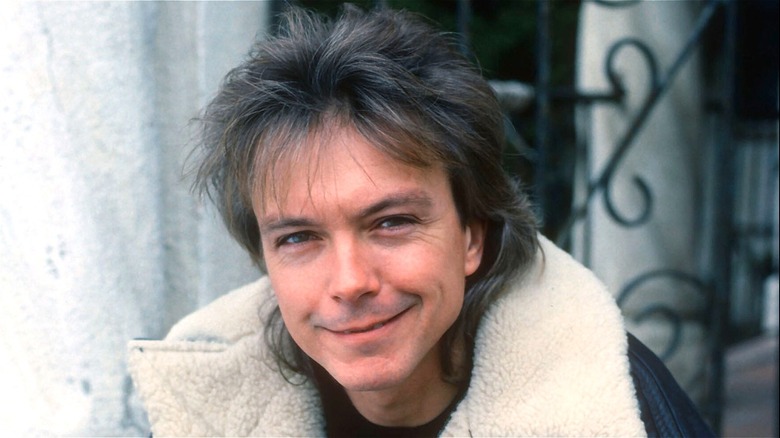
For many people, David Cassidy is still best remembered as the clean-cut teen heartthrob from the cast of "The Partridge Family." That image stuck for decades, and it remained the easiest shorthand for who he was. But Cassidy wanted to live beyond the role that made him famous. "What was tough was the way people my own age would perceive me as this image that was created of this sweet, innocent boy next door, which was the antithesis of the teenage life I had lived," he said in a 1995 interview with the Los Angeles Times.
In 1991, Cassidy pushed back even on being called a "former teen idol," per The Washington Post, which gives you a sense of how much he resisted being reduced to that one chapter. The star felt frustrated that people assumed the fluffy character he played on television was the real him. Cassidy did change, and he worked to be taken seriously beyond the haircut and the screaming-fans era. Still, the old label never fully fell away. Part of that was nostalgia, and part of it was the way celebrity culture tends to recast former idols as heartthrobs who are barely recognizable years later. In Cassidy's case, this often meant more attention on how much he had changed after "The Partridge Family" than on the longer career and more complicated life that followed.
Cassidy had a front-row view of stardom before his teen-idol years
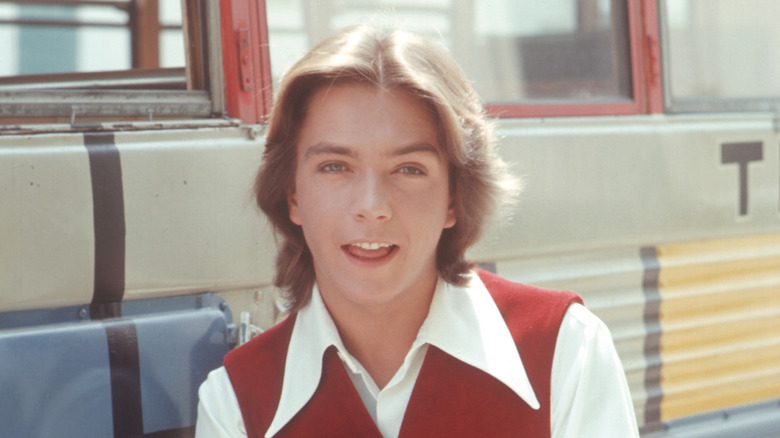
Born in New York City, David Cassidy was the son of actor Jack Cassidy and singer-actress Evelyn Ward. In 2012, David once explained how early the show business world entered his imagination. "My earliest recollection of my father is being taken to see him in a matinee. I have a vivid memory of me, in the back of the taxi afterwards, saying, 'Dad, that's what I want to do,'" he told The Guardian. "They looked at me and said, 'Yes, you can do that, but not until you graduate from school.' I was 3 [years old]." In the same interview, David admitted that his parents eventually split up. "My mother gave up a good part of her career to look after me." While Ward went on tour, David was left in the care of his grandparents.
When he was 11 years old, David moved to Los Angeles to live with his father and stepmother, Shirley Jones, who would later play his mother on "The Partridge Family." The move undoubtedly brought him closer to the center of the entertainment world, but it also placed him inside a more complicated family dynamic as he grew older. In a 1975 interview cited by Woman's World, David said, "I'm incommunicado with my old man." For all the tension in their relationship, David still recognized his father's talent. After graduating, he returned to New York and got his first Broadway job in "The Fig Leaves Are Falling" (1969) at the Majestic Theatre, the same theater where he had seen his father perform as a child. "If you put all my brothers together, we would add up to all the talent that was in my father," he told the Los Angeles Times in 2009.
Cassidy broke the rules of the teen-idol playbook
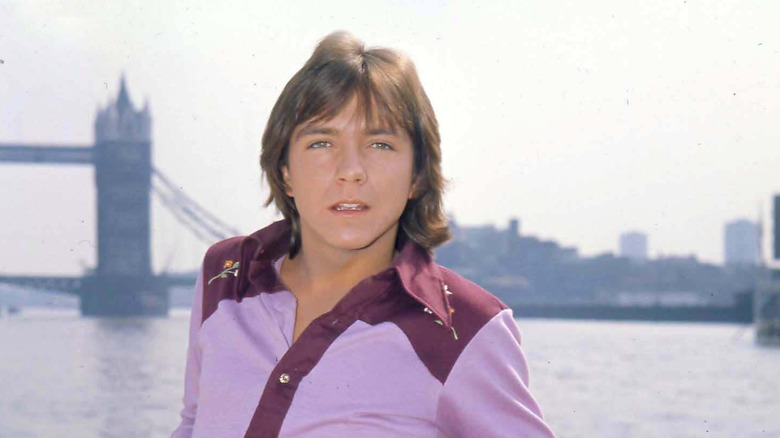
In the early 1970s, David Cassidy was still at the center of "The Partridge Family" and widely adored by young fans. As The New Yorker put it in June 1972, "For some time now, millions of nice little girls (ages 8-14) all over the country have had mad crushes on David Cassidy." On May 11 of that year, the 22-year-old appeared nude on the cover of "Rolling Stone" for an issue titled "Naked Lunch Box." Cassidy later made clear that the decision was deliberate. "I didn't tell my management I was doing that. They went insane. We shot it at my house in Los Angeles," he told Rolling Stone. Robin Green, the Rolling Stone writer who covered the story, later said, "It was a very conscious decision to shed his image and become hip."
Later on, Cassidy looked back on that era as a time when he didn't have much say over how he was presented. In a 2012 interview with The Guardian, Cassidy said, "I was being told what to sing, how to dress, how to act. I wasn't allowed to be myself." The shoot also may have come out of a bigger frustration with the whole fame machine around him. Cassidy once said he posed for it in part as a rebuke to the people profiting from his Partridge Family image. "It p***** off everybody that was really profiting from the business of David Cassidy," he said. "I scratched my head and thought, You know, this David Cassidy business has really gotten outta hand." Cassidy's manager even noted that the star's gross merchandising percentage was "less than one percent" per year (via TV Guide).
Cassidy pursued a solo recording career
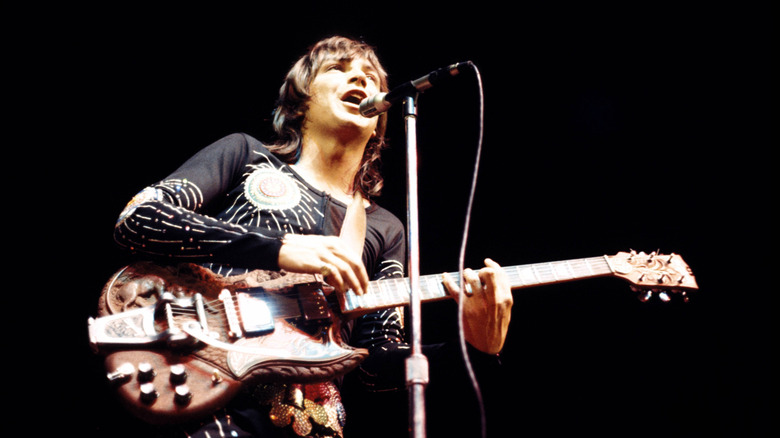
Although he was cast in 1970 mainly as an actor, David Cassidy quickly became the lead voice on the show's records. He later explained the shift in an interview with The Washington Post: "I started writing songs when I started a recording career as a result of being on 'The Partridge Family.' They didn't hire me as a singer or musician, they hired me as an actor, although the producers knew I was a singer and a guitar player." By 1972, that side of his career had become a major enterprise of its own. "It was very, very difficult, because I was working all day on the "Partridge Family" television show and was recording at night, right after I got off work, driving over the hills from Burbank to Hollywood," Cassidy told The Washington Post. "I cut maybe 250 songs during that period, then did two or three albums that were successful. My first five albums were triple-platinum, and I played a lot of concerts."
Cassidy notched major solo hits, including "Cherish," "Could It Be Forever," and "How Can I Be Sure," as well as later scoring a Top 30 comeback with "Lyin' to Myself" in 1990. Across the ocean, in Britain and Ireland, the hype around him was often compared to that of the Beatles — the Irish News called it "Cassidy-mania." In 1990, when Rolling Stone asked if he was surprised record labels came calling again, Cassidy said, "Yeah, it was really a shock ... All I had to do was go down and talk into a microphone, and there were a hundred people in the parking lot after I was done."
Cassidy's mainstream success waned in the U.S. by the early 1990s
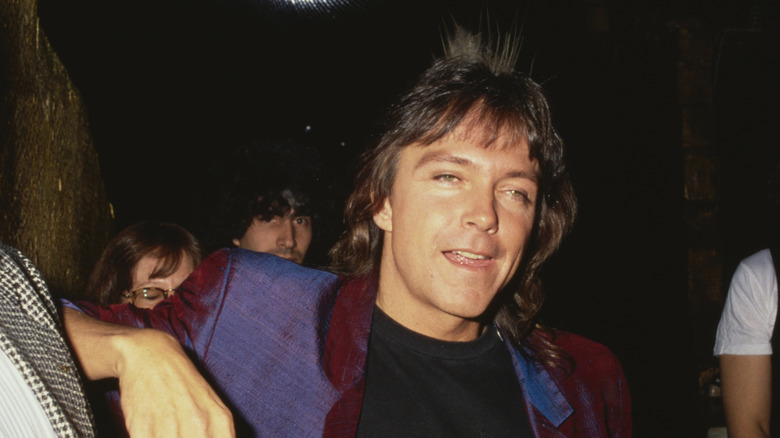
By the early 1990s, David Cassidy's mainstream fame in the United States had faded. He was still recognizable, of course, but as he told the Los Angeles Times, "It seemed whenever I'd read my name, it would be David 'former teen idol sex symbol' Cassidy. I used to think, 'Well, I guess I'm going to have to do something more significant in my life, like David "convicted felon" Cassidy or something,' anything that would erase that convenient label."
He was trying, meanwhile, to build a life and career beyond that old image, working hard to prove himself to those who refused to take him seriously as a mature artist. It didn't help that after a few solo albums failed, Cassidy moved away from songwriting and television. During this time, he raised racehorses and kept working in theater. But things were different outside the United States. In Europe, Cassidy's popularity lasted much longer throughout the '80s and '90s, and he continued to draw strong audiences there well after his American chart run had ended. His lead role in "Time" in London's West End is one of the clearest examples.
Cassidy spent much of the '90s and 2000s chasing legitimacy through musical theatre
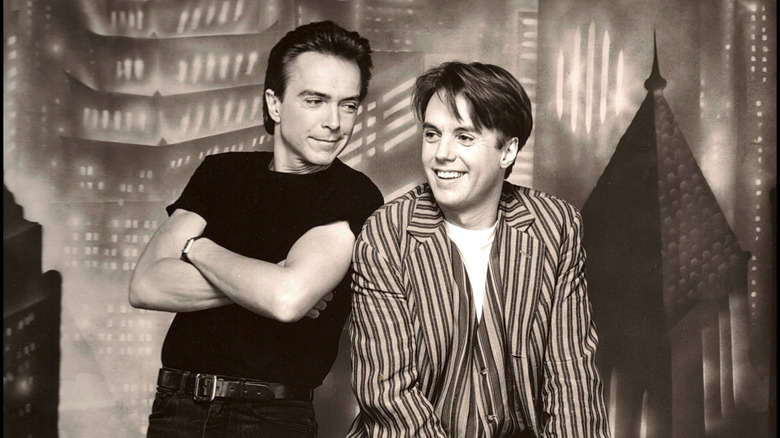
For David Cassidy, the 1990s and 2000s were marked by a steady run of stage work, including Broadway, touring productions, and Las Vegas shows. In 1993, he joined the Broadway cast of "Blood Brothers," playing Mickey opposite his half-brother Shaun Cassidy. At the time, the production's advance sale skyrocketed after the two Cassidy brothers joined the lineup. As David moved toward the new century, his career became increasingly centered on Las Vegas. He joined MGM Grand's "EFX" in late 1996, taking over the lead role in the high-profile production, and stayed with the show for about two years.
David left "EFX" in 1998 after a successful run in the production, and his official site says that period earned him recognition in Las Vegas as both best singer and best all-around entertainer. He went on to headline "At the Copa" at the Rio, where he performed from January 2000 to January 2001, and also delighted fans with some of his "Partridge Family" classics. That same year, he geared up for an international concert tour after spending much of his time on casino stages across the country.
His longest marriage didn't come until his third
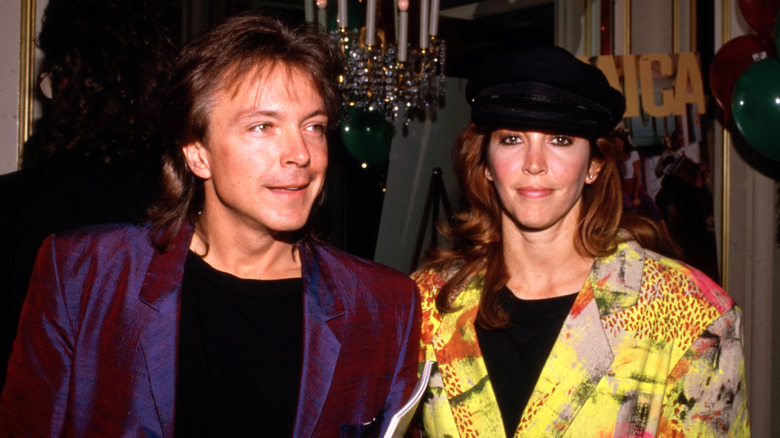
David Cassidy's longest marriage came only after two shorter ones. He first married actress Kay Lenz in 1977 after a brief relationship. Looking back in 1989, Lenz told People, "I absolutely adored him," but said the marriage was difficult from the start. "I wasn't used to that state-of-stardom lifestyle," she said. "When we eloped it was on the national news. All of a sudden I was getting mail from women telling me that they had three of his children." After that marriage ended, David became more involved in horse racing, which was one of his main interests outside of show business. He then married South African horse breeder Meryl Tanz. "We haven't been apart since. In his rock days, he was remote. Now he has time for me," Tanz told People in 1983. The marriage ended soon after, and their divorce was finalized in 1988. In between the split, David welcomed a daughter with model Sherry Williams. The stunning Katie Cassidy was born on November 25, 1986.
The relationship that lasted was the one with songwriter Sue Shifrin, whom David had first met in the 1970s before reconnecting with her in the mid-1980s. They married in 1991, and that same year welcomed their son, Beau Cassidy. Shifrin remained with Cassidy for more than two decades, making hers his longest marriage. When she filed for divorce in February 2014, she told TMZ, "This has been looming for some time ... I am truly heartbroken that our marriage is ending." Addressing David's struggles with addiction at the time, she also said, "I'm glad David is getting the help he needs and I am confident he will come back better and stronger than ever."
Cassidy's later career included a reality TV turn
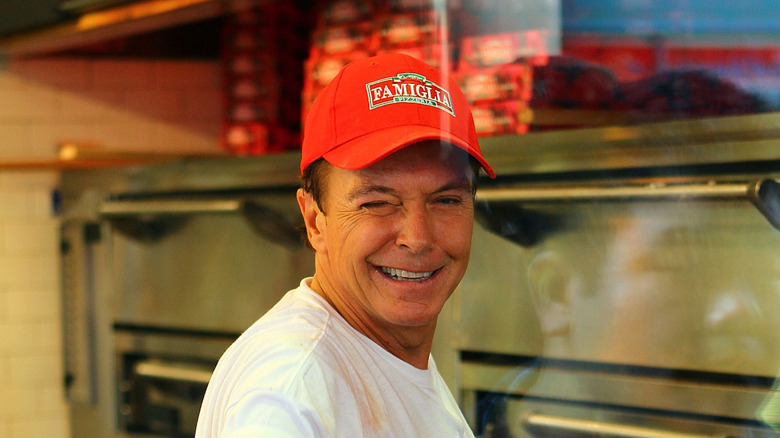
David Cassidy appeared on Season 4 of NBC's "The Celebrity Apprentice," which aired in 2011. Unfortunately, he was the first contestant fired after the men's team lost the opening challenge. Despite the quick dismissal, Cassidy himself was less embarrassed than simply relieved to be off the set. While reflecting on his 2011 exit during a 2016 interview with The Washington Post, Cassidy said, "I was thrilled, and I can't even tell you how delighted I was, not having to get up at 4:20 in the morning, to be downstairs in makeup and clothes in New York City in late November, I think it was, and working 12 to 14 hours on a reality show, which I had never done before." He added, "I was thrilled when The Donald [Trump] said I was fired. I went, 'Thank God!'"
By that point, Cassidy's late-2000s life was already spread across several tracks. His memoir, "Could It Be Forever? My Story," was published in 2007, and he was still performing live while also devoting serious time to horse breeding and racing. He had been the top breeder in New York by several measures, according to his 2009 interview with Thoroughbred Style.
Alcohol became a recurring problem in Cassidy's life
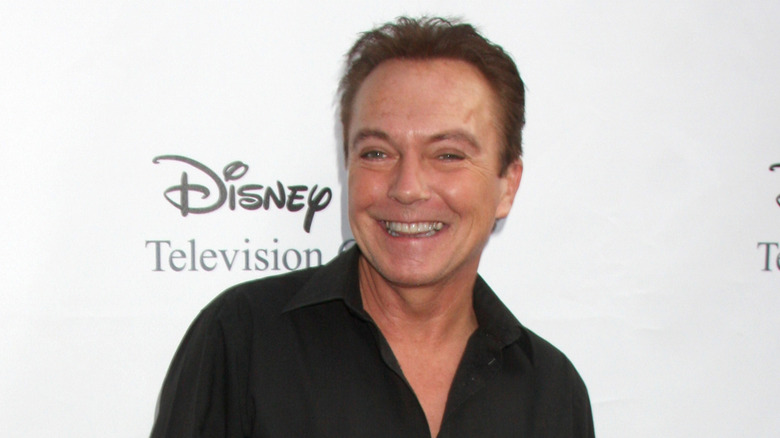
In the years before David Cassidy publicly discussed his health decline, his legal troubles repeatedly centered on alcohol. They were also the kind of incidents that often get folded into the churn of celebrity arrests you totally forgot happened. For instance, he was arrested on suspicion of DUI in Florida back in November 2010, when police said they found a half-empty bottle of bourbon in his car and that he failed breath tests. He later pleaded no contest in that case.
In August 2013, he was arrested again in upstate New York on a felony DWI charge after police said his blood-alcohol level was above the legal limit; the charge was elevated because of his earlier DUI case. Then, in January 2014, he was arrested near Los Angeles International Airport on suspicion of DUI after authorities said he made an illegal turn against a red light. Two months later, a Los Angeles judge sentenced him to 90 days in residential rehab and five years of probation. While in rehab, Cassidy released a message to fans describing himself as an alcoholic "battling this deadly disease." "I am working as hard as any human being to live a sober life. I am truly grateful to all of my friends and fans who have sent me thousands of letters and messages in support," he said (via ABC).
Cassidy's money troubles became impossible to hide in 2015
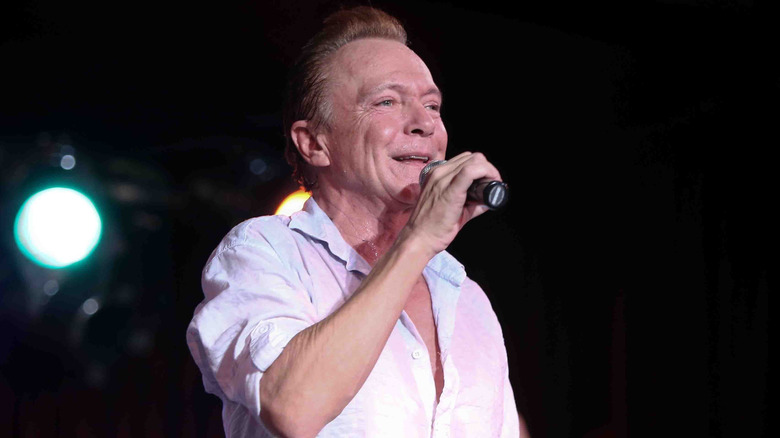
In 2015, David Cassidy sought Chapter 11 bankruptcy protection in Florida after a rough stretch that included rehab and repeated DUI trouble. The filing came about a year after Sue Shifrin-Cassidy filed for divorce, and court documents revealed that Cassidy listed assets of up to "$10 million and a debt of up to $10 million" (via The Los Angeles Times). The filing made clear that his financial problems had grown serious enough to spill into nearly every part of his life.
One of the most visible signs of Cassidy's financial trouble was the loss of his Fort Lauderdale waterfront home. The property was originally listed for $4.5 million and later marked down more than once before winding up in bankruptcy auction. The top bid at the September 2015 auction was $1.8 million, though the court-approved sale was eventually finalized at a little more than $2 million. The auction happened the same day Cassidy was accused in a hit-and-run case of sideswiping a truck on a Fort Lauderdale highway and then leaving the scene. Around then, he also had a tense appearance on ITV's "This Morning," where Eamonn Holmes questioned him about the bankruptcy and the loss of his home. According to the Daily Mail, Cassidy finally snapped: "Are you trying to rubbish me?"
Cassidy's final years brought major personal news
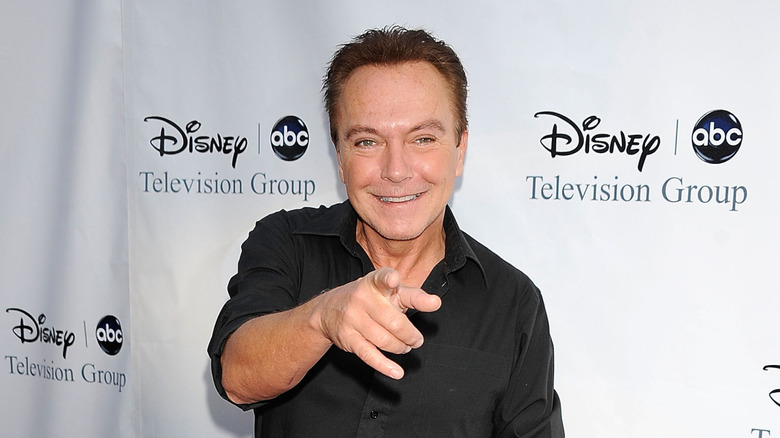
In the final year of David Cassidy's life, his health decline became impossible to ignore. In February 2017, he told People that he was living with dementia and would stop touring. A few months later, his condition worsened dramatically, and by November 2017, he had been hospitalized in Florida. David died on November 21, 2017, at 67 years old. "David died surrounded by those he loved, with joy in his heart and free from the pain that had gripped him for so long," his publicist JoAnn Geffen said on behalf of the family (via ABC News). David died in Fort Lauderdale from complications of multiple organ failure.
David's will had about $150,000 in various assets, which were left to his son, Beau Cassidy. His daughter was not included, renewing attention to Katie Cassidy's complicated relationship with her late father. Earlier that year, David had also spoken warmly about Beau. "He's just one of the best people you'll ever meet in your life and it's that that I'm proud of," he told People (via Daily Mail). His remarks about Katie, on the other hand, were far colder. He said, "I wasn't her father. I was her biological father but I didn't raise her." Katie boasts a long Hollywood resume, while Beau works as an actor and performer. "My father's last words were 'so much wasted time.' This will be a daily reminder for me to share my gratitude with those I love as to never waste another minute," wrote Katie, hinting at a potential reconciliation with David before his death.